
浦发银行

Search documents
2026年中国中小银行行业政策、产业链、资产规模、竞争格局及趋势研判:数字化转型与绿色金融深化,推动中小银行资产规模与竞争力同步提升[图]
Chan Ye Xin Xi Wang· 2026-01-19 01:16
Core Viewpoint - The small and medium-sized banks in China play a crucial role in supporting the long-term development of the economy by fostering private enterprises and small businesses, thus contributing to local economic prosperity and advancing financial market reforms [1][9]. Summary by Sections 1. Overview of the Small and Medium-Sized Banking Industry - Small and medium-sized banks are generally defined as all banks excluding the six major state-owned banks. They include national joint-stock banks, urban commercial banks, rural commercial banks, private banks, credit cooperatives, and village banks [3][10]. 2. Industry Policies - The Chinese government has shown significant attention to the development of small and medium-sized banks, continuously optimizing the policy environment to support industry growth. For instance, in January 2025, the government issued guidelines to enhance rural banking services and support small enterprises [5][6]. 3. Industry Chain - The upstream of the small and medium-sized banking industry includes IT service providers, payment platforms, financial market participants, and hardware/software suppliers. The midstream consists of the banks themselves, while the downstream includes consumers and businesses utilizing banking services [7][8]. 4. Current Development Status - Small and medium-sized banks have significantly expanded their total assets, reaching 192.25 trillion yuan in 2024, a year-on-year increase of 6.39%. By November 2025, total assets are projected to reach 201.6 trillion yuan, with a growth rate of 6.49% [1][9]. 5. Competitive Landscape and Key Enterprises - The competitive landscape of the small and medium-sized banking industry shows a clear tiered structure. The first tier includes major banks like China Merchants Bank and Shanghai Pudong Development Bank, while the second tier consists of regional banks like Beijing Bank and Shanghai Bank. The third tier includes numerous local rural financial institutions [14][15]. 6. Development Trends - Digital transformation is becoming a core competitive advantage for small and medium-sized banks, with a focus on data-driven operations and enhanced customer experiences through technology [18]. - Green finance is transitioning from concept to practice, with banks expected to integrate environmental risk assessments into their lending processes and develop specialized products to support sustainable initiatives [19]. - Regional and specialized operations are expected to deepen, with banks focusing on local economic characteristics and developing tailored financial solutions for small and micro enterprises [21].




招行、中信、兴业密集落子:起底股份行AIC的生存哲学
Hua Er Jie Jian Wen· 2026-01-18 23:51
几乎同期,招商银行旗下的招银投资现身深蓝汽车的C轮融资名单,豪掷5亿元现金; 作为兴业银行旗下AIC,兴银投资则在开业45天内,密集扫货盛新锂能、金发科技、东阳光三家上市公 司的核心子公司,累计投放超60亿元。 随着兴业、招商、中信三家股份行AIC密集开业,"5+0"的国有行垄断格局宣告终结。 三家股份行急切的起手式,透露了一种与国有大行不同的生存哲学—— 它们已不甘做政府母基金身后的"金主",选择直接现身被投企业的股东名单中。 岁末年初,当一级市场的GP们还在为募资寒冬瑟瑟发抖,三张来自银行系的巨额支票,已经悄无声息 地划向了新能源与硬科技赛道。 2025年12月末,仅开业一周的中信银行旗下信银金投火速完成首单,一举拿下深圳港华顶信清洁能源 49%的股权; 三张新面孔 虽同持AIC牌照,但在首批落地的项目中,三家股份行已经拿出了不同的剧本。 在三家新晋AIC中,招商银行旗下的招银投资注册资本高达150亿元,比兴业和中信高出整整50%,这 多出的50亿是资本金,亦是招行在股权投资战场上的底气。 招银投资的首秀选择了深蓝汽车,在深蓝汽车刚刚完成的61.22亿元C轮融资中,招银投资拿下约2.42% 的股权,成为该 ...


金价可能大跌开始了,26年1月18日黄金跌价
Sou Hu Cai Jing· 2026-01-18 23:50
Group 1 - The overall gold price in domestic jewelry stores remains stable, with most brands unchanged from the previous day, while a few stores made slight adjustments. The retail price for gold jewelry is around 1186 CNY per gram for Shui Bei, and major brands like Chow Tai Fook and China Gold are around 1436 CNY per gram [1] - Some brands experienced minor fluctuations: Liufu Jewelry at 1434 CNY per gram, Chow Sang Sang down to 1429 CNY per gram, and Lao Feng Xiang up to 1436 CNY per gram [1] - The retail gold price is influenced not only by international and trading factors but also by brand premiums, channel costs, and processing fees, leading to slower and more limited short-term fluctuations [2] Group 2 - Bank and institutional gold bar prices are closer to market trading logic, with current quotes ranging from 1045 to 1050 CNY per gram. For example, Agricultural Bank's gold bar is approximately 1046.2 CNY per gram, while Shanghai Gold Exchange's standard gold bar is around 1031.5 CNY per gram [3] - The price of silver bars varies widely, with some channels quoting around 22 CNY per gram, while others are closer to 20 CNY per gram based on standard silver prices [3] Group 3 - The Shanghai Gold Exchange shows slight fluctuations in gold prices, with Au9999 dropping to around 1029 CNY per gram and the gold recovery price at approximately 1017 CNY per gram, reflecting a discount due to various costs [5] - The increase in gold prices has led to a rise in demand for physical gold bars and jewelry, but there are challenges in safe storage, particularly in first-tier cities where bank safe deposit boxes are in short supply [6][7] Group 4 - The demand for safe storage is driven by increased physical gold holdings and concerns about theft, while banks face challenges in expanding safe deposit box services due to high maintenance and compliance costs [7] - The cost of safe deposit boxes varies significantly by city and box size, with small boxes costing hundreds of CNY annually and larger boxes potentially reaching thousands. Investors should evaluate the balance between rental costs, safety benefits, and liquidity [9] Group 5 - A combination of physical and non-physical investment methods is recommended, such as using gold ETFs or accumulation gold to reduce storage pressures. For those needing physical gold, choosing reputable channels and understanding buyback policies is crucial [10] - The current stability in retail gold prices contrasts with more pronounced fluctuations in trading and recovery prices, highlighting the importance of distinguishing between jewelry consumption, investment gold bars, and trading products [10]

上海国际金融中心一周要闻回顾(1月12日—1月18日)
Guo Ji Jin Rong Bao· 2026-01-18 03:47
Group 1: Key Meetings and Policies - Shanghai Mayor Gong Zheng met with UBS CEO Ralph Hamers, expressing hope for UBS to better serve Chinese companies going global and promote Shanghai to global partners [1] - The Shanghai Financial Regulatory Bureau, in collaboration with law enforcement, has launched 15 nationwide campaigns to combat "black and gray" financial activities, resulting in the resolution of 117 cases and the arrest of over 370 suspects [2] - The Shanghai Stock Exchange has adopted a "zero tolerance" policy towards violations, issuing over 270 disciplinary actions and implementing regulatory measures over 330 times to maintain market order [3] Group 2: Financial Developments - As of January 11, 2026, the Shanghai branch of China Construction Bank has managed personal financial assets exceeding 1 trillion yuan, serving 21 million individual clients [4] - The first non-directional public REITs expansion was launched on January 12, 2026, marking a significant innovation in the REITs market and promoting quality rental housing assets [5] - The Shanghai Gold Exchange emphasized the construction of secure and efficient financial infrastructure to support national strategies and improve market services during its 2026 work meeting [6] Group 3: Regulatory Changes - The Shanghai and Shenzhen Stock Exchanges have increased the minimum margin requirement for financing from 80% to 100%, effective January 19, 2026, to strengthen counter-cyclical adjustments [7] - The People's Bank of China held a work meeting emphasizing the implementation of a moderately loose monetary policy to support high-quality economic development [8] - The Shanghai Insurance Association and the Shanghai Judicial Appraisal Association issued guidelines to standardize property insurance claims processes, aiming to improve industry governance [9] Group 4: Innovations in Financial Services - China Construction Bank's Shanghai branch launched a "coffee production internet service platform" to facilitate cross-border trade, enhancing efficiency and security for traders [9] - China Pacific Insurance has upgraded its strategy to address the challenges posed by an aging population, focusing on a comprehensive ecosystem covering elderly care, health, and rehabilitation [10] - Star Ring Fusion completed a 1 billion yuan Series A financing round, setting a record for private nuclear fusion companies in China [11] Group 5: Green Finance Initiatives - Shanghai Pudong Development Bank issued its first biodiversity loan of 7 million yuan to support agricultural technology development, reflecting its commitment to green finance [12] - Bank of China Shanghai branch efficiently processed a qualification application for a Hong Kong metal trader in just 15 days, showcasing its expertise in cross-border finance [13] - The Shanghai branch of the Bank of Communications collaborated with the Shanghai Data Exchange to establish an online data transaction settlement service system [14] Group 6: International Trade Support - The Export-Import Bank of China Shanghai branch provided customized financial support for a solid waste enterprise's offshore trade, demonstrating its role in stabilizing cross-border supply chains [16]
并购市场需求旺盛 贷款投放密集落地
Zhong Guo Jing Ying Bao· 2026-01-16 20:35
Group 1 - The core viewpoint of the article highlights the increasing activity in the domestic merger and acquisition (M&A) market, driven by a series of supportive policies from regulatory authorities, particularly the new guidelines on M&A loans issued by the National Financial Regulatory Administration [1][2][3] - The new M&A loan management regulations allow for a higher proportion of controlling M&A loans in the transaction price, increasing the limit from 60% to 70%, and extending the loan term from seven years to ten years, thereby facilitating financing for M&A transactions [3][4] - The implementation of these regulations has led to a rapid increase in M&A loan projects being approved and disbursed by various commercial banks within a short period, indicating a positive market response to the new policies [2][3][4] Group 2 - The new regulations specifically include minority stake acquisitions in the scope of M&A loans, which aligns with current industrial upgrade needs and is expected to promote industrial integration and high-quality economic development [4][7] - Several banks, including Industrial and Commercial Bank of China and Agricultural Bank of China, have successfully issued the first M&A loans under the new regulations, demonstrating proactive engagement with local enterprises to meet their financing needs [4][5][6] - The regulatory environment is further supported by multiple government departments encouraging industrial mergers and acquisitions, particularly in technology sectors such as electronics and biomedicine, which are seeing increased M&A activity [8][9]




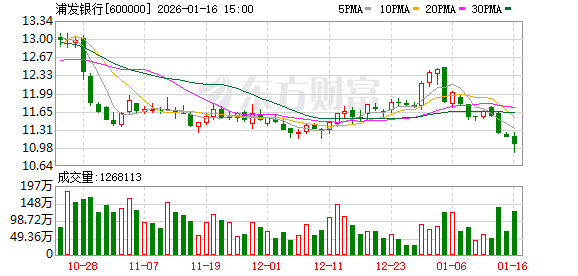
浦发银行大宗交易成交24.84亿元
Zheng Quan Shi Bao Wang· 2026-01-16 15:32
1月16日浦发银行大宗交易一览 | 成交量 | 成交金额 | 成交价 | 相对当日收盘 | | | | --- | --- | --- | --- | --- | --- | | (万 | (万元) | 格 | 折溢价(%) | 买方营业部 | 卖方营业部 | | 股) | | (元) | | | | | 22520.29 | 248398.82 | 11.03 | -0.09 | 信达证券股份有限公司北 | 信达证券股份有限公司 | | | | | | 京科丰桥证券营业部 | 资产管理事业部 | (文章来源:证券时报网) 证券时报·数据宝统计显示,浦发银行今日收盘价为11.04元,下跌1.08%,日换手率为0.38%,成交额为 13.99亿元,全天主力资金净流入7081.98万元,近5日该股累计下跌4.33%,近5日资金合计净流出2.15亿 元。 两融数据显示,该股最新融资余额为31.65亿元,近5日增加6844.16万元,增幅为2.21%。 机构评级来看,近5日共有6家机构给予该股评级,预计目标价最高的是浙商证券,1月13日浙商证券发 布的研报预计公司目标价为16.77元。(数据宝) 浦发银行1月16日大 ...
浦发银行薛宏立:银行要做全要素生产率革命的“催化剂”
2 1 Shi Ji Jing Ji Bao Dao· 2026-01-16 12:57
Core Viewpoint - The core viewpoint emphasizes that commercial banks must adapt to a new growth paradigm focused on enhancing total factor productivity through technological innovation and optimized resource allocation, transitioning from traditional financing for expansion to providing support for innovation and transformation [1][2]. Group 1: Top-Level Design - The strategic goals of commercial banks should align deeply with national priorities, moving beyond traditional financial metrics to establish a comprehensive strategic goal system that supports high-quality development [1]. - Resource allocation must shift from serving tangible assets to enhancing intangible assets, creating a new resource allocation system that integrates technology, scenarios, and value [1][2]. - Organizational structures need to adapt to functional transformations, fostering agility, collaboration, and professionalism to enable a closed-loop operation driven by industry research and customer needs [2]. Group 2: Business Innovation - Commercial banks should focus on three main lines: breakthroughs in technological innovation, upgrading industrial structures, and enhancing openness, creating a diversified and comprehensive financial service system [2]. - In the field of technology finance, banks need to develop a toolbox of products that align with the innovation lifecycle, offering tailored financial products for startups, growth-stage companies, and mature enterprises [2]. - The approach to industrial finance should transition from serving individual enterprises to supporting entire industrial chains, ensuring financial services effectively reach all levels of the industry [2]. - In cross-border finance, banks should expand their global service networks to support enterprises' integration into global production chains, innovating products and services for cross-border settlements, financing, and currency risk hedging [2]. Group 3: Risk Control - The risk landscape for the real economy has changed significantly, necessitating the development of a risk control model that aligns with quality enhancement [3]. - A data-driven intelligent risk control system should be established, shifting focus from tangible assets to intangible assets like patents and intellectual property, and evolving from post-event identification to preemptive warning [3]. - A differentiated risk management approach is essential, avoiding a one-size-fits-all strategy and tailoring risk control standards to different industries, scales, and development stages [3]. - Strengthening risk control capabilities through technology integration, such as knowledge graphs and machine learning, is crucial for real-time risk assessment and management [3].
银行今十条:多家地方银行上调存款利率;银行保管箱供不应求;柳州银行换东家...
Jin Rong Jie· 2026-01-16 12:14
Group 1 - The core financial data for 2025 shows a robust growth in social financing and M2, with social financing stock reaching 442.12 trillion yuan, a year-on-year increase of 8.3%, and M2 balance at 340.29 trillion yuan, up 8.5% [1] - The implementation of the new merger loan regulations has led to a surge in business activity among major banks, focusing on supporting equity mergers and enhancing capital allocation efficiency [2] - The appointment of Zou Jiayi as the President and Chairman of the Asian Infrastructure Investment Bank (AIIB) is expected to inject new momentum into the bank's operations and regional economic cooperation [3] Group 2 - Local banks have raised deposit interest rates in response to market competition, with increases typically around 20 basis points, aiming to attract deposits and enhance customer loyalty [4] - The surge in gold prices has led to increased demand for bank gold accumulation services, prompting banks to adjust fees and minimum investment thresholds while enhancing risk management measures [5] - The demand for bank safe deposit boxes has skyrocketed, particularly in Beijing, with waiting periods extending to several years due to a lack of available boxes [6] Group 3 - Huaxia Bank announced a cash dividend of 0.10 yuan per share for the first half of 2025, totaling approximately 15.915 billion yuan, reflecting the bank's strong operational performance [7] - The shareholding change at Liuzhou Bank has been approved, with Guangxi Guokong Capital acquiring 67.44% of the shares, which is expected to optimize the bank's governance structure [9] - The auction of shares held by Zhongrong Xinda for Shanxi Bank failed to attract bidders, indicating a cautious investment sentiment in the market [10] Group 4 - The former Secretary of the Sichuan Banking Regulatory Commission, Wang Zeping, was expelled from the Party and public office due to serious violations, highlighting the commitment to integrity in the financial regulatory sector [11]
浦发银行今日大宗交易折价成交2.25亿股,成交额24.84亿元
Xin Lang Cai Jing· 2026-01-16 09:29
1月16日,浦发银行大宗交易成交2.25亿股,成交额24.84亿元,占当日总成交额的63.97%,成交价11.03 元,较市场收盘价11.04元折价0.09%。 ...
银行业“10万亿俱乐部”扩容至10家,陈国汪详解大中小银行划分标准
Jin Rong Jie· 2026-01-16 09:09
Group 1 - The core viewpoint of the articles highlights that both Pudong Development Bank and CITIC Bank have successfully surpassed the 10 trillion yuan asset threshold, expanding the "10 trillion asset club" in China's banking industry to 10 members, which includes six major state-owned banks and four national joint-stock banks [1] - The total asset scale of the 10 banks now accounts for 60% of the entire banking industry, indicating a growing concentration of resources among leading institutions [1] - Chen Guowang, director of the Financial Industry Research Institute, noted that the significant changes in asset scale among banks have created a clear disparity with the classification standards established in 2015, which need to be updated to better reflect the current industry landscape [2] Group 2 - The classification standards for banks, established in 2015, categorize institutions based on asset size, but the threshold for large banks is no longer applicable as multiple institutions have surpassed the 10 trillion yuan mark [2] - The current classification includes various types of banks, such as policy banks, state-owned commercial banks, joint-stock banks, urban commercial banks, rural small banks, and private banks, indicating a diverse banking landscape [2] - Chen Guowang suggests that the asset scale classification standards should be revised to adapt to the new developments in the banking industry [2]