罗氏

Search documents
为谋划“十五五”乃至更长远发展汇聚全球顶尖智慧 陈吉宁会见来沪参加上海市市长国际企业家咨询会议的企业家代表
Jie Fang Ri Bao· 2025-10-12 02:17
记者 张骏 昨天,市委书记陈吉宁分别会见了来沪参加第37次上海市市长国际企业家咨询会议的上海市市长国 际企业家咨询会议主席、瑞士罗氏集团董事会主席施万,韩国SK集团会长崔泰源,瑞士诺华集团董事 会主席乔恩礼。 陈吉宁对施万先生荣获"上海市荣誉市民"称号表示祝贺,对SK集团加入咨询会议表示欢迎,对各 位国际企业家为上海城市发展、咨询会议成功举办所作出的积极贡献表示感谢。他说,今年是收官"十 四五"、谋划"十五五"承上启下之年,即将召开的中共二十届四中全会将对未来五年发展作出顶层设计 和战略擘画,研究关于制定国民经济和社会发展第十五个五年规划的建议。上海作为中国经济中心城市 和改革开放的前沿窗口,谋划"十五五"乃至更长远发展,需要汇聚全球顶尖智慧、聆听国际先进经验, 期待国际企业家依托咨询会议这个开放交流平台,立足各自专业领域,以国际视野和战略远见,为上海 高质量发展出谋划策,为国内外产业合作牵线搭桥,更好凝聚共识、共享机遇、共创未来。 陈吉宁说,当前,上海正深化建设"五个中心",加快发展集成电路、生物医药、人工智能等三大先 导产业。罗氏集团、SK集团、诺华集团是各自所在领域的全球领军企业,发展理念、核心业务同上 ...
辉瑞,不想认输
Ge Long Hui· 2025-10-11 16:02
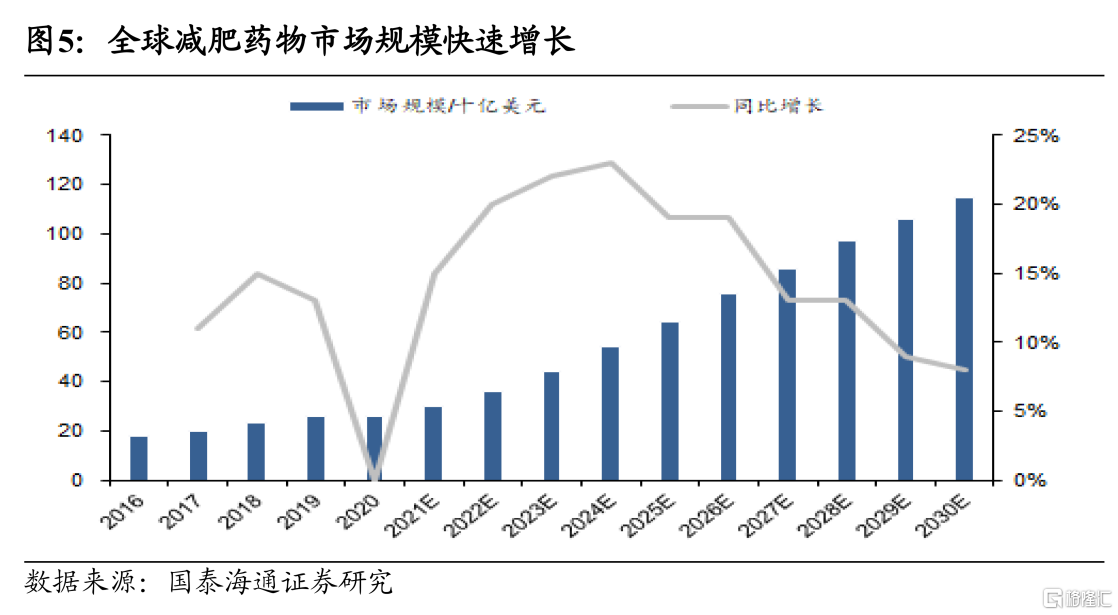
Core Viewpoint - Pfizer's recent acquisition of Metsera for over $7.2 billion marks its strong re-entry into the weight loss market, despite previous setbacks in its GLP-1 pipeline. The company aims to capture a share of the lucrative obesity and cardiometabolic disease treatment market, which is projected to grow significantly in the coming years [1][4]. Group 1: Market Potential and Competition - The global GLP-1 market is expected to reach approximately $52.83 billion in 2024, with a year-on-year growth of 46%. The sales of semaglutide products are projected to be around $29.3 billion, holding a 55.5% market share, while tirzepatide products are expected to generate nearly $16.5 billion, accounting for 32.23% [1]. - In 2024, sales of the weight loss version of semaglutide (Wegovy) are anticipated to grow by 86% to about $8.448 billion, while tirzepatide (Zepbound) is expected to see a staggering 2702% increase to $4.926 billion [2]. - The global anti-obesity drug market is forecasted to exceed $150 billion by 2030, indicating a robust growth trajectory for the sector [2]. Group 2: Pfizer's Strategy and Pipeline - Pfizer had previously halted its GLP-1 pipeline development, which included three small molecule agonists, leaving only one GIPR antagonist in Phase II clinical trials. However, the company has now pivoted back into the obesity market by acquiring Metsera, which has several promising obesity drug candidates [4][6]. - Pfizer plans to invest $10-15 billion in mergers and acquisitions by 2025 to counteract the impending patent cliff, with eight major products set to lose patent protection in the next three years, contributing to 40% of the company's total revenue in 2024 [5]. Group 3: Metsera's Drug Pipeline - Metsera's pipeline includes MET-097i, a novel long-acting GLP-1 receptor agonist with a half-life of 380 hours, allowing for monthly dosing. It also features MET-233i, a long-acting amylin analog currently in Phase I trials, which aims to reduce weight while preserving muscle mass [9][10]. - Recent Phase IIb studies for MET-097i showed promising results, with participants losing an average of 14.1% of their body weight over 28 weeks, and some individuals achieving weight loss of up to 26.5% [9][10]. Group 4: Competitive Landscape - The weight loss drug market is becoming increasingly competitive, with major players like Eli Lilly and Novo Nordisk leading the charge. Pfizer's challenge will be to differentiate its offerings in a market where many companies are pursuing similar therapeutic targets [17][21]. - Recent developments include Eli Lilly's successful Phase III trials for its oral GLP-1RA, which demonstrated an average weight loss of 7.3 kg, and Novo Nordisk's advancements in multi-target therapies [18][21]. Group 5: Future Outlook - Pfizer's acquisition of Metsera is not just a pipeline enhancement but a strategic move to secure a foothold in the evolving landscape of next-generation weight loss therapies. The market is shifting from a "duopoly" to a "multitude of competitors," indicating a new phase of competition in the obesity treatment sector [24].


(进博故事)小小“药盒”的进博奇迹之旅
Zhong Guo Xin Wen Wang· 2025-10-11 08:05
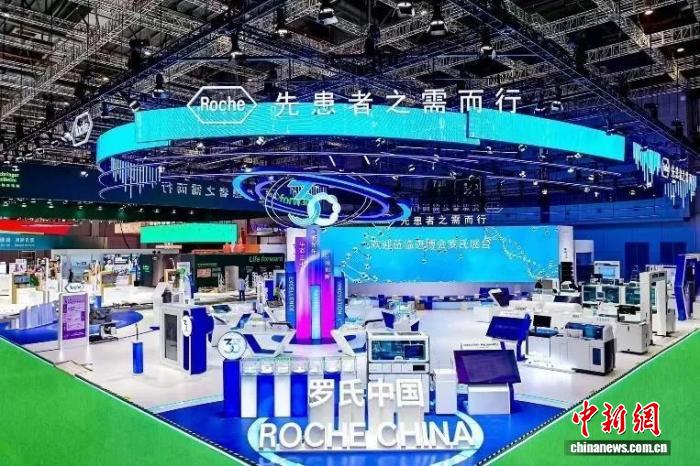
Core Insights - The article highlights the transformation of innovative pharmaceutical products from exhibition items to market-ready goods, emphasizing the role of the China International Import Expo (CIIE) in accelerating this process [1][3][4]. Group 1: Company Background - Roche, a leading global biotechnology company with nearly 130 years of history, has a long-standing relationship with China, dating back to 1926 when it introduced its products through a Shanghai pharmacy [2]. - Roche has been a consistent participant in the CIIE since its inception, viewing it as a vital platform for showcasing innovative products and enhancing connections with customers and government [2][5]. Group 2: Product Development and Market Entry - The innovative drug, Sufuda, was first showcased at the second CIIE and gained significant attention due to its unique treatment mechanism, requiring only a single dose [3][4]. - Following its debut, Sufuda was included in the list of urgently needed foreign clinical drugs and received approval for sale in China within five months, demonstrating the CIIE's impact on product commercialization [3][4]. Group 3: Investment and Future Prospects - Roche announced a significant investment of 2.04 billion RMB to establish a new biopharmaceutical production base in Shanghai, reflecting its commitment to the Chinese market and the potential for growth [5]. - The CIIE has facilitated Roche's transition from an exhibitor to an investor, with expectations for more innovative products to emerge from future expos, continuing to benefit Chinese patients [5].
爱科百发坎坷上市路:五年四度冲击资本市场 管线多为授权引进核心竞争力如何体现?
Xin Lang Zheng Quan· 2025-10-11 08:05
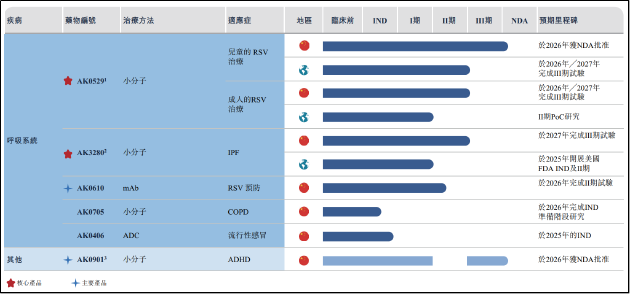
Core Viewpoint - Shanghai Aike Baifa Biopharmaceutical Technology Co., Ltd. (referred to as "Aike Baifa") has submitted its prospectus to the Hong Kong Stock Exchange for the fourth time since 2021, facing challenges in its capital market journey due to reliance on licensed-in R&D models, questionable commercialization potential, and ongoing cash flow pressures [1][2]. Group 1: Capital Market Attempts - Aike Baifa's journey to capital markets has been fraught with difficulties, having first submitted its listing application to the Hong Kong Stock Exchange in June 2021, only to terminate the process in October of the same year [2]. - The company then shifted focus to the domestic market, applying for a listing on the Sci-Tech Innovation Board in April 2023, but withdrew its application in January 2024 after multiple inquiries [2]. - The changing capital market environment, regulatory policies, and investor preferences have led to missed financing opportunities, while R&D expenditures continue to accumulate, exacerbating financial pressures [2]. Group 2: Financial Performance - Aike Baifa is currently in a state of deep losses, with revenues of 6.7 million yuan in 2023 and a cumulative net loss of 571 million yuan during the same period [2]. - The company's cash flow is under significant pressure, with net cash flow from operating activities for 2023, 2024, and the first half of 2025 reported as -232.8 million yuan, -188.7 million yuan, and -71.7 million yuan, respectively [3]. - As of June 30, 2025, the company had only 96.74 million yuan in cash and cash equivalents, having exhausted most of its financing from angel to B-round and approximately 80.29% of C to D-round funds [3]. Group 3: R&D and Product Pipeline - Aike Baifa focuses on innovative therapies for respiratory and pediatric diseases, with a product pipeline consisting of six candidate drugs, primarily developed through a License-in model [4][6]. - The core product, Qiruisuo Wei (AK0529), was developed during the founder's tenure at Roche and is marketed as the first RSV-specific antiviral drug to show positive results in critical Phase III trials, although its non-original research background raises market concerns [6]. - The reliance on external technologies for product development has led to regulatory scrutiny regarding the company's core competitiveness, especially as most products are licensed-in [6][7]. Group 4: Market Challenges - Despite having a first-mover advantage, Qiruisuo Wei faces significant challenges, particularly in the treatment market where existing preventive monoclonal antibody drugs have already gained approval [7]. - The licensing agreements for Qiruisuo Wei include substantial upfront and milestone payments, which could limit the company's long-term profitability even if the product is successfully commercialized [7].
贝尔生物三度闯关IPO再折戟 传统酶联免疫技术陷黄昏危机
Hua Xia Shi Bao· 2025-10-11 01:57
Core Viewpoint - Beijing Beier Bioengineering Co., Ltd. has once again paused its IPO journey, marking the third attempt since 2020 without success [2][3] IPO Attempts - Beier Bio's IPO journey has been tumultuous, with multiple attempts since its first application in July 2020, which was withdrawn in February 2021. The company then shifted to the Shanghai Stock Exchange in October 2021, but this attempt also failed. In April 2025, it redirected its efforts to the Beijing Stock Exchange, where its IPO was accepted on June 30, but was halted three months later due to the need for updated financial reports [3][4] Fundraising Plans - The company plans to publicly issue up to 25 million shares, aiming to raise a total of approximately 537 million yuan, which will be allocated to the construction of an in vitro diagnostic reagent and instrument production base and a research and development center [4][5] Project Feasibility Concerns - Despite claiming to be a "national-level specialized and innovative small giant," the feasibility and return prospects of its fundraising projects are questioned due to tightening industry policies, increasing market competition, and rising tax burdens [4][6] Financial Performance - Beier Bio has experienced significant revenue fluctuations, with a 50.57% increase in revenue and a 237.21% increase in net profit in 2023, followed by a decline in both metrics in 2024, with revenue down 9.08% and net profit down 6.00% [7][8] Core Product Revenue Decline - The decline in revenue is primarily attributed to a drop in income from core product lines, particularly the respiratory pathogen detection series, which saw a 10.3% decrease in revenue from 2023 to 2024 [9][10] Market Competition and Risks - The in vitro diagnostic market is highly competitive, with major players like Roche and Abbott dominating. Beier Bio's lack of brand influence and market coverage raises concerns about its ability to maintain market share if competitors adopt aggressive pricing strategies [6][11] Tax Policy Impact - Starting in 2025, the company will face increased tax burdens as it transitions from a simplified tax method to a general tax method, significantly raising its tax costs and further squeezing profit margins [6][11] Technology Transition Challenges - The company heavily relies on traditional enzyme-linked immunosorbent assays and colloidal gold reagents, which are losing market share to newer technologies like chemiluminescence. If Beier Bio fails to adapt and innovate, it risks being outpaced by competitors [10][11]

Will Keytruda Continue to Aid Merck's Top Line in Q3 Earnings?
ZACKS· 2025-10-10 17:01
Core Insights - Merck holds a strong position in the oncology market, primarily driven by its PD-L1 inhibitor, Keytruda, which accounted for over 50% of the company's pharmaceutical sales in the first half of 2025 [1][9] - Keytruda's sales increased approximately 7% in the first half of 2025, and the company anticipates continued growth, particularly in early lung cancer indications [2][3] Sales Performance - The Zacks Consensus Estimate for Keytruda's sales in Q3 2025 is $8.50 billion, with an internal estimate of $8.51 billion [3] - Keytruda is expected to continue being the primary revenue driver in the second half of 2025, supported by the Animal Health segment and new product launches [3] Regulatory Developments - The FDA approved a subcutaneous formulation of Keytruda, known as Keytruda Qlex, which enhances patient convenience and extends patent protection beyond 2028 [4][9] Competitive Landscape - Keytruda faces competition from other PD-L1 inhibitors such as Bristol-Myers' Opdivo, Roche's Tecentriq, and AstraZeneca's Imfinzi, which have also shown strong sales growth [6][7] - Opdivo generated $4.82 billion in sales in the first half of 2025, up 9% year-over-year, while Tecentriq and Imfinzi reported CHF 1.7 billion and $2.72 billion in sales, respectively [6][7] Financial Performance - Year-to-date, Merck's shares have declined by 12.1%, underperforming the industry, sector, and S&P 500 [8] - Merck's shares trade at a price/earnings ratio of 9.15, which is lower than the industry average of 15.88 and its 5-year mean of 12.66, indicating attractive valuation [10] Earnings Estimates - The Zacks Consensus Estimate for 2025 earnings per share has slightly increased from $8.92 to $8.93, while the estimate for 2026 has decreased from $9.61 to $9.58 over the past 60 days [11]


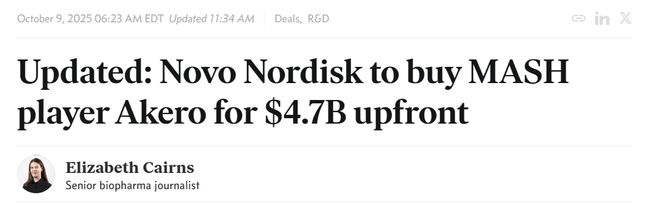
52亿美元!诺和诺德收购一款FGF21药物
Xin Lang Cai Jing· 2025-10-10 14:33
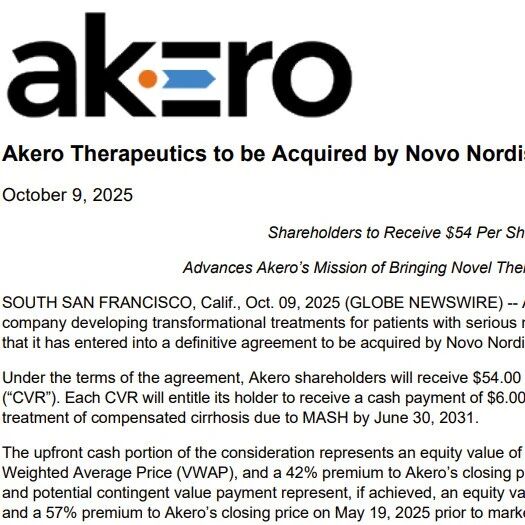
Core Viewpoint - Akero Therapeutics, Inc. has signed a definitive acquisition agreement with Novo Nordisk for up to $5.2 billion, highlighting Novo Nordisk's commitment to enhancing sales growth and countering competition from Eli Lilly in the U.S. market [1][2]. Company Summary - Akero shareholders will receive $54.00 in cash per share upon completion of the transaction, along with a Contingent Value Right (CVR) that could provide an additional $6.00 per share if Akero's drug efruxifermin receives U.S. regulatory approval for treating compensated cirrhosis due to MASH by June 30, 2031 [2]. - The core asset of the acquisition is Akero's FGF21 analog efruxifermin, which is currently in Phase 3 clinical trials for patients with severe liver scarring due to MASH [5][9]. - Akero's drug has shown potential to become a cornerstone therapy for MASH, which is closely related to obesity, aligning strategically with Novo Nordisk's existing product line [5]. Industry Summary - The acquisition reflects a trend in the biopharmaceutical industry where large pharmaceutical companies are actively acquiring firms to expand their product lines and market share [16]. - MASH is becoming an increasingly important area within the competitive obesity drug market, with recent high-profile acquisitions, including Roche's agreement to acquire 89Bio Inc. for up to $3.5 billion and GlaxoSmithKline's acquisition of a potential MASH treatment for up to $2 billion [16].

siRNA 药物行业深度报告:小核酸,大时代,靶向治疗新纪元
GUOTAI HAITONG SECURITIES· 2025-10-10 11:23
Investment Rating - The report rates the industry as "Overweight" [4] Core Insights - The siRNA drug industry is entering a new era with the maturation of technology platforms and the expansion of indications, focusing on the commercial value of siRNA drugs for common diseases [2][3] - siRNA drugs have transitioned from rare diseases to common diseases, showcasing strong target expansion capabilities, robust research and development extensibility, long-lasting effects, and low resistance [4][12] - The industry is witnessing a surge in business development (BD) transactions, particularly among multinational corporations (MNCs), indicating a vibrant market for siRNA technology [4][31] Summary by Sections 1. Dawn of a New Era for Small Nucleic Acid Drugs - Small nucleic acid drugs, including siRNA and ASO, are becoming a significant path for drug development, with a focus on their ability to regulate protein production [7] - The global approval of small nucleic acid drugs has reached 23, with siRNA drugs leading the way in rare disease applications [12][13] - Alnylam and other leading companies have demonstrated significant market capitalization differences due to their innovative drug development technologies [14][16] 2. Platform Characteristics and Focus on Indications - The siRNA drug industry is characterized by high barriers in modification and delivery, with a focus on breakthroughs in extrahepatic delivery systems [6][29] - The commercialization of siRNA drugs is accelerating, with multiple common diseases nearing market readiness [6][29] - The GalNAc delivery system has become the mainstream strategy for liver-targeted siRNA delivery, while breakthroughs in extrahepatic delivery are still needed [6][29] 3. Related Companies - Listed companies in the siRNA space include Yuyuan Pharmaceutical, Hengrui Medicine, and others, while unlisted companies include Bewang Pharmaceutical and others [4][12]


被嫌弃的AAV病毒递送系统
3 6 Ke· 2025-10-09 23:18
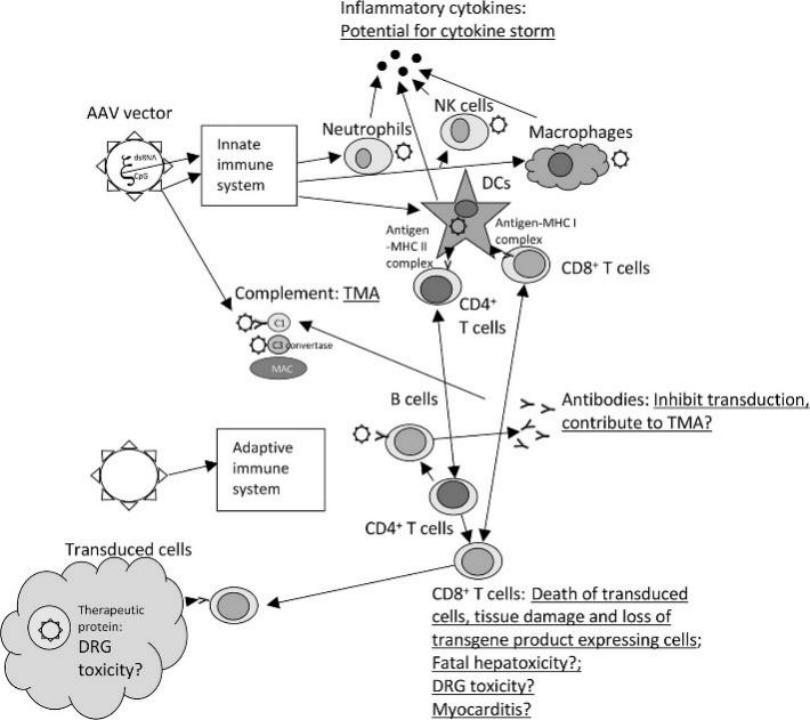
Core Viewpoint - The AAV (Adeno-Associated Virus) gene therapy sector is facing unprecedented challenges, including safety issues, high costs, and a significant withdrawal of major pharmaceutical companies from AAV projects [1][2][3][4]. Industry Challenges - AAV has transitioned from a highly sought-after delivery system to one facing skepticism and abandonment by major pharmaceutical companies [2][3]. - The industry is experiencing a crisis of confidence due to multiple safety incidents, including patient deaths linked to AAV therapies [13][14]. - High costs associated with AAV therapies, often exceeding $1 million, limit accessibility and create financial burdens for companies [10][12]. Technical Limitations - AAV's small capacity (approximately 4.7 kb) restricts its ability to deliver larger genes, necessitating complex strategies that may compromise efficacy [6]. - Immune responses triggered by AAV can lead to severe complications, including inflammation and organ damage, complicating treatment outcomes [7][8][9]. - The presence of neutralizing antibodies in the population poses significant barriers to the effectiveness of AAV therapies, limiting patient eligibility and treatment options [9]. Market Dynamics - Major companies like Pfizer, Roche, and Takeda have withdrawn from AAV research, reallocating resources to more promising areas [14][15]. - The capital market's enthusiasm for AAV has shifted to a more cautious approach, leading to financing difficulties for biotech firms focused on AAV therapies [15][16]. Future Directions - Despite the challenges, some companies are exploring new delivery systems, such as lipid nanoparticles (LNPs) and polymer nanoparticles, which may offer advantages over AAV [18]. - Companies like uniQure are focusing on optimizing AAV vectors and targeting specific diseases, indicating that AAV may still have a role in certain niches [19][21]. - The industry consensus suggests that while gene therapy remains promising, AAV is no longer the sole solution, and innovation in delivery methods is essential for future success [21].
暴涨超16%!押注肝病治疗赛道,诺和诺德豪掷52亿美元收购Akero
美股IPO· 2025-10-09 16:03
Core Viewpoint - Novo Nordisk announced the acquisition of Akero Therapeutics for up to $5.2 billion to obtain its promising drug efruxifermin for treating metabolic-associated steatotic liver disease (MASH) [1][3] Group 1: Acquisition Details - The acquisition price is set at $54 per share in cash, representing a 16% premium over Akero's closing price of $46.49 [3] - If efruxifermin receives full approval in the U.S. by June 30, 2031, Novo Nordisk will pay an additional $6 per share to Akero shareholders as a contingent value right (CVR) [3] - Following the announcement, Akero's stock surged over 19% in pre-market trading, while Novo Nordisk's stock fell nearly 2% [3] Group 2: Strategic Importance - Efruxifermin is currently in late-stage clinical trials for patients with severe liver scarring due to MASH, which is closely linked to obesity [5] - Novo Nordisk views efruxifermin as a potential cornerstone therapy for MASH, which can be used alone or in combination with its weight-loss drug Wegovy [4][5] - The acquisition aligns with Novo Nordisk's strategy to enhance its product pipeline in the competitive obesity treatment market, especially against rivals like Eli Lilly [6] Group 3: Market Context - The MASH market is becoming increasingly important, with major pharmaceutical companies actively pursuing acquisitions to strengthen their positions [5] - Recent transactions in the sector include Roche's agreement to acquire 89Bio Inc. for up to $3.5 billion and GlaxoSmithKline's acquisition of a potential MASH treatment for up to $2 billion [5] - Novo Nordisk's new CEO, Mike Doustdar, emphasizes focusing on developing next-generation obesity and diabetes drugs that also address MASH and related cardiovascular metabolic diseases [6]