
通威股份

Search documents
电力设备行业点评报告:反内卷趋势无忧,太空光伏产业提速
Yin He Zheng Quan· 2026-01-09 09:20
Investment Rating - The report maintains a "Recommended" rating for the electric equipment industry [1] Core Insights - The report highlights that the trend of anti-involution is not a concern, and the space photovoltaic industry is accelerating [1] - The report discusses the recent regulatory actions in the photovoltaic sector, emphasizing the prohibition of monopolistic behaviors such as price and capacity coordination, while allowing compliance with cost-based sales and technology standard improvements [4] - The report notes a continued upward trend in industry prices, with expectations for profit recovery in 2026 as terminal demand gradually improves [4] - The rise of commercial space and the acceleration of the space photovoltaic industry are underscored, with significant plans for deploying solar energy networks in space [4] Summary by Sections Regulatory Environment - The market regulatory authority has halted self-regulatory actions related to the photovoltaic industry's silicon material integration platform, citing monopolistic concerns [4] - A collaborative governance framework is being established among enterprises, power generation entities, and associations to ensure compliance and quality standards [4] Industry Price Trends - The average transaction price for N-type silicon material has increased to 59,200 CNY per ton, reflecting a week-on-week increase of 9.83% [4] - Prices for N-type silicon wafers and battery cells have also seen upward adjustments, indicating a recovery in the industry [4] Space Photovoltaic Development - Elon Musk's plan to deploy 100GW of solar-powered satellites annually is highlighted, along with China's plans for gigawatt-level space data centers [4] - The report anticipates that space photovoltaic technology will become commercialized in the next 10-15 years, driven by decreasing launch costs and technological breakthroughs [4] Investment Recommendations - The report suggests focusing on companies with technological reserves in space photovoltaic, such as Junda Co., JinkoSolar, Trina Solar, and others [4] - It also recommends monitoring leading companies with strong advantages in new technologies, as well as those benefiting from anti-involution policies in the silicon material segment [4]
两天跌逾12% 多晶硅收储方案生变?
Xin Hua Cai Jing· 2026-01-09 08:11
Core Viewpoint - The recent sharp decline in polysilicon futures prices is attributed to regulatory concerns regarding potential anti-monopoly risks in the industry, following a meeting with leading polysilicon companies and regulatory authorities [1][2]. Group 1: Regulatory Actions - Regulatory authorities have convened a meeting with major polysilicon companies, including Tongwei Co., Xiexin Technology, and Daqo Energy, to address anti-monopoly risks and have requested written rectification plans by January 20 [1][2]. - The core requirements of the rectification plan include prohibiting agreements on production capacity, utilization rates, sales volumes, and prices, as well as preventing any form of market division or profit distribution [1]. Group 2: Market Impact - Following the news, polysilicon futures experienced a significant drop, with the main contract closing at a limit down of 53,610 yuan per ton on January 8, and further declines on January 9, reaching around 51,800 yuan per ton, marking a drop of over 12% in two days [2]. - The market is expected to revert to a weaker fundamental trading logic, focusing on marginal cost pricing due to the regulatory developments [2]. Group 3: Industry Context - The photovoltaic industry has been under pressure, with recent government meetings emphasizing the need for industry self-discipline and the prevention of "involution" or harmful competition [2][3]. - The establishment of a new company aimed at integrating polysilicon capacity has raised concerns about potential monopolistic practices, highlighting the ongoing debate about industry consolidation [3]. Group 4: Future Considerations - The industry is at a crossroads, facing the challenge of balancing capacity reduction with maintaining fair competition, as regulatory bodies and industry stakeholders work to address these issues [4].
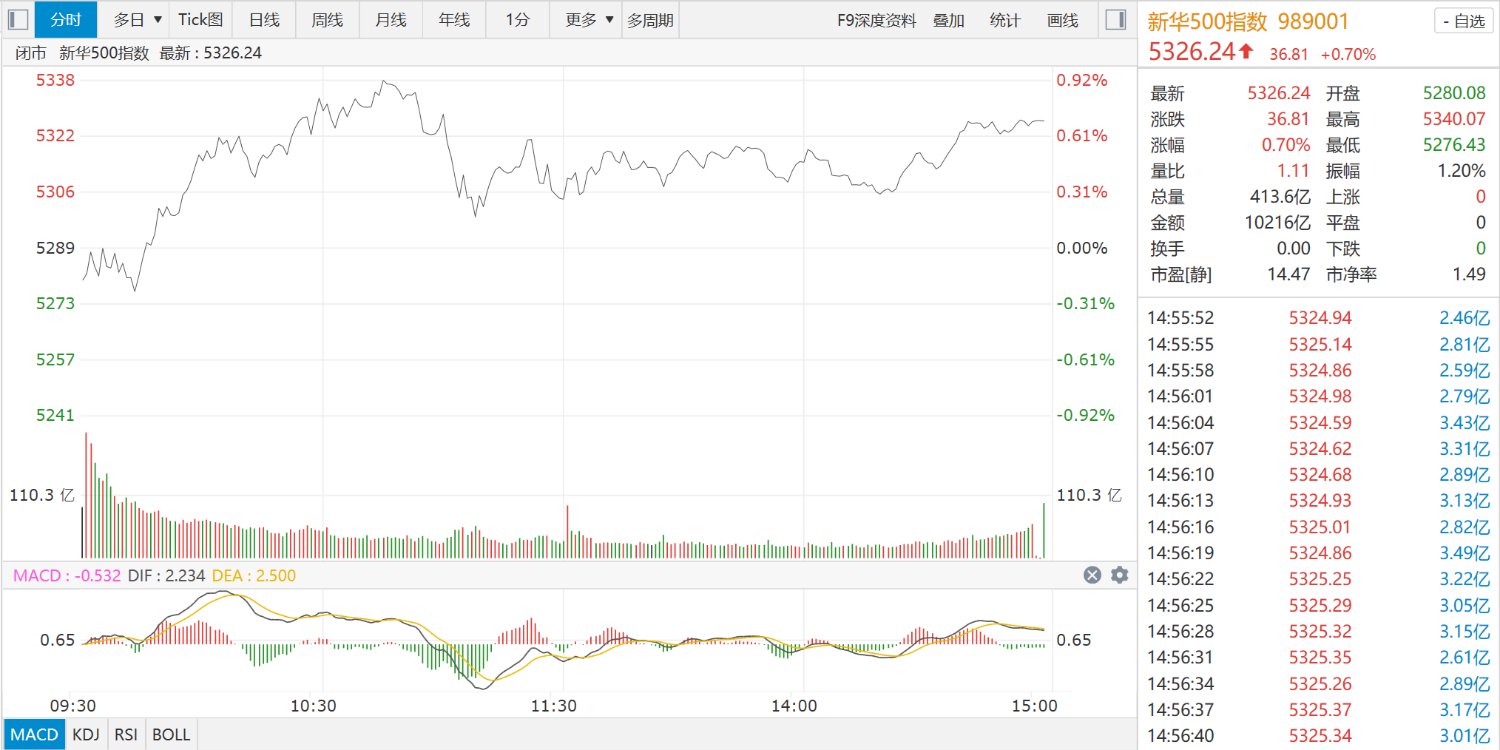
【新华500】新华500指数(989001)9日涨0.7%
Zhong Guo Jin Rong Xin Xi Wang· 2026-01-09 07:53
转自:新华财经 编辑:胡晨曦 走势上看,新华500指数(989001)9日早间小有低开随后震荡上行,一度涨约0.9%,午后指数窄幅震荡,最终小幅收涨。指数盘中最高触及5340.07点,最 低触及5276.43点,成分股全天总成交额报10216亿元,成交额较上一交易日明显增加。 成分股方面,国瓷材料、蓝思科技、西部超导、光启技术等成分股涨幅居前;弘元绿能、大全能源、通威股份、兆易创新等成分股跌幅靠前。 新华财经北京1月9日电(胡晨曦)新华500指数(989001)1月9日收盘涨0.7%,报5326.24点。 新华500指数由国家金融信息平台•新华财经发布,新华指数(北京)有限公司运营维护,指数度量A股主要大中市值股票价格水平。关于新华500指数的详 细信息,请参见新华财经客户端。 ...

电力设备行业:反内卷趋势无忧,太空光伏产业提速
Yin He Zheng Quan· 2026-01-09 07:39
Investment Rating - The report maintains a "Recommended" rating for the electric equipment industry [1] Core Insights - The report highlights that the trend of anti-involution is not a concern, and the space photovoltaic industry is accelerating [1] - The report discusses the recent regulatory actions in the photovoltaic sector, emphasizing the prohibition of monopolistic behaviors such as price and capacity coordination, while allowing compliance with cost-based sales and technology standard improvements [4] - The report notes a continued upward trend in industry chain prices, with expectations for profit recovery in 2026 as terminal demand gradually warms up [4] - The rise of commercial space and the acceleration of the space photovoltaic industry are emphasized, with significant plans for deploying solar energy networks in space [4] Summary by Sections Regulatory Environment - The market regulatory authority has halted self-regulatory actions related to the photovoltaic industry's silicon material integration platform, citing monopolistic concerns [4] - The framework for collaborative governance among enterprises, power generation parties, and associations is outlined, focusing on compliance and quality standards [4] Industry Price Trends - Recent data indicates that the average transaction price for N-type silicon material has increased to 59,200 CNY per ton, reflecting a week-on-week increase of 9.83% [4] - Prices for N-type silicon wafers and battery cells have also seen upward adjustments, with average prices reaching 1.4 to 1.7 CNY per piece and 0.39 CNY per watt, respectively [4] Space Photovoltaic Development - Elon Musk's plan to deploy 100GW of solar energy satellites annually is highlighted, alongside China's phased deployment of gigawatt-level space data centers from 2025 to 2035 [4] - The report anticipates that space photovoltaic technology will become commercialized within the next 10-15 years, driven by decreasing launch costs and breakthroughs in battery technology [4] Investment Recommendations - The report suggests focusing on companies with technological reserves in space photovoltaic, including JunDa Co., JinkoSolar, Trina Solar, and others [4] - It also recommends attention to leading companies with strong advantages in new technologies, such as LONGi Green Energy and Aiko Solar [4] - Companies benefiting from anti-involution policies in the silicon material segment, such as Tongwei Co. and GCL-Poly Energy, are also highlighted [4] - The report advises monitoring companies that prioritize synergy in energy storage and are relatively independent from the main chain, such as Sungrow Power Supply and others [4]
工业硅月报:淡季需求走弱,工业硅承压下行-20260109
Tong Guan Jin Yuan Qi Huo· 2026-01-09 07:12
1. Report Industry Investment Rating - No relevant content provided 2. Core Views of the Report - In 2026, at the crucial start of the 15th Five - Year Plan, the central bank will use reserve requirement ratio and interest rate cuts flexibly and efficiently, continue expansionary fiscal policies to boost domestic demand, integrate technological innovation with industrial upgrading, promote green energy transformation and upgrading, and pursue high - quality development. In December 2025, China's manufacturing PMI returned to the expansion range, high - tech manufacturing profit growth accelerated, and CPI increased by 0.8% year - on - year, showing signs of stabilizing and recovering domestic demand [3][50]. - On the supply side, the operating rate in Xinjiang remains at 80%, but some enterprises have routine maintenance and production cuts at the beginning of the year. Production in Sichuan and Yunnan drops significantly during the dry season, and production in Gansu and Inner Mongolia is generally stable. The supply shows a marginal decline, and social inventory is at a high level [3][50]. - On the demand side, anti - monopoly supervision in the polysilicon industry dampens market sentiment. Under the background of silicon wafer price cuts to reduce inventory, both volume and price continue to weaken. Battery manufacturers face increased cost pressure due to rising silver prices and their price - increase attempts are resisted by downstream customers. Component leaders mostly produce based on sales, gradually increasing production cuts to reduce inventory backlogs. Demand for centralized projects shows marginal cooling at the end of the year, with most projects on hold or postponed. Traditional industries such as organic silicon and aluminum alloy face downward consumption pressure. It is expected that in January 2026, the demand side will face downward pressure in the off - season, and the anti - monopoly policy in polysilicon may drag down consumer confidence. Overall, the industrial silicon price in January 2026 is expected to fluctuate weakly within a range, with the price center likely to move down compared to December [3][37][50]. 3. Summary According to the Table of Contents 2025 December Industrial Silicon Market Review Industrial Silicon Futures Price Fluctuated within a Range - In December 2025, industrial silicon showed a trend of first falling and then rising. The main 2512 contract operated in the range of 8120 - 9240 yuan/ton, with the price center lower than the previous month. The manufacturing PMI returned to the expansion range, and industrial enterprise profit growth remained stable. A polysilicon anti - involution platform was launched. On the supply side, the operating rate in Xinjiang remained above 80%, production in the southwest was low during the dry season, and production in Inner Mongolia and Gansu increased. On the demand side, polysilicon manufacturers planned price adjustments, silicon wafer prices were close to the cash cost line, battery manufacturers signaled price increases due to cost pressure, and component manufacturers' price - increase attempts were resisted by downstream customers. The short - term sharp decline in polysilicon futures prices dragged down the industrial silicon price [8]. The Spot Market Remained Stable with a Slight Decline - In December 2025, the number of operating furnaces in the three major industrial silicon producing areas in China was 240, with an overall operating rate of 30.1%. Electricity prices in the southwest increased during the dry season, raising production costs. The operating rate in Xinjiang rose above 80% but decreased slightly at the end of the month due to production cuts by some large factories. Production in Sichuan and Yunnan decreased due to high electricity prices, and production in Gansu and Inner Mongolia was stable. Domestic production in December decreased slightly to 39.7 million tons. By the end of December, social inventory decreased slightly to 55.3 million tons. Mainstream 553 grade spot prices fluctuated moderately. It is expected that in January 2026, the prices of domestic mainstream grades will continue to fluctuate within a range, and the spot market is expected to operate stably [11][12]. Macroeconomic Analysis In December, the Manufacturing PMI Returned to the Expansion Range, and High - Tech Manufacturing Profit Growth Accelerated - In December 2025, China's official manufacturing PMI was 50.1, the first expansion since April. Large - scale enterprise PMI was 50.8, up 1.5% month - on - month, and medium - sized enterprise PMI was 49.8, approaching the boom - bust line. The production index was 51.7, indicating accelerating manufacturing production; the new order index was 50.8, showing improved market demand; the raw material inventory index was 47.8, with a narrowing decline in raw material inventory; the employment index was 48.2, indicating a decline in employment sentiment; and the supplier delivery index was 50.2, indicating faster delivery times. In November 2025, industrial enterprise profits decreased by 13.1% year - on - year, and the cumulative profit from January to November increased by 0.1% year - on - year, maintaining positive cumulative growth for the fourth consecutive month. From January to November, high - tech manufacturing profits increased by 10.0% year - on - year, 2.0 percentage points faster than from January to October, and 9.9 percentage points higher than the average of all large - scale industrial enterprises [16][17]. Fundamental Analysis Northern Production Declined from a High Level, and Production in the Southwest was Low during the Dry Season - In 2025, China's industrial silicon production showed fluctuations. From January to November, the cumulative production was 3.868 million tons, a year - on - year decrease of 14.7%. Xinjiang's production showed a pattern of low at first and high later, with a cumulative production of 1.9248 million tons from January to November, accounting for 52.03%. Production in Sichuan and Yunnan increased from the dry season to the wet season. The new production capacity in Gansu, Inner Mongolia and other places was limited. Overall, in the context of anti - involution policies, China's industrial silicon supply showed a contraction trend [21][22]. In November, Industrial Silicon Exports Increased by 22% Month - on - Month - From January to November 2025, the cumulative export volume of industrial silicon was 661,500 tons, a year - on - year decrease of 1%. In November, the export volume was 54,900 tons, a year - on - year increase of 4%. China's industrial silicon exports are mainly concentrated in Southeast Asia. With the recovery of foreign trade exports and the development of the photovoltaic industry in emerging markets, the export scale of industrial silicon is expected to continue to grow, and the export volume in January 2026 is expected to be between 50,000 and 70,000 tons [25]. In December, Social Inventory was at a High Level, and Warehouse Receipt Inventory Faced Centralized Cancellations - By December 31, 2025, the national industrial silicon social inventory decreased slightly to 5.53 million tons, still at a high level. The warehouse receipt quantity on the Guangzhou Futures Exchange was 10,231 lots, equivalent to 51,000 tons, a month - on - month decrease of 68.9%. After the implementation of the new warehouse receipt delivery standard, mainstream 5 - series products became the main delivery models. It is expected that in January 2026, China's social inventory will continue to rise [28]. The Anti - Involution of the Photovoltaic Industry Entered a Crucial Stage, and the Consumption of Organic Silicon and Aluminum Alloy was Relatively Sluggish - **Polysilicon**: Anti - monopoly supervision was strengthened, and a new platform for capacity clearance was established. From January to November 2024, the cumulative production of polysilicon was 1.206 million tons, a year - on - year decrease of 27.3%. The anti - monopoly policy hit market confidence and led to a sharp decline in futures prices. - **Silicon wafers**: From January to November 2025, the cumulative production was 607,000 tons. Facing over - capacity and high inventory, many enterprises cut production in the fourth quarter, and the overall operating rate dropped to about 45%. - **Battery cells**: The price showed a downward trend throughout the year. In the third quarter, the overseas orders of 183N battery cells decreased, and the domestic demand for 210N battery cells weakened. - **Components**: The demand for distributed projects was weak, while the centralized market improved slightly in the fourth quarter. Most component enterprises produced based on sales and increased production cuts to reduce inventory. - **Organic silicon**: From January to November 2025, the cumulative production of DMC was 2.272 million tons, a year - on - year increase of 4.6%. The industry faced over - capacity and weak terminal consumption in the first half of the year. After the implementation of anti - involution policies in the fourth quarter, enterprises jointly cut production and raised prices, and the price rebounded to 13,600 yuan/ton. It is expected that in January 2026, the organic silicon market will remain stable in terms of volume and price. - **Aluminum alloy**: From January to November 2025, the cumulative production was 17.456 million tons, a year - on - year increase of 15.8%. In December, the processing fee of aluminum rods in the Foshan market showed a short - term increase but then declined. It is expected that in January 2026, the production of aluminum alloy will decline slightly, and the processing fee of aluminum rods will face pressure [30][32][34][35][37]. Market Outlook - Macroeconomically, in 2026, at the start of the 15th Five - Year Plan, the central bank will implement expansionary policies, and domestic demand shows signs of recovery. - On the supply side, production in Xinjiang may decline due to maintenance, production in Sichuan and Yunnan will be low during the dry season, and production in Gansu and Inner Mongolia will be stable. Supply will show a marginal decline, and inventory will remain high. - On the demand side, the demand for the photovoltaic industry and traditional industries such as organic silicon and aluminum alloy will face downward pressure in the off - season. - Overall, the industrial silicon price in January 2026 is expected to fluctuate weakly within a range, with the price center likely to be lower than in December [50][51].
电力设备:反内卷趋势无忧,太空光伏产业提速
Yin He Zheng Quan· 2026-01-09 07:03
Investment Rating - The report maintains a "Recommended" rating for the electric equipment industry [1] Core Insights - The report highlights that the trend of anti-involution is not a concern, and the space photovoltaic industry is accelerating [1] - The recent regulatory actions in the photovoltaic sector aim to prevent monopolistic behaviors while allowing compliance with cost-based sales and technology standards [4] - The prices in the industry continue to rise, indicating a recovery, with silicon material prices increasing by 9.83% week-on-week to 59,200 CNY/ton [4] - The commercial space sector is emerging, with plans for deploying solar energy satellites, which could lead to significant advancements in space photovoltaic technology [4] Summary by Sections Regulatory Environment - The market regulatory authority has halted self-regulatory actions related to silicon material integration in the photovoltaic industry, focusing on preventing monopolistic practices [4] - Compliance measures are being established to ensure fair competition among industry participants [4] Industry Performance - The prices of N-type silicon wafers and cells have seen increases, with N-type cell prices rising to 0.39 CNY/W and TOPCon module prices reaching 0.7 CNY/W [4] - The industry is expected to turn profitable in 2026 as terminal demand recovers [4] Technological Advancements - The report emphasizes the potential of space photovoltaic technology, which can generate energy continuously and is projected to become commercialized in the next 10-15 years [4] - The focus is on companies with technological reserves in space photovoltaics, such as Junda Co., JinkoSolar, Trina Solar, and others [4]
收评:沪指16连阳时隔10年站上4100点,市场成交额放大至3万亿元
Xin Lang Cai Jing· 2026-01-09 07:02
Core Viewpoint - The A-share market experienced a collective rise today, with significant gains across major indices and various sectors showing strong performance, particularly in AI applications, commercial aerospace, and small metals [1] Market Performance - The Shanghai Composite Index rose by 0.92%, the Shenzhen Component Index increased by 1.15%, the ChiNext Index gained 0.77%, and the North Star 50 Index was up by 1.05% [1] - The total trading volume in the three markets reached 31,523 billion yuan, an increase of 3,261 billion yuan compared to the previous day, with over 3,900 stocks in the three markets showing gains [1] Sector Highlights - Leading sectors included AI applications, commercial aerospace, military equipment, controllable nuclear fusion, small metals, medical services, oil and gas exploration and services, computing power leasing, and retail, all showing significant gains [1] - The AI application sector saw a surge, with stocks like Tianlong Group, Yidian Tianxia, and Guangdong Media hitting the daily limit [1] - The small metals sector continued to rise, with companies such as Zhongtung High-tech and Yunnan Zhenye reaching new highs, and Jintong Co. hitting the daily limit [1] - The commercial aerospace sector maintained its strong performance, with stocks like Galaxy Electronics and China First Heavy Industries achieving consecutive gains [1] Underperforming Sectors - The photovoltaic sector showed weakness, with Hongyuan Green Energy hitting the daily limit down, followed by declines in Daqo New Energy and Tongwei Co. [1] - The brain-computer interface sector experienced fluctuations, with companies like Meihao Medical and Aipeng Medical seeing significant declines [1]


光伏设备板块局部走弱,弘元绿能跌停
2 1 Shi Ji Jing Ji Bao Dao· 2026-01-09 06:21
Group 1 - The photovoltaic equipment sector is experiencing localized weakness, with significant declines in stock prices [1] - Hongyuan Green Energy has hit the daily limit down, while Daqo Energy has dropped over 6% [1] - Other companies such as Aotwei, Tongwei Co., and JinkoSolar are also seeing declines in their stock prices [1]


多晶硅龙头被反垄断约谈,光伏上游产能整合面临空前危机
Xin Lang Cai Jing· 2026-01-09 04:17
Core Viewpoint - The solar photovoltaic (PV) industry faces significant challenges following an antitrust warning regarding the consolidation of polysilicon production capacity, raising uncertainties about the future of self-regulatory actions in the industry [1][6]. Group 1: Antitrust Warning and Industry Response - On January 6, major polysilicon companies were summoned by the State Administration for Market Regulation (SAMR) due to allegations of price manipulation under the guise of industry self-regulation [1]. - The SAMR issued clear rectification requirements, prohibiting agreements on capacity, utilization rates, production volumes, and sales prices among companies [1][4]. - The meeting highlighted multiple complaints received since July 2025, accusing companies of controlling production and market segmentation based on investment ratios [1][4]. Group 2: Market Impact and Price Fluctuations - Following the news, polysilicon futures contracts hit the daily limit down, with a 9% drop on January 8, while major polysilicon stocks experienced declines, with GCL-Poly Energy falling over 7% [2]. - The average prices for polysilicon, silicon wafers, battery cells, and modules are projected to increase by 38.9%, 2.2%, 0.4%, and 2.3% respectively by November 2025 [2]. - Despite a slowdown in market transactions, many polysilicon companies raised new order prices to over 65,000 yuan per ton, significantly above the market average [2]. Group 3: Industry Consolidation and Future Outlook - The establishment of Beijing Guanghe Qiancheng Technology Co., aimed at consolidating polysilicon resources, has raised concerns about potential monopolistic practices [3][5]. - The platform is designed to operate under a dual-track model, referencing successful experiences from other industries to stabilize prices [3]. - Industry leaders emphasize the need for a balanced profit distribution across the entire solar value chain, as current high profits in polysilicon are unsustainable if downstream sectors continue to incur losses [3][5]. Group 4: Challenges Ahead - The self-regulatory actions in the industry are now facing unprecedented challenges, with the cancellation of monthly meetings aimed at addressing overcapacity and price control until rectification measures are completed [5][6]. - The uncertainty surrounding the path forward for coordinated production control and the exit of outdated capacities is increasing, complicating the industry's efforts to stabilize [6].

光伏技术革新赋能未来能源,光伏ETF嘉实(159123)一键布局光伏产业链
Xin Lang Cai Jing· 2026-01-09 03:13
Group 1 - The core viewpoint of the articles highlights the growth and commercialization of space photovoltaic technology, which offers significant advantages over traditional ground-based data centers, including higher deployment efficiency, better energy efficiency, and lower cooling costs [1] - The China Securities Index indicates that the photovoltaic industry index has seen a rise of 0.82%, with notable increases in component stocks such as Robotech (up 7.25%) and Dier Laser (up 5.81%) [1] - The global photovoltaic installation capacity is expected to continue growing over the next 3-5 years, with an estimated new installation capacity of 630-650 GW by 2026, although growth rates may slow to single digits [1] Group 2 - As of December 31, 2025, the top ten weighted stocks in the photovoltaic industry index include TBEA, LONGi Green Energy, and Sungrow Power, collectively accounting for 55.11% of the index [2] - The photovoltaic ETF managed by Harvest (159123) tracks the China Securities photovoltaic industry index, providing a convenient tool for investing across the entire photovoltaic industry chain [2] - Investors can also access photovoltaic industry investment opportunities through the off-market connection of the photovoltaic ETF (014605) [3]