农业银行

Search documents
关于黄金业务风险,工行、农行、邮储、招行最新提示!
Di Yi Cai Jing· 2026-02-02 13:27
Core Viewpoint - The recent volatility in gold and silver prices has prompted banks to enhance risk management measures and issue warnings to clients regarding potential market fluctuations [2][3][5]. Group 1: Market Volatility - On February 2, international gold prices fell to $4403.64 per ounce, with a maximum daily drop exceeding 9%, while silver prices dropped to $71.33 per ounce, with a maximum daily decline close to 15% [2]. - Banks are responding to increased volatility in the precious metals market, with significant price fluctuations leading to heightened risk awareness among financial institutions [2][3]. Group 2: Risk Warnings from Banks - Industrial and Commercial Bank of China (ICBC) issued a warning on February 2, advising clients to assess their risk tolerance and maintain a rational investment approach amid market volatility [2]. - Agricultural Bank of China also released a notice on the same day, urging clients to carefully evaluate their financial situation before engaging in precious metals trading [3]. - Postal Savings Bank of China emphasized the importance of risk awareness and prudent investment strategies for clients involved in gold accumulation and physical precious metals business [3]. Group 3: Margin Adjustments - ICBC announced an increase in the margin requirement for personal clients trading silver contracts from 60% to 66% effective February 2, following a notification from the Shanghai Gold Exchange [3][4]. - On January 27, ICBC had already raised the margin for gold contracts from 43% to 60% due to increased market risks [4]. - China Merchants Bank adjusted its margin requirements for various gold contracts from 60% to 70% effective February 2, while maintaining a 15% limit on price fluctuations [5].


金银年内涨幅近乎抹平!零售端排队扫货,交易所银行加严风控
2 1 Shi Ji Jing Ji Bao Dao· 2026-02-02 13:16
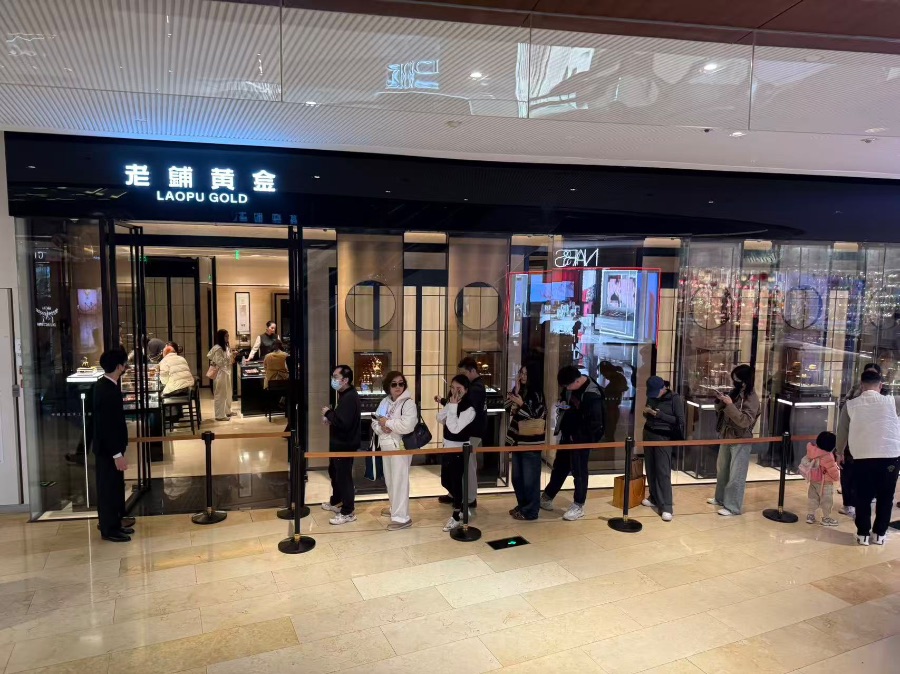
Core Viewpoint - Precious metals have experienced a significant price drop, nearly erasing previous gains, with gold and silver prices plummeting sharply in early February 2023 [1][3]. Price Movements - As of February 2, gold prices fell to a low of $4,402.06 per ounce, reducing the year-to-date gain from 30% to 4% [1] - Silver prices also saw extreme volatility, dropping to $71.312 per ounce, with year-to-date gains shrinking from 60% to approximately 4% [1] - On February 2, the precious metals sector declined by 10.81%, with a net outflow of 1.039 billion in principal funds [2]. Historical Context - The previous week marked the largest single-day drop in gold prices in 40 years, with gold falling over 12% to a low of $4,682 per ounce [3]. - Silver experienced a historic intraday drop of over 36%, reaching a low of $74.28 per ounce [3]. Retail Impact - The drop in gold prices has led to increased retail interest, with customers flocking to stores to purchase gold jewelry at lower prices [4]. Market Analysis - The price correction is attributed to the nomination of Kevin Walsh as the next Federal Reserve Chair, which strengthened the dollar and raised concerns about future liquidity [6]. - The rapid increase in gold prices prior to the drop led to a market correction as investors took profits [6]. - The long-term outlook for gold remains supported by potential economic weakness and ongoing global risks, despite short-term volatility [7]. Risk Management - In response to the price fluctuations, the Shanghai Gold Exchange and CME have raised margin requirements for gold and silver futures [8]. - Major banks have issued risk warnings and adjusted investment thresholds to mitigate potential losses for investors [9][10][11][12].

金银跌幅收窄至2%,年内涨幅一度近乎抹平
21世纪经济报道· 2026-02-02 12:58
白银的波动更为剧烈,盘中一度跌至71.312美元/盎司,年内涨幅也从60%大幅收窄至4%左 右。紧随其后的是,各家机构紧急发布风险提示,交易所也上调了相关品种的保证金比例和涨 跌幅的幅度。 截至20:20,现货黄金、白银跌幅收窄。现货黄金跌幅从最多10%收窄至2%,现货白银跌幅从 最多16%收窄至2%。 | 国际贵会属 | | | | | | --- | --- | --- | --- | --- | | 名称 | 现价 | 涨跌 | 涨跌幅 | 年初至今 | | 伦敦金现 | 4774.630 | -120.488 | -2.46% | 10.57% | | 伦敦银现 | 83.558 | -1.701 | -1.99% | 16.74% | | COMEX黄金 | 4777.4d | 32.3 | 0.68% | 9.53% | | COMEX白银 | 82.210d | 3.679 | 4.68% | 15.82% | | 伦敦金(人民币/克) | 1065.8814 | -26.8976 | -2.46% | 9.87% | | 伦敦银(人民币/千克) | 18653.4108 | -379.6841 ...
红利指数不同渠道估值不同,原因为何?|投资小知识
银行螺丝钉· 2026-02-02 12:45
Core Viewpoint - The article discusses the differences in index calculation methods, particularly focusing on the disparity between total market capitalization weighting and dividend yield weighting, which significantly affects the valuation of financial stocks, especially banks [2][3]. Group 1: Index Calculation Methods - Financial indices typically use total market capitalization weighting, meaning stocks with larger market caps have a higher allocation in calculations [2]. - In contrast, dividend indices primarily use dividend yield weighting, where stocks with higher dividend yields receive a greater allocation [2]. - This difference is particularly evident in the case of the China Securities Dividend Index, where major banks like Industrial and Commercial Bank of China have a minimal weight of around 1% due to the dividend yield weighting method [2]. Group 2: Valuation Discrepancies - The total market capitalization of Industrial and Commercial Bank of China is approximately 2.6 trillion, which could account for over 10% of the index if calculated by market cap [3]. - When considering other major banks, the financial sector could represent over half of the China Securities Dividend Index by market cap, leading to a calculated price-to-earnings (P/E) ratio of around 8 times [3]. - However, the actual weight of the financial sector in the China Securities Dividend Index is only 23%, similar to the 21% in the CSI 300, indicating a lower P/E ratio of around 10 times when based on actual holdings [3]. Group 3: Strategy Indices and Their Valuations - The article highlights that the issue of valuation discrepancies is more pronounced in strategy indices like the CSI A500, where the reported P/E ratio can be around 17 times, while the actual P/E ratio is closer to 24 times, indicating potential overvaluation [6][7]. - The financial sector's representation in the CSI A500 is only 11.97%, which, when calculated by total market cap, inflates the P/E ratio to around 17 times, contrasting with the actual holdings-based calculation of over 23 times [7]. Group 4: Evolution of Index Calculation - The article notes that most platforms still use a simplistic total market cap weighting for all indices, which may not accurately reflect the complexities of modern strategy indices [9]. - As more strategy indices emerge, each with its own weighting rules, it is suggested that valuation calculations should align with the actual holdings of the indices for greater accuracy [10].

黄金白银继续暴跌,轮到银行股机会了?
Di Yi Cai Jing· 2026-02-02 11:57
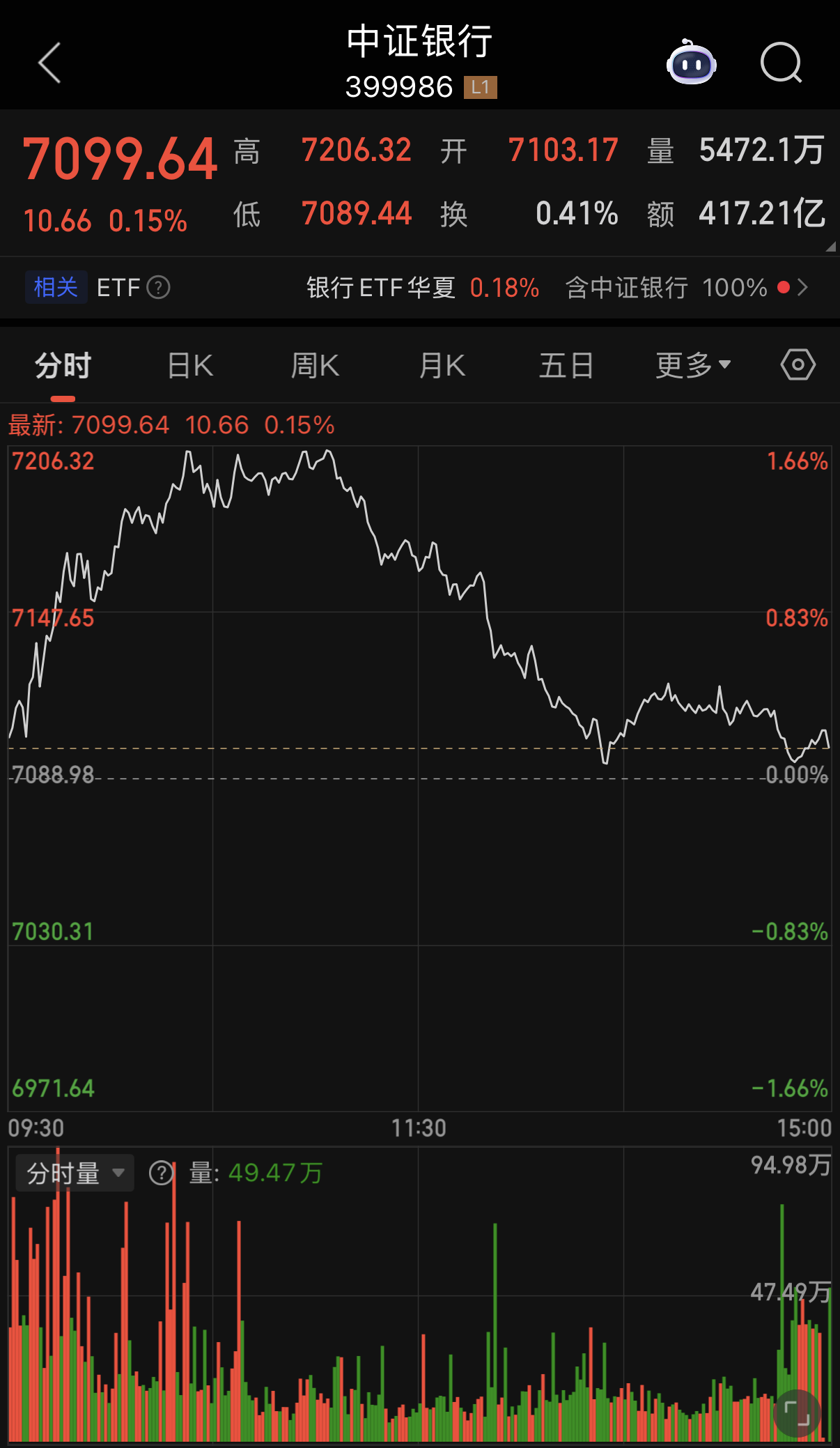
Core Viewpoint - The A-share market is experiencing significant volatility, particularly in the precious metals and banking sectors, with a notable shift in investor focus towards regional banks amid a backdrop of fluctuating gold and silver prices [1][2]. Group 1: Market Performance - On February 2, the A-share market faced downward pressure, with the Shanghai Composite Index dropping by 2.48%, the Shenzhen Component by 2.69%, and the ChiNext Index by 2.46% [2]. - The precious metals sector led the decline with a 7.62% drop, while other resource sectors like steel, chemicals, and coal also saw declines exceeding 5% [2]. - Despite the overall market downturn, bank stocks showed resilience, with 17 banks recording gains, led by CITIC Bank with a 2.64% increase [5]. Group 2: Banking Sector Dynamics - The banking sector has been characterized by a significant outflow of funds, with the China Securities Index reporting a cumulative decline of 6.76% in the banking index as of January 30 [5][6]. - Regional banks have outperformed national banks, with several local banks announcing share buyback plans, signaling potential recovery and investor confidence [1][9]. - Analysts suggest that the peak of fund outflows from the banking sector has passed, with the price-to-book ratio for bank stocks currently around 0.57, indicating potential value for investors [6][7]. Group 3: Investment Sentiment - There is a growing optimism regarding the banking sector's fundamentals, with expectations for a strong start to credit growth in 2026 and stable asset quality [9]. - Recent announcements of share purchases by bank executives and shareholders have bolstered market confidence, particularly among regional banks like Qilu Bank and Nanjing Bank [9]. - The shift in focus from passive to active fund management in the banking sector may lead to increased buying interest, especially if the selling pressure from passive funds diminishes [7][8].
部分银行实物金条库存松动,投资情绪降温
Di Yi Cai Jing Zi Xun· 2026-02-02 11:53
Core Viewpoint - The recent significant fluctuations in gold and silver prices have led to a cooling of investor enthusiasm for physical gold, with some investors opting to wait and observe the market [2][3]. Group 1: Price Movements - As of February 2, spot gold has dropped by 6.80% to $4,562 per ounce, while spot silver has decreased by 11.46% to $75.49 per ounce [2]. - In January, gold prices surged, with COMEX gold futures reaching over $5,600 per ounce, marking a monthly increase of over 29%, while COMEX silver futures peaked at $120 per ounce, with a monthly rise of 72% [3]. - On January 30, both gold and silver prices experienced a sharp decline, with COMEX gold futures falling by 8.35% to $4,907.50 per ounce and COMEX silver futures dropping by 25.50% to $85.25 per ounce [3]. Group 2: Investor Behavior - Following the price drop, some investors have chosen to wait rather than invest in physical gold, as evidenced by the availability of gold bars in banks that were previously sold out [2][3]. - Various banks have reported a shift in inventory status, with some gold products now showing sufficient stock, contrasting with the previous high demand [5][6]. Group 3: Market Sentiment - Investor sentiment has become polarized, with some believing that gold prices will continue to decline, while others are taking the opportunity to buy at lower prices [7]. - The World Gold Council reported that global gold demand is expected to exceed 5,000 tons by 2025, driven primarily by strong physical gold investment demand [7]. Group 4: Institutional Insights - Analysts suggest that the recent volatility in gold prices is influenced by market sentiment and speculative factors, making it difficult to predict price movements accurately [9]. - Despite short-term risks, many institutions maintain a positive long-term outlook for gold, with expectations of a return to upward trends later in the year [8].
多家银行提示!理性投资贵金属
Xin Lang Cai Jing· 2026-02-02 11:41
Core Viewpoint - Recent volatility in domestic and international precious metal markets has significantly increased uncertainty, prompting banks to issue warnings and adjust trading parameters to protect investors [1][3][4]. Group 1: Agricultural Bank - Agricultural Bank has issued a warning regarding the severe fluctuations in precious metal prices, urging clients to assess their risk tolerance and financial situation before engaging in trading [1][4]. - The bank announced adjustments to the trading limits for silver contracts under its Gold Market Access service, increasing the price fluctuation limit from 19% to 25% if a one-sided market condition occurs starting February 2, 2026 [1][5]. - Clients are advised to monitor market changes closely and manage their positions effectively to mitigate risks associated with market volatility [1][5]. Group 2: Postal Savings Bank - Postal Savings Bank has also highlighted the increased volatility in precious metal markets, advising clients to enhance their risk awareness and make rational investment decisions [1][5]. - The bank emphasizes the importance of avoiding impulsive trading behaviors and maintaining a balanced portfolio in light of the current market conditions [1][5]. Group 3: China Merchants Bank - China Merchants Bank has announced adjustments to its "Zhaocai Gold" business, increasing the margin requirement for various gold contracts from 60% to 70% due to heightened market volatility [3][7]. - The fluctuation limit for the Ag (T+D) contract will be raised to 25% if a one-sided market condition is observed, while it remains unchanged at 15% if not [3][7]. - These measures are aimed at safeguarding investor interests and mitigating market risks [3][7].



农业银行:进一步做好贵金属市场风险防范
Cai Jing Wang· 2026-02-02 11:35
2月2日,农业银行(601288)发布关于进一步做好贵金属市场风险防范的提示。农业银行表示,近期国 内外贵金属市场价格波动剧烈,不确定性因素显著增强。特别提示各位客户审慎评估自身风险承受能 力,综合考虑自身财务状况开展贵金属交易业务,保持理性投资心态。请各位客户密切关注行情变化, 合理控制持仓规模,有效防范市场波动风险。 ...
数字货币全球博弈升级,人民币飞跃新关口
3 6 Ke· 2026-02-02 11:19
在全球金融数字化转型与货币形态重构的博弈关键期,中国法定数字货币迎来里程碑式突破。 2026年1月1日,数字人民币计息机制正式落地,标志着中国版央行数字货币完成从"数字现金"到"数字存款"的质变, 以制度创新开启2.0时代新征程。 这一变革的背后,是顶层设计的精准谋篇。2025年12月29日,中国人民银行(下称"央行")党委委员、副行长陆磊在 《金融时报》发表署名文章,明确《关于进一步加强数字人民币管理服务体系和相关金融基础设施建设的行动方案》 (下称《行动方案》)于2026年1月1日正式实施。 "数字人民币有利息了。"李女士在数字人民币App方寸之间,所看到的0.05%利息,却是数字人民币的历史性记录。 新一代计量框架、管理体系、运行机制与生态体系同步启动,为数字人民币的功能升级筑牢制度根基。 《行动方案》的核心突破,在于重塑数字人民币的价值属性。方案明确银行机构需为客户实名数字人民币钱包余额计 付利息,并遵守存款利率定价自律约定。这一安排不仅让商业银行可自主开展数字人民币钱包余额的资产负债经营管 理,更通过存款保险制度,为其赋予与传统存款同等的安全保障,彻底改变了此前数字人民币的功能局限。 "客户在商业银 ...
部分银行实物金条库存松动,投资情绪降温
第一财经· 2026-02-02 11:12
作者 | 第一财经 安卓 2月2日,黄金、白银价格继续剧烈波动。截至记者发稿,现货黄金跌6.80%,报4562美元/盎司;现货白银跌11.46%,早间曾一度转涨,但随后又大 幅下挫,报75.49美元/盎司。 第一财经发现,随着黄金、白银价格持续大幅下挫,人们投资实物黄金的热情有所松动,部分投资者选择观望,此前日日被抢断货的银行金条也出现了 库存,部分银行的实物金条甚至显示为"库存充足"状态。 2026.02. 02 本文字数:2352,阅读时长大约4分钟 投资情绪降温 今年1月,贵金属经历了历史罕见的上涨行情。去年12月底至1月28日,市场对美联储的独立性担忧、地缘风险中枢上行及弱美元预期等,直接催化 COMEX黄金期货于1月29日突破5600美元/盎司,月内最高涨幅超过29%,COMEX白银期货突破120美元/盎司,月内最高涨幅甚至达到72%,不断 刷新历史。 1月30日,黄金、白银价格同步上演"高台跳水",其中,COMEX黄金期货跌8.35%报4907.50美元/盎司,COMEX白银期货跌25.50%报85.25美元/ 盎司。 业内普遍认为,本次黄金"巨震",直接原因或是美国总统特朗普提名凯文·沃什为新任 ...