
北方导航

Search documents
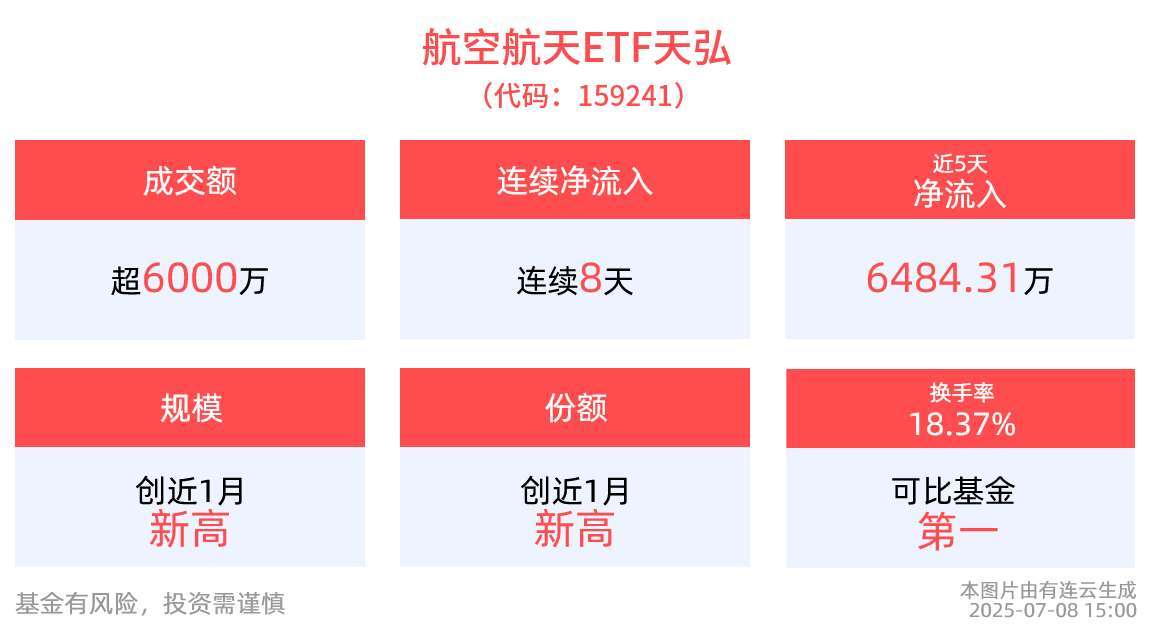
连续8日净流入!含军工量最高的航空航天ETF天弘(159241)换手率高企,居同类产品第一,军工增长大周期有望提升行业估值
Sou Hu Cai Jing· 2025-07-08 08:03
Core Viewpoint - The aerospace ETF Tianhong (159241) has shown strong market performance with significant inflows and a focus on the military and aerospace sectors, indicating a positive outlook for the industry. Group 1: Market Performance - As of July 8, 2025, the aerospace ETF Tianhong (159241) closed up 0.54% with a turnover rate of 18.37%, leading its category, and had a total transaction volume of 605.219 million yuan, reflecting active market trading [3] - The ETF has seen a net subscription of 2.7 million shares today, with its latest scale reaching 329 million yuan and total shares at 298 million, both hitting a one-month high as of July 7, 2025 [3] Group 2: Fund Inflows and Events - The aerospace ETF Tianhong (159241) has experienced continuous net inflows over the past eight days, totaling 155 million yuan [4] - The first National Defense Science and Technology Industry Cultural and Creative Industry Expo will be held from September 29 to October 4 in Wuhan, showcasing significant military technology innovations [4] - The "Liqian No. 2" rocket is set for its maiden flight in September 2025, with a payload capacity of 12 tons to low Earth orbit, indicating advancements in commercial space capabilities [4] Group 3: Industry Outlook - According to Shenwan Hongyuan Securities, the military industry is expected to experience a dual boost in fundamentals and valuations, with military trade reshaping the global landscape and opening up significant growth opportunities [4] - Zhongyou Securities anticipates a turning point in military orders as the "Centenary of the Army Building" goals progress, highlighting new market directions driven by technological advancements [5] Group 4: ETF Characteristics - The aerospace ETF Tianhong (159241) closely tracks the National Aerospace and Aviation Industry Index, focusing on key sectors such as aircraft and satellite industries, aligning with emerging themes like low-altitude economy and commercial space [5] - The index has a "military content" of 96.24%, surpassing other military indices, indicating a strong focus on defense [6] - The index also leads in "drone content," featuring companies deeply involved in drone technology, making it the highest in the market [7] - The index covers over 73% of aerospace and aviation equipment, marking it as the highest in "aerospace content" among military indices [8] - The index's technology attributes are stronger, with a one-year performance return of 31.68%, outperforming traditional military indices [9] - Revenue growth for the National Aerospace and Aviation Industry Index is projected at 42.73% for 2025, exceeding traditional military indices [10]

国防军工行业报告:中央财经委员会第六次会议强调推动海洋经济高质量发展
China Post Securities· 2025-07-08 01:27
Investment Rating - The industry investment rating is "Outperform the Market" and is maintained [1] Core Insights - The Central Financial Commission's sixth meeting emphasized promoting high-quality development of the marine economy, highlighting the need for top-level design, increased policy support, and encouraging social capital participation [12][15] - The military industry is expected to see an inflection point in orders as the "Centenary Goal of Building the Army" enters its second half, with new technologies and products representing new market directions that may contain greater elasticity [15] Summary by Sections Industry Overview - The closing index for the defense industry is 1618.51, with a 52-week high of 1712.48 and a low of 1113.62 [1] Market Performance - The military sector indices showed a weekly increase, with the China Securities Military Index rising by 1.47% and the Shenwan Military Index by 1.36% [16] - The top ten performing stocks in the military sector this week included Chengxi Aviation (+24.21%) and China Ship Emergency (+20.23%) [19] Investment Recommendations - Two main investment themes are suggested: 1) Aerospace and "gap-filling" new focuses, including companies like Feilihua, Fenghuo Electronics, and AVIC Shenyang Aircraft [15] 2) New technologies, products, and markets with greater elasticity, including Aerospace Intelligent Manufacturing and Guangdong Hongda [15] Valuation Levels - As of July 4, 2025, the China Securities Military Index stands at 11391.90, with a PE-TTM valuation of 112.79 and a PB valuation of 3.52 [21][22] Data Tracking - The report includes tracking of private placements and stock incentive data for various military companies, indicating significant fundraising and stock performance [25][27]
军贸行业专题报告:军贸“高端化和体系化”提升行业发展空间,核心军工资产估值有望重塑
ZHONGTAI SECURITIES· 2025-07-07 11:12
Investment Rating - The report provides a positive investment outlook for the military trade industry, highlighting the potential for high-end and systematic development to reshape the valuation of core military assets by 2025 [3]. Core Viewpoints - The military trade industry is experiencing a significant upward trend driven by geopolitical factors, with global military spending expected to reach a new high in 2024, particularly in Europe and the Middle East [46][50]. - Domestic military enterprises are seizing historical opportunities in military trade, with China's military trade exports growing at a CAGR of 10.4% from 2000 to 2023, increasing its global share from 1.6% to 10.0% [57]. - The report emphasizes the importance of a dual-cycle model ("domestic + overseas") to effectively hedge against domestic demand fluctuations and enhance growth potential through comprehensive lifecycle management [5][20]. Summary by Sections 1. Business Model - The military trade sector effectively balances domestic demand fluctuations through a dual-driven model of "local + overseas," which opens up growth opportunities via systematic solutions and full lifecycle management [5][20]. - Overseas operations contribute significantly to higher profit margins, with military trade orders helping to enhance production capacity and delivery rates [6][24]. 2. Demand Drivers - Global military spending continues to rise, with geopolitical tensions accelerating the growth of military equipment transactions [46]. - The instability of the Russia-Ukraine situation has led to a significant reduction in Russian military exports, creating supply gaps in military aircraft, armored vehicles, and engines [50]. 3. Supply Landscape - The U.S. has maintained the largest share of military trade exports globally, while China's military equipment is increasingly competitive, particularly in the drone and long-range artillery markets [8][54]. - China's military trade exports have diversified, with Pakistan being the largest customer, and other Asian and Middle Eastern countries increasing their imports of Chinese military equipment [57]. 4. Key Companies Overview - The report identifies several key companies in the military trade sector, including AVIC, China Aerospace Science and Industry Corporation, and Poly Technologies, which are actively expanding their military trade capabilities [10][39].
中证国新国企航空航天科技指数下跌0.42%,前十大权重包含中航沈飞等
Jin Rong Jie· 2025-07-04 14:48
Group 1 - The core index, the China Securities National New State-Owned Enterprise Aerospace Technology Index, closed at 2449.8 points, down 0.42%, with a trading volume of 17.88 billion [1] - Over the past month, the index has increased by 6.55%, by 11.66% over the past three months, and by 5.93% year-to-date [1] - The index comprises 40 representative listed companies from state-owned enterprises involved in aerospace equipment, materials, information, and security, reflecting the overall performance of state-owned enterprises in the aerospace technology sector [1] Group 2 - The top ten weighted companies in the index include: Aero Engine Corporation (9.37%), AVIC Xi'an Aircraft Industry (8.48%), AVIC Optoelectronics (7.71%), AVIC Shenyang Aircraft Corporation (5.9%), Hongdu Aviation (4.7%), Northern Navigation (4.12%), AVIC Aircraft (3.97%), Aerospace Electronics (3.9%), AVIC High-Tech (3.88%), and China Science and Technology Star Map (3.76%) [1] - The market segments of the index holdings show that the Shanghai Stock Exchange accounts for 63.79%, the Shenzhen Stock Exchange for 35.60%, and the Beijing Stock Exchange for 0.60% [1] Group 3 - From an industry perspective, the index holdings are composed of 82.72% in industrials, 5.87% in materials, 5.03% in information technology, 4.73% in communication services, and 1.65% in consumer discretionary [2] - The index samples are adjusted semi-annually, with adjustments implemented on the next trading day following the second Friday of June and December each year [2] - In special circumstances, the index may undergo temporary adjustments, such as when a sample company is delisted or undergoes mergers, acquisitions, or spin-offs [2]

军工行情当下如何参与?
2025-07-03 15:28
Summary of Military Industry Conference Call Industry Overview - The military industry sector has seen significant growth since early May, ranking second among Shenwan's primary industries, driven by domestic policy cycles, geopolitical tensions, and rising security demands, as well as China's enhanced international military trade status [1][2][3]. Key Points and Arguments Macro Level Insights - China's military expenditure has maintained single-digit growth for the past decade, with room for improvement in its GDP proportion. The year 2025, marking the end of the 14th Five-Year Plan, is expected to see concentrated order deliveries, boosting domestic demand [1][3]. - The military sector's valuation is not at extreme levels, with a PE ratio around the 75th percentile and a PB ratio at the 60th percentile over the past decade, indicating potential for profit recovery [3][6]. Mid-Level Insights - The military sector's prosperity is improving, with components from upstream to military electronics and equipment showing signs of recovery. For instance, the revenue growth rate of leading MLCC companies in Taiwan has rebounded, and the price decline of sponge titanium has narrowed [1][4]. Micro Level Insights - The first quarter reports indicate that some sub-sectors are entering a replenishment phase, with significant increases in orders for aviation equipment and military electronics. There are clear signs of accelerated capacity clearance, with a decrease in companies under cash flow pressure [1][4]. Investment Dynamics - Public funds show a significant underweight in the military sector, with allocation ratios returning to levels seen since 2016, indicating a non-crowded investment environment. Retail investors, financing, and ETF funds have shown notable net inflows, particularly during key events [1][5]. Historical Concerns - Historical concerns regarding the military sector include weak profitability, limited market space, and unpredictable policies. For example, the military expenditure growth rate has been around 7.3% over the past decade, with defense spending remaining stable as a percentage of GDP [8][9]. Future Outlook - The military industry is expected to continue its growth trajectory, with significant orders anticipated in the coming years. The focus will be on the recovery of the 14th Five-Year Plan orders and military trade growth logic [6][19]. - The development of unmanned systems and advanced weaponry is a key area of focus, with significant advancements in various platforms, including aerial, ground, and underwater systems [15][21]. Investment Strategy - The current investment strategy should focus on sectors experiencing recovery, particularly in upstream military electronics and missile supply chains. The military sector is likely transitioning from the first to the second phase of its growth cycle, presenting opportunities for investment [7][19]. Conclusion - The military industry is poised for continued growth, supported by favorable macroeconomic conditions, improving profitability, and strategic government policies. Investors are encouraged to explore opportunities within this sector, particularly in areas aligned with technological advancements and military modernization efforts [18][30].
我国将举行盛大阅兵,日最早8月部署F-35B
GUOTAI HAITONG SECURITIES· 2025-07-03 11:07
Investment Rating - The report rates the military industry as "Buy" [1] Core Viewpoints - The military industry is expected to perform well in the long term due to increasing great power competition and rising defense expenditures [3][9][10] - A grand military parade is scheduled for September 3, 2025, showcasing domestic military equipment and advancements [8][20] - Japan is set to deploy F-35B stealth fighters as early as August, indicating a shift in regional military dynamics [8][10] Summary by Sections Investment Highlights - Key investment areas include: 1. Assembly: AVIC Shenyang Aircraft Corporation, Aerospace South Lake, AVIC Xi'an Aircraft Industry [4] 2. Components: AVIC Optoelectronics, Guobang Electronics, Ruichuang Micro-Nano [4] 3. Subsystems: AVIC Avionics, North Navigation [4] 4. Materials and Processing: Feilihua, Guangwei Composite, Huaqin Technology, Bolite, Western Materials, Aviation Materials [4] - Notable stocks include: - Assembly: Aerospace Rainbow, AVIC Chengfei [4] - Components: Unisoc, Aerospace Electric, Hongyuan Electronics, Zhenhua Technology, Torch Electronics [4] - Subsystems: Aero Engine Corporation, Jianghang Equipment [4] - Materials and Processing: AVIC Heavy Machinery, AVIC High-Tech, Western Superconducting, Aerospace Technology [4] Market Review - The military sector saw a 7.46% increase last week, outperforming the market by 5.54 percentage points [12][13] - The Shanghai Composite Index rose by 1.91%, while the ChiNext Index increased by 5.69% [12][13] - The China Securities National Security Index performed the best, rising by 8.31% [16] Major News in the Military Industry - The Shanghai Cooperation Organization defense ministers' meeting was held in Qingdao, emphasizing regional security cooperation [20] - The upcoming military parade will feature all domestically produced active combat equipment, highlighting advancements in military capabilities [21][23] - The focus of the parade will be on commemorating the victory in the Anti-Japanese War and showcasing the modernization of the military [24][25]


军工板块或将进入“戴维斯双击”阶段,借道高端装备ETF(159638)布局行业轮动机会
Sou Hu Cai Jing· 2025-07-03 05:58
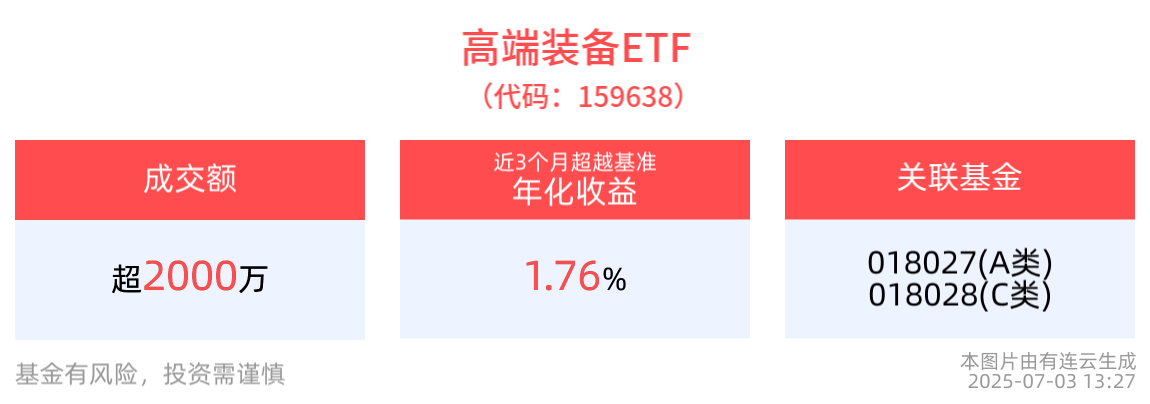
Core Viewpoint - The high-end equipment sector is experiencing mixed performance, with specific stocks showing significant gains while others decline, indicating a volatile market environment [1][4]. Group 1: Market Performance - As of July 3, 2025, the CSI High-End Equipment Sub-Index decreased by 0.07%, with stocks like Jiuziyang rising by 18.64% and China Haifang leading the decline [1]. - The High-End Equipment ETF (159638) saw a turnover of 2.07% during the trading session, with a total transaction value of 24.12 million yuan [3]. - Over the past week, the average daily transaction value of the High-End Equipment ETF was 83.12 million yuan, with the latest fund size reaching 1.158 billion yuan [3]. Group 2: Investment Trends - Leveraged funds are increasingly investing in the high-end equipment sector, with the latest margin buying amounting to 2.36 million yuan and a margin balance of 20.91 million yuan [3]. - The High-End Equipment ETF has shown a net value increase of 27.22% over the past year, with the highest single-month return recorded at 19.30% [3]. Group 3: Industry Outlook - The military industry is expected to experience three growth curves: domestic demand focusing on low-cost precision-guided munitions, unmanned systems, and information technology; military trade demand potentially surging due to regional conflicts; and broader military demand in areas like large aircraft, low-altitude economy, commercial aerospace, and deep-sea technology [3][4]. - China's defense spending is projected to grow significantly, likely outpacing GDP growth, with 2025 marking a turning point for the industry as it emerges from a period of stagnation [4]. - The top ten weighted stocks in the CSI High-End Equipment Sub-Index account for 45.22% of the index, indicating concentrated investment in key players like AVIC Shenyang Aircraft and AVIC Engine [4][6].


A股收评:军工股降温,水产养殖、钢铁股逆势大爆发
Ge Long Hui· 2025-07-02 07:39
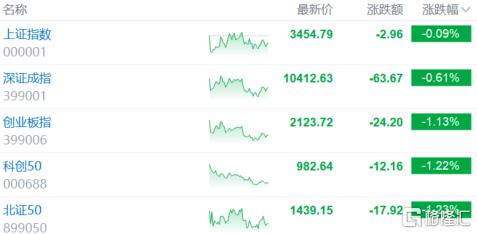
Market Overview - The A-share market experienced a decline with the Shanghai Composite Index falling by 0.09% to 3454 points, the Shenzhen Component down by 0.61%, and the ChiNext Index decreasing by 1.13% [1][2] - Total trading volume for the day was 1.41 trillion yuan, a decrease of 914 billion yuan compared to the previous trading day, with nearly 3300 stocks declining [1] Sector Performance - The aquaculture sector saw significant gains, with stocks like Guolian Aquatic and Zhanzi Island hitting their daily limits [8] - Steel and photovoltaic equipment sectors also experienced substantial increases, with companies like Chongqing Steel and LiuGao Co. reaching their daily limits [9][10] - Conversely, sectors such as aerospace, communication equipment, and semiconductor-related stocks faced declines, with notable drops in companies like Beifang Changlong and Neimenggu Yijian [4][6] Notable Stocks - In the aquaculture sector, Guolian Aquatic rose by 20.11%, Zhanzi Island by 10.03%, and Tongwei Co. by 10.01% [8] - In the steel sector, Shengde Jiatai increased by 17.00%, and LiuGao Co. and Zhijian Steel both rose by over 10% [9] - In the photovoltaic sector, Daqo New Energy surged by over 15%, with several other stocks also hitting their daily limits [10] Future Outlook - UBS analysts suggest that A-share earnings may gradually recover throughout the year, with potential for market growth in the medium to long term [11] - Structural reforms in China, including lowering foreign investment barriers and enhancing the vitality of private enterprises, are expected to improve the investment environment [11]
军工股震荡走低 内蒙一机午后跌停
news flash· 2025-07-02 05:51
Group 1 - Military stocks experienced a significant decline in the afternoon session, with Inner Mongolia First Machinery Group hitting the daily limit down [1] - Other military-related stocks such as North China Longyun, Great Wall Military Industry, Construction Industry, Morningstar Aerospace, China Ordnance, North Navigation, and Zhongtian Rocket also saw declines exceeding 5% [1]

北方导航控制技术股份有限公司关于公司2020年股票期权激励计划第三个行权期2025年第二季度自主行权结果暨股份变动的公告
Shang Hai Zheng Quan Bao· 2025-07-01 19:11
Core Viewpoint - The announcement details the results of the third exercise period of the 2020 stock option incentive plan of Beifang Navigation Control Technology Co., Ltd., highlighting the number of options exercised and the implications for the company's stock structure and financial situation [2][6]. Summary by Sections Stock Option Exercise Details - The number of stock options available for exercise in the third period is 6,612,255 options, with the actual exercise period from January 16, 2025, to December 29, 2025 [2]. - As of June 30, 2025, a total of 4,370,316 shares have been exercised, accounting for 66.09% of the total options available [2][6]. - The shares obtained through the exercise will be tradable on the second trading day after the exercise date [2][6]. Decision-Making Process and Disclosure - The board of directors approved the stock option incentive plan on November 15, 2020, and the independent directors provided their opinions on the plan [3]. - The plan received approval from the State-owned Assets Supervision and Administration Commission on December 29, 2020 [3][4]. Stock Structure Changes - The third exercise period involved 81 eligible participants, with 40 participating in the second quarter of 2025 [6]. - The exercise did not result in changes to the controlling shareholder structure, with the major shareholders' holdings remaining stable [8]. Fundraising and Financial Impact - The total funds raised from the exercise in the second quarter of 2025 amounted to 16,864,809.44 yuan, with a cumulative total of 36,946,057.64 yuan raised by June 30, 2025 [8]. - The funds will be used to supplement the company's working capital [8]. - The exercise of options is not expected to have a significant impact on the company's financial status or operating results [8].
