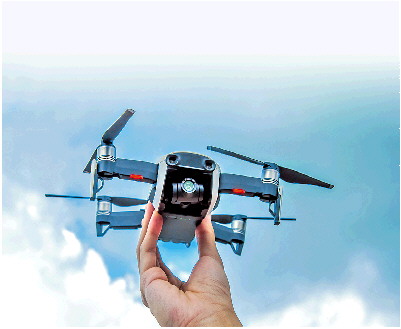
大疆

Search documents
港科大百万创赛启示录:孵化新一代科技创业之星
21世纪经济报道· 2025-12-16 11:51
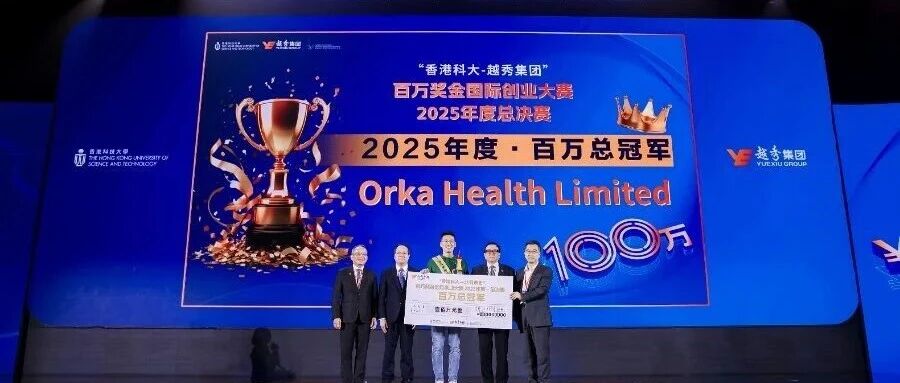
2017年,两位硅谷青年注意到一个现象:欧美五大助听器厂商的产品价格高昂、操作复杂。他们 意识到,若将先进的AI算法与国内成熟的供应链结合,不仅有望打破传统厂商的垄断,还能大幅 降低用户成本,同时提升声音体验——这便是Orka Health Limited创业的起点。 1 2月1 2日,在"香港科大-越秀集团"百万奖金国际创业大赛(简称"港科百创")2025年 度 总 决 赛 上 , Or k a He a lt h Limit e d 带 来 的 AI 助 听 耳 机 项 目 , 经 过 多 轮 激 烈 比 拼 , 从 11 22支参赛团队中脱颖而出,摘得" 2025年度·百万总冠军",斩获100万元人民币的现金 大奖。 香 港 科 技 大 学 副 校 长 ( 研 究 及 发 展 ) 郑 光 廷 教 授 见 证 了 百 万 大 奖 得 主 的 诞 生 。 他 观 察 到,今年进入十强的团队普遍展现出更强的技术落地能力,"既具备国际一流的技术壁 垒,也在产品研发、市场验证和商业模式构建上稳步推进"。 回望15年的发展历程,港科百创早已超越竞赛本身,演变为一个高浓度的科创资源聚合 平台。它既是港科大创新基因的输 ...

极兔如何在“海外竞争最激烈市场”成就领跑样本?
Zheng Quan Ri Bao Wang· 2025-12-16 11:13
Core Insights - J&T Express successfully held an investor open day in Bangkok, Thailand, attracting a record attendance of over 180 participants, indicating strong market interest in its Southeast Asia strategy and operational achievements [1] - The company has achieved significant success in Thailand by focusing on service quality, scale, efficiency, and cost, integrating innovations from its experience in China [1] Group 1: Operational Achievements - J&T Express is the only express delivery company in Thailand to fully automate all its transfer centers, with the SPK sorting center being the largest, capable of processing over 5 million packages per day [1] - The company plans to upgrade its end-point automation capabilities across Thailand by 2026, which is expected to significantly enhance efficiency and reduce costs [1] Group 2: Business Expansion - J&T Express is diversifying its revenue structure beyond e-commerce, launching the "J&TSuper" service targeting high-end business clients, successfully attracting major companies like Apple, CP Group, 711, and Adidas [2] - The company has established a 70,000 square meter overseas warehouse network in Bangkok, with daily processing capabilities of over 200,000 orders for ToC and over 4,000 cubic meters for ToB, enhancing its role as a key link between Chinese supply chains and the Thai consumer market [2] Group 3: Market Potential - Investors expressed interest in the long-term market dynamics in Thailand, with management highlighting the high capital barriers and lengthy construction periods for new entrants, indicating a sustainable competitive advantage for J&T Express [2] - The Thai e-commerce market is still in a high growth phase, with significant potential for increased penetration and package volume, positioning J&T Express to capitalize on market expansion and structural upgrades [3]
珠三角地区企业参访,深圳、佛山企业参访
Sou Hu Cai Jing· 2025-12-16 10:16
Core Insights - The Pearl River Delta (PRD) is a leading area for China's reform and opening-up, showcasing top global manufacturing, technological innovation, and industrial clusters [1] - The visit focuses on four key areas: smart manufacturing, digital economy, green energy, and cross-border e-commerce, aiming to help participants gain insights into industry trends and connect with quality resources [1] Group 1: Benchmark Enterprises - The PRD is home to several benchmark enterprises, including Huawei, Tencent, BYD, and DJI, which are among the world's top 500 companies [3] - Participants will learn about strategic layouts, technological breakthroughs, and ecosystem construction from these leading companies, including Huawei's "1+N" strategy and Tencent's industrial internet transformation [3] Group 2: Advanced Technologies - Research and development investments are significant, with Huawei's annual R&D expenditure exceeding 100 billion yuan, making it a leader in global patent numbers [5] - Key technological methodologies include BYD's innovative materials for blade batteries and the collaborative model between industry and academia exemplified by Dongguan Songshan Lake Material Laboratory [5] Group 3: Knowledge System Upgrade - The visit provides a comprehensive understanding of strategic frameworks and management methodologies from leading companies, covering areas such as strategic planning, technology development, and global expansion [6] - This approach helps avoid the limitations of fragmented learning, enabling participants to build a complete cognitive system from macro trends to micro implementations [6] Group 4: Practical Experience - The visit emphasizes actionable solutions, such as Midea's "T+3" flexible production model, which can reduce delivery cycles by 30%, and OPPO's AI visual inspection technology, which can improve yield rates by 20% [8] - Participants will receive internal training materials and tools from leading companies, facilitating the rapid transformation of benchmark experiences into productivity [8] Group 5: Brand Influence - Participating companies will receive the "Pearl River Delta Benchmark Enterprise Learning Base" certification, enhancing their brand credibility and market competitiveness [9] - The visit serves as an accelerator for corporate upgrades, helping participants seize opportunities in the PRD economic wave for leapfrog development [9] Group 6: Resource Networking - The event creates a three-dimensional resource platform connecting government, capital, and industry chains, allowing participants to engage with local investment and technology agencies [10] - Post-visit, participants can join the "Pearl River Delta Enterprise Alumni Association" to continue receiving industry updates and invitations to internal sharing sessions, fostering a long-term value network [10]


【高端访谈】东风柳汽林长波:轻量化已经转化为用户收益
Xin Hua Cai Jing· 2025-12-16 02:45
Core Viewpoint - Dongfeng Liuzhou Motor Co., Ltd. is focusing on lightweight technology in commercial vehicles, which translates into economic benefits for users, emphasizing the importance of a "full lifecycle cost" assessment system to quantify these benefits [1][2]. Group 1: Lightweight Strategy - The company is developing a "full lifecycle cost" assessment system to quantify the benefits of lightweight technology, using the example of the Chenglong H7 Pro model, which can achieve a 15% reduction in fuel consumption [2]. - In the first ten months of this year, Dongfeng Liuzhou's commercial vehicle sales exceeded 39,000 units, representing a year-on-year growth of 34% [2]. - The company emphasizes collaborative innovation in the supply chain to implement its lightweight strategy, partnering with Chuangneng New Energy for joint development of key technologies [2]. Group 2: Intelligent Technology - The application of intelligent technology in commercial vehicles is seen as a significant opportunity for differentiation, particularly in reducing labor costs and optimizing energy consumption [3]. - In long-distance logistics, the intelligent driving system allows for reduced manpower, requiring only one driver and one safety officer, thus lowering operational costs for users [3]. - The intelligent driving system is expected to improve fuel efficiency significantly, with different driving habits impacting fuel consumption by 10%-15% [3]. Group 3: Future Outlook - The company aims to leverage intelligent technology to create a differentiated advantage, projecting a commercial vehicle production target of 45,000 units by 2025 [4]. - Over the next 3 to 5 years, the company anticipates achieving a total sales volume of 300,000 units for both commercial and passenger vehicles [4].

赋能百业、资本追捧 3D打印赛道将迎黄金发展期
Zheng Quan Ri Bao· 2025-12-15 22:56
Core Insights - The transition from "Made in China" to "Intelligent Manufacturing in China" is accelerating, with 3D printing becoming a core variable in various industries, evidenced by a nearly 50% increase in the 3D printing concept index as of December 15 [1] - The 3D printing industry is experiencing a significant transformation, moving from niche applications to becoming a mainstay in manufacturing, driven by policy support and surging market demand [1][2] Industry Growth and Market Dynamics - The production of 3D printing equipment surged by 100.5% year-on-year in November, outpacing other high-end manufacturing categories like industrial robots and electric vehicles [1] - The consumer-grade 3D printing market is expanding rapidly, with a projected market size of $4.1 billion in 2024, expected to grow to $16.9 billion by 2029, reflecting a compound annual growth rate of 33.0% [4] - The price of consumer-grade 3D printers has significantly decreased, with stable mid-range models now priced around 3,000 yuan, comparable to smartphones, down from over 10,000 yuan three years ago [4] Technological Advancements - Innovations in AI modeling and materials are lowering the barriers for consumer-grade 3D printing, making it more accessible and cost-effective [3][4] - Industrial-grade 3D printing is increasingly being adopted across various manufacturing sectors, including automotive, where it facilitates rapid prototyping and reduces development costs [5][7] Capital Influx and Investment Trends - The 3D printing sector has seen a surge in investment, with major tech companies like Tencent and Meituan entering the market, indicating strong future growth potential [8][10] - The A-share market for 3D printing stocks has shown robust performance, with over 80% of companies in the sector experiencing stock price increases this year [9] Consumer Demand and Customization - The rise of personalized consumption is driving demand for 3D printing, particularly in niche markets like cosplay and custom figurines, where consumers seek unique, tailored products [2][3] - The combination of industrial and consumer demands is reshaping the market, with 3D printing technology becoming a critical tool for meeting new manufacturing requirements [7][9]
全球GDP50强城市大洗牌:深圳略逊新加坡,成都远超悉尼,南京逼近旧金山!
Sou Hu Cai Jing· 2025-12-15 07:10
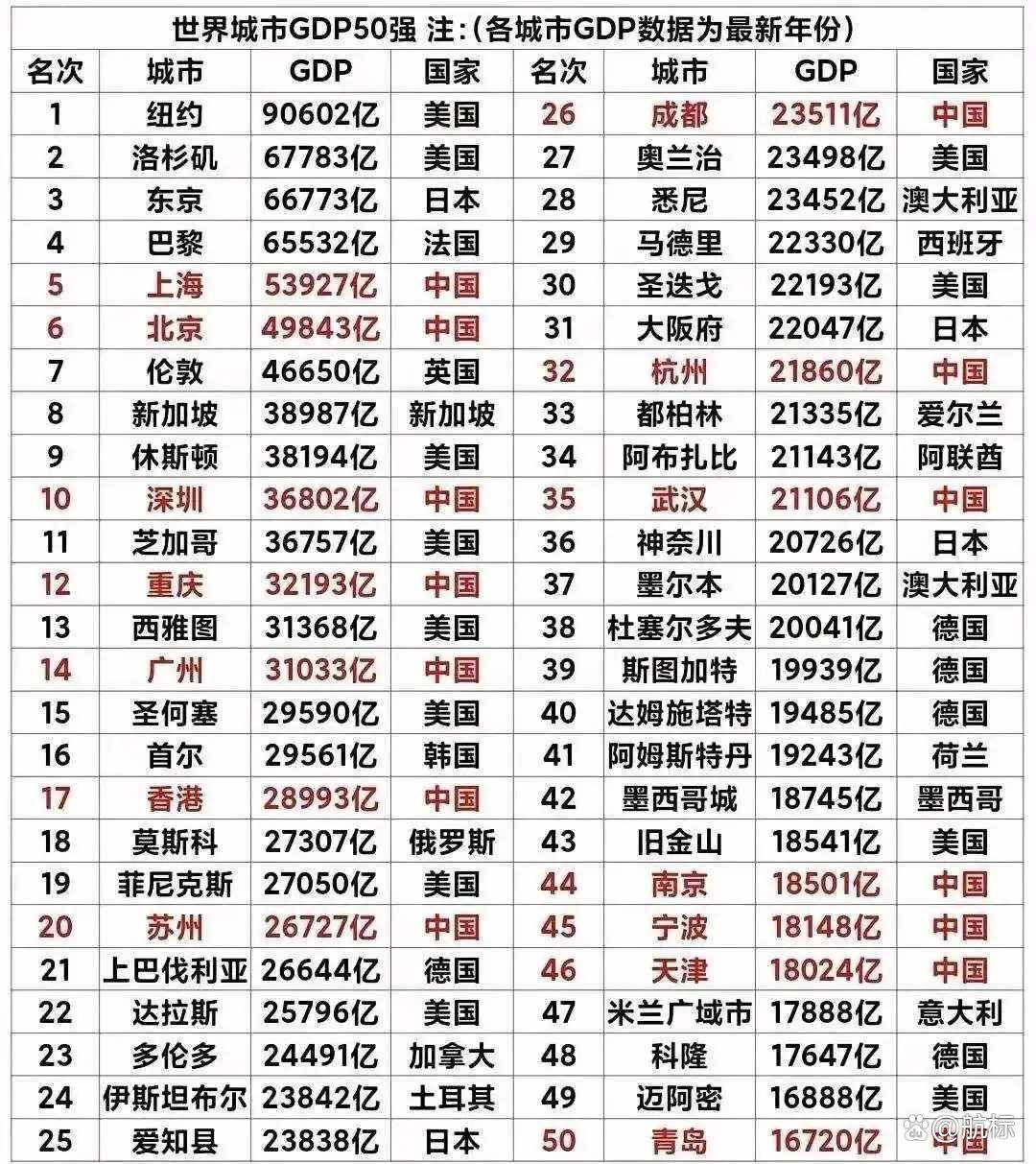
Core Insights - The recent global city GDP rankings reveal a significant shift in the economic landscape, with Chinese cities like Shenzhen, Chengdu, and Nanjing making notable advancements [1][8] - Shenzhen's GDP reached 36,802 billion yuan, closely following Singapore, while Chengdu surpassed Sydney for the first time with a GDP of 23,511 billion yuan [1][4] - The rise of these cities is attributed to geographical advantages, continuous policy benefits, and robust industrial innovation [1][8] Group 1: Shenzhen - Shenzhen's GDP of 36,802 billion yuan is just 2,185 billion yuan behind Singapore, marking a 12% reduction in the gap from the previous year [1][2] - The city is a core engine of the Guangdong-Hong Kong-Macao Greater Bay Area, benefiting from its proximity to the Pearl River Delta manufacturing base and international shipping routes [1][2] - Shenzhen leads in PCT international patent applications, accounting for 34.6% of the national total, with major contributions from companies like Huawei and Tencent [2] Group 2: Chengdu - Chengdu's GDP reached 23,511 billion yuan, surpassing Sydney by a narrow margin of 59 billion yuan, marking its emergence as a significant inland economic hub [4][5] - The city has developed a robust international air transport network, with a combined passenger throughput of 86 million at its airports in 2024 [4] - Chengdu's electronic information industry is a key driver, with a scale exceeding 2 trillion yuan, representing 38.7% of its GDP [4][5] Group 3: Nanjing - Nanjing's GDP reached 18,501 billion yuan, just 40 billion yuan shy of San Francisco, showcasing its competitive edge in the digital economy [7][8] - The city boasts a complete industrial chain in software and information services, with revenues reaching 820 billion yuan [7] - Nanjing's strong academic resources contribute significantly to its innovation, with 48 universities generating 65% of the city's invention patents [7]
资本密集入局,3D打印产业,爆发了!
Zheng Quan Shi Bao Wang· 2025-12-15 05:16
Core Viewpoint - Since 2025, the Chinese 3D printing industry has entered a phase of capital frenzy, marked by significant investments and IPO attempts, indicating a shift towards large-scale and capitalized growth [1] Group 1: Capital Influx - On December 10, consumer-grade 3D printing brand KuaiZao Technology announced the completion of a multi-hundred million yuan Series B financing led by Hillhouse Capital and Meituan, with funds allocated for multi-color printing technology R&D and global talent acquisition [2] - KuaiZao Technology, founded in 2016 and headquartered in Shenzhen, has a product line that includes multifunctional printers and high-efficiency multi-color printers, with its flagship product U1 achieving a crowdfunding record of 150 million yuan, reflecting strong market demand [2] - DJI, a drone giant, invested several hundred million yuan in Smart Pie, indicating confidence in the growth potential of consumer-grade 3D printing technology [2] - Other major players, including Tencent and Shenzhen Capital Group, are also investing in the sector, with Chuangxiang Sanwei planning to raise funds through an IPO to enhance R&D and expand overseas [2][3] Group 2: Industry Growth and Trends - Since 2025, the number of investment and financing events in the industry has reached a near five-year high, exceeding 40, with a clear trend of capital concentrating on leading projects [4] - Shenzhen has emerged as a hub for the 3D printing industry, with significant contributions from consumer-grade products, as evidenced by customs data showing 3D printer exports reaching 3.7777 million units in 2024 [5] - In Q1 2025, global shipments of entry-level 3D printers (priced below $2,500) surpassed 1 million units, a 15% year-on-year increase, with Chinese suppliers accounting for 95% of the market share [5] - TuoZhu Technology, founded in 2020, reported revenues of 5.5 to 6 billion yuan in 2024, with a net profit of nearly 2 billion yuan and a net profit margin exceeding 30% [5] Group 3: Technological and Market Dynamics - The industry explosion is attributed to a deep resonance of technology, policy, and demand, with AI integration lowering usage barriers and enhancing user experience [8] - The demand for 3D printing is experiencing explosive growth, driven by the Z generation's pursuit of personalized expression and strong industrial demand from sectors like consumer electronics and aerospace [9] - Policies supporting the industry are intensifying, with the inclusion of desktop 3D printing devices in key consumption categories, leading to price reductions for entry-level devices [9]

相机无人机行业更新
2025-12-15 01:55
Industry and Company Summary Industry: Drone and Camera Sector Key Points - **DJI's Upcoming Product Launches**: DJI is set to release the Onboard 30 drone by late November or early December 2025, featuring 360-degree omnidirectional obstacle avoidance, ground flight mode, multiple control methods, and a transmission distance of 25 kilometers, with a hovering accuracy of within 1 centimeter and support for level 6 wind resistance, significantly enhancing market competitiveness [1][5][20]. - **Market Performance of DJI's Products**: In Q3 2025, DJI's OMO 30 panoramic camera shipped 295,000 units, capturing 39% of the market share, indicating a narrowing gap in panoramic imaging capabilities compared to competitors [1][11]. The overall revenue for DJI is projected to reach 94.5 billion yuan in 2025, with the drone business accounting for 55% and handheld imaging business for 35% [1][13]. - **Consumer Drone Sales Breakdown**: DJI anticipates a total shipment of 4.2 million consumer drones in 2025, with the Mini series representing 40% of sales, entry-level models at 25%, mid-range L4 series at 20%, and high-end Mavic series at 10-13% [1][15]. - **Future Growth Areas**: DJI identifies future growth in the drone market through innovative product forms, such as panoramic drones, and integration with third-party accessories, aiming to develop more intelligent tracking features to meet entertainment and low-altitude photography needs [1][16]. - **Comparison with Competitors**: DJI's Onboard 30 is expected to outperform the recently launched Y0A1 panoramic drone from a competitor, which has shown underwhelming sales performance, with initial sales around 1,000 units on launch day compared to DJI's typical 3,000 units [2][3]. - **Technological Advantages**: DJI's proprietary OcuSync 4.0 technology allows for a transmission distance of approximately 25 kilometers with higher signal stability, while competitors rely on external chips and open-source protocols, leading to performance gaps in flight control and image transmission [4][10]. - **Cost Structure of Competitors**: The estimated BOM cost for a competitor's drone is around 5,200 yuan, with significant portions allocated to the drone body, glasses, and control handles, while DJI benefits from lower procurement costs due to in-house developed components [7][8]. - **Market Expansion for Panoramic Drones**: Panoramic drones are expected to attract a new user base, including those previously using panoramic cameras and inexperienced users interested in FPV, potentially opening new markets in travel, sports, and entertainment [12]. - **Investment in 3D Printing Technology**: DJI's investment in a local 3D printing company aims to enhance competitiveness against emerging threats in the market, leveraging shared technological synergies between drone and 3D printing systems [24][25]. Additional Insights - **Sales Strategy**: DJI plans to price its new panoramic drone competitively, with initial prices set lower than competitors, enhancing its market appeal [6]. - **Future Product Innovations**: Upcoming products include the Harmony 360 and Pocket 4, with a focus on maintaining competitive advantages against both traditional and emerging competitors in the drone and imaging markets [20][21]. - **Consumer Trends**: The shift towards panoramic drones indicates a growing interest in versatile imaging solutions, which could redefine user engagement in the drone market [12][16]. This summary encapsulates the key developments and strategic insights within the drone and camera industry, particularly focusing on DJI's market positioning and competitive landscape.
影石创新20251214
2025-12-15 01:55
Summary of the Conference Call on Yingshi Innovation's Panoramic Drone Company Overview - **Company**: Yingshi Innovation - **Product**: Panoramic Drone - **Launch Date**: Recently launched, with significant market interest Industry Insights - **Market Dynamics**: The panoramic drone market is currently dominated by major players like Yingshi and DJI, with a low saturation level, indicating potential for growth and profitability for both companies [2][11] - **Competition**: The market is experiencing rapid development, with new entrants potentially increasing competition in the short term, but a stable coexistence between major players is expected in the long run [10][11] Key Product Features - **User Experience**: The drone offers an immersive flying experience through VR glasses and motion controllers, making it accessible for new users and panoramic camera enthusiasts [2][4] - **Technical Specifications**: Equipped with a panoramic lens for 360-degree photography and video, it includes convenient post-editing features such as one-click AI editing and various effects [2][6] - **Pricing Strategy**: Priced at 6,799 yuan, the strategy aims to quickly establish market reputation and enhance profitability through future iterations and economies of scale [2][8] Sales Performance - **Initial Sales**: Approximately 1,000 units sold daily since launch, indicating strong initial market acceptance despite competition [3] User Demographics - **Target Audience**: The primary user groups include: 1. Experienced drone users seeking new panoramic experiences 2. Users dissatisfied with traditional drones looking for innovative solutions 3. Enthusiasts of panoramic cameras transitioning to panoramic drones [9] Challenges and Opportunities - **User Pain Points**: Issues such as dizziness from VR headsets and the weight of the headset have been noted, presenting areas for future improvement [7] - **Market Penetration**: Online reputation is growing, but offline marketing and staff training need enhancement to improve consumer experience [12] Future Development Plans - **Product Expansion**: Yingshi plans to launch several new products in 2026, targeting a broader price range to attract more consumers and transition the market from niche to mainstream [13] - **Innovation Focus**: Emphasis on product innovation rather than price competition is crucial for attracting high-end consumers who value unique experiences [14] Market Outlook - **Growth Potential**: The panoramic drone market is expected to continue evolving with ongoing iterations and innovations, enhancing user experience and expanding market size [15] - **Long-term Viability**: Despite potential short-term competition, the long-term outlook remains positive as product performance and functionality improve, positioning panoramic technology as a mainstream application in smart imaging devices [15][16]

“谁能飞、谁在飞、在哪飞”全程可管可控
Qi Lu Wan Bao· 2025-12-14 17:15
《民用无人驾驶航空器系统运行识别规范》则规定,无人机应在开机后和飞行全过程中,主动向监管方报 送自身身份、位置等信息,以便监管方全程实时掌握无人机的飞行状态。 近日,《民用无人驾驶航空器实名登记和激活要求》及《民用无人驾驶航空器系统运行识别规范》两项 强制性国家标准发布,明确"谁能飞"和"谁在飞"的核心要求,该标准将于2026年5月1日起正式实施。新国 标的实施会带来怎样的影响?普通用户和厂家又该怎么做? 记者李苗岳致呈 新国标能实时追溯 飞手信息和飞行轨迹 据悉,此次出台的两项强制性国家标准中,《民用无人驾驶航空器实名登记和激活要求》规定了无人机实 名登记和激活的工作流程,对登记主体、管理查询、注销等环节作出具体规范,明确要求无人机在激活前 和取消激活后均不能具备飞行能力。 "新国标将从人、设备、空域三个维度构建管理体系,实现无人机'谁能飞、谁在飞、在哪飞'全流程可管 可控。"梁峰强调,该标准在国际民用无人机领域处于领先水平,是我国发展低空经济的重要举措。 旧设备需在过渡期完成改造 否则将无法飞行 近日,在社交平台上,博主"地图侦探"的视频,引发公众对无人机飞行安全的关注。该博主称,近期在广东英 德、中山及 ...