尼康

Search documents
SCREEN,宣布收购
半导体芯闻· 2025-11-05 10:30
Core Viewpoint - SCREEN Holdings has acquired Nikon's wafer bonding technology R&D business to enhance its advanced semiconductor packaging capabilities, which is seen as a significant growth opportunity for the company [2]. Financial Performance - SCREEN reported a 1.2% year-on-year increase in consolidated revenue to 135.7 billion yen for the first quarter of the fiscal year 2025, but net profit decreased by 8.4% to 16.6 billion yen [3][4]. - The company's operating profit fell by 12.2% to 24.3 billion yen, which was below market expectations of 30.8 billion yen [4]. - Revenue from the semiconductor manufacturing equipment segment decreased by 2.4% to 109.5 billion yen, while the operating profit for this segment dropped by 11.6% to 25.6 billion yen [4]. Market Dynamics - Demand for flash memory increased, but there was a decline in demand from foundries and DRAM, impacting overall performance [4]. - The revenue share from the Chinese market decreased to 34% from 46% year-on-year, while the Taiwanese market share increased significantly from 17% to 29% [5]. Future Outlook - SCREEN maintains its revenue forecast for the fiscal year 2025, projecting a 0.7% decrease to 621 billion yen and a 13.8% drop in operating profit to 117 billion yen [5].


“什么值得买”“11.11”开门红:品质消费持续领跑,兴趣赛道快速增长
Zhong Guo Zhi Liang Xin Wen Wang· 2025-11-03 05:23
Core Insights - The 2025 "11.11" shopping festival by "What Worth Buying" emphasizes a consumer trend driven by interests and AI technology, aiming to enhance user experience and satisfaction during the shopping event [1][12] Consumer Trends - The top five categories by GMV during the opening period were major appliances, mobile communications, kitchen appliances, home furniture, and household electricals, indicating a strong preference for larger items [3] - Fastest-growing categories with GMV over one million included pet daily necessities, gaming hardware, outdoor apparel, kitchen tools, and automotive maintenance, with year-on-year growth rates of 90.35%, 55.28%, 43.33%, 36.26%, and 36.24% respectively [3] Interest-Driven Consumption - Interest-driven consumption is becoming a new norm, with significant performance in categories like sports equipment, travel, and home renovation, reflecting a shift from traditional consumption patterns [3][5] - The platform's upgraded "Interest Square" features over a hundred dedicated interest scenarios, enhancing the consumer experience from interest content to interest-based purchases [5] High-Value Products - High-value products such as large-capacity appliances and premium electronics are leading the market, with brands like Midea and Xiaomi dominating sales in their respective categories [4][5] - The smartphone category is witnessing a trend towards high-end and smart devices, with the new iPhone 17 series capturing the top three GMV spots [5] Health and Wellness - Health-related products are experiencing significant growth, with functional health products and smart devices becoming essential for consumers, particularly among working professionals [10] - The trend of "active health management" is driving demand for health products that focus on precise interventions rather than basic protection [10] Travel and Outdoor Activities - Travel-related consumption is on the rise, with international travel gaining popularity, particularly to destinations like Europe and Japan [8] - Outdoor sports categories, including footwear and apparel, are also seeing substantial sales, driven by both professional and amateur consumers [7] Future Outlook - The company aims to deepen its understanding of consumer interests and enhance operational strategies using AI technology, focusing on creating a more interconnected shopping experience [12]


The Cost of Corporate Complacency: How Refusal to Modernize Leads to Technological Decay and Competitive Backlog
Medium· 2025-10-29 17:34
Core Insights - The article discusses the dangers of organizational complacency, highlighting how refusal to modernize can lead to technological decay and competitive disadvantages [2][3][30] Group 1: Japan's Bureaucratic Complacency - Japan's reliance on fax machines in 2025 exemplifies a significant technological disconnect, with thousands of government procedures still dependent on outdated technology [2][5] - The cultural and bureaucratic inertia in Japan is rooted in established workflows that require physical documentation and personal seals, making modernization a complex challenge [6][11] - The COVID-19 pandemic exposed the vulnerabilities of this complacency, as the reliance on fax machines hindered timely information flow, impacting public health [9][10] Group 2: Kodak's Downfall - Kodak's failure to embrace digital technology, despite inventing the first digital camera in 1975, illustrates the consequences of short-term thinking and fear of cannibalization [12][14] - The company's management prioritized immediate profit margins over long-term innovation, leading to its eventual bankruptcy in 2012 [15][16] - Kodak's story serves as a cautionary tale about the risks of ignoring disruptive technologies and the importance of adapting to market changes [29] Group 3: U.S. Banking System and COBOL Crisis - The U.S. banking system's reliance on COBOL, a programming language from 1959, highlights systemic technological decay, with 220 billion lines of COBOL code still in use [17][18] - The aging workforce of COBOL programmers poses a significant risk, as their knowledge and expertise are disappearing, leading to a talent black hole [19] - The inflexibility of COBOL systems complicates modernization efforts, as banks face astronomical costs and risks associated with replacing outdated technology [20][22] Group 4: The Anatomy of Complacency - Complacency is characterized by denial, cultural inertia, and short-termism, which hinder organizations from recognizing the need for change [23][24][25] - The article emphasizes that modernization is not merely a technical choice but a cultural and strategic imperative for organizations to thrive [26][27] - The true cost of complacency is ultimately bankruptcy, as organizations that fail to adapt do so at their own peril [28][30]


怕稀土卡脖子?ASML突然对我们放出王炸,美国表示:防线崩了
Sou Hu Cai Jing· 2025-10-21 04:59
Core Viewpoint - The global semiconductor supply chain is at a critical turning point, with the Netherlands, particularly ASML, playing a pivotal role in shaping technology strategies across nations [2][4]. Group 1: Industry Dynamics - Since 2019, the U.S. has imposed export controls preventing ASML from selling extreme ultraviolet lithography systems to China, which are essential for processes below 5nm [2]. - In 2023, the Netherlands followed suit by imposing licensing requirements on immersion deep ultraviolet machines, causing delays in Chinese procurement [2][4]. - By 2025, geopolitical factors intensified, leading to the Netherlands expanding controls to include maintenance services and older models, complicating operations for suppliers [4]. Group 2: Localized Production and Supply Chain Efficiency - ASML supplier KMWE established a small factory in Suzhou in May 2023, focusing on 3D printing metal parts and key module production, reducing reliance on cross-border licensing [5][7]. - The revenue contribution from KMWE's factory reached 11% of total income, amounting to €190 million, indicating strong market appeal [7]. - ASML upgraded its Beijing service center in March 2025, halving response times for software debugging and parts replacement, reflecting a shift towards local service capabilities [7][10]. Group 3: Sales and Market Strategy - ASML's sales to China accounted for 46% of its revenue in the first half of 2025, primarily driven by the demand for older, unrestricted equipment [12]. - The Dutch government simplified administrative processes for ASML's sales to China, enhancing efficiency by 30% compared to the previous year [10]. - ASML's Q3 2025 report indicated strong orders with net bookings of €540 million, while Chinese sales represented 42% of total revenue [17]. Group 4: Technological Advancements and Local Innovations - ASML's technology evolution from deep ultraviolet to extreme ultraviolet systems has improved exposure precision, with deep ultraviolet machines using a 193nm light source [12][14]. - Chinese companies like Shanghai Micro Electronics have transitioned from laboratory to mass production, enhancing their capabilities to cover mature nodes [19]. - Local suppliers are investing in automation and digital technologies to improve production efficiency and reduce defect rates [14][21]. Group 5: Geopolitical Implications and Future Outlook - The Netherlands' actions are seen as a challenge to U.S. dominance, indicating a potential shift in alliances within the semiconductor industry [16][21]. - Despite a projected decline in Chinese revenue to 20% by 2026, ASML's absolute sales figures remain significant, with local factories expanding production lines [17][21]. - The global chip competition is entering a new phase, with Dutch companies signaling a willingness to explore cooperative opportunities with China [21].

全球影像,进入中国时间
雷峰网· 2025-10-20 04:06
Core Viewpoint - The article emphasizes the transformation of the imaging industry, highlighting China's emerging dominance in this sector through technological advancements and market dynamics [1][2]. Group 1: Evolution of the Imaging Industry - The imaging industry has undergone significant changes, transitioning from traditional camera dominance to mobile imaging, driven by technological breakthroughs and market demands [2][3]. - The shift from cameras to smartphones as the primary imaging device marks the third transition in the industry, with Chinese companies leading this change [7][8]. - The global camera sales peaked at 120 million units in 2010 but are projected to decline to 8.3 million units by 2024, while smartphone shipments are expected to rise from 297 million units in 2010 to 1.24 billion units by 2024 [5][6]. Group 2: Technological Advancements - The rapid iteration of smartphone sensors, particularly the transition from CCD to CMOS technology, has allowed for significant advancements in pixel density and processing speed [9][10]. - The processing capabilities of smartphones have surpassed those of traditional cameras, with smartphones utilizing advanced 3nm/5nm chips for complex image processing, while cameras often rely on older technology [11][12]. - The integration of a complete ecosystem for mobile imaging, including shooting, processing, and sharing, has created a unique advantage for Chinese companies in the imaging market [13][14]. Group 3: China's Competitive Advantages - China's massive mobile imaging market is a key driver of innovation and investment, fostering a robust supply chain and manufacturing capabilities [16][17]. - The vertical integration of the supply chain in China enhances efficiency and reduces costs, allowing for rapid innovation and responsiveness to market demands [18][19]. - The combination of AI and large-scale manufacturing capabilities in China supports the development of advanced imaging technologies and products [21][22]. Group 4: User-Centric Innovation - The focus on user needs drives innovation in the imaging sector, with companies like OPPO leveraging consumer insights to enhance product offerings [29][30]. - OPPO's Find X9 series exemplifies the integration of high pixel counts with superior image quality, addressing specific user demands for clarity and emotional resonance in photography [32][33]. - The article highlights the importance of understanding user behavior and preferences in shaping the future of imaging technology [30][31]. Group 5: Future Outlook - The article concludes with a positive outlook for China's imaging industry, anticipating significant advancements and global recognition in the coming decade [51].

行业聚焦:全球长工作距离消色差物镜市场头部企业份额调研(附Top 10 厂商名单)
QYResearch· 2025-10-17 09:57
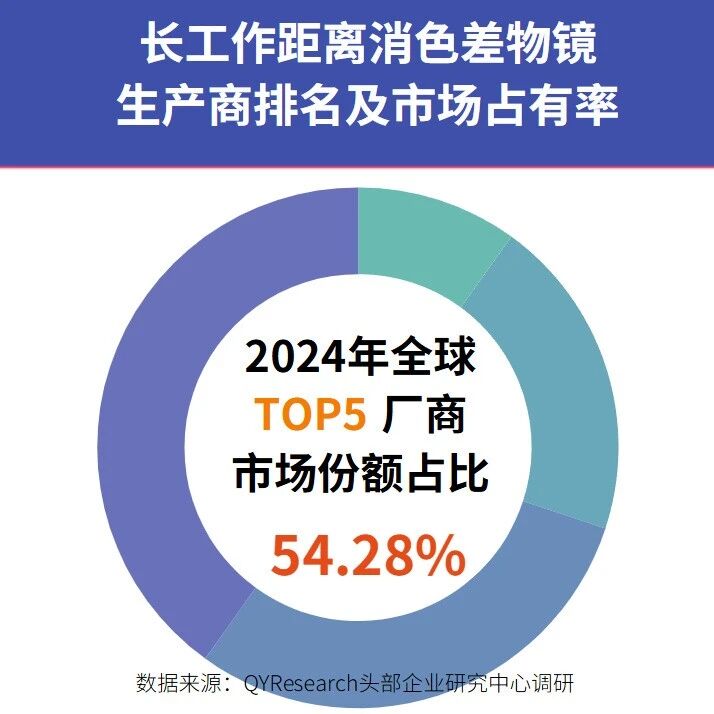
Core Insights - The long working distance achromatic objective lens is a specialized optical component designed to minimize chromatic aberration and spherical aberration while increasing the physical distance between the lens and the sample, making it suitable for complex applications such as semiconductor inspection and live cell observation in life sciences [2][12]. Market Overview - According to QYResearch, the global market for long working distance achromatic objective lenses is expected to reach $143.95 million by 2030, with a compound annual growth rate (CAGR) of 5.73% over the coming years [3][5]. - The 50x long working distance achromatic objective lens currently dominates the market, accounting for approximately 25.6% of the market share [5][9]. Application Segmentation - The semiconductor industry remains the largest downstream market for long working distance achromatic objective lenses, projected to account for about 28.6% of market demand in 2024 [9][12]. Competitive Landscape - Key manufacturers in the global long working distance achromatic objective lens market include Olympus, Leica Microsystems (Danaher), Zeiss, Suzhou Toto Technology Co., Ltd., and Nikon, with the top five companies holding approximately 54.28% of the market share [11][18]. Market Drivers - The demand for long working distance achromatic objective lenses is driven by advancements in life sciences research and live imaging, as well as the precision inspection needs of the semiconductor and electronics manufacturing industries [12][13]. - The integration of these lenses into machine vision systems for non-destructive testing and quality control in industrial automation is also contributing to market growth [13]. Challenges and Risks - The development and manufacturing of long working distance achromatic objective lenses face technical challenges, including the inherent contradictions in optical design that require significant R&D investment and advanced manufacturing processes [14][15]. - Market demand is highly dependent on capital expenditures in downstream high-end scientific instruments and semiconductor equipment, making it vulnerable to economic cycles and industry-specific downturns [15].
600余家企业集中亮相湾芯展 中国芯片的“硬实力”藏不住了
Mei Ri Jing Ji Xin Wen· 2025-10-16 14:45
Core Insights - The 2025 Bay Area Semiconductor Industry Ecosystem Expo showcases the advancements and potential of China's semiconductor industry, highlighting breakthroughs in key areas and the importance of innovation [1][4] - The expo serves as a bridge for chip companies to connect with opportunities in the largest semiconductor growth market in China, the Greater Bay Area [2] - The event reflects the increasing integration and collaboration within the semiconductor industry, with significant capital investment and international participation [3][4] Industry Overview - China is the world's largest chip consumer, with integrated circuit imports expected to reach approximately 2.8 trillion yuan in 2024, making the Bay Area a critical market for semiconductor companies [2] - The expo emphasizes the complete industrial system in China, which fosters new market opportunities by linking chip manufacturing with various application scenarios [2] - The semiconductor industry is characterized by high capital intensity and long cycles, necessitating support from risk and patient capital, as evidenced by the establishment of a 5 billion yuan industry investment fund in Shenzhen [2] Market Dynamics - As of Q3 2025, the Chinese chip industry has seen 93 merger and acquisition transactions, a 33% increase year-on-year, with a total transaction value of 54.9 billion yuan, reflecting a nearly 50% growth [3] - The expo has attracted a significant number of international companies, with participation from firms like ASML, Applied Materials, and NXP, indicating China's openness to global collaboration [3] - Foreign investments in China are increasing, with companies like Micron expanding operations and NXP establishing a new business line dedicated to the Chinese market [3] Future Outlook - The semiconductor industry in China is moving towards maturity, with a focus on comprehensive system advancements across design, equipment, materials, and software [4] - Continuous innovation and open collaboration are seen as key strategies for building resilience in the industry and seizing future opportunities [4]
光刻机:半导体设备价值之冠,国产替代迎来奇点时刻:光刻机行业深度研究报告
Huachuang Securities· 2025-10-14 12:43
Investment Rating - The report maintains a "Recommendation" rating for the lithography machine industry, highlighting its significance in semiconductor equipment [1]. Core Insights - Lithography machines are the most complex and highest value segment in semiconductor equipment, with a market share of approximately 24% in 2024 [4][10]. - The evolution of lithography technology follows the Rayleigh criterion, with advancements in light source wavelength, numerical aperture, and process factor optimization driving continuous breakthroughs in process nodes [5][20]. - The global market is dominated by ASML, Canon, and Nikon, with ASML holding a market share of 61.2% in 2024, particularly in the ArFi immersion and EUV sectors [5][6]. Summary by Sections Section 1: Lithography as the Core Process in Wafer Manufacturing - Lithography is crucial for transferring circuit patterns onto silicon wafers, directly influencing device size, line width, and integration density [10][11]. - The lithography machine's value is the highest among semiconductor equipment, accounting for 24% of the global semiconductor equipment market in 2024 [19][20]. Section 2: Evolution of Lithography Technology - The report outlines five generations of lithography machines, detailing the transition from mercury lamps to DUV and EUV technologies, which have enabled the manufacturing of smaller process nodes [20][22]. - The Rayleigh criterion defines the relationship between critical dimension, wavelength, and numerical aperture, guiding the technological advancements in lithography [20][21]. Section 3: Global Market Dynamics - The report reviews the historical evolution of leading companies in the lithography market, emphasizing ASML's strategic advancements through immersion and EUV technologies [5][6]. - The report highlights the urgency for domestic alternatives in China due to high reliance on imports and geopolitical pressures, with significant policy support driving local technological advancements [5][6]. Section 4: Relevant Companies - The report identifies key domestic companies such as Maolai Optical, Huicheng Vacuum, Wavelength Optics, and Fuzhijing Technology, which are positioned to benefit from the acceleration of domestic lithography machine production [5][6].
2025深圳“湾芯展”亮点纷呈,半导体产业迈向全球创新高地
Zhong Guo Fa Zhan Wang· 2025-10-14 06:21
Core Insights - The "2025 Bay Area Semiconductor Industry Ecosystem Expo" (referred to as "Bay Chip Expo") aims to enhance the semiconductor and integrated circuit industry in Shenzhen, which is considered a strategic high ground in global technology competition and a core engine for industrial upgrading [1][2] - Shenzhen's semiconductor and integrated circuit industry is projected to reach a scale of 256.4 billion yuan in 2024, with a year-on-year growth of 26.8%, and 142.4 billion yuan in the first half of 2025, reflecting a 16.9% increase [2] - The Bay Chip Expo serves as a platform for deep integration of domestic and international semiconductor industry chains, promoting collaboration and synergy within the Greater Bay Area [2][3] Industry Development - Shenzhen's semiconductor industry has seen significant optimization due to collaborative efforts in policies, funding, talent, and platforms, positioning it as a globally influential innovation hub [2] - The first Bay Chip Expo attracted 68,000 visitors and featured 400 leading companies, while the upcoming event will expand to over 600 exhibitors and 60,000 pre-registered attendees, with an exhibition area exceeding 60,000 square meters [2][3] Event Features - The 2025 Bay Chip Expo will emphasize four key characteristics: increased market orientation, cutting-edge technology focus, enhanced international participation, and stronger branding [3][4] - The expo will include specialized zones for wafer manufacturing, advanced packaging, AI chips, and edge computing, along with nearly 30 professional forums on cutting-edge technologies [3][4] International Collaboration - The expo aims to attract exhibitors from over 20 countries, including top companies from the US, Japan, Germany, and South Korea, facilitating international market expansion for Chinese enterprises [4] - A comprehensive resource integration service mechanism will be established, promoting the convergence of technology, products, markets, information, funding, and policies [4] Regional Highlights - Longgang District will showcase its semiconductor industry cluster at the expo, featuring 215 related enterprises and highlighting major projects and public service configurations [5][6] - The Longshan Technology Park, covering 1.38 million square meters, will serve as a hub for technological innovation and high-end manufacturing in the semiconductor sector [6] Notable Participants and Initiatives - The expo will feature major companies such as BYD, Foxconn, DJI, and Yangtze Memory Technologies, along with the launch of the 5 billion yuan Shenzhen Semiconductor Industry Investment Fund [7] - The event will also unveil the "2024 China Chip Science Top Ten Advances," showcasing significant achievements in the industry [7]



从佳能、索尼到尼康,为什么常见的相机品牌大多来自日本?| 声动早咖啡
声动活泼· 2025-10-10 04:07
Core Viewpoint - The article discusses the evolution of the camera industry, highlighting how Japanese brands have surpassed German manufacturers to dominate the interchangeable lens camera market, primarily through mass production and affordability strategies [3][4]. Group 1: Market Position and Trends - By the first half of 2025, interchangeable lens cameras are expected to account for 75% of global digital camera shipments [2]. - Canon has maintained the largest market share in interchangeable lens cameras for 22 consecutive years, followed by Sony, Nikon, and Fujifilm, which collectively hold over 90% of the market [3][4]. - Since 2011, sales of interchangeable lens cameras have been declining, with a brief recovery in 2022, but growth has slowed again, particularly in DSLR sales [8]. Group 2: Historical Context and Development - After World War II, Japanese camera manufacturers rebuilt their industrial systems with American assistance, focusing on mass production and cost reduction, while German brands remained high-end and hand-crafted [4]. - The introduction of the Ricohflex III in 1950 marked one of the first mass-produced twin-lens reflex cameras, significantly lowering costs and making cameras accessible to the general public [4]. - Nikon's launch of the Nikon F in 1959, which gained popularity among war correspondents, helped shift the perception of Japanese cameras from cheap imitations to reliable professional equipment [5]. Group 3: Technological Advancements - Japanese manufacturers were early adopters of electronic technology, automating processes like metering and focusing, which reduced the learning curve for users [5]. - Canon introduced the first fully electronic SLR with a built-in CPU in 1976, sparking a consumer trend towards automatic exposure cameras [5]. - The shift to digital photography was embraced by Japanese brands, while German companies like Leica were slow to adapt, leading to a significant market share for digital cameras [6]. Group 4: Ecosystem and Brand Loyalty - Users typically invest in a complete camera ecosystem, purchasing lenses and accessories that are brand-specific, which fosters brand loyalty [6]. - Major brands like Canon, Nikon, and Sony have developed extensive ecosystems, with hundreds of lens options available, reinforcing user retention within their brands [6][7]. - Professional markets, including media and sports, heavily rely on these ecosystems, with brands like Sony and Canon dominating the professional photography market at events like the Olympics [7]. Group 5: Current Challenges - Japanese camera brands face challenges from rising tariffs in the U.S., which have led to price increases for cameras [9]. - The rise of smartphones and action cameras has significantly impacted the interchangeable lens camera market, with sales in Japan dropping to 6.6 million units in 2022, less than half of the 2011 figures [9].