
海尔

Search documents
维信诺打入海尔高端智能家居供应链
Jin Rong Jie· 2025-10-21 01:58
Core Insights - Visionox (002387.SZ) has entered the high-end product supply chain of Haier in the smart home sector, launching the world's first washing machine equipped with an OLED screen, enhancing user interaction and experience [1][2] Group 1: Product Innovation - The washing machine features a 6.42-inch hard screen with display precision comparable to mobile phones, utilizing AMOLED technology for a seamless visual experience even in power outages [1] - The introduction of AMOLED screens addresses the limitations of traditional washing machine interfaces, allowing for better visibility in bright environments due to high contrast and wide color gamut [1][2] Group 2: Evolution of Smart Home Technology - The innovation in the washing machine signifies a shift from mere functional enhancements to a refined focus on human sensory experiences in smart home devices [2] - Future functionalities may include real-time display of household water and electricity consumption, as well as automated care instructions for different fabric types, creating a service ecosystem centered around laundry needs [2] Group 3: Market Implications - The integration of AI and display technology in smart appliances marks a new phase in the smart home industry, moving towards more user-friendly and technologically advanced solutions [2]

大厂南下,广东站上人形机器人新风口
2 1 Shi Ji Jing Ji Bao Dao· 2025-10-16 08:46
Core Insights - The AIR (Artificial Intelligence and Robotics) industry is becoming a central field in global technological competition and industrial transformation, reshaping human production and lifestyle paradigms [1] - Financial empowerment is crucial for the development of the AIR industry, requiring a robust financial support system that includes long-term capital supply and strategic capital efficiency [1] - Guangdong is positioned as a leader in the AIR industry, leveraging its strong industrial foundation and broad application space to create a "Guangdong model" for high-quality development in the AIR sector [1] Investment Landscape - By mid-2025, global funding in the humanoid robot sector exceeded 14 billion RMB, with Chinese companies accounting for 60% of this, amounting to 8.4 billion RMB, surpassing the total funding for 2024 [1] - Guangdong enterprises, particularly from Shenzhen, are leading in this capital frenzy, with UBTECH Robotics raising over 5.5 billion HKD in the Hong Kong market, becoming the first humanoid robot stock [2] - Another Shenzhen company, Xunfei Technology, raised over 1 billion HKD through discounted share placements to enhance its R&D and global market expansion [2] Challenges and Opportunities - Despite initial commercialization successes among leading companies, the humanoid robot industry remains in its early industrialization phase, with mid-tier companies facing commercialization challenges [3] - Guangdong's reliance on imported core technologies in the robot industry chain indicates a need for improved self-sufficiency and control over the supply chain [3] - The influx of capital and favorable policies are driving innovation and market potential in Guangdong's humanoid robot industry, but breakthroughs in core components and application scenarios are necessary for establishing a competitive edge [3] Market Dynamics - The Hong Kong stock market has become a primary financing battlefield for robot companies, with limited listings for complete robot manufacturers, primarily featuring Guangdong firms [4] - UBTECH and Xunfei are the only two leading companies listed in Hong Kong, with distinct focuses on humanoid and collaborative robots, respectively [4] - The investment landscape has evolved, with significant backing from major tech firms like JD.com and Meituan, which are actively investing in multiple Guangdong humanoid robot companies [7] Strategic Investments - Major internet companies are not only providing substantial funding but also helping robot companies overcome commercial bottlenecks, facilitating the transition from concept to market [9] - The investment strategies of these tech giants emphasize the importance of commercialization capabilities rather than just technological concepts [9] - The collaboration between large firms and robot companies is fostering a regional development trend in the humanoid robot sector, enhancing the overall ecosystem [9] Future Outlook - The future of the humanoid robot industry in Guangdong hinges on the synergy between capital influx, technological breakthroughs, and commercial viability [11] - The region must focus on integrating industry capital with emerging companies to accelerate commercialization and scale production [11] - Strengthening the development of high-end algorithm talent and cross-disciplinary R&D teams is essential for enhancing Guangdong's competitiveness in the global humanoid robot market [11]

贸易摩擦再起,内需消费机会备受关注!消费ETF(159928)涨超1%,昨日获净流入超4.4亿元!机构:乐观看待消费板块补涨机会!
Xin Lang Cai Jing· 2025-10-14 05:26
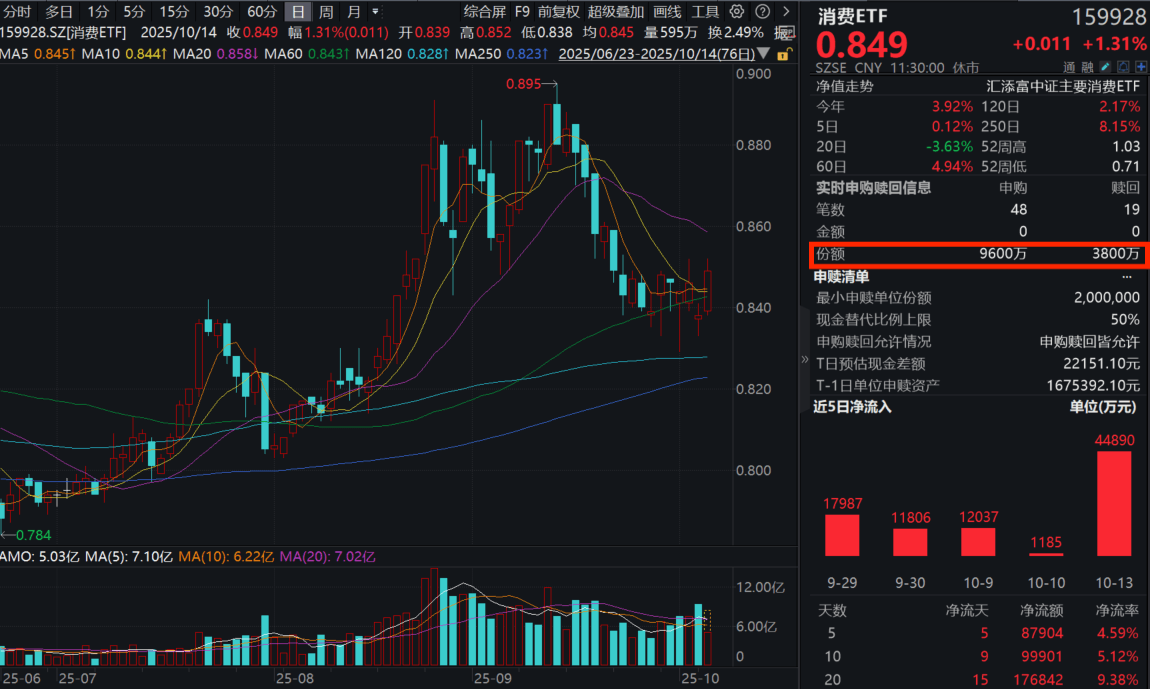
Group 1: Market Performance - The consumption ETF (159928) rose over 1.3% today, with a trading volume exceeding 520 million yuan, marking a net inflow of over 440 million yuan yesterday and an additional 60 million yuan today, achieving eight consecutive days of capital inflow [1] - The latest scale of the consumption ETF (159928) has surpassed 19.9 billion yuan, nearing the 20 billion yuan mark, significantly leading its peers [1] Group 2: Hong Kong Market Insights - The Hong Kong consumption 50 ETF (159268) experienced a slight increase of 0.1%, with a trading volume exceeding 30 million yuan, accumulating over 12 million yuan in net inflow over the past 20 days [3] - Key component stocks showed mixed performance, with notable gains in brands like Bling and Pop Mart, while companies like Mixue Group and Anta Sports saw declines [3] Group 3: Consumer Trends and Opportunities - The upcoming Double 11 shopping festival is expected to boost consumer spending, with Alibaba's Taobao implementing significant subsidy measures to enhance sales [6][8] - The retail sector is anticipated to perform in line with expectations during the National Day holiday, driven by customer traffic, although average spending per customer remains under pressure [6] Group 4: Investment Outlook - The current market environment presents a rebound opportunity due to low valuations and a clean slate for companies, with expectations of improved fundamentals in sectors like beer and dairy [8] - Structural growth remains robust, particularly among younger consumers and in emerging markets, with certain stocks showing reasonable valuations and high growth potential over the next three years [8] - Four categories of investment opportunities are highlighted for the next six months, focusing on low absolute valuations, historical valuation comparisons, high growth certainty, and short-term policy-driven sectors [8] Group 5: ETF Composition - The consumption ETF (159928) has a significant concentration in its top ten holdings, with over 68% weight, including leading liquor companies and major consumer goods firms [10] - Notable stocks in the ETF include Wuliangye, Kweichow Moutai, and Yili, each holding substantial weight in the index [11]

【企业风景】 透视“中国跨国100大”:制造和基建领风骚
Zheng Quan Shi Bao· 2025-10-13 18:07
Core Insights - The "Top 100 Chinese Multinational Companies" list represents China's integration into the global economy and highlights the achievements of Chinese multinational enterprises [1] - Analyzing the development and characteristics of these companies can provide valuable insights and benchmarks for other Chinese enterprises looking to expand internationally [1] Group 1: Technology Manufacturing - Technology manufacturing companies constitute over one-third of the "Top 100" list, primarily driven by private enterprises like Huawei, Lenovo, and Haier [2] - These companies aim to capture larger markets by leveraging product technology and after-sales service, with a notable increase in solar and new energy firms joining the ranks [2] - The internationalization strategies of these firms are diverse, including direct sales, cross-border mergers, and local production, allowing for flexible market entry [2] Group 2: Resource Production - Resource production companies also make up over one-third of the list, predominantly consisting of large state-owned enterprises [3] - These companies focus on energy and mineral resources, with their overseas operations being more localized and independent compared to technology manufacturers [3] - The investment and operational scale at each overseas site are significant, but the overall global integration is lower [3] Group 3: Infrastructure - Infrastructure companies account for just over 10% of the list and are primarily state-owned, providing essential support for other Chinese enterprises venturing abroad [3] - Their operations include transportation, power engineering, and urban construction, acting as international partners for technology and resource companies [3] Group 4: Service Industry - The service industry, including traditional and emerging internet services, currently represents less than 10% of the list [4] - Traditional service firms are limited in their international expansion, while internet companies are increasingly becoming a new force in internationalization, with notable entries in recent years [4] - Internet firms tend to pursue international growth through cross-border mergers and equity investments, although their overseas revenue remains low compared to their foreign assets [5] Group 5: International Logistics - International logistics companies, such as China COSCO Shipping and China International Marine Containers, are also represented on the list, highlighting their role as inherently international enterprises [5] - These firms support China's global supply chain and have significant operational capabilities, including shipping and port operations [5] Group 6: Comprehensive Holdings - Comprehensive holding companies show fluctuating rankings on the list, influenced by changes in their overseas holdings [5] - The collective representation of these multinational enterprises underscores China's image as a manufacturing powerhouse and infrastructure expert on the global stage [5]
晨会纪要:2025年第169期-20251009
Guohai Securities· 2025-10-09 01:40
Group 1 - The core viewpoint of the report highlights that the cloud service business has turned profitable, driving overall profit growth for the company in the first half of 2025 [3][4] - The company reported a revenue of 4.343 billion yuan for the first half of 2025, representing a year-on-year increase of 4.88%, while the net profit attributable to shareholders reached 183 million yuan, up 73.26% year-on-year [3][4] - The gross profit margin for the first half of 2025 improved significantly to 23.37%, an increase of 1.35 percentage points year-on-year, primarily driven by the rapid growth of the cloud service business [4] Group 2 - The cloud service revenue for the first half of 2025 was 1.274 billion yuan, reflecting a year-on-year increase of 29.96%, while the management software and IoT solutions reported revenues of 1.198 billion yuan and 1.872 billion yuan, showing slight declines of 0.34% and 4.46% respectively [4] - The operating profit from the cloud service business was 20 million yuan in the first half of 2025, a turnaround from a loss of 71 million yuan in the same period last year [4] - The company has launched the Haiyue Model V3.0, which enhances the intelligence of cloud service products and has been applied in various enterprises, including Beijing Tongrentang [6][7] Group 3 - The company has signed contracts with major state-owned enterprises for its management software, indicating a successful penetration into the market [8] - The IoT solutions focus on equipment manufacturing, smart manufacturing, and communication information, with significant projects signed in these areas [9] - The company forecasts revenues of 9.076 billion yuan, 10.022 billion yuan, and 10.996 billion yuan for 2025, 2026, and 2027 respectively, with net profits projected at 541 million yuan, 653 million yuan, and 893 million yuan [9]
制造业,拒绝双足机器人
Di Yi Cai Jing· 2025-09-27 13:12
Core Viewpoint - The consensus is forming that bipedal humanoid robots are not suitable for factory environments due to high energy consumption and slower movement speed compared to wheeled robots [2][8]. Group 1: Industry Insights - Many robotics companies are pushing products into manufacturing, including both wheeled and bipedal robots, but the latter is facing challenges in factory settings [2][3]. - New Times has deployed a humanoid robot at Haier's Chongqing refrigerator factory, indicating a partnership aimed at upgrading robot control technology and data collection for training new robots [3]. - Puzhi Robotics has shipped 200 robots, with 60% being wheeled and 40% bipedal, primarily for exhibition purposes rather than industrial applications [4]. Group 2: Technical Challenges - Bipedal robots have significantly higher development costs and complexity compared to wheeled robots, which have more mature technology and lower costs [4][9]. - Current bipedal robots have a movement speed of approximately 1.3 meters per second, while wheeled robots can reach speeds of 2.5 meters per second, making them less suitable for high-paced industrial environments [8][9]. - Bipedal robots face battery life issues, with operational times of 2-3 hours compared to 4-5 hours for wheeled robots, further limiting their industrial applicability [9]. Group 3: Market Dynamics - The investment return rate is a key consideration for industrial enterprises, and the lower initial costs of wheeled robots make them more appealing [10]. - New Times is currently accumulating technology reserves for bipedal robots but does not plan to commercialize them in the short term, reinforcing the preference for wheeled robots in factories [11]. - Experts suggest that while wheeled robots are currently dominant, advancements in bipedal robot technology could eventually lead to their integration into industrial settings [12][13].


制造业,拒绝双足机器人 | 海斌访谈
Di Yi Cai Jing· 2025-09-27 13:01
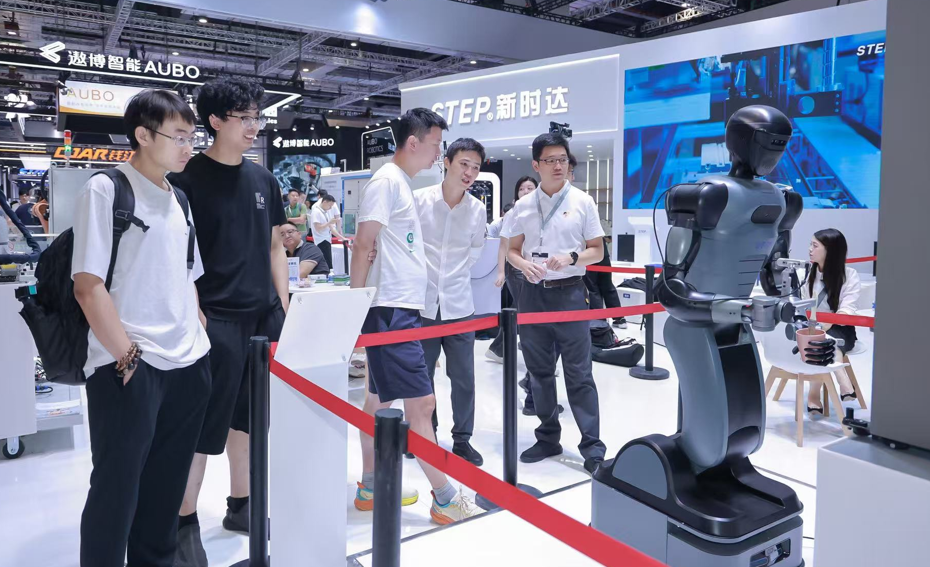
Core Viewpoint - The consensus is forming that bipedal humanoid robots are not suitable for factory environments due to high energy consumption and slower movement speed compared to wheeled robots [1][10]. Group 1: Robot Types and Applications - Wheeled robots are currently more adaptable to factory settings, while bipedal robots are primarily used for exhibition purposes [2][4]. - New Times Da has deployed a humanoid robot at Haier's Chongqing refrigerator factory, focusing on upgrading robot control technology and data collection for training new generation robots [4][5]. - Puzhi Robotics has shipped 200 robots, with 60% being wheeled and 40% bipedal, indicating a preference for wheeled robots in industrial applications [4][5]. Group 2: Cost and Efficiency - The development cost of bipedal robots is significantly higher due to increased complexity and the need for more sensors, with prices ranging from 500,000 to 600,000 yuan, while wheeled robots cost between 400,000 and 450,000 yuan [5][8]. - Bipedal robots consume 40% of their energy for movement, leading to inefficiencies in factory settings where speed and energy efficiency are critical [10]. Group 3: Performance and Limitations - Bipedal robots have a movement speed of approximately 1.3 meters per second, while wheeled robots can reach 2.5 meters per second, making them less suitable for high-paced industrial environments [8][9]. - The operational endurance of bipedal robots is limited to 2-3 hours under full load, compared to 4-5 hours for wheeled robots, further impacting their utility in factories [9][10]. Group 4: Future Outlook - Experts express a mixed outlook on the future of bipedal robots in factories, with some believing that technological advancements could eventually allow them to replace wheeled robots [12][13]. - The development of humanoid robots is seen as a long-term goal, with significant challenges remaining in terms of safety, technical feasibility, and economic value [13].
枝繁叶更茂 “链主”效应助力发展
Qi Lu Wan Bao· 2025-09-25 22:17
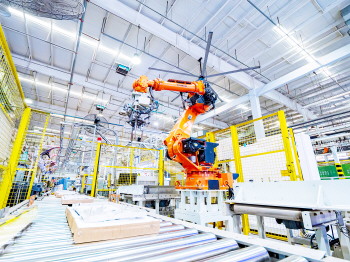
Group 1: New Investment Model and Industry Development - Qingdao Jiaozhou has established a new investment model focusing on "chain leaders" to accelerate the gathering of innovative enterprises in the industrial chain [2] - The "chain leader" effect is evident with companies like Zhongchu Steel Super attracting over 200 steel trading enterprises and Shandong High-speed's supply chain project leading to investments from six logistics financial companies [2] - Jiaozhou is promoting the upgrade of its innovative industrial system, focusing on sectors like smart home appliances, new energy, and green food, leading to the emergence of industry benchmarks and the expansion of industrial clusters [2] Group 2: Digital Transformation in Enterprises - Over 600 enterprises in Jiaozhou have achieved digital transformation, enhancing production efficiency and innovating business models [4] - Haier's air conditioning interconnected factory has transitioned to a "make-to-order" production model, utilizing big data and generative AI for optimization across the entire value chain [3] - The "Gongfu Shanghe" comprehensive empowerment platform has been established to support enterprises in adopting advanced technologies like 5G and smart manufacturing [3] Group 3: Industrial Ecosystem Development - The Kaos Industrial Internet Ecological Park in Jiaozhou is set to produce 26 million high-end home appliances annually, with a current refrigerator production capacity of 4.2 million units [5] - Jiaozhou has attracted 19 upstream and downstream enterprises in the smart home appliance industry, with a total investment of 14.66 billion yuan [6] - The establishment of the Jiaozhou green food industry chain has seen nearly 70 related enterprises, producing over 40 product categories [6] Group 4: New Energy Industry Growth - Jiaozhou is fostering the integration of production, education, and research in the new energy sector, with companies like Qingdao Proton Power Technology developing modular SOEC systems for hydrogen production [7][8] - The city is enhancing its new energy industry framework, led by companies like Qingdao Tianneng Heavy Industry and Huijin Tong, focusing on wind power, smart grid equipment, and energy storage [9] - Jiaozhou aims to accelerate the development of five key industrial clusters, including smart home appliances and new energy, through increased R&D investment and optimized industrial layout [9]



新时达(002527.SZ):新时达人形机器人已顺利在海尔重庆冰箱工厂现场产线部署完毕
Ge Long Hui· 2025-09-24 13:19
Core Viewpoint - The company is committed to developing robotic products that effectively address practical issues in various scenarios [1] Group 1: Upcoming Events and Product Launches - At the 2025 China International Industry Fair (CIIF) on September 23, 2025, the company will showcase its embodied robot systems tailored for actual application needs in Haier's factory [1] - The company will also present multiple innovative robots, industry solutions, and new intelligent motion control PAC products, including an AI-based welding robot that utilizes self-developed algorithms and AI technology [1] - On September 24, the company will host the "2025 CIIF Embodied Intelligent Ecosystem Integration Development Forum," inviting participation from universities, research institutions, and enterprises to promote technology exchange and application [1] Group 2: Current Developments - The company's humanoid robots have been successfully deployed on the production line at Haier's Chongqing refrigerator factory, and will soon commence smart factory training, gradually taking on tasks and advancing to more complex processes [1] - The company has identified four key data collection and validation scenarios to be completed by the end of the year, which include adaptive grasping robot systems, smart welding, flexible automated PCB quality inspection, and dual-arm collaborative assembly [1]
王子新材(002735) - 002735王子新材投资者关系管理信息20250919
2025-09-19 10:08
Group 1: Company Overview and Strategy - The company is actively engaged in the controllable nuclear fusion industry, leveraging national policy support and focusing on technological innovation to drive growth [2][3] - The company has established deep cooperation with suppliers for core raw materials, ensuring supply chain stability and independence [3] - The company operates multiple industrial parks across various locations, employing over 3,000 staff members [3] Group 2: Financial Performance - The subsidiary Ningbo New容 contributes less than 3% to the overall revenue for the fiscal year 2024, indicating a minimal short-term impact on the company's financial performance [3] - The plastic packaging business achieved revenue of approximately 640 million yuan in the first half of 2025, reflecting a year-on-year growth of 21.22% with a gross margin of 17.41% [5] Group 3: Business Segments and Future Outlook - The military electronics segment, represented by the subsidiary Wuhan Zhongdian Huarui, generated approximately 44.53 million yuan in revenue in the first half of 2025 [5] - The company aims to optimize its business structure and enhance R&D capabilities in the military electronics sector while expanding the production scale of film capacitors [5] - The company emphasizes a sustainable development strategy focused on quality business and diversified growth to create long-term value for shareholders [5]
