
蒂森克虏伯

Search documents
关税大棒砸向欧洲!德国经济火车头熄火,万亿产业链紧急转向
Sou Hu Cai Jing· 2025-08-27 01:01
Group 1 - The EU's exports to the US fell by 27% year-on-year in June, leading to a significant reduction in trade surplus from €15.6 billion to €2.8 billion, marking a historic decline [1][2] - The US increased tariffs on EU goods from an average of less than 5% to 15%, with some sectors facing tariffs as high as 50%, resulting in a sevenfold increase in costs for European companies [2][3] - The EU's attempts to circumvent tariffs through third-country transshipment have been largely blocked due to strict regulations and heightened vigilance from US customs [2] Group 2 - Germany's economy, as the EU's industrial powerhouse, is facing severe challenges, with GDP contracting by 0.1% in Q2, risking a technical recession if Q3 shows further decline [1][6] - The automotive industry in Germany is particularly hard-hit, with major companies like BMW and Mercedes-Benz reporting significant profit declines, and the overall cash flow for the three major car manufacturers potentially decreasing by €10 billion [6][9] - Job losses are escalating, with companies like Thyssenkrupp and Audi planning to cut thousands of jobs, potentially leading to a loss of 70,000 jobs in the automotive sector across Europe [6][9] Group 3 - Germany's high energy costs and lagging digital transformation are exacerbating the economic impact of tariffs, with industrial electricity prices being the highest in Europe and a nearly 20% decline in production capacity in energy-intensive industries [9][10] - The shift towards the Chinese market is accelerating, with German companies like BMW and Volkswagen seeking partnerships to enhance competitiveness in electric vehicle production [10][11] - The cumulative economic loss for Germany due to US tariffs is estimated at €290 billion from 2025 to 2028, with the EU as a whole facing losses of €1.1 trillion, indicating a broader impact on the Western industrial system [11][12]

国际观察|美关税政策加剧德国经济复苏之困
Xin Hua She· 2025-08-19 02:11
Economic Overview - Germany's GDP decreased by 0.1% in Q2 2023, reversing earlier growth and falling short of market expectations, indicating ongoing economic decline after two years of contraction [1] - The unemployment rate is approaching 3 million, with significant layoffs announced by major companies such as Audi, Deutsche Bank, and Siemens, reflecting the impact of the economic downturn on the labor market [2] Industry Impact - The automotive industry, a key sector in Germany, is facing substantial profit declines among major manufacturers like BMW and Volkswagen, with industrial output hitting its lowest level since May 2020 [2] - Over one-third of companies report insufficient orders, particularly in the automotive, machinery, and electrical equipment sectors, highlighting a critical lack of demand [2] Consumer Confidence - Consumer confidence has dropped, with the leading index falling to -21.5 points, indicating a shift towards saving rather than spending due to high prices and economic uncertainty [3] External Pressures - U.S. trade policies and tariffs are significantly impacting Germany's export-driven economy, with predictions that these could reduce Germany's GDP by 0.2% in the medium term [4] - The automotive sector is particularly affected by U.S. tariffs, which impose additional costs on German car manufacturers despite recent reductions in tariffs on EU imports [4] Structural Challenges - Germany faces long-standing structural issues, including slow infrastructure investment and lengthy project approval processes, which hinder economic competitiveness [4] - Rising energy costs have also severely impacted manufacturing profits, with energy-intensive industries experiencing production declines of nearly 20% [5][6] Government Response - The German government is implementing a comprehensive economic plan, focusing on boosting the defense industry to stimulate growth, alongside a significant public investment initiative aimed at infrastructure and research [7] - Despite these efforts, experts express skepticism about the sustainability of growth without structural reforms, emphasizing the need for a balanced approach that includes fiscal policy and systemic reforms [8]
蒂森克虏伯下调全年业绩预期
Zheng Quan Shi Bao Wang· 2025-08-14 06:17
Core Viewpoint - Thyssenkrupp has lowered its full-year earnings forecast, expecting adjusted EBIT to be at the lower end of previous expectations, with revenue projected to decline by 5% to 7% [1] Group 1: Financial Performance - The company reported a net loss of €278 million in the third quarter, with sales decreasing by 9% to €8.2 billion [1] - The anticipated decline in revenue and EBIT is attributed to weak demand in the European automotive sector and high energy costs resulting from the Russia-Ukraine conflict [1] Group 2: Strategic Adjustments - Thyssenkrupp plans to cut its investment budget by €200 million and continue implementing cost-cutting measures [1]

德国推出1000亿欧元"德国基金"!撬动十倍私人资本,重点投资国防、能源领域
Sou Hu Cai Jing· 2025-08-11 00:31
Group 1 - The German government announced a large-scale investment plan called the "German Fund" with a total size of €100 billion (approximately $116 billion) aimed at enhancing security in strategic areas such as defense, energy, and critical raw materials [1][3] - The fund will be supported by at least €10 billion of initial public funding from the government, with a goal to leverage up to ten times that amount in private capital investments [1][3] - The fund will focus on growth, innovation, and competitiveness, collaborating with private investors in Germany and Europe [1] Group 2 - The fund will adopt a mixed investment model, providing a government-backed assurance to attract international investors, including venture capital and family offices [3] - Key investment areas will include energy infrastructure, with the government considering acquisitions in electricity transmission networks to strengthen control [3] - The defense industry is also a priority, with negotiations ongoing for minority stakes in European arms manufacturers [3] Group 3 - The establishment of the fund comes in response to Germany's economic contraction over the past two years, viewed as a crucial measure by the government to stimulate economic growth [4] - Geopolitical risks have heightened the need for this fund to secure critical supply chains [4] - The fund aims to invigorate the domestic capital market, addressing the cautious investment behavior of private enterprises, particularly in high-risk projects [4] - A previously initiated fund during former Chancellor Scholz's administration, aimed at investing in important mineral projects, is expected to be integrated into the new fund [4] - The fund is anticipated to officially launch in September or October, with potential for expanded investment coverage [4]
百亿撬动千亿!德国拟启动战略基金,投向国防和能源
Hua Er Jie Jian Wen· 2025-08-06 09:19
这一旗舰基金计划是德国总理Friedrich Merz政府为重振德国经济所采取的关键举措。德国经济已连续 两年陷入萎缩,政府希望通过该计划扭转颓势。此外,德国政府希望通过这项基金强化关键供应链的安 全性,因为当前地缘政治风险持续加剧。 德国基金锁定电网、军工与资本市场 德国经济部表示,德国政府的资金来源正在与财政部及国家开发银行KfW进行协商,不过官方尚未透露 基金的结构、投资策略和具体时间表的更多细节。但知情人士透露,德国基金计划将在9月或10月正式 启动。 千亿德国基金登场,德国开启经济保卫战。 8月6日周三,据媒体报道,德国正准备推出一项名为"德国基金"(Deutschlandfonds)的投资基金,投 资国防、能源和关键原材料等战略性行业,并确保关键供应链的安全。 这项基金预计总规模将达到1000亿欧元(约合1160亿美元),并将通过吸引国际投资者,如风险投资和 家族办公室来扩大政府资金的影响力。根据德国经济部的声明,政府将为该基金初步注资至少100亿欧 元,目标是撬动最多10倍规模的私人资本。 风险提示及免责条款 市场有风险,投资需谨慎。本文不构成个人投资建议,也未考虑到个别用户特殊的投资目标、财务 ...
150PB工业数据+智能体革命,西门子开启AI制造新纪元
机器之心· 2025-07-25 04:29
Core Viewpoint - Siemens is at the forefront of integrating AI into industrial processes, exemplified by its Industrial Copilot and Industrial Foundation Model, which enhance automation and efficiency in manufacturing environments [9][30][65]. Group 1: Historical Context and Development - The journey of Siemens in industrial AI began in 1964 with the creation of the Zuse Graphomat Z64, marking the start of computer-generated art and the long evolution towards AI in industry [2][4]. - Over the past 60 years, Siemens has transformed its Erlangen factory into a hub for over 100 AI applications, utilizing digital twin technology to mirror real-world processes [6][9]. Group 2: Industrial Copilot and AI Integration - The Industrial Copilot acts as a bridge between human language and machine operations, allowing users to issue natural language commands that the system translates into actionable tasks [10][18]. - This system significantly improves efficiency, enabling engineers to generate automation code quickly, reducing development time by nearly 50% and deployment time by 30% [14][15]. Group 3: Industrial Foundation Model (IFM) - The Industrial Foundation Model is a collection of models rooted in 150PB of validated industrial data, designed to understand and operate within the constraints of industrial environments [24][28]. - Unlike general-purpose AI models, the IFM is tailored to comprehend machine language and industrial logic, making it suitable for complex manufacturing processes [25][28]. Group 4: Data and Knowledge as Competitive Advantages - Siemens possesses a unique data asset of 150PB, which spans various stages of product design and manufacturing, providing a competitive edge in AI model training [34][36]. - The company’s extensive experience and industry know-how are critical in navigating the complexities of data collection, cleaning, and model deployment in industrial settings [40][41]. Group 5: Strategic Moves and Future Outlook - Recent strategic actions include the acquisition of Altair for over $10 billion, enhancing Siemens' capabilities in industrial simulation and AI-driven optimization [67]. - Siemens is also focusing on reskilling its workforce to ensure that employees can effectively collaborate with AI technologies, emphasizing the importance of cultural acceptance of AI in industrial environments [62][65].


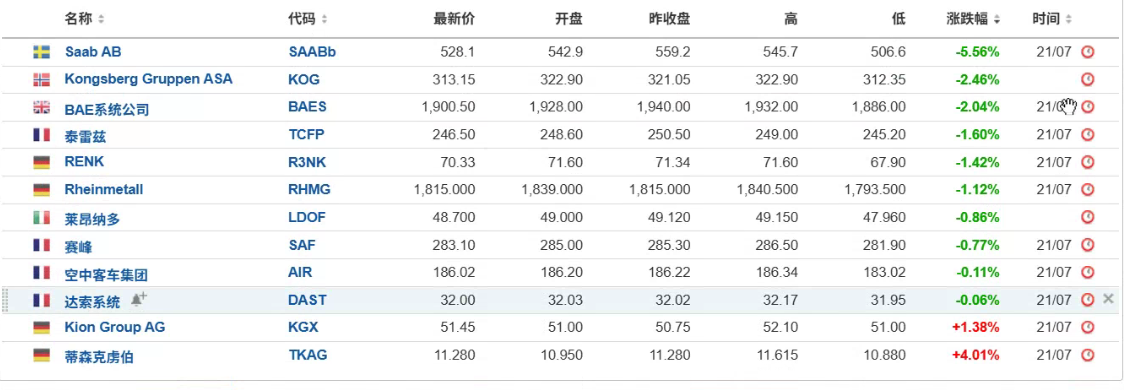
欧洲军工股普遍收跌,萨博公司跌5.56%,Kongsberg Gruppen ASA跌2.46%,英国宇航系统(BAE)跌2.04%,蒂森克虏伯则涨4.01%。
news flash· 2025-07-21 17:19
Group 1 - European defense stocks generally declined, with Saab falling by 5.56%, Kongsberg Gruppen ASA down by 2.46%, and BAE Systems decreasing by 2.04% [1][2] - Thyssenkrupp, however, saw an increase of 4.01% [1][2] Group 2 - Specific stock performance included Saab AB at a latest price of 528.1, down from a previous close of 559.2 [2] - Kongsberg Gruppen ASA's latest price was 313.15, down from 321.05 [2] - BAE Systems' latest price was 1,900.50, down from 1,940.00 [2] - Thyssenkrupp's latest price was 11.280, up from 11.280 [2]
军工与钢铁,日本尖端技术领先全球三十年,让中美德俄望尘莫及?
Sou Hu Cai Jing· 2025-07-19 04:58
Core Viewpoint - Japan's military and steel technology is recognized as world-leading, particularly in precision manufacturing, materials science, and electronic technology, although it faces competition from other major powers like the US, Russia, and China [1][22]. Group 1: Military Technology - Japan has a significant advantage in machine tool technology, with a global market share of over 30% in high-end CNC machine tools, crucial for producing precision components in military equipment [3]. - The country excels in materials technology, producing high-temperature alloys and special steels that are essential for high-performance military applications, with companies like Mitsubishi Heavy Industries and Nippon Steel being key players [5]. - Japan's electronic technology, particularly in radar and communication systems, is highly advanced, with phased array radar technology enhancing naval combat capabilities [6]. - The "Soryu-class" submarines utilize Air-Independent Propulsion (AIP) technology, providing enhanced stealth and operational capabilities [8]. Group 2: Steel Technology - Japanese steel companies like Nippon Steel and JFE Steel produce high-quality steel that is widely used in military, automotive, and construction industries, with innovations in production processes improving efficiency and reducing waste [10][11]. - Japan maintains a 5 to 15-year lead in steel technology, particularly in product quality and environmental practices, despite competition from Germany, South Korea, and China [18]. Group 3: Research and Development - Japan invests heavily in research and development, with R&D spending consistently above 3% of GDP, reaching approximately 3.3% in 2022, which translates into tangible technological advantages [13]. - The country's technological prowess is attributed to decades of accumulated knowledge and continuous investment in innovation since World War II [14]. Group 4: Industry Structure - Japan's military and steel industries benefit from a complete supply chain, with local companies responsible for every production stage, enhancing flexibility in innovation and product upgrades [17]. - The rigorous quality control and work ethic in Japan ensure high reliability in military and steel products [17]. Group 5: Global Impact - Japan's advanced technologies have positively influenced global military and steel industries, with many countries relying on Japanese precision machinery and high-quality materials [20].
关税前景不明,美股反弹受阻,纽铜一度较日低暴拉超18%
Hua Er Jie Jian Wen· 2025-07-08 23:18
Group 1 - US stock market shows mixed performance with small-cap stocks outperforming, while the Dow Jones lagged behind [2][8] - Nvidia reached a new high with a market capitalization approaching $4 trillion [2][8] - Freeport-McMoRan, a copper mining company, saw its stock price surge over 8.8% after Trump's announcement of a 50% tariff on copper imports [2][14] Group 2 - The S&P 500 index closed down 4.46 points, a decrease of 0.07% [3] - The Dow Jones Industrial Average fell by 165.60 points, a decline of 0.37% [4] - The Nasdaq Composite index increased by 5.95 points, a rise of 0.03% [5] Group 3 - The Philadelphia Semiconductor Index rose by 1.81% [10] - AMD shares increased by 2.24% [11] - The Nasdaq Golden Dragon China Index rose by 0.71%, outperforming the major US indices for two consecutive days [12] Group 4 - Energy sector ETF increased by 2.69%, while financial sector ETF decreased by 0.89% [7] - Solar stocks, including SunRun, fell over 11% due to tightening clean energy tax regulations proposed by Trump [15]
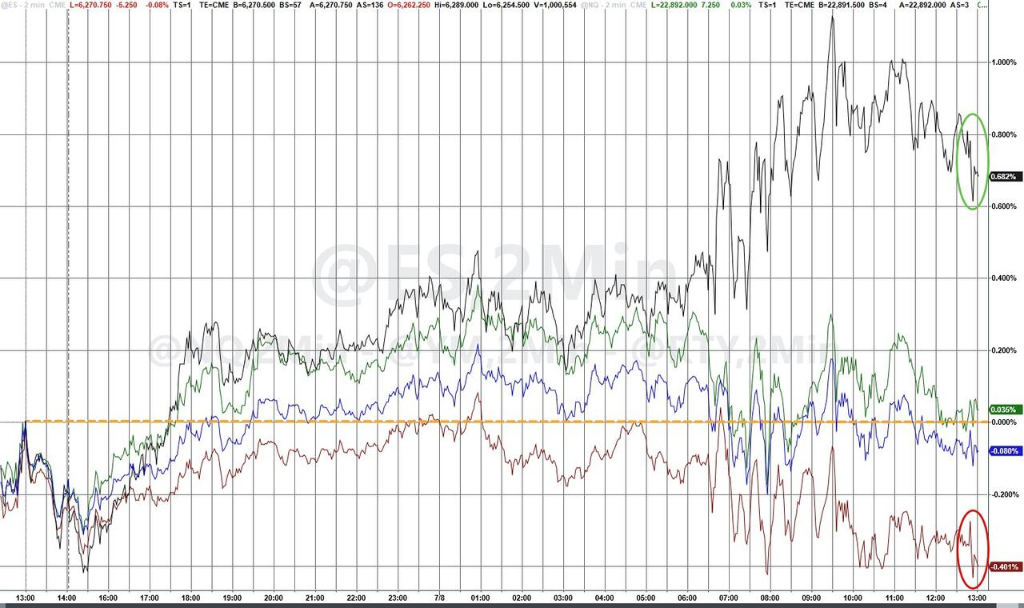
据德国商报:德国政府目前并未就可能收购蒂森克虏伯防务业务股权一事进行相关谈判。
news flash· 2025-07-02 05:23
Group 1 - The German government is currently not engaged in negotiations regarding a potential acquisition of Thyssenkrupp's defense business equity [1]