NEC

Search documents
小球穿墙而过,诺奖看见“量子革命”
2 1 Shi Ji Jing Ji Bao Dao· 2025-10-10 07:56
Group 1 - The core achievement of the Nobel Prize winners is the demonstration that quantum tunneling can occur at a macroscopic scale, not just in the microscopic realm [2][4][10] - The experiments conducted by the laureates utilized superconducting circuits to validate two fundamental quantum properties: quantum tunneling and energy quantization [4][8] - Their work provides a tangible connection between quantum mechanics and macroscopic systems, allowing for the observation of quantum phenomena in a way that can be directly experienced [8][10] Group 2 - The research contributes to the broader understanding of "universal quantum theory," suggesting that quantum states evolve continuously from atomic to large circuit scales without the need for a mysterious collapse mechanism [10][11] - The findings are expected to pave the way for the next generation of quantum technologies, including quantum cryptography, quantum computers, and quantum sensors [12][13] - The historical context of quantum mechanics is highlighted, noting its foundational role in modern technology and its applications in various fields such as telecommunications, medical imaging, and computing [11][12] Group 3 - The advancements in quantum technology are shifting from theoretical possibilities to practical commercialization, with significant progress made in quantum communication and computing [12][13] - Notable achievements in quantum applications have been made in China, including successful long-distance quantum communication and the development of a superconducting quantum computing prototype that outperforms traditional supercomputers [13]


SuperQ Quantum CEO Invited to Speak at Japan's Q-STAR Quantum Alliance Meeting; Bringing Quantum-Driven Autonomy & Resilience Solutions to Japan
Thenewswire· 2025-10-09 12:00
Core Insights - SuperQ Quantum Computing Inc. has been invited to present at the Q-STAR meeting in Japan, highlighting its leadership in quantum and supercomputing [1][3] - The presentation will focus on quantum-driven solutions for Japan's societal challenges, showcasing SuperQ's hybrid quantum and classical computing platform [2][5] - Q-STAR serves as Japan's primary industry alliance for quantum technology, aiming to foster collaborations among corporations, start-ups, academia, and government [3][4] Company Overview - SuperQ Quantum is positioned as a leader in quantum and supercomputing, aiming to provide significant ROI for global organizations [6][7] - The company's flagship platform, Super™, is designed to make advanced computational power accessible, targeting sectors such as finance, healthcare, logistics, and defense [8] Strategic Engagement - The engagement with Q-STAR is seen as a strategic move for SuperQ to enhance its growth in Asia and establish a foothold in Japan [5] - The collaboration aims to explore joint pilot initiatives and reinforce Japan's leadership in quantum applications [5]


日经平均股指大涨2175点,创新高
日经中文网· 2025-10-06 08:12
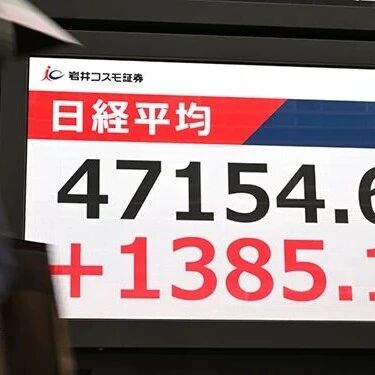
Core Viewpoint - The Japanese stock market experienced a significant surge following the election of new Liberal Democratic Party president, Sanae Takaichi, with expectations of fiscal expansion and monetary easing driving investor sentiment [4]. Group 1: Market Performance - On October 6, the Nikkei average index rose by 2,175.26 points, marking a 4.8% increase and reaching a record high of 47,944.76 points [2]. - This single-day increase is noted as the fourth largest since the index's inception [2]. Group 2: Political Impact - The election of Sanae Takaichi, the first female president of the Liberal Democratic Party, shifted market expectations, leading to a rapid buying of Japanese stocks and selling of yen [4]. - The market had initially anticipated the election of Agriculture Minister Yoshikazu Koizumi, making Takaichi's victory a surprise that fueled optimism among investors [4]. Group 3: Sector Performance - Stocks related to Takaichi's proposed policies on defense, nuclear fusion, and space saw significant buying interest, with companies like Mitsubishi Heavy Industries, IHI, Fujitsu, and Mitsubishi Electric reaching new highs [4]. - Cybersecurity stocks such as NEC and Trend Micro also experienced substantial price increases [4]. Group 4: Market Sentiment - Approximately 90% of stocks in the Tokyo Stock Exchange Prime market saw gains, reflecting a broad-based rally driven by investor optimism regarding potential reforms in Japan [4].
Transgene to Present New Immunological Data from Phase I Trial of Individualized Therapeutic Cancer Vaccine, TG4050, at SITC 2025
Globenewswire· 2025-10-03 15:45
Core Insights - Transgene will present a detailed analysis of the neoantigen-specific T cell response from the Phase I trial of its individualized therapeutic cancer vaccine, TG4050, at the upcoming SITC Annual Meeting [1][3] - TG4050 is being developed for solid tumors, specifically targeting HPV-negative head and neck cancers, utilizing Transgene's myvac® technology and NEC's AI capabilities [3][5] - The Phase I trial results showed that all patients receiving TG4050 remained disease-free after a minimum of 2-year follow-up, contrasting with a 19% relapse rate in the observational arm [4] Company Overview - Transgene is a biotechnology company focused on developing targeted immunotherapies for cancer treatment, with a portfolio of viral vector-based immunotherapeutics [5] - TG4050 is the lead asset of the company, representing the first individualized therapeutic vaccine based on the myvac® platform, demonstrating proof of principle in head and neck cancer treatment [5][6] - The company is also advancing other viral vector-based assets, including BT-001, which is in clinical development [5] Clinical Development - TG4050 is currently being evaluated in a randomized multicenter Phase I/II clinical trial as a single agent in the adjuvant treatment of HPV-negative head and neck cancers [3] - A Phase II extension of the trial is ongoing, with patient enrollment currently in progress [4]

宣布开放1300项专利,海信能否规避“专利丛林法则”
2 1 Shi Ji Jing Ji Bao Dao· 2025-09-25 15:01
Core Viewpoint - Hisense is strategically opening over 1,300 core patents related to three-color laser technology to strengthen its industry position and expand the market scale, while also aiming to influence industry standards [2][9][10] Market Trends - The smart projection market, excluding laser TVs, saw a decline in sales volume by 3.9% year-on-year to 2.778 million units in the first half of 2025, with sales revenue dropping by 2.9% to 4.68 billion yuan [3] - The decline in the market is primarily attributed to a significant drop in low-end projector sales, as the market is undergoing a phase of clearing out low-end capacity [4] Product Performance - Despite the overall market contraction, the high-end segment, particularly laser display products, is experiencing growth, with the global laser projection market expected to reach a compound annual growth rate of 23.4% from 2020 to 2025 [4][5] - In the first half of 2025, the shipment of laser TVs over 100 inches in China increased by 177% year-on-year, indicating a shift towards high-quality display products [6] Technological Advancements - The adoption of advanced technologies such as 8K ultra-high definition and HDR Pro is expected to enhance the penetration of laser sources in emerging fields like AR/VR and automotive HUDs [6] - Hisense's three-color laser technology offers superior brightness and color range compared to traditional LED projectors, covering over 90% of the Rec. 2020 color gamut [7][8] Strategic Implications - By opening its patents, Hisense aims to create a dual-driven model of "technology output + complete machine sales," which will stabilize revenue through patent licensing while increasing market share for its products [7][9] - The move is seen as a way to avoid the pitfalls of a "patent jungle," which could hinder technological commercialization and market growth [8][9]

日本央行决定出售ETF,为何股市还能上涨?
3 6 Ke· 2025-09-23 03:36
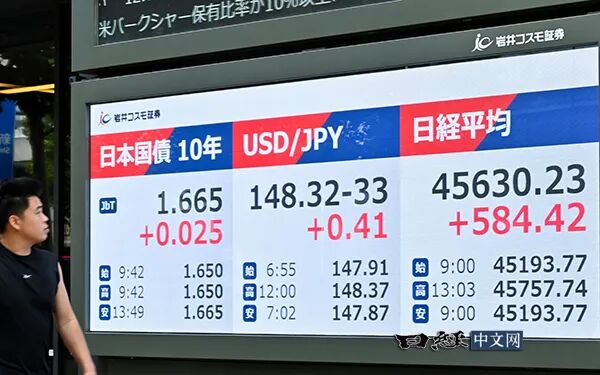
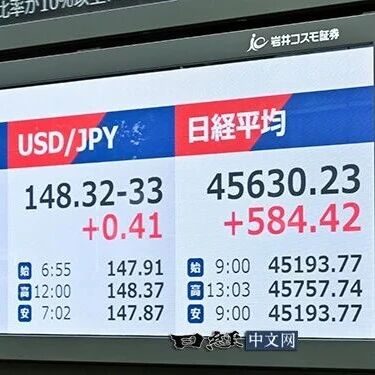
| will history of the | | 10. HTT 1/5 = 1/1 | | --- | --- | --- | | 心 被共コスモ世界 - LEE (14 13) 11 11 11 11 11 11 | | 日落平 | | 148.32-33 | | 45680.25 | | 1.665 | | +584.42 | | +0.491 +0.025 | | | | 编 6:55 9:42 | 1.650 | 14791 @ 9:00 45193.// | | 148.37 雷 9:42 高 12:00 | 1.650 | 雷 13:03 45757.74 | | 安 13:49 安 7:02 | 1.665 | 147.87 @ 9:00 45193.77 | | 2 2 2 8 中文网 | | | 受到长期利率上涨的影响,日本的银行股明显上涨(9月22日,东京都中央区) 日本央行9与19日发表了出售ETF的方针,不过由于出售速度缓慢,有分析认为这对市场的 影响轻微。有观点认为,"脱离对央行的依赖"反而有可能促进日本企业的公司治理改革,日 经平均股指22日再次创出新高…… 即使日本银行(央行 ...
日本央行决定出售ETF,为何股市还能上涨?
日经中文网· 2025-09-23 02:58
Core Viewpoint - The article discusses the impact of the Bank of Japan's (BOJ) decision to sell Exchange-Traded Funds (ETFs) on the Japanese stock market, highlighting a significant rise in bank stocks and the Nikkei index, as well as potential corporate governance reforms resulting from reduced reliance on the central bank [1][3]. Group 1: Market Reactions - Following the BOJ's announcement on September 19 regarding the sale of ETFs, the Nikkei index initially dropped over 800 points but rebounded to a new high, gaining 447 points (1%) to reach 45,493 points by September 22 [1][3]. - Investors have resumed buying Japanese stocks despite the BOJ's ETF sales, with the Nikkei index recovering nearly 1,000 points from its low on September 19 [3]. Group 2: Corporate Governance Reforms - Analysts suggest that the BOJ's gradual exit from ETF purchases could enhance corporate governance in Japan, as companies may become less dependent on the central bank's support [1][5]. - The Tokyo Stock Exchange's PBR reform initiated in 2023 is prompting companies to accelerate the reduction of cross-shareholdings and stabilize their shareholder bases [5][6]. Group 3: Corporate Actions and Strategies - Companies like Omron and Mitsubishi Electric are actively considering structural reforms, including divesting underperforming business units to improve return on equity (ROE) [5][6]. - Omron's stock rose by 7% following its announcement to consider divesting its struggling electronic components business [5]. - Mitsubishi Electric aims to increase its ROE from 8% in FY2024 to 10% by FY2027, with its stock price rising by 20% after the announcement [6]. Group 4: Market Sentiment and Future Outlook - The market is closely monitoring the BOJ's ETF sales as a potential catalyst for accelerating corporate governance reforms in Japan [6]. - UBS analysts predict that companies will increasingly focus on shareholder returns and business restructuring to enhance profitability in the wake of the PBR reforms [5][6].
Open RAN已死?
半导体行业观察· 2025-09-16 01:39
Core Viewpoint - Mavenir's CEO warns that without support from "brownfield" operators, Open RAN may face extinction, leading to a monopoly by Ericsson and Nokia outside of China [1][4] Group 1: Open RAN Development - Open RAN was officially launched in early 2018 with the establishment of the O-RAN Alliance, aimed at creating more open interfaces to foster competition among suppliers [3] - Since the formation of the O-RAN Alliance, there have been few new "greenfield" network projects, with the largest network owned by Echostar set to retire after selling spectrum licenses to AT&T and SpaceX [3][4] - Major existing "brownfield" operators show a lack of interest in Open RAN, preferring traditional suppliers like Huawei, Ericsson, and Nokia, whose RAN market share increased from 75.1% in 2023 to 77.4% [4] Group 2: Market Competition - Nokia's mobile networks president asserts that competition in the market is more intense than critics suggest, with companies like Samsung, Fujitsu, and NEC also participating [5] - Omdia reports that Samsung held a 4.8% share of the RAN market last year, ranking as the fifth-largest supplier, while NEC and Fujitsu had shares of 0.9% and 0.5%, respectively [5] Group 3: Technological Integration - Nokia claims to have integrated its baseband technology with multiple manufacturers' radio units, including Mavenir and a Korean RF unit manufacturer [6] - Nokia's MantaRay platform allows operators to manage RAN from different suppliers, addressing concerns about multi-vendor integration in Open RAN [8][9] Group 4: Future Outlook - Despite positive remarks from Nokia regarding Open RAN's progress, concerns remain among large telecom operators about the sub-industry's prospects, with projected annual spending on RAN products declining by 22% from 2022 to 2024 [12] - Smaller suppliers like Mavenir may struggle to compete against larger companies like Fujitsu and NEC, which have the backing of larger electronic firms [12][13]



短期优势时代:不懂“脉动速度”,投资如同盲人骑快马
Sou Hu Cai Jing· 2025-08-27 03:42
Group 1 - The core truth of today's investment world is that technological moats are failing, supply chains are critical to a company's survival, and the key metric determining value is "pulsation speed" [1][2] - Dell's stock price surged 269 times in the 1990s due to its innovative supply chain design, which included zero finished goods inventory and direct sales to customers [1][2] - Silicon Graphics, once a leader in 3D graphics technology, faced a dramatic decline due to supply chain failures, highlighting the importance of supply chain resilience [2] Group 2 - The "pulsation speed" framework from MIT analyzes how industries oscillate between vertical integration and horizontal modularity, with the transition speed determined by the industry's pulsation speed [5][7] - Different industries exhibit varying pulsation speeds, with personal computers having a product pulsation speed of less than 6 months, while pharmaceuticals can take over 10 years for new drug development [6][14] - The "whip effect" illustrates how small demand fluctuations can be amplified throughout the supply chain, leading to significant impacts on upstream suppliers [8] Group 3 - The three-dimensional capability chain map helps analyze a company's competitive position within its supply chain and technology ecosystem, focusing on organizational, technological, and capability chains [10][11][12] - Companies must adapt to market changes by managing their resources efficiently, as demonstrated by Dell's just-in-time production model that minimizes inventory cycles [13] - Investment strategies should be tailored based on industry types, such as "fruit fly" industries with rapid iteration cycles and "elephant" industries with stable cash flows [18][20]



走进联想:构建“厚植中国、全球互惠”的新型全球化 | 跨越山海
Di Yi Cai Jing· 2025-08-25 06:39
Core Insights - Lenovo Group serves as a landmark case for the globalization of Chinese enterprises, navigating a new phase of global trade and developing strategies for geopolitical resilience, deeper localization, sustainable growth, and trusted global branding [2][3][4] Group 1: Globalization Journey - Founded in 1984 in Beijing, Lenovo officially began its globalization journey in 2004 with the acquisition of IBM's PC business, which marked a significant milestone in its international expansion [2][3] - Over the past 20 years, Lenovo has transformed from a leading player in the Chinese PC market to the world's top PC manufacturer, maintaining its market leadership [3][4] - Lenovo's innovative spirit has revitalized struggling tech brands like ThinkPad, Motorola, NEC, and Fujitsu, showcasing its ability to turn "negative assets" into key growth drivers [3][4] Group 2: Resilience and Adaptation - Despite global trade disruptions caused by tariff wars, Lenovo maintained its competitiveness and market share through its unique ODM+ end-to-end operational model, achieving resilient growth [3][4] - In the fiscal year 2024/25, Lenovo reported its best-ever performance, with strong momentum continuing into the first quarter of fiscal year 2025/26 [3][4] Group 3: Manufacturing and Localization Strategy - Lenovo's globalization is characterized by a "China + N" manufacturing strategy, with overseas revenue reaching 314.4 billion yuan in 2024, ranking second among Chinese enterprises [6][9] - The company operates in 180 markets globally, employing 72,000 staff and managing a complex supply chain with over 2,000 suppliers [6][9] - Lenovo's manufacturing capabilities are primarily based in China, with 75% of its revenue generated from overseas markets, emphasizing its commitment to local production and delivery [9][11] Group 4: Mergers and Acquisitions - The acquisition of IBM's PC business in 2004 was pivotal for Lenovo, providing essential resources such as brand, technology, and supply chain advantages [16][21] - Lenovo has successfully integrated several well-known brands through acquisitions, including IBM's x86 server business and Motorola Mobility, enhancing its global governance capabilities [21][22] - The company has adopted a localized approach in its acquisitions, ensuring that management teams are composed of local talent to better understand market dynamics [22][45] Group 5: Innovation and AI Integration - Lenovo has diversified its business beyond PCs, with non-PC revenue accounting for 47% of total revenue, driven by its focus on AI and innovation [36][38] - The company has established a robust R&D framework, with over 30,000 patents, to support its long-term competitiveness in the AI era [39][40] - Lenovo's commitment to sustainable development and AI for all reflects its vision for a future where technology benefits society [37][40]