Summit Therapeutics Inc.

Search documents
Why Is AbbVie Stock Trading Higher On Thursday?
Benzinga· 2025-07-10 18:36
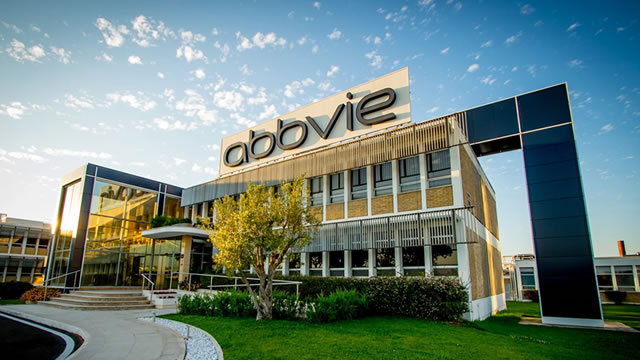
Core Insights - IGI Therapeutics SA and AbbVie Inc. have entered into an exclusive licensing agreement for IGI's investigational asset ISB 2001, aimed at oncology and autoimmune diseases [1][2] - AbbVie will have exclusive rights to develop, manufacture, and commercialize ISB 2001 in North America, Europe, Japan, and Greater China [2] Financial Terms - IGI will receive an upfront payment of $700 million and is eligible for up to $1.225 billion in milestone payments, along with tiered, double-digit royalties on net sales [3] - The total potential financial benefit for IGI from this agreement could reach $1.925 billion [3] Product Details - ISB 2001 is a first-in-class trispecific T-cell engager targeting BCMA and CD38 on myeloma cells and CD3 on T cells, currently in Phase 1 for relapsed/refractory multiple myeloma [3] - Recent data from a study presented at the 2025 ASCO Annual Meeting showed a sustained overall response rate (ORR) of 79% and a complete/stringent complete response (CR/sCR) rate of 30% in heavily pretreated relapsed/refractory myeloma patients [4] Regulatory Status - The U.S. FDA granted ISB 2001 Orphan Drug Designation in July 2023 and Fast Track Designation for relapsed/refractory myeloma patients in May 2025 [5] Market Context - Other companies in the industry are also pursuing significant partnerships, such as AstraZeneca's reported talks with Summit Therapeutics for a $15 billion deal and BioNTech's agreement with Bristol Myers Squibb involving $1.5 billion upfront [5][6] - AbbVie’s stock price increased by 2.63% to $195.63 following the announcement [7]


Merck Strikes $10-Billion Deal For Verona, Secures First-In-Class COPD Drug
Benzinga· 2025-07-09 13:03
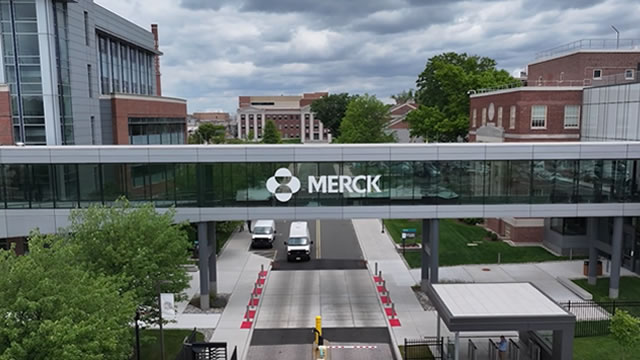
Core Viewpoint - Merck & Co. Inc. is acquiring Verona Pharma plc for approximately $10 billion, adding Ohtuvayre, a novel treatment for chronic obstructive pulmonary disease (COPD), to its portfolio [1][2][4] Group 1: Acquisition Details - The acquisition price is set at $107 per American Depository Share (ADS), with each ADS representing eight ordinary shares of Verona Pharma [1] - The transaction is expected to close in the fourth quarter of 2025, with most of the purchase price capitalized as an intangible asset for Ohtuvayre [3] Group 2: Product Information - Ohtuvayre, approved by the U.S. FDA in June 2024, is the first new inhaled mechanism for COPD in over 20 years, combining bronchodilator and non-steroidal anti-inflammatory effects [2] - Ohtuvayre is also under evaluation in clinical trials for non-cystic fibrosis bronchiectasis [2] Group 3: Industry Context - The acquisition reflects a trend of large pharmaceutical companies acquiring biotech firms with approved, revenue-generating products to replace revenue from drugs losing patent protection [4] - Merck's Keytruda, the top-selling drug globally with nearly $30 billion in annual revenue, is expected to face patent expiration and U.S. government price-setting rules by 2028 [4] Group 4: Merck's Acquisition Strategy - Since Rob Davis became CEO in April 2021, Merck has been highly active in acquisitions and licensing, with the highest deal count and spending in the pharmaceutical industry [5] - Investors are urging Merck to pursue more deals to offset anticipated sales declines following Keytruda's patent expiration, with Davis seeking deals worth between $1 billion and $15 billion [5] Group 5: Market Reaction - Following the announcement, Verona Pharma's stock rose by 20.7% to $104.83, while Merck's stock increased by 0.50% to $81.78 during premarket trading [6]

不稳固:港股部分互联网行业头部企业因竞争加剧,引发盈利预期下修的
ZHONGTAI INTERNATIONAL SECURITIES· 2025-07-07 14:48
Market Performance - The Hang Seng Index fell by 1.5% last week, closing at 23,916 points[1] - The Hang Seng Tech Index decreased by 2.3%, ending at 5,216 points[1] - Average daily trading volume dropped by 6.1% to HKD 245.4 billion[1] Sector Performance - Consumer discretionary and information technology sectors declined by 2.9% and 2.3% respectively[1] - Healthcare, materials, and real estate sectors increased by 4.9%, 2.6%, and 1.7% respectively[1] Economic Indicators - In June, the U.S. added 147,000 non-farm jobs, with the unemployment rate dropping to 4.1%[2] - Labor force participation rate fell to 62.3%, indicating a potential slowdown in the job market[2] - Average hourly wage growth slowed to 0.2% month-on-month and 3.7% year-on-year, the lowest since May 2021[2] Automotive Sector Insights - Li Auto's June delivery volume fell short of expectations, leading to a 7.9% drop in stock price[3] - Xpeng Motors' new SUV received 10,000 orders within 9 minutes, but concerns over pricing led to a 6.8% decline in stock price[3] - NIO's stock price decreased by 6.6% last week, while CATL's H-shares rose by 9.9% due to stable market share[3] Healthcare Sector Developments - The Hang Seng Healthcare Index rose by 5.0%, outperforming the Hang Seng Index[4] - AstraZeneca is negotiating a potential USD 15 billion licensing deal for a cancer drug with CanSino Biologics[4] Renewable Energy Sector Trends - Solar energy stocks surged, with Xinyi Solar and GCL-Poly Energy rising by 20.4% to 22.8%[5] - Market sentiment is optimistic due to anticipated supportive policies from the government[5] Water Supply Sector Analysis - China Water Affairs reported a 29.9% decline in net profit for FY25, primarily due to credit losses and decreased connection revenue[6][7] - Water supply sales volume increased by 7.4%, with operational revenue rising by 6.5%[7] Real Estate Market Overview - New home sales in 30 major cities fell by 24.7% year-on-year, with a significant drop in first, second, and third-tier cities[11] - Land transaction volume decreased by 55.6% year-on-year, indicating a slowdown in the real estate market[14] Investment Recommendations - The company maintains a "Buy" rating for selected state-owned developers in the real estate sector, anticipating policy support[17][18]
医药健康行业周报:创新药BD仍是投资主线,关注泛癌种潜力的双/多抗-20250706
SINOLINK SECURITIES· 2025-07-06 05:24
Investment Rating - The report maintains a strong confidence in the pharmaceutical sector, particularly in innovative drugs, predicting a reversal trend in 2025 [4] Core Viewpoints - The innovative drug sector is experiencing strong performance driven by multiple factors, including the completion of quarterly portfolio adjustments, increased policy support from the National Healthcare Security Administration (NHSA) and the National Health Commission, and significant collaborations in the industry [1][11] - The NHSA and the National Health Commission have jointly released measures to support the high-quality development of innovative drugs, which will accelerate the commercialization of domestic innovative products and create a positive cycle of profitability and strong R&D investment [20][21] - The report highlights the potential of dual/multi-target antibodies in cancer treatment and innovative drugs addressing unmet clinical needs in chronic diseases as key investment opportunities [1][4] Summary by Sections Innovative Drugs - The innovative drug sector remains the main investment line, with a focus on dual/multi-target antibodies for various cancers and chronic diseases [1][11] - AstraZeneca is in talks for a collaboration worth up to $15 billion for the AK112 drug, which has catalyzed strong performance in related stocks [1] Pharmaceutical Sector - The NHSA's new measures will direct more healthcare resources towards innovative drugs, enhancing their commercialization and profitability [20][21] - The report notes that since 2018, 149 innovative drugs have been included in the healthcare insurance directory, significantly increasing the proportion of new drugs covered [22] Biologics - Changchun High-tech's new drug, Vuxin Qibai monoclonal antibody, has been approved for treating acute gout arthritis, marking a significant advancement in biologics [29][34] - The drug shows rapid onset of action and a substantial reduction in recurrence risk, highlighting its clinical significance [33][34] Traditional Chinese Medicine - Lingrui Pharmaceutical's new indication for its nasal spray is expected to boost sales, with ongoing efforts to expand hospital coverage and OTC sales [38][41] Medical Devices - The report emphasizes policy support for high-end medical devices, predicting accelerated commercialization in various segments such as medical robots and AI [3][4] Medical Services - Recent policies to enhance maternity benefits are expected to stimulate demand in related services [3][4]


Why AstraZeneca Stock Got Thumped on Thursday
The Motley Fool· 2025-07-03 22:26
Core Viewpoint - AstraZeneca is potentially facing a significant financial commitment due to ongoing discussions for a partnership with Summit Therapeutics, which has raised concerns among investors [1][2]. Financial Implications - The partnership may involve an upfront payment of several billion dollars, with a total figure mentioned being $15 billion, which includes upfront and milestone payments [5][6]. - AstraZeneca has a strong financial position, with over £4 billion ($5.5 billion) in cash reported at the end of its latest quarter, but the $15 billion figure is substantial even when distributed over the drug's lifecycle [6]. Drug Development Potential - The collaboration is centered around ivonescimab, a cancer drug that has shown significant potential and could become a blockbuster if successful [4][7]. - The oncology development program for ivonescimab is noted for its promising prospects, suggesting that the investment could be worthwhile for AstraZeneca [7].


X @Bloomberg
Bloomberg· 2025-07-03 14:28
Partnership & Licensing - AstraZeneca is in discussions for a partnership with Summit Therapeutics to license a lung-cancer drug [1] - The potential deal could involve AstraZeneca paying up to $15 billion over time [1]

Revolution Medicines and Summit Therapeutics Enter into Clinical Collaboration to Evaluate Combinations of Three RAS(ON) Inhibitors with Ivonescimab in RAS Mutant Tumors
Globenewswire· 2025-06-30 12:00
Core Insights - Revolution Medicines and Summit Therapeutics have entered a clinical collaboration to evaluate the safety and efficacy of RAS(ON) inhibitors in combination with Summit's ivonescimab across multiple solid tumor types [1][2][3] Company Overview - Revolution Medicines is a late-stage clinical oncology company focused on developing targeted therapies for RAS-addicted cancers, with a pipeline that includes daraxonrasib (RMC-6236), elironrasib (RMC-6291), and zoldonrasib (RMC-9805) [4] - Summit Therapeutics is a biopharmaceutical oncology company dedicated to developing patient-friendly therapies aimed at improving quality of life and addressing unmet medical needs [5][6] Clinical Collaboration Details - The collaboration will assess combinations of RAS(ON) inhibitors with ivonescimab in three priority tumor types: RAS mutant non-small cell lung cancer (NSCLC), pancreatic ductal adenocarcinoma (PDAC), and colorectal cancer (CRC) [2] - Under the agreement, Summit will provide ivonescimab for clinical research, while Revolution Medicines will act as the study sponsor, with both companies retaining commercial rights to their respective compounds [2] Drug Development Insights - Initial evidence suggests that daraxonrasib and elironrasib can provide additive antitumor activity when combined with a PD-1 antibody in first-line treatment for RAS mutant non-small cell lung cancer [2] - The collaboration aims to explore the therapeutic potential of combining investigational drugs from Revolution's RAS(ON) inhibitor portfolio with Summit's advanced PD-1 / VEGF bispecific inhibitor [3]


康方生物“双面承压”:抗癌药陷合规风波,临床数据再引争议
Xin Lang Zheng Quan· 2025-06-11 01:14
Core Viewpoint - The recent controversies surrounding Kangfang Biopharma highlight significant compliance and clinical data challenges, raising concerns about the company's internal controls and the clinical value of its drug, Cadonilimab [2][3][4]. Group 1: Compliance Issues - A patient purchased 70 doses of Cadonilimab for 79,320 yuan, with most labeled for "clinical research use only," indicating a serious compliance breach [2]. - Kangfang Biopharma acknowledged that the issue stemmed from a sales representative forging research documents to obtain the drug, emphasizing that no fees were charged to patients [2]. - The incident reveals a critical lack of internal controls within the company's distribution process [2][4]. Group 2: Clinical Data Controversy - The Phase III HARMONi study showed a significant progression-free survival (PFS) benefit (risk ratio of 0.52) for EGFR-mutant lung cancer patients, but the overall survival (OS) benefit (risk ratio of 0.79) did not reach statistical significance [3]. - Summit Therapeutics and Kangfang attempted to downplay the OS results, highlighting that no EGFR second-line treatment has shown significant OS benefit in registration studies [3]. - The FDA considers "significant OS benefit" a necessary condition for drug approval, adding uncertainty to future submissions [4]. Group 3: Strategic Challenges - Kangfang Biopharma faces dual pressures from compliance issues and clinical data scrutiny, necessitating a strengthening of its sales compliance system [4]. - The company reported a 12.51% increase in sales and marketing expenses to 1.002 billion yuan, while R&D spending decreased by 5.29% to 1.188 billion yuan, raising questions about maintaining innovation [4]. - The founder expressed intentions to continue clinical research for products like Ivosidenib and accelerate global development, but the company must navigate compliance and data challenges to transform pressure into opportunity [5].

Will Merck's Keytruda Continue to Drive Growth Amid Looming LOE?
ZACKS· 2025-06-10 14:50
Core Insights - Merck (MRK) has over six blockbuster drugs, with Keytruda being the primary revenue driver, accounting for approximately 50% of pharmaceutical sales [1][9] - Keytruda's sales are increasing due to its rapid adoption in early-stage non-small cell lung cancer (NSCLC) and continued strong performance in metastatic indications [2] - There are concerns regarding Merck's heavy reliance on Keytruda, especially with the impending loss of exclusivity in 2028, prompting the need for diversification [3] Sales and Growth - Keytruda generated sales of $7.21 billion in Q1 2025, reflecting a 6% year-over-year growth, with an estimated compound annual growth rate (CAGR) of 5.4% over the next three years [7][9] - Merck is exploring innovative strategies to sustain Keytruda's growth, including combinations with LAG3 and CTLA-4 inhibitors, and a partnership with Moderna for a personalized mRNA therapeutic cancer vaccine [5][9] Competitive Landscape - Competitive pressure for Keytruda may increase, particularly with Summit Therapeutics' ivonescimab showing promising results in a phase III study, which could challenge Keytruda's market position [4] Future Strategies - Merck is developing a subcutaneous formulation of Keytruda to potentially extend its patent life, with an FDA decision expected in September [6] - The company is also banking on the recently launched pulmonary arterial hypertension (PAH) drug Winrevair to support revenue after Keytruda's exclusivity ends [7] Valuation and Market Performance - Merck's shares have decreased by 19.6% this year, contrasting with a 0.3% increase in the industry [8] - From a valuation perspective, Merck's price/earnings ratio stands at 8.55, which is lower than the industry average of 15.12 and its own 5-year mean of 12.89 [10]
2 Soaring Stocks Wth More Upside Potential
The Motley Fool· 2025-06-05 07:19
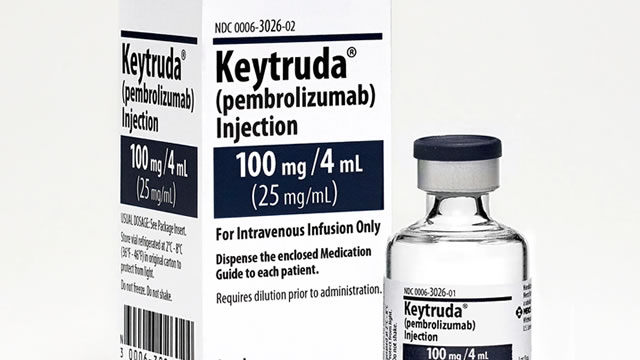
Group 1: Summit Therapeutics - Summit Therapeutics' shares have increased over 1,000% in the past three years, primarily due to the progress of ivonescimab, an investigational cancer medicine [2] - Ivonescimab has shown positive results in several phase 2 and phase 3 studies in China and is already approved there, contributing to Summit's market cap of $13.6 billion despite no revenue generation [2][6] - The drug has produced Phase 3 results comparable to Keytruda for non-small cell lung cancer, indicating significant market potential [4] - Ivonescimab is being tested for multiple cancer types, suggesting a robust pipeline for Summit Therapeutics [5] - The company anticipates U.S. approval for ivonescimab within three years, with potential for further approvals in the next decade [6] Group 2: Axsome Therapeutics - Axsome Therapeutics has seen stock market gains of nearly 350% over the past three years due to significant clinical and regulatory milestones [7] - The company’s revenue increased by 62% year over year to $121.5 million in the first quarter, driven by the approval of Auvelity for major depressive disorder and the acquisition of Sunosi for narcolepsy [8] - Axsome is expected to transform its product lineup with new approvals and label expansions in the next three years, including positive trial results for several candidates [9] - The company is conducting multiple clinical studies that could lead to further positive data and regulatory submissions, indicating a strong late-stage pipeline [10]