碧桂园

Search documents
碧桂园服务(06098.HK)12月15日耗资1896.2万港元回购300万股

Ge Long Hui· 2025-12-15 09:52
格隆汇12月15日丨碧桂园服务(06098.HK)发布公告,2025年12月15日耗资1896.2万港元回购300万股, 回购价格每股6.29-6.34港元。 ...
Analyst warns China's Vanke on brink of default as bailout hopes fade
Youtube· 2025-12-15 07:36
Group 1: Default and Restructuring - Bondholders are resisting restructuring efforts, indicating a lack of expectation for a state bailout or improvement in the property market, suggesting a potential default may occur [1][4][6] - Avanka has liabilities of 364 billion yuan, which could surpass defaults seen with Evergrande and Country Garden, highlighting that no company is considered "too big to fail" in China [4][5] - The central government is focused on avoiding a systemic banking crisis rather than supporting the property market, which is viewed as "dead money" [5][8] Group 2: Local Government and Economic Impact - Local governments, including Shenzhen Metro, are facing revenue shortages due to a 40-50% decline in land sales, limiting their ability to bail out property companies [8][9] - The property sector's peak contribution to GDP was 31%, and a significant loss in this sector could lead to long-term economic stagnation, as new tech investments may not compensate for the decline [9][10] - Fixed asset investment in property has decreased by 14%, indicating ongoing downturns in the sector [12] Group 3: Property Market Trends - New home prices in China have dropped by 2.1%, with significant declines in tier three cities, while some areas like Shanghai show slight increases [9][11] - Actual property prices are reported to have fallen by 40-80%, contradicting official statistics [10][11] - Production in the property sector has decreased from 1.67 billion square meters in 2019 to approximately 780 million square meters last year, with expectations of further declines before a potential plateau [13]




债市早报:2026年全国金融系统工作会议召开;资金面整体充沛,主要期限国债收益率全线上行
Sou Hu Cai Jing· 2025-12-15 03:24
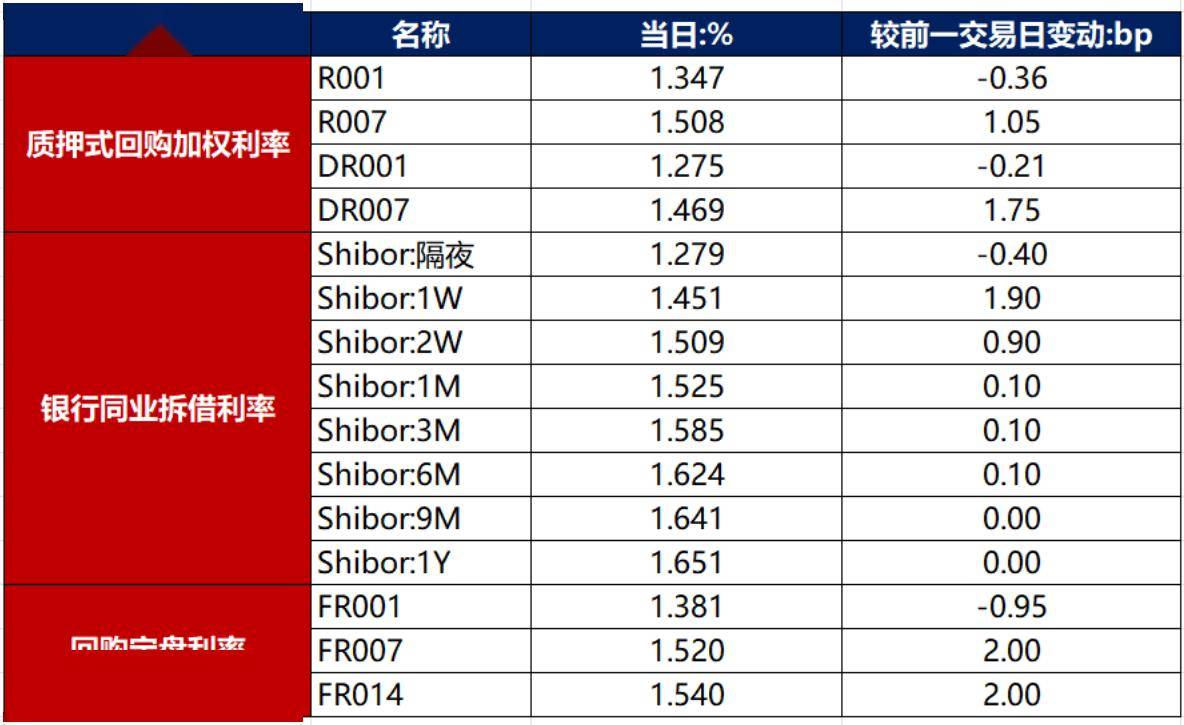
Group 1: Debt Market News - The central bank conducted a small-scale net withdrawal in the open market on December 12, with a total of 120.5 billion yuan in 7-day reverse repos at a rate of 1.40%, resulting in a net withdrawal of 19.3 billion yuan for the day [9][10] - The bond market experienced a significant adjustment, with yields on major government bonds rising across the board, particularly in the long end, as market concerns about large bond supply and profit-taking pressure emerged [12] - The yield on the 10-year government bond rose by 2.75 basis points to 1.8425%, while the 10-year policy bank bond yield increased by 3.35 basis points to 1.9165% [12] Group 2: Financial Regulatory Developments - The Financial Regulatory Administration issued a new set of guidelines to enhance the supervision and management of commercial bank custody businesses, aiming to promote standardized and healthy development in this sector [5] - The central bank emphasized the need for effective implementation of monetary policy tools, including potential interest rate cuts, to support stable economic growth and reasonable price recovery [3][4] Group 3: Corporate Announcements - Vanke announced that the proposals for extending the maturity of its "22 Vanke MTN004" bond were not effectively passed during the bondholders' meeting [15] - China Baoan announced its participation in the substantive merger and restructuring of the Shanshan Group and its wholly-owned subsidiary, seeking investors for this process [17] - Renfu Pharmaceutical received an administrative penalty notice from the Hubei Securities Regulatory Bureau, leading to the implementation of other risk warnings on its stock [20]


交银国际_房地产行业:2026年展望,在新平衡中拥抱拐点与复苏_
2025-12-15 02:13
Summary of Key Points from the Conference Call Industry Overview - **Industry**: Real Estate - **Focus**: Chinese mainland and Hong Kong real estate markets - **Outlook for 2026**: The industry is expected to explore new development models under strong policy support, despite facing challenges. Structural opportunities from "good houses" and "good cities" are emerging [1][6][10]. Core Insights and Arguments Chinese Mainland Real Estate - **Sales Forecast**: The total sales area of commercial housing in China is projected to be between 900 million to 950 million square meters in 2026, down from approximately 970 million square meters in 2024. The expected sales amount is around 10 to 11 trillion RMB, including 8 to 9 trillion RMB from residential sales [1][11]. - **Investment Preference**: The preferred investment ranking is as follows: state-owned enterprises (SOEs) or SOE-backed developers > leading private enterprises with land reserves in first and second-tier cities > other private developers [1][26]. - **Market Dynamics**: The market is transitioning from quantity expansion to quality improvement, with a focus on "good housing" standards. The demand is shifting towards improvement-type housing, which is expected to dominate the market [10][13]. Hong Kong Real Estate - **Market Recovery**: Key catalysts for recovery include improved macroeconomic uncertainty (notably interest rate cuts), significant policy easing, and a return of fundamental demand drivers. The recovery is expected to be gradual, with residential properties leading the way, followed by quality retail assets and core office spaces [3][37]. - **Rental Growth**: Residential rents are expected to increase by approximately 3% in 2026, with small to medium-sized unit prices rising by 5%. The retail sector is also anticipated to see moderate growth due to stabilizing local consumption and increased tourist arrivals [3][39]. - **Investment Strategy**: Investors are advised to focus on residential recovery as a high-quality proxy, particularly in the context of the anticipated market rebound [3][37]. Additional Important Insights - **Policy Environment**: The current policy framework is expected to remain supportive, with a focus on maintaining a stable demand-side policy and normalizing supply-side regulations. The emphasis is on improving housing quality and service standards [10][12]. - **Market Segmentation**: The market is experiencing significant segmentation, with first and second-tier cities showing resilience while third and fourth-tier cities face structural adjustments. The share of sales in first and strong second-tier cities is expected to increase from 30% to 35-40% by 2026 [12][15]. - **Supply Dynamics**: New construction is projected to be between 550 million to 600 million square meters in 2026, reflecting cautious market expectations and cash flow conditions among developers. This is expected to help digest existing inventory levels [21][22]. - **Financial Health of Developers**: The industry is shifting towards a focus on cash flow management, with a significant emphasis on achieving positive operating cash flow as a key indicator of operational capability. Developers with strong cash flow management are likely to be favored by the market [24][25]. Conclusion The real estate industry in both the Chinese mainland and Hong Kong is at a pivotal point, with emerging opportunities driven by policy support and changing market dynamics. Investors are encouraged to adopt a selective approach, focusing on quality and location to capitalize on the anticipated recovery in the sector [25][26].
中国房地产-中央经济工作会议聚焦:化解风险,力稳楼市-China Property CEWC Focus on Defusing Risk Strive to Stabilize Property Market
2025-12-15 01:55
Summary of the Conference Call on China Property Sector Industry Overview - **Industry**: China Property Sector - **Event**: Central Economic Work Conference (CEWC) held on December 10-11, 2025 Key Points and Arguments 1. **Risk Management and Market Stabilization**: - The conference emphasized the need to take proactive steps to defuse risks in key areas and stabilize the property market through city-specific policies aimed at controlling new supply, reducing inventory, and optimizing existing supply [1][2][7] - The focus is on encouraging inventory purchases for social housing and deepening the reform of the housing provident fund [1][7] 2. **Policy Tone and Intentions**: - Compared to previous meetings, the tone in December 2025 is seen as more proactive than in April and July 2025, but less decisive than in December 2024 [2] - The language used indicates a shift from a strong push for stabilization to a more moderate approach, recognizing the imbalance of weak domestic demand against strong supply [2] 3. **Local Stimulus and Monetary Policy**: - A new round of local demand-side stimulus is anticipated, including home purchase and mortgage interest subsidies, although these are not expected to significantly alter home price expectations due to abundant supply [3] - There is a low likelihood of targeted monetary easing or pro-leverage initiatives in the near term, but urban renewals and REIT approvals are expected to accelerate [3] 4. **Market Reactions and Sales Outlook**: - The property sector experienced a share price correction in early December due to weak sales and price declines, particularly in Tier 1 cities, alongside expectations of policy easing following Vanke's debt extension [4] - A short-lived policy-driven rebound in share prices is expected, with continued soft sales projected for Q4 2025 and limited improvement in household confidence [4] 5. **Investment Recommendations**: - Analysts suggest late December as a better entry point for reviewing the sector after the recent price corrections, with top picks including Jinmao, C&D, and CRL [4] Other Important Insights - The conference highlighted the importance of stabilizing investment and resolving local government debt risks while maintaining a necessary fiscal deficit and ensuring stable economic growth [1][7] - The need for a moderate recovery in price levels and stabilization of investment from further decline was acknowledged, indicating a cautious approach to future developments in the property market [2][3] This summary encapsulates the critical discussions and insights from the conference call regarding the current state and future outlook of the China property sector, emphasizing risk management, policy intentions, and market dynamics.
万科20亿元债券展期方案未获有效通过;山东发布住房“以旧换新”指导意见|房产早参
Mei Ri Jing Ji Xin Wen· 2025-12-14 23:08
Group 1 - Vanke's proposal to extend the maturity of a 2 billion yuan bond was not approved, raising concerns about the difficulty of debt management for real estate companies [1] - The bond has a principal repayment date of December 15, 2025, with an interest rate of 3%, and if no consensus is reached during the grace period, Vanke may face substantial default [1] Group 2 - Poly Developments plans to issue up to 5 billion yuan in convertible bonds to fund nine real estate projects, with a total investment of 22.221 billion yuan [2] - This financing move reflects the company's strategy to ensure project advancement through market-based financing tools, providing a reference for compliant real estate companies [2] Group 3 - Shandong Province has issued guidelines for a "trade-in" housing policy, introducing three models: "sell old for new," "collect old for new," and "demolish old for new," aimed at stimulating housing demand [3] - The policy includes measures to support real estate agencies in providing "help sell" services and encourages market-based acquisition of second-hand homes [3] Group 4 - Country Garden's previously acquired land in Foshan is being re-listed for auction at a starting price of 401 million yuan, significantly lower than the previous acquisition price of 2.74 billion yuan [4] - The area has seen a lack of new large-scale developments, and the reduced starting price may attract new bidders, although additional development costs may impact the final outcome [4] Group 5 - Nanshan Holdings plans to apply for a borrowing limit of 7 billion yuan from its controlling shareholder, which will be available for three years and can be reused [5] - This borrowing strategy aims to stabilize the company's cash flow and reduce overall financing costs, enhancing financial stability and risk resilience [5]


China Vanke’s Paths to Avoid Default Narrow After Failed Vote
MINT· 2025-12-14 08:28
Core Viewpoint - China Vanke Co., the last major developer in China to avoid default, faces significant challenges as creditors rejected its proposal to delay a bond payment, highlighting the ongoing real estate debt crisis in the country [1][3]. Company Summary - Vanke failed to secure the necessary support for its plan to delay a 2 billion yuan bond payment due on December 15, with all proposals falling short of the required 90% approval [2]. - The company must find funds to pay the bond by the end of Monday or within a five-business-day grace period, or risk default [4]. - Vanke has historically relied on support from its largest shareholder, state-owned Shenzhen Metro Group, which provided over 30 billion yuan in shareholder loans [5][6]. - Recent scrutiny of Shenzhen Metro's borrowing terms has led to a decline in Vanke's securities, raising concerns about its financial stability [6]. Industry Summary - The ongoing real estate debt crisis in China has persisted for five years, resulting in record defaults and restructurings among major property developers like Country Garden and Evergrande [3]. - Policymakers have pledged to stabilize the housing market but have not implemented measures deemed necessary by some economists to revive the sector [3]. - Market analysts suggest that a full-scale debt restructuring for Vanke is likely, as temporary extensions would not resolve the underlying financial issues [9].

200万房贷年利息或少1.26万元,多地已试点
第一财经· 2025-12-14 07:04
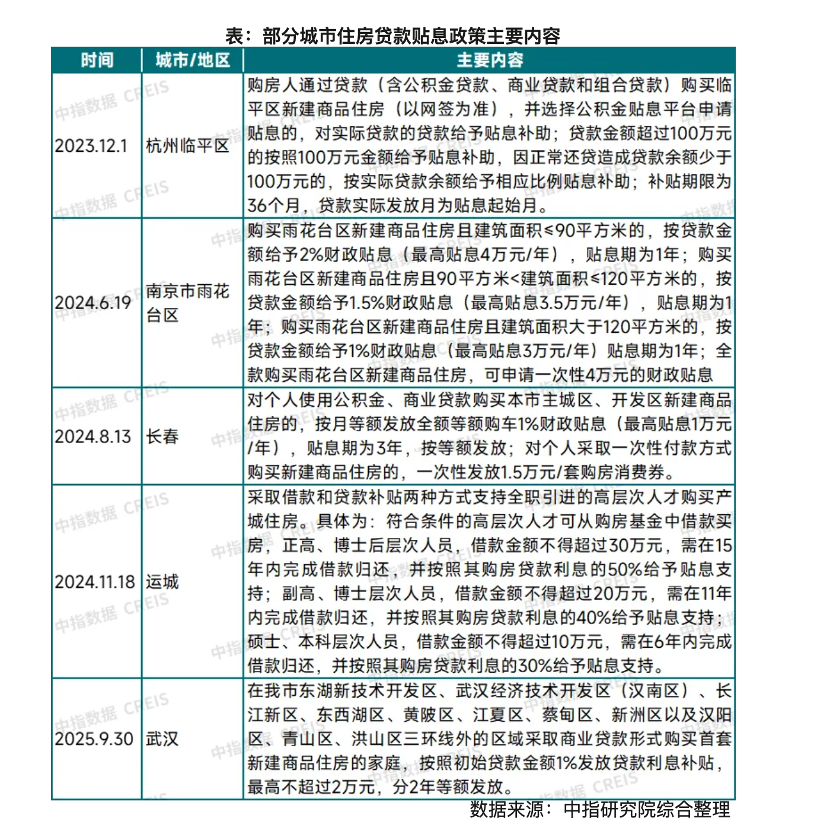
Core Viewpoint - The article discusses the potential implementation of a housing interest subsidy policy to stimulate the real estate market, which could alleviate the pressure on banks' net interest margins while benefiting buyers through reduced loan costs [3][11]. Policy Implementation - Since the end of 2023, cities like Hangzhou, Nanjing, Changchun, Yuncheng, and Wuhan have introduced housing interest subsidy policies to lower purchasing costs through fiscal subsidies [4]. - There are two main operational models for the subsidies: 1. Fixed interest subsidies based on loan amounts, such as 1% in Changchun and Wuhan, and tiered subsidies in Nanjing based on property size [5]. 2. Percentage-based interest subsidies, like in Yuncheng, where high-level talents receive varying subsidies based on their educational qualifications [5][6]. Policy Effects - The subsidy period typically ranges from 1 to 3 years, with payment methods including one-time, annual, or monthly disbursements [6]. - Initial results show positive impacts on new home transactions, with cities like Nanjing and Wuhan reporting significant month-on-month increases in sales following the implementation of these policies [8]. Market Response - The article notes that the market has reacted positively, with significant stock price increases for real estate companies following discussions of the subsidy policy [14]. - Analysts believe that the interest subsidy could enhance market confidence and stabilize expectations, potentially leading to a recovery in the real estate market [11]. Financial Implications - A simulation by the China Index Academy indicates that a 1% interest subsidy on a 2 million yuan loan could reduce monthly payments by approximately 1,048 yuan, saving borrowers about 12,600 yuan annually [10][11]. - The estimated total sales of new and second-hand residential properties in 2025 could reach around 14 trillion yuan, with potential subsidy costs of approximately 700 billion yuan if a 1% subsidy is applied [12]. Broader Context - The article draws parallels with international practices, such as Hong Kong's mortgage interest deduction policy and the U.S. housing affordability programs during the financial crisis, suggesting that similar strategies could be effective in China [9]. - The article emphasizes that the subsidy policy is not solely aimed at the real estate market but is part of a broader strategy to stimulate domestic demand and economic circulation [16].

购房贴息讨论升温 多地实践已显效!能否全国推行?
Di Yi Cai Jing· 2025-12-14 03:37
Core Viewpoint - The discussion around housing interest subsidies has gained significant attention, with the potential for policy implementation to alleviate the pressure on banks' net interest margins while benefiting buyers, banks, and the government [1][6]. Group 1: Policy Implementation and Effects - Various cities, including Hangzhou, Nanjing, Changchun, Yuncheng, and Wuhan, have initiated housing interest subsidy policies since late 2023, aimed at reducing housing costs through fiscal subsidies on loan interest [2][4]. - Two main operational models have emerged: fixed subsidies based on loan amounts and percentage-based interest subsidies [2]. - The subsidy period typically ranges from 1 to 3 years, with disbursement methods including one-time payments or annual/monthly installments [3]. Group 2: Market Response and Initial Outcomes - Initial results indicate a positive impact on housing transactions, with new home sales in Nanjing and Wuhan showing month-on-month increases of 17.5% and 18.7%, respectively, following the implementation of subsidy policies [4][6]. - The policy is expected to enhance market confidence and stabilize expectations, thereby promoting a recovery in the real estate market [6][7]. Group 3: Financial Implications and Projections - The interest subsidy can significantly reduce monthly mortgage payments; for instance, a 1% subsidy on a 2 million yuan loan could save buyers approximately 1.26 million yuan in annual interest [7][8]. - The estimated annual funding requirement for the subsidy could range from 30 billion to 45 billion yuan, corresponding to new mortgage loans of 3 trillion to 4.5 trillion yuan [8]. - The total sales of new and second-hand residential properties in 2025 are projected to be around 14 trillion yuan, with a potential subsidy amount of 700 billion yuan if a 1% interest subsidy is applied [7][8]. Group 4: Broader Economic Context - The policy is seen as part of a broader strategy to stimulate domestic demand and support the overall economy, rather than solely focusing on the real estate market [11][12]. - The success of previous fiscal subsidy models for consumer loans provides a reference for the housing interest subsidy approach, indicating a potential for a win-win situation among the government, banks, and consumers [11].
购房贴息讨论升温,多地实践已显效!能否全国推行?
Di Yi Cai Jing· 2025-12-14 03:30
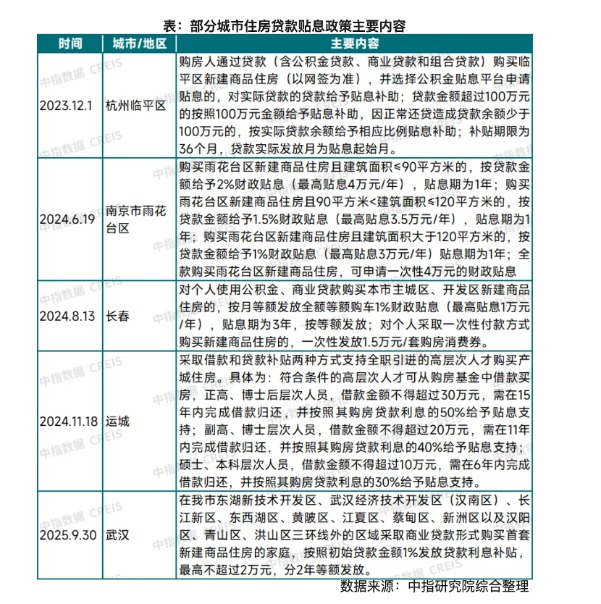
Core Viewpoint - The discussion around home loan interest subsidies has gained significant attention, with the potential for such policies to be implemented to alleviate the pressure on banks' net interest margins while benefiting fiscal budgets and homebuyers, creating a "triple win" scenario [1][8]. Group 1: Policy Implementation and Effects - Various cities, including Hangzhou, Nanjing, Changchun, Yuncheng, and Wuhan, have initiated home loan interest subsidy policies since late 2023, aimed at reducing home purchase costs through fiscal subsidies [2][3]. - The policies have shown initial positive effects, with new home transaction volumes in Nanjing and Wuhan increasing by 17.5% and 18.7% respectively following the implementation of these subsidies [6][8]. Group 2: Operational Models - There are primarily two operational models for the subsidies: one provides fixed interest subsidies based on the loan amount, while the other offers subsidies as a percentage of the loan interest [3][4]. - For example, in Nanjing, different subsidy rates are applied based on the size of the purchased property, with rates of 2%, 1.5%, and 1% for properties under 90 square meters, between 90-120 square meters, and over 120 square meters, respectively [3][6]. Group 3: Financial Implications - The subsidy period typically ranges from 1 to 3 years, with disbursement methods including one-time payments or annual/monthly distributions [4][6]. - The potential savings for homebuyers can be significant; for instance, a loan of 2 million yuan at a 3.1% interest rate could see monthly payments reduced by approximately 1,048 yuan with a 1% subsidy, leading to annual interest savings of about 12,600 yuan [9][10]. Group 4: Market Reactions and Future Outlook - The market has reacted positively to the discussions around these policies, with significant increases in stock prices for real estate companies following the news [11][12]. - Analysts predict that the subsidy policy may be rolled out gradually, initially targeting new first-home loans in major cities, with an estimated annual funding requirement of 30 billion to 45 billion yuan for new loans [10][12].