房贷贴息政策

Search documents
东吴证券晨会纪要-20260226
Soochow Securities· 2026-02-26 00:17
Macro Strategy - The report indicates that there is potential for interest rate cuts in 2026, with expectations of one rate cut or a 50 basis points reserve requirement ratio reduction, while retaining the possibility of two additional rate cuts depending on economic growth and financial market conditions [1][14]. Fixed Income Analysis - The semiconductor industry faces significant financing challenges due to its high capital intensity and long investment cycles. Despite the inclusion of semiconductor companies in the "bond technology board" for support, there remains a structural mismatch between the bond market's capabilities and the industry's needs, particularly for private companies [2]. - The report analyzes the bond financing strategies of three leading semiconductor companies: SK Hynix, ASML, and Broadcom, highlighting how their financing paths align with their strategic development phases [16][17]. Real Estate Policy Impact - The report evaluates the effects of housing loan interest subsidy policies, noting significant regional disparities in their effectiveness. For instance, Nanjing's Rain Flower District saw a 28.6% increase in residential sales, while other regions like Wuhan and Hangzhou experienced declines [3][19]. - If a nationwide 1% subsidy policy is implemented, the estimated fiscal cost could reach approximately 470 billion yuan, depending on the coverage of new and existing loans [4][19]. Company Recommendations - **Oriental Electric (600875)**: The company is expected to see steady growth in its energy equipment business, with projected net profits of 35.0 billion, 45.2 billion, and 54.4 billion yuan for 2025-2027, reflecting growth rates of 20%, 29%, and 20% respectively. A target price of 41.9 yuan is set, with a "buy" rating [5][21]. - **China Tobacco Hong Kong (06055.HK)**: The company is positioned to benefit from the unique export of cigarettes in the domestic duty-free market, with an upward adjustment in profit forecasts due to expected improvements in gross margins [6][22]. - **Liyang Chip (688135)**: The company is expanding its high-end testing capacity and is expected to continue growing, with a focus on automotive electronics and other emerging applications [7][8]. - **Sany Heavy Industry (600031)**: As a global leader in construction machinery, the company is projected to benefit from the industry recovery, with net profits forecasted at 85 billion, 111 billion, and 127 billion yuan for 2025-2027 [13].
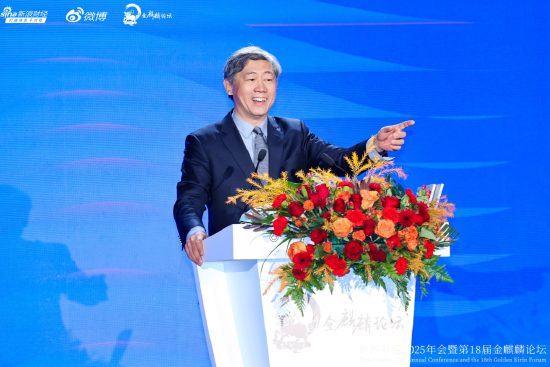
李稻葵:建议出台房贷贴息政策,70亿财政补贴可撬动280万亿市场规模
Xin Lang Cai Jing· 2026-01-15 03:01
Core Viewpoint - The "2025 Sina Finance Annual Conference and the 18th Golden Unicorn Forum" will be held on January 15, 2026, in Beijing, focusing on the theme of "Starting the 14th Five-Year Plan, New Economic Voyage - Reshaping Growth Paradigms, Co-creating Future Prosperity" [1][7]. Group 1: Economic Potential and Government Transformation - The potential for China's economic growth remains significant, and there is a need for confidence in this potential [3][9]. - A transformation from a "development-oriented government" to a government that promotes comprehensive and high-quality economic development is essential [3][10]. - A new framework of "government and market economics" is proposed, which includes establishing four national-level coordination mechanisms [10]. Group 2: Proposed Coordination Mechanisms - The first mechanism is a Human Resources Development Committee to coordinate investments in education, healthcare, and elderly care [10][11]. - The second mechanism is a Real Estate Development Committee aimed at enhancing top-level design, with a suggestion to provide interest subsidies to help young people buy homes, potentially leveraging a market scale of 280 trillion yuan [10][11]. - The third mechanism is an International Trade Balance Development Committee to address external trade frictions [4][11]. - The fourth mechanism is an Artificial Intelligence Development and Governance Committee to coordinate technological innovation and employment security [4][11]. Group 3: Economic Outlook for the Year - There are several positive expectations for the year, including stabilization of real estate prices in key regions [5][11]. - The stock market is expected to be optimistic, with a shift in investment interest towards A-shares as international assets become cheaper [5][11]. - A recovery in nominal GDP growth is anticipated for the year [5][11].

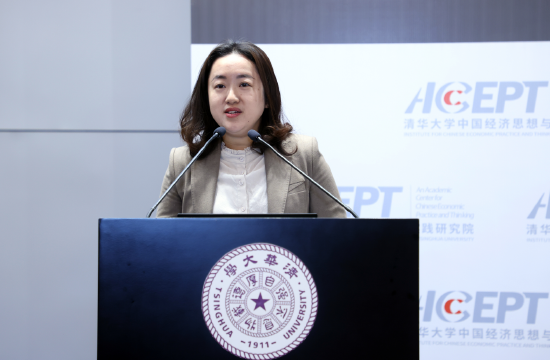
清华大学报告:尽快出台房贷贴息政策,700亿财政补贴可撬动280万亿居民房地产资产
Xin Lang Cai Jing· 2026-01-13 06:57
Core Viewpoint - The 50th Tsinghua University China and World Economy Forum emphasizes the urgent need for a mortgage interest subsidy policy to counteract the negative impact of declining housing prices and to stabilize and potentially increase home prices in the short term [1][4]. Group 1: Mortgage Interest Subsidy Policy - The ACCEPT Research Institute suggests that high mortgage interest rates are a significant deterrent for citizens in purchasing homes, despite a slight nominal decrease in rates [1][5]. - The research outlines three scenarios for interest subsidies, with the most conservative being a 1% subsidy on new mortgages, requiring a fiscal investment of 70 billion yuan in the first year based on an annual new mortgage scale of 7 trillion yuan [5]. - In an extreme scenario, maintaining a 1% subsidy on a cumulative 40 trillion yuan of existing mortgage stock would total only 400 billion yuan, indicating that such extreme conditions are unlikely [5]. Group 2: Leverage Effect of Subsidy - The analysis reveals that the leverage effect of the mortgage interest subsidy policy is significant; for instance, a 1% subsidy could mobilize approximately 280 trillion yuan of residential real estate assets with an initial fiscal input of 70 billion yuan [2][5].
房地产周报:各地房贷贴息力度与效果如何?-20251222
NORTHEAST SECURITIES· 2025-12-22 08:21
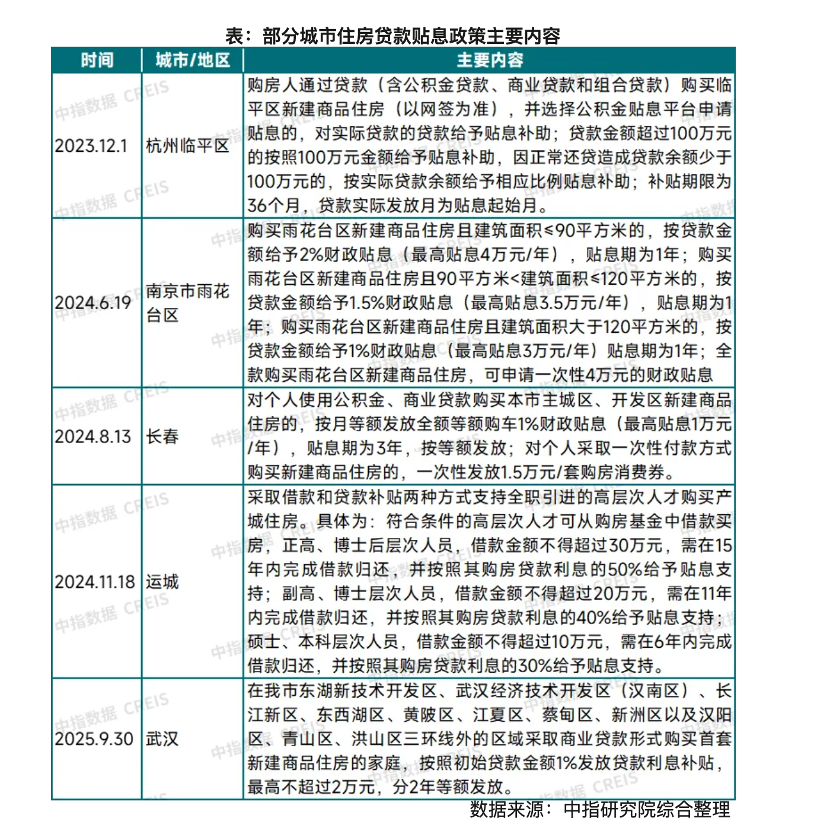
Investment Rating - The report maintains an "Outperform" rating for the real estate sector, indicating a positive outlook despite current challenges [8]. Core Insights - The real estate market is experiencing a gradual recovery, with expectations for increased policy support to boost confidence and sales [2][3]. - Recent mortgage interest subsidy policies have been implemented in various cities, but their effectiveness is limited due to strict conditions and low subsidy rates [16][17]. - The overall sentiment in the real estate market remains cautious, with significant declines in both new and second-hand housing transactions reported [6][19]. Summary by Sections Mortgage Subsidy Policies - Various cities have introduced mortgage interest subsidies ranging from 1% to 2%, with limited effectiveness observed in boosting sales [16][18]. - The subsidies are often restricted to new purchases made within a specific timeframe, typically 3 to 6 months after the policy announcement [17][21]. - The total subsidy amounts are relatively low, with caps around 10,000 to 40,000 yuan depending on the city [17][18]. Market Performance - The A-share real estate sector has underperformed the broader market, with a weekly decline of 0.41% compared to the benchmark [22][23]. - The credit bond issuance in the real estate sector has seen a net financing deficit, indicating ongoing financial challenges [43][44]. - The REITs market has also faced declines, with the index down 2.60% this week, reflecting broader market trends [45][55]. Transaction Trends - New housing transaction volumes have decreased significantly, with year-on-year declines of approximately 33% reported in both new and second-hand markets [6][19]. - The land supply and transaction volumes in major cities show mixed trends, with a decrease in supply but an increase in transaction areas [5][6]. - The report suggests focusing on three areas for potential investment: commercial real estate, second-hand brokerage, and property services [19].
房贷贴息缘何引发热议?
Xin Lang Cai Jing· 2025-12-16 00:25
Core Viewpoint - The discussion around mortgage interest subsidies is gaining momentum as pilot programs have been implemented in certain regions, raising expectations for a nationwide policy that would provide direct financial relief to homebuyers and stimulate housing demand while alleviating pressure on banks' net interest margins [1][9]. Group 1: Policy Implementation - Since 2023, some regions have initiated pilot mortgage interest subsidy policies, with a focus on first-time homebuyers and specific limits on subsidies [3][11]. - Wuhan has announced a subsidy of 1% on the initial loan amount for first-time homebuyers, with a maximum subsidy of 20,000 yuan, distributed over two years [3][11]. - Changchun's policy is more extensive, offering a 1% subsidy for up to 10,000 yuan per year for three years, applicable to both public and commercial loans [3][11]. Group 2: Financial Impact on Homebuyers - The mortgage interest subsidy effectively acts as a "hidden interest rate cut," reducing the financial burden on homebuyers significantly [4][12]. - For a 1 million yuan loan over 30 years at an average interest rate of 3.06%, the monthly payment would decrease from approximately 3,860 yuan to 3,410 yuan with the subsidy, saving about 1.62 million yuan in interest over three years [4][12]. - Higher loan amounts see even greater benefits, with a 200 million yuan loan potentially saving over 10,000 yuan annually [5][12]. Group 3: Bank Profitability and Cash Flow - Banks face ongoing challenges with narrowing net interest margins, which have dropped to an average of 1.42% as of Q3 2025, putting pressure on profitability [6][14]. - The mortgage interest subsidy model allows banks to maintain their interest rates while the subsidy covers the difference, thus protecting their profit margins [6][14]. - This policy also helps stabilize bank cash flow by reducing the likelihood of early loan repayments, which had previously disrupted banks' asset management [7][14]. Group 4: Regional Variations and Fiscal Considerations - The implementation of a nationwide subsidy policy must consider regional economic disparities and the financial capabilities of local governments [8][16]. - Core cities with high housing prices and loan volumes will face greater fiscal burdens compared to smaller cities, which may struggle to fund such subsidies [8][16]. - The effectiveness of the subsidy policy will depend on precise adjustments to banking strategies and the ability to manage regional differences in economic conditions [8][16].

理想和现实之间的房贷贴息
Bei Jing Shang Bao· 2025-12-15 15:51
Core Viewpoint - The discussion around mortgage interest subsidy policies has gained significant attention due to their perceived positive impact and pilot implementations in various cities [1][2]. Group 1: Policy Implementation and Impact - Several cities, including Hangzhou, Nanjing, and Wuhan, have initiated regional mortgage interest subsidy policies since late 2023, aimed at reducing the monthly payment burden for homebuyers [1]. - The subsidy policy is expected to enhance residents' purchasing power, thereby alleviating the consumption pressure caused by high mortgage payments, aligning with the broader goal of expanding domestic demand [2]. - The policy could stimulate both rigid and improved housing demand by lowering the cost of home purchases, contributing positively to the stabilization of the real estate market [2]. Group 2: Economic Considerations and Challenges - While the mortgage interest subsidy can promote real estate market recovery and address consumer pain points, there are concerns regarding fiscal sustainability and the potential increase in local government debt [3]. - The distribution of funding responsibilities between central and local governments needs careful consideration to avoid exacerbating fiscal imbalances [3]. - The policy's implementation should include a set timeframe and gradual reduction to prevent long-term market distortions, and the extent of the subsidies must be managed to avoid excessive risk in the banking sector [3].
购房贴息讨论升温,多地实践已显效!能否全国推行?
Di Yi Cai Jing· 2025-12-14 03:30
Core Viewpoint - The discussion around home loan interest subsidies has gained significant attention, with the potential for such policies to be implemented to alleviate the pressure on banks' net interest margins while benefiting fiscal budgets and homebuyers, creating a "triple win" scenario [1][8]. Group 1: Policy Implementation and Effects - Various cities, including Hangzhou, Nanjing, Changchun, Yuncheng, and Wuhan, have initiated home loan interest subsidy policies since late 2023, aimed at reducing home purchase costs through fiscal subsidies [2][3]. - The policies have shown initial positive effects, with new home transaction volumes in Nanjing and Wuhan increasing by 17.5% and 18.7% respectively following the implementation of these subsidies [6][8]. Group 2: Operational Models - There are primarily two operational models for the subsidies: one provides fixed interest subsidies based on the loan amount, while the other offers subsidies as a percentage of the loan interest [3][4]. - For example, in Nanjing, different subsidy rates are applied based on the size of the purchased property, with rates of 2%, 1.5%, and 1% for properties under 90 square meters, between 90-120 square meters, and over 120 square meters, respectively [3][6]. Group 3: Financial Implications - The subsidy period typically ranges from 1 to 3 years, with disbursement methods including one-time payments or annual/monthly distributions [4][6]. - The potential savings for homebuyers can be significant; for instance, a loan of 2 million yuan at a 3.1% interest rate could see monthly payments reduced by approximately 1,048 yuan with a 1% subsidy, leading to annual interest savings of about 12,600 yuan [9][10]. Group 4: Market Reactions and Future Outlook - The market has reacted positively to the discussions around these policies, with significant increases in stock prices for real estate companies following the news [11][12]. - Analysts predict that the subsidy policy may be rolled out gradually, initially targeting new first-home loans in major cities, with an estimated annual funding requirement of 30 billion to 45 billion yuan for new loans [10][12].



四大利好突袭:万科20亿债券展期过关,27亿资金抢筹封涨停
Sou Hu Cai Jing· 2025-12-11 14:55
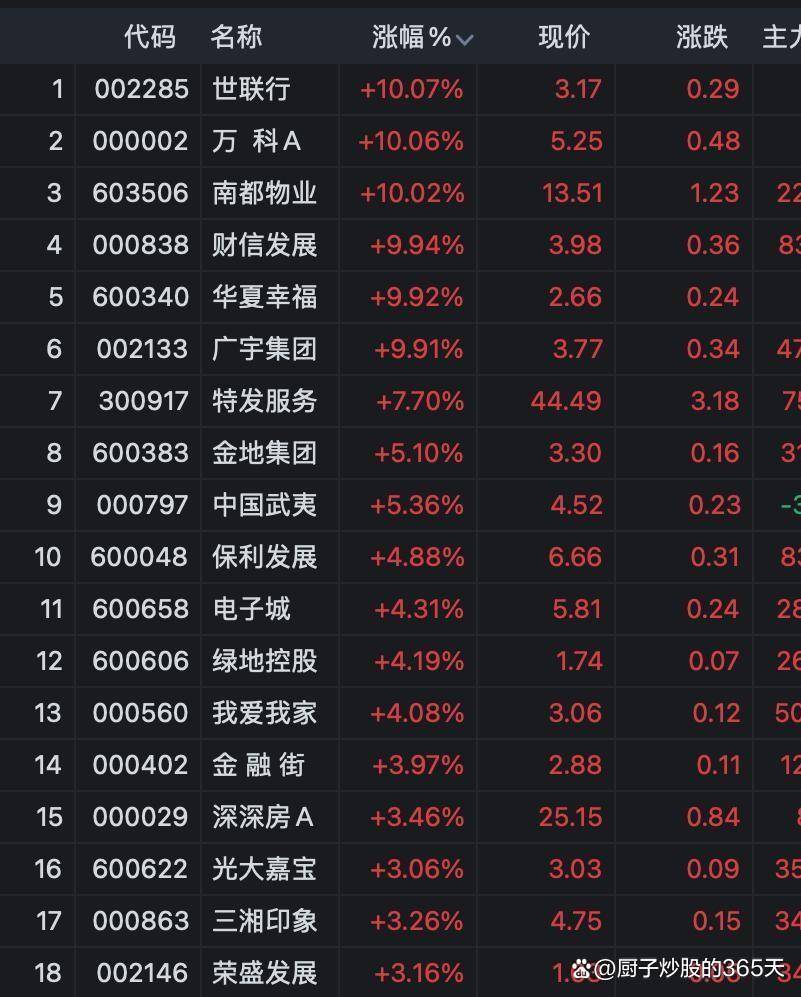
Core Viewpoint - The significant buying activity in Vanke A shares, with a 27.38 billion yuan order, indicates strong bullish sentiment in the real estate sector, leading to a broad rally in related stocks and bonds [1][3]. Group 1: Market Reaction - Vanke A shares hit the daily limit up with a 10.06% increase, while Vanke H shares surged by 19%, and several other real estate stocks also reached their daily limits [1][2]. - The bond "22 Vanke MTN004" saw a 42% increase, triggering a trading halt, reflecting heightened investor confidence in the company's financial stability [1][3]. Group 2: Debt Management - Vanke's 20 billion yuan medium-term note was successfully extended to December 15, 2026, with a maintained interest rate of 3%, signaling support from state-owned enterprises [3][5]. - The agreement to extend the bond without additional penalties indicates institutional confidence in Vanke's long-term creditworthiness [5]. Group 3: Industry Trends - The real estate sector is witnessing a shift from high leverage to a balanced approach of development and operation, with increased focus on light-asset sectors like property management and long-term rentals [7][9]. - Recent policy discussions around mortgage interest subsidies are seen as potential catalysts for stimulating demand in the housing market [5][9]. Group 4: Investor Sentiment - Institutional investors have been actively accumulating Vanke A shares, with significant purchases totaling 60.92 billion yuan over two days, reflecting strong expectations for valuation recovery in the real estate sector [7]. - The increase in second-hand home transaction volumes in first-tier cities is viewed as a sign of market stabilization, despite ongoing challenges in new home sales [7][9].

热点褪去,谨慎为金
Hu Xiu· 2025-12-11 11:29
Group 1 - The overall domestic market is under pressure, with almost all major sectors experiencing a pullback, except for minor gains in sectors like power grid equipment [3] - The real estate sector, which had previously shown strong performance, is now facing challenges due to unsubstantiated rumors regarding Vanke's debt and potential state support, as well as exaggerated claims about a nationwide mortgage interest subsidy policy [3] - The artificial intelligence industry chain has also cooled down significantly, with an overall decline of over 2%, and leading companies in the optical module sector experiencing deeper corrections of 3%-4% [3] Group 2 - The decline in the AI sector is influenced by overseas news, particularly the 11% drop in Oracle's stock after its earnings report, which has shifted investor focus towards cash flow returns rather than speculative investments in AI data centers [3]
【笔记财经晨会】2025.12.11 星期四
债券笔记· 2025-12-11 11:28
Macroeconomic Insights - November inflation data shows CPI increased by 0.7% year-on-year, meeting expectations, while month-on-month decreased by 0.1%. Core CPI, excluding food and energy, rose by 1.2% year-on-year. PPI decreased by 2.2% year-on-year, lower than the expected -2%, but increased by 0.1% month-on-month [5][7]. - The IMF projects China's economy to grow by 5.0% in 2025 and 4.5% in 2026 [7]. - The bond market continued its recovery, with long-term government bonds showing significant improvement. The main contract for 30-year government bonds rose by 0.3% [7]. Equity Market Analysis - The market exhibited a rebound after a dip, indicating strong support at lower levels. The computing hardware sector was pivotal in driving the index's recovery, and its core stocks will be crucial for future observations [9]. - The Ministry of Commerce's promotion of the "Fat Donglai model" focuses on the lower-tier market, indicating a shift in retail competition towards refined operations, personalized services, and deep digital integration for high-quality development [10]. - Hainan's free trade port's full island closure and its 14th Five-Year Plan mark a new phase of higher-level openness. Short-term investment prospects include consumer return and policy benefits, while medium-term focuses on modern service industries and unique industrial clusters [10].