
vivo

Search documents
1.1亿年轻人正在刷卡:印尼中产消费增速碾压东南亚
吴晓波频道· 2025-12-22 00:29
Core Insights - The article highlights the significant presence of Chinese brands in Indonesia, showcasing their integration into the local market and consumer culture [2] - Indonesia has become a crucial market for Chinese companies due to its large population, youthful demographic, and rapid economic growth, leading to increased consumer spending [3] - The article discusses successful business models of Chinese companies in Indonesia, emphasizing the importance of localization and leveraging domestic supply chains [6][11][14] Group 1: Market Overview - Indonesia is the fourth most populous country in the world with over 280 million people, and about half of its population is under 30 years old, indicating a strong consumer base [3] - The bilateral trade volume between China and Indonesia is projected to reach $147.8 billion in 2024, marking a 6.1% year-on-year increase [2] - The e-commerce market in Indonesia is expected to grow at a compound annual growth rate (CAGR) of 28% from 2019 to 2024, reaching 3.4 times its size in 2019 [3] Group 2: B2C Market Segmentation - The projected Gross Merchandise Value (GMV) for various B2C categories in Indonesia by 2029 includes: - Fashion and Apparel: $273.6 billion with a CAGR of 14.6% [4] - Consumer Electronics: $213.9 billion with a CAGR of 15.1% [4] - Food and Beverage: $164.3 billion with a CAGR of 17.2% [4] - Beauty and Personal Care: $144.9 billion with a CAGR of 20.6% [4] - Furniture and Home: $70.6 billion with a CAGR of 19.3% [4] Group 3: Successful Business Models - Cool-vita, a health supplement brand, achieved over 10 million sales in its first year and a GMV CAGR of over 200% over six years, becoming the top online health brand in Indonesia [9] - The company adopted localized marketing strategies, such as selling single units of products to cater to local purchasing power [11][13] - Xiaomi established a production facility in Indonesia in 2017, achieving 100% local production and becoming the second-largest smartphone brand in the country by 2018 [18][19] Group 4: Strategic Insights for Market Entry - Companies are encouraged to develop localized marketing strategies that resonate with the Indonesian consumer base [11] - Utilizing domestic supply chain advantages can enhance operational efficiency and market responsiveness [14][15] - Management teams should include local talent to ensure effective execution of strategies and cultural integration [16][17] Group 5: Future Opportunities - The article outlines plans for a private board focused on helping businesses capture opportunities in Indonesia's consumer market, emphasizing the importance of local insights and strategic partnerships [29][31]



晚报 | 12月22日主题前瞻
Xuan Gu Bao· 2025-12-21 14:24
Group 1: Supercritical CO2 Power Generation - The world's first commercial supercritical CO2 power generation unit has successfully commenced operation in Guizhou, marking a significant milestone in the application of this technology [1] - The "Super Carbon No. 1" project enhances power generation efficiency by over 85% and net power output by more than 50% compared to existing steam power generation technologies [1] - This technology is expected to create a market worth trillions by efficiently utilizing industrial waste heat and contributing to carbon neutrality goals [1] Group 2: Optical Computing Chips - Researchers at Shanghai Jiao Tong University have achieved a breakthrough in optical computing chips, developing the LightGen chip that supports large-scale semantic media generation models [2] - LightGen demonstrates a performance improvement of two orders of magnitude in computing power and energy efficiency compared to top digital chips, even with less advanced input devices [2] - The development of optical computing chips represents a transformative opportunity for China in the high-end AI computing chip sector, shifting competition from traditional metrics to energy efficiency and parallel processing [2] Group 3: AI Smartphones - ByteDance is collaborating with hardware manufacturers like Vivo, Lenovo, and Transsion to pre-install AIGC plugins on their devices, aiming to enhance user engagement and shift AI from a passive to an active role [3] - The partnership with these manufacturers, which collectively have a potential user base exceeding 1 billion, is expected to accelerate the commercialization of AI smartphones, with a projected penetration rate of over 50% by 2026 [3] Group 4: Robotics in Entertainment - The introduction of humanoid robots by Yushu Technology at a concert in Chengdu marks the first instance of robots performing on stage in a commercial concert setting [4] - This event signifies a shift in the application of humanoid robots from mere technological showcases to integral components of entertainment, with potential market growth as technology advances and costs decrease [4] - IDC forecasts that the shipment of commercial humanoid robots in China will reach approximately 50,000 units by 2030, with a compound annual growth rate exceeding 95% [4]
年终报道∣智能手机的下一次变革,已被AI启动?
Zhong Guo Ji Jin Bao· 2025-12-21 08:05
Core Insights - The smartphone industry in 2025 is significantly influenced by AI, marking a shift from hardware-centric innovations to AI-driven functionalities [2][3] - AI is transitioning from a mere tool to a core operational component in smartphones, with companies like Honor and Apple leading this change [4][5] - The introduction of AI phones, such as the Doubao AI phone, has sparked discussions about the potential for AI to replace human operations in mobile tasks [6][7] Group 1: Industry Trends - AI has become the central theme in smartphone launches, with major brands emphasizing AI capabilities in their new models [3][4] - The average smartphone replacement cycle has extended to approximately 51 months, indicating a shift from smartphones being seen as fast-moving consumer goods to durable goods [3] - The introduction of AI at the system level is seen as a foundational change, with expectations that by 2026, edge AI models will become standard in the industry [5] Group 2: Market Dynamics - The Doubao AI phone has generated significant market interest, with its price skyrocketing in the second-hand market, indicating a strong consumer demand for AI-driven experiences [6][7] - However, the current AI applications in smartphones have not yet reached a "killer app" status, as they lack comprehensive user understanding and personalization [6] - The competition is shifting from hardware specifications to AI system capabilities and ecosystem integration, with companies needing to focus on long-term user value [11][12] Group 3: Regulatory and Ecosystem Challenges - The rise of AI phones has led to restrictions from various applications, limiting their functionality on devices like the Doubao AI phone [8][9] - There is a potential conflict between AI-driven operations and existing app ecosystems, which may lead to a reevaluation of app monetization and user engagement strategies [10] - The industry is facing a need for clearer regulations and communication between AI phone manufacturers and app developers to ensure a balanced ecosystem [9][10]

年终报道∣智能手机的下一次变革,已被AI启动?
中国基金报· 2025-12-21 07:59
Core Viewpoint - The smartphone industry is undergoing a significant transformation driven by AI, shifting from hardware-centric innovations to AI as a core operational component [3][5][15]. Group 1: AI's Role in Smartphones - AI has transitioned from being a marketing buzzword to a fundamental aspect of smartphone operation, with manufacturers emphasizing AI's integration into the user experience [3][5]. - Major brands like Apple, Vivo, and Honor are focusing on developing AI capabilities that operate at the system level, indicating a shift towards AI as essential infrastructure for future smartphones [6][10]. - The introduction of the Doubao AI phone exemplifies this shift, showcasing AI's potential to perform tasks autonomously, thus redefining user interaction with smartphones [9][10]. Group 2: Market Dynamics and Consumer Behavior - The global smartphone replacement cycle is lengthening, with the average annual replacement rate dropping to 23.7% by 2024, indicating a shift from smartphones as fast-moving consumer goods to durable goods [5]. - The Doubao AI phone has generated significant market interest, with its price skyrocketing in the second-hand market, reflecting consumer demand for innovative experiences rather than just hardware specifications [9][12]. - The competition is evolving from hardware specifications to AI system capabilities and ecosystem integration, as companies seek to meet consumer demands for streamlined interactions [15][16]. Group 3: Challenges and Ecosystem Impact - Despite the excitement around AI, there are concerns about the lack of "killer applications" that fully leverage AI's capabilities in smartphones, limiting its current effectiveness [8][12]. - The introduction of AI-driven smartphones has led to disruptions in existing app ecosystems, with some applications restricting access to AI operations, highlighting the tension between innovation and established app functionalities [12][13]. - The shift towards AI as an operational entity may necessitate a reevaluation of app monetization strategies and user engagement models, as AI could change how users interact with applications [13][16].

智能眼镜成“无感偷拍”工具,清洗AI标识黑灰产隐现
Nan Fang Du Shi Bao· 2025-12-21 06:32
Core Viewpoint - The importance of safety in AI products is emphasized, as any lapse could lead to significant consequences for the industry and public trust [1][3]. Group 1: AI Safety Concerns - The security testing results for AI hardware products are concerning, with vulnerabilities that could allow for malicious activities, such as using AI glasses for covert surveillance [3][5]. - The current state of security for embodied intelligent robots is described as "full of holes," indicating multiple vulnerabilities that could lead to harmful actions [3][5]. - There is a significant gap in understanding the value of security among many emerging AI startups, with some companies neglecting to establish dedicated security teams until late in their development [5]. Group 2: AI Mobile Assistants - The launch of the AI mobile assistant "Doubao" has sparked controversy regarding its system-level permissions and potential risks to user privacy [6][7]. - The regulatory landscape for AI assistants is evolving, with calls for balanced oversight that prevents both excessive regulation and unchecked growth [7][8]. Group 3: AI Content Regulation - New regulations require AI-generated content to have visible and hidden identifiers to ensure accountability and traceability [9][10]. - There are emerging black market activities focused on removing AI identifiers, posing challenges for content regulation [10][12]. Group 4: AI and Youth Protection - The rise of AI companionship products has raised ethical concerns, particularly regarding their impact on youth, with incidents of self-harm linked to AI interactions [13][14]. - Companies are implementing measures to protect minors, such as usage restrictions and behavior analysis to identify underage users [14]. Group 5: AI Copyright Issues - Ongoing disputes regarding AI copyright focus on the legality of using copyrighted material for training data and the responsibilities of AI platforms [15][17]. - Recent statistics indicate a significant number of copyright infringement cases related to AI in the U.S., highlighting the urgency of resolving these issues [17]. - Collaborative agreements between AI companies and copyright holders, such as the partnership between Disney and OpenAI, are seen as potential pathways to resolve disputes and foster innovation [19].
大疆的“印钞机”,被手机厂商盯上了
虎嗅APP· 2025-12-21 03:05
Core Viewpoint - DJI stands out in the consumer electronics market by maintaining high profit margins while achieving significant market share in niche categories like drones and action cameras, unlike most competitors who are engaged in price wars and low margins [5][9]. Group 1: Market Position and Performance - DJI has consistently held over 70% market share in the consumer drone sector for the past decade, and it is projected to capture 66% of the action camera market by Q3 2025, a significant shift from GoPro's 84% in 2022 [5][9]. - The newly launched Osmo360 panoramic camera achieved a 49% market share in China and 43% globally within three months, significantly impacting the previous market leader [8]. - The Pocket series, particularly Pocket 3, is expected to sell over 5 million units in 2024, generating approximately 175 billion yuan in revenue, which is 3.5 times the total revenue of the previous market leader [19]. Group 2: Competitive Landscape - Major smartphone manufacturers like Vivo and OPPO are entering the handheld imaging market, with significant resources allocated to develop competing products, indicating a strategic shift in focus towards this segment [12][13]. - Xiaomi is also planning to launch a competitive product, aiming for a million units in sales, leveraging partnerships to enhance its market position [14]. Group 3: Unique Business Model - The success of Pocket 3 represents a departure from the typical low-margin, high-volume model prevalent in consumer electronics, achieving high pricing power and low competition [18]. - Pocket 3 has maintained a strong resale value, with second-hand prices remaining close to the original price, contrasting sharply with the typical depreciation seen in smartphones [19]. Group 4: Core Competencies and Barriers - DJI's competitive advantage lies in its advanced mechanical stabilization technology, which has been miniaturized for consumer use, making it difficult for competitors to replicate [24]. - The company has integrated its supply chain effectively, with most components being self-developed or customized, creating a barrier for new entrants [24]. Group 5: Strategic Adjustments - DJI has recently reduced the price of Pocket 3 to 2599 yuan, targeting younger consumers and Vloggers, while maintaining a profit margin that competitors find hard to match [27]. - The company is also expanding its distribution channels to reach a broader audience, indicating a shift towards making its products more accessible [27].

普京年度记者会:愿谈判结束俄乌冲突;“数十万份”爱泼斯坦案文件将公布;美军大规模空袭叙利亚境内“伊斯兰国”目标 | 一周国际财经
Mei Ri Jing Ji Xin Wen· 2025-12-20 16:40
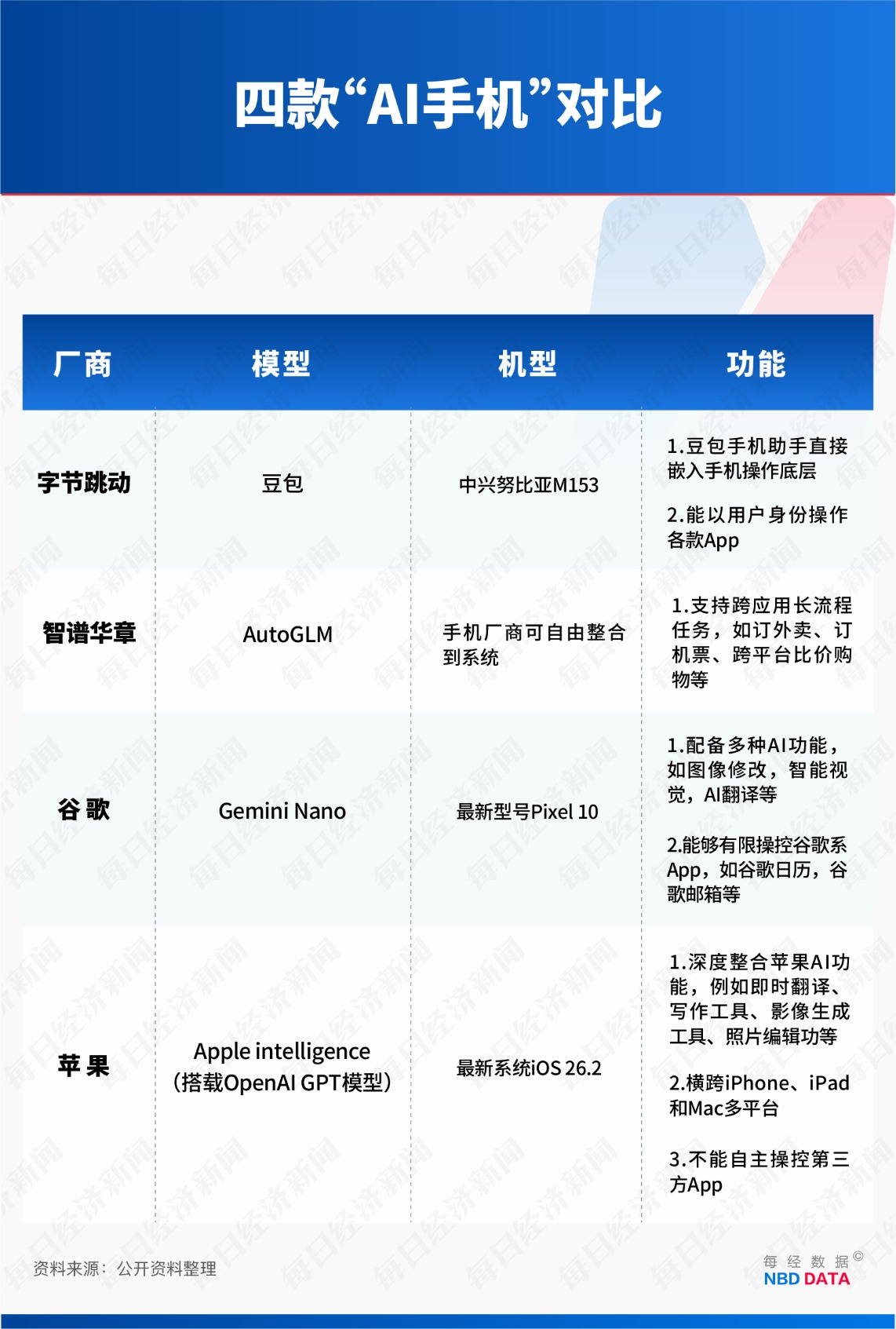
Core Viewpoint - The emergence of AI smartphones, particularly represented by ByteDance's "Doubao Phone" nubia M153, signifies a significant shift in the mobile internet landscape, contrasting with the API standardization approach taken by Apple and Google, leading to a redefined relationship among smartphone manufacturers, app developers, and users [5][7][12]. Group 1: AI Smartphone Development - On December 19, ByteDance announced collaborations with hardware manufacturers like vivo, Lenovo, and Transsion to advance AI smartphone technology following the launch of the "Doubao Phone" [5][6]. - The "Doubao Phone" utilizes GUI technology to enable AI assistants to perform complex tasks across applications, which has prompted a defensive response from mainstream apps [5][10]. - The core technology of the "Doubao Phone" is based on a deep integration of GUI and system-level permissions, allowing AI to execute tasks like ordering food and comparing prices seamlessly [7][10]. Group 2: Technical Route Comparison - The competition between the GUI paradigm represented by Doubao and the API paradigm led by Apple and Google highlights a fundamental divergence in AI smartphone strategies [12][13]. - The GUI approach allows for broader application compatibility without requiring developer cooperation, while the API approach emphasizes stability, privacy, and efficiency but relies on app developers to integrate their functionalities [12][13]. - Apple and Google are currently focusing on API development, which is seen as a more conservative and slower approach compared to the rapid advancements in GUI technology [17][20]. Group 3: Market Implications - According to Canalys, the global AI smartphone shipment share is expected to rise from 16% in 2024 to 54% by 2028, with a compound annual growth rate of 63% from 2023 to 2028, driven by major players like Samsung and Apple [20][21]. - The introduction of AI assistants in smartphones raises concerns among major app developers about potential disruptions to their business models, as AI could bypass traditional app functionalities [21][22]. - The future ecosystem of AI smartphones is anticipated to evolve into a "layered governance" structure, where different players will have varying degrees of influence and control over AI operations [22][23].


珠三角观察丨布局“十五五”,九城市委全会划重点
Xin Lang Cai Jing· 2025-12-20 13:55
Core Insights - The Pearl River Delta (PRD) region is entering a new phase of development, focusing on innovation-driven and collaborative growth as part of the "14th Five-Year Plan" and the upcoming "15th Five-Year Plan" [1] - The region aims to transform its industrial structure from factor-driven to innovation-driven, enhancing regional cooperation and urban development quality [1] Group 1: Industrial Development - The PRD cities are prioritizing the development of new productive forces, with a strategic focus on technological innovation to lead the modernization of the industrial system [1] - Guangzhou is constructing a "12218" modern industrial system, emphasizing the consolidation of existing industries while exploring new sectors like low-altitude economy and artificial intelligence [2] - Shenzhen is focusing on the integration of digital, network, platform, and financial services to upgrade its manufacturing sector, with a strong emphasis on artificial intelligence and green technologies [5] - Foshan is targeting a transformation from a manufacturing hub to an intelligent manufacturing city, particularly in the fields of artificial intelligence and robotics [5] - Dongguan is building an "8+8+4" key industrial system, enhancing traditional manufacturing through digitalization while expanding into semiconductor and new energy sectors [7] - Huizhou aims to achieve a "trillion GDP" target by strengthening industrial collaboration with neighboring cities and developing an AI and robotics industrial belt [9][10] Group 2: Regional Cooperation - The "14th Five-Year Plan" has accelerated the integration of the Guangdong-Hong Kong-Macao Greater Bay Area, with a focus on both hard and soft connectivity to optimize regional development [12] - Guangzhou and Shenzhen are leading the creation of a world-class urban agglomeration, with initiatives to enhance international competitiveness and cooperation with Hong Kong and Macau [12][14] - The construction of urban circles and the promotion of "same city" development are becoming increasingly important, with cities like Huizhou and Zhuhai actively participating in these efforts [14][16] Group 3: Urban Development and Quality of Life - The PRD cities are shifting their focus from scale expansion to high-quality, efficient, and livable urban development, aiming to create modern, resilient, and civilized cities [17] - Guangzhou is emphasizing urban renewal and village renovation, with a focus on enhancing urban quality and functionality [22] - Dongguan is pursuing a strategy of "intelligent creation and livability," aiming to improve governance and urban experience [18] - Each city is developing unique urban brands and characteristics, with a focus on creating high-quality living environments [20][22]

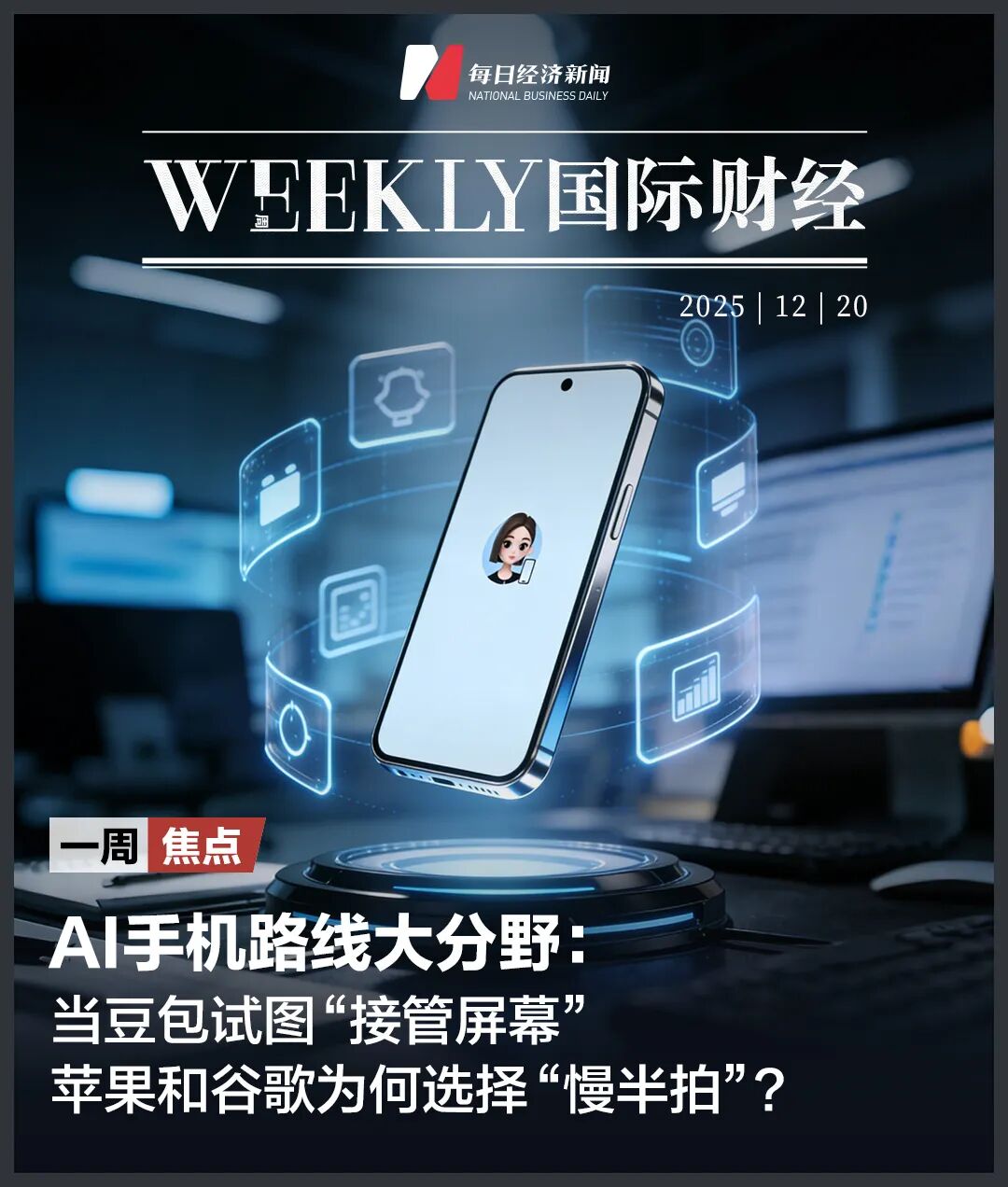
AI手机路线大分野:当豆包试图“接管屏幕” 苹果和谷歌为何选择“慢半拍”?
Mei Ri Jing Ji Xin Wen· 2025-12-20 05:47
Core Viewpoint - The emergence of AI smartphones has created a clear division in technology routes, with ByteDance's "Doubao Phone" leading a GUI (Graphical User Interface) approach, while Apple and Google maintain a more conservative API (Application Programming Interface) standardization route, resulting in a significant shift in the mobile internet landscape [1][4][8]. Group 1: AI Smartphone Development - ByteDance, in collaboration with ZTE Nubia, launched the "Doubao Phone" nubia M153, which allows AI assistants to perform complex tasks across applications using GUI technology [1][4]. - The Doubao Phone's AI assistant can execute tasks like ordering food and comparing prices through voice commands, showcasing its cross-application capabilities [4][6]. - The technology behind Doubao Phone involves deep integration with system-level permissions, enabling the AI to simulate user interactions with various apps [6][7]. Group 2: Competitive Landscape - The competition between the GUI approach of Doubao and the API approach of Apple and Google highlights a fundamental clash in the mobile internet's business logic and interests [4][8]. - Apple's API approach focuses on building a standardized framework for developers to integrate AI capabilities, which is seen as more stable and privacy-conscious but requires cooperation from app developers [9][13]. - Google is also pursuing an API strategy, emphasizing cloud collaboration and prioritizing desktop applications, while still in the early stages of mobile GUI implementation [13][14]. Group 3: Market Trends and Projections - According to Canalys, the global AI smartphone shipment share is expected to rise from 16% in 2024 to 54% by 2028, with a compound annual growth rate of 63% from 2023 to 2028, driven by advancements in chip technology and increasing consumer demand for AI features [14]. - The introduction of AI assistants in smartphones is anticipated to disrupt traditional business models, as they may directly intervene in transactions, raising concerns among major internet companies [14][15]. Group 4: Future Ecosystem Dynamics - The future of AI smartphones is likely to see a "layered governance" structure, where major apps like WeChat and Taobao may develop their own AI agents to maintain control over user interactions, while smaller apps may be directly managed by system-level AI [16][17]. - The shift towards AI-driven ecosystems is expected to transform the competitive landscape from a focus on traffic acquisition to value co-creation, with smartphone manufacturers taking the lead [16][17].
当豆包AI手机发起“硬件联盟”:一场向超级App宣战的“系统级革命”全面爆发
Mei Ri Jing Ji Xin Wen· 2025-12-19 14:20
Core Insights - ByteDance is collaborating with Lenovo to integrate AI capabilities into smartphones, aiming to gain user access and reshape the AI landscape in mobile technology [1][2] - The launch of the Doubao AI phone assistant has prompted major apps like WeChat and Taobao to defend their market positions, indicating a significant shift in the competitive landscape [1][4] - The strategy involves creating new revenue streams through partnerships with hardware manufacturers, positioning them as channel partners in ByteDance's AI ecosystem [2][3] Group 1: Collaboration and Strategy - ByteDance is working with various hardware manufacturers, including Lenovo, Vivo, and Transsion, to pre-install AI plugins on smartphones, aiming to capture the next generation of human-computer interaction [1][2] - The collaboration model discussed includes revenue sharing from traffic distribution and subscription services, with no upfront fees for customized development [2][3] - The goal is to transform smartphone manufacturers from mere device makers into integral partners within ByteDance's AI ecosystem [2][3] Group 2: Market Dynamics and Challenges - The Doubao AI phone has faced operational challenges with major apps, leading to adjustments in its AI capabilities to comply with existing app restrictions [4][5] - The strategy to target mid-range smartphones priced above 2000 yuan aims to build a substantial user base, with plans to expand to 150 million to 200 million devices [6][7] - The overseas market is seen as a more favorable environment for innovation, allowing for lower risk and better user education before entering the more competitive domestic market [7][8] Group 3: Future Prospects and Uncertainties - The potential for a hardware alliance could shift the balance of power against super apps, but the success of this strategy remains uncertain [3][8] - The sustainability of new business models, including revenue generation from AI services, is still unproven, posing a significant challenge for all players involved [8] - ByteDance's approach to leveraging AI in smartphones could reshape the mobile ecosystem, but it faces hurdles from super apps and the need for a clear commercial path [8]