OPPO

Search documents
豆包搅动AI手机池水 厂商摸索数据、权限边界
2 1 Shi Ji Jing Ji Bao Dao· 2025-12-27 07:07
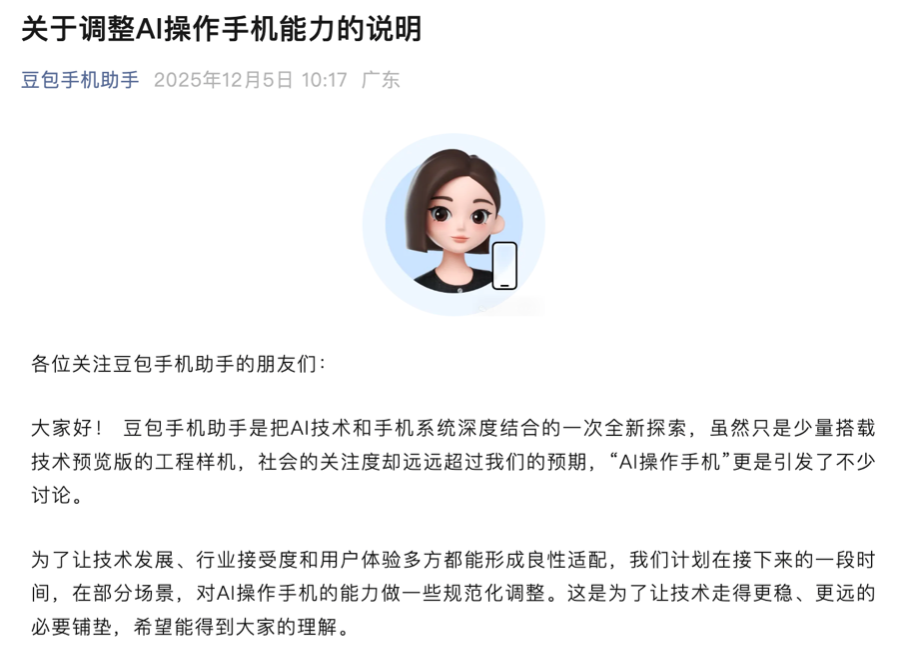
Core Insights - The launch of the Doubao mobile assistant in late 2025 has created significant waves in the smartphone industry, being recognized by users as a "truly AI phone" due to its autonomous cross-application operation capabilities [1][5] - However, the Doubao mobile assistant faced usage restrictions in multiple applications, leading to an official statement on December 5 regarding adjustments to its AI operation capabilities [1][3] - The challenges faced by Doubao reflect broader issues in the AI phone sector, particularly concerning user privacy and data rights, which require collaborative efforts from various stakeholders [3][7] Group 1: Technology and Development - The rapid improvement of domestic open-source large models has provided a solid foundation for the iterative development of AI phones, shifting focus from cloud-based models to offline capabilities [4][13] - The announcement of the open-sourcing of the AutoGLM model by Zhiyu on December 9 signifies a move towards "technological equality" in the mobile agent space, potentially lowering development barriers [3][12] - The evolution of AI phones is not just about technological advancements but also involves a complex interplay of patience, restraint, and ecosystem collaboration [4][17] Group 2: Market Dynamics and Competition - The Doubao mobile assistant's features are not significantly different from previously demonstrated smart applications by other manufacturers, indicating that the market is still in the early stages of realizing cross-application autonomous capabilities [5][6] - The competition in the AI phone market is fundamentally about ecosystem development, requiring a shift from traditional app models to a more integrated approach that allows for cross-application automation [17][21] - The emergence of AI agents is seen as a potential battleground for user engagement and control over data, with manufacturers needing to navigate the complexities of user habits and regulatory compliance [8][17] Group 3: Industry Challenges - The current landscape reveals a "standard vacuum" regarding user authorization and data rights, complicating the implementation of AI agents that require cross-application functionality [7][18] - The transition to AI agents necessitates a reevaluation of existing operational models, as traditional single-operation authorization methods are inadequate for the demands of AI-driven tasks [7][18] - The industry faces challenges related to memory and power consumption as the capabilities of end-side models expand, necessitating advancements in hardware to support these new demands [18][20] Group 4: Future Outlook - The AI phone competition is evolving from a focus on hardware specifications to a comprehensive race involving end-side capabilities, ecosystem openness, and user experience [21][22] - The integration of AI capabilities into hardware is expected to reshape traditional consumer electronics business models, moving towards subscription-based software services [20][22] - The developments surrounding the Doubao mobile assistant highlight the need for industry-wide collaboration to address the challenges of rights, interests, and standards in the evolving AI landscape [20][22]

深度使用80天后,我已经离不开小米17 Pro Max的背屏了
3 6 Ke· 2025-12-27 06:57
从噱头到实用 有些东西,只有在失去之后,才真正意识到她的好。 我说的不是爱情,而是我真正的日常伴侣,小米 17 Pro Max 。 如果在两个月前,你问我怎么看小米 17 Pro Max 的背屏,我会毫不客气地用「电子盲肠」来形容它,那时的我,认为它不过是小米为了差异化而强行加 戏的产物。 但在深度使用了 80 天后,这台机器被同事拿去做测试,我改用 OPPO Find X9 标准版,一种随之而来的不适感让我意识到,我似乎有点离不开它了。 从 3 步到 1 步 这种使用体验上的落差,藏在许多不起眼的生活细节里。 不仅是取餐码,你可以把自己想要的任何东西贴在背屏上 这种流畅感在我换回直板旗舰后的第一天就戛然而止。 我下意识地把手机背面递出去,却只换来扫码枪的沉默和店员疑惑的眼神。我只好收回手机,双击唤醒、上滑解锁、点开灵动岛或桌面小组件,等待应用 加载,最后才调出二维码。 从物理时间上看,这大概只多了 3 到 4 秒。但在交互体验上,这是从「一步直达」到「三步跳转」的退化。 在早高峰这种高压、快节奏的特定场景下,这多出来的两步操作所带来的阻滞感被无限放大。它强迫我将注意力从「取咖啡」这件事本身,转移到「操作 手 ...


美丽废物还是年轻人潮品?一款迷你AI手机靠情绪价值众筹千万|焦点分析
3 6 Ke· 2025-12-27 01:45
Core Insights - The article discusses the emergence of a Hong Kong-based startup, IKKO, which has successfully crowdfunded an AI smartphone, the Mind One Pro, raising over 11.5 million HKD on Kickstarter, despite the smartphone industry appearing closed to new entrants a decade ago [2][4]. Group 1: Product Features - IKKO Mind One Pro features a unique 4.02-inch square AMOLED display, making it half the size of traditional smartphones, and includes a 180-degree flip camera that serves both front and rear photography needs [2][7]. - The device operates on a dual-system design, with Android 15 for a complete app ecosystem and a lighter IKKO AI OS focused on minimizing distractions and enhancing productivity through AI tools [8][9]. - The smartphone's AI capabilities are more focused compared to mainstream competitors, emphasizing a "distraction-free" work environment through its dedicated modes [9]. Group 2: Market Positioning - IKKO's strategy aligns with current trends of targeting niche markets rather than competing directly with major brands, allowing for potential success through unique product offerings [4][11]. - The company aims to integrate hardware and service models, offering free data services for AI functionalities in over 60 countries, which could pave the way for future subscription services [9]. Group 3: Challenges and Criticisms - Critics argue that the IKKO Mind One Pro may be perceived more as a fashion accessory than a practical tool, given its lower specifications compared to mainstream devices, such as its 2200 mAh battery and the use of a 2022 Mediatek Helio G99 processor [10]. - The smartphone faces skepticism regarding its advertised "free global network," as the service is limited to AI functionalities, leaving traditional data needs reliant on standard SIM cards [10]. - As the AI smartphone market matures, differentiation becomes increasingly challenging, with major brands integrating AI deeply into their systems, potentially overshadowing standalone hardware solutions like IKKO's [11].

孙正义藏了44年的长女自曝身份;周大福客服回应“牛马”吊坠被指阴阳打工人;霸王茶姬发长文回应质疑丨邦早报
创业邦· 2025-12-27 01:09
Group 1 - The article discusses the announcement by Spiber, a biotech unicorn in Japan, regarding the involvement of Masaya Kawanami, the daughter of SoftBank's founder Masayoshi Son, in the company's operations starting in the first half of 2026. This marks her first public acknowledgment of her family background in a business context, raising speculation about potential succession plans for SoftBank [2] - Realme, a smartphone brand under OPPO, has responded to rumors of large-scale layoffs, stating that business operations are normal and that the rumored layoffs are part of regular personnel changes at year-end. The company is set to launch new products in January [4] - Bawang Tea's stock price fell nearly 15% due to concerns over caffeine content in their products, prompting the company to issue a statement clarifying that their tea's caffeine levels are comparable to that of a latte and significantly lower than that of an Americano [4] - Chow Tai Fook faced backlash over a gold pendant design, which was criticized on social media. The company responded that the product is selling well online and that customer feedback will be considered for future designs [6] - Dong'an Group confirmed the suspension of three Porsche dealerships due to operational difficulties, with plans to address employee salary issues within 60 days. The company denied rumors of investor flight [9] - Midea's Building Technology division announced a 5% price increase across all product lines due to rising raw material costs, effective from December 15, 2025 [11][12] - The first national standards for AI large models have been implemented, focusing on technical evaluation and aiding over 30 companies in technology iteration [13] Group 2 - Lenovo plans to unveil an AI super-intelligent agent at CES, which is expected to compete with existing AI assistants by offering more comprehensive features and cross-device connectivity [17] - Douyin has launched a long-form content feature allowing users to publish articles up to 8,000 words, enhancing its content creation capabilities [17] - The UK used car market saw a 2.8% growth in Q3 2025, with over 2 million transactions, marking the strongest performance since 2021 [22] - Apple's smartphone sales in China doubled in November, with a 128.4% year-on-year increase, while the overall smartphone market grew less than 2% [22]

全球围剿“苹果税”中国何以成“最后高地”?
Xin Lang Cai Jing· 2025-12-26 21:01
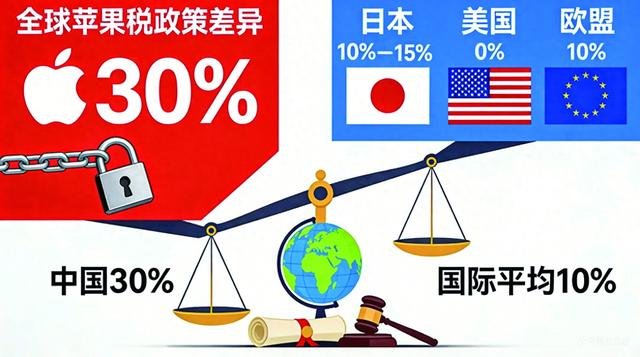
Core Viewpoint - The article discusses the global shift regarding the "Apple Tax," highlighting the contrast between international regulatory changes and the situation in China, where developers still face a high commission rate of 30% [2][3][6]. Global Regulatory Changes - Various countries, including the EU, Japan, and South Korea, have implemented measures to reduce Apple's App Store commission rates, with the EU's Digital Markets Act forcing Apple to lower its rates to between 10% and 17% [5][6]. - As of 2024, over 15 countries have initiated compliance regulations against the "Apple Tax," leading to a fragmented and differentiated approach to commission rates globally [5][6]. China's Unique Position - In contrast to global trends, China remains an outlier, with developers required to pay a 30% commission, significantly higher than the rates in Europe (4.6%) and the U.S. (8.8%) [6][8]. - Despite ongoing complaints and calls for policy changes, there has been no substantial shift in China's regulatory stance regarding the "Apple Tax" [6][9]. Developer Challenges - Developers in China face significant challenges, including strict regulations that prevent them from using third-party payment systems or directing users to external payment options [3][4]. - The high commission rates have led to financial strain on developers, with some considering pausing updates for iOS versions due to the unsustainable costs [13][14]. Market Dynamics - The Chinese market's unique structure, including high commission rates from Android platforms, has led some developers to view Apple's 30% fee as relatively reasonable [9][10]. - The perception of Apple's services as high-quality and secure contributes to a complex relationship between developers and the platform, where some developers have found ways to circumvent high fees [10][12]. Future Outlook - The future trajectory of the "Apple Tax" in China will depend on the interplay of regulatory intentions, market pressures, and the maturity of the digital ecosystem [14][19]. - There is potential for the development of a "Chinese version of the Digital Markets Act" or revisions to existing antitrust laws, which could lead to a reduction in commission rates [14][15]. Strategic Considerations - Apple has been adapting its narrative in response to global scrutiny, emphasizing its contributions to the developer community and the value of its ecosystem [7][11]. - The company’s localized strategies and cooperation with Chinese authorities have allowed it to maintain a favorable position in the market, despite the high commission rates [11][12].

荣耀推出WIN系列!智能手机呈现新趋势
Zhong Guo Zheng Quan Bao· 2025-12-26 14:37
Group 1: Core Insights - Honor launched its esports flagship smartphone series, Honor WIN, which includes two versions priced at 3999 yuan and 2699 yuan respectively, featuring upgrades in cooling and imaging technology [1] - The introduction of active cooling solutions, such as fans, is becoming essential for high-performance smartphones as passive cooling methods are insufficient to manage heat generated by advanced AI capabilities and chip performance [2] - The smartphone imaging sector is expected to enter a new growth phase, driven by increasing consumer demand for diverse imaging capabilities and continuous upgrades in camera specifications [3] Group 2: Industry Trends - The trend towards active cooling in smartphones is gaining momentum, with companies like OPPO and Honor integrating micro-fans into their devices, indicating a shift towards a new era of active cooling technology [2] - The Honor WIN series features innovative cooling technologies, including a dual 360-degree airflow design and a 30% improvement in cooling efficiency, showcasing advancements in thermal management [2] - The smartphone camera market is evolving with a focus on high pixel counts, optical zoom, and advanced stabilization technologies, suggesting a competitive landscape where imaging capabilities are a key differentiator among brands [3]
涨价潮,来了?
大胡子说房· 2025-12-26 09:33
Core Viewpoint - A new wave of price increases is anticipated across various industries, driven by factors such as supply reduction, wage increases, and government policies aimed at stimulating domestic demand [1][5][30]. Group 1: Price Increases in Various Industries - McDonald's will raise prices on several menu items by 0.5-1 yuan starting December 15, 2025 [2]. - Moutai's wholesale prices for all products have increased, with the 25-year Flying Moutai rising by 40 yuan to 1600 yuan per bottle, and the Zodiac Snake variant surging by 230 yuan to 2000 yuan per bottle [3]. - SMIC has implemented a price increase of approximately 10% on certain production capacities, particularly focusing on the 8-inch BCD process platform [4]. - Major global shipping companies, including MSC, CMA CGM, Maersk, and Hapag-Lloyd, have announced plans to adjust freight rates starting January 1, 2026, including seasonal surcharges [4]. - Smartphone manufacturers like Xiaomi, OPPO, vivo, and Honor have raised prices on new models by 100 to 600 yuan compared to previous generations since October [5]. Group 2: Reasons Behind Price Increases - Price increases are partly a response to policies aimed at reducing overcapacity and promoting quality over quantity in production, as seen in industries like Moutai and SMIC [5][6]. - The price of lithium carbonate has risen from 92,800 yuan per ton to 104,900 yuan per ton, reflecting a monthly increase of over 13%, driven by production cuts from leading companies [6]. - The government has emphasized the need to stimulate domestic demand by increasing residents' income, which may lead to higher wages and consequently higher prices [6][7]. Group 3: Economic Outlook and Market Trends - The expectation is that inflation will become the main theme moving forward, with CPI gradually rising as the economy recovers from deflation [28][45]. - Monetary policies, including potential interest rate cuts, are anticipated to continue, providing a basis for inflation as liquidity increases in the market [34][40]. - The A-share market is expected to experience a slow bull market due to improved regulations, increased long-term capital inflows, and enhanced liquidity [41][43]. - As capital markets stabilize and residents' financial conditions improve, consumer spending is likely to increase, further driving price rises across various sectors [42][44].

真我手机回应大规模裁员 系年底正常的人员变动
Xin Lang Cai Jing· 2025-12-26 08:27
Core Viewpoint - Realme has initiated a large-scale layoff plan, which the company claims is a normal year-end personnel adjustment, despite reports of significant staff reductions and departmental changes [2] Group 1: Company Operations - Realme's spokesperson stated that the company's business is operating normally and a new product, Neo, is set to launch in January [2] - The layoffs reportedly involve outsourced, on-site, and formal employees, with some departments retaining only one new graduate [2] Group 2: Market Position - Realme, established in May 2018 as an independent brand under OPPO, initially launched its first product in the Indian market and reached over 1 million global users by September 2018 [2] - Despite ambitions to break into the top five global smartphone brands, Realme currently ranks in the "others" category according to IDC's Q3 smartphone shipment data, with major competitors being Samsung, Apple, Xiaomi, Transsion, and Vivo [2] - Realme is not listed among the top five smartphone brands in the Chinese market either [2]
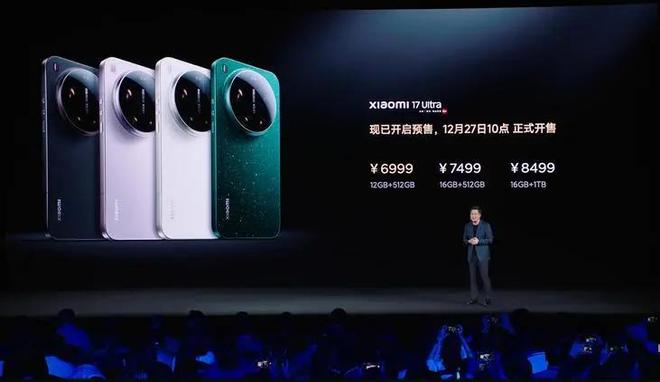
雷军没有上台,小米17 Ultra起售价涨500元
3 6 Ke· 2025-12-26 06:14
Core Viewpoint - Xiaomi's recent launch of the Xiaomi 17 Ultra smartphone marks a strategic shift towards the high-end market, with a price increase reflecting rising production costs and a focus on enhancing brand value through premium offerings [4][7]. Product Launch - The Xiaomi 17 Ultra was introduced on December 25, featuring a 2D flat screen, the thinnest Ultra model at 8.29mm, and powered by the fifth-generation Snapdragon 8 processor [1]. - The device includes advanced camera features such as a 14mm ultra-wide-angle lens, a 23mm one-inch main camera, and a 75-100mm 200MP periscope telephoto lens [1]. Pricing Strategy - The starting price for the Xiaomi 17 Ultra is set at 6,999 yuan, an increase of 500 yuan from the previous model, the Xiaomi 15 Ultra [4][5]. - The device's memory configuration has been upgraded, starting with 12GB+512GB, compared to the previous model's 12GB+256GB [5]. - Additional pricing tiers include 7,499 yuan for 16GB+512GB and 8,499 yuan for 16GB+1TB, with the Leica edition priced at 7,999 yuan for 16GB+512GB [5][6]. Market Positioning - The Xiaomi 17 Ultra aims to compete directly with high-end models from Huawei and Apple, with the latter's iPhone 17 starting at 5,999 yuan and the Pro models priced higher [7]. - The strategic intent behind the pricing is to establish a foothold in the premium market while balancing concerns about sales volume [7]. Strategic Partnerships - Xiaomi has upgraded its global imaging strategic partnership with Leica, introducing the "strategic co-creation model" with the Xiaomi 17 Ultra by Leica [2]. - This collaboration is expected to enhance the product's appeal to photography enthusiasts and core users, rather than focusing solely on high sales volumes [7]. Market Context - According to IDC, as of Q3 2025, Xiaomi holds a 14.7% market share in China, ranking fourth behind Vivo, Apple, and Huawei [8][9]. - The overall smartphone market has shown signs of stabilization, with Xiaomi's recent performance reflecting a slight decline in shipment volume compared to the previous year [8].
小米卢伟冰:一万多的手机放到下一代
Guan Cha Zhe Wang· 2025-12-26 03:35
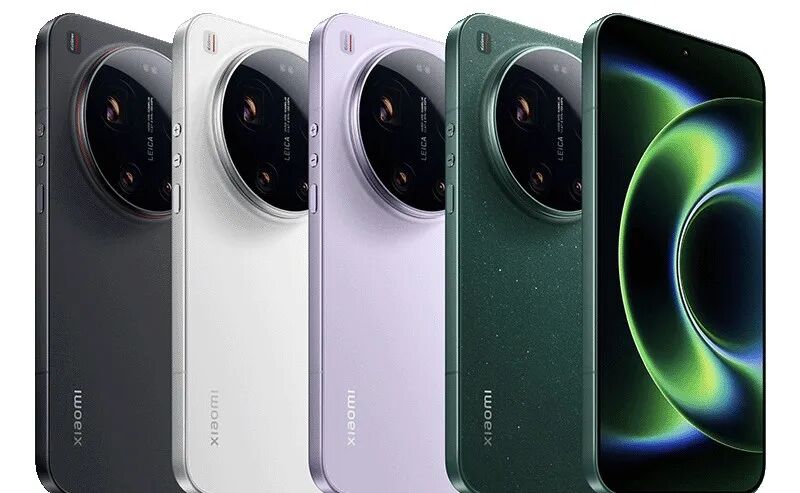
Group 1 - Xiaomi launched its flagship smartphone, the Xiaomi 17 Ultra, with a price range of 6,999 to 8,499 yuan, and a Leica version priced between 7,999 and 8,999 yuan [1] - The price increase for the Xiaomi 17 Ultra was anticipated, with a 500 yuan increase compared to the previous generation, the Xiaomi 15 Ultra [1][3] - Xiaomi's president, Lu Weibing, indicated plans to target the high-end smartphone market with models priced above 6,000 yuan in the future [1] Group 2 - The Xiaomi 17 Ultra features significant imaging capabilities, including a 1-inch main camera and a 200-megapixel telephoto lens, with advanced hardware and technology for enhanced dynamic range and optical zoom [3] - Other specifications include a 6.9-inch display, Snapdragon 8 Gen 2 processor, 6,800 mAh battery, and fast charging capabilities, making it the lightest Ultra model at 8.29 mm thick [3] - The Leica version of the Xiaomi 17 Ultra includes upgrades in lens zoom, UI interaction, and ergonomic design [3] Group 3 - Xiaomi and Leica have upgraded their strategic partnership, focusing on integrating Leica's optical expertise and design aesthetics into their products [5] - In the third quarter, Xiaomi ranked fourth in the Chinese smartphone market with a shipment of 10 million units, while Vivo, Apple, and Huawei led the market [5]