美的集团

Search documents
强势股追踪 主力资金连续5日净流入88股
Zheng Quan Shi Bao Wang· 2026-01-22 09:44
Core Viewpoint - The report highlights the significant inflow of main capital into various stocks, with specific companies showing remarkable performance in terms of net capital inflow and stock price changes [1][2]. Group 1: Main Capital Inflow - A total of 88 stocks have experienced a net inflow of main capital for five consecutive days or more, indicating strong investor interest [1]. - Hangzhou Bank leads with 16 consecutive days of net inflow, followed by Yunnan Baiyao with 14 days [1]. - Midea Group has the highest total net inflow amounting to 1.582 billion yuan over seven days, while Hangzhou Bank follows closely with 1.489 billion yuan over 16 days [1]. Group 2: Performance Metrics - The stock with the highest net inflow ratio relative to trading volume is Fenglong Co., which has surged by 359.76% over the past 16 days [1]. - Other notable stocks include Guotai Junan Securities with a net inflow of 1.109 billion yuan over 11 days and China Ping An with 1.074 billion yuan over six days, although their stock prices have seen declines of 2.46% and 3.28% respectively [1]. - The report includes a detailed table of stocks with their respective net inflow amounts, inflow ratios, and cumulative price changes, providing a comprehensive overview of market trends [1][2].





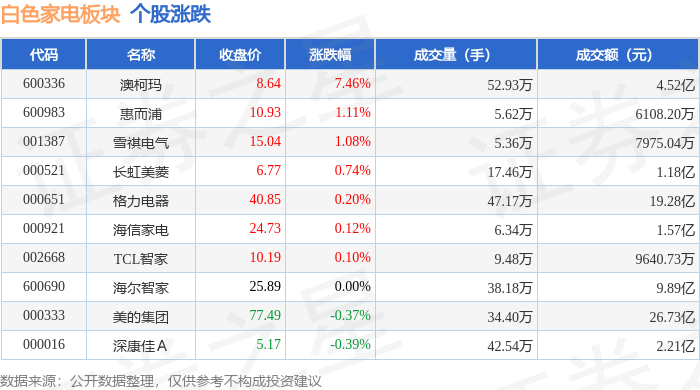
白色家电板块1月22日跌0.09%,深康佳A领跌,主力资金净流入5.14亿元
Zheng Xing Xing Ye Ri Bao· 2026-01-22 09:01
Market Overview - The white goods sector experienced a slight decline of 0.09% on January 22, with Deep Konka A leading the drop [1] - The Shanghai Composite Index closed at 4122.58, up 0.14%, while the Shenzhen Component Index closed at 14327.05, up 0.5% [1] Individual Stock Performance - Aokema (600336) saw a significant increase of 7.46%, closing at 8.64 with a trading volume of 529,300 shares and a turnover of 452 million yuan [1] - Whirlpool (600983) and Xueqi Electric (001387) also reported modest gains of 1.11% and 1.08%, respectively [1] - Gree Electric (000651) and Hisense Home Appliances (000921) had minimal changes, with Gree Electric up 0.20% and Hisense up 0.12% [1] - Midea Group (000333) experienced a slight decline of 0.37%, closing at 77.49 with a trading volume of 344,000 shares and a turnover of 2.673 billion yuan [1] Capital Flow Analysis - The white goods sector saw a net inflow of 514 million yuan from institutional investors, while retail investors contributed a net inflow of 41.26 million yuan [1] - However, speculative funds experienced a net outflow of 555 million yuan [1] Detailed Capital Flow for Key Stocks - Midea Group had a net inflow of 47.4 million yuan from institutional investors, but a net outflow of 48.3 million yuan from speculative funds [2] - Gree Electric reported a net inflow of 74.51 million yuan from institutional investors, with a net outflow of 101 million yuan from speculative funds [2] - Haier Smart Home (600690) had a net inflow of 47.07 million yuan from institutional investors, while retail investors saw a net outflow of 60.53 million yuan [2] - Deep Konka A experienced a net outflow of 32.93 million yuan from institutional investors, but a net inflow of 24.88 million yuan from retail investors [2]





港股芯片股高开低走
Di Yi Cai Jing Zi Xun· 2026-01-22 08:43
| 名称 | 现价 | 涨跌 | 涨跌幅 · | 成交额 | | --- | --- | --- | --- | --- | | 理想汽车-W | 65.550c | 2.600 | 4.13% | 13.08亿 | | 百度集团-SW | 160.000c | 6.300 | 4.10% | 39.62亿 | | 哔哩哔哩-W | 257.000c | 8.200 | 3.30% | 10.55亿 | | 华虹半导体 | 109.200c | 3.400 | 3.21% | 27.72亿 | | 金蝶国际 | 14.520c | 0.360 | 2.54% | 5.89亿 | | 蔚来-SW | 37.040c | 0.820 | 2.26% | 1.33亿 | | 阿里巴巴-W | 164.800c | 1.600 | 0.98% | 98.37亿 | | 京东集团-SW | 113.900c | 1.100 | 0.98% | 9.37亿 | | 中芯国际 | 77.850c | 0.600 | 0.78% | 39.62亿 | 跌幅方面,地平线机器人跌逾4%,小鹏汽车、京东健康跌近3%。 1月22日, ...
港股芯片股高开低走
第一财经· 2026-01-22 08:36
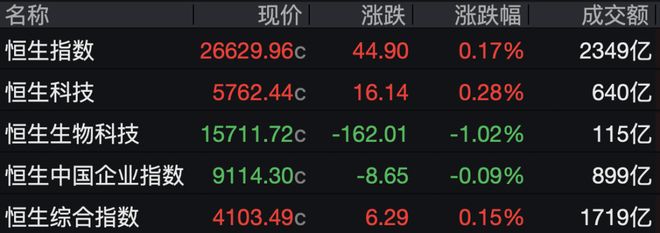
跌幅方面,地平线机器人跌逾4%,小鹏汽车、京东健康跌近3%。 | 名称 | 现价 | 涨跌 | 涨跌幅 ^ | 成交额 | | --- | --- | --- | --- | --- | | 地平线机器人-W | 8.890c | -0.400 | -4.31% | 19.42亿 | | 小鹏汽车-W | 76.950c | -2.350 | -2.96% | 12.96亿 | | 京东健康 | 64.850c | -1.950 | -2.92% | 3.96亿 | | 美的集团 | 85.700c | -1.700 | -1.95% | 1.95亿 | | 海尔智家 | 26.320c | -0.480 | -1.79% | 3.79亿 | | 同程旅行 | 23.340c | -0.260 | -1.10% | 1.37亿 | | 阿里健康 | 6.740c | -0.070 | -1.03% | 7.02亿 | 半导体、 芯片股高开低走,兆易创新跌超8%,纳芯微跌近8%,天岳先进跌超4%。 1月22日,香港恒生指数收涨0.17%,恒生科技指数涨0.28%。 | 名称 | 涨跌| 现价 | | | 成交额 ...

初瑞雪“广货行天下”直播专场销售额破亿,打响广货新年“开门红”
Huan Qiu Wang· 2026-01-22 08:20
本次专场直播是辛选积极响应广东省"广货行天下"春季行动的首场实战举措,汇聚家电、食品、日化等 7大品类127个广东知名品牌,美的、格兰仕、华帝、广州酒家等龙头企业携200余款优品亮相,多家本 土品牌借此次直播首次触达电商渠道,实现线上销售突破。 据数据显示,本场直播销售额破百万的产品达35个,华帝烟灶套装、芝华仕床、安吉尔净水器销售额分 别超过340万元、330万元、260万元,欣欣蛋糕、珍珍饮料等单品销量均突破百万量级,多款好物轮 番"秒空",彰显广货强劲市场号召力。 作为全场明星产品,广东海鸭蛋开场5分钟销量即突破100万只,最终总销量超200万只,引爆直播间消 费热潮。据悉,辛选与江门海鸭蛋的合作始于2019年,累计助销超3000万只,有效带动当地养殖产业升 级与农户增收。 来源:环球网 【环球网消费综合报道】1月21日,广东省"广货行天下"春季行动重点活动——辛选集团"广货行天 下"首场直播正式开启,由辛选集团董事长、快手头部主播初瑞雪带队直播。全场累计销售额突破1亿 元,吸引超3300万人次观看,带动95万单广货销往全国,覆盖全国31个省份、超360个城市,让优质广 货走出广东、走出大湾区,实现面向 ...

投行“迁徙” 一年超70人聘入上市公司
2 1 Shi Ji Jing Ji Bao Dao· 2026-01-22 08:17
Group 1 - The core point of the article highlights a significant trend where investment bankers are transitioning to executive roles in listed companies, particularly as secretaries and financial directors, due to changes in the industry landscape and declining income from investment banking [1][2][5] - From January 1, 2025, to January 20, 2026, at least 76 listed companies have announced new appointments for positions such as secretary, financial director, or securities representative, with a notable 66 of these individuals coming from investment banking backgrounds [2][5] - The trend shows that more individuals from leading investment banks, such as CITIC Securities and China International Capital Corporation (CICC), are making this transition, leveraging their experience and resources to secure positions in listed companies [1][2][5] Group 2 - The decline in investment banking income is a driving factor for this transition, with main underwriting revenues dropping significantly from 2022 levels; for instance, CITIC Securities' main underwriting revenue fell from 53.52 billion yuan in 2022 to 15 billion yuan in 2025 [6][7] - The article notes that the number of investment banks with main underwriting revenues exceeding 10 billion yuan has decreased drastically, indicating a broader trend of income reduction within the industry [6][7] - The potential income for former investment bankers transitioning to listed companies varies widely, but many can expect salaries in the range of one to two million yuan, with additional incentives from stock options potentially increasing their total compensation significantly [8]
投行“迁徙”,一年超70人聘入上市公司
2 1 Shi Ji Jing Ji Bao Dao· 2026-01-22 08:15
Core Insights - The trend of investment bankers transitioning to executive roles in listed companies is increasing due to changes in the brokerage industry's salary structure and the slowdown in IPO activities [2][4][8] - A significant number of these transitions involve former investment bankers taking on the role of Secretary of the Board (董秘), with 66 out of 76 new appointments in this position [4][6] Group 1: Transition Trends - From January 1, 2025, to January 20, 2026, at least 76 listed companies announced new appointments for positions such as Secretary of the Board, CFO, or securities representative, with a notable number coming from investment banking backgrounds [2][4] - The majority of these transitions are from top-tier investment banks, indicating a preference for experienced professionals in executive roles [2][5] Group 2: Financial Context - Investment banking revenues have significantly declined, with the main underwriting income dropping from over 10 billion yuan for nine firms in 2022 to only two firms exceeding this threshold in 2025 [9][10] - Specifically, CITIC Securities, the leading firm, saw its main underwriting income fall from 53.52 billion yuan in 2022 to 15 billion yuan in 2025, reflecting a broader trend of revenue contraction in the industry [10][11] Group 3: Motivations for Transition - The decline in income from investment banking has prompted many professionals to reassess their career prospects, leading to an increased interest in executive positions within listed companies [8][11] - While the fixed salaries in these new roles vary, the potential for stock options and incentives is a significant draw, with some professionals expecting to earn substantial amounts through equity compensation [11]



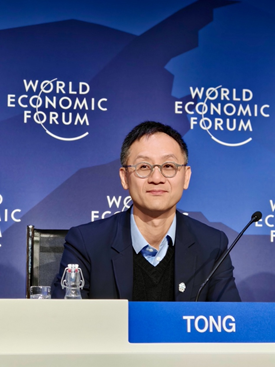
直击达沃斯|对话腾讯汤道生:要以长期主义、务实进取的态度拥抱AI
Xin Lang Cai Jing· 2026-01-22 08:06
Core Insights - The focus of AI discussions has shifted from model capabilities to the ability of companies to integrate AI into their core business processes as AI becomes more accessible [1][11] - The true competitive edge lies in the systematic integration of models, data, business processes, and industry knowledge [1][11] Group 1: Systematic Integration Capability - Companies must identify high-frequency, high-value business scenarios to effectively embed AI capabilities into their workflows [3][13] - Long-term competitiveness is derived from the accumulation of data and industry know-how, emphasizing the importance of data governance [3][13] - The cost-effectiveness and engineering capabilities of AI deployment are crucial for its sustainability in business systems [3][13] Group 2: Challenges in AI Implementation - Many companies face challenges in realizing the benefits of AI due to misalignment between business goals and technical capabilities [4][15] - Data quality and governance are often underestimated, leading to ineffective AI projects [4][15] - The lack of interdisciplinary talent and inadequate organizational structures hinder the successful integration of AI into daily operations [4][16] Group 3: Strategic Approaches - Companies should adopt a "small steps, quick wins" strategy, focusing on validating small core scenarios while prioritizing data governance [6][16] - A long-term, pragmatic approach is necessary for embracing AI, avoiding the pitfalls of overestimating short-term progress [6][16] Group 4: Dual Strategy of Self-Development and Open Source - The company will maintain a dual strategy of self-developed and open-source models, which is seen as essential for the future AI ecosystem [7][17] - The coexistence of multiple models and scenarios is anticipated, with cloud providers offering a stable technical foundation for flexible combinations [7][17] Group 5: Globalization and Compliance - Compliance has become a prerequisite for market entry and building trust, shifting from a backend legal concern to a strategic asset [9][19] - Sustainable globalization requires deep localization and ecosystem co-construction, moving beyond a one-size-fits-all product approach [9][19] - The company has seen significant growth in its international cloud business, doubling its global customer base over the past year [10][20]

2025年度并购报告,广东赢麻了
投中网· 2026-01-22 06:06
Group 1 - In 2025, the Chinese M&A market saw a total of 5,086 announced transactions, a decrease of 20.27% year-on-year, while the total transaction amount reached 2,373.515 billion yuan, an increase of 29.08% [7] - The completed transactions in 2025 amounted to 3,342, a slight increase of 0.45% year-on-year, with a total transaction value of 1,485.131 billion yuan, up 54.41% year-on-year, indicating a structural optimization trend in the market [9][10] - The Guangdong province continued to lead the M&A market in China, benefiting from the dual innovation drive of the Guangdong-Hong Kong-Macao Greater Bay Area, with electronic information, traditional manufacturing, healthcare, and energy mining being the hot sectors [10][31][32] Group 2 - In 2025, private equity funds showed a recovery in exit numbers, with 469 exits, a year-on-year increase of 22.77%, and a total capital recovery of 64.215 billion yuan, up 8.54% year-on-year [17] - Notable exits included TCL Technology's acquisition of a 21.53% stake in Shenzhen Huaxing Optoelectronics for 11.562 billion yuan and Silex Group's acquisition of Chongqing Liangjiang New Area Longsheng New Energy for 3.509 billion yuan [20][21] Group 3 - In 2025, there were 20 M&A transactions exceeding 10 billion yuan, with the largest being China Shipbuilding Industry's acquisition of China Shipbuilding Heavy Industry for 115.15 billion yuan, marking a significant milestone in China's shipbuilding industry [23] - Major domestic M&A cases included Guotai Junan's merger with Haitong Securities for approximately 97.609 billion yuan and Shandong Hongchuang's acquisition of Shandong Hongtu for 63.518 billion yuan [24][25] Group 4 - The cross-border M&A market in 2025 saw a total of 144 transactions, with outbound M&A accounting for 79 and inbound M&A for 65, reflecting a year-on-year decline of 13.77% [26] - Notable cross-border transactions included Midea Group's acquisition of Teka Group for 8.287 billion yuan and Zijin Mining's acquisition of Newmont Golden Ridge for 7.315 billion yuan [27][29] Group 5 - The M&A market in 2025 was characterized by a structural differentiation of "quantity reduction and price increase," with a notable shift from quantity dividends to quality dividends [10] - The electronic information sector led the number of transactions with 579 deals, accounting for 17.32%, while the financial sector had the largest disclosed transaction value at 203.596 billion yuan, representing 13.71% of the total [34][36]





张坤等知名基金经理罕见发声!
天天基金网· 2026-01-22 05:20
Group 1 - The core viewpoint of the article highlights the strategic adjustments made by prominent fund managers at E Fund in their investment portfolios for Q4 2025, focusing on sectors like AI, healthcare, consumer goods, and technology [2][4][6][10] Group 2 - Zhang Kun adjusted the structure of investments in the healthcare, consumer, and technology sectors while maintaining a stable position in top holdings, which include Tencent Holdings, Kweichow Moutai, and Alibaba-W [4][5] - Zhang Kun expressed confidence in the improvement of living standards and social security in China over the next decade, suggesting a narrowing gap with developed countries [4] - The AI wave is seen as a significant driver for innovation, with strong domestic demand expected to attract global resources and talent [4][5] Group 3 - Chen Hao focused heavily on AI-related sectors, increasing allocations in power equipment, new energy, non-bank financials, and chemicals, which yielded positive returns [7][8] - Chen Hao anticipates a transition of the AI industry from an acceleration phase in 2025 to a stable growth phase in 2026, emphasizing the importance of structural opportunities and the integration of AI with local applications [7][8] Group 4 - Xiao Nan reduced allocations in high-end and sub-high-end liquor sectors while increasing investments in the livestock industry, anticipating inflation-driven cost increases over the next two years [10] - The top holdings in Xiao Nan's consumer sector fund remained unchanged, including Kweichow Moutai and Midea Group [10]