传音控股

Search documents
内存涨价,千元机的天塌了
创业邦· 2026-02-14 10:16
Core Viewpoint - The article discusses the significant impact of rising storage chip prices on the smartphone industry, particularly affecting mid-range and low-end models, as manufacturers shift focus to higher-margin products due to supply constraints driven by AI infrastructure demand [6][8][16]. Group 1: Market Dynamics - Since the second half of last year, storage chips have experienced a dramatic price surge, with consumer-grade memory modules increasing by over 600%, making them highly valuable investment products [6]. - Major storage chip manufacturers, including Samsung, Micron, and SK Hynix, have reported that their production capacities for DRAM, NAND Flash, and HBM products are fully booked until 2026 [6][16]. - The demand for HBM memory used in AI chips has prioritized its production, leading to a supply squeeze for consumer-grade products, particularly affecting low-end smartphones [8][16]. Group 2: Impact on Smartphone Manufacturers - Transsion, known for its cost-effective models, has been significantly impacted, reporting a 22.6% revenue increase but an 11% drop in net profit, with a two-percentage-point decline in gross margin [8]. - Other smartphone manufacturers are also adjusting their strategies, with many opting to delay the launch of low-cost models and focusing on higher-end devices due to the rising costs of storage components [9][12]. - The cost structure of low-end smartphones is heavily affected by the rising prices of storage chips, which are considered a rigid cost that cannot be easily adjusted [12][14]. Group 3: Pricing Strategies and Market Trends - The article highlights that the average selling price (ASP) of smartphones is expected to exceed $400 for the first time, indicating a shift towards higher-priced models as manufacturers adapt to the changing market dynamics [19]. - As the market for mid-range and low-end smartphones shrinks, manufacturers are likely to prioritize high-end models, which offer greater pricing flexibility and profit margins [17][19]. - The ongoing supply constraints and rising costs may lead to the end of the "thousand-yuan phone era," as manufacturers may find it increasingly difficult to maintain low prices while covering rising component costs [19].




雷军选中的智能锁代工厂赴港IPO:“传音大将”能否解开鹿客科技“小米结”
Sou Hu Cai Jing· 2026-02-14 05:28
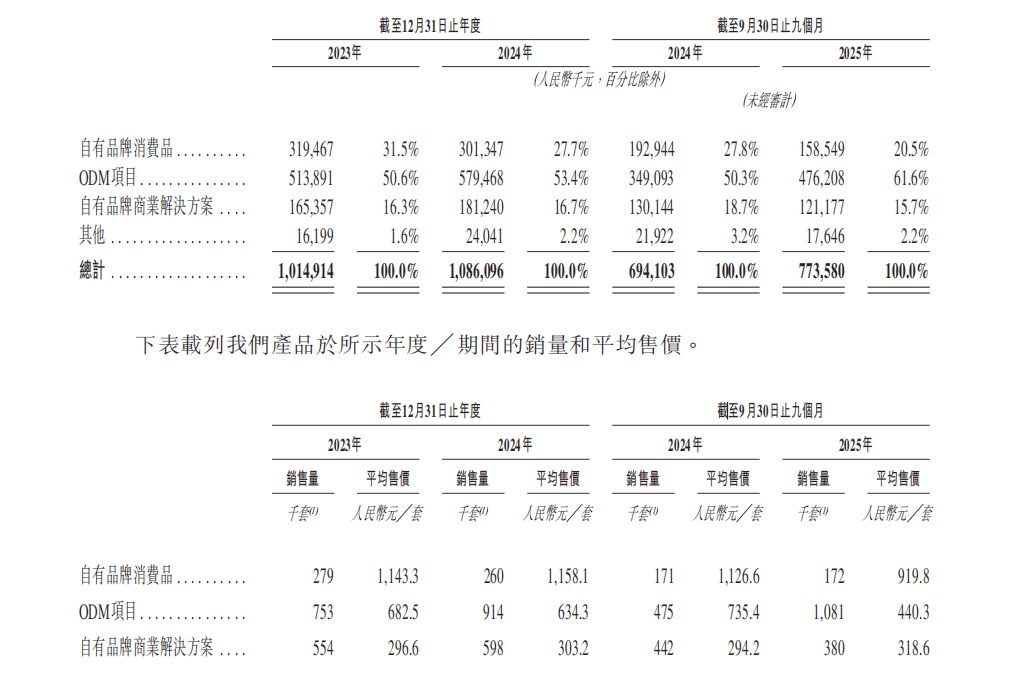
Group 1 - The departure of Hu Yue from Transsion Holdings to become CMO of LOKA Technology is seen as a strategic move to enhance the company's global competitiveness and reduce reliance on Xiaomi [1] - LOKA Technology aims to transition from being a simple lock manufacturer to a comprehensive home security service provider, integrating hardware, software, and AI [2] - The company's revenue for 2023 and 2024 is projected to be 1.01 billion RMB and 1.09 billion RMB respectively, with a significant increase in ODM business revenue share from 50.6% in 2023 to 61.6% in the first three quarters of 2025 [3] Group 2 - The average selling price of ODM products has decreased from 682.5 RMB in 2023 to 440.3 RMB in the first three quarters of 2025, leading to a decline in overall gross margin from 35.2% in 2024 to 31.2% in 2025 [4] - LOKA's dependency on Xiaomi is increasing, with revenue from the largest customer accounting for 48.6% in 2023 and rising to 60.6% in the first three quarters of 2025 [3] - The company is facing cash flow challenges, with operating cash flow turning negative in the first three quarters of 2025, resulting in a net outflow of 38.31 million RMB [7] Group 3 - The overseas business of LOKA is still in its infancy, contributing only 3.9% of total revenue in the first three quarters of 2025, which poses a significant challenge for future growth [8] - The company plans to use part of the funds raised from its IPO to repay bank loans related to equipment purchases, indicating a need for liquidity [7] - Hu Yue's experience in establishing brand barriers in emerging markets is expected to play a crucial role in LOKA's global expansion strategy [8]
传音控股是非洲之王还是非洲卷王?港股IPO能否解——“困”?
Sou Hu Cai Jing· 2026-02-14 03:38
Core Viewpoint - Transsion Holdings, known as the "King of Africa," is facing significant challenges as it anticipates a more than 50% decline in net profit due to rising raw material costs and intensified competition from domestic smartphone manufacturers entering the African market [5][18]. Group 1: Market Position and Performance - According to IDC, Transsion Holdings holds a 12.5% share of the global smartphone market, ranking third behind Samsung and Apple, and a 7.9% share in the global smartphone brand market, ranking sixth [2]. - In the African market, Transsion leads with the highest market share in the smartphone segment [2]. - The company's net profit is projected to decline significantly, with a 44.97% drop reported in Q3 2025 and a 57.48% decline in the first half of 2025 [10][11]. Group 2: Factors Affecting Performance - The primary reason for the decline in Transsion's performance is the rising costs of core materials driven by the AI industry's rapid growth, which has increased the prices of essential components like DRAM and NAND Flash [8][11]. - The average selling price of Transsion's feature phones is around 50 yuan, while entry-level smartphones average between 300 to 500 yuan, making it difficult to pass on rising costs to consumers [11]. - The proportion of storage chips in Transsion's material costs has increased from 22% in 2024 to 27% in 2025, with projections indicating it could reach 34% by the end of 2026 [11]. Group 3: Competitive Landscape - Domestic competitors such as Xiaomi, OPPO, and Honor are increasingly targeting the African market, leading to a decline in Transsion's market share, which has dropped to 51% as of September 2025 [12][15]. - Xiaomi's sales in Africa grew by 32% in Q1 2025, while Transsion experienced a 5% decline in the same period [15]. - Competitors are adopting similar technologies that were once unique to Transsion, eroding its competitive advantage [17]. Group 4: Strategic Responses - Transsion has submitted an application for an H-share IPO to raise $1 billion, with funds allocated for AI technology development, market promotion, IoT business expansion, and operational liquidity [21][22]. - The company aims to enhance its product competitiveness through AI applications and improve brand recognition in emerging markets [22]. - Transsion is also increasing its sales and R&D expenditures to maintain its market position amid rising competition and costs [17].

蛇年A股第一牛股,狂飙1836%
2 1 Shi Ji Jing Ji Bao Dao· 2026-02-13 09:52
Core Insights - The A-share market concluded the Year of the Snake with all major indices showing positive performance, with the Shanghai Composite Index rising by 25.58%, the Shenzhen Component Index increasing by 38.84%, and the ChiNext Index leading with a remarkable gain of 58.73% [1] Individual Stock Performance - Nearly 4,700 stocks recorded gains throughout the year, with 779 stocks doubling in price and over 100 stocks achieving gains exceeding 200% [1] - The top ten performing stocks, excluding those listed after 2025, are: - Shangwei New Materials - Tianpu Co., Ltd. (605255) - Jiamei Packaging (002969) - *ST Yazhen (603389) - Honghe Technology (603256) - Dingtai High-tech (301377) - Feiwo Technology (301232) - *ST Yushun (002289) - Shengtong Energy (001331) - Chaojie Co., Ltd. (301005) [1] Underperforming Stocks - Despite the overall positive index performance, some stocks experienced significant declines. The top ten underperforming stocks, excluding newly listed and ST stocks, are: - Kangle Weishi - Hualian Co., Ltd. (000882) - Tianjian Co., Ltd. (301383) - Wantai BioPharm (603392) - Transsion Holdings - Guibao Pet (301498) - Yihualu (300212) - Aibo Medical - Longda Food (002726) - Beishidake (300822) [1]
蛇年A股第一牛股,狂飙1836%
21世纪经济报道· 2026-02-13 09:48
Group 1 - The A-share market experienced a strong performance in the Year of the Snake, with major indices all showing positive growth. The Shanghai Composite Index rose by 25.58%, the Shenzhen Component Index increased by 38.84%, and the ChiNext Index led with a remarkable gain of 58.73% [1] - Nearly 4,700 stocks recorded gains over the year, with 779 stocks doubling in price and over 100 stocks increasing by more than 200% [1] - The top ten stocks by growth in the Year of the Snake, excluding those listed after 2025, included companies such as Shangwei New Materials, Tianpu Co., and Jiamei Packaging [1] Group 2 - Despite the overall positive index performance, some stocks experienced significant declines. The top ten stocks with the largest declines, excluding newly listed and ST stocks, included companies like Kangle Weishi, Hualian Co., and Tianjian Co. [1]

近乎腰斩!蛇年十大熊股出炉,这些股“榜上有名”



2 1 Shi Ji Jing Ji Bao Dao· 2026-02-13 09:15
Core Viewpoint - The A-share market concluded the Year of the Snake with all major indices showing positive performance, with the Shanghai Composite Index rising by 25.58%, the Shenzhen Component Index increasing by 38.84%, and the ChiNext Index leading with a remarkable gain of 58.73% [1]. Summary by Category Market Performance - The Year of the Snake saw significant gains across major indices, with the Shanghai Composite Index up by 25.58%, the Shenzhen Component Index up by 38.84%, and the ChiNext Index up by 58.73% [1]. Stock Performance - Despite the overall positive index performance, certain stocks experienced substantial declines. The top ten stocks with the largest declines, excluding newly listed stocks and ST stocks, are: 1. Kang Le Wei Shi 2. Hua Lian Shares 3. Tian Jian Shares 4. Wan Tai Biological 5. Chuan Yin Holdings 6. Guai Bao Pet 7. Yi Hua Lu 8. Ai Bo Medical 9. Long Da Mei Shi 10. Bei Shi Da Ke [1].
内存价格翻倍上涨,涨价还是减配,手机行业进退两难
3 6 Ke· 2026-02-13 03:33
Core Insights - The rapid increase in memory prices since Q4 2025 has significantly raised costs for smartphone manufacturers, leading to a potential retreat in the industry as companies face tough choices between raising prices or reducing specifications [1][5][8] - Counterpoint research indicates that memory prices may rise by approximately 40% before Q2 2026, further increasing material costs for manufacturers [2] - The smartphone market is experiencing a shift, with manufacturers adjusting their strategies to cope with rising costs, leading to a potential decline in overall market volume and increased competition among brands [8][10] Price Increases and Cost Management - Recent statistics show that new models from brands like Xiaomi, OPPO, and vivo have seen price increases ranging from 100 to 600 yuan compared to previous models, with mid-range models experiencing a price gap increase from 300 to between 400 and 600 yuan [3] - Memory typically accounts for 15% of a smartphone's Bill of Materials (BoM), rising to 20% in mid-range models, while most Chinese smartphone brands have hardware gross margins between 10% and 20% [4] - The price of the mainstream "12GB+256GB" memory configuration has surged by 75% over the past year, raising concerns about consumer willingness to absorb these costs [5] Market Dynamics and Manufacturer Strategies - The pressure from rising memory costs is affecting upstream suppliers, with manufacturers reluctant to pass on costs to consumers for fear of reduced sales, leading to downward adjustments in business plans for 2026 [6][7] - Manufacturers are increasingly focusing on structural adjustments to manage costs, such as changing suppliers or reducing specifications in less noticeable areas [5][7] - The competition is intensifying, with leading brands like Apple and Samsung having more leverage due to their financial stability and long-term supply agreements, while smaller brands face greater challenges [7][8] Market Outlook and Future Trends - The smartphone market in China is projected to see a slight decline in shipments, with major brands like Xiaomi and OPPO reducing their 2026 order quantities by over 20% [8][10] - The trend of "flagship-ifying" mid-range models is reversing, as manufacturers face supply pressures and must focus on high-end models and overseas markets for growth [10] - The global smartphone market is expected to enter a phase of "scale contraction and price increase," with IDC and Counterpoint predicting at least a 2% decline in global smartphone sales this year [10]
千元机的天塌了
虎嗅APP· 2026-02-13 00:37
以下文章来源于远川科技评论 ,作者何律衡 远川科技评论 . 刻画这个时代(的前沿科技) 本文来自微信公众号: 远川科技评论 ,作者:何律衡, 题图来自 :视觉中国 去年下半年以来,存储芯片进入史诗级涨价潮,消费级内存条一度跳涨6倍以上,荣膺当下最保值的 理财产品。 人工智能基础设施需求爆发,三星、美光、SK海力士三大存储芯片厂的产能被迅速榨干。 SK海力士去年10月就表示,2026年DRAM、NAND Flash和HBM三大产品线产能被预订一空,三星 和美光的HBM产能也全部售罄。 AI芯片所用的HBM内存利润率更高,自然在产能分配中优先级更高,导致消费级产品供应再度遭遇 挤压,陆续向下游行业传导,存储芯片涨价的最大受害者也浮出水面:低端手机。 以性价比著称的传音,中低端机型占出货量大头,也最早被涨价殃及。去年三季度,传音增收不增 利,营收增长22.6%,净利润反倒大降11%,毛利率抹去两个百分点。 单季度的业绩受当季新机型上市影响较大,但即便按照全年业绩指引看,传音2025年度营收利润双 降,净利润直接腰斩,手机也从全球第四[3]掉进了others[4]。 | 排名 | 3Q25 | 市场份额 | 4Q25 ...

中国最低调手机老板被围剿,消失的30亿都去哪了?
创业邦· 2026-02-13 00:08
Core Viewpoint - Transsion Holdings, known as the "King of Africa," has experienced a significant decline in net profit, dropping from 55.49 billion to 25.46 billion, a decrease of 54.11%, despite a slight revenue drop of 4.58% to 655.68 billion in 2025 [6][12]. Group 1: Company Background and Success - Transsion's success is attributed to its strategic focus on the African market, which was largely overlooked by global giants, and its ability to meet local consumer needs with affordable, durable, and feature-rich mobile phones [7][8]. - The company gained a strong market position by offering innovative features such as four-SIM support and tailored camera algorithms for darker skin tones, which resonated well with African consumers [8][10]. - Transsion's revenue grew from 253.46 billion to over 600 billion in four years, with a compound annual growth rate exceeding 30% [10]. Group 2: Profit Decline and Challenges - The decline in profit is attributed to rising global storage chip prices, which increased by over 40%, forcing Transsion to consider a price hike of 17% on its low-cost phones, a move that could jeopardize its market share in price-sensitive regions [12][13]. - Increased competition from domestic brands like Xiaomi and Honor has led to higher sales and marketing costs for Transsion, further eroding its profit margins [13][15]. - The company's high-margin feature phone business is rapidly shrinking, with its revenue share dropping to 5.86%, while lower-margin smartphones now account for 83.87% of its revenue [13][15]. Group 3: Strategic Shifts and Future Outlook - Transsion is attempting to diversify its business by investing approximately 20 billion in energy storage and electric vehicles, although this new venture only contributed 8.8% to its revenue in the first half of 2025 [15][18]. - The company faces a significant challenge in transitioning to an AI-driven market, as competitors have already established strong technological foundations [18]. - The loss of 30 billion in profit signifies the end of an era for Transsion, which must now focus on innovation, brand value, and operational efficiency to maintain its market position and profitability [18][20].

India second-largest active installed base of smartphones globally
Business· 2026-02-12 17:56
Market Overview - The active installed base of smartphones in India exceeds 740 million, representing more than half of the country's population of 1.45 billion [1] - India accounts for 14% of the global installed base of smartphones, while China leads with a 19% share, equating to approximately 1,005 million devices [2] Retention and Longevity - The average smartphone retention period in India is currently 42 months, which is slightly lower than the global average of 47 months [2][6] Brand Leadership - Xiaomi holds the largest active installed base in India, despite a decline in market share as it shifted focus from affordable devices to the premium segment [3] - Xiaomi's older Redmi and Note series continue to be widely used, indicating long shelf lives before users upgrade [3] - Globally, Xiaomi ranks third in terms of active installed base, with only Apple and Samsung surpassing the 1 billion mark [4] Competitive Landscape - Eight brands have active installed bases exceeding 200 million units globally, including Apple, Samsung, Xiaomi, Oppo, Vivo, Honor, Transsion, and Huawei, collectively controlling over 80% of the global smartphone installed base [5] - Motorola, Realme, and Google remain below the 200 million mark, with Motorola and Realme nearing that threshold [5]