
信达生物

Search documents
中国创新药产业加速迈向全球价值链核心
Jing Ji Guan Cha Wang· 2026-02-18 03:24
Core Insights - The Chinese innovative pharmaceutical industry is transitioning from "importing and imitating" to "innovating and exporting," enhancing its global influence and authority in the innovative drug sector [1] - In early 2026, the market for outbound licensing transactions in China's innovative drugs continued its strong growth, with the first quarter's transaction amount exceeding $33.28 billion, setting a historical record [1][2] - By 2025, the total value of China's innovative drug license-out transactions reached $140.27 billion, a significant increase from $2.56 billion in 2017, making China the global leader in this sector [2] Transaction Growth - The growth in China's innovative drug licensing transactions is driven by the dual pressures of a "patent cliff" and "innovation demand" in the global pharmaceutical industry [1] - In 2026, the upfront payment scale in just one month approached half of the total for the entire year of 2025, indicating a rapid increase in transaction volume and quality [2] - The structure of transactions is evolving, with a shift from simple rights transfers to deep binding models based on technology platform sharing and global R&D collaboration [2][3] Strategic Partnerships - Notable collaborations include partnerships between Innovent Biologics and Eli Lilly, as well as between 3SBio and Pfizer, showcasing the trend of comprehensive capability partnerships rather than mere product supply [3] - Leading pharmaceutical companies are adopting a dual strategy of "independent R&D + global licensing," creating a sustainable innovation cycle [3] Financial Performance - Over 70% of innovative pharmaceutical companies reported positive revenue growth in 2025, with cash flow from outbound licensing contributing to a virtuous cycle with capital market financing [4] - The evolving payment system in China, which combines basic medical insurance with commercial insurance, supports a stable cash flow from the domestic market while enhancing long-term corporate value through global collaborations [4] Global Impact - The trend of outbound licensing is reshaping cooperation rules and competitive dynamics in the global pharmaceutical industry, with Chinese companies increasingly playing a proactive and critical role [4][6] - The collaboration between companies like Innovent and Takeda exemplifies a mutually beneficial partnership that leverages global channels and local clinical capabilities [4] Market Sentiment - Despite market fluctuations, analysts generally view high-quality innovative pharmaceutical companies as attractive long-term investments, reflecting a dual recognition of explosive innovative potential and structural growth resilience in the Chinese pharmaceutical industry [5] Industry Dynamics - The surge in outbound licensing is prompting local companies to balance "bringing in" and "going out," with the latter gaining prominence and indicating international market recognition of China's innovative drug quality [6] - There is a need for rational and cautious approaches in the face of rising transaction prices and potential market uncertainties, emphasizing the importance of thorough scientific and commercial due diligence [6]

创新药出海开年跑出“加速度”:产业迈入2.0时代
Jing Ji Guan Cha Wang· 2026-02-18 02:45
Core Insights - The Chinese innovative pharmaceutical industry has entered the 2.0 era, shifting from "import imitation" to "innovation output," with new forms like license-out and new co indicating a transformation in internationalization [1] - In the first quarter of 2026, the total transaction amount for Chinese innovative drug licensing (BD) exceeded $33.28 billion, surpassing the highest quarterly level of 2025, marking a shift from a "follower" to a core driver in the global innovation value chain [1][2] - The explosive growth in BD transactions is attributed to multiple factors, including the global pharmaceutical industry's "patent cliff" and "innovation demand," alongside China's recognized R&D efficiency and clinical capabilities [1] Transaction Growth - In 2025, the total value of China's innovative drug license-out transactions reached $140.27 billion, a significant increase from $2.56 billion in 2017, accounting for 49% of global innovative drug licensing transactions, surpassing the U.S. for the first time [2] - In January 2026, the upfront payment scale approached half of the total for 2025, with total transaction amounts reaching 22% of 2025's total [2] - The quality of transactions is also improving, with frequent occurrences of upfront payments exceeding $100 million and 37 transactions exceeding $1 billion, second only to the U.S. [2] Transaction Structure - The upgrade in transaction structure is a core feature of China's innovative drug internationalization, with traditional "selling seedlings" models being replaced by "technology platform output" and "global R&D collaboration" [2][3] - Notable collaborations include Innovent Biologics and Eli Lilly, where the partnership is based on a new molecule, demonstrating deep trust in China's R&D capabilities [2] Strategic Transformation - Leading pharmaceutical companies are adopting a dual strategy of "independent R&D + global licensing," creating a sustainable innovation ecosystem [3] - Examples include BeiGene's revenue surpassing 36 billion yuan in 2025, showcasing strong commercialization capabilities, and other companies achieving breakeven for the first time [3] Financial Performance - Over 70% of innovative pharmaceutical companies achieved revenue growth in 2025, with cash flow from BD transactions and IPO funding providing substantial resources for the industry [4] - The combination of domestic market cash flow and global licensing is creating a dual-driven model that reduces financial risks and accelerates the conversion of innovative results [4] Industry Ecosystem - The internationalization of innovative drugs is reshaping the global pharmaceutical landscape, with predictions of the emergence of global Chinese pharmaceutical giants [4] - Collaborations like that between Innovent Biologics and Takeda illustrate the strategic partnerships that enhance project advancement efficiency [4] Investment Trends - The innovative drug sector has seen a correction over the past two quarters, but long-term prospects for quality targets remain favorable, suggesting increased allocation [5] - The "dumbbell strategy" proposed by CICC highlights the dual characteristics of "innovation output" and "steady growth" in the Chinese innovative drug industry [5][6] Market Dynamics - An increasing number of Chinese innovative pharmaceutical companies are transitioning from "license-in" to proactive "license-out," achieving record high transaction amounts and gaining recognition in international markets [6] - Horizontal cooperation and integration among domestic pharmaceutical companies are accelerating to optimize resource allocation and address market competition and regulatory challenges [6]
减肥药市场持续火热:两大巨头口服大战在即
Feng Huang Wang· 2026-02-17 00:51
Core Insights - The global weight loss drug market has undergone significant changes in the past five years, with Novo Nordisk's semaglutide gaining approval for weight loss in the U.S. in 2021, marking the entry of GLP-1 weight loss drugs into the pharmaceutical industry [1] - By 2025, Eli Lilly's tirzepatide is projected to achieve $36.5 billion in sales, highlighting the commercial potential of the weight loss sector [1] - The competition has shifted from injectable forms to oral formulations, with Novo Nordisk's oral semaglutide receiving approval in December 2025, becoming the first oral GLP-1 obesity treatment [1][2] Group 1: Market Dynamics - The approval of oral medications signifies a breakthrough beyond the physical limitations of injection pens, enhancing Novo Nordisk's product line defensively [2] - A surge in prescription volume for oral semaglutide has been observed, with approximately 50,000 prescriptions per week by January 23, 2026 [1] - Eli Lilly is also advancing in the oral GLP-1 space with its orforglipron, which has shown positive results in clinical trials and is expected to launch in mid-2026 [2] Group 2: Competitive Landscape - Novo Nordisk's oral semaglutide is a peptide drug, while Eli Lilly's tirzepatide is a small molecule oral drug, showcasing differentiation in their approaches [3] - Small molecule products are expected to have simpler development processes and better cost control, potentially impacting market competition if safety and efficacy are validated [3] - Other pharmaceutical giants, including AstraZeneca and various domestic companies, are also developing oral GLP-1 drugs, indicating a broadening competitive landscape [3][4] Group 3: Clinical Developments - AstraZeneca's oral GLP-1 receptor agonist, elecoglipron, has achieved positive results in key Phase 2 trials and is moving towards Phase 3 development [3] - Domestic companies like HengRui Medicine and others are advancing their oral GLP-1 drug pipelines, with promising clinical trial results [4] - The oral weight loss drug market is expected to grow, but injectable forms will still play a role in the short term, with rising expectations for their effectiveness and safety [4][5] Group 4: Future Outlook - The core patent for semaglutide will expire in 2026 in several markets, paving the way for a wave of generic versions, which may lead to more affordable options for consumers [5] - The penetration of GLP-1 weight loss drugs is anticipated to expand beyond first-tier cities, reaching broader markets [5]


中国创新药出海交易额暴涨10倍破千亿美元!信达生物88.5亿美元合作震撼全球
Jin Rong Jie· 2026-02-16 13:56
Core Insights - The IBI EXPO 2026 Biopharmaceutical Innovation Conference will provide a high-level platform for communication and collaboration in the innovative drug industry [1] - Recent favorable news in the innovative drug sector includes a significant increase in licensing agreements, with Chinese companies signing $137.7 billion in deals in 2025, nearly a tenfold increase from 2021 [1][2] - The trend of Chinese biopharmaceutical companies entering international licensing agreements is accelerating, with major collaborations such as the $8.85 billion deal between Innovent Biologics and Eli Lilly [1][5] Market Focus - The IBI EXPO 2026 conference serves as a catalyst for the innovative drug sector, highlighting the substantial growth in licensing agreements and the transition from research investment to commercial realization [2] - The number of licensing agreements reached 186 in 2025, with a total transaction value of $137.7 billion, marking a record high for the past decade [3][5] - Companies like Innovent Biologics and Rongchang Biopharma are transitioning from loss to profit, indicating a clear improvement in the overall profitability of the industry [2][3] Broker Insights - Open Source Securities notes that the period from 2017 to 2026 is a "golden decade" for Chinese pharmaceutical companies, with licensing agreements skyrocketing from $2.562 billion in 2017 to $137.7 billion in 2025 [3] - The overall revenue growth in innovative drugs is evident, with over 70% of companies reporting positive revenue growth in 2025, showcasing strong commercial capabilities [3] - The innovative drug sector has seen a price correction over the past two quarters, but long-term prospects remain positive, suggesting an increase in sector allocation [3] Related Industries - The innovative drug sector is transitioning from a research investment phase to a commercialization phase, with significant implications for the CXO (Contract Research Organization) industry, which is expected to benefit from increased orders [5] - The new business model of external licensing is expected to enhance the early-stage research pipeline, benefiting companies involved in drug discovery and clinical trials [4][5] - The trend of Chinese innovative drugs "going global" is becoming systematic, with major collaborations indicating a shift towards international development [5] Industry Chain Companies - Heng Rui Medicine is a representative company in the domestic chemical innovative drug sector, with a diverse pipeline and ongoing internationalization efforts [7] - Sanofi Biopharma has received approval for its self-developed monoclonal antibody, further enriching its commercial product pipeline [7] - Companies like Rongchang Biopharma and Ailis are demonstrating strong revenue growth and successful international collaborations, indicating a positive trend in the innovative drug sector [7][8]


一家别样的“减肥企业”赴港!糖吉医疗成色如何?
Sou Hu Cai Jing· 2026-02-16 08:42
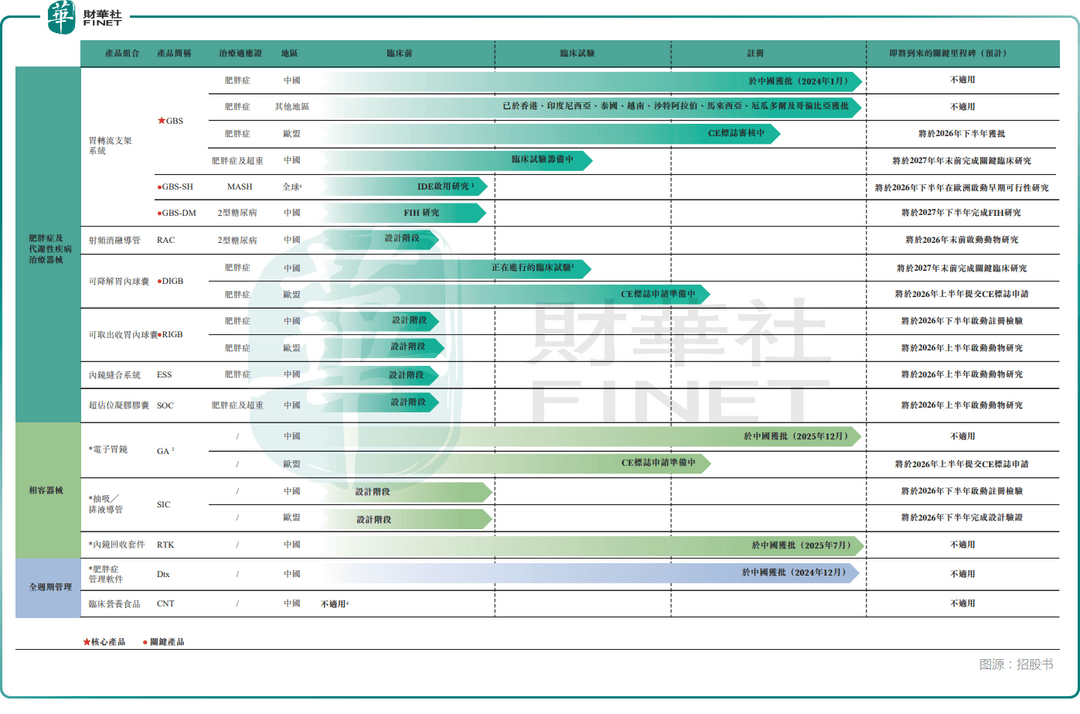
文|财华社 医械企业如何布局减肥赛道? 在全球生活方式改变、城市化及人口老龄化的驱动下,包括肥胖症、代谢功能障碍相关脂肪性肝炎(MASH)及2型糖尿病(T2DM)在内的代谢性疾病 已成为一项普遍的全球健康挑战,并为医疗器械领域创造了规模最大且增长最快的机遇之一。 成立于2016年的糖吉医疗是一家立足于中国的医疗器械公司,专注于为代谢性疾病的治疗及全周期管理提供创新解决方案,旨在提供有别于药物治疗及侵 入性减重手术的独特治疗方法。 在业务布局上,糖吉医疗形成了"核心产品+关键产品+配套器械+数字健康"的多元化管线:核心产品胃转流支架系统(GBS)已实现商业化;关键产品包 括针对MASH的GBS-SH(获FDA突破性器械认定)、针对2型糖尿病的GBS-DM,以及可降解胃内球囊(DIGB)、可取出收胃内球囊(RIGB);配套器 械涵盖电子胃镜、内镜回收套件等;数字健康平台Dtx与临床营养食品则完善了全周期管理闭环。 | | FINE | | | | | | | | | | | --- | --- | --- | --- | --- | --- | --- | --- | --- | --- | --- | | | ...

大华继显:AI创新及国策推动内地互联网医疗领域 看好阿里健康(00241)及平安好医生
Xin Lang Cai Jing· 2026-02-16 01:30
Group 1 - The mainland internet healthcare sector is entering a new phase driven by tech giants accelerating AI innovation and government policy support, such as the online initial diagnosis pilot program launched in Beijing [1] - Despite challenges in profitability, leading companies are leveraging AI ecosystems and innovative strategies for long-term sustainable growth [1] Group 2 - The company maintains a "Buy" rating for Alibaba Health (00241) with a target price of HKD 7.8, expecting a compound annual growth rate (CAGR) of 13% in revenue and 24% in adjusted net profit from FY2026 to FY2028, driven by growth in innovative drugs and healthcare products, deepening synergy with Alibaba Group (09988), and increasing AI application [1] - The company also favors Ping An Good Doctor (01833) with a "Buy" rating and a target price of HKD 20, anticipating a CAGR of 16% in revenue and 56% in adjusted net profit from FY2025 to FY2027, supported by deepening synergy with Ping An Insurance (02318) and ongoing AI empowerment [1] Group 3 - The company maintains an "Overweight" rating for the mainland healthcare sector, preferring leading innovative pharmaceutical companies and contract research, development, and manufacturing organizations (CRDMOs) [2] - The company is optimistic about internet healthcare firms that effectively utilize real-world data to optimize AI algorithms and enhance service quality [2] - Preferred stocks include BeiGene (06160), Innovent Biologics (01801), Hansoh Pharmaceutical (03692), China Biologic Products (01177), Hutchison China MediTech (00013), WuXi Biologics (02269), WuXi AppTec (02359), and Alibaba Health [2]

大华继显:AI创新及国策推动内地互联网医疗领域 看好阿里健康(00241)及平安好医生(01833)
Zhi Tong Cai Jing· 2026-02-16 01:25
Group 1 - The mainland internet healthcare sector is entering a new phase driven by tech giants accelerating AI innovation and government policy support, such as the online initial diagnosis pilot program launched in Beijing [1] - Despite challenges in profitability, leading companies are leveraging AI ecosystems and innovative strategies for long-term sustainable growth [1] - Alibaba Health (00241) is favored with a "Buy" rating and a target price of HKD 7.8, with expected revenue and adjusted net profit CAGR of 13% and 24% from FY2026 to FY2028, driven by innovative drugs, healthcare product growth, and deepening synergies with Alibaba [1] Group 2 - Ping An Good Doctor (01833) is also favored with a "Buy" rating and a target price of HKD 20, with expected revenue and adjusted net profit CAGR of 16% and 56% from FY2025 to FY2027, supported by synergies with Ping An (02318) and ongoing AI empowerment [1] - The firm maintains an "Overweight" rating on the mainland healthcare sector, preferring leading innovative pharmaceutical companies and contract research, development, and manufacturing organizations (CRDMOs) [2] - Companies that effectively utilize real-world data to optimize AI algorithms and enhance service quality in internet healthcare are also favored, with preferred stocks including BeiGene (06160), Innovent Biologics (01801), Hansoh Pharmaceutical (03692), China Biologic Products (01177), Hutchison China MediTech (00013), WuXi Biologics (02269), WuXi AppTec (02359), and Alibaba Health [2]
中国创新药对外授权年交易额突破千亿美元,4年增长近10倍
YOUNG财经 漾财经· 2026-02-14 09:10
Core Insights - The annual transaction value of China's innovative drug licensing has surpassed $100 billion, marking a nearly tenfold increase over four years, with a total of $137.7 billion in licensing deals signed in 2025 [2] - Major global pharmaceutical companies, including Novartis, AstraZeneca, and GSK, have signed significant agreements with Chinese firms, indicating a strong interest in China's next-generation innovative drug development pipelines [3] - The average transaction size for licensing deals involving Chinese biopharmaceutical companies has significantly increased this year, with an average deal size of $1.3 billion, a 76% increase from 2025 and six times the average size in 2021 [4] Group 1 - In 2025, there were 186 licensing transactions involving Chinese companies, reflecting a growing trend in the biopharmaceutical sector [2] - The average upfront payment for licensing deals this year is $77.7 million, double that of 2025 and three times the average in 2021 [4] - Notable recent agreements include a strategic partnership between Innovent Biologics and Eli Lilly worth $8.85 billion, and a potential $18.5 billion collaboration between AstraZeneca and CSPC Pharmaceutical Group [4] Group 2 - Macquarie Capital predicts that oncology drugs will continue to attract global pharmaceutical companies, highlighting China's strong capabilities in chemical drug development [5] - Multinational companies are increasingly viewing China as a critical part of their global R&D infrastructure, especially as they face patent cliffs and seek to reduce costs [5] - Vision Lifesciences reports that China leads the world in specific molecular types, with Chinese companies accounting for nearly 90% of global licensing transactions for antibody-drug conjugates (ADCs) [5]

中国创新药对外授权年交易额突破千亿美元,4年增长近10倍
第一财经· 2026-02-14 08:43
根据数据提供商Pharmcube的最新数据,2025年,中国企业签署了1377亿美元总规模的对外许可 交易,较2021年增长了近10倍,交易数量达到186项。 2026.02. 14 本文字数:1085,阅读时长大约2分钟 作者 | 第一财经 钱童心 中国生物制药公司参与的新药对外许可授权交易在2025年再次创下历史新高,并突破了千亿美元大 关。 麦格理资本亚洲医疗保健研究部门预测,今年被视为肿瘤治疗基石的一类药物将继续吸引全球制药商 的关注。麦格理资本分析师指出,尽管中国在生物学领域的实力相较于美国仍有差距,但在化学领域 实力雄厚,跨国公司可以从中国企业获得有前景的分子授权,其成本低于大型企业内部研发成本。 麦格理资本在最近的一份报告中表示:"许多跨国公司正将中国视为其全球研发基础设施的重要组成 部分。尤其是在一些公司面临专利悬崖之际,为了削减成本,这一点显得尤为重要。" 行业咨询公司Vision Lifesciences在去年12月发布的2026年生物技术许可展望报告中也指出,中国 在特殊分子类型方面处于世界领先地位。以热门的肿瘤疗法抗体偶联药物(ADC)为例,中国企业 占据了全球此类药物对外许可交易的近 ...
医药行业专题报告:25Q4持仓调整筑底,2026年医药板块有望迎来修复性机会
Guoxin Securities· 2026-02-14 00:45
Investment Rating - The investment rating for the pharmaceutical and biotechnology sector is "Outperform the Market" (maintained) [2] Core Insights - The pharmaceutical sector underperformed the market in Q4 2025, with the overall sector down by 9.3% compared to a slight decline of 0.2% in the CSI 300 index. Notably, the pharmaceutical commercial segment showed a positive performance with a 5.3% increase, while other segments like medical services and biological products experienced significant declines [4][8] - The total net asset value of pharmaceutical funds decreased to 358.4 billion yuan, a 9.0% decline quarter-on-quarter. This marks the first time since 2019 that passive pharmaceutical funds (181.8 billion yuan) surpassed active funds (176.5 billion yuan) [4][14] - The overall pharmaceutical holdings across all funds dropped to 7.97%, a decrease of 1.71 percentage points. Active pharmaceutical funds maintained a high concentration with a holding ratio of 97.45% [23] Summary by Sections 1. Market Review - In Q4 2025, the pharmaceutical and biotechnology sector lagged behind the CSI 300 index, with a decline of 9.3%. The chemical pharmaceuticals segment fell by 9.6%, biological products by 12.4%, and medical devices by 10.6% [8] 2. Pharmaceutical Fund Size - As of Q4 2025, the net asset value of pharmaceutical funds was 358.4 billion yuan, down 9.0% from the previous quarter. Active funds accounted for 176.5 billion yuan, a 14.6% decrease, while passive funds reached 181.8 billion yuan, down 2.8% [14] 3. Pharmaceutical Holdings Ratio - The pharmaceutical holdings ratio for all funds was 7.97%, down 1.71 percentage points. Active pharmaceutical funds had a holding ratio of 97.08%, while passive funds had 97.83% [23] 4. Holdings Structure Analysis - The highest sub-sector holding in Q4 2025 was chemical preparations at 37.5%, followed by other biological products at 20.8%. The largest increases in holdings were seen in traditional Chinese medicine (+0.98 percentage points) and chemical preparations (+0.62 percentage points) [29] 5. Additions and Reductions in Holdings - The top three pharmaceutical stocks by the number of funds holding them were Heng Rui Medicine (498 funds), WuXi AppTec (408 funds), and Mindray Medical (204 funds). Notably, Heng Rui Medicine saw a reduction of 236 funds, while Ying En Biological-B experienced an increase of 47 funds [84][88]