奥克斯电气

Search documents
华泰证券今日早参-20251016
HTSC· 2025-10-16 03:04
Macro Insights - In September, the total social financing (TSF) growth showed a slight slowdown year-on-year, primarily due to a lower net issuance of government bonds under a high base effect, while the financing demand from households and enterprises showed signs of stabilization at low levels [2][3] - The M2 money supply maintained a steady year-on-year growth rate, while M1 growth accelerated, indicating an improvement in liquidity [2] Inflation Analysis - The Consumer Price Index (CPI) in September decreased by 0.3% year-on-year, slightly better than the previous month's decline of 0.4%, but below the Bloomberg consensus expectation of a 0.2% decrease [2][3] - The Producer Price Index (PPI) fell by 2.3% year-on-year, consistent with the previous month's decline of 2.9% and in line with market expectations [4] Fixed Income Market - The financial data for September indicated a temporary pause in the migration of household deposits, with a total social financing increment of 3.53 trillion yuan, which was lower than the expected 3.28 trillion yuan, reflecting a year-on-year decrease of 229.7 billion yuan [7] - The report highlighted that the performance of corporate short-term loans remained strong, while household medium to long-term loans showed positive year-on-year and month-on-month growth [7] Transportation Sector - In September, the growth rate of airline capacity slightly slowed, but the passenger load factor remained high, with a year-on-year increase of 2.6 percentage points to 86.0% [5] - The report anticipates that the positive trend in ticket prices, which turned positive year-on-year, is likely to continue into the fourth quarter, supported by a decrease in oil prices that may alleviate cost pressures for airlines [5] Electric Power and New Energy - The National Development and Reform Commission announced a "three-year doubling" action plan for electric vehicle charging facilities, aiming to establish 28 million charging facilities by the end of 2027, significantly boosting the charging infrastructure [6] - This initiative is expected to accelerate the construction of charging stations and provide performance growth opportunities for companies in the charging pile industry [6] Key Companies - Fuyao Glass, a leading automotive glass manufacturer, is expected to continue its sustainable growth driven by product upgrades and lean manufacturing, with a focus on capital expenditure projects that will enhance its capacity [9] - Xiaogongsi City reported a 23.1% year-on-year increase in revenue for the first three quarters of 2025, driven by the comprehensive launch of its global digital trade center, which significantly boosted its profitability [10] - Gigabit is projected to achieve a net profit growth of 57% to 86% year-on-year for the first three quarters of 2025, primarily due to the success of new game launches [12]
认购金额超去年全年,险资频繁参与港股IPO,逻辑是什么?
Sou Hu Cai Jing· 2025-10-15 10:54
Core Viewpoint - The Hong Kong IPO market has seen significant participation from insurance institutions, with a total subscription amount nearing 30 billion HKD, surpassing last year's total [1][3]. Group 1: Participation and Investment Trends - As of October 14, 2023, seven insurance institutions have participated as cornerstone investors in seven Hong Kong IPOs, with a total subscription amount of approximately 29.32 billion HKD, a substantial increase from less than 10 billion HKD last year [3][4]. - Major players include Taikang Insurance, China Pacific Insurance, and others, with Taikang Insurance alone participating in five IPOs, investing over 14 billion HKD, accounting for nearly half of the total insurance investment in Hong Kong IPOs [3][4]. - The participation of insurance capital is driven by regulatory encouragement, a downward trend in long-term interest rates, and the need to enhance equity asset allocation to cover liability costs [3][4]. Group 2: Investment Focus and Selection Criteria - Insurance institutions are focusing on sectors such as hard technology and green industries, with a preference for companies that align with national strategies and demonstrate long-term growth potential [6][7]. - The selection criteria emphasize cash flow, industry position, and governance structure, with a preference for projects with a clear controlling shareholder, low foreign ownership, and quantifiable valuations (typically PE less than 20) [1][6]. - The investment strategy reflects a balance between certainty and growth, targeting companies with strong market positions and solid financial metrics [6][7]. Group 3: Market Performance and Valuation - The Hong Kong IPO market has raised approximately 182.9 billion HKD in the first nine months of 2023, marking a 229% increase year-on-year, with an average of 4-5 cornerstone investors per project [5]. - The performance of IPOs has been strong, with significant first-day gains, exemplified by Zijin Mining International, which saw a peak increase of 66% on its listing day [5][8]. - The valuation of Hong Kong stocks is generally lower than that of A-shares, providing a favorable investment opportunity for insurance capital [5].



港股打新神话归来?仅1家破发!涨幅猛但散户“一签难求”
Zheng Quan Shi Bao Wang· 2025-10-15 02:43
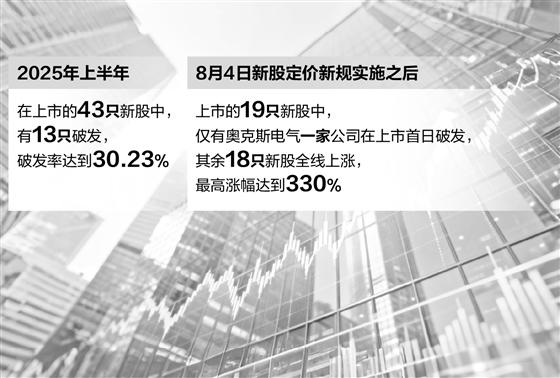
Core Insights - The Hong Kong stock market has rapidly rebounded since 2025, with IPOs leading global fundraising in the first three quarters [1][2] - The new IPO pricing mechanism implemented on August 4 has significantly improved the first-day performance of new listings, with only one out of 19 new companies experiencing a drop in share price on debut [1][3] - The allocation of shares to retail investors has decreased significantly under the new rules, leading to increased difficulty for retail investors to secure shares [2][4] IPO Market Performance - As of September 30, 2025, Hong Kong has nearly 300 IPO applications, a historical high, with 67 new listings raising HKD 182.9 billion, marking a 49% and 229% increase year-on-year respectively [2] - Despite the increase in listings and fundraising, the first-day failure rate for new stocks was 30.23% in the first half of 2025 [2] - Following the new rules, the first-day failure rate has decreased, with only one company out of 19 listed since August 4 experiencing a drop, while the highest gain reached 330% [3] Changes in Share Allocation - The new rules allow issuers to set a public subscription ratio between 10% and 60%, often resulting in only 10% being allocated to retail investors, which has led to a significant reduction in their share of new listings [2][3] - The allocation changes have resulted in a "monk more porridge less" situation, making it increasingly difficult for retail investors to win shares, with some new stocks having a winning rate as low as 0.1% [4][5] Investor Behavior and Market Trends - The enthusiasm for IPOs among retail investors has surged, exemplified by the record-breaking subscription rate of 11,465 times for Golden Leaf International Group [4] - The majority of new stocks listed since August 4 have seen a first-day increase of over 100%, with small-cap companies showing particularly high gains [6] - Retail investors tend to favor large-cap companies for their stability, although small-cap stocks have shown greater price increases [6][7]
港股打新神话归来?仅1家破发!涨幅猛但散户“一签难求”
证券时报· 2025-10-15 02:24
Core Viewpoint - The Hong Kong stock market has experienced a rapid recovery since 2025, with IPOs leading global fundraising efforts in the first three quarters. The new IPO pricing mechanism implemented on August 4 has significantly improved the first-day performance of newly listed stocks, with only one out of 19 new listings experiencing a decline on their debut [1][5]. Group 1: IPO Market Performance - The Hong Kong IPO market is expected to reclaim the top position globally by the end of 2025, driven by an unprecedented wave of IPO applications, with nearly 300 listings as of September 30, 2025 [4]. - In the first nine months of 2025, there were 67 new listings raising a total of HKD 182.9 billion, marking a 49% increase in the number of listings and a 229% increase in fundraising compared to the previous year [4]. - Despite the recovery, the probability of new stocks experiencing a decline on their first day remains notable, with a 30.23% decline rate observed in the first half of 2025 [4]. Group 2: Changes in Distribution Mechanism - The new IPO pricing mechanism allows issuers to set the public offering allocation between 10% and 60%, significantly reducing the allocation for retail investors, which previously could be as high as 50% [4][5]. - Following the implementation of the new rules, the first-day decline rate for new stocks has decreased, with only one out of 19 new stocks listed since August 4 experiencing a decline [5]. Group 3: Retail Investor Participation - Retail investors are facing increased difficulty in securing allocations due to the new distribution mechanism, which has led to a situation where demand far exceeds supply, resulting in a "monks and porridge" scenario [2][6]. - The record-breaking subscription rate of 11,465 times for the listing of Golden Leaf International Group on October 10 highlights the heightened interest among retail investors, despite the limited allocation of only 10% [7]. - The average allocation for retail investors has dropped to around 10%, leading to a significant decrease in the chances of winning allocations, with some stocks having a winning rate as low as 0.1% [7][8]. Group 4: Stock Performance Trends - Among the 19 new stocks listed after the new rules, 9 companies saw their first-day gains exceed 100%, indicating a strong performance trend for newly listed companies [10]. - The majority of the top-performing stocks this year are small-cap companies, with the highest gainers often being those with high subscription multiples [10]. - Retail investors tend to favor larger companies for their stability, although smaller companies have shown greater initial price increases [11].

港股IPO定价新规后仅1家破发 新股涨幅猛散户中签难
Zheng Quan Shi Bao· 2025-10-14 17:32
Core Insights - The Hong Kong stock market has rapidly rebounded since 2025, with IPOs in the first three quarters reclaiming the top position globally in fundraising [2][3] - The new IPO pricing mechanism implemented on August 4 has led to improved first-day performance for new listings, with only one out of 19 new companies experiencing a drop in share price on debut [2][4] - The allocation of shares to retail investors has significantly decreased under the new rules, resulting in increased difficulty for retail investors to secure shares [3][5] IPO Market Performance - As of September 30, 2025, Hong Kong has nearly 300 IPO applications, a historical high, with 67 new listings raising HKD 182.9 billion, marking a 49% and 229% increase year-on-year respectively [3] - Despite the increase in IPO numbers and fundraising, the first-day failure rate remains notable, with 30.23% of new listings in the first half of 2025 experiencing price drops [3][4] Changes in Share Allocation - The new rules allow issuers to set the public offering allocation between 10% and 60%, with a minimum of 10% for retail investors, leading to a situation where 90% of shares are allocated to institutional investors [3][4] - Following the implementation of the new rules, the first-day failure rate for new stocks has decreased, with only one out of 19 new listings since August 4 experiencing a drop [4][5] Retail Investor Dynamics - The enthusiasm for IPOs among retail investors has surged, exemplified by the record-breaking subscription rate of 11,465 times for the listing of Golden Leaf International Group on October 10 [5][6] - The allocation for retail investors is now typically limited to 10%, resulting in a significant drop in the chances of winning shares, with some new stocks having a winning rate as low as 0.1% [5][6] Stock Performance Trends - Among the 19 new stocks listed after the new rules, 9 companies saw first-day gains exceeding 100%, indicating a strong performance trend [7] - The majority of high-performing new stocks are small-cap companies, with a notable preference among retail investors for larger, more stable companies despite lower initial gains [7][8] Investment Strategy Insights - New economy companies are outperforming traditional sectors, with small-cap and high-demand stocks showing strong initial performance but often weakening subsequently [8]
奥克斯电气(02580):供应链效率领先,中国制造出海典范
HTSC· 2025-10-14 13:49
Investment Rating - The report initiates coverage on Aux Electric with a "Buy" rating and a target price of HKD 17.67, based on an 8x PE for 2025 [5][4]. Core Insights - Aux Electric is the fifth largest air conditioning provider globally and the fourth largest in China, with a market share of 7.1% globally and 7.3% in China for 2024 [1][18]. - The company has a robust presence in over 150 countries, focusing on both domestic and international markets through a dual strategy of ODM and OBM [1][18]. - The report highlights Aux's historical adaptability and strategic positioning, capturing market opportunities across different eras, from cost-effective products in the early 2000s to leveraging e-commerce in the 2010s and expanding globally in the 2020s [1][21]. Summary by Sections Company Overview - Aux Electric entered the air conditioning industry in 1994 and has since developed a multi-brand strategy, including the main brand Aux and sub-brands like ShinFlow, HuaSuan, and Aufit, to cater to various market segments [23][1]. - The company has maintained a strong growth trajectory, with a projected revenue of RMB 29.8 billion in 2024 and a CAGR of 30% in air conditioning sales from 2023 to 2024 [23][18]. Market Outlook - The global air conditioning market is expected to grow from RMB 1.31 trillion in 2024 to RMB 1.53 trillion in 2028, with a CAGR of 4.0% [2]. - Aux is actively expanding in emerging markets, particularly in the Middle East and Southeast Asia, with significant contributions from both ODM and OBM business models [2][18]. Financial Projections - The report forecasts Aux's net profit attributable to shareholders to be RMB 3.167 billion, RMB 3.661 billion, and RMB 4.073 billion for 2025, 2026, and 2027, respectively, with corresponding EPS of RMB 1.99, RMB 2.31, and RMB 2.56 [4][12]. - Revenue from overseas sales is expected to reach RMB 188.9 billion, RMB 234.6 billion, and RMB 281.8 billion from 2025 to 2027, accounting for 54.3%, 58.5%, and 62.6% of total revenue [2][4]. Competitive Positioning - Aux Electric's manufacturing efficiency is highlighted, with a capacity utilization rate of 91.3% compared to the industry average of 74.4% in 2024, which enhances its bargaining power [3][22]. - The company has diversified its customer base, reducing dependency on any single client, with the largest customer accounting for only 6.3% of revenue in Q1 2025 [22][3].
奥克斯电气跌0.88%创新低 西藏源乐晟浮亏
Zhong Guo Jing Ji Wang· 2025-10-13 09:43
Group 1 - The core point of the article highlights that Aux Electric (02580.HK) has seen its stock price decline to a record low of HKD 13.03 since its listing on September 2, where it initially closed at HKD 16.48, reflecting a drop of 5.4% on the first day [1] - As of the latest trading session, Aux Electric's stock closed at HKD 13.58, marking a decrease of 0.88% [1] - The company is currently in a state of stock price decline, having fallen below its initial public offering (IPO) price [1] Group 2 - Aux Electric issued a total of 238,235,200 shares, with 83,382,400 shares allocated for public offering and 154,852,800 shares for international offering [1] - The final offer price for Aux Electric was set at HKD 17.42, resulting in total proceeds of HKD 4,150.1 million, with net proceeds amounting to HKD 3,993.5 million after deducting estimated listing expenses of HKD 156.5 million [1] - The cornerstone investors for Aux Electric include China Post Insurance, China Post Wealth Management, and several others, with a total allocation of 55,921,400 shares [2]
斥资近30亿港元 险资“掘金”港股IPO市场
Shang Hai Zheng Quan Bao· 2025-10-10 18:20
Core Insights - The Hong Kong IPO market has seen significant activity this year, with insurance capital actively participating as cornerstone investors, totaling nearly 30 billion HKD in subscriptions [1][2] Group 1: Insurance Capital Participation - Seven insurance institutions have participated in the IPO placements of seven companies in Hong Kong, with a total subscription amount of approximately 29.32 billion HKD [1] - The number of participating insurance institutions, the number of companies invested in, and the subscription amount have all exceeded the total for the previous year, which was less than 10 billion HKD [1] - Taikang Insurance and its subsidiaries have been the most active, participating in five IPO placements and investing over 14 billion HKD [1][2] Group 2: Market Drivers - The active participation of insurance capital in Hong Kong IPOs is driven by three main factors: policy guidance, asset allocation needs, and market opportunities [2] - In a low-interest-rate environment, insurance capital seeks to enhance long-term returns through equity investments, particularly in emerging industries that align with national strategic goals [2] Group 3: Performance and Strategy - Many participating insurance institutions have already realized floating profits from their IPO investments, with significant price increases observed in stocks like Zijin Mining and Chery Automobile [3] - Insurance capital's strategy as cornerstone investors involves a long-term perspective, focusing on the future growth potential of the companies rather than short-term price fluctuations [3] - The classification of assets for insurance capital participating in IPOs is expected to remain primarily as trading financial assets under new financial instrument standards [3] Group 4: Future Outlook - Industry experts anticipate that insurance capital will continue to increase its equity investment in both primary and secondary markets to address challenges posed by the low-interest-rate environment [4] - The recent regulatory changes have enhanced the advantages for insurance capital in IPO allocations, allowing them to leverage their long-term investment capabilities [5] - Future investment strategies may shift towards active industry empowerment, focusing on hard technology and green sectors, with an increased holding ratio [5]



险资掘金港股IPO
Shang Hai Zheng Quan Bao· 2025-10-10 12:42
Group 1 - The core viewpoint of the articles highlights the active participation of insurance capital in Hong Kong IPOs, with a total investment of approximately 30 billion HKD in 2023, significantly surpassing last year's figures [1][2][3] - Seven insurance institutions have acted as cornerstone investors in seven Hong Kong IPOs this year, with a total subscription amount of about 29.32 billion HKD, primarily in sectors such as materials, consumer discretionary, and information technology [2][3] - The increase in IPO activity is attributed to a combination of policy guidance, asset allocation needs, and market opportunities, as insurance capital seeks to enhance long-term returns in a low-interest-rate environment [3][5] Group 2 - Some insurance institutions have already realized floating profits from their IPO investments, with examples including Taikang Life's investment in Zijin Mining International and Dajia Life's investment in Chery Automobile [4] - Insurance capital is expected to continue increasing its equity investment efforts, both in the primary and secondary markets, as a response to the challenges posed by the low-interest-rate environment [5][6] - The recent regulatory changes have positioned insurance capital favorably in the IPO allocation process, allowing them to leverage their advantages as long-term investors [6][7]
横扫港股IPO!从“固收为王”到“股债双驱”,险资重塑资本角色
Hua Xia Shi Bao· 2025-10-09 19:35
纵观全局,险资正在从传统的"固收为主、权益为辅"转向"固收打底、权益增强"的资产配置模式。其在 IPO市场上的频繁出手,不仅是资产端寻求收益突破的战术调整,更是保险资金作为"耐心资本"服务实 体经济、支持国家战略的功能体现。 "险资正在从传统财务投资者向'产业赋能型资本'转型。"北京大学应用经济学博士后、教授朱俊生在接 受《华夏时报》记者采访时表示,传统险资更关注财务收益,而近年来,随着投资能力、产业研究能力 和投后管理能力的提升,一些险资机构开始通过IPO基石投资、战略配售、联合投后服务等方式深入参 与产业链发展,实现资本与产业的双向价值创造。 本报(chinatimes.net.cn)记者吴敏 北京报道 近年来,在资本市场深化改革与利率持续下行的双重背景下,保险资金正以前所未有的活跃姿态涌入 IPO市场,成为一级市场中不可忽视的长期资本力量。从港股基石投资到A股战略配售,从半导体芯片 到新能源电站,险资的触角正深入更多具备高成长性与战略价值的产业领域。 港股IPO:险资成为基石力量 今年以来,港股市场迎来多家重磅企业上市,其中紫金矿业旗下黄金业务板块紫金黄金国际的登陆尤为 引人注目。该项目不仅是今年港股募 ...