
Agility Robotics

Search documents
亚马逊机器人快递员要来了,所用技术涉及宇树、DeepSeek和阿里
Zheng Quan Shi Bao· 2025-06-06 11:06
Core Insights - Amazon is testing humanoid robots for package delivery, incorporating technologies from several Chinese tech companies [1][4] - The company aims to automate logistics to reduce labor costs, which currently account for about 20% of its retail revenue [2][3] - Successful implementation of humanoid robots could transform Amazon's logistics model and impact the entire delivery industry [3] Group 1: Testing and Development - Amazon has created an indoor obstacle training ground in San Francisco to test the robots' balance, package handling, and environmental interaction [2] - The training ground includes complex terrains and a Rivian electric delivery vehicle to simulate real delivery scenarios [2] - A new team, AgenticAI, has been formed within Amazon's Lab126 to focus on developing robots that can execute tasks based on natural language commands [2][3] Group 2: Cost Savings and Automation - If 30%-40% of Amazon's U.S. retail goods can be processed by robots by 2030, the company could save $10 billion annually [2] - Amazon has already deployed over 750,000 robots in its global logistics network, including fixed and mobile robots for warehouse operations [3] Group 3: Technology Partnerships - The humanoid robots' hardware is being tested with contributions from Chinese companies, including a robot developed by Yushu Technology [4] - Software development for the robots is based on DeepSeek's DeepSeek-VL2 model and Alibaba's Qwen model, enabling the robots to recognize addresses and navigate obstacles [4][5] - The integration of AI capabilities from Chinese firms is seen as essential for advancing logistics automation [5]


人形机器人,到底能不能投资?
3 6 Ke· 2025-05-27 01:36
Group 1: Core Insights - Humanoid robots can drive smarter automation, reduce costs, and enhance human labor productivity, but improper investment questions can lead to high costs and counterproductive outcomes [1][4] - The rapid development of general-purpose humanoid robots, driven by advancements in generative AI, mechatronics, and simulation technology, may reshape labor dynamics across various industries [3][4] - The cost of manufacturing humanoid robots has decreased by 40% in recent years, with projections indicating a drop from approximately $58,000 to $20,000 per robot by 2032 [4] Group 2: Investment Considerations - Companies must evaluate the specific roles humanoid robots can play in their operations, focusing on areas where they can outperform traditional industrial robots and create greater value [6] - A comprehensive cost-benefit analysis is essential for humanoid robot investments, considering both direct and indirect costs, with Robot as a Service (RaaS) offering a more cost-effective entry point [12] Group 3: Application Areas - Humanoid robots have proven valuable in manufacturing and warehousing, addressing labor shortages and performing hazardous tasks, with 58% of large factory managers believing they will become a cost-effective assembly standard by 2040 [7] - In healthcare, humanoid robots can assist with daily tasks for the elderly and those with special needs, demonstrating positive outcomes in social interaction and communication skills for children with autism [9] - In customer service, humanoid robots are increasingly being adopted in retail and hospitality sectors, particularly for tasks that are monotonous, dangerous, or repetitive [10] Group 4: Integration and Collaboration - Effective integration of humanoid robots into existing processes requires a focus on optimizing broader organizational workflows rather than isolated tasks [13] - Ensuring safe collaboration between personnel and humanoid robots is crucial, necessitating a culture of human-robot collaboration and adherence to safety best practices [14][15] Group 5: Future Outlook - The future of work is evolving with humanoid robots becoming integral to the workforce, offering new growth opportunities, efficiency improvements, and enhanced innovation capabilities [17]


NVIDIA Powers Humanoid Robot Industry With Cloud-to-Robot Computing Platforms for Physical AI
Globenewswire· 2025-05-19 04:25
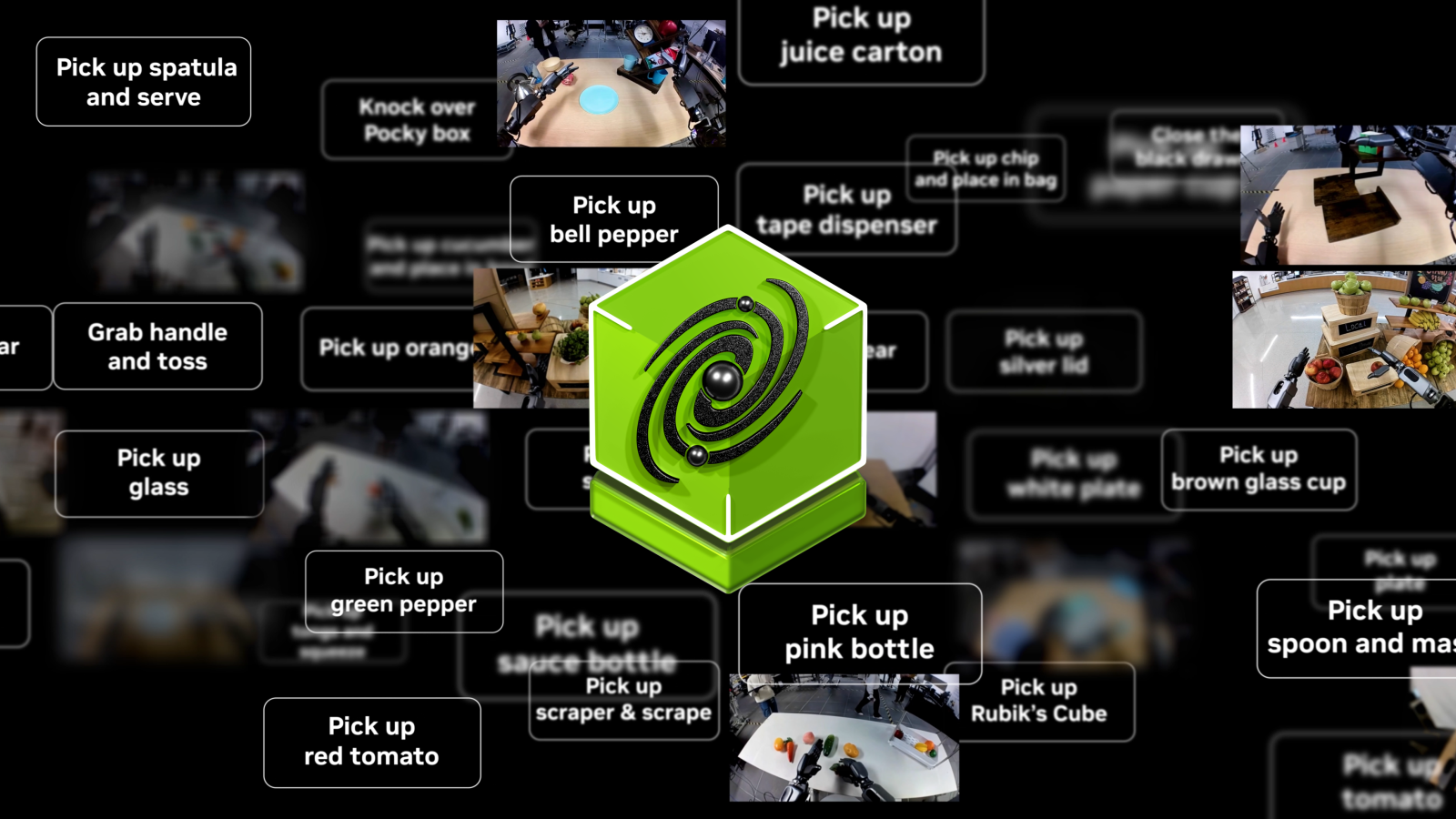
Core Insights - NVIDIA has introduced the NVIDIA Isaac GR00T N1.5, an updated foundation model for humanoid reasoning and skills, along with the GR00T-Dreams blueprint for generating synthetic motion data and Blackwell systems to enhance humanoid robot development [1][3][10] Group 1: Product Announcements - The NVIDIA Isaac GR00T N1.5 model improves adaptability to new environments and workspace configurations, enhancing its success rate in material handling and manufacturing tasks [7][8] - The GR00T-Dreams blueprint generates vast amounts of synthetic motion data, allowing robots to learn new behaviors and adapt to changing environments [3][4] - The GR00T-Dreams blueprint complements the previously released GR00T-Mimic blueprint, which augments existing data rather than generating new data [5] Group 2: Industry Adoption - Various humanoid and robotics developers, including Agility Robotics, Boston Dynamics, and XPENG Robotics, are adopting NVIDIA's Isaac platform technologies to advance their robot development [2][9] - Early adopters of the GR00T N models are utilizing them for tasks such as natural language understanding and complex workflows in industrial settings [8] Group 3: Technological Advancements - NVIDIA's simulation technologies, including Isaac Sim and Isaac Lab, are being used by companies to close the data and testing gap in humanoid robot development [9] - The Blackwell systems, including NVIDIA RTX PRO 6000 workstations, provide a unified architecture for running various robot development workloads, achieving up to 18 times greater performance for data processing [10][11]

New PatentVest Pulse Report Reveals IP Gaps in Billion-Dollar Humanoid Robotics Startups
Globenewswire· 2025-05-14 16:00
Core Insights - The PatentVest Pulse report highlights a significant gap between rising valuations of humanoid robotics startups and their lack of intellectual property protections, indicating potential long-term value risks [1][2] - The report serves as a strategic guide for investors, board members, and CEOs to identify which companies are well-positioned and which are vulnerable in the humanoid robotics sector [1][2] Industry Analysis - The analysis benchmarks the IP portfolios of leading startups such as Figure AI, Sanctuary AI, Apptronik, Tesla Optimus, Neura Robotics, Engineered Arts, 1X Technologies, and Collaborative Robotics, mapping over 11,000 patent families across 794 entities globally [3] - The report emphasizes the importance of IP as a critical factor for scaling, licensing, and capturing long-term value in the humanoid robotics industry [2] Emerging Leaders - Figure AI is gaining attention and capital, while Sanctuary AI is building a defensible platform, with other companies like Neura Robotics, Apptronik, and Agility Robotics also making strides through focused IP strategies [6] - Sanctuary AI is noted as one of the few startups among the top 20 global patent holders, highlighting the rarity of defensible positions in the industry [6] Corporate Landscape - Major industrial players such as Sony, UBTECH, Honda, Toyota, Hyundai, Alphabet, and Samsung hold over 11,000 humanoid robotics patent families, indicating significant corporate consolidation in the IP landscape [6] - University-led innovation is crucial, with institutions like Tsinghua University, AIST, and the University of Tokyo holding key patents that influence core technologies and future commercialization opportunities [6]

人形机器人企业爆单!宇树机器人最新发声,机器人ETF基金(159213)再度飙涨超2%,全球资管巨头唱多人形机器人!
Xin Lang Cai Jing· 2025-05-12 03:17
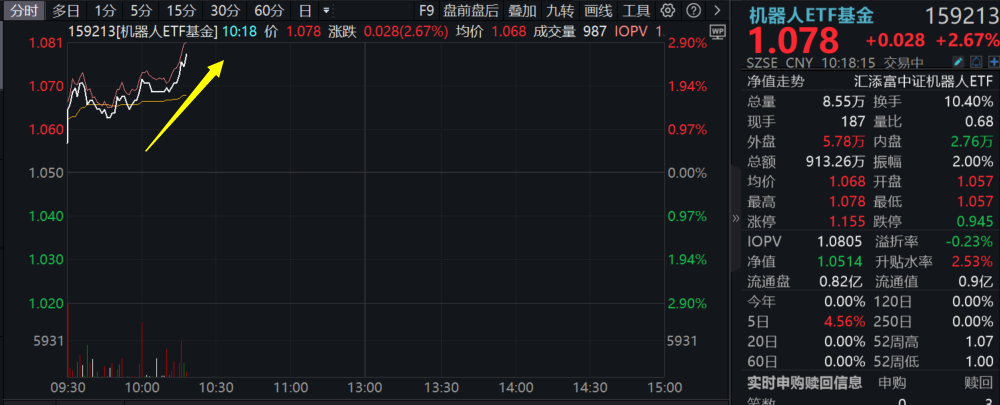
Core Viewpoint - The humanoid robot market is experiencing significant growth, driven by favorable government policies and increasing demand across various sectors, with projections indicating a potential market size of over 15 trillion yuan by 2025 [4][9]. Group 1: Market Performance - The A-share market showed an upward trend on May 12, with the robot sector rebounding, particularly the Robot ETF fund (159213), which opened high and rose by 2.67% [1]. - Major components of the Robot ETF fund saw substantial gains, with companies like Tuosida reaching a 20% limit up, and others like Koli'er and Xinjie Electric also experiencing significant increases [3]. Group 2: Industry Advantages - The humanoid robot industry in China benefits from strong policy support, with various national and local initiatives aimed at fostering development, including the inclusion of robots in key work reports and the establishment of industry funds [5][6]. - China's competitive edge in the humanoid robot market is highlighted by its leading position in patent applications, with 5,925 patents filed from 2020 to 2024, significantly outpacing other countries [4][5]. Group 3: Production and Supply Chain - The domestic robot industry is witnessing a rise in localization, with the domestic production rate of key components increasing from 17.5% in 2015 to 35.7% in 2022, indicating a trend towards cost reduction and efficiency [7]. - Major companies are preparing for mass production of humanoid robots, with 2025 expected to be a pivotal year for the industry, as several manufacturers are on the brink of entering small-scale production [7][8]. Group 4: Application Scenarios - The demand for robots is driven by manufacturing upgrades and demographic changes, with the global aging population creating a pressing need for robotic solutions to address labor shortages [9]. - The potential market for humanoid robots is projected to exceed 1 billion units, corresponding to a market space of over 15 trillion yuan, as the industry prepares for widespread adoption across industrial, commercial, and domestic applications [9].
我国第四代自主量子计算测控系统“本源天机4.0”发布;TrendForce:中国智能工厂部署的成本优势显著丨智能制造日报
创业邦· 2025-05-07 03:19
Group 1 - Waymo plans to expand its autonomous taxi service to Atlanta, Miami, and Washington D.C. by 2026, in collaboration with Magna to build a new autonomous vehicle factory in Phoenix [1] - The launch of the "Benyuan Tianji 4.0," a fourth-generation quantum computing measurement and control system in China, supports over 500 quantum bits, indicating a significant advancement in the country's quantum computing industry [1] - SK Hynix has overtaken Samsung to become the global leader in the DRAM market with a market share of 36.7% in Q1 2025, driven by AI server demand and a recovery in PC and mobile demand [1] Group 2 - TrendForce reports that China accounts for over half of the global increase in industrial robot installations, highlighting its cost advantages in deploying smart factories, although high deployment costs may hinder widespread adoption [1] - The Ministry of Industry and Information Technology and the National Standardization Administration of China have released the 2024 version of the National Intelligent Manufacturing Standard System Construction Guide, focusing on the integration of AI and manufacturing [1]
TrendForce:中国智能工厂部署的成本优势显著
news flash· 2025-05-06 10:18
《科创板日报》6日讯,TrendForce最新报告指出,近年来中国占据全球新增工业机器人安装量的一半 以上,凸显了其工业技术和基础设施的成熟度,在智能工厂部署方面具有显著的成本优势。TrendForce 表示,特斯拉、波士顿动力和Agility Robotics等公司正在开发专门用于工厂的以人为本的机器人产品, 这为解决劳动力短缺问题提供了潜在的解决方案。然而,高昂的部署成本(加上进口零部件的关税)可 能会阻碍这些产品的广泛应用。 TrendForce:中国智能工厂部署的成本优势显著 ...
家庭具身智能市场前景几何?
机器人圈· 2025-04-28 09:31
前言: 今年的政府工作报告中提出,建立未来产业投入增长机制,培育生物制造、量子科技、具身智能、6G等未来产 业。 作为人工智能领域的前沿热点,具身智能备受瞩目,它被认为是新一波人工智能浪潮的重点方向。 家庭具身智能的市场规模 人工智能大模型的持续突破,如语言视觉多模态大模型能力的增强,为具身智能提供了更强大的"大脑",使其能 够更好地理解和处理复杂任务。 同时,传感器、机器人关节等硬件技术的不断改进,也提升了具身智能设备的感知和行动能力,推动其在家庭场 景中的应用。 根据头豹研究报告,2023年中国具身智能市场规模已经达到4186亿元 ,随着大模型技术突破,具身智能市场规 模有望持续提升,2027年市场规模预计达到6328亿元。 家庭具身智能作为具身智能的重要应用领域,在老龄化加剧、人们对生活品质追求提升的背景下,需求不断增 长,市场规模也将随之扩大。 国内企业纷纷布局 中国电信成立的人工智能研究院(TeleAI)正在加速智传网(AI Flow)的布局和研究。智传网能够通过家族式同 源模型协同将"端—边—云—网"高效串联。 中国电信相关负责人表示,预计2025年6月份或7月份,自主研发的家用机器人四足狗会小批 ...
专家访谈汇总:“中国制造”挑战日本精密减速器霸主地位
阿尔法工场研究院· 2025-04-23 13:33
1 、 《 宇树机器人商业化路径分析 》摘要 2、 《 中国精密减速器行业全景分析与未来展望 》摘要 ■ 宇树机器人(Unitree Robotics)近期成为广告界的顶流,特别是在社交媒体和春晚等大型平台 上,凭借其幽默且具互动性的表现吸引了大量关注。 ■ 这一营销策略已帮助宇树科技与多个行业大牌合作,如科技、快消和互联网品牌,其中包括跨界站 台、舞台走秀、直播带货等活动,极大提升了品牌曝光度。 ■ 宇树机器人参与了多个广告项目,尤其是以G1、H1、Go2为主角,这些机器人展示了多种技能,如 唱跳、走秀和直播带货。 ■ 通过与大品牌的合作,宇树不仅提升了知名度,也加深了消费者对其产品的印象,尤其在竞争激烈 的机器人市场中,早期建立强大的品牌形象至关重要。 ■ 自2020年A轮融资以来,宇树的财务报告显示其连续五年盈利,且产品通过自主研发大幅降低了生 产成本,具备了强大的市场竞争力。 ■ 尽管宇树在C端市场通过价格亲民的策略和不断优化产品体验迎合消费者需求,但机器人普及仍面 临价格和实用性的双重挑战。 ■ 精密减速器主要功能是通过多级齿轮结构将电机的高转速转化为机械臂所需的低速大扭矩输出,从 而决定了机器人在 ...
黄仁勋「组局」,具身智能的核心玩家们聊了聊人形机器人的落地与未来
Founder Park· 2025-04-16 12:56
文章转载自 「 Linguista」 今年的 GTC 大会,英伟达发布了通用机器人模型 GR00T N1,老黄特别提到未来重点关注的趋势是「Physical AI」(物理 AI)。 不仅如此,老黄还把当下机器人领域的核心玩家都喊了过来,针对人形机器人领域当下的技术路径、数据问题以及通用模型和通用机器人等问题进行了深 入探讨,有不少很有价值的观点。 嘉宾阵容很强大,1X、Skild AI、Agility Robotics、Boston Dynamics……堪称具身智能领域的「华山论剑」。 嘉宾介绍: TLDR: Founder Park 正在搭建开发者社群,邀请积极尝试、测试新模型、新技术的开发者、创业者们加入,请扫码详细填写你的产品/项目信息,通过审核 后工作人员会拉你入群~ Bernt Børnich,人形机器人创企 1X 的创始人兼 CEO。1X 致力于构建完全自主的人形机器人。此前曾推出专注于家庭场景的人形机器人 NEO。 Deepak Pathak,具身智能创企 Skild AI 的 CEO 兼联创。Skild AI 致力于打造机器人通用「大脑」。此前曾推出曾推出可扩展的机器人基础模型「Skild B ...