
POSCO

Search documents
POSCO and JSW Sign an Agreement to Explore Steel Plant in India
ZACKS· 2025-08-22 15:56
Group 1 - POSCO has signed a non-binding Heads of Agreement with JSW Steel to explore the establishment of a 6 million tons per annum integrated steel plant in India, combining POSCO's advanced technology with JSW's market presence [1][8] - The agreement outlines a proposed 50:50 joint venture, with a detailed feasibility study to determine the plant's location, investment structure, and resource requirements, with Odisha being a preferred site [2][8] - The partnership aims to align with India's self-reliance vision and create a globally competitive manufacturing hub for both domestic and export markets [3][8] Group 2 - PKX stock has experienced a decline of 15.7% over the past year, compared to the industry's decline of 19.2% [5] - PKX currently holds a Zacks Rank of 2 (Buy), indicating a favorable outlook among analysts [6] - Other top-ranked stocks in the Basic Materials sector include Nutrien Ltd., Carpenter Technology Corporation, and CF Industries Holdings, with varying degrees of performance and earnings estimates [6][7][9][10]


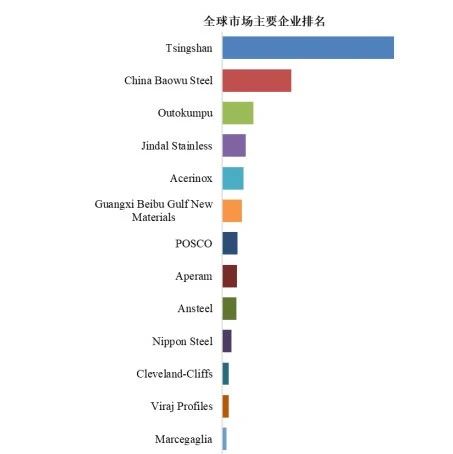
全球奥氏体不锈钢市场前10强生产商排名及市场占有率
QYResearch· 2025-08-14 09:00
Core Viewpoint - The global austenitic stainless steel market is projected to reach $128.1 billion by 2031, with a compound annual growth rate (CAGR) of 3.7% from 2025 to 2031 [1][10]. Market Overview - Austenitic stainless steel is the most produced and widely used type of stainless steel, known for its excellent corrosion resistance, good plasticity and toughness, and non-magnetic properties [1]. - Major global producers include Tsingshan, China Baowu Steel, Outokumpu, and Jindal Stainless, with the top ten manufacturers holding approximately 59.0% of the market share in 2022 [5]. - The 300 series accounts for about 75.0% of the market share in terms of product type, while the food processing and catering sector is the largest downstream market, representing approximately 26.1% of the demand [7]. Key Drivers - The demand for austenitic stainless steel is driven by its superior performance and extensive applications across various core industries. Key drivers include: - Continuous investment in construction and infrastructure, where austenitic stainless steel is preferred for its corrosion resistance and aesthetic appeal [10]. - Increased demand in the automotive industry for lightweight, high-strength, and corrosion-resistant materials, particularly in the context of electric vehicles [10]. - Stable demand from the energy and heavy industries, including oil and gas, chemicals, and power sectors, due to stringent requirements for corrosion and high-temperature resistance [10]. - Growing requirements in food processing, medical devices, and pharmaceuticals for hygienic and non-toxic materials, driven by population growth and heightened health awareness [10]. Challenges - The austenitic stainless steel market faces challenges such as: - High and volatile raw material costs, particularly for key alloying elements like nickel and chromium, which are influenced by global supply-demand dynamics and geopolitical factors [13]. - Competition from alternative materials, including duplex stainless steel and high-performance plastics, which may offer better strength and corrosion resistance in certain applications [13]. - Economic uncertainties and rising trade protectionism that could lead to market demand fluctuations and supply chain disruptions [13]. - Increasingly stringent environmental regulations and requirements for energy consumption and carbon emissions, which impose higher technical and cost demands on manufacturers [13]. Opportunities - The austenitic stainless steel industry has multiple growth opportunities, including: - Industrialization and urbanization in emerging economies, leading to significant demand for infrastructure and consumer goods [14]. - Growing demand for high-value and customized products, prompting companies to develop specialized grades for specific corrosive environments or extreme temperature conditions [14]. - Advancements in recycling technologies and the adoption of green manufacturing practices, enhancing resource efficiency and reducing environmental impact [14]. - Integration of new material technologies and advanced manufacturing processes, such as 3D printing and surface modification, expanding application boundaries and improving performance [14]. - Rapid growth in demand for high-performance stainless steel in sectors like renewable energy, environmental engineering, and high-end equipment manufacturing, creating new market segments and profit opportunities [14].
七部门出台金融支持新兴工业化指导意见
Dong Zheng Qi Huo· 2025-08-06 01:07
Report Industry Investment Ratings - Gold: The price trend is volatile, and it has not yet broken out of the volatile range. It is recommended to wait and see [10][11][12]. - Stock Index Futures: It is recommended to allocate each stock index evenly. The market remains in a state of high - risk preference, where it is easy to rise and difficult to fall [13][15][16]. - US Dollar Index: It is expected to fluctuate in the short term [17][20][21]. - US Stock Index Futures: Whether the economic downward pressure intensifies still needs more data verification. Attention should be paid to the callback risk at the current level [22][23][24]. - Treasury Bond Futures: August is a favorable period for the bond market. It is recommended to look for short - term opportunities to narrow the spread between T09 - 12 contracts when the bond market sentiment warms up [25][26][27]. - Agricultural Products (Beans Meal): The internal strength and external weakness will continue. The operating center of beans meal will rise [28][30][31]. - Agricultural Products (Edible Oils): For palm oil, do not short. Consider gradually laying out long positions in the 01 contract when the price pulls back to 8800 yuan/ton. For soybean oil, it is recommended to choose the 01 contract for long positions [32][33][34]. - Agricultural Products (Cotton): The short - term downward space of Zhengzhou cotton is limited. There may be a rebound before a large number of new cotton hits the market [35][37][38]. - Agricultural Products (Corn Starch): The upward movement of the price difference between rice and flour is expected to be weak [39][40]. - Black Metals (Steam Coal): It is expected that the coal price will rise to around 670 yuan (the long - term agreement price) and fluctuate. Pay attention to the price performance after the decline in rigid demand [41][42]. - Black Metals (Iron Ore): The price is expected to fluctuate, and it is difficult to fall sharply in the short term. Pay attention to the actual implementation of production restrictions in mid - August [42][43]. - Agricultural Products (Corn): In the medium to long term, corn is expected to maintain a volatile downward trend. It is recommended to continue holding short positions in new crops [44]. - Black Metals (Rebar/HRC): The short - term market fluctuates greatly. It is recommended to operate with a light position [45][46][47]. - Black Metals (Coking Coal/Coke): In the short term, it will fluctuate. The 09 contract will focus on the delivery situation, and the market may return to fundamentals [48][49]. - Non - ferrous Metals (Copper): It is recommended to wait and see on a single - side basis. Pay attention to the internal - external reverse arbitrage strategy [50][52][53]. - Non - ferrous Metals (Polysilicon): In the short term, the price may operate between 45000 - 57000 yuan/ton. Consider selling out - of - the - money put options [55][56][57]. - Non - ferrous Metals (Industrial Silicon): Consider gradually stopping losses on short positions. Wait for an opportunity to go long after the macro - sentiment is released [58][59]. - Non - ferrous Metals (Nickel): In the short term, pay attention to band trading opportunities. In the medium term, look for opportunities to short at high prices [60][61][62]. - Non - ferrous Metals (Lithium Carbonate): Wait and see before the risk event is resolved. Stop profiting from the 9 - 11 reverse arbitrage [63][64]. - Non - ferrous Metals (Lead): Look for opportunities to buy at low prices and manage positions well. Wait and see on the arbitrage side [65][66]. - Non - ferrous Metals (Zinc): On a single - side basis, it is recommended to wait and see. Hold low - level speculative long positions with good position management. Pay attention to medium - term positive arbitrage opportunities [70][71]. - Energy Chemicals (Carbon Emissions): It will fluctuate in the short term [72][73]. - Energy Chemicals (Urea): Pay attention to the relevant meeting in Beijing tomorrow. The price has strong support in the short term [74][75][76]. - Energy Chemicals (Styrene): Pay attention to the opportunity to stop profiting from the position of narrowing the styrene - pure benzene price difference [77][78]. - Energy Chemicals (Caustic Soda): The subsequent market will fluctuate [79][80]. - Energy Chemicals (Pulp): The market is expected to decline following the commodity market [81][82]. - Energy Chemicals (PVC): The market will fluctuate in the short term [83][84]. - Energy Chemicals (PX): It will adjust in the short - term [85][86]. - Energy Chemicals (PTA): It will adjust in the short - term [87][88][89]. Core Viewpoints - The US economic data is weak, with the ISM non - manufacturing PMI falling short of expectations. There are signs of stagflation, and the inflation pressure will increase after the implementation of tariffs. The market risk preference has weakened [11][17][20]. - China's seven - department policy on financial support for new - type industrialization and the free pre - school education policy have boosted the stock market, and the market has strong expectations for policies [13][14][15]. - The bond market's reaction to the rise of the stock market needs to be closely monitored. In early August, the fundamentals and capital situation are favorable for the bond market [25]. - For commodities, different varieties have different supply - demand situations. For example, the supply of some agricultural products is affected by weather and planting conditions, and the supply of some non - ferrous metals is affected by production capacity and inventory [35][50][52]. Summary According to the Directory 1. Financial News and Comments 1.1 Macro Strategy (Gold) - Trump criticized Powell for late interest - rate cuts and announced tariff increases, which raised market risk aversion. The US July ISM non - manufacturing PMI was lower than expected, showing stagflation risks. The gold price fluctuated and was waiting for a breakthrough [10][11]. 1.2 Macro Strategy (Stock Index Futures) - Seven departments issued a guiding opinion on financial support for new - type industrialization, and the State Council announced free pre - school education. The stock market was strong, and the Shanghai Composite Index reached a new high this year. The market priced in policy expectations boldly and remained in a high - risk - preference state [13][14][15]. 1.3 Macro Strategy (Foreign Exchange Futures - US Dollar Index) - The US July ISM non - manufacturing PMI was lower than expected, and the economic downward pressure increased. The market risk preference weakened, and the US dollar index fluctuated [17][20]. 1.4 Macro Strategy (US Stock Index Futures) - The US Treasury plans to issue a record - high amount of four - week Treasury bonds. The weakening of the service PMI has increased market concerns, and the US stock market is expected to continue to pull back [22][23]. 1.5 Macro Strategy (Treasury Bond Futures) - The central bank conducted a 7 - day reverse repurchase operation, with a net withdrawal of funds. The bond market's reaction to the rise of the stock market was dull. If it becomes insensitive to the stock market rise, the bond market can be more optimistic in the short term [25]. 2. Commodity News and Comments 2.1 Agricultural Products (Beans Meal) - The far - month basis trading volume of beans meal increased. The cost of imported soybeans supported the futures price, and the market was worried about the future supply of imported soybeans [28][30]. 2.2 Agricultural Products (Edible Oils) - The supply of palm oil from Indonesia and Malaysia may decrease by 20% in the next five years, which has increased market concerns. The export of soybean oil from China has increased, and the price has risen [32][33]. 2.3 Agricultural Products (Cotton) - The global cotton production, consumption, and trade volume in the 2025/26 year will change little. The growth progress of US cotton is slightly slow, and the excellent rate is stable. The short - term downward space of Zhengzhou cotton is limited [35][37][38]. 2.4 Agricultural Products (Corn Starch) - The spot price of corn starch is stable at a high level. The downstream demand is weak, and the loss of enterprises in North China is expected to expand [39][40]. 2.5 Black Metals (Steam Coal) - The price of steam coal in the northern port market is rising steadily. The price is expected to rise to around 670 yuan and fluctuate, and the daily consumption will reach an inflection point in mid - to late August [41][42]. 2.6 Black Metals (Iron Ore) - The Onslow project's iron ore shipment volume has increased significantly. The iron ore price will fluctuate, and the port inventory is expected to decline in the next 1 - 2 weeks [42][43]. 2.7 Agricultural Products (Corn) - The成交 rate of imported corn auctions has dropped significantly, and the market sentiment has turned pessimistic. In the long - term, corn is expected to decline [44]. 2.8 Black Metals (Rebar/HRC) - The passenger car sales forecast has been raised, and the steel price has rebounded. The short - term market is volatile [45][46][47]. 2.9 Black Metals (Coking Coal/Coke) - The coking coal market in Luliang is oscillating. The supply of coal and coke is gradually recovering, and the market will oscillate in the short term [48][49]. 2.10 Non - ferrous Metals (Copper) - Mitsubishi may cut its copper smelting business, and Codelco's mine has an accident. The market is worried about the US recession, and the copper price may be under pressure [50][51][53]. 2.11 Non - ferrous Metals (Polysilicon) - The photovoltaic power generation utilization rate in June was 95.4%. The spot price of polysilicon has increased slightly, and the price is expected to operate between 45000 - 57000 yuan/ton [54][55][57]. 2.12 Non - ferrous Metals (Industrial Silicon) - Yunnan and Inner Mongolia Tongwei passed the industrial silicon measurement audit. The supply of industrial silicon may increase in August, but the demand from polysilicon will also rise, and the inventory may decrease [58]. 2.13 Non - ferrous Metals (Nickel) - The LME nickel inventory increased. The raw material price is weakening, but the nickel price is difficult to fall deeply in the short term. It is recommended to pay attention to short - term band opportunities and medium - term short - selling opportunities at high prices [60][61][62]. 2.14 Non - ferrous Metals (Lithium Carbonate) - POSCO plans to acquire lithium assets. The demand for lithium carbonate is growing, but the supply is uncertain. It is recommended to wait and see before the risk event is resolved [63][64]. 2.15 Non - ferrous Metals (Lead) - The LME lead spread was at a discount. Anhui's environmental protection measures affected the production of recycled lead. The short - term bottom of the lead price was established, but the downward trend has not been reversed [65][66]. 2.16 Non - ferrous Metals (Zinc) - The LME zinc inventory decreased. Glencore and Western Mining's zinc production increased. The supply of zinc is high, and the demand is weak. The zinc price will oscillate, and there is a risk of a short - term upward movement from the external market [67][68][70]. 2.17 Energy Chemicals (Carbon Emissions) - The CEA price was 72.38 yuan/ton, down 0.33%. The trading volume did not increase significantly. The CEA price is expected to fluctuate around 73 yuan/ton [72]. 2.18 Energy Chemicals (Urea) - The government issued agricultural disaster - prevention measures. The urea price rose slightly, and the market was affected by the India tender and export policy expectations [74][75][76]. 2.19 Energy Chemicals (Styrene) - The price of caprolactam was stable. The styrene market fluctuated slightly, and the inventory was expected to increase in August. It is recommended to pay attention to the opportunity to stop profiting from the styrene - pure benzene spread [77][78]. 2.20 Energy Chemicals (Caustic Soda) - The price of caustic soda in Shandong decreased slightly. The supply decreased slightly, and the demand was weak. The subsequent market will fluctuate [79][80]. 2.21 Energy Chemicals (Pulp) - The price of imported wood pulp decreased. The market was affected by weak fundamentals and the end of the "anti - involution" sentiment [81][82]. 2.22 Energy Chemicals (PVC) - The PVC price rose. The market was affected by the rise of coking coal prices and will fluctuate in the short term [83][84]. 2.23 Energy Chemicals (PX) - The PX price was slightly stronger. The demand was in the off - season, and the supply was expected to increase. The price will adjust in the short term [85][86]. 2.24 Energy Chemicals (PTA) - The PTA spot price weakened, and the trading improved slightly. The market was affected by the downstream off - season and followed the crude oil price. It will adjust in the short term [87][88][89].
Pilbara Minerals (PILB.F) 2025 Conference Transcript
2025-08-05 06:05
Summary of Pilbara Minerals Conference Call Company Overview - **Company**: Pilbara Minerals (PLS) - **Industry**: Lithium Mining - **CEO**: Dale Henderson, who joined PLS in 2017 and became MD and CEO in 2022 [1] Key Points and Arguments Market Dynamics - The lithium market is characterized by volatility and rapid changes, with demand remaining strong despite recent price declines [11][12] - The transition from traditional energy to electrification is a significant industrial shift, indicating a long-term growth trajectory for lithium demand [11][40] - Recent pricing trends show lithium prices falling below the industry's cost base, leading to production cuts and project delays [12][14] Company Performance - FY 2025 was a landmark year for PLS, exceeding guidance on production, costs, and capital expenditures [5][6] - PLS maintained a strong balance sheet, closing the year with approximately $1 billion in cash [7] - The company completed a multi-year investment cycle, enhancing production capacity and processing capabilities [6][24] Strategic Initiatives - PLS expanded its resource base both locally and internationally, securing its first international asset in Brazil [6][8] - The company has established a joint venture with POSCO for lithium hydroxide production, diversifying its operations [33][35] - PLS is positioned to serve multiple markets, including Europe, North America, and Brazil, enhancing its strategic reach [9][36] Operational Excellence - PLS achieved record production levels and reduced unit costs by 10% quarter on quarter [24] - The company implemented the largest whole of ore lithium sorter globally, improving ore recovery and reducing costs [28][30] - The Pilgangoora asset was upgraded, increasing total resources by 23% in contained lithium [27] Future Outlook - The focus for FY 2026 will be on optimizing operations, advancing growth options, and maintaining strategic partnerships [39][40] - PLS aims to capture margins as prices rise, leveraging its scale and balance sheet strength [15][16] - The company is preparing for a potential new wave of lithium demand driven by advancements in technology and electrification [19][20] Additional Important Content - The lithium market is still developing, with unpredictable pricing and supply dynamics [12] - PLS's independence as the largest independent hard rock lithium producer provides a competitive advantage [10] - The company emphasizes disciplined investment and strategic positioning to navigate market volatility [41][42] This summary encapsulates the key insights from the conference call, highlighting Pilbara Minerals' strategic positioning, operational achievements, and outlook in the evolving lithium market.
POSCO(PKX) - 2025 Q2 - Earnings Call Transcript
2025-07-31 07:02
Financial Data and Key Metrics Changes - Consolidated revenue for Q2 2025 reached KRW 17.6 trillion, with an operating profit of KRW 610 billion, marking growth for two consecutive quarters [3][9] - Operating profit margin improved from 3.9% to 5.7%, with EBITDA recorded at KRW 1.6 trillion [4][10] - Net debt decreased slightly quarter on quarter due to effective investment and working capital management [9] Business Line Data and Key Metrics Changes - Steel operating margin increased by 35.6% to KRW 610 billion, with improvements noted in both domestic and overseas steel operations [10][12] - The rechargeable battery materials segment faced increased deficits due to initial operational costs and falling lithium prices, although future losses are not expected to increase [7][10] - POSCO International showed robust performance, while POSCO E&C's overseas projects incurred additional costs leading to marginal decreases [10][22] Market Data and Key Metrics Changes - The domestic market showed moderate improvements contributing to mill margin growth, while overseas steel operations in Indonesia and Vietnam diversified sales channels [4][13] - The lithium market is seen as opportune, with a significant joint investment in Argentina expected to generate synergies [8][10] Company Strategy and Development Direction - POSCO is committed to ongoing efficiency improvements and restructuring of non-core assets, aiming to generate KRW 1 trillion in cash flow [11][12] - The company is focusing on high-value added steel products and has initiated projects for advanced technologies like HiRX, which is designated as a national strategic technology [16][17] - Future investments are planned in high-growth markets such as the U.S. and India, with a focus on premium products [80][81] Management's Comments on Operating Environment and Future Outlook - Management expressed cautious optimism about sustaining profit levels into Q3 despite global tariff uncertainties [5][6] - The potential decrease in Chinese steel production is expected to positively impact POSCO's profits in the second half of the year [27] - The company anticipates that lithium prices will rebound, contributing to improved profitability in the rechargeable battery materials segment [36][67] Other Important Information - The sale of the POSCO Changjiegang Stainless Steel subsidiary is underway due to ongoing deficits from oversupply and local government policies in China [6][10] - The company is actively pursuing customer certifications and commercial production in its lithium business, with significant investments in new plants [7][21] Q&A Session All Questions and Answers Question: Steel market outlook and price negotiations - Management noted that while there are expectations of decreased production in China, domestic demand has increased, which is expected to positively impact profits [26][27] - Price negotiations in the automotive and shipbuilding industries are ongoing, with optimism about maintaining favorable terms despite raw material fluctuations [28][30] Question: Update on Indian joint venture and potential acquisitions - Discussions regarding the Indian joint venture are progressing, with environmental feasibility studies ongoing [31][32] - The potential acquisition of the Waiala steelmaker is under review, focusing on mining opportunities and renewable energy [33][34] Question: Lithium market developments - Management believes lithium prices will not fall below $8, with expectations of gradual increases in the coming years [36][67] Question: U.S. and European market strategies - The company plans to adapt to the U.S. market despite tariffs, with a focus on maintaining competitive pricing and exploring other regions [39][44] - In the European market, management anticipates limited volume increases due to quota restrictions but aims to keep prices competitive [46][47] Question: PZSS sale and product deficits - The sale of PZSS is progressing, with final details being negotiated, and management expects to cover losses through divestments [51][52] - Currently, there are hardly any steel products recording deficits due to restructuring efforts [55] Question: Lithium certification progress and safety incidents - Certification for lithium products is ongoing, with three customers already certified [59] - The impact of a safety incident in E&C is still being assessed, with potential effects expected in Q4 [61][62]
POSCO(PKX) - 2025 Q2 - Earnings Call Transcript
2025-07-31 07:00
Financial Data and Key Metrics Changes - Consolidated revenue for Q2 2025 reached KRW 17.6 trillion, with an operating profit of KRW 610 billion, marking growth for two consecutive quarters [3][9] - Operating profit margin improved from 3.9% to 5.7%, indicating a recovery in profitability [10][12] - EBITDA for the quarter was KRW 1.6 trillion, and cumulative CapEx for the first half was KRW 3.1 trillion [9][10] - Net debt decreased slightly quarter on quarter due to effective investment and working capital management [9] Business Line Data and Key Metrics Changes - Steel segment operating margin increased by 35.6% to KRW 610 billion, driven by improved mill margins from lower raw material costs [10][12] - The rechargeable battery materials segment faced increased deficits due to falling lithium prices and initial operational costs from new plants [10][22] - POSCO International showed robust performance in infrastructure, although overseas projects incurred additional costs leading to marginal decreases [10][12] Market Data and Key Metrics Changes - Domestic market improvements contributed to the growth in mill margins, while overseas steel sales also increased quarter on quarter [4][10] - The lithium market is seen as opportune, with a recent joint investment in Argentina expected to generate significant synergies [8][10] Company Strategy and Development Direction - The company is focused on restructuring non-core assets and improving operational efficiency through AI and robotics [14][15] - Ongoing projects include the development of high-value-added steel products and the HiRX technology for long-term strategic growth [16][17] - The company is exploring opportunities in high-growth markets such as the U.S. and India, with plans for local production plants [84][85] Management's Comments on Operating Environment and Future Outlook - Management expressed cautious optimism about sustaining profit levels into Q3 despite global tariff uncertainties [5][10] - The company is monitoring the potential decrease in Chinese steel production, which could positively impact profits in the second half [28][29] - Future profitability in the lithium segment is contingent on market conditions and cost management [70][71] Other Important Information - The sale of the POSCO Changjiegang Stainless Steel subsidiary is underway, which will be removed from consolidated accounts upon completion [6][12] - The company is committed to ongoing restructuring efforts, aiming to generate KRW 1 trillion in cash flow [11][12] Q&A Session Summary Question: Steel market outlook and price negotiations - Management noted that while there are expectations of decreased production in China, domestic demand is increasing, which could positively impact profits [28][29] - Price negotiations in the automotive and shipbuilding sectors are ongoing, with expectations of slight upward adjustments due to anti-dumping tariffs [32][33] Question: Update on Indian joint venture and potential acquisitions - Discussions regarding the Indian joint venture are progressing, with environmental feasibility studies ongoing [34][35] - The company is exploring the acquisition of the Waiala steelmaker, focusing on mining opportunities and renewable energy [36][37] Question: Lithium market developments - Management anticipates a rebound in lithium prices, with expectations that prices will not fall below $8 [39][40] Question: Sales projections for U.S. and European markets - The company expects to maintain a small profit margin despite tariffs, with plans to explore other regions for sales [46][47] - The impact of anti-dumping tariffs on pricing strategies is being assessed, with a focus on maintaining competitiveness [48][49] Question: PZSS sale and product deficits - The sale of PZSS is progressing, with final details being negotiated, and management expects to cover losses through divestments [55][56] - Currently, there are few products recording deficits due to operational adjustments and facility shutdowns [58] Question: CapEx investment plans and potential losses - The CapEx investment plan remains unchanged, with no significant changes expected in the near term [77][78] - The company is confident in covering any potential EBITDA deficits through divestments and operational efficiencies [80][81]
POSCO(PKX) - 2025 Q2 - Earnings Call Presentation
2025-07-31 06:00
POSCO Holdings 2025. Q2 Earnings Release July 31, 2025 Disclaimer This presentation was prepared and circulated to shareholders and investors to release information regarding the company's business performance prior to completion of auditing for the period pertaining to the 2nd quarter of 2025. Given that this presentation is based on unaudited financial statements, certain figures may be modified in the course of the audit process. This presentation contains certain forward-looking statements relating to t ...
韩国路走窄了,被传拒绝出席中国阅兵后,李在明开始对华加税
Sou Hu Cai Jing· 2025-07-27 05:34
Group 1 - The core issue revolves around South Korea's precarious position between the US and China, leading to a series of trade-related decisions that may harm its own economy [1][5] - The US imposed a 25% tariff on key South Korean exports, threatening $18 billion in annual automotive exports and $12 billion in steel exports, putting significant pressure on the South Korean economy [3] - In response to US tariffs, South Korea announced anti-dumping duties of 28.16% to 33.57% on Chinese steel products, which coincided with similar actions taken by Vietnam, indicating a strategic alignment with US interests [5][6] Group 2 - The South Korean government is under pressure to join a "anti-China technology alliance" as part of negotiations for tariff exemptions, which could further complicate its trade relationships [6] - The imposition of tariffs on Chinese steel is expected to significantly increase costs for South Korean shipbuilders, with Samsung Heavy Industries facing an annual cost increase of 1.2 trillion KRW (approximately 63 million RMB) per ship [8] - The reliance on Chinese steel has led to project delays and potential financial losses in major construction projects, with estimates suggesting a loss of 600 billion KRW due to material shortages [8] Group 3 - South Korea's trade dependency on China is highlighted by a projected bilateral trade volume of 2.33 trillion RMB in 2024, with 63% of semiconductor exports reliant on the Chinese market [9] - The geopolitical landscape is further complicated by the presence of 28,500 US troops in South Korea, which diminishes South Korea's bargaining power in trade negotiations [9] - The South Korean government has attempted to appease the US through various measures, including military cooperation and economic concessions, but the effectiveness of these strategies remains uncertain [11]
国泰君安期货商品研究晨报-20250725
Guo Tai Jun An Qi Huo· 2025-07-25 02:06
1. Report Industry Investment Ratings The report does not provide industry investment ratings. 2. Core Views of the Report - The report presents the market trends and forecasts of various commodities on July 25, 2025, including precious metals, base metals, energy, and agricultural products. Each commodity has its own unique trend influenced by factors such as supply - demand, macro - economic news, and policy changes [2][4]. 3. Summary by Commodity Precious Metals - **Gold**: Expected to oscillate and decline, with a trend strength of 1 [2][7][9]. - **Silver**: Expected to break through and rise, with a trend strength of 1 [2][7][9]. Base Metals - **Copper**: Lacks a clear driving force, with prices in a state of oscillation. The trend strength is 0 [2][11][13]. - **Zinc**: Prices are turning weak, and the trend strength is 0 [2][14][16]. - **Lead**: High domestic total inventory restricts price rebounds, and the trend strength is 0 [2][17][18]. - **Tin**: Prices are disturbed by floods in Wa State. The trend strength is - 1 [2][20][23]. - **Aluminum**: Short - term oscillation. Aluminum oxide prices are strengthening, and cast aluminum alloy follows electrolytic aluminum. The trend strengths are 0 for aluminum, 1 for aluminum oxide, and 0 for cast aluminum alloy [2][25][27]. - **Nickel**: Macro - sentiment boosts expectations, but reality limits elasticity. The trend strength is 0. Stainless steel is dominated by macro - sentiment at the margin, and fundamentals determine elasticity, with a trend strength of 0 [2][28][32]. Energy - related Commodities - **Carbonate Lithium**: Supply - side disturbances intensify, and it may be strong in the short term, with a trend strength of 1 [2][33][35]. - **Industrial Silicon**: Warehouse receipts are being cleared, and the market shows resistance to decline. The trend strength is 0. Polysilicon is affected more by policy disturbances, and attention should be paid to the upside space, with a trend strength of 1 [2][37][39]. - **Iron Ore**: Supported by macro - expectations, it oscillates strongly, with a trend strength of 1 [2][40][41]. - **Rebar and Hot - Rolled Coil**: Both are in a state of wide - range oscillation, with trend strengths of 0 for rebar and 0 for hot - rolled coil [2][43][46]. - **Silicon Ferrosilicon and Manganese Silico - Manganese**: Overseas mining companies' quotation increases lead to wide - range oscillations, with trend strengths of 0 for both [2][47][49]. - **Coke**: After three rounds of price increases, it oscillates strongly, with a trend strength of 1. Coking coal has strengthened supply - policy expectation constraints and oscillates strongly, with a trend strength of 1 [2][51][53]. - **Steam Coal**: Daily consumption is recovering, and it oscillates and stabilizes, with a trend strength of 0 [2][55][58]. Others - **Log**: Oscillates repeatedly [2][59].
国泰君安期货商品研究晨报:绿色金融与新能源-20250725
Guo Tai Jun An Qi Huo· 2025-07-25 02:03
2025年07月25日 国泰君安期货商品研究晨报-绿色金融与新能源 | 观点与策略 | | --- | | 镍:宏观情绪提振预期,现实限制弹性 | 2 | | --- | --- | | 不锈钢:宏观情绪主导边际,基本面决定弹性 | 2 | | 碳酸锂:供给端扰动加剧,短期或偏强 | 4 | | 工业硅:仓单去化,盘面表现抗跌 | 6 | | 多晶硅:政策扰动加强,关注上方空间 | 6 | 国 泰 君 安 期 货 研 究 所 请务必阅读正文之后的免责条款部分 1 期货研究 商 品 研 究 2025 年 7 月 25 日 镍:宏观情绪提振预期,现实限制弹性 不锈钢:宏观情绪主导边际,基本面决定弹性 张再宇 投资咨询从业资格号:Z0021479 zhangzaiyu@gtht.com 【基本面跟踪】 镍基本面数据 | | | 指标名称 | T | T-1 | T-5 | T-10 | T-22 | T-66 | | --- | --- | --- | --- | --- | --- | --- | --- | --- | | | | 沪镍主力(收盘价) | 124,360 | 990 | 4,480 | 3,22 ...