Temu

Search documents
Sensor Tower:2025年全球短剧内购收入突破28亿美元
Bei Jing Shang Bao· 2026-01-14 04:46
Group 1 - The core viewpoint of the articles highlights the strong performance of non-gaming mobile applications in Q4 2025, driven by seasonal demand and the success of cross-border e-commerce, short videos, and AI applications [1][2] - ByteDance's TikTok and CapCut dominated the revenue charts, showcasing the effectiveness of overseas applications in capitalizing on seasonal traffic [1] - Global in-app purchase revenue for short video applications exceeded $2.8 billion, marking a year-on-year increase of 116%, with short video apps accounting for a significant portion of the top 20 non-gaming applications by overseas revenue [1] Group 2 - Kunlun Wanwei's FreeReels saw a remarkable download increase of approximately 580%, ranking 7th in downloads, while ShortMax's downloads surged over 130% [2] - ByteDance's AI applications, including Dola (Cici, the overseas version of Doubao), experienced a download growth of 98%, and Gauth's downloads increased by 218% [2] - Xiaomi's system-level tool applications captured nearly one-third of the active user rankings, with Temu surpassing 760 million global monthly active users, and AliExpress experiencing a 5.5% increase in active users in Q4 [2]

2025年,跨境电商跑进下半场:告别低价,搏杀品牌
Sou Hu Cai Jing· 2026-01-10 11:13
Core Insights - 2025 presents significant challenges for cross-border platforms and merchants due to the end of the "small exemption" policy in the U.S. and the establishment of fixed tariffs by the EU, marking the end of the "low-price direct mail + tax exemption" model that has supported overseas trade for years [2] - Despite the dual pressures of tariffs and compliance, the growth of the "four dragons" of cross-border e-commerce has not slowed, with TikTok Shop and Temu both approaching the $100 billion GMV mark, and the industry focus shifting from North America to Europe and Latin America [2] Summary by Sections 1. Dual Pressure of Tariffs and Compliance - In 2025, cross-border merchants are under the shadow of tariff pressures, with the U.S. imposing a 10% tariff on Chinese goods starting in February, leading to the suspension of tax exemption for packages valued at $800 or less by August [2][3] - A 3C seller noted that tariff costs increased by approximately 25%, erasing price advantages in the consumer electronics sector, prompting many merchants to seek alternative markets, particularly in Europe, where demand for high-quality products is rising [3] - From January to September 2025, exports to the EU reached $20.5 billion, surpassing the total for 2024, while exports to the U.S. dropped significantly [4] 2. Compliance Challenges - The EU plans to impose a fixed tariff of €3 on small packages valued under €150 starting July 1, 2026, indicating a global shift away from the "tax-free era" [7] - New regulations require all platforms serving Chinese operators to report seller identities and transaction data quarterly, marking the entry of cross-border e-commerce into a fully compliant era [8][9] 3. Growth of the "Four Dragons" - Despite challenges, the "four dragons" of cross-border e-commerce are experiencing substantial growth, with TikTok Shop's GMV nearing $100 billion and Temu's projected GMV between $90 billion and $95 billion for 2025 [10] - TikTok Shop's active consumer base reached 400 million, with a fourth-quarter GMV exceeding $25 billion, surpassing eBay [9][10] 4. Shift to European Markets - The four dragons are increasingly focusing on the European market due to U.S. tariff policies, with Temu's monthly active users in Europe surpassing 140 million, a 74% increase year-on-year [12] - SHEIN is also shifting focus to Europe, with projected revenue growth of 30.7% in 2026, expected to exceed U.S. revenue for the first time [12] 5. Brandization as a Consensus - TikTok Shop is recognized as the third fastest-growing brand in the U.S. in 2025, with a 95% increase in large brands earning over $30 million joining the platform [13][14] - SHEIN opened its first permanent store in Paris, aiming to enhance brand image, while AliExpress launched a "super brand plan" to attract top brands [14] 6. Conclusion - The year 2025 has seen Chinese cross-border e-commerce navigating through policy, cost, and market restructuring, with a shift from low-price driven models to brand-focused and diversified market strategies [15] - AI is poised to reshape the e-commerce landscape, with OpenAI introducing instant checkout features, indicating a future where e-commerce platforms evolve into AI-driven shopping experiences [15]

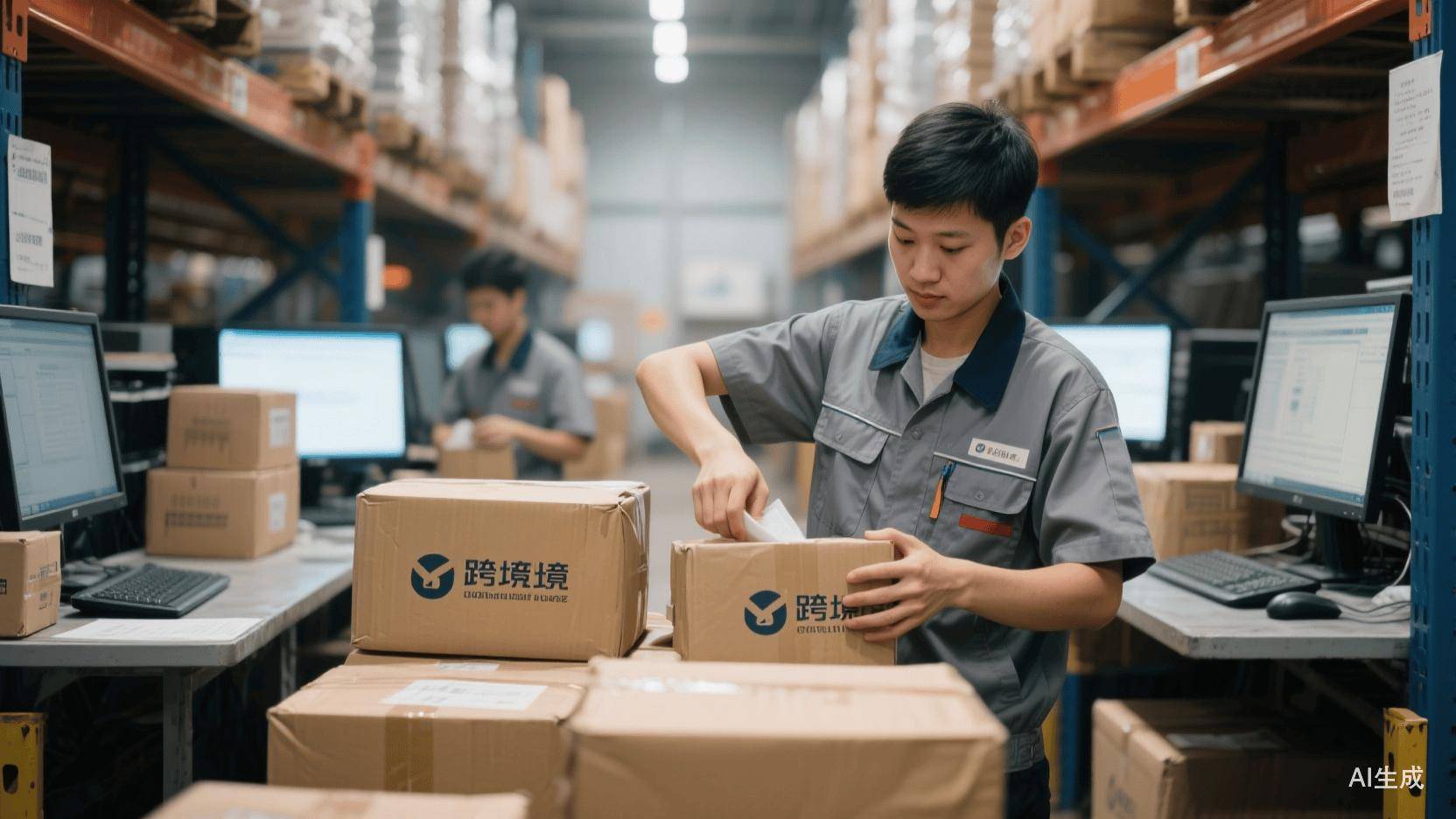
2025,跨境电商跑进下半场:告别低价,搏杀品牌
Sou Hu Cai Jing· 2026-01-10 10:31
Core Insights - 2025 presents significant challenges for cross-border platforms and merchants due to the end of the "small parcel exemption" policy in the U.S. and the establishment of fixed tariffs by the EU, marking the end of the "low-cost direct mail + tax exemption" model that has supported overseas trade for years [2] - Despite the dual pressures of tariffs and compliance, the growth of the "four small dragons" in cross-border e-commerce remains robust, with TikTok Shop and Temu both approaching the $100 billion GMV milestone [2][12] - The industry is transitioning away from reliance on traffic-driven growth towards a long-term operational model centered on compliance and brand development [2] Tariff and Compliance Pressures - In 2025, cross-border merchants are under significant tariff pressure, with the U.S. imposing a 10% tariff on Chinese goods and ending the tax exemption for packages valued at $800 or less [2][3] - A 3 Euro fixed tariff will be applied to small parcels entering the EU valued under 150 Euros starting July 1, 2026, indicating a global shift away from the "tax-free era" [7] - New tax regulations require all platforms serving Chinese operators to report seller identities and transaction data quarterly, marking the entry of cross-border e-commerce into a fully compliant era [8] Growth of the "Four Small Dragons" - In 2025, TikTok Shop's active consumers reached 400 million, with GMV nearing $100 billion, making it the fifth-largest platform globally and the fastest-growing [9] - Temu's projected GMV for 2025 is between $90 billion and $95 billion, with significant growth in downloads and active users [9] - The shift in focus towards the European market is evident, with Temu's monthly active users in Europe surpassing 140 million, contributing 40% of its global GMV [12] Market Trends - The European market is emerging as a new growth engine for cross-border e-commerce, with significant increases in sales and profit margins compared to the U.S. market [4][12] - Brand recognition is becoming a consensus among platforms, with major brands increasingly joining TikTok Shop, reflecting a shift from small merchants to a more diverse ecosystem [13][14] - The introduction of competitive strategies, such as price guarantees by platforms like AliExpress, indicates a move towards brand differentiation and market positioning [14] Conclusion - The cross-border e-commerce landscape in 2025 is characterized by a re-evaluation of growth strategies in light of new tariffs and compliance pressures, with a focus on brand development and market diversification [15] - The integration of AI technologies is expected to reshape the e-commerce landscape, potentially transforming platforms into intelligent shopping assistants [15]
专访yehyehyeh创新社创始人叶晓薇:2026,可持续时尚告别“漂绿”,走向“深绿”
Xin Lang Cai Jing· 2026-01-10 08:10
Core Insights - The year 2025 marks a pivotal point for the global fashion industry, transitioning sustainable fashion from a marketing add-on to a necessity for survival in the mainstream market due to the enforcement of the EU's Sustainable Product Ecodesign Regulation (ESPR) and various anti-greenwashing laws [1][2] Group 1: Changes in ESG Practices - The fashion industry is shifting from vague carbon reduction promises to comprehensive data-driven carbon management across the entire supply chain, driven by the upcoming ESPR [2][3] - The adoption of circular economy practices, particularly textile-to-textile (T2T) innovations, is becoming a major focus, with significant collaborations emerging to integrate new materials into supply chains [2][3] - The industry's mindset is evolving from merely increasing the production of preferred materials to enhancing the underlying production systems, which is crucial for making a real environmental and social impact [3] Group 2: Regulatory Pressures and Transparency - Recent policies are pushing the fashion and textile industry’s ESG requirements from voluntary practices to mandatory compliance, with the EU's Consumer Empowerment Directive and Green Claims Directive establishing stricter standards for environmental claims [3][4] - Fast fashion platforms like Shein and Temu are now facing systemic external pressures that require transparency, compliance, and verifiability, necessitating significant investments in certification systems and digital disclosures [4][5] Group 3: Consumer Engagement and Market Trends - There is a notable shift in consumer focus from single material considerations to deeper supply chain decarbonization and circular models, as regulations demand full lifecycle information disclosure [5][6] - The phenomenon of "green hushing" is emerging, where brands are opting for silence on their sustainability efforts due to regulatory pressures, which could lead to a lack of transparency and consumer awareness [5][6] - Brands are increasingly collaborating with suppliers to provide green energy, indicating a shift towards collaborative decarbonization efforts across the entire supply chain [6][7] Group 4: Future Trends in Sustainable Fashion - The three key trends anticipated in the ESG space for the fashion industry over the next three years are circular economy, collaborative intelligence (AI), and nature-based solutions (NbS) [8][9][10] - Circular economy practices are seen as essential for addressing resource depletion and waste crises, while AI and digital tools are necessary for efficient management of complex supply chain data [9][10] - Nature-based solutions emphasize the importance of regenerative agriculture and biodiversity protection as foundational elements for restoring the relationship between the fashion industry and the planet [11]
5 Biggest Benefits of Trump’s Tariffs in 2025
Yahoo Finance· 2026-01-09 14:51
Group 1: Economic Impact of Tariffs - Businesses and consumers began feeling the effects of President Trump's tariffs in mid-2025, leading to economic uncertainty and inflation, but some experts believe the U.S. may see advantages as stability returns [1] - The tariff environment has required a major reorientation of distributors and resellers, but there is now a sense of stability regarding tariffs for the next year [2] - Domestic manufacturers are expected to benefit from reduced competition and increased pricing power due to tariffs impacting foreign firms [3] Group 2: Sector-Specific Effects - Sectors such as electronics, beauty products, home goods, toys, and clothing are already experiencing impacts from tariffs, with the "de minimis" tariff rule affecting offshore retailers like Shein and Temu [2] - Shipping and logistics companies face increased processing workloads due to tariffs, which adds costs and slows delivery times [3] Group 3: Consumption and Environmental Considerations - Tariffs may lead to reduced consumption in the U.S., which could positively impact environmental and sustainability efforts [4] - There is an expectation of shrinkage in the number of units consumed by Americans and a reduction in diversity of options available [5]
亚马逊的反击:GWD声势大、落地难
雷峰网· 2026-01-09 11:13
Core Viewpoint - Amazon's new GWD warehouse initiative aims to lower logistics barriers for cross-border sellers, but it faces skepticism regarding its actual effectiveness and cost advantages [2][3][5]. Group 1: GWD's Purpose and Expectations - The GWD warehouse is expected to alleviate long-standing logistics pain points for cross-border sellers by simplifying the logistics chain, allowing sellers to send goods to Shenzhen, where Amazon will handle the rest [3][5]. - The GWD model is seen as a response to the high costs and complexities faced by Chinese sellers when entering international markets, particularly in terms of inventory management and logistics [3][5]. - Compared to platforms like Temu and SHEIN, which allow low-cost testing of markets, Amazon's traditional FBA model requires larger inventory commitments, making it less accessible for smaller sellers [4]. Group 2: Challenges and Costs of GWD - Despite the expectations, industry insiders believe that the GWD does not significantly lower the actual barriers for sellers, as it operates more like a "front warehouse" system [6][7]. - The GWD initiative has high entry requirements, including a good standing U.S. account and a minimum annual sales threshold of $2.2 million, limiting access for smaller sellers [7][8]. - Cost-wise, GWD may not offer significant advantages over traditional logistics providers, as it is expected to follow a standardized pricing model rather than a low-cost competition strategy [8][9]. Group 3: Operational and Compliance Considerations - The expected delivery time for GWD is between 35 to 45 days, which may not be competitive during peak seasons due to potential congestion in inventory transfers [9][10]. - Sellers will still need to manage their own customs documentation and compliance, which adds complexity compared to fully managed models like Temu's [10][11]. - GWD is likely to be more suitable for established brands with mature supply chains, as they are better equipped to handle the compliance and logistical challenges involved [11][12].


拉美本地化元年:中国企业的新生
创业邦· 2026-01-08 10:33
Core Viewpoint - The article emphasizes that 2025 marks a significant turning point for Chinese businesses entering the Latin American market, particularly in e-commerce, driven by changing consumer behaviors and increasing local investments by Chinese companies [7][12][19]. Group 1: Market Dynamics - Latin America is currently the fastest-growing e-commerce market globally, with a projected growth rate of 12.2% in 2025, significantly outpacing the global average [12]. - The e-commerce penetration rate in Latin America is expected to reach approximately 12%-15% in 2025, indicating substantial growth potential compared to China's over 45% penetration rate [12]. - Major markets like Argentina, Brazil, and Mexico will continue to lead the region's growth, accounting for over 84% of total retail e-commerce sales [15]. Group 2: Consumer Behavior - Latin American consumers are shifting from merely completing online transactions to more rational and value-driven purchasing decisions, favoring practicality and cost-effectiveness over brand prestige [17][18]. - The influence of traditional search engines is declining, with social media and direct engagement becoming crucial for consumer trust and conversion [18]. - The trend of "functionality consumption" is rising, with Chinese brands gaining loyalty through clear product parameters and reliable local after-sales service [18]. Group 3: Business Opportunities - The article highlights that 2025 is witnessing a surge in Chinese businesses actively entering the Latin American market, moving from a phase of observation to tangible operations [15][19]. - The demand for high-quality, cost-effective products remains unmet in the Latin American market, presenting a significant opportunity for Chinese companies [19]. - Trade-type sellers, who quickly sell products sourced from China, dominate the market, while factory-direct D2C brands are expected to grow in the long term [21]. Group 4: Localization Strategies - Chinese companies are increasingly focusing on localization, adapting to local cultures, languages, and consumer preferences to ensure long-term success in Latin America [34][38]. - The integration of local production and supply chains is becoming a trend, with companies like Shein investing in local manufacturing to enhance competitiveness and create jobs [40]. - The article notes that successful market entry requires understanding local regulations and consumer behavior, emphasizing the importance of building trust and relationships in business [43][49]. Group 5: Future Outlook - The Latin American market is expected to undergo significant changes in 2026, with Mexico stabilizing its market conditions and Brazil experiencing tax reforms and increased compliance requirements [23]. - The potential for growth in Argentina is notable due to less competition and high local prices, which Chinese products can help mitigate [23]. - Overall, the article suggests that Latin America is evolving from a mere opportunity to a critical market for Chinese enterprises, necessitating proactive engagement and investment [24][49].

B2C Ecommerce Global Market Size & Forecast Report,2020-2024 & 2025-2029: Digital Payments Expand as Ecommerce Checkout Becomes More Localised
Globenewswire· 2026-01-07 09:01
Core Insights - The global ecommerce market is projected to grow at a compound annual growth rate (CAGR) of 6.2%, reaching approximately US$9.21 trillion by 2029, up from an estimated US$7.25 trillion in 2025 [3][13]. Market Growth and Trends - The ecommerce market has experienced a robust growth rate of 9.5% from 2020 to 2024, with expectations of continued growth at a CAGR of 6.2% from 2025 to 2029 [3]. - Digital payments are becoming more localized, with countries like India and Brazil seeing rapid adoption of local payment methods integrated into ecommerce platforms [4]. - Social commerce is reshaping online purchasing pathways, with platforms like Douyin and TikTok Shop driving engagement and sales through content [5][9]. Competitive Landscape - Competitive intensity is expected to increase as cross-border discount platforms scale globally and social-commerce ecosystems deepen their integration with traditional commerce [2]. - Major players such as Amazon, Alibaba, Walmart, JD.com, and Mercado Libre are scaling logistics networks and financial services as key differentiators [11]. - New entrants like Temu are expanding their presence in the U.S. and Europe, intensifying competition in the ecommerce space [11]. Cross-Border Commerce - Cross-border ecommerce is gaining momentum as consumers seek imports and price advantages, with platforms like Temu and Shein attracting customers through competitively priced international goods [6][9]. - Improved international logistics and favorable government trade policies are facilitating cross-border flows, although regulatory scrutiny may impact certain models [9][10]. Omni-Channel Integration - Retailers are increasingly integrating ecommerce with physical store formats to enhance fulfillment and inventory management, leveraging existing store networks for improved last-mile efficiency [7][10]. - The trend towards omni-channel retail integration is expected to strengthen as retailers seek margin stability and adapt to consumer expectations for flexible delivery options [7][10]. Recent Developments - Strategic partnerships and mergers have been prominent, such as Shopify and TikTok's collaboration for cross-border merchant onboarding and Amazon's investment in Deliveroo for grocery fulfillment [12].


What MercadoLibre Needs to Prove in 2026
The Motley Fool· 2026-01-07 07:00
Core Viewpoint - MercadoLibre is at a critical juncture as it enters 2026, needing to demonstrate that its growth can be both durable and profitable after a decade of rapid expansion [1][3] Group 1: Growth and Profitability - The company continues to grow, with its e-commerce platform attracting new buyers and transactions, while Mercado Pago has emerged as a significant fintech platform in Latin America [2] - In 2025, margins faced pressure due to increased competition and rising capital requirements, indicating that the growth story is no longer solely driven by favorable market conditions [2][4] - Investors will be looking for evidence in 2026 that margins can stabilize without sacrificing growth, requiring improvements in logistics efficiency and monetization strategies [5][6] Group 2: Fintech Performance - Mercado Pago has become a crucial growth engine, with rapid expansion in payments, assets under management, and lending, alongside improved credit quality [8][9] - The company must maintain credit discipline and control delinquency rates to ensure that fintech growth is sustainable and contributes meaningfully to earnings [10] Group 3: Investment and Operating Leverage - Significant investments are being made in logistics, technology, and payment infrastructure across key markets, which are strategically important for enhancing delivery and reliability [11] - In 2026, investors will seek signs of operating leverage, such as declining fulfillment costs and efficient scaling of technology spend [12] Group 4: Competitive Landscape - Competition has intensified, with Shopee surpassing MercadoLibre in Brazil and new entrants like Temu altering consumer price expectations [13] - The company must demonstrate that competition will not lead to permanent margin compression, with signs of pricing rationality and improved monetization per user being critical for restoring confidence [14] Group 5: Investor Implications - MercadoLibre remains a compelling long-term investment opportunity in Latin America's digital economy, but the company must prove its ability to execute effectively in 2026 [16][17] - Success in 2026 could transition the company from a high-growth platform to a durable compounder, while failure may lead to increased stock volatility despite rising revenues [16]

拉美本地化元年:中国企业的新生
3 6 Ke· 2026-01-06 09:17
Group 1 - The core viewpoint of the articles highlights the increasing presence and investment of Chinese companies in Latin America, particularly in Brazil, marking 2025 as a pivotal year for this trend [4][5][8][9]. - The Latin American e-commerce market is experiencing rapid growth, with a projected growth rate of 12.2% in 2025, significantly outpacing the global average [9][12]. - The shift in consumer behavior in Latin America is evident, with a move towards more rational and value-driven purchasing decisions, favoring functionality over brand prestige [15][14]. Group 2 - Chinese companies are increasingly localizing their operations in Latin America, focusing on understanding local cultures and consumer needs, which is essential for long-term success [29][31][32]. - The integration of local production and supply chains is becoming a trend, with Chinese firms investing in local manufacturing to reduce costs and enhance market presence [34][33]. - The digital economy in Brazil is supported by a high level of internet usage, with Brazilians spending an average of 5 hours and 25 minutes daily on social media, indicating a ripe environment for e-commerce growth [26][27]. Group 3 - The competitive landscape in Latin America is evolving, with trade-based sellers currently dominating, but there is potential for D2C brands to gain long-term advantages through local production [19][20]. - The regulatory environment in countries like Mexico and Brazil is stabilizing, which could provide growth opportunities for compliant businesses [20][21]. - The cultural nuances of trust and social interaction play a significant role in business operations in Latin America, necessitating a tailored approach for foreign companies [38][39].