淮北矿业

Search documents
十余家煤企揭晓半年成绩单!产品量价齐跌 利润集体承压
Hua Xia Shi Bao· 2025-07-19 01:13
Core Viewpoint - The coal industry is experiencing significant profit declines across multiple companies due to a sharp drop in coal prices, with many firms reporting losses or substantial reductions in net profit for the first half of 2025 [1][2][3]. Company Performance - Zhengzhou Coal Electricity and Panjiang Coal & Electricity have shifted from profit to loss, with Shanghai Energy forecasting a net profit of 190 million to 230 million yuan, a decrease of 51.27% to 59.75% year-on-year [2]. - China Shenhua, the industry leader, expects a net profit of 23.6 billion to 25.6 billion yuan, down 39 billion to 59 billion yuan compared to the same period last year, representing a decline of 13.2% to 20.0% [2][3]. - Gansu Energy is projected to report a net loss of 180 million yuan, while Jizhong Energy anticipates a profit of 330 million to 400 million yuan, down 60.06% to 67.05% year-on-year [2][3]. - Lanhua Science and Technology expects a net profit of 40 million to 60 million yuan, a decrease of 89.12% to 92.75% [2][3]. - Yongtai Energy forecasts a profit of 120 million to 150 million yuan, down 87.39% to 89.91% year-on-year [2][3]. - Anyuan Coal Industry expects a net loss of 259 million to 310 million yuan, indicating an expanded loss compared to the previous year [2][3]. Industry Trends - The coal industry has been in a downward profit trend for nearly two years, with major companies like China Shenhua and Pingmei Shenma Coal & Electricity reporting consecutive quarterly profit declines [4]. - The decline in profits is attributed to falling coal prices, with the price of 5500 kcal coal at North Port dropping nearly 20% to 620 yuan per ton by June 30, 2025 [1][4]. - The coal market has experienced three significant price fluctuations since the establishment of the socialist market economy, with the current downturn being the most severe [5][7]. - In 2023, coal imports reached a record high of 474 million tons, up 61.8% year-on-year, contributing to the price decline [6][7]. - The overall revenue of the coal mining and washing industry fell by 19.2% year-on-year in the first five months of 2025, with total profits down by 50.6% [7]. Price Dynamics - The price of coal has been on a downward trend since 2023, with analysts suggesting that prices may have entered a reasonable range and could be nearing the bottom [8]. - The price of Q5500 coal at Qinhuangdao Port hit a low of 617 yuan per ton on June 5, 2023, marking a 49.6% drop from the peak earlier that year [4][5].



内蒙古3地着力建设国家碳达峰试点新“样板”
Nei Meng Gu Ri Bao· 2025-07-18 14:22
Core Insights - Inner Mongolia has launched three pilot cases for national carbon peak initiatives, focusing on Ordos, Baotou, and Chifeng High-tech Industrial Development Zone [1][2][3] Group 1: Ordos City - Ordos City has achieved a cumulative energy intensity reduction of over 23% since 2024, supporting an average economic growth of 6.97% with an annual energy consumption reduction of 6.56% [1] - The city has established the first zero-carbon industrial park in China and implemented the first set of zero-carbon industrial park standards, setting a benchmark for green transformation in industrial parks nationwide [1] - Ordos has developed a systematic "dual carbon" policy framework covering nine major areas and eight industries, with a clear timeline and roadmap [1] Group 2: Baotou City - Baotou City has exceeded its "14th Five-Year Plan" target with a cumulative energy intensity reduction of over 35%, achieving an average energy consumption reduction of over 8% and supporting an average economic growth of 8.6% [2] - The city has attracted several low-carbon pilot projects, including the first pure green hydrogen industrialization project in the country and a full-chain carbon capture utilization and storage (CCUS) demonstration project in the steel industry [2] - Ongoing green low-carbon projects include the Guoneng coal-to-olefins CCUS project and a 15 MW distributed wind power and hydrogen project by Baogang Group [2] Group 3: Chifeng High-tech Industrial Development Zone - Chifeng has included the national carbon peak pilot construction in its government work report for 2024 and 2025, emphasizing the importance of deepening reforms [3] - The development zone is exploring an "green production through green" industrial development model, attracting green hydrogen, ammonia, and battery industries through traceable green electricity [3] - The first phase of a 152,000 tons/year zero-carbon hydrogen ammonia project has been successfully launched, achieving 100% green electricity hydrogen production [3]
高温天叠加“反内卷”:煤炭走强,红利ETF国企(530880)飘红0.59%
Sou Hu Cai Jing· 2025-07-18 07:57
Group 1 - The core viewpoint of the articles highlights the strong performance of coal-related stocks and the positive outlook for coal prices due to seasonal demand and policy adjustments [1][2] - The "anti-involution" policy aims to eliminate low-price competition and optimize resource allocation, benefiting leading companies with cost advantages and high dividend capabilities [1] - The dividend ETF tracking the Shanghai National Enterprise Dividend Index has a high dividend yield of 5.2%, making it attractive for investors seeking income [2] Group 2 - The coal market is experiencing a robust trend supported by high electricity demand during peak seasons, with expectations for price increases in thermal coal [1] - The report from Guosen Securities indicates that coal prices have bottomed out in the first half of the year, with an anticipated improvement in supply-demand dynamics in the second half [1] - The historical trend shows that A-shares typically enter a dividend peak period from May to July, making high-dividend sectors a focal point for capital allocation [1]




安信红利精选混合A:2025年第二季度利润414.16万元 净值增长率2.71%
Sou Hu Cai Jing· 2025-07-18 05:16
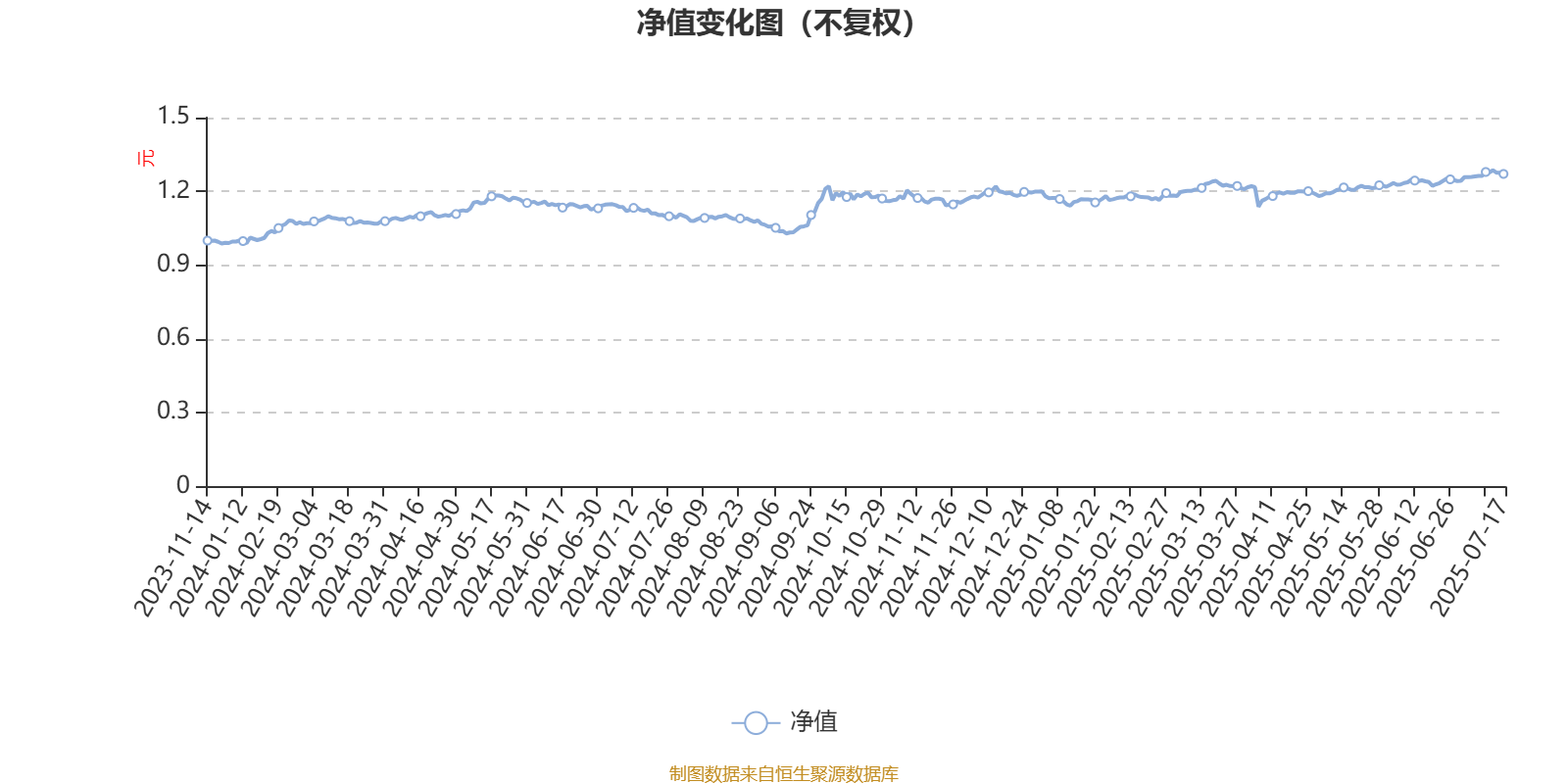
Core Viewpoint - The AI Fund Anxin Dividend Select Mixed A (018381) reported a profit of 4.1416 million yuan for Q2 2025, with a net asset value growth rate of 2.71% during the period [3]. Fund Performance - As of the end of Q2 2025, the fund's scale was 152 million yuan [15]. - The fund's unit net value was 1.271 yuan as of July 17 [3]. - The fund's performance over different periods includes: - 3-month net value growth rate: 6.23%, ranking 476 out of 607 comparable funds [3]. - 6-month net value growth rate: 8.95%, ranking 363 out of 607 comparable funds [3]. - 1-year net value growth rate: 14.43%, ranking 405 out of 601 comparable funds [3]. Fund Management and Strategy - The fund manager, Zhang Ming, oversees 9 funds and has slightly increased allocations in light industry and home appliances while reducing exposure in construction materials, environmental protection, and retail [3]. - The fund's average stock position since inception is 79.71%, compared to the industry average of 85.32% [14]. Risk Metrics - The fund's Sharpe ratio since inception is 1.1654 [8]. - The maximum drawdown since inception is 13.02%, with the largest quarterly drawdown occurring in Q3 2024 at 10.38% [11]. Holdings - As of the end of Q2 2025, the top ten holdings include major companies such as China Construction Bank, China Shenhua Energy, and Industrial and Commercial Bank of China [18].

煤炭板块盘初走高 云煤能源涨停
news flash· 2025-07-18 01:36
Core Viewpoint - The coal sector showed strong performance in early trading, with several companies reaching their daily price limits due to rising coal prices in the market [1] Group 1: Market Performance - Yunmei Energy reached its daily price limit, while Dayou Energy, Shanxi Coking Coal, Huaibei Mining, Lu'an Environmental Energy, and Pingmei Shenma also experienced price increases [1] - As of July 16, the "CCTD Bohai Rim thermal coal spot reference prices" for three specifications (5500K, 5000K, 4500K) were reported at 635, 570, and 504 yuan/ton respectively [1] Group 2: Price Changes - Daily price increases for the three specifications were 3 yuan/ton each, while weekly price changes were 14, 19, and 18 yuan/ton respectively [1]

煤炭月度供需数据点评:6月:“反内卷”改变政策方向,夏季煤价反弹-20250717
Shanxi Securities· 2025-07-17 06:41
Investment Rating - The coal industry is rated as "synchronous with the market" [1][4]. Core Insights - The coal supply has shown a marginal decrease in growth, with a total output of 2.405 billion tons from January to June 2025, reflecting a year-on-year increase of 5.4%, but the growth rate is slowing down. In June alone, the output was 421 million tons, up 3.0% year-on-year [4][6]. - Demand for coal is supported by manufacturing and infrastructure investments, with fixed asset investment growing by 2.8% year-on-year in the first half of 2025. Manufacturing investment increased by 7.5%, while real estate investment decreased by 11.2% [4][6]. - Coal imports have contracted significantly, with a total of 22.17 million tons imported from January to June 2025, down 11.1% year-on-year. In June, imports were 33.037 million tons, a decrease of 25.93% year-on-year [5][6]. - Coal prices are stabilizing after a decline, with signs of a rebound in June. The average price of Shanxi mixed 5500 thermal coal has decreased since the beginning of 2025 [5][6]. Summary by Sections Supply and Demand Analysis - The coal supply has been decreasing marginally, with a total output of 2.405 billion tons in the first half of 2025, and June's output was 421 million tons [4][6]. - Demand is primarily driven by non-electric sectors, with a notable increase in manufacturing and infrastructure investments [4][6]. Import and Price Trends - Coal imports have seen a significant reduction, with a total of 22.17 million tons imported in the first half of 2025, marking an 11.1% year-on-year decline [5][6]. - The coal prices are nearing the bottom, with a rebound observed in June, indicating a potential for future price stability [5][6]. Investment Recommendations - The report suggests focusing on companies in the coking coal sector such as Huai Bei Mining, Pingmei Shenma, and Shanxi Coking Coal, while for thermal coal, companies like Shanxi Coal International, Jinko Coal, and Yanzhou Coal Mining are highlighted [6].
“反内卷”发酵+用煤旺季,数据告诉你煤炭板块迎来“强支撑”
智通财经网· 2025-07-17 05:42
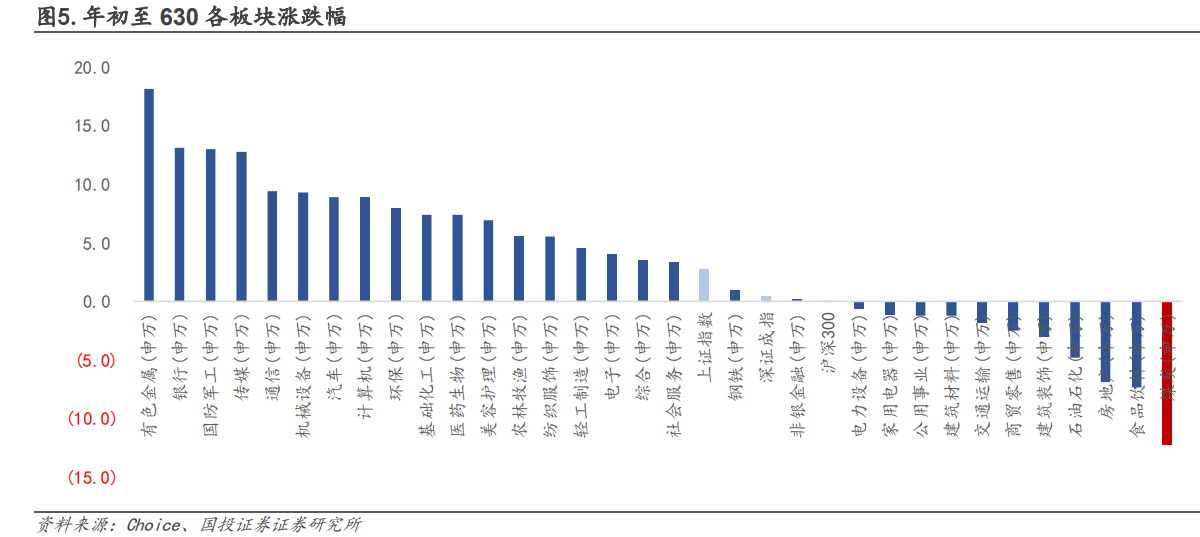
Core Viewpoint - The coal sector has experienced a significant rebound, driven by seasonal demand and the "anti-involution" policy aimed at stabilizing the market and promoting high-quality development [2][8]. Group 1: Market Performance - On July 14, the coal sector in the Hong Kong market rose by 3.79%, with China Shenhua H shares (01088) surging nearly 5% at one point, and related warrants increasing over 60% [1]. - The A shares of China Shenhua (601088.SH) also saw a rise of over 3%, while Zhengzhou Coal Electricity (600121.SH) hit the daily limit up during afternoon trading [1]. - As of June 30, the coal sector (Shenwan) had a decline of 12.29%, underperforming the CSI 300 index and ranking last among Shenwan industries [3]. Group 2: Supply and Demand Dynamics - The coal market is facing a supply-demand imbalance, with the China Coal Transportation and Marketing Association emphasizing the need for coal companies to understand market changes and adhere to long-term contracts [2]. - The average price of Qinhuangdao Q5500 thermal coal fell by 23% year-on-year, while the average price of coking coal at Jing Tang Port dropped by 39% [2]. - As of July 4, the average daily coal consumption of the six major power generation groups increased by 3.75% week-on-week, reaching an average of 84.27 million tons [7]. Group 3: Policy Impact - The "anti-involution" policy aims to reduce chaotic competition in the coal industry, with the government focusing on establishing rules to eliminate local protectionism and market segmentation [7][8]. - The recent meeting of the Central Financial Committee highlighted the need to address "involution-style" competition, which has further stimulated the coal sector's upward momentum [7][8]. Group 4: Investment Opportunities - Analysts suggest that the coal sector's rebound is supported by low valuations, high dividends, and potential transformation premiums, with a focus on companies like China Shenhua (01088, 601088.SH) and China Coal Energy (01898, 601898.SH) [9][10]. - The sector is expected to benefit from seasonal price increases due to rising demand amid supply constraints, with recommendations for stocks such as China Shenhua and Guanghui Energy [10]. - The coal industry is positioned at a triple support level of valuation, policy, and profit, making high-dividend leaders suitable for stable investment [11].
6月统计局数据点评:火电同比延续正增,进口降幅再度扩大
Changjiang Securities· 2025-07-16 02:11
Investment Rating - The industry investment rating is "Positive" and maintained [9] Core Viewpoints - The report anticipates seasonal improvement in thermal coal demand due to high temperatures in July and August, which may lead to a short-term price recovery for thermal coal. The coal sector is currently underweight, with attractive dividend yields and defensive allocation value [2][25] - For coking coal, there is a rebound in prices driven by strong policy expectations and market sentiment, but the bargaining power of coking coal remains relatively weak in the black industry chain, limiting short-term upside potential [2][34] Supply Summary - Domestic coal production in June reached 42.107 million tons, a year-on-year increase of 3.0% and a month-on-month increase of 4.4%. The total coal production for the first half of the year was 240.5 million tons, up 5.4% year-on-year [6][14] - Coal imports in June fell to 33.04 million tons, a decrease of 25.93% year-on-year and 8.3% month-on-month. Cumulative imports for the first half of the year were 221.7 million tons, down 11.1% year-on-year [18][21] Demand Summary - In June, thermal power generation increased by 1.1% year-on-year and 7.0% month-on-month, with total domestic power generation reaching 796.3 billion kWh, up 1.7% year-on-year [24][27] - Non-electric coal demand, particularly in cement production, saw a decline, with June production at 15.547 million tons, down 5.3% year-on-year [29][33] - The steel sector showed a significant year-on-year decrease in production, with crude steel output in June at 8.318 million tons, down 9.2% year-on-year [33][38] Future Outlook - The report suggests that thermal coal prices may see further support due to seasonal demand increases and the current low inventory levels at power plants. Key factors to monitor include supply conditions, high-temperature weather, and sustained demand release [25][27] - For coking coal, while recent price rebounds are noted, the report indicates limited short-term upside due to weak bargaining power and strong expectations of a seasonal downturn [34][38]

国信证券晨会纪要-20250716



Guoxin Securities· 2025-07-16 01:31
Macro and Strategy - June financial data shows a significant rebound in credit, with new social financing reaching 4.20 trillion yuan, exceeding expectations of 3.71 trillion yuan, and new RMB loans at 2.24 trillion yuan, surpassing the forecast of 1.84 trillion yuan [8][9][10] - The M2 money supply grew by 8.3% year-on-year, indicating a recovery in domestic economic momentum as private sector balance sheet expansion improves [8][9] - The "seesaw effect" between government financing and corporate loans has weakened, suggesting a shift in credit dynamics as local governments approach their annual debt targets [9][10] Retail Industry - The jewelry market is projected to grow steadily, with the market size reaching 728 billion yuan in 2024, reflecting a compound annual growth rate of 3.6% since 2019 [11][12] - The top five companies in the jewelry sector hold a market share of 41.4%, indicating increasing industry concentration as consumer preferences shift towards quality and design [11][12] - The retail sector is benefiting from the recent Amazon Prime Day, which generated an estimated $24.1 billion in sales, a 30% increase year-on-year, highlighting the growth potential in cross-border e-commerce [13][14] Food and Beverage Industry - The food and beverage sector saw a 0.92% increase, underperforming the Shanghai Composite Index by 0.17 percentage points [14] - The liquor market is stabilizing, with major brands focusing on brand positioning and market health, while the overall demand remains under pressure [15][16] - Recommendations include leading brands like Kweichow Moutai and Wuliangye, which have shown resilience and potential for recovery [15][16] Construction and Building Materials - The construction materials sector is expected to improve due to a shift towards healthy competition and urban renewal initiatives, with a focus on technological innovation [17][18] - Cement prices have stabilized, with a slight decrease of 0.4% week-on-week, while demand remains steady despite seasonal fluctuations [17][18] - Recommendations include companies like Three Trees and China National Building Material, which are well-positioned to benefit from domestic demand [18] Computer Industry - The AI ASIC market is rapidly expanding, with a projected market size growth from $14.8 billion in 2024 to $83.8 billion by 2030, reflecting a compound annual growth rate of 33.5% [19][20] - The price advantage of AI ASIC chips over GPUs is significant, with average prices of $5,236 compared to $8,001 for GPUs, making them more attractive for specific applications [19][20] - Companies like Google and Amazon are accelerating their development of ASIC chips, indicating strong future demand in this sector [21] Home Appliances - The home appliance sector is experiencing stable growth in domestic sales, driven by government subsidies, while exports face challenges due to high bases and tariff impacts [22][23] - White goods are seeing a slight increase in domestic sales, with air conditioning units showing a 9.5% growth in domestic shipments [22][23] - Recommendations include leading brands such as Midea and Gree, which are expected to maintain strong performance [22][23] Pharmaceutical Industry - Merck's acquisition of Verona for $10 billion aims to enhance its portfolio with a new COPD treatment, indicating strong growth potential in respiratory therapies [27][28] - WuXi AppTec is projected to achieve a 102% increase in net profit for the first half of 2025, reflecting robust operational performance [29] - The pharmaceutical sector is showing resilience, with a focus on innovative treatments and strategic acquisitions [27][28] Coal Industry - The coal market is expected to stabilize as domestic production increases and imports decrease, with a projected production of 4.85 billion tons in 2025, a 2% increase year-on-year [31][32] - Demand for coal is anticipated to improve in the second half of the year, particularly for non-electric uses such as chemical production [33] - Recommendations include leading coal companies like China Shenhua and China Coal Energy, which are well-positioned to benefit from market dynamics [34] Electronics Industry - The electronics sector is experiencing positive momentum, with a 0.93% increase in stock performance, driven by strong demand in the optical and semiconductor segments [34] - The industry is expected to see significant catalysts in the coming months, particularly in the context of AI and cloud computing advancements [34] - Companies involved in ASIC development are likely to benefit from the ongoing trends in computing and data processing [34]
煤炭行业2025年中期投资策略:煤价探底,基本面向好
Guoxin Securities· 2025-07-15 09:27
Supply: Marginal Increment Significantly Reduced - Domestic coal production from January to May increased by approximately 130 million tons year-on-year, while imports decreased by about 16 million tons, indicating an overall increase in supply [3][7] - The domestic raw coal production reached 1.99 billion tons from January to May, reflecting a year-on-year increase of 6%. However, the growth rate is expected to narrow in the second half of the year, with an estimated total production of around 4.85 billion tons for 2025, representing a year-on-year increase of 9 million tons (2%) [3][9] - The decrease in imports is attributed to weak demand, high inventory levels, and diminishing price advantages of imported coal. For the first five months of 2025, coal imports totaled 19 million tons, a year-on-year decrease of approximately 16 million tons (8%) [3][64] Demand: Short-term Improvement Expected, Medium-term Resilience Visible - National commodity coal consumption from January to May reached 2.05 billion tons, showing a slight year-on-year increase of 0.1 billion tons (0.5%). The demand is expected to improve in the second half of the year as the consumption peak season approaches [3][4] - In the thermal power sector, the demand is under pressure due to slowing electricity growth and competition from renewable energy. However, the demand for thermal power is expected to rebound in the second half of the year [3][4] - Non-electric demand, particularly from the chemical sector, remains strong, with significant year-on-year growth in coal-to-PVC, coal-to-ethylene glycol, and coal-to-methanol production [3][4] Inventory: High Port Inventory Declining, De-stocking Remains Focus - Port inventories are currently at high levels but are expected to decline as demand improves in the peak consumption season. The focus will remain on de-stocking [4] Price: Thermal Coal Prices at Bottom, Coking Coal Prices Showing Stages of Rebound - The average market price of Qinhuangdao Q5500 thermal coal fell by approximately 199 yuan/ton in the first half of 2025, a year-on-year decrease of 23%. However, there is potential for price rebound as supply-demand dynamics improve [3][57] Investment Recommendations: High Dividend Value Still Exists, Stage Game Elasticity - The report suggests that despite the downward pressure on coal prices, there is still potential for a rebound in the second half of the year. The resilience of coal demand is viewed positively in the medium term [3][4] - Key investment targets include stable-performing coal companies such as China Shenhua, China Coal Energy, and Shaanxi Coal and Chemical Industry, as well as elastic stocks like Electric Power Investment and Jinko Coal Industry [3][4]