阿里

Search documents
京东还要打三场硬仗
虎嗅APP· 2025-03-06 13:48
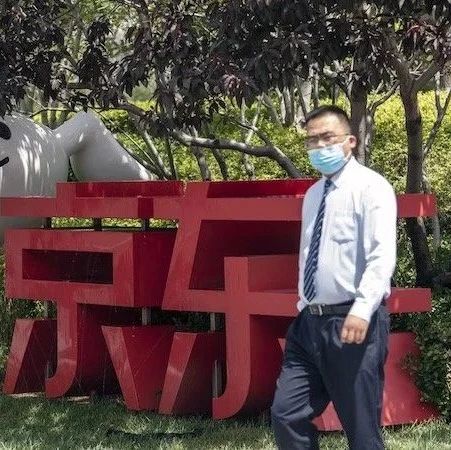
Core Viewpoint - JD.com is currently competing in three key areas: AI transformation, entering new market segments, and finding growth within its existing business. The underlying principle of these competitions is speed and efficiency [1]. Financial Performance - JD.com reported a revenue increase of 13.4% year-on-year to 347 billion yuan in Q4 2024. Operating profit under non-GAAP increased by 34.6% to 10.5 billion yuan, with an operating profit margin rising from 2.5% to 3% compared to the same period last year [1]. - The positive financial results were well-received in the capital markets, with JD.com's stock price rising over 6% in pre-market trading following the earnings announcement [1]. Market Expansion - JD.com officially entered the food delivery market shortly before the earnings report and plans to expand into local life group buying, travel, and moving services by early 2025. This move is seen as a direct competition with Meituan and Douyin in the local lifestyle market [1]. - The core e-commerce business, particularly in the 3C (computer, communication, consumer electronics) and daily necessities sectors, showed strong growth, with revenue growth in these categories reaching double digits year-on-year [4]. Marketing and User Growth - Marketing expenditures increased by 28.4% year-on-year to 13.1 billion yuan in Q4 2024, marking the fastest growth in marketing spending since the pandemic began. This contrasts with a 10.3% decline in Q4 2022 and a 9.4% increase in Q4 2023 [4]. - The increase in marketing investment and favorable government policies, such as the trade-in program for digital products, significantly boosted user growth, with active user numbers and shopping frequency both achieving double-digit growth year-on-year [4]. Cost Control and Efficiency - JD.com managed to keep its general and administrative expenses and operating costs below the revenue growth rate, with increases of 3.2% and 11.9%, respectively. This led to a notable improvement in profit margins [5]. - The retail segment's operating profit grew by 44.6% year-on-year to 10.036 billion yuan, marking the fastest growth in operating profit for JD Retail in Q4 since the pandemic [5]. AI Transformation - JD.com is actively pushing for AI integration across its business, with over 800,000 merchants currently using AI tools such as digital humans and AI short videos [2]. - The company has implemented AI in over 100 scenarios internally, with more than 600,000 employees utilizing AI tools based on JD's language model [7]. - The launch of the upgraded digital human technology and various AI applications in e-commerce has significantly improved conversion rates, with some applications exceeding a 300% increase compared to market averages [8]. Competitive Landscape - JD.com is now in direct competition with Meituan and Douyin in the local lifestyle sector, with both companies expanding their service offerings. However, JD.com is still in the early stages of its food delivery and travel services [11]. - The company faces challenges in balancing its resources between its core e-commerce business and new ventures, especially as competitors like Pinduoduo and Alibaba intensify their efforts in the same markets [12][13].


空头彻底被打爆了
表舅是养基大户· 2025-03-06 13:32
不过有些人开心不起来了,就是前阵子做空港股的 ,上周咱们不是提到,有人买了2倍做空恒生科技的ETF么,看到4500点,结果一轮上涨,2倍 做空ETF最近三天跌了20%了,创新低,而从去年9月开始,随着恒生科技的一轮超级牛市,2倍做空的ETF,从接近7块,跌到了目前的1.6块不 到,差不多跌了75%,属于彻底的脚踝斩了。 今天, 港股做空比例进一步滑落到16% ,属于正常水平了。 下午发布会的解读,放在后半部分 ,一共十五条,先聊两个开心的事儿。 今天港股彻底起飞了 ,大涨5.4%,日内最高摸到了6090点,收盘是6069点, 全部创短期新高 ,把最近的坑算是彻底填上了。 今天有基金公司已经开始发公告,提示中概互联ETF的溢价风险了,因为中概互联一半仓位在港股,一半仓位在美股,今天盘中的价格,相当于 已经直接认为今晚美股的中概还要继续飙——不过,也确实有可能,傍晚, 京东发布了四季报 ,不仅业绩超预期高增长,而且宣布未来3年最多 回购50亿美元的股票,以至于京东在美股盘前最高涨超10%,目前还涨了7%以上,其他中概也在跟涨。 这就是我们之前提到的两个决定性的周期,一是低利率周期,二是互联网松绑周期,共同决定了互 ...
迈向高质量投资——释放增长潜力,构建新发展格局
Da Gong Guo Ji· 2025-03-06 07:28
Investment Growth and Trends - Infrastructure investment in 2024 showed a year-on-year growth of 9.2%, with power, heat, gas, and water supply sectors leading at 23.9% growth[2] - Manufacturing investment also grew by 9.2% in 2024, outpacing overall fixed asset investment by 6 percentage points, highlighting its role as a key economic driver[3] - Real estate investment faced challenges, declining by 10.6% in 2024, with new housing sales down 12.9% and sales revenue down 17.1%[4] Challenges and Opportunities - Investment quality development is entering a new phase, facing challenges in addressing imbalances and enhancing core strengths[5] - China's per capita infrastructure capital stock is only 20% to 30% of that in developed countries, indicating significant investment needs in shortfall areas[4] - Despite traditional growth engines like real estate being under pressure, there is potential for resource optimization towards infrastructure and manufacturing[4] Future Outlook - Infrastructure investment is expected to remain robust, supported by special bonds and urban renewal policies, which will drive growth in 2025[6] - Manufacturing investment is poised for strategic opportunities, with significant investments in technology and digital infrastructure, such as Alibaba's plan to invest 380 billion RMB over three years[7] - Real estate investment is anticipated to recover with policy support, as financing mechanisms have already facilitated the construction of 14 million housing units[8]
两会预告丨明日上午,外交主题记者会!
证券时报· 2025-03-06 04:47
Group 1 - The 14th National People's Congress will hold a press conference on March 7, 2025, at 10 AM, where Foreign Minister Wang Yi will address questions regarding China's foreign policy and international relations [1] - The press conference will take place at the Media Center [1] Group 2 - The article mentions various topics related to the stock market and economic growth, including the government's work report and GDP growth target set at around 5% for 2025 [4] - There are references to significant market movements, such as a surge in Chinese assets and stock prices, indicating a positive sentiment in the financial markets [4] - The government's focus on stabilizing the stock and real estate markets is highlighted, suggesting a proactive approach to economic management [4]

独家洞察 | 用FactSet解码AI新贵DeepSeek:崛起与影响
慧甚FactSet· 2025-03-06 04:33
自上个月国产大模型DeepSeek R1上线以来,就迅速引发了大量的关注和讨论。在上周的文章中,我们着 重探讨了DeepSeek对金融行业的作用。在金融这个数据密集、决策复杂的领域,DeepSeek展现出了令人 瞩目的应用潜力。从年报解读到纪要整理,从数据分析到策略复现等,它将成为金融从业者的得力助手。 不过,我们也认识到,像策略复现、因子挖掘这类问题,其过程本身就相对复杂。DeepSeek 虽然能够生 成相关代码,但却无法在后台对这些代码进行运算检验,也无法获取策略中所需的具体数据。这就意味 着,其生成的代码仅仅只能作为参考,在实际应用于投资决策之前,用户还需要进行严谨的核验和细致的 调 试 。 毕 竟 , 金 融 市 场 容 不 得 半 点 马 虎 , 每 一 个 决 策 都 关 乎 着 巨 大 的 利 益 得 失 。 下 图 1 是 FactSet Workstation中关于DeepSeek的资本情况介绍。 图1: 点击图片查看大图 资料来源:FactSet 在本文中,我们将研究DeepSeek公司本身以及其带来的影响。如下图2所示,DeepSeek自今年1月发布新 模型以来,其网上搜索热度飙升,关于 ...

AI的胡编乱造,正在淹没中文互联网
虎嗅APP· 2025-03-05 10:03
Core Viewpoint - The article discusses the rapid proliferation of AI-generated content, particularly from the DeepSeek-R1 model, and highlights the significant misinformation it can produce, which poses a risk to the integrity of information on the Chinese internet [2][20]. Group 1: AI Tool Impact - DeepSeek-R1 has become widely used, leading to a saturation of AI-generated content that often contains factual inaccuracies, which can mislead users [2][20]. - The article cites specific examples of misinformation generated by DeepSeek-R1, including a popular but erroneous response on Zhihu regarding the animation industry [9][10]. Group 2: Misinformation Examples - The first example involves a misleading narrative about the animation industry, claiming that a specific animation scene was well-received at the Annecy Animation Festival, which was factually incorrect [9][10]. - The second example discusses a fabricated article about military corruption, which included outrageous claims that were entirely invented by DeepSeek-R1 [11][12]. Group 3: AI Model Characteristics - DeepSeek-R1 is noted for its high "hallucination" rate of 14.3%, indicating a tendency to generate false information, which is higher than other models like Deepseek-V3 [15]. - The model's design encourages it to fabricate details to meet user prompts, leading to a blend of truth and fiction in its outputs [12][14]. Group 4: Broader Implications - The misuse of AI tools like DeepSeek-R1 for generating misleading information can have severe consequences, especially in sensitive areas such as politics, history, and culture [16][20]. - The article emphasizes the need for clear labeling of AI-generated content to prevent the blending of real and fabricated information, which could further complicate the information landscape [20].

老罗要做AIOS,挖来小米前50号员工|36氪独家
36氪· 2025-03-05 09:19
Core Viewpoint - The article discusses the latest entrepreneurial venture of Luo Yonghao, focusing on the development of an AI operating system (AIOS) and its integration with AI hardware, indicating a strategic shift back to hardware after previous explorations in AR and AI assistants [3][6][7]. Group 1: Company Background and Strategy - Luo Yonghao is leveraging his previous company, The Red Line, which was initially focused on AR products, to expand into the AIOS market [4]. - The recruitment of Wang Wenjun, a former key employee at Xiaomi, highlights the importance of experienced personnel in the development of AIOS, as he has a strong background in software and hardware integration [6][7]. - The strategic plan involves first launching AIOS, followed by the development of AI smartphones, creating a coherent product ecosystem [7]. Group 2: Product Development and Challenges - The J1 Assistant, an AI assistant product, is currently in testing and is expected to be integrated into the AIOS, although initial market reactions have been lukewarm [9][10]. - The development team, led by CTO Zhu Yongsheng, is facing challenges in creating a robust operating system, which requires significant investment and technical expertise [11]. - Luo Yonghao is under pressure to successfully launch the J1 Assistant to attract further investment, making the upcoming month critical for the company's future [11].

通信及电子20250224周报:国内各厂商全面接入deepseek,算力需求加速释放-2025-03-05
Guodu Securities· 2025-03-05 01:22
研究所 [table_reportdate] 通信\电子 2025 年 2 月 24 日 行业周报 行业研究 行业周报 投资评级:推荐 国内各厂商全面接入 deepseek,算力需求加速释放 --通信及电子 20250224 周报 1)摘要 在国内 AI 公司深度求索发布大模型 DeepSeek-R1 之后持续获得高度关 注,包括腾讯、阿里在内的各大平台相继接入 DeepSeek,国内算力需 求有望得到进一步的激发。DeepSeek-R1 在性能上对标全球领先水平, 并且具有明显的成本优势,同时实现全面开源,DeepSeek R1 的发布及 其具备的各项优势,有望使得 AI 应用加速落地,端侧持续受益。随着 端侧算力的增强,端侧模型将在更多的领域中发挥重要作用,特别是在 需要实时处理和高隐私要求的应用场景中。全球 AI 应用商业化有望提 速,AI 应用场景将有望和消费电子等场景深度结合,进入百花齐放的 时期。在算力环节我们优先推荐国内晶圆代工环节,首推龙头中芯国际 和华宏公司,同时建议关注上游设备,半导体设备行业在成熟制程扩产、 国产化替代以及国产设备技术突破的共同推动下,保持快速增长,同时 在先进制程工艺以 ...





医疗数据资产的流通与交易
2025-03-04 16:20
Summary of Medical Data Circulation and Trading Conference Call Industry Overview - The conference call discusses the medical data industry in China, focusing on the circulation and commercialization of medical data assets, particularly in major hospitals in Beijing and other cities like Shenzhen and Shanghai [1][2]. Key Points and Arguments 1. **Expansion of Medical Data Trials**: In 2024, the Beijing Health Commission and Economic and Information Bureau will expand medical data trials to 22 major hospitals, promoting the assetization of medical data [1][2]. 2. **Challenges in Data Sharing**: Hospitals face challenges such as low levels of information technology and insufficient data demand. Solutions include improving IT infrastructure, clarifying data needs, and providing policy and financial support [1][3]. 3. **Policy as a Driving Force**: National policies are crucial for the circulation of medical data. The National Data Bureau actively promotes data sharing plans and encourages hospitals to open their data elements [1][2]. 4. **Demand for Specialized Data**: Hospitals prefer to trade representative specialized disease data, with demand typically driven by commercial value [1][4]. 5. **AI's Impact on Data Demand**: The development of AI in healthcare has significantly increased the demand for medical data, shifting focus from basic medical records to high-value data such as expert notes on complex cases [1][6]. 6. **Lack of Standard Pricing**: There is no unified pricing standard for medical data, which is usually based on asset valuation and costs associated with technical teams and data annotation [1][6]. 7. **Data Ownership Issues**: The issue of data ownership is a major barrier to commercial applications. Anonymization is key, as anonymized data can belong to hospitals, facilitating data circulation [1][12][16]. 8. **Successful Case Studies**: Successful data trading cases, such as the orthopedic data assetization by Jishuitan Hospital, demonstrate the potential for hospitals to monetize their data [2][5]. 9. **Regulatory Environment**: The regulatory environment is evolving, with Beijing providing clear guidelines for medical data transactions, encouraging innovation and pilot projects [4][21]. 10. **Collaboration Among Hospitals**: Hospitals are exploring collaborative models for data standardization and revenue sharing, which could serve as a benchmark for future projects [13][20]. Additional Important Insights - **Diverse Data Needs**: Different types of data, such as imaging and clinical data, are in demand, with top hospitals being preferred sources due to their quality and quantity of data [7][10]. - **Non-Exclusive Data Sales**: Data can be sold to multiple buyers unless there is an exclusivity agreement, which can increase the price [8]. - **Impact of Population Size**: China's large population provides a vast amount of high-quality medical data, which is advantageous for developing medical AI models [14]. - **Third-Party Collaborations**: Third-party companies can collaborate with hospitals to develop specialized AI models, provided they follow legal and compliance processes [22][23]. - **Future of Data Standardization**: Efforts are underway to standardize and connect medical data across regions, although challenges remain [11][30]. This summary encapsulates the key discussions and insights from the conference call regarding the medical data industry, highlighting the opportunities and challenges in data circulation and commercialization.
荣耀牵头新生态,中外AI巨头齐上桌?
半佛仙人· 2025-03-04 12:01
Core Viewpoint - The article discusses Honor's Alpha strategy, which aims to invest over $10 billion in the next five years to build an open, co-creative, and shared AI terminal ecosystem with global partners [2][19]. Group 1: Transition to AI Terminal Ecosystem - Honor is transitioning from a smartphone manufacturer to a leading global AI terminal ecosystem company to bridge the gap between AI technology and human needs [4][19]. - The strategy emphasizes the importance of practical applications of AI, focusing on enhancing user efficiency rather than just technological advancements [3][5]. Group 2: Collaborative Approach - Honor's Alpha strategy involves collaboration with major tech companies like Microsoft, Qualcomm, Google, Alibaba, and ByteDance to reshape smartphones and improve human-computer interaction [8][10]. - The company aims to leverage the strengths of various partners to maximize capabilities and create innovative solutions that a single company cannot achieve alone [9][11]. Group 3: Open Ecosystem - Unlike traditional closed ecosystems, Honor promotes an open, co-creative model that allows various industries, including automotive and robotics, to benefit from its platform [12][14]. - This approach encourages mutual growth and innovation, enabling all partners to thrive within the ecosystem [16][18]. Group 4: Vision for the Future - The ultimate goal of Honor's Alpha strategy is to unlock human potential by alleviating mundane tasks through AI, allowing individuals to focus on more creative and fulfilling activities [21][23]. - The strategy is positioned to create significant commercial potential and ambitious returns by integrating AI capabilities across multiple industries [23].