Spotify Technology S.A.

Search documents
互联网女王报告揭秘硅谷现状:AI指数级增长,中国厂商在开源竞争中领先 | 企服国际观察
Tai Mei Ti A P P· 2025-06-11 02:33
Core Insights - The report by Mary Meeker highlights the unprecedented speed and scale of AI adoption, indicating a transformative impact on technology history [3][6][22] - AI is experiencing exponential growth, with ChatGPT reaching 800 million users in just 17 months, surpassing any product from the internet era [3][8] - The report emphasizes a shift in AI development focus from academia to industry, driven by proprietary interests and competitive advantages [6][10] User Growth - ChatGPT achieved 800 million users within 17 months, with an annual recurring revenue growth rate that outpaces any product from the internet era [3][8] - The rapid user adoption of AI technologies is reshaping the landscape of digital interaction and functionality [8][18] Cost Dynamics - Training costs for AI models can reach up to $1 billion, but inference costs have decreased by 99% over two years [4][14] - The energy efficiency of GPUs has significantly improved, with NVIDIA's 2024 Blackwell GPU showing a 105,000-fold reduction in power consumption compared to the 2014 Kepler GPU [4][14] Competitive Landscape - The rise of Chinese firms in the AI space is notable, with open-source approaches enabling rapid advancements and global competition [4][10] - Closed-source models like OpenAI's GPT-4 and Anthropic's Claude dominate enterprise applications due to their superior performance, despite lacking transparency [6][10][13] Infrastructure and Investment - The demand for AI infrastructure is increasing, putting pressure on cloud providers and chip manufacturers [8][21] - Significant capital investment is required for AI development, with ongoing competition among companies for key technologies like chips and data centers [21][22] Job Market Impact - Since 2018, job vacancies related to AI have surged by 448%, indicating strong demand for talent in the AI sector [19][22] - AI is evolving roles in various professions, enhancing productivity rather than replacing jobs [18][22] Market Segmentation - The AI market is bifurcating into closed-source models, which are favored by enterprises, and open-source models, which are gaining traction among developers and startups [10][12][13] - Open-source models are becoming increasingly competitive, offering low-cost alternatives with robust capabilities [12][13] Strategic Implications - Companies are shifting from selling isolated software licenses to integrating AI functionalities across their technology stacks, focusing on delivering tangible outcomes [21][22] - The competition in AI is likened to a space race, highlighting the strategic importance of technological advancements in this field [21][22]


Mary Meeker:AI采纳现状如何?
Sou Hu Cai Jing· 2025-06-11 02:17
Core Insights - Mary Meeker's latest report highlights the rapid growth of ChatGPT's search volume, surpassing traditional Google search in just three years, marking a significant shift in internet usage [2][3] - The report emphasizes the unprecedented speed of technological change, particularly in AI, and its global impact, contrasting it with the slower adoption rates of previous technological revolutions [4][6] AI Growth Metrics - Since 2010, the annual growth rate of AI training model data has reached 260%, while the required computational resources have grown at 360% [2] - ChatGPT's user base, subscription numbers, and revenue growth indicate its widespread adoption among internet users [3] Developer Engagement - The number of developers in the Google ecosystem has increased from 1.4 million to 7 million, a fivefold increase since last year [5] - Companies are leveraging AI developments to enhance user interactions, with a shift towards AI management roles in customer support [5] Adoption Speed Comparison - AI adoption has occurred in approximately three years, significantly faster than personal computers (20 years), desktop internet (12 years), and mobile internet (6 years) [6] Business Investment Trends - A Morgan Stanley survey indicates that 75% of global CMOs are experimenting with AI, with significant capital expenditures in AI projects, including a 21% increase in related capital spending and a 28% rise in data spending [6][7] Cost Dynamics - The report notes a "cost deflation" phenomenon, with the purchasing power for AI inference increasing tenfold annually [7] Future AI Landscape - New users will engage with AI in a native environment, free from traditional internet constraints, suggesting a transformative impact on daily life [8] Global Usage Statistics - ChatGPT usage rates are reported at 13.5% in India, 9% in the U.S., and 5% in Indonesia and Brazil [9] U.S.-China AI Competition - The report highlights China's leading position in large language model performance, with implications for national strategy and technological innovation [10] Next-Generation AI Interfaces - The transition from text to voice interfaces, and eventually to humanoid robots, is anticipated as a significant development in AI interaction [10]

腾讯音乐买下喜马拉雅,但字节还在猛攻一切
3 6 Ke· 2025-06-11 02:14
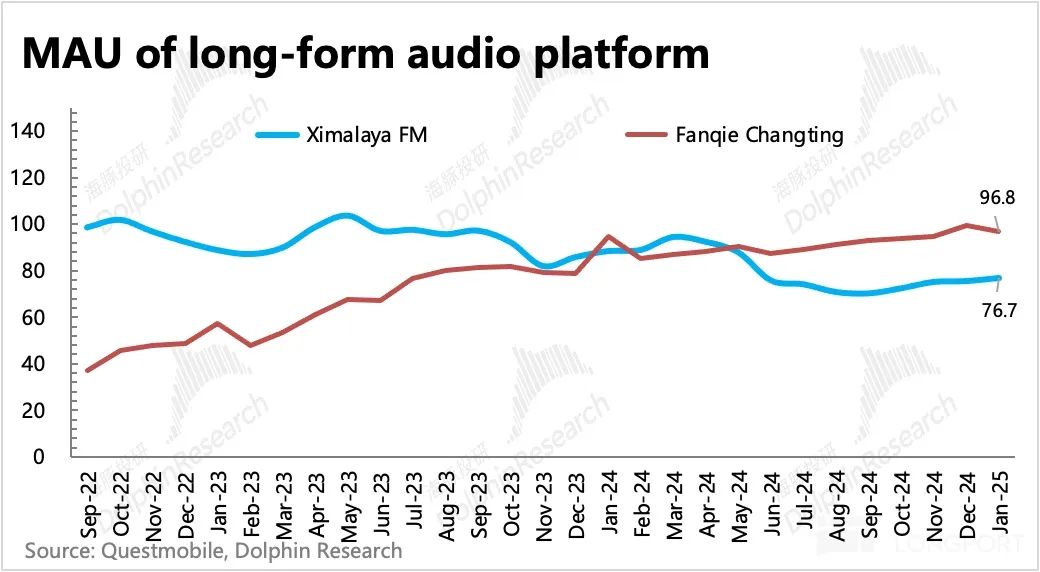
Group 1: Acquisition Details - Tencent Music is acquiring Ximalaya for $1.26 billion in cash and approximately 5.2% equity, totaling around $2.7 to $2.8 billion [1] - Tencent Music was already a shareholder in Ximalaya, holding about 5.33% of its shares [1] - Ximalaya has raised nearly 10 billion RMB over 12 funding rounds but has struggled to go public, leading to the decision to sell to Tencent [1] Group 2: Market Context - The acquisition comes at a significant discount compared to Ximalaya's peak valuation of approximately 30 billion RMB (over $4 billion) in 2021, representing a nearly 30% decline [6] - Ximalaya's monthly active users (MAU) have decreased to under 200 million, down about one-third from its peak in 2021, due to competition from short video platforms and aggressive commercialization [8][6] Group 3: Strategic Implications for Tencent Music - The acquisition will enhance Tencent Music's product offerings, filling a gap in the long audio content segment, which includes podcasts and audiobooks [8][9] - Tencent Music aims to integrate audio content into its existing platforms, potentially offering a unified membership service that includes music and audio content [10][11] - The acquisition positions Tencent Music to better compete against rivals like NetEase Cloud Music and ByteDance, which are disrupting the market with free models [12][14] Group 4: Competitive Landscape - ByteDance's free music streaming app, Soda Music, has rapidly gained 60 million MAU, posing a direct challenge to Tencent Music's paid subscription model [12][14] - The competition between Tencent and ByteDance spans multiple content areas, including short videos, long videos, literature, and audio [15] - The industry is witnessing a shift towards mixed monetization models, balancing subscription services with free content to attract a broader user base [16][17]

助力初創公司成功之路:吸引並深耕本地另類投資基金
香港金融发展局· 2025-06-11 00:30
Investment Rating - The report emphasizes the importance of alternative investment strategies, particularly in private equity, venture capital, and private credit, as essential components for supporting the growth of startups and the overall economy [6][34][41]. Core Insights - The report highlights the critical role of startups as catalysts for innovation and social change, asserting that they are essential for driving economic growth and addressing societal challenges [18][22]. - It underscores the need for Hong Kong to adapt to global trends in alternative investments to maintain its competitive edge as a leading financial hub [7][9]. - The report identifies a significant imbalance in the financing landscape, indicating that local participation in alternative investment funds remains limited, which poses challenges for startups seeking growth capital [8][9]. Summary by Sections Startup Ecosystem and Alternative Investments - The report discusses the growing importance of alternative investments, particularly venture capital and private equity, in fostering innovation and economic development [6][34]. - It notes that Hong Kong's asset and wealth management sector manages over HKD 31.1 trillion (approximately USD 4 trillion), with 65% of the capital sourced from international markets [6][7]. Challenges and Opportunities - The report outlines the challenges faced by the startup ecosystem in Hong Kong, including a lack of structured private market funding and the need for a more robust alternative investment framework [8][9]. - It emphasizes the necessity for strategic policies to attract global investors and enhance the local startup ecosystem [10][11]. Recommendations for Policy and Framework - The report proposes several actionable recommendations, including establishing a dedicated licensing system for private equity and venture capital, modernizing tax and regulatory frameworks, and optimizing public funding to support private equity and venture capital development [12][13][14][15][16]. - It advocates for integrating specific alternative investment options into retirement plans to enhance portfolio diversification [15]. Global Trends and Local Adaptation - The report highlights global trends in digitalization and sustainability, noting that cities with robust startup ecosystems will play a decisive role in shaping the future of global industries [22][23]. - It points out that Hong Kong is well-positioned to leverage its strategic location and financial services expertise to foster a vibrant startup ecosystem [24][46].
IPO屡战屡败,喜马拉雅被收购是最好的结局?
Bei Jing Shang Bao· 2025-06-10 15:15
Core Viewpoint - Tencent Music has signed an acquisition agreement to purchase Ximalaya, marking a significant development in the audio content industry, with Ximalaya becoming a wholly-owned subsidiary of Tencent Music after the deal closes [4][6]. Group 1: Acquisition Details - The acquisition involves a cash payment of $1.26 billion and a stock component where Ximalaya shareholders will receive up to 5.1986% of Tencent Music's Class A common stock and an additional 0.37% of Class A common stock for the founding shareholders [4][5]. - Ximalaya will undergo a business restructuring post-acquisition, but it will maintain its brand, product independence, core management team, and strategic direction [4][5]. Group 2: Ximalaya's Market Position - Founded in 2012, Ximalaya is a leading online audio platform in China, having faced challenges in its IPO journey, including multiple failed attempts to list on U.S. and Hong Kong exchanges [5][8]. - Ximalaya's revenue sources include subscriptions, advertising, and live streaming, with reported revenues of 5.857 billion yuan, 6.061 billion yuan, and 6.163 billion yuan for 2021, 2022, and 2023 respectively [5][8]. Group 3: Industry Context - The online audio market is perceived as having a limited business model, especially with the rise of short video platforms, leading to a less favorable view from capital markets [8][9]. - The acquisition is seen as a strategic move for Tencent Music to enhance its non-music content offerings and potentially explore new business avenues with Ximalaya [6][8].
欢迎来到Zero UI时代 | Jinqiu Select
锦秋集· 2025-06-10 15:08
Core Insights - The article emphasizes the shift from traditional user interfaces to AI-driven interactions, suggesting that as AI becomes better at understanding user intent, the need for complex interfaces will diminish [3][11][12] - Felix Haas argues that entrepreneurs must adapt their application development strategies to leverage AI capabilities or risk missing opportunities [4][11] Evolution of User Interfaces - The history of user interfaces is described as a compromise between humans and machines, where each innovation has required humans to adapt to machine language rather than machines understanding human needs [5][6] - The physical era (1868-1980s) involved direct physical interactions with machines, while the graphical era (1980s-2007) introduced graphical user interfaces (GUIs) that still required users to learn a new visual language [6][7] - The touch era (2007-2020s) simplified interactions but led to a proliferation of unique application interfaces, increasing cognitive load on users [8][9] Current UI Challenges - Users face cognitive overload due to the need to remember multiple interface rules across numerous applications [9][10] - The complexity of software has increased, leading to a paradox where more powerful tools result in more complicated interfaces [10] - Contextual disconnection occurs as applications fail to understand user intent across different tasks, leading to inefficiencies [10][11] Zero UI Concept - The concept of Zero UI suggests that the best interface is one that is invisible, allowing users to focus on their tasks rather than the interface itself [12][13] - Three forms of Zero UI are identified: predictive interfaces that anticipate user needs, conversational interfaces that use natural language, and environmental interfaces that respond to context [13][14] Future of Interaction - The evolution of voice assistants illustrates the trend towards more natural interactions, moving from command-based to conversational exchanges [15][16] - The future of browsing and searching is predicted to shift towards dialogue-based interfaces, fundamentally changing how users interact with digital content [16][17] Hardware Revolution - The exploration of screenless devices, such as AI-driven products that rely on voice and environmental interactions, indicates a significant shift in hardware design philosophy [20][21] - Despite challenges faced by companies attempting to innovate in this space, the industry is collectively seeking solutions beyond traditional screen-based interfaces [21][22]

一场并购,打开了声音行业的想象力
虎嗅APP· 2025-06-10 13:43
Core Viewpoint - The acquisition agreement between Tencent Music and Ximalaya marks a significant strategic move in the evolving audio content market, aiming to enhance user engagement and address competition from various platforms [1][3][4]. Group 1: Market Dynamics - The audio market has faced challenges from short video platforms, necessitating music platforms to diversify content to maintain user activity [1][3]. - Ximalaya has been oscillating between mergers and IPO attempts since 2018, indicating a strategic pivot in response to competitive pressures [1][3]. - The competition landscape includes not only short video platforms but also online music services and niche audio content providers, complicating resource allocation for companies like Ximalaya [3][4]. Group 2: Financial Performance - Ximalaya achieved an adjusted net profit of 224 million yuan in 2023, following its first profitable quarter in Q4 2022, with a monthly active user base of 303 million [3][10]. - Despite its potential as a quality asset, Ximalaya's market performance has been challenged by the dominance of short video platforms and the need to compete across multiple content formats [3][4]. Group 3: Strategic Implications of the Acquisition - The merger is expected to facilitate collaborative growth in audio content, allowing Ximalaya to focus on expanding its content ecosystem and improving service capabilities [4][6]. - The acquisition aligns with global trends where companies like Spotify have successfully integrated diverse audio content through strategic acquisitions, enhancing user engagement and revenue growth [6][9]. - The combined strengths of Tencent Music and Ximalaya could position them as a leading player in the audio market, akin to a Chinese version of Spotify, leveraging Tencent's capabilities in content ecosystem and monetization [9][10]. Group 4: Industry Trends and Future Outlook - The audio industry is experiencing a transformation, with significant growth in podcasting and audio content consumption, yet it remains undervalued compared to the short video sector [12][13]. - Advances in AI technology are poised to redefine the audio landscape, enabling more efficient content production and personalized user experiences [14][15]. - The future of audio content is expected to evolve into a more interactive and valuable medium, enhancing user engagement beyond mere listening [16].

欧股表现领先全球 欧洲超级富豪纷纷变现
news flash· 2025-06-10 08:22
Core Insights - European billionaires are cashing in on recent stock market gains, with the region's stock performance leading globally, resulting in approximately $1 billion in profits from their sales [1] Group 1: Stock Sales - Martin Lorentzon, co-founder of Spotify, submitted a request to sell 1 million shares valued at approximately $660 million, marking the largest sale since the company's IPO in 2018 [1] - Maria Del Pino, a member of the founding family of Ferrovial SE, reduced her stake in the company by selling shares worth €271 million, the largest reduction in at least nine years [1] - Twins Thomas and Andreas Strueman have applied to convert over $100 million worth of BioNTech SE shares into cash, marking their first sale of the vaccine manufacturer's stock this year [1] Group 2: Net Worth and Holdings - Despite the stock sales, these billionaires still hold significant stakes in their respective companies, with a combined net worth of approximately $49 billion [1]

AI创业最大的壁垒是什么?
Hu Xiu· 2025-06-10 06:29
Group 1 - The core idea is that in the AI era, taste has become a new scarce resource, as production is no longer limited [3][4][6] - Taste is difficult to quantify and process, but it is essential for creating products that resonate with users [4][7] - Top founders understand that taste is a competitive advantage that accumulates over time, influencing design, code, corporate culture, and equity structure [8][9] Group 2 - Companies often confuse taste with aesthetics, but true taste involves making difficult decisions that may sacrifice market expansion for quality [11][12] - Taste and rapid iteration are not opposites; a clear sense of taste can accelerate decision-making and reduce rework [12][13] - Consistency in taste can transform chaos into clarity, guiding numerous small decisions that enhance the overall user experience [16][20] Group 3 - Sales teams must embody the company's taste, ensuring that every interaction reflects the product's values and principles [21][25] - High-quality go-to-market strategies respect the audience's intelligence and focus on delivering value rather than just quantity [25][32] - Companies with taste can maintain founder-led leadership longer, as taste is transmitted through shared decision-making and mentorship [29][30] Group 4 - Taste is not universally dominant; in some markets, functionality can overshadow aesthetics, especially when alternatives are limited [32][34] - The rewards of taste are immediate and cumulative, fostering trust and attracting top talent who value craftsmanship [35][36] - In an era where AI can replicate functionality, taste becomes the ultimate differentiator that cannot be easily copied [36][39]


United Airlines Stock Up 4.83% on Friday's Trading: Here's Why
ZACKS· 2025-06-09 17:01
Core Insights - United Airlines Holdings, Inc. (UAL) shares rose by 4.83% to $84.23 on June 6, 2025, following the announcement of a collaboration with Spotify Technology S.A. [1][8] Collaboration with Spotify - UAL will offer Spotify's video and audio podcasts, audiobooks, and curated playlists for free on over 680 aircraft, enhancing the in-flight experience with new 4K, Bluetooth-enabled seatback screens [2][3][8] - This partnership marks the first time Spotify has provided in-flight audiobooks and video podcasts, allowing UAL passengers access to over 65 pieces of content [3] Future Developments - In 2026, UAL passengers may log into the Spotify app on in-flight entertainment screens to access personalized content [4] Additional Initiatives - UAL's MileagePlus CEO highlighted the partnership's potential to enhance customer experience at high altitudes, offering 1,000 bonus miles to new Spotify Premium subscribers [5] - UAL and JetBlue Airways launched a loyalty partnership called "Blue Sky," allowing passengers to earn and redeem loyalty points across both airlines, with shared access to preferred seating and simplified booking [6]