华熙生物

Search documents
医疗美容板块9月16日跌1.45%,华熙生物领跌,主力资金净流出1.06亿元
Zheng Xing Xing Ye Ri Bao· 2025-09-16 08:52
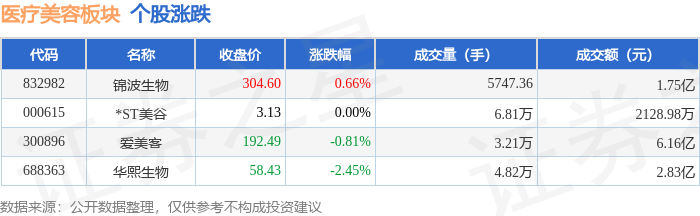
Group 1 - The medical beauty sector experienced a decline of 1.45% on September 16, with Huaxi Biological leading the drop [1] - The Shanghai Composite Index closed at 3861.87, up 0.04%, while the Shenzhen Component Index closed at 13063.97, up 0.45% [1] - Key stocks in the medical beauty sector showed varied performance, with Jinbo Biological up 0.66%, Aimeike down 0.81%, and Huaxi Biological down 2.45% [1] Group 2 - The medical beauty sector saw a net outflow of 106 million yuan from main funds, while retail investors contributed a net inflow of 92.11 million yuan [1] - Specific stock fund flows indicated significant outflows for Huaxi Biological and Aimeike, with Huaxi Biological seeing a net outflow of 38.59 million yuan [2] - Aimeike had a net outflow of 67.20 million yuan, while ST Meigu experienced a smaller net outflow of 40.85 million yuan [2]


玻尿酸巨头再陷裁员风波,山东女首富铁腕反腐
Feng Huang Wang· 2025-09-16 05:11
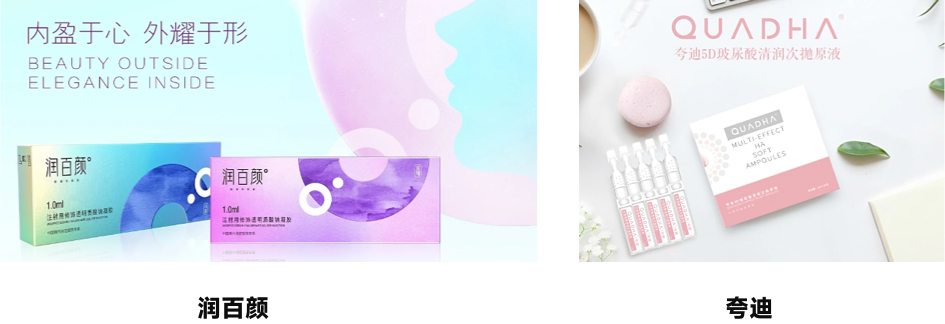
Core Viewpoint - The return of Zhao Yancai, the founder and chairperson of Huaxi Biological, has initiated a significant internal restructuring and reform within the company, amidst declining financial performance and organizational turmoil [1][3][20]. Group 1: Organizational Changes - Huaxi Biological has seen over 10 executives leave or change positions since the beginning of the year, indicating a major organizational overhaul [3]. - Employees have reported a shift from direct employment to outsourcing, with inconsistent severance packages being offered, leading to uncertainty and dissatisfaction among staff [2][3]. - The company is reportedly relocating a significant portion of its operations from Beijing to Hangzhou, retaining only a small part of its business in Beijing [2][3]. Group 2: Financial Performance - The company's half-year report revealed a revenue of 2.261 billion yuan, a year-on-year decrease of 19.57%, and a net profit of 221 million yuan, down 35.38% [3][22]. - The functional skincare segment, which accounted for 72.45% of the company's main business revenue, saw a significant decline in growth, with a projected revenue of 2.569 billion yuan in 2024, down 31.62% year-on-year [9][22]. - Marketing expenses have surged, with sales costs rising from 5.21 billion yuan in 2019 to 30.49 billion yuan in 2022, constituting nearly 48% of revenue [9]. Group 3: Market Position and Strategy - Huaxi Biological, once a leader in the hyaluronic acid market with a 44% global share, is facing intensified competition and a shift in consumer preferences, leading to a decline in brand loyalty [5][21]. - The company has decided to phase out underperforming brands like Runxiquan, focusing instead on its core brands, Runbaiyan and Kuaidi, in response to market pressures [8][18]. - Zhao Yancai's return is seen as a potential turning point, with efforts to restore governance and strategic direction, although the effectiveness of these measures remains to be seen in upcoming quarters [20][22].
社零数据涨了,但为什么感到生意更难做了?
3 6 Ke· 2025-09-16 00:33
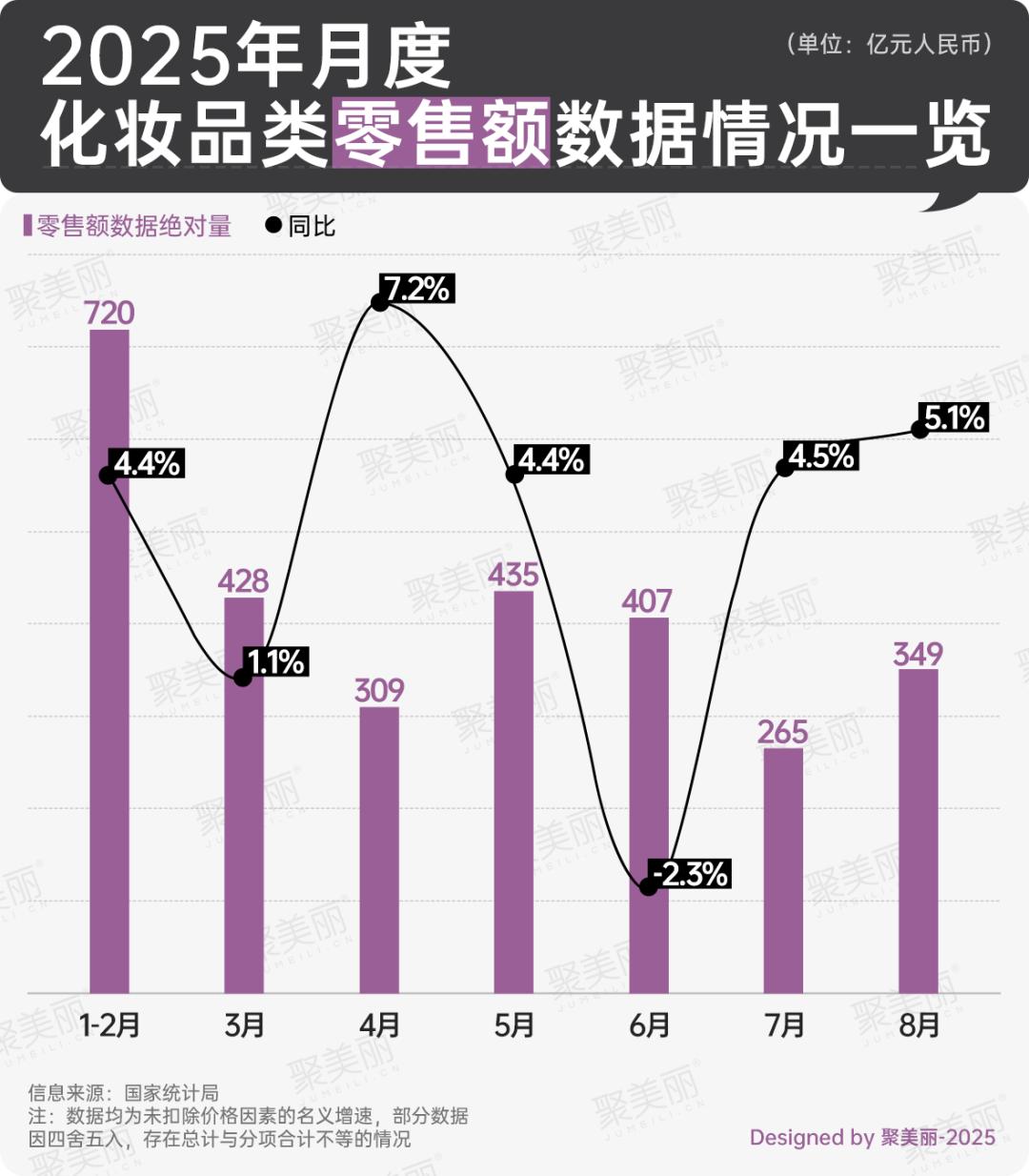
Core Insights - The cosmetics retail sector has experienced significant fluctuations in monthly sales due to macroeconomic weakness and intensified industry competition, with June marking the first negative growth of the year during the 618 shopping festival [1] - Despite a reported recovery in July and August, the actual market sentiment among industry professionals remains pessimistic, indicating a disconnect between statistical data and real-world experiences [6][12] Retail Performance Data - In August, the cosmetics retail sales reached 34.9 billion yuan, showing a year-on-year growth of 5.1%, while the cumulative sales from January to August totaled 291.5 billion yuan, with a growth of 3.3% [3][5] - The overall retail sales of consumer goods in August amounted to 396.68 billion yuan, reflecting a 3.4% year-on-year increase, with non-automotive consumer goods retail sales growing by 3.7% [5] Market Dynamics - The growth in cosmetics retail sales is primarily driven by larger retail enterprises, as smaller businesses and brands are struggling to survive amid economic downturns and increased competition [12][14] - The disparity between reported growth and the experiences of smaller players highlights the challenges faced by non-scale businesses, which are not adequately represented in national statistics [11][12] Industry Challenges - The cosmetics industry is undergoing a transition from a high-growth phase to a period of slower growth and intensified competition, with many small and innovative brands facing significant operational challenges [13][14] - A total of 64 bankruptcy cases related to cosmetics companies have been reported, indicating a troubling trend for the industry, particularly among smaller firms [14][16] Consumer Behavior - The average price of cosmetic products has decreased, with a notable decline in gross margins for brands like 毛戈平, attributed to consumer downgrading and a deteriorating economic environment [23] - A significant portion of consumers (72%) express concerns over rising daily costs, indicating that pricing remains a critical issue for both consumers and brands [23]
可选消费W37周度趋势解析:9月博彩板块延续景气度,跑赢其他可选子行业-20250915
Haitong Securities International· 2025-09-15 11:31
Investment Rating - The report assigns an "Outperform" rating to multiple companies in the discretionary sector, including Nike, Midea Group, JD Group, Haier Smart Home, Anta Sports, Gree Electric, and others [1]. Core Insights - The gambling sector continues to show strong performance in September, outperforming other discretionary sub-sectors, with a weekly increase of 1.8% [4][16]. - Domestic cosmetics and luxury goods also performed positively, with increases of 0.7% and 0.3% respectively, while other sectors like overseas sportswear and snacks faced declines [4][16]. - The report highlights that most sub-sectors are currently undervalued compared to their historical averages, indicating potential investment opportunities [20]. Summary by Relevant Sections Weekly Performance Review - The gambling sector led the weekly performance with a 1.8% increase, followed by domestic cosmetics at 0.7% and luxury goods at 0.3%. In contrast, overseas sportswear and snacks saw declines of 3.0% and 4.1% respectively [4][16]. - Year-to-date performance shows significant gains in gold and jewelry, domestic cosmetics, and pets, with increases of 167.1%, 60.6%, and 38.8% respectively [13]. Sector Analysis - The gambling sector's strong performance is attributed to better-than-expected results during the off-season, with optimism for the upcoming peak season driven by events like the NBA and concerts [6][16]. - Domestic cosmetics are benefiting from successful marketing campaigns, with notable sales figures reported [6][17]. - The overseas sportswear sector is under pressure due to disappointing earnings forecasts and competition, leading to significant stock price declines [8][17]. Valuation Analysis - Most sectors are trading below their five-year average P/E ratios, indicating potential for growth. For instance, the expected P/E for the overseas sportswear sector is 33.4 times, which is 59% of its historical average [20]. - The gambling sector's expected P/E is 34.2 times, which is 40% of its historical average, suggesting it may be undervalued [20].
医疗美容板块9月15日涨0.3%,华熙生物领涨,主力资金净流出4672.6万元
Zheng Xing Xing Ye Ri Bao· 2025-09-15 08:49
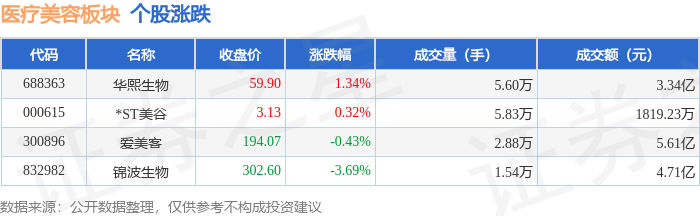
Market Overview - The medical beauty sector increased by 0.3% on September 15, with Huaxi Biological leading the gains [1] - The Shanghai Composite Index closed at 3860.5, down 0.26%, while the Shenzhen Component Index closed at 13005.77, up 0.63% [1] Individual Stock Performance - Huaxi Biological (688363) closed at 59.90, up 1.34%, with a trading volume of 56,000 shares and a transaction value of 334 million [1] - *ST Meigu (000615) closed at 3.13, up 0.32%, with a trading volume of 58,300 shares and a transaction value of 18.19 million [1] - Aimeike (300896) closed at 194.07, down 0.43%, with a trading volume of 28,800 shares and a transaction value of 561 million [1] - Jinbo Biological (832982) closed at 302.60, down 3.69%, with a trading volume of 15,400 shares and a transaction value of 471 million [1] Capital Flow Analysis - The medical beauty sector experienced a net outflow of 46.726 million from institutional investors, while retail investors saw a net inflow of 27.246 million [1] - The sector's overall capital flow indicates a mixed sentiment, with retail investors showing interest despite institutional outflows [1]

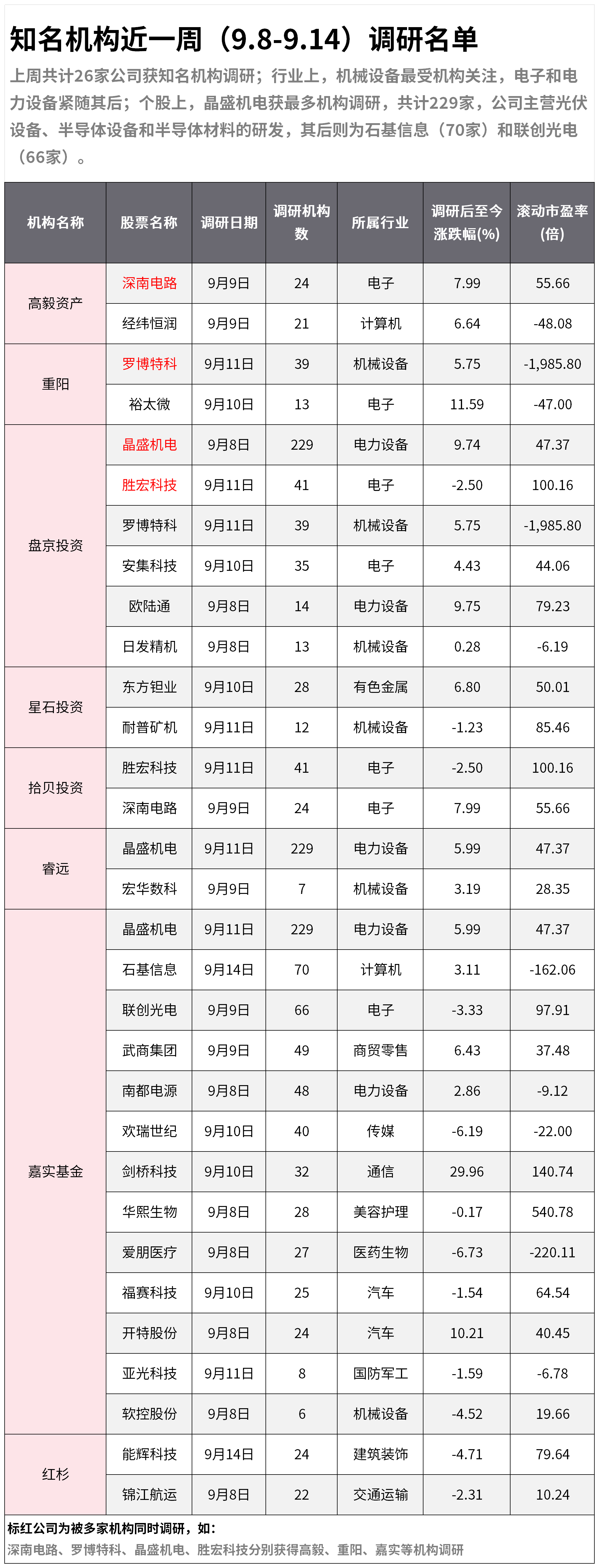
知名机构近一周(9.8-9.14)调研名单:机构扎堆这只半导体设备龙头
Xuan Gu Bao· 2025-09-15 08:23
Core Insights - A total of 26 companies were investigated by well-known institutions in the past week (September 8 - September 1) [1] - The semiconductor equipment and materials sector is highlighted, with Jing Sheng Machinery receiving the most attention from institutions [1] Group 1: Company Investigations - Jing Sheng Machinery was the most researched company, with 229 inquiries [2][3][4] - Other notable companies include Shen Nan Circuit with 24 inquiries and Sheng Hong Technology with 41 inquiries [2][3] - Institutions such as Gao Yi Asset and Chong Yang conducted multiple investigations on various companies, indicating strong interest in the semiconductor and technology sectors [2][3] Group 2: Institutional Interest - Institutions like Rui Yuan and Shi Xi Fund have shown significant interest in companies like Jing Sheng Machinery and Shi Ji Information, with 229 and 70 inquiries respectively [4] - The presence of multiple institutions investigating the same companies suggests a competitive interest in these sectors [5] - The data indicates a trend where semiconductor-related companies are attracting more institutional research, reflecting potential growth opportunities in this industry [1][2]

白酒行业基本面逐步筑底,消费ETF嘉实(512600)盘中涨近1%
Sou Hu Cai Jing· 2025-09-15 05:51
Core Insights - The consumption ETF, Jia Shi (512600), has shown significant performance with a 0.67% increase, and notable individual stocks like Hai Da Group and Hua Xi Bio have risen by 3.14% and 2.37% respectively [1] - The ETF has experienced a net inflow of 25.22 million yuan over the past five trading days, indicating strong investor interest [1] - The current price-to-earnings ratio (PE-TTM) of the index tracked by the ETF is 20.2, which is historically low, suggesting potential undervaluation [2] Performance Metrics - As of September 12, 2025, the consumption ETF has achieved an 8.61% increase in net value over the past six months [1] - The ETF's highest single-month return since inception was 24.50%, with an average monthly return of 6.05% [1] - The ETF's performance over the last three months has outperformed its benchmark with an annualized return of 7.08%, ranking it first among comparable funds [1] Market Trends - The food and beverage sector is undergoing adjustments due to policy impacts, with a noticeable decline in revenue year-on-year in Q2 2025, which may help clear historical burdens [4] - The upcoming Mid-Autumn Festival and National Day are expected to boost market demand, with recent sales showing improvement compared to June and July [5] - Leading liquor companies are adapting to industry cycles and changing consumer trends, which may lead to a gradual recovery in the sector [5] Sector Composition - The index tracked by the consumption ETF includes major consumer sectors such as liquor, pork, dairy, and food processing, with liquor accounting for over 39% of the index weight [2] - Key stocks within the index include Yili (10.02% weight), Kweichow Moutai (9.85% weight), and Wuliangye (9.85% weight), among others [4]


华熙生物涨2.01%,成交额2.08亿元,主力资金净流出168.55万元
Xin Lang Zheng Quan· 2025-09-15 05:20
Core Viewpoint - Huaxi Biological has shown a significant increase in stock price and market performance, despite a decline in revenue and net profit in the first half of 2025 [1][2]. Company Overview - Huaxi Biological Technology Co., Ltd. was established on January 3, 2000, and went public on November 6, 2019. The company is located in Jinan, Shandong Province, and specializes in microbial fermentation and cross-linking technology platforms [1]. - The company has developed a full industry chain business system that includes raw materials, medical terminal products, functional skincare products, and functional foods, serving global pharmaceutical, cosmetic, food manufacturing enterprises, medical institutions, and end users [1]. Financial Performance - As of July 31, 2025, Huaxi Biological reported a revenue of 2.261 billion yuan, a year-on-year decrease of 19.57%, and a net profit attributable to shareholders of 221 million yuan, down 35.38% year-on-year [2]. - The company has distributed a total of 1.138 billion yuan in dividends since its A-share listing, with 528 million yuan distributed in the last three years [3]. Stock Performance - On September 15, Huaxi Biological's stock price increased by 2.01%, reaching 60.30 yuan per share, with a total market capitalization of 29.045 billion yuan [1]. - The stock has seen an 18.40% increase year-to-date, with a 0.50% rise over the last five trading days, a 12.00% increase over the last 20 days, and a 19.26% increase over the last 60 days [1]. Shareholder Information - As of July 31, 2025, the number of shareholders for Huaxi Biological was 32,500, an increase of 1.78% from the previous period, with an average of 14,799 circulating shares per shareholder, a decrease of 1.75% [2]. - Major shareholders include various ETFs, with notable changes in holdings among the top ten circulating shareholders [3].
与新生代GP共成长:建发新兴投资讲述国资LP的投资哲学
Zhong Guo Zheng Quan Bao· 2025-09-15 04:29
Core Viewpoint - The article emphasizes the role of state-owned capital in venture capital, highlighting the balance between adhering to national strategic missions and achieving efficient market-oriented allocation through the example of Jianfa Emerging Investment, which operates under the principle of "government direction, market execution" [1] Group 1: Company Overview - Jianfa Emerging Investment has been operational for ten years, collaborating with over 70 GP institutions and managing more than 29 billion yuan in funds, achieving a net profit exceeding 4 billion yuan since its inception [2] - The investment focus includes sectors such as healthcare, advanced manufacturing, and TMT/consumption, with notable investments in companies like CATL, Huaxi Biological, and ZhiPu AI [2] Group 2: Strategic Role - The company acts as a bridge and translator between government strategic directives and market innovation, converting policy language into specific investment standards and risk control requirements [3] - It emphasizes the need for effective integration between proactive government and efficient market mechanisms, recognizing the diverse ecosystem of stakeholders in the market economy [3] Group 3: Support for New GPs - Jianfa Emerging Investment is committed to supporting new funds and GPs, advocating for the gradual "unbinding" of state-owned capital to enhance market-oriented allocation capabilities [4] - The company employs a quantitative scoring system for selecting GPs, focusing on open communication and cognitive alignment with potential partners [4] Group 4: Innovation and Risk-Taking - The company encourages a culture of innovation and risk-taking, allowing employees to experiment without the fear of accountability, fostering a spirit of exploration and proactive engagement with new technologies [6] - The founder's philosophy reflects a broader cultural ethos of the Fujian region, emphasizing the importance of courage and enthusiasm in facing new challenges [6]
2025年中国功能性护肤品行业产品布局分析 “妆字号”产品矩阵不断拓展【组图】
Qian Zhan Wang· 2025-09-15 04:11
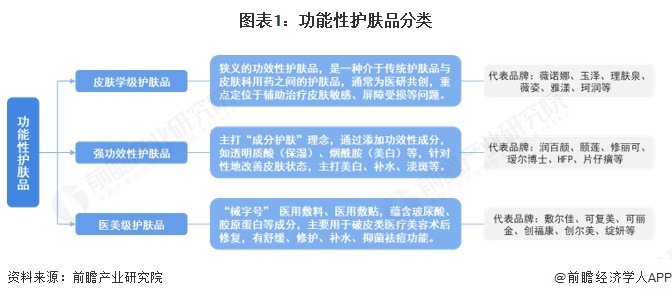
Core Viewpoint - The functional skincare industry in China is experiencing a rise of domestic brands, with products categorized into three main segments: dermatological skincare, high-efficacy skincare, and medical aesthetic skincare [1][2]. Group 1: Industry Overview - Functional skincare products are designed to alleviate or assist in treating specific skin issues, classified as either cosmetic (妆字号) or medical devices (械字号) [1]. - The industry is characterized by a growing presence of domestic brands, indicating a shift in market dynamics [1]. Group 2: Market Segmentation - The functional skincare market is divided into three segments: - Dermatological skincare, typically developed by cosmetic companies in collaboration with dermatologists, includes brands like Winona and La Roche-Posay [2]. - High-efficacy skincare, which emphasizes chemical ingredients, features brands such as WIS and HFP [2]. - Medical aesthetic skincare, developed by companies with a background in biomedicine or medical devices, includes brands like Fulejia and Kefu Mei [2]. Group 3: Product Composition - Dermatological skincare products focus on simplified and targeted ingredients, with examples like Winona's "Soothing Moisturizing Cream" containing ingredients such as sea buckthorn and hyaluronic acid [4]. - High-efficacy skincare products highlight active ingredients like niacinamide and salicylic acid [4]. - Medical aesthetic skincare products, such as those from Chuangfukang, contain fewer ingredients, focusing on essential components like collagen [4]. Group 4: Company Product Strategies - Companies in the functional skincare sector are diversifying their product lines, with many offering both cosmetic and medical device products [6]. - For instance, Betaini focuses on dermatological skincare while also extending into medical device products [6]. Group 5: Company Registration Data - Various companies have registered a significant number of products under both cosmetic and medical device categories, indicating a robust presence in the market: - Huaxi Biological has 1,766 cosmetic registrations and 27 medical device registrations [7]. - Fulejia has 3 cosmetic registrations and 110 medical device registrations [7].