腾讯

Search documents
“国产AI ASIC龙头”燧原科技上市再进一步 哪些上市公司有望价值重估?
Mei Ri Jing Ji Xin Wen· 2026-01-05 09:33
随着燧原科技完成IPO辅导,其背后潜伏的上市公司引发投资者关注。 证监会官网近日披露,上海燧原科技股份有限公司已完成IPO辅导工作,即将申报科创板上市。这家被 称为"国产GPU四小龙"之一的人工智能芯片企业正迎来其发展历程中的关键节点。而燧原科技背后的上 市公司到底有哪些?能否因此实现价值重估呢? 燧原科技获"券商一哥"加持 AI芯片公司IPO或催化背后股东重估 高盛报告指出,参考同类公司估值,百度所持昆仑芯59%股权的价值区间为30亿美元至110亿美元。这 一估值现象为同类AI芯片公司的资本化提供了参考基准。 AI芯片公司上市潮下频现资本赢家 上市公司"燧原"机遇值得期待 燧原科技专注于人工智能领域云端算力产品,致力于为通用人工智能打造算力底座。该公司已开发四代 AI芯片,产品线覆盖训练和推理两大场景。 燧原科技成立于2018年3月,由赵立东和张亚林共同创立。两位创始人均拥有丰富的AMD工作经历,在 芯片领域积累了深厚经验。赵立东曾服务于AMD并担任紫光集团副总裁,张亚林则曾是AMD上海研发 中心的核心技术负责人。 2025年世界人工智能大会上,燧原科技发布最新一代训推一体产品"燧原L600",支持FP8低 ...
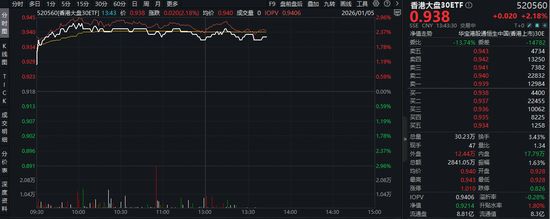
快手旗下可灵“连环升级”!自带哑铃策略的——香港大盘30ETF(520560)盘中拉升2.7%
Xin Lang Cai Jing· 2026-01-05 06:11
Core Viewpoint - The Hong Kong Large Cap 30 ETF (520560) is experiencing significant activity, reflecting investor optimism towards the Hong Kong stock market, with a recent increase of 2.18% and a total inflow of 122 million yuan over the past 20 days, indicating a positive outlook for future performance [1][3]. Group 1: ETF Performance and Strategy - The Hong Kong Large Cap 30 ETF has shown a high level of activity, with an intraday increase of 2.72% and a current rise of 2.18%, successfully recovering the 20-day moving average [1]. - The ETF has attracted a total of 122 million yuan in inflows over the last 20 days, suggesting strong investor confidence in the Hong Kong market's future [1]. - The ETF employs a "technology + dividend" barbell strategy, combining high-growth technology stocks with stable dividend-paying stocks, making it an ideal long-term investment tool for the Hong Kong market [3]. Group 2: Key Holdings and Sector Focus - Major contributors to the ETF's performance include Kuaishou, which rose over 10%, and other significant stocks such as BeiGene, China Resources Land, and Ping An Insurance, all showing notable gains [1]. - The ETF's composition includes high-volatility technology stocks like Alibaba and Tencent, alongside stable dividend stocks such as China Construction Bank and Ping An Insurance, reflecting a balanced investment approach [3]. - The Hong Kong Large Cap 30 Index, which the ETF tracks, has outperformed the Hang Seng Index over the past five years, primarily due to its focus on technology growth [4]. Group 3: Market Sentiment and Future Outlook - Market sentiment and liquidity conditions are currently more favorable than in November, increasing the likelihood of a positive start to trading in 2026 [3]. - Analysts suggest continuing to allocate investments towards technology sectors with expected performance, while also maintaining a balanced portfolio to mitigate volatility [3].


海外科技行业2026年第1期:Meta并购、资本密集投入前沿Lab,行业进入价值兑现期
GUOTAI HAITONG SECURITIES· 2026-01-05 05:24
Investment Rating - The report maintains an "Overweight" rating for the industry, recommending investment in AI computing, cloud vendors, AI applications, and AI social networking sectors [4][6]. Core Insights - Meta's acquisition of Manus for over $2 billion signals a strong commitment to monetizing AI capabilities, with Manus achieving an annual recurring revenue (ARR) of $125 million through a subscription model for AI agents [2][7]. - Continuous capital investment in advanced AI models has led to a new phase of "ample funding + rapid iteration" for AI labs, with significant investments from SoftBank totaling $40 billion in OpenAI, raising its valuation to approximately $500 billion [8]. - OpenAI is venturing into AI hardware, expected to launch its first product, potentially a "smart pen" or wearable audio device, by 2026 or 2027, marking a shift towards an integrated software-hardware ecosystem [9]. Summary by Sections Weekly Overview - Meta's acquisition of Manus is highlighted as a pivotal move, emphasizing the transition from AI capability competition to a focus on mature products and cash flow [7]. Capital Investment Trends - The report notes that major investments in AI labs are alleviating financial pressures, allowing for accelerated technological iterations and product deployments [8]. AI Hardware Development - OpenAI's upcoming hardware project, produced by Hon Hai, aims to enhance user interaction with AI, indicating a strategic expansion into hardware [9]. Market Performance - The report provides a market performance overview, noting fluctuations in major indices and specific stock performances within the tech sector [10][12]. AI Industry News - Key developments include Baidu's submission of an IPO application for Kunlun Chip, signaling growth in China's semiconductor sector, and the launch of Tencent's translation model [22][24].
美国对委内瑞拉军事打击影响:环球市场动态
citic securities· 2026-01-05 03:11
Market Overview - A-shares were closed for the New Year holiday, while Hong Kong stocks opened strong with a 2.76% increase in the Hang Seng Index, closing at 26,338.47 points[3][11] - European markets saw gains, with the UK stock market reaching a new high, and the Stoxx 600 index rising by 0.67%[3][9] - US stocks showed mixed performance, with the Dow Jones up 0.7% to 48,382.4 points, while the Nasdaq fell slightly by 0.03%[9][8] Commodity and Forex - OPEC+ decided to maintain its production cut strategy in the first quarter to address global oil supply surplus risks, with oil prices fluctuating but currently up less than 1%[4][27] - International gold prices increased by over 1% amid geopolitical tensions following US military actions in Venezuela[4][27] Fixed Income - Global long-term interest rates saw a sell-off at the start of the year, particularly in Europe, with US Treasury yields rising by 0-3 basis points[5][30] - The market anticipates active primary issuance this week, with corporate bond issuance expected to reach approximately $50-70 billion[30] Geopolitical Impact - The US military conducted a significant strike in Venezuela, capturing President Maduro, which is expected to have limited short-term effects on equity markets and commodities[6][27] - The long-term implications of this event may influence the political and economic order in Venezuela, with potential impacts on US control over regional resources[6] Investment Insights - The semiconductor sector saw significant gains, with the Philadelphia Semiconductor Index rising by 4.0%, driven by strong performances from companies like Micron Technology, which surged 10.5%[9] - The commercial aerospace sector is expected to grow, with advancements in reusable rockets and satellite orders anticipated to catalyze industry growth in 2026[18]
上晚会、进演讲,AI竞争已经进入「大厂时间」
创业邦· 2026-01-05 03:10
Core Insights - The AI industry is increasingly dominated by large companies, with significant investments in infrastructure, model development, and application promotion, shifting the competitive landscape away from startups [5][7][12] - Major tech firms are leveraging high-profile events like New Year's Eve celebrations to promote their AI products, indicating a return to familiar competitive strategies from the internet product era [6][11] - The competition between large companies and AI startups is intensifying, with startups facing challenges in competing against the resources and ecosystem advantages of larger firms [7][15] Group 1: Industry Trends - The release of ChatGPT 3.5 in November 2022 marked the beginning of a new wave in AI, making year-end observations of AI trends increasingly significant [5] - By the end of 2025, major companies have established dominance in key areas such as AI entry points and computing power, altering the narrative of AI development [5][7] - The competitive dynamics have shifted, with large firms like OpenAI and Google intensifying their rivalry, impacting the prospects of AI startups [6][7] Group 2: Marketing Strategies - Major companies are utilizing high-visibility events for aggressive marketing of their AI products, with significant sponsorship roles in events like New Year's Eve celebrations [9][11] - Companies like Alibaba, Tencent, and ByteDance are actively engaging in content co-creation with popular influencers to maximize their reach and impact [11][12] - The strategy of leveraging major events for product promotion reflects a tactical shift back to familiar competitive practices, reminiscent of past internet product launches [11][12] Group 3: Startup Challenges - AI startups are finding it increasingly difficult to emerge as industry leaders due to the overwhelming advantages held by larger firms in terms of funding, resources, and market presence [7][15] - Notable AI startups are opting for public listings or significant funding rounds to sustain their operations, but their financial capabilities are dwarfed by the investments made by larger companies [15][17] - The sale of Manus to Meta exemplifies the challenges faced by startups in maintaining independence and competing against the scale of large tech firms [17] Group 4: Future Outlook - The year 2026 is anticipated to be pivotal for AI applications and innovation, with startups needing to recalibrate their strategies to find niche opportunities [7][12] - The concept of "greenfield" opportunities is highlighted, suggesting that smaller firms may find success in less obvious market segments overlooked by larger competitors [17][18] - Unique and differentiated projects may emerge as viable alternatives for startups, focusing on niche applications or innovative solutions that stand apart from mainstream offerings [18][19]


国信证券:模型架构继续演化 多模态+长文本为Agent爆发提供基础
Zhi Tong Cai Jing· 2026-01-05 02:15
Group 1 - The core viewpoint of the report emphasizes the evolution of model architecture, with multimodal and long-text capabilities laying the foundation for the explosion of Agents in the AI sector [1] - The report highlights that the commercial paths of large model vendors are diverging, with a significant increase in demand for reasoning expected by 2026, which will reshape the SaaS market landscape [1] - The analysis of the stock price trends of major US tech giants over the past three years shows a continuous progression of the AI narrative, with OpenAI leading the acceleration in 2023 and Microsoft benefiting from its exclusive partnership [1] Group 2 - The report discusses the ongoing evolution of model architecture, noting that the next generation of models must address two core pain points: the computational and memory consumption bottlenecks during the training phase, and the limited memory capacity during inference [2] - It is projected that the Scaling Law will continue to be relevant, with advancements in pre-training, post-training, and reasoning scenarios, while reinforcement learning is expected to become a key breakthrough area [2] - The report indicates that the gap between Chinese and US models is currently around 3-6 months, with computational power and algorithms being critical for catching up [2] Group 3 - The report identifies that no clear winner has emerged in the general large model capabilities, with different vendors pursuing distinct commercialization paths [3] - OpenAI is noted for its strong consumer base of 800 million users, while Gemini is recognized as the current state-of-the-art (SOTA) benchmark due to its commitment to a native multimodal approach [3] - Anthropic is highlighted for its focus on the B2B market, achieving a valuation of $350 billion, while Grok is expected to leverage Tesla's unique data advantages for its next-generation models [3] Group 4 - The report anticipates that the demand for AI applications will continue to grow, with the software development landscape being reshaped by large models, which are expected to open up new ceilings for software demand [4] - It cites IDC data projecting the global SaaS market to reach nearly $1 trillion by 2029, a significant increase from $580 billion in 2025, although it notes that the competitive landscape among players will be reshuffled [4] - The report observes that large model vendors are beginning to collaborate with B2B software service providers to develop more industry-specific demands [4] Group 5 - The report predicts an explosion in demand for reasoning capabilities by 2026, with AI programming, AI Agents, and AI content creation being the primary application areas driving growth [5] - It highlights the rapid growth of several AI applications, including AI programming software Cursor, which has reached an ARR of $1 billion, and AI agent Manus, which achieved $100 million in ARR within eight months [5] - The report suggests that as model capabilities mature, there will be noticeable growth in AI applications in consumer devices and enterprise distribution channels [5]



人工智能行业专题(14):大模型发展趋势复盘与展望
Guoxin Securities· 2026-01-05 01:16
Investment Rating - The report maintains an "Outperform" rating for the AI industry [1] Core Insights - The report reviews the stock price trends of major US tech companies over the past three years, highlighting the continuous evolution of AI narratives. In 2023, OpenAI led the global acceleration of AI, benefiting Microsoft through exclusive partnerships, resulting in a significant valuation increase. The narrative shifted in 2024 towards reasoning capabilities, with application companies seen as optimal investments, particularly Meta, which holds a monopoly in social media and advertising scenarios [2][11] - The report anticipates a 50% year-on-year increase in capital expenditures (Capex) for four major companies in 2025, with a sustained growth rate of over 30% expected in 2026. The report notes that the North American tech giants' Capex was revised upwards from an initial estimate of $320-330 billion to nearly $400 billion by year-end [2][18] - The evolution of model architectures continues, with the Scaling Law remaining relevant. The emergence of multi-modal and long-text capabilities is expected to provide a foundation for the explosion of agents. The report identifies two core pain points that need addressing: the computational and memory consumption bottlenecks during training and the limited memory capacity during inference [2][47] Summary by Sections Section 1: Stock Price and Capex Review - In 2023, major tech companies experienced a significant recovery in stock prices after a sharp decline in 2022, with OpenAI's advancements driving this trend [7][11] - The report predicts that the Capex for major companies will continue to grow, with Microsoft, Amazon, Google, and Meta all showing substantial year-on-year increases [18][19] Section 2: Demand for Reasoning Capabilities - The report highlights that the demand for reasoning capabilities is expected to explode, particularly in programming and agent applications. The growth of AI programming tools and agents is anticipated to drive significant revenue increases in these sectors [5][11] Section 3: Model Development Trends - The report discusses the ongoing evolution of model architectures, emphasizing the importance of addressing computational efficiency and memory limitations. It notes that the next generation of models will need to overcome these challenges to achieve significant advancements [33][47] - The report also mentions the competitive landscape among major model developers, with OpenAI, Google, and others vying for leadership in multi-modal capabilities and reasoning models [36][44] Section 4: Investment Recommendations - The report suggests focusing on companies involved in computational infrastructure, such as Alibaba, Baidu, NVIDIA, and Google, as well as major model developers like Alibaba, Google, and Tencent [5][11]
外卖大战升温 消息称阿里将引入视觉AI降低餐馆成本
Feng Huang Wang· 2026-01-05 00:59
阿里通义万相大模型 凤凰网科技讯北京时间1月5日,据彭博社报道,阿里巴巴集团将推出一项服务,帮助餐馆利用AI展示 店内环境。阿里正在外卖领域与美团竞争,此举属于该公司整体布局的一部分。 知情人士称,阿里旗下地图和本地服务部门高德即将推出新功能,允许餐馆仅通过上传视频或照片就能 生成3D图像。该技术基于阿里视觉生成大模型通义万相,旨在降低商家的营销和推广成本。阿里计划 将该技术免费开放给部分商家,让他们试用一段时间。 此前,阿里CEO吴泳铭已设定了AI战略,要将AI融入旗下所有业务,利用这项新技术推动增长。这与 谷歌、腾讯等大型科技公司的布局方向不谋而合。 眼下,中国企业正越来越多地尝试利用AI提升现有业务并开拓新市场。高德的最新举措表明,阿里正 试图在美团主导的领域进行扩张。美团在外卖、点评及餐馆预订等本地服务市场占据领先地位。过去几 年,阿里在外卖等领域输给了规模较小的竞争对手,如今正试图利用AI和更雄厚的资金储备夺回市场 份额。 2025年,阿里为旗下热门在线服务投入数百亿元激励与补贴,以应对美团和京东的竞争。这场"三强争 霸"挤压了行业利润空间,也引发了监管层面的警告。(作者/箫雨) ...

上晚会、进演讲,AI竞争已经进入「大厂时间」
Tai Mei Ti A P P· 2026-01-05 00:57
Core Insights - The AI industry is increasingly dominated by large companies, with significant competition emerging between established players and startups [1][2] - Major tech firms are leveraging high-profile events like New Year's Eve celebrations to promote their AI products, marking a shift in marketing strategies [3][4] - The competitive landscape for AI startups is becoming more challenging, as they struggle to compete with the resources and ecosystem advantages of larger companies [2][6] Group 1: Industry Trends - The release of ChatGPT 3.5 in November 2022 marked the beginning of a new AI wave, making year-end a critical observation point for AI industry trends [1] - By the end of 2025, large companies have taken the lead in AI infrastructure, model development, and application promotion, changing the competitive dynamics [1][2] - Major firms are not only investing in AI technology but are also engaging in aggressive marketing strategies to capture public attention during significant events [3][4] Group 2: Company Actions - Companies like Alibaba, Tencent, and ByteDance are heavily investing in AI products, with notable launches and marketing campaigns leading to significant user engagement [6][7] - Tencent has made structural adjustments to enhance its AI capabilities, indicating a more aggressive approach in the AI sector [7] - Alibaba's financial commitment includes a strategic investment plan of 380 billion yuan, while ByteDance is expected to increase its capital expenditure to 160 billion yuan in 2026 [7] Group 3: Startup Challenges - AI startups face increasing difficulties in becoming industry leaders due to the overwhelming advantages held by large companies in terms of resources and market presence [2][6] - Some startups, like Zhiyu and MiniMax, are opting for IPOs, while others like Manus have chosen to sell to larger firms, reflecting a trend of consolidation in the industry [2][8] - The potential for smaller companies to find niche opportunities exists, as larger firms focus on more prominent market segments, leaving gaps for innovation in specialized areas [8][10]
港股AI大模型第一股之争,智谱与MiniMax的赛道博弈
阿尔法工场研究院· 2026-01-05 00:03
Core Viewpoint - The article discusses the upcoming IPOs of two Chinese AI unicorns, Zhipu (2513.HK) and MiniMax (0100.HK), highlighting their significant financing and contrasting business strategies in the AI large model sector. Financing and Valuation - MiniMax has raised over $1.5 billion (approximately 10.8 billion RMB) while Zhipu has raised over 8.3 billion RMB, placing both companies among the top in AI financing [1][2] - MiniMax's IPO valuation is estimated at approximately 46.1-50.4 billion HKD, while Zhipu's valuation is around 51.1 billion HKD, reflecting optimistic market expectations for AI [1] Business Strategies - MiniMax focuses on consumer-oriented multimodal AI products, while Zhipu adopts a B2B approach with open-source models and API calls, indicating distinct commercialization strategies [3][21] - Zhipu claims to be the leading independent general-purpose large model developer in China with a market share of 6.6%, while MiniMax claims a global market share of 0.3% [6][8] Market Position and Customer Base - As of June 30, 2025, Zhipu's models support over 8,000 institutional clients and approximately 80 million devices, establishing a strong market presence [7] - MiniMax, while claiming to be the tenth largest large model technology company globally, has not disclosed its domestic ranking and has a smaller market presence compared to Zhipu [8] Revenue and Growth - Zhipu's revenue for 2024 is projected at 312 million RMB, with a customer concentration decreasing from 61.5% to 40% among its top five clients [16] - MiniMax's revenue for 2024 is estimated at $30.5 million, with a significant portion (over 71%) coming from consumer AI products [16] Financial Performance and Risks - MiniMax is experiencing higher losses, with a projected net loss of $465 million in 2024 and $512 million in the first nine months of 2025, while Zhipu's losses are smaller and more manageable [18][20] - MiniMax faces potential legal challenges, including a lawsuit from Disney, which could result in significant financial liabilities [19] Investment Appeal - Both companies attract major investors like Alibaba, Tencent, and Hillhouse Capital, indicating a high concentration of capital in the Chinese AI large model sector [2][21] - MiniMax is more appealing to investors who understand consumer AI product logic and can tolerate high valuation volatility, while Zhipu may attract those who favor open-source ecosystems and are willing to accept long-term losses for market positioning [25]