BioNTech

Search documents
罕见!国内巨头整体收购创新药企
第一财经· 2025-07-17 01:58
Core Viewpoint - The acquisition of innovative drug company Lixin Pharmaceutical by China National Pharmaceutical Group for up to $951 million marks a new era for Chinese biopharma companies, transitioning from a focus on generic drugs to innovative drug development [1][2]. Group 1: Acquisition Details - China National Pharmaceutical Group's stock surged nearly 6% following the announcement of the acquisition [1]. - This acquisition is seen as a significant move, as it is uncommon for biotech companies to sell themselves entirely, with previous transactions often involving pipeline sales or product collaborations [1][2]. - The deal is viewed as a win-win situation, benefiting both the buyer and the seller, with the potential to stimulate a new wave of innovation in China's pharmaceutical market [2]. Group 2: Industry Trends - Chinese biopharma companies, traditionally focused on generic drug production, are increasingly investing in innovative drug research and development [2]. - Notable companies leading this transformation include Hengrui Medicine, CSPC Pharmaceutical Group, and Kelun Pharmaceutical, which are actively pursuing innovative drug development [2][3]. - Recent collaborations, such as AstraZeneca's partnership with CSPC and Hengrui's licensing agreement with Merck, highlight the growing trend of strategic alliances in the industry [3].


国内巨头罕见整体收购创新药企,如何影响生物医药市场格局
Di Yi Cai Jing· 2025-07-16 10:33
Core Viewpoint - The acquisition of innovative drug company Lixin Pharmaceutical by China Biopharma for up to $9.51 billion marks a significant milestone in the Chinese biopharmaceutical industry, indicating a shift towards a model of mergers and acquisitions combined with independent development [1][2]. Group 1: Acquisition Details - China Biopharma's stock surged nearly 6% following the announcement of the acquisition [1]. - This acquisition opens a new era for mature biopharma companies, primarily focused on generic drug development, to acquire biotech startups that focus on innovative drug research [1]. - Previous transactions in the industry often involved biotech companies selling pipelines or product collaborations, rather than complete company sales [1]. Group 2: Market Reactions and Implications - A biopharma investor noted that a positive market reaction to the acquisition could stimulate a new wave of innovation in China's drug market, benefiting both the buyer and seller [2]. - The trend of established Chinese biopharma companies transitioning from generic production to increased investment in innovative drug development is evident, with companies like Hengrui Medicine and CSPC Pharmaceutical actively pursuing this strategy [2]. - Recent collaborations, such as AstraZeneca's partnership with CSPC and Hengrui's licensing agreement with Merck, highlight the growing focus on innovative drug development within the industry [2].
中生制药5亿美元“吞下”明星biotech,创新药并购潮再起
2 1 Shi Ji Jing Ji Bao Dao· 2025-07-15 13:48
Core Viewpoint - The acquisition of "star biotech" Lixin Pharmaceutical by China Biologic Products (01177.HK) reflects a dual trend of value reassessment in China's innovative pharmaceutical sector and the transformation ambitions of local giants [1][2] Group 1: Acquisition Details - China Biologic Products announced the acquisition of 95.09% of Lixin Pharmaceutical for approximately $500 million, which, combined with a previous 4.91% stake, will make Lixin a wholly-owned subsidiary [1] - Lixin Pharmaceutical has completed three cross-border licensing deals totaling nearly $5 billion since its establishment in 2019, indicating its strong market position [1][5] - The acquisition is seen as a strategic move to enhance China Biologic's internationalization and innovation capabilities [6][11] Group 2: Market Context - The tightening financing environment has made it difficult for biotech companies to secure funding, making the acquisition a means to alleviate cash flow pressures for Lixin [2] - China Biologic Products has seen its stock price double this year, reaching a market capitalization of HKD 119.5 billion, although it remains below its peak of over HKD 200 billion [2] - The acquisition signals a broader trend of consolidation in the domestic innovative drug industry, driven by intensified competition and the need for improved R&D efficiency [2][6] Group 3: Lixin Pharmaceutical's Strengths - Lixin Pharmaceutical focuses on First-in-Class and Best-in-Class innovative drug development, with seven projects in clinical stages and nearly 20 preclinical projects [3][5] - The company has established strong international licensing capabilities, with cumulative external licensing agreements valued at nearly $4 billion [5][8] - Lixin's core platforms in tumor immunity and antibody-drug conjugates (ADC) align with current global trends in drug development, enhancing its attractiveness to potential acquirers [5][7] Group 4: Implications for the Industry - The acquisition reflects three major trends in the Chinese pharmaceutical industry: normalization of international licensing models, accelerated mergers and acquisitions among big pharma, and sustained interest in ADC and tumor immunity sectors [6][10] - The deal is expected to boost market confidence in biotech firms with international potential, marking a shift from merely licensing products to directly operating global rights [11] - The acquisition of Lixin is part of a larger narrative of transformation within the Chinese pharmaceutical industry, moving from "wild growth" to "refined operations" [11]

mRNA已成国际药企关注焦点 云顶新耀能否从百亿元规模肿瘤疫苗市场中分得一杯羹?
Mei Ri Jing Ji Xin Wen· 2025-06-30 11:06
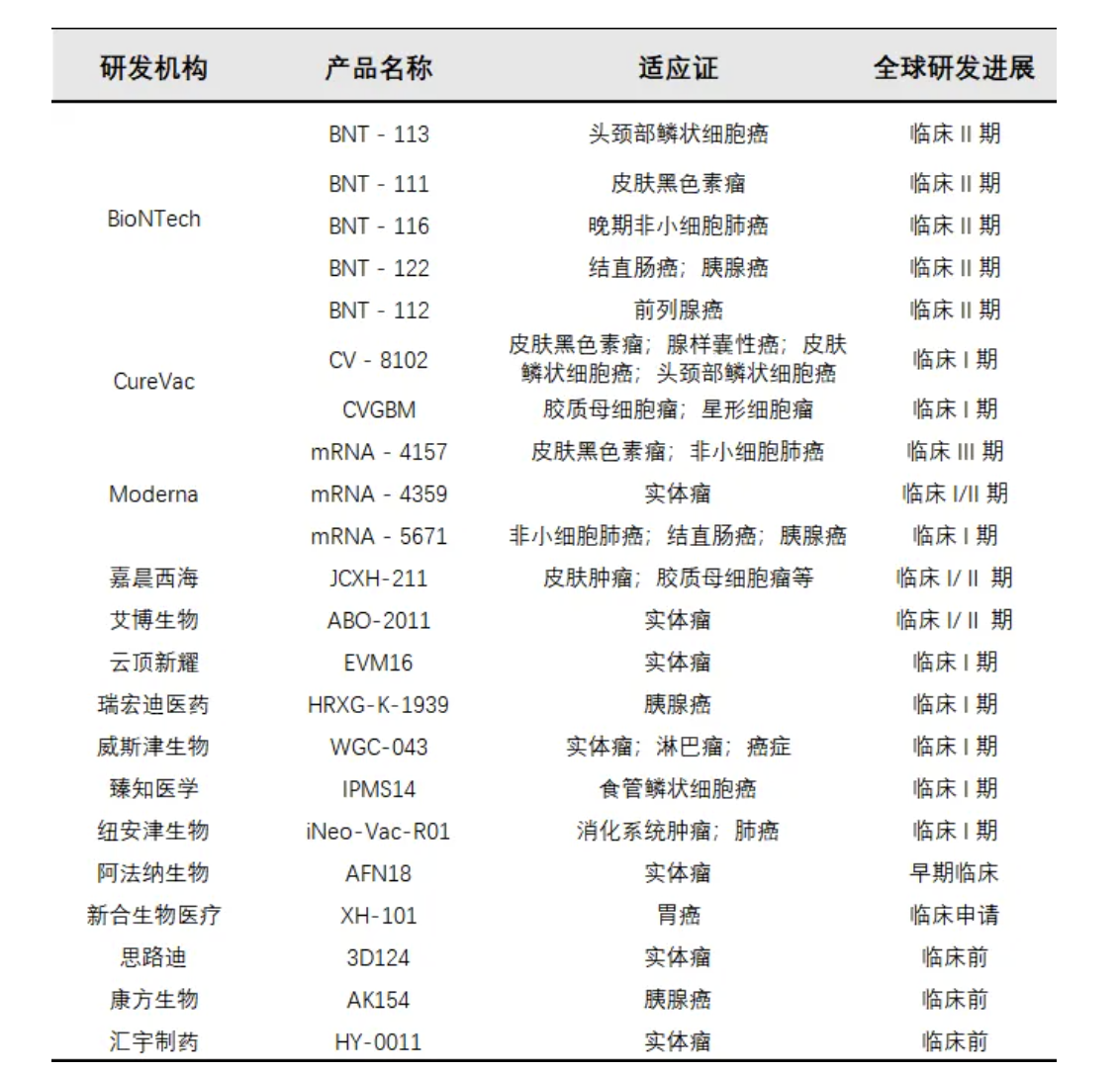
Core Viewpoint - CloudTop New Horizon (HK01952) has seen a significant stock price increase of 28.6% over the past seven trading days, driven by the presentation of its mRNA technology platform and three products targeting autoimmune diseases at a recent R&D event [1][2]. Company Developments - The company showcased its mRNA technology platform, including the universal tumor therapeutic vaccine EVM14, personalized tumor therapeutic vaccine EVM16, and autologous CAR-T project [1][3]. - EVM14 is set to begin a global multi-center Phase I clinical trial (EVM14 C101), with the first patient expected to be enrolled by Q3 2025 [1][3]. - EVM16 has shown efficacy in mouse melanoma models and is the company's first personalized mRNA tumor vaccine to enter clinical stages, with initial patient dosing expected to be completed by March 2025 [3][4]. Business Strategy - The CEO emphasized a selective business development strategy, focusing on leveraging international partnerships to enhance the global footprint of innovative drugs [1][4]. - The company aims to utilize its mRNA technology platform for developing both preventive and therapeutic mRNA products, with a focus on therapeutic vaccines [2][4]. Market Position - CloudTop New Horizon's mRNA platform has become a focal point for international pharmaceutical companies, potentially accelerating the commercialization of its products [4][7]. - The company has established a comprehensive industry chain platform that includes antigen design, sequence optimization, delivery systems, and large-scale production capabilities [7][8]. Industry Context - The global mRNA tumor vaccine market is projected to reach $21 billion by 2035, with the domestic market expected to reach 10 billion RMB [7]. - Compared to international leaders like BioNTech and Moderna, which have advanced their mRNA tumor vaccine pipelines to Phase II and III clinical trials, CloudTop New Horizon is still in the early stages of development [5][6]. Technical Challenges - Efficient delivery systems remain a significant bottleneck for mRNA vaccines, with limited suppliers for lipid nanoparticles (LNP) and ongoing patent disputes hindering development [8]. - CloudTop New Horizon has developed its proprietary LNP delivery technology, with a rich internal lipid library exceeding 500 types to meet the needs of various projects [8].
Arbutus Reacquires Greater China Rights to Imdusiran and Announces Scientific Advisory Board with Late-Stage Clinical Focus
Globenewswire· 2025-06-25 11:30
Core Insights - Arbutus Biopharma Corporation has reacquired the rights to its lead compound, imdusiran, from Qilu Pharmaceutical, concluding their strategic partnership for the development and commercialization of imdusiran in Greater China [1][2] - The decision to terminate the partnership was influenced by Qilu's pipeline reprioritization and Arbutus' focus on advancing its pipeline efficiently [2] - Imdusiran has shown promising results, achieving functional cure in eight patients during Phase 2a trials [2][3] Company Overview - Arbutus Biopharma is a clinical-stage biopharmaceutical company focused on infectious diseases, particularly chronic hepatitis B virus (cHBV) [7] - The company is also developing an oral PD-1 inhibitor (AB-101) for cHBV treatment and is involved in legal actions to protect its intellectual property related to its patented LNP technology [7] Product Details - Imdusiran is designed to reduce all HBV viral proteins and antigens, which is essential for reawakening the immune system to control the virus [5] - The treatment has been reported to be generally safe and well-tolerated, with significant reductions in hepatitis B surface antigen (HBsAg) and HBV DNA [5] Scientific Advisory Board - Arbutus has established a new Scientific Advisory Board consisting of experts in chronic hepatitis B treatment to guide its strategic evaluation of the cHBV pipeline [2]


裁员63人!BioNTech收缩CAR-T战线
2 1 Shi Ji Jing Ji Bao Dao· 2025-06-20 08:09
Core Viewpoint - BioNTech is scaling back its CAR-T therapy production in the U.S. due to underwhelming results from early cancer trials, specifically the BNT211 therapy for testicular cancer, leading to layoffs at its Maryland facility [1][4] Group 1: Company Developments - BioNTech plans to reduce the scale of its cell therapy production at its first U.S. facility following disappointing trial results for its CAR-T candidate BNT211 [1] - The company will lay off 63 employees at its Maryland facility, primarily affecting the cell therapy technical operations team [1] - Despite the setback with BNT211, BioNTech continues to pursue another Phase I study for the same drug targeting CLDN6-positive tumors [1] - BioNTech has made significant business development moves, including six licensing agreements with domestic biotech firms in 2023, with potential total deal values exceeding $2.5 billion [3] Group 2: Financial Performance - BioNTech's annual revenue is projected to decline from €17.31 billion in 2022 to €3.82 billion in 2024, with profits turning into losses, expected to reach €665 million in 2024 [4] - The company reported a net loss of €400 million in Q1 2025, with cash reserves reduced to €15.9 billion [4] - BioNTech's stock price has seen significant fluctuations, peaking at $464 per share in August 2021, but has since stabilized around $100 [3] Group 3: Industry Trends - The global CAR-T therapy market is projected to grow from $6.37 billion in 2024 to $16.35 billion by 2032, with a compound annual growth rate of 12.5% [6] - There are currently six CAR-T products approved in China, with varying degrees of sales data available [6][7] - The high cost and accessibility issues of CAR-T therapies remain significant challenges for the industry, with individual production driving up costs [8][9]
合成生物学周报:工信部启动生物制造中试平台计划,南林大研发非粮生物基隔热材料-20250618
Huaan Securities· 2025-06-18 13:00
Investment Rating - The industry investment rating is "Overweight" [1] Core Views - The report highlights the ongoing active research in life sciences and the global wave of biotechnology revolution, which is accelerating integration into economic and social development. This provides new solutions for major challenges such as health, climate change, resource security, and food security. The National Development and Reform Commission has issued the "14th Five-Year Plan for the Development of the Bioeconomy," indicating a trillion-yuan market potential in the bioeconomy sector [3][4]. Summary by Sections 1.1 Secondary Market Performance - The synthetic biology sector saw a significant increase of 9.36% in the week from June 9 to June 13, 2025, outperforming the Shanghai Composite Index by 9.61 percentage points [17][20]. 1.2 Company Business Progress - Domestic companies are making strides in synthetic biology, such as Hongmo Bio partnering with Yizhi Weisi to establish an AI-driven bio-manufacturing center, and Yike Bio launching a PHA bioplastic production base in Suzhou [26][27]. 1.3 Industry Financing Tracking - Financing activities in the synthetic biology sector are accelerating, with nearly a hundred companies completing new financing rounds since the beginning of 2025. Notable examples include Jingjiahang's angel round financing and Mosanna Therapeutics' $80 million Series A financing [33][34]. 1.4 Company R&D Directions - Companies are focusing on innovative technologies, such as the development of non-grain bio-based insulation materials by Nanjing Forestry University and the strategic collaboration between AstraZeneca and Stone Pharmaceutical for drug discovery [9][29]. 1.5 Industry Research Dynamics - The report notes the establishment of key technology R&D projects in Shanghai for synthetic biology, covering various innovative areas such as AI cell design and 3D printing of tissues [8].
隔夜美股全复盘(6.13) | 甲骨文大涨逾13%,第四财季业绩超预期+云基础设施营收指引积极
Ge Long Hui· 2025-06-12 23:30
Market Overview - US stock indices experienced fluctuations but closed higher, with the Dow Jones and Nasdaq both up by 0.24% and the S&P 500 up by 0.38% [1] - The VIX index increased by 4.4% to 18.02, indicating a rise in market volatility [1] - The US dollar index fell by 0.79% to 97.86, while the yield on the 10-year Treasury bond decreased by 1.401% to 4.362% [1] - Spot gold rose by 0.94% to $3,386.57 per ounce, and Brent crude oil increased by 0.5% to $70.26 [1] Industry & Stocks - Most sectors in the S&P 500 saw gains, with utilities up 1.21%, technology up 0.93%, and healthcare up 0.78%, while communication and industrial sectors declined by 0.81% and 0.26% respectively [2] - Chinese concept stocks mostly fell, with notable movements including TSMC up 0.98% and Alibaba down 1.45% [2] - Major tech stocks had mixed results, with Microsoft up 1.32% and Nvidia up 1.52%, while Google and Meta saw declines of 1.02% and 0.11% respectively [2] - Boeing's stock dropped by 4.79% following a plane crash in India that resulted in over 290 fatalities [2] Company Focus - Oracle reported Q4 earnings that exceeded expectations, with revenue up 11% year-over-year to $15.9 billion and cloud infrastructure revenue soaring 52% to $3 billion [3] - Nvidia's CEO announced that the company will exclude the Chinese market from its revenue and profit forecasts [4] - AMD's CEO highlighted that the AI chip market is expected to exceed $500 billion by 2028, with their new MI350 chip series outperforming Nvidia's products [5] - Reports indicate that the US and China reached a preliminary agreement on rare earth export licenses, valid for six months [6] - Micron Technology plans to invest approximately $200 billion in chip manufacturing and R&D in the US, aiming to create 90,000 jobs [9] - South Korea's semiconductor exports grew by 21.2% year-over-year in May, reaching $13.8 billion, driven by strong demand for AI-related chips [10] - The US saw a significant drop in imports at major ports in May, with Long Beach and Los Angeles ports experiencing declines of 20.9% and 8.5% respectively [11] - Airbus raised its 20-year forecast for commercial aircraft demand by 2% to 43,420 units, reflecting a slight adjustment in global economic growth predictions [13] - BioNTech agreed to acquire CureVac for approximately $1.25 billion, ending a long-standing competition between the two companies [14]

X @Investopedia
Investopedia· 2025-06-12 20:01
Mergers and Acquisitions - CureVac shares surged 35% following the announcement of its acquisition by BioNTech [1] - The all-stock deal values CureVac at approximately $125 billion [1]
超500亿美元授权交易带火创新药企:有的市值重回千亿,多家股价翻倍
第一财经· 2025-06-12 15:22
Core Viewpoint - The article discusses the surge in out-licensing deals among innovative pharmaceutical companies in China, highlighting the positive impact on stock prices and market valuations as these companies enter a revenue-generating phase after years of R&D investment [1][4]. Group 1: Out-Licensing Transactions - Significant out-licensing deals have recently occurred, including a record $1.25 billion upfront payment for SSGJ-707 from 3SBio to Pfizer, and a potential $11.1 billion revenue for BioNTech from a collaboration with Bristol-Myers Squibb on BNT327 [3][4]. - Since the beginning of 2025, the total value of out-licensing transactions from China has exceeded $50 billion, accounting for 44% of the global total, with upfront payments around $2.5 billion, representing 23% of global upfront payments [4][5]. Group 2: Stock Market Impact - The stock prices of innovative pharmaceutical companies have seen significant increases due to successful out-licensing deals, with 25 out of 59 biotech companies in Hong Kong doubling their stock prices this year [2][6]. - 3SBio's stock rose by 32.28% on the day of announcing its out-licensing deal, and another company, CSPC Pharmaceutical Group, saw a 20% increase following a licensing announcement [6][7]. Group 3: Industry Dynamics - The article notes that the long development cycles and high costs associated with innovative drug development lead many companies to seek out-licensing as a strategy to generate immediate revenue [9][11]. - There is a concern regarding the potential loss of pricing power for Chinese companies if they sell their pipelines too early, which could lead to higher future costs to re-enter the market [12][13].