阿里云

Search documents
赋能的美妙:DeepSeek开源背后的商业野心和生态架构
Sou Hu Cai Jing· 2025-09-30 18:48
Core Insights - DeepSeek leverages open-source technology to significantly lower the entry barriers in the industrial AI quality inspection market, allowing smaller companies to access advanced AI capabilities at a fraction of the cost [2][3] - The company aims to build a robust ecosystem by attracting developers and partners through free technology, which will later facilitate monetization through various services and collaborations [3][10] Group 1: Business Model - The first step in DeepSeek's monetization strategy involves using free technology to attract partners and build an ecosystem, similar to a shopping mall offering free rent to attract merchants [3][10] - The second step focuses on providing customized enterprise-level services to larger companies, ensuring high reliability and compliance, which allows DeepSeek to charge for these premium services [4][10] - The third step involves collaborating with hardware and cloud service providers, enabling DeepSeek to earn revenue through partnerships without extensive sales efforts [5][6] Group 2: Industry Impact - DeepSeek's open-source approach is changing the competitive landscape of the AI industry, forcing established players to lower their prices and adapt to a more open model [9][10] - The collaboration with domestic chip manufacturers like Huawei enhances the performance of local AI chips, reducing reliance on foreign supply chains and increasing the adoption of domestic solutions [8][10] Group 3: Strategic Insights - The strategy of offering free technology is designed to create a viral adoption effect, leading to a large user base that can later be monetized through high-end services and ecosystem partnerships [11][10] - Building a strong ecosystem is deemed more critical than the technology itself, as a larger user base leads to more tools and resources, solidifying DeepSeek's market position [12][10] - DeepSeek recognizes the potential risks associated with open-source technology and implements strict content review mechanisms and compliance frameworks to mitigate these risks [13][10]



零一万物联创沈鹏飞:生成式AI下半场是“一把手工程”,破局需跨越6大鸿沟
Zhong Jin Zai Xian· 2025-09-30 10:22
Core Insights - The core message emphasizes that generative AI has transitioned from a storytelling phase to a practical application phase, where embedding AI into business processes is crucial for success in the future [1][2] Organizational Barriers - Three main organizational barriers hinder the implementation of generative AI in enterprises: - Resistance from personnel due to differing levels of understanding of AI, leading to communication issues [2] - Organizational resistance characterized by departmental silos that prevent data sharing and process integration [2] - Capability resistance where a lack of skills results in the inability to effectively utilize purchased technology [2] Technical Barriers - Three primary technical barriers complicate the deployment of generative AI: - Difficulty in identifying suitable application scenarios within enterprises, as IT personnel may lack business knowledge [2] - High technical thresholds for application, making it challenging for in-house IT teams to implement AI effectively [2] - Customization challenges due to insufficient data, which hampers the development of models that truly understand business needs [2] Strategic Approach - The company adopts a "top-down" strategy, termed "One-Person Project," to address organizational barriers by aligning the understanding of AI among top management and creating tailored solutions [5][8] - The "Forward Deployed Engineer (FDE) model" is implemented to ensure engineers work closely with client business teams, facilitating the integration of business needs with technical solutions [5][8] Government and Enterprise Engagement - The company targets new productivity industrial parks with a phased approach to create a closed-loop industry ecosystem, including various model training and application development bases [6] - For enterprises, the company promotes a customized consulting model to drive process reengineering and technology implementation, ensuring a closed-loop iteration [6] Case Study and Implementation - A case study of a large global industrial enterprise illustrates the company's "1+3+9" integrated service model, which includes strategic design, platform implementation, and high-value scenario realization [8] - The company has established deep collaborations with leading firms across various sectors, including telecommunications and finance, to deploy its generative AI solutions [8] Ecosystem Development - The company aims to become an ecosystem connector in the AI 2.0 era, fostering collaboration among industry clients, partners, and itself to co-create innovative solutions [8][12] - A multi-tiered partner ecosystem is being built, offering various levels of collaboration and support to enhance joint market development and product co-creation [10][11] Future Vision - The company envisions generative AI as an open, shareable, and extendable "ecological origin," emphasizing the importance of deep integration with vertical industries and third-party developers [12]
消息称AWS中国西区负责人蔡韬离职,云巨头区域线“再瘦身”
Xi Niu Cai Jing· 2025-09-30 09:29
日前,据媒体报道,亚马逊云科技(AWS)中国西区负责人蔡韬(Terry Cai)已于近期离任。这是继2024年底前任西区一把手叶永军跳槽阿里云后,AWS 中国在西部市场的又一次高层震荡。 截至目前,AWS中国未回应继任人选及西区架构调整计划。蔡韬本人亦未透露下一步去向。 公开信息显示,蔡韬2017年加入AWS,先后负责游戏出海及加密算力等垂直行业,2024年底接任西区总经理。 然而,2023年底启动的"8大行业线"改革大幅削弱区域权重,西区半数头部客户被划归游戏、金融等行业线,区域团队只承担落地交付与渠道拓展职能,战 略话语权骤降。 ...


科沃斯与阿里云达成战略合作 共筑机器人智能生态新未来
Zheng Quan Ri Bao Wang· 2025-09-30 08:48
Core Insights - Ecovacs Robotics has formed a strategic partnership with Alibaba Cloud to enhance its AI capabilities and develop an end-to-end AI operation management platform aimed at creating more efficient and intelligent products and services [1] Group 1: AI Strategy and Development - Since initiating its internal AI strategy in 2016, Ecovacs has continuously integrated AI technology into its products and operations [2] - The introduction of AIVI technology at the 2018 IFA exhibition allowed robots to utilize deep learning to intelligently identify and avoid common household obstacles [2] - In 2023, Ecovacs launched the "AllinAI" strategy, focusing on integrating self-developed natural language model algorithms with robotic AI applications [2] Group 2: Product Innovation and User Experience - In 2024, Ecovacs plans to incorporate various sizes of AI models (0.7B, 1.5B, 7B) into its robotic products, enabling users to issue cleaning commands through natural voice and engage in multi-turn conversations [2] - The company is developing a unified Agent platform for end-to-end management, which will enhance knowledge sharing and collaboration efficiency [3] Group 3: Collaboration with Alibaba Cloud - Ecovacs has established a deep collaboration with Alibaba Cloud since 2016, focusing on stable robot connectivity, intelligent upgrades, and data innovation [3] - The partnership aims to leverage Alibaba Cloud's AI computing power and global infrastructure to optimize product interaction and improve internal operational efficiency [3] Group 4: Future Directions - Ecovacs is committed to expanding into smart home cleaning, cooking, and personal care products, further solidifying its leading position in the smart home ecosystem [3]

六成私募“满仓豪赌”,科技主线全线爆发,芯片ETF天弘(159310)、科创综指ETF天弘(589860)涨超2%!
Xin Lang Cai Jing· 2025-09-30 06:57
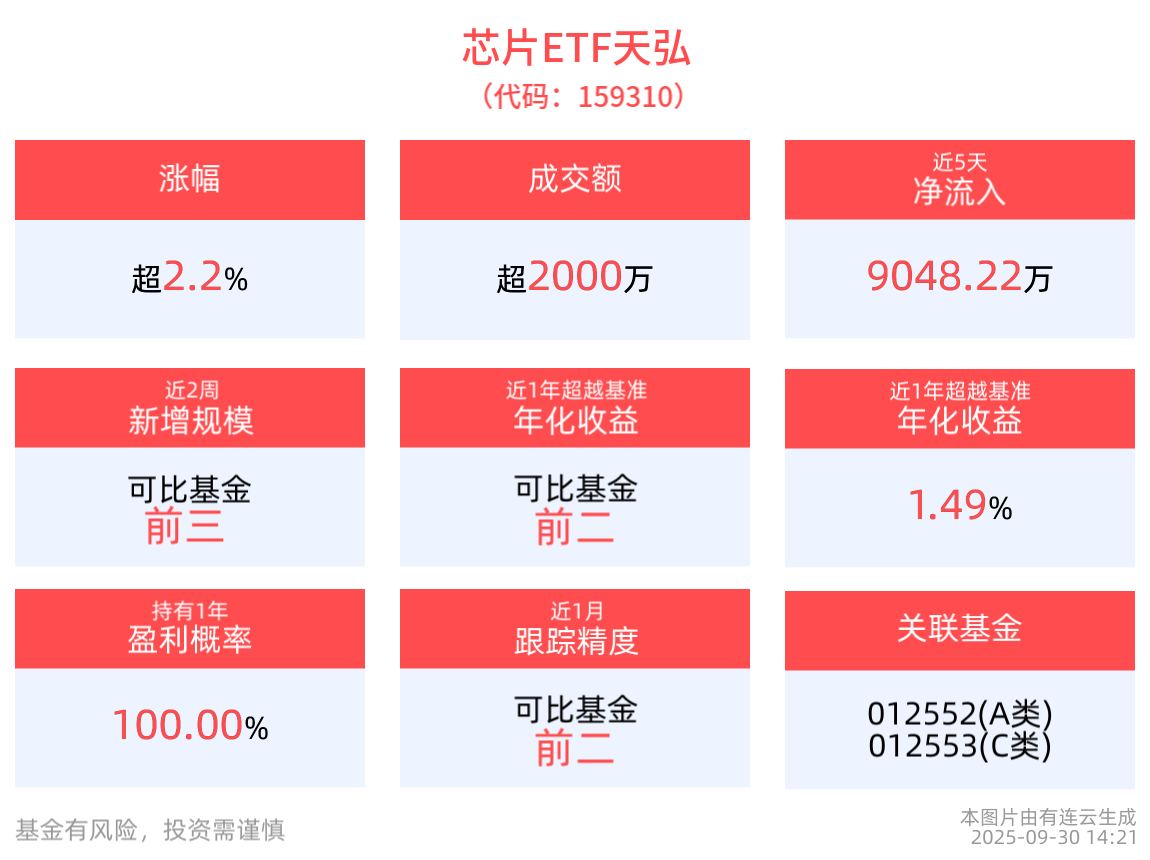
Core Insights - The chip ETF Tianhong (159310) has seen a significant increase of 2.29% with a trading volume of 23.1 million yuan, driven by strong performances from constituent stocks such as Jiangbolong (301308) and Baiwei Storage (688525) [3] - In the past two weeks, the chip ETF Tianhong (159310) has experienced a growth of 19.6 million yuan, indicating robust investor interest [3] - The technology sector is gaining traction among private equity firms, with over 65% planning to maintain high positions in technology growth areas, particularly in AI and semiconductors [5] Fund Performance - The chip ETF Tianhong (159310) has recorded a net inflow of 90.48 million yuan over four out of the last five trading days, reflecting strong market interest [4] - The Sci-Tech Innovation Index ETF Tianhong (589860) has also shown positive momentum, with a peak increase of over 2% and a trading volume of 90.74 million yuan [4] Product Highlights - The chip ETF Tianhong (159310) tracks the CSI Chip Industry Index, with top holdings including SMIC, Northern Huachuang, and Cambrian [5] - The Sci-Tech Innovation Index ETF Tianhong (589860) covers 97% of the Sci-Tech Innovation Board's market value, focusing on strategic emerging industries such as semiconductors and AI [5] Industry Developments - Alibaba Cloud has launched the new generation of AI servers, the Panjiu 128, which boasts high-density design and significant performance improvements, attracting industry attention [6] - The IPO of domestic AI chip company Moer Thread has been approved in a record time of less than three months, highlighting the efficiency of the new listing standards for tech firms [6] Institutional Perspectives - CITIC Securities anticipates steady growth in the computer industry for Q3 2025, with a focus on AI applications and computing power [7] - Jinyuan Securities notes Alibaba Cloud's comprehensive strategy in computing power and platform development, which is expected to accelerate the application of domestic AI hardware [7]
伟仕佳杰涨超9% 公司布局云计算、AI、具身智能等新兴业务领域
Zhi Tong Cai Jing· 2025-09-30 06:34
Core Viewpoint - Weishi Jiajie (00856) has seen a significant stock increase of over 9%, currently trading at 10.77 HKD with a transaction volume of 260 million HKD, indicating strong market interest and confidence in the company's growth potential [1] Group 1: Business Overview - Weishi Jiajie's operations encompass three main sectors: enterprise systems, consumer electronics, and cloud computing [1] - The company established its cloud computing division in 2013, marking its entry into the cloud business [1] - Since 2015, Weishi Jiajie has formed partnerships with major cloud providers including Microsoft, Alibaba Cloud, Amazon, Huawei, and VMware [1] Group 2: Strategic Acquisitions and Partnerships - In 2020, the company acquired Yunxing Data, a software technology firm focused on cloud management and AI intelligent scheduling, now known as Jiajie Yunxing [1] - As a strategic partner of NVIDIA in Southeast Asia, Weishi Jiajie has supported the implementation of several key projects [1] - Jiajie Yunxing serves as a software supplier for Huawei Cloud, providing products and services for 7 out of 9 national intelligent computing centers approved by the Ministry of Science and Technology [1] Group 3: Recent Developments - On August 21, Weishi Jiajie announced a significant partnership with Zhiyuan Robotics at the inaugural partner conference, becoming the official platform VAP for Zhiyuan Robotics [1] - This collaboration marks the company's first foray into the field of embodied intelligence [1] - According to Zhonghang Securities, the dual-engine business development model being cultivated by the company is expected to enhance its value creation capabilities [1]
港股异动 | 伟仕佳杰(00856)涨超9% 公司布局云计算、AI、具身智能等新兴业务领域
智通财经网· 2025-09-30 06:28
Core Viewpoint - The stock of Weishi Jiajie (00856) has increased by over 9%, currently trading at 10.77 HKD with a transaction volume of 260 million HKD, indicating strong market interest and potential growth in its business segments [1] Business Segments - Weishi Jiajie operates in three main sectors: enterprise systems, consumer electronics, and cloud computing [1] - The company established its cloud computing division in 2013 and began collaborations with major cloud providers such as Microsoft, Alibaba Cloud, Amazon, Huawei, and VMware starting in 2015 [1] - In 2020, the company acquired a software technology firm focused on cloud management and AI scheduling, now known as Jiajie Yunxing [1] Strategic Partnerships - In Southeast Asia, Weishi Jiajie serves as a strategic partner for NVIDIA, contributing to the implementation of several key projects [1] - The subsidiary Jiajie Yunxing acts as a software supplier for Huawei Cloud, providing products and services for 7 out of 9 national intelligent computing centers approved by the Ministry of Science and Technology [1] Recent Developments - On August 21, the company announced a significant partnership with Zhiyuan Robotics at the first partner conference, marking its entry into the embodied intelligence sector [1] - According to Zhonghang Securities, the dual-engine business expansion model being developed by the company is expected to enhance its value creation capabilities [1] - The comprehensive market layout in emerging sectors such as cloud computing, AI, and embodied intelligence is seen as having long-term growth potential [1]
零一万物发布合作伙伴权益计划
Zhong Zheng Wang· 2025-09-30 05:45
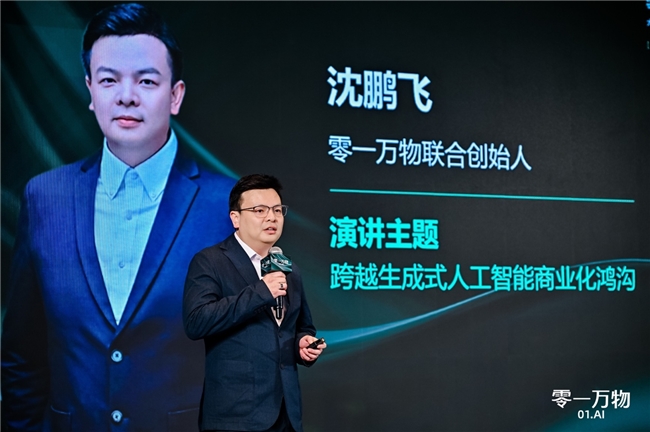
零一万物联合创始人沈鹏飞在本次大会的主题演讲中表示,当前生成式AI在企业端落地面临挑战的核 心原因,在于三大组织障碍与三大技术障碍,组织障碍包括人员阻力、组织阻力、能力阻力等三个方 面,技术障碍包括场景、应用、定制等三个方面。这些结构性问题使得AI系统即使部署成功,也难以 真正融入业务流程,缺乏战略协同、场景闭环与生态互动的能力整合。只有真正打通从战略设计到执行 落地的全链路,才能确保AI能力在企业中发挥实效。 资料显示,零一万物是李开复于2023年创立的AI公司,公司聚焦大模型研发与企业级AI应用。今年1 月,零一万物与阿里云达成战略合作,共同成立"产业大模型联合实验室"。 中证报中证网讯(记者 王辉)近日,AI科技公司零一万物在上海举办"元启上海"华东数智大会,并发 布合作伙伴权益计划。该计划通过联合解决方案、技术互补、认证伙伴、联合市场开发等模式,构建包 含产品共创、算力基石、行业垂类及生态共建在内的多层次伙伴生态体系。通过各类分级合作模式,为 合作伙伴提供从研发支持、市场资源到品牌联合推广等权益。 ...
OpenAI和英伟达,正在把GPU玩成“金融产品”
3 6 Ke· 2025-09-30 03:25
Core Insights - The potential investment of up to $100 billion by Nvidia in collaboration with OpenAI to build a 10 GW AI data center highlights the financialization of computing power [1] - In 2024, global generative AI financing reached $56 billion, accounting for over half of the total AI industry financing, with major companies like Microsoft and Google significantly increasing their capital expenditures [1] - The shift from traditional GPU purchasing to a rental model is emerging as a solution to the challenges faced by AI companies, allowing for more flexible financial management [2][4] Financialization of GPUs - Traditional GPU procurement involves significant upfront costs and depreciation, which has become unsustainable due to rapid technological advancements [2] - The rental model transforms GPUs into financial products that can be leased, financed, and traded, mitigating the risks associated with ownership [4][5] - Companies like CoreWeave and Lambda Labs are leading the way in GPU rental services, with CoreWeave securing $1.7 billion in funding and Lambda Labs offering hourly rental services [5] Capital Logic of Computing Power - The financialization of computing power may disrupt the AI industry more profoundly than innovations like ChatGPT, as it introduces new investment opportunities and risks [6][8] - Future developments may include the securitization of GPU rental contracts, allowing for trading in capital markets and creating a new asset class [7] - The concentration of capital, computing power, and energy resources in the U.S. is likened to an oligopoly, where larger companies can leverage financing to maintain a competitive edge [9][11] Challenges for China - China's hardware and financial systems lag behind the U.S., with export controls limiting access to advanced GPUs and a lack of a mature financial infrastructure for computing power [12] - Chinese companies are exploring algorithm optimization and efficiency improvements, but without a robust GPU rental market and credit rating system, they risk being marginalized [12] - The need for China to develop its own GPU leasing market and financial infrastructure is critical to avoid being sidelined in the global computing power landscape [12] Conclusion - The rumored collaboration between OpenAI and Nvidia signifies a shift in industry logic, where the financialization of GPUs could accelerate AI development while potentially exacerbating inequalities in access to computing resources [13][14]

国泰海通|计算机:国产GPU接连突破,AI算力仍是未来主线
国泰海通证券研究· 2025-09-29 13:18
Core Viewpoint - The article emphasizes the ongoing advancements in artificial intelligence (AI) and the significant investments being made in the sector, particularly in GPU technology and AI server capabilities, indicating a strong future growth trajectory for these areas [1][2][3][4]. Group 1: Investment Developments - Nvidia plans to gradually invest up to $100 billion in OpenAI to support data center infrastructure, with an initial deployment of at least 10 gigawatts of systems expected by the second half of 2026 [2]. - The approval of Moore Threads' IPO on the Sci-Tech Innovation Board aims to raise approximately 8 billion yuan for the development of self-controlled AI training and inference chips, as well as graphics chips [3]. - Alibaba Cloud launched the Panjiu 128 super-node AI server, which supports 128 AI computing chips and offers significant improvements in bandwidth and latency, enhancing inference performance by about 50% [4]. Group 2: Market Trends and Future Directions - The investment from major players like Nvidia is expected to extend the global AI infrastructure expansion cycle, increasing demand for high-end GPUs, advanced packaging, and cooling solutions [2]. - The focus of competition in the computing power supply is shifting towards optimizing interconnectivity, with an emphasis on achieving high bandwidth and energy efficiency in system designs [4]. - The commercialization of the MUSA architecture and developer ecosystem by domestic GPU manufacturers is entering a market validation phase, which could accelerate R&D investments and ecosystem development [3].