小红书

Search documents
亏损的永辉迎来新总裁:管培生出身,“胖改”负责人丨消费参考
2 1 Shi Ji Jing Ji Bao Dao· 2025-09-19 01:13
Group 1 - The core point of the article is the appointment of Wang Shoucheng as the new CEO of Yonghui Supermarket, marking a significant leadership change after a prolonged vacancy [1][3][4] - Wang Shoucheng, born in April 1991 and a master's graduate from Peking University, has held various positions within Yonghui since joining as a management trainee in 2017, indicating a long-term commitment to the company [1][2] - The leadership change comes at a critical time for Yonghui, as the company reported a 20.7% year-on-year decline in revenue to 29.95 billion yuan and a net loss of 240 million yuan in the first half of the year [4] Group 2 - The company has been undergoing significant restructuring, including a reduction in the number of suppliers by 50% and increasing the direct procurement of fresh produce to over 60% [5] - The appointment of Wang is seen as a move to balance the existing team dynamics, especially after the major shareholder, Miniso, took a controlling stake in Yonghui [3][4] - The stock price of Yonghui Supermarket was reported at 5.05 yuan per share, reflecting a decline of 2.13% on the day of the announcement [7]

小红书与虚假营销上演“猫鼠游戏”
Hua Er Jie Jian Wen· 2025-09-18 14:41
Core Insights - The article discusses the significant efforts by Xiaohongshu to combat false marketing, which disrupts the community ecosystem and fair business practices [2][9] - Xiaohongshu has established a dedicated team to tackle false marketing, achieving notable results since its formation in March, including banning over 12 million fake accounts and reducing false marketing content exposure by 60% [2][9] Group 1: Company Initiatives - Xiaohongshu's "Anti-False Marketing Team" was officially introduced during an event aimed at addressing false marketing issues [2][3] - The platform has seen its monthly active users surpass 300 million, becoming a leading choice for users seeking travel reviews and lifestyle advice [3] - The team has implemented a multi-faceted governance approach, focusing on account, content, industry, brand, and search management to effectively combat false marketing [4][6] Group 2: Governance Strategies - Account governance targets the source of false marketing by identifying abnormal behaviors and banning over 12 million fake accounts in six months [5] - Content governance focuses on accurately identifying and removing fake notes and comments, particularly those that mislead users into thinking they are genuine recommendations [5][6] - The industry governance team investigates marketing tactics within critical sectors like education and real estate, establishing strict qualification standards and content regulations [6] Group 3: Technological Enhancements - Xiaohongshu has upgraded its AI models to better identify and combat false marketing, tailoring models to specific scenarios to enhance detection accuracy [8] - The platform has developed a "Black Seed Database" containing 180,000 samples of violations, allowing for real-time comparison and interception of new content [8] - The introduction of the "Ecological Sentinel" system helps identify abnormal content patterns quickly, improving the efficiency of false marketing detection [8] Group 4: Impact and Future Goals - The ongoing efforts have led to a 20% decrease in user negative feedback regarding search results and a 10% increase in user satisfaction with community content [9] - Xiaohongshu aims to make the cost of false marketing exceed the benefits, thereby reducing the motivation for brands to engage in such practices [7][9] - The battle against false marketing is seen as a long-term commitment, with the goal of fostering a genuine and friendly community atmosphere [9][10]
贝壳“银河计划”已在全国72个城市落地
Sou Hu Cai Jing· 2025-09-18 13:23
Core Insights - The "Galaxy Plan" by Beike has been implemented in 72 cities across China, empowering over 33,000 industry practitioners as of September this year [1][3] - The Beike Shenzhen station has participants with a total follower count exceeding 3 million [1] Group 1: Industry Trends - The real estate sector is experiencing accelerated online transformation due to changes in consumer information acquisition methods in the mobile internet era [3] - Beike's "Galaxy Plan" focuses on building a matrix of real estate influencers in collaboration with platforms like Tencent and Xiaohongshu, providing comprehensive support for practitioners [3] Group 2: Future Directions - The future of real estate new media is expected to exhibit three major trends: "content specialization," where users are willing to pay for authentic cases and professional interpretations; "service integration," which requires a seamless connection between content, conversion, and service; and "ecosystem co-construction," where platforms, influencers, and users coexist to lead the industry [3] - The president of the Shenzhen Real Estate Brokerage Association emphasized the importance of long-term commitment among agents, advocating for compliance to build trust and professionalism for future success [3] Group 3: Value Proposition - Beike's new media head highlighted that while traffic can be allocated through algorithms, user decisions ultimately rely on trust in people [3] - The company aims to help practitioners overcome "traffic anxiety" by shifting focus to "value cultivation," leveraging professional content and quality service to capture market share [3]

种草之上的新模式,让小红书买手跑了起来
远川研究所· 2025-09-18 13:05
Core Viewpoint - Xiaohongshu is actively enhancing its e-commerce business through various initiatives, including the "Million Commission-Free Plan" and the introduction of new commercial tools and cash subsidies for creators, signaling a shift towards a "buyer era" in its community-driven platform [2][3]. Group 1: E-commerce Developments - Xiaohongshu has transformed its e-commerce section "Market" into a primary entry point within the app, indicating a strategic focus on e-commerce growth [2]. - The platform reported over 1.5 million commercial creators, with a year-on-year growth rate of 61%, and a significant increase in live-streaming buyers and sales [3]. - The number of new merchants on Xiaohongshu has surged by 8.1 times in the past year, with a 3.3 times increase in merchants achieving over 100 million in sales [6]. Group 2: Supply and Demand Dynamics - Xiaohongshu's unique supply structure allows for better discovery of quality products, as evidenced by successful case studies where specific posts led to significant sales increases for brands [6][11]. - The platform's buyer model, which integrates deep user engagement, allows creators to recommend products with a high degree of accuracy and trust [7]. - The community's demand is driven by real-life experiences and interactions, leading to a more engaged and motivated consumer base [14][19]. Group 3: New Relationships and Roles - Creators on Xiaohongshu are referred to as "buyers" rather than traditional influencers, emphasizing their role in curating and building trust with their audience [21]. - The platform has introduced new features to enhance the buyer's ability to showcase products, allowing for a more personalized shopping experience [25]. - Xiaohongshu's approach fosters long-term relationships between creators and their audience, moving away from short-term sales tactics to a model based on trust and community engagement [23][26].

日赚半亿的携程,为何遭遇监管约谈?
Feng Huang Wang Cai Jing· 2025-09-18 12:49
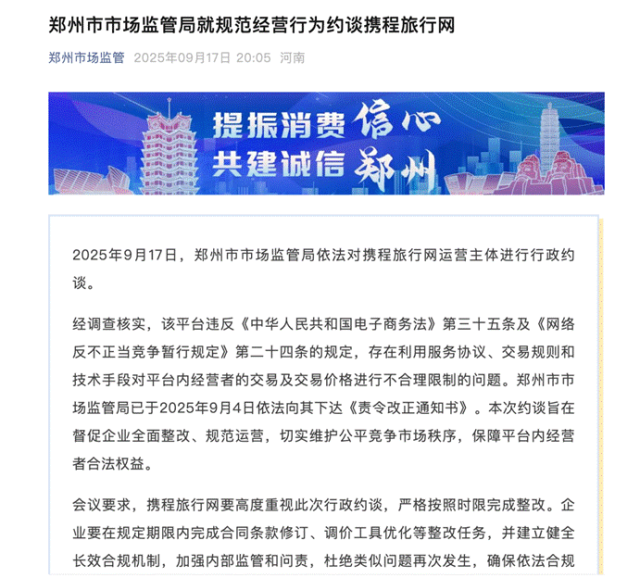
Core Viewpoint - The online travel industry is facing scrutiny as Ctrip, a major player, has been summoned for administrative talks by the Zhengzhou Market Supervision Administration due to allegations of unreasonable restrictions on pricing and transactions for platform operators [1][3][5]. Group 1: Regulatory Actions - The Zhengzhou Market Supervision Administration's announcement on September 17 highlights concerns over Ctrip's practices, including the use of a "price adjustment assistant" that allegedly forces hotels to comply with price changes without notification [3][4]. - This regulatory action follows a previous meeting in August where multiple travel platforms, including Ctrip, were warned about practices such as "forced choices" and price manipulation [3][4]. - Ctrip has been instructed to revise contracts and optimize tools to establish a long-term compliance mechanism [5]. Group 2: Ctrip's Business Performance - Ctrip has shown significant recovery from the pandemic, reporting revenues of 28.7 billion and a net profit of nearly 9.2 billion in the first half of 2025, translating to over 50 million in daily earnings [6][8]. - The company's revenue is primarily driven by accommodation bookings and transportation ticketing, which together account for over 70% of its total revenue [8][10]. - Despite Ctrip's financial success, many of its partners, including major airlines, are experiencing substantial losses, indicating a disparity in the industry's financial health [8][10]. Group 3: Industry Dynamics - The hotel industry is facing significant challenges, with approximately 30,000 hotels closing in the past two years, and average room prices declining by 6% year-on-year in 2024 [10]. - Ctrip's market share in the hotel and travel market is projected to reach 56% in 2024, benefiting from a high commission model that ranges from 10% to over 30% for some hotels [10]. - The ongoing regulatory scrutiny and the pushback from airlines suggest a growing tension between online travel agencies and traditional service providers, as airlines seek to reclaim pricing power and user data [11][13].
2025上海网络视听内容创作者大会
第一财经· 2025-09-18 11:56
Core Viewpoint - The Chinese online audio-visual industry is experiencing explosive growth and profound transformation, becoming a core part of the digital economy and a main platform for cultural dissemination [1] Group 1: Event Overview - The "2025 Shanghai Online Audio-Visual Content Creator Conference" will be held on September 19-20, 2025, in Yangpu District, Shanghai, focusing on the theme "Many Voices Create Harmony" [1] - The conference aims to gather regulatory bodies, leading platforms, top creators, and industry leaders to explore the future of the digital content industry [1] - The event seeks to establish Shanghai as a "dream factory" for high-quality internet content, promoting the growth of creators alongside the city [1] Group 2: Key Sessions and Speakers - Various sessions will feature discussions on topics such as transforming local dialects into social currency, bridging heavy topics with public interest through food, and the role of AI in connecting technology with human empathy [3][4] - Notable speakers include industry leaders and creators, such as the producer of the game "Miracle Warm" and the head of Tencent Video's AI products [3][4] - The conference will also include performances by well-known music creators from platforms like Bilibili [6] Group 3: Opening Ceremony and Keynotes - The opening ceremony will feature performances and the release of the "2025 Online Audio-Visual Content Creator White Paper" [7] - Keynote speeches will cover topics like quality content in the internet age and innovative urban narratives in the short video era [7][8] - The event will culminate in a roundtable discussion on the impact of content creation in the current digital landscape [12][15]

什么样的商业模式最有价值?
创业家· 2025-09-18 10:13
Core Viewpoint - The most valuable business model for product creation is the "long tail on both ends," where buyers are small and medium-sized enterprises (SMEs) and sellers are long-tail suppliers. This model maximizes value, as exemplified by Alibaba. Conversely, the least valuable model is "big on both ends," serving only large clients [1]. Group 1: Product Innovation and Market Insights - The success of Japanese manufacturing since the 1980s serves as a model for emerging economies, emphasizing the transformation of technology into user-perceived value. For instance, Sony's Walkman addressed the need for portable music, while Uniqlo's success stemmed from comfortable basics and innovative materials [6]. - AI is reshaping the essence of consumption by redefining product value through algorithms. Future champions in consumption will be those who perfectly integrate demand with algorithms, as seen in products like Plaud's recording card and Haivivi's toys [6]. - The course will explore how to innovate products and manage supply chains by learning from companies like Sony, Uniqlo, and Muji, focusing on turning technology into user-friendly products [7]. Group 2: Strategies for Market Competition - In a saturated market, the course will analyze how to become a new leader in niche segments amidst brand competition. The rise of AI algorithms will be discussed in the context of creating new product categories [8]. - Globalization requires Chinese brands to deeply integrate local market needs with Chinese supply chain capabilities, moving from simple exportation to localized coexistence [9][10]. - The course will highlight the importance of balancing localization and standardization in global markets, emphasizing that successful overseas expansion involves understanding and addressing local consumer needs [10][11]. Group 3: Course Structure and Expert Insights - The course spans three days, focusing on product innovation, market strategies, and global expansion. It features insights from industry leaders like 牛文文, 朱啸虎, and 前田悟, who will share their expertise on leveraging AI and consumer insights for growth [12][13][17]. - Participants will learn about the importance of rapid market testing and the need to avoid the illusion of technical perfection, emphasizing the necessity of validating demand quickly [14]. - The course will also cover how to maintain product quality while ensuring affordability, as demonstrated by Muji's product development philosophy [22].


重拳出击虚假营销,小红书组建了一支“战队”
3 6 Ke· 2025-09-18 09:44
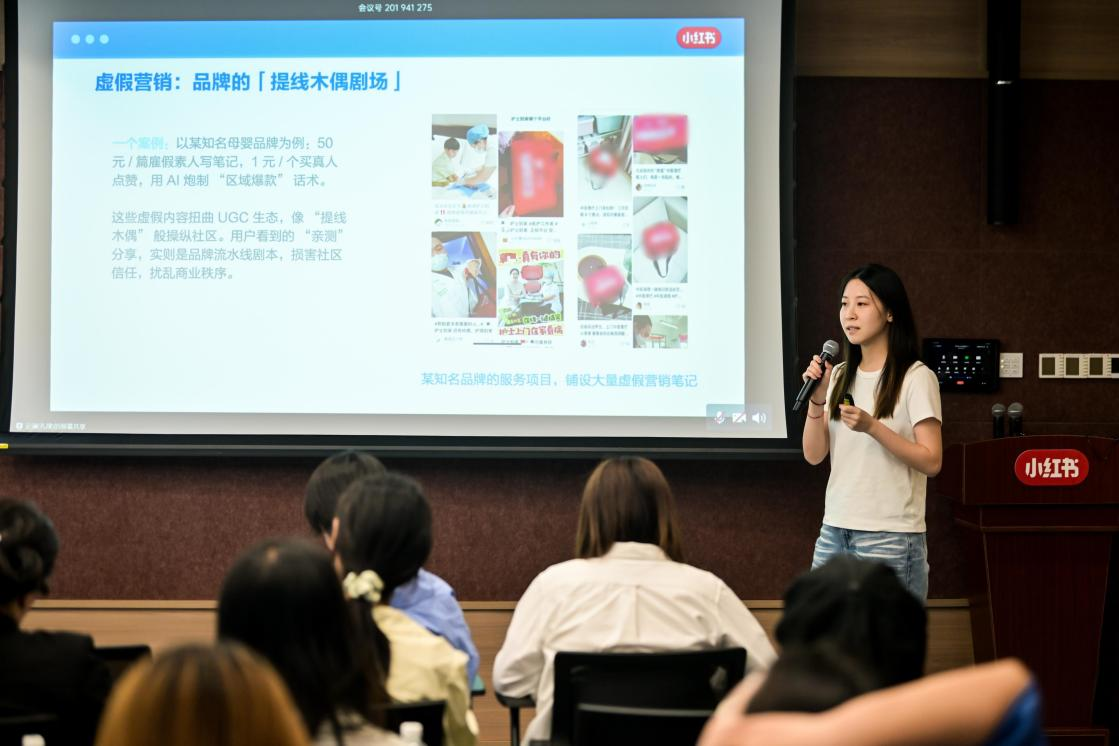
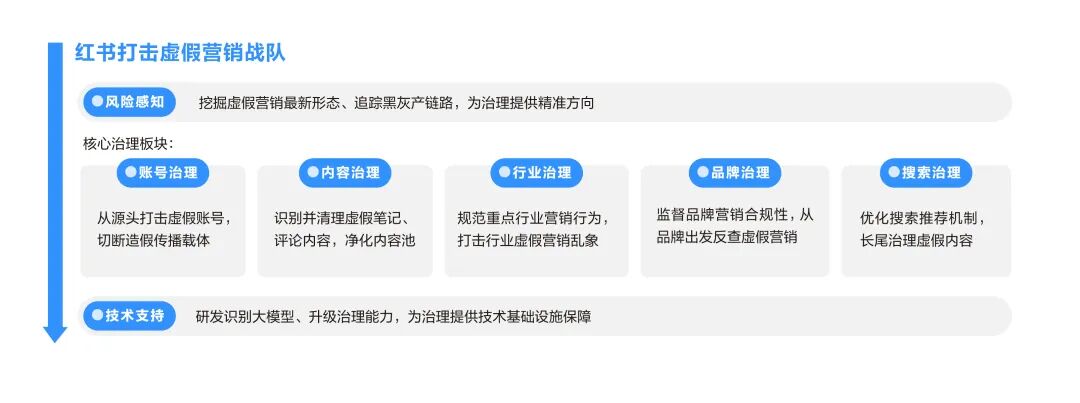
Core Insights - The article highlights the increasing prevalence of false marketing on internet content platforms, which has become a significant issue for brand merchants aiming to capture consumer attention [1][3] - Xiaohongshu has established a "False Marketing Combat Team" to combat this issue, emphasizing the importance of maintaining a genuine community [4][14] Group 1: False Marketing Issue - The rise of false marketing has led to a decline in user trust on platforms, with tactics such as fake content and manipulated traffic becoming common [1][3] - A specific case from Xiaohongshu illustrates how seemingly innocent posts can be part of a calculated marketing strategy, undermining the platform's authenticity [3][4] Group 2: Xiaohongshu's Response - Since the establishment of the "False Marketing Combat Team" in March, Xiaohongshu has banned over 12 million fake accounts and dealt with 13.76 million false marketing posts, resulting in a 60% decrease in false marketing content exposure [4][6] - The team employs a systematic approach to governance, focusing on five key areas: account governance, content governance, industry governance, brand governance, and search governance, supported by a technical team [6][7] Group 3: Technological Advancements - The technical team plays a crucial role in enhancing the identification and efficiency of combating false marketing through upgraded AI models [7][13] - The team has developed a rapid response system that can identify and address new forms of false marketing within 1-2 days [13][16] Group 4: Community Trust and Authenticity - Xiaohongshu prioritizes maintaining a genuine community, even at the cost of some search data metrics, to ensure user trust and satisfaction [16][14] - The platform's efforts have led to a 20% decrease in user negative feedback regarding search results and a 10% increase in user satisfaction with community content [16][14] Group 5: Industry Trends - Many false marketing teams are recognizing the unsustainability of their practices and are beginning to pivot towards legitimate marketing strategies [17] - The ongoing battle against false marketing is viewed as a long-term effort, with the goal of making the cost of false marketing exceed its benefits [17]
重拳出击虚假营销,小红书组建了一支“战队”
36氪未来消费· 2025-09-18 09:43
Core Viewpoint - The article emphasizes the urgent need to combat false marketing practices that undermine user trust on content platforms, particularly in the context of rising competition and the prevalence of low-quality, deceptive content [2][3][21]. Group 1: Background and Context - The shift in consumer decision-making has led to content platforms becoming battlegrounds for brands, resulting in widespread false marketing practices [2]. - The emergence of the "Zhengzhou model," which involves mass-producing viral content and distributing it through ordinary accounts, has drawn attention to the issue of false marketing [2]. Group 2: Actions Taken Against False Marketing - Multiple platforms have reached a consensus to combat false marketing, with Xiaohongshu (Little Red Book) taking a strong stance by forming a "False Marketing Combat Team" in March [3][9]. - Since its establishment, the team has banned over 12 million false accounts, dealt with 13.76 million false marketing posts, and removed over 360 million false comments, resulting in a 60% overall decrease in false marketing content [9][12]. Group 3: Governance Strategies - Xiaohongshu's governance strategy includes five main areas: account governance, content governance, industry governance, brand governance, and search governance, supported by a technical team [12]. - The account governance focuses on identifying and banning "pseudo-influencer" and "crowdsourced" accounts, while content governance aims to clean up posts with disguised advertisements and fake comments [12]. Group 4: Challenges and Adaptations - False marketing has evolved into a sophisticated operation, making it challenging for the combat team to keep up, likening the situation to a cat-and-mouse game [14][15]. - The team has had to continuously adapt its algorithms and strategies to counteract the tactics employed by false marketing organizations, which have become increasingly adept at evading detection [14][19]. Group 5: Community Trust and Brand Integrity - The integrity of Xiaohongshu's community, built on authenticity, is at risk due to false marketing, which can erode user trust and disrupt the ecosystem for legitimate brands [8][22]. - The platform prioritizes maintaining a genuine user-generated content (UGC) environment, even at the cost of some search data metrics, to ensure that users receive authentic content [24]. Group 6: Future Outlook - The combat against false marketing is described as a long-term battle, with the goal of making the cost of false marketing exceed its benefits, thereby rendering it obsolete [26].

GPT-5与Transformer共同发明人Lukasz Kaiser重磅加盟,2025全球机器学习技术大会全日程官宣!
Tai Mei Ti A P P· 2025-09-18 08:23
Core Insights - The development of computing and connectivity is cyclical, with "Computing 2.0" entering an accelerated phase, and AGI expected to emerge around 2035 [1] - The 2025 Global Machine Learning Technology Conference will be held on October 16-17 in Beijing, featuring top scholars and industry leaders to explore the infinite possibilities of the AI era [1] Event Highlights - Lukasz Kaiser, a key figure in the development of large models and co-inventor of GPT-5, will discuss the historical, current, and future aspects of reasoning models at the conference [2][4] - Li Jianzhong, director of the Singularity Intelligence Research Institute, will present insights on large model technology and its impact on computing, development, and interaction paradigms [4] Expert Participation - The conference will feature numerous industry leaders discussing the latest developments and commercialization challenges in large model technology [5] - Notable speakers include former OpenAI researchers and experts from leading tech companies, sharing breakthroughs and insights in AI technology [5][13] Agenda Overview - The agenda includes various sessions on topics such as efficient screening of large models, uncertainty modeling, and multi-modal applications in AI [8][9] - The second day will continue with discussions on AI governance, foundational infrastructure, and the latest advancements in embodied intelligence and software development paradigms [10][11] Industry Collaboration - The conference aims to foster collaboration among global AI industry participants, promoting innovation and exploring paths for industry upgrades [16][17] - It serves as a platform for effective communication and cooperation among enterprises, developers, and researchers in the AI field [17]