
抖音

Search documents
字节豆包也开始带货了
Hua Er Jie Jian Wen· 2025-10-28 11:16
Core Insights - The article discusses the integration of the AI assistant "Doubao" with Douyin's e-commerce platform, allowing users to receive product recommendations and links directly during conversations, enhancing the shopping experience [2][3][4]. Group 1: Doubao's New Features - Doubao has been upgraded to include direct links to products from Douyin Mall, particularly when users inquire about consumer-related topics [2][4]. - The integration allows for a seamless service loop from inquiry to product recommendation to purchase, significantly shortening the decision-making process for consumers [3][4]. Group 2: Market Positioning and Strategy - Douyin's strategic move to launch this feature before the Double Eleven shopping festival aims to enhance its competitive edge in the e-commerce space [4][5]. - The integration positions Douyin not just as a traffic provider but as a "consumer decision service provider," reflecting a shift in its business model [5][6]. Group 3: E-commerce Ecosystem - Douyin's e-commerce ecosystem now includes various shopping scenarios: active search, passive recommendations, and AI-driven decisions, creating a comprehensive shopping experience [6][7]. - The projected GMV for Douyin e-commerce in 2024 is approximately 3.43 trillion yuan, with a target of 4.2 trillion yuan for 2025, indicating significant growth expectations [6]. Group 4: Global Trends and Comparisons - The article highlights global trends where major retailers like Walmart and Amazon are also integrating AI into their shopping experiences, emphasizing the importance of data-driven personalized recommendations [7][8]. - Unlike other platforms that embed AI into e-commerce, ByteDance's approach integrates e-commerce services into AI applications, showcasing a unique strategy in the market [8][9]. Group 5: Challenges Ahead - As Doubao begins to monetize through product links, it faces the challenge of balancing commercial value with user trust, which is currently fragile [9]. - The e-commerce industry is undergoing a transformation from "people finding goods" to "goods finding people," with AI playing a crucial role in this evolution [9].


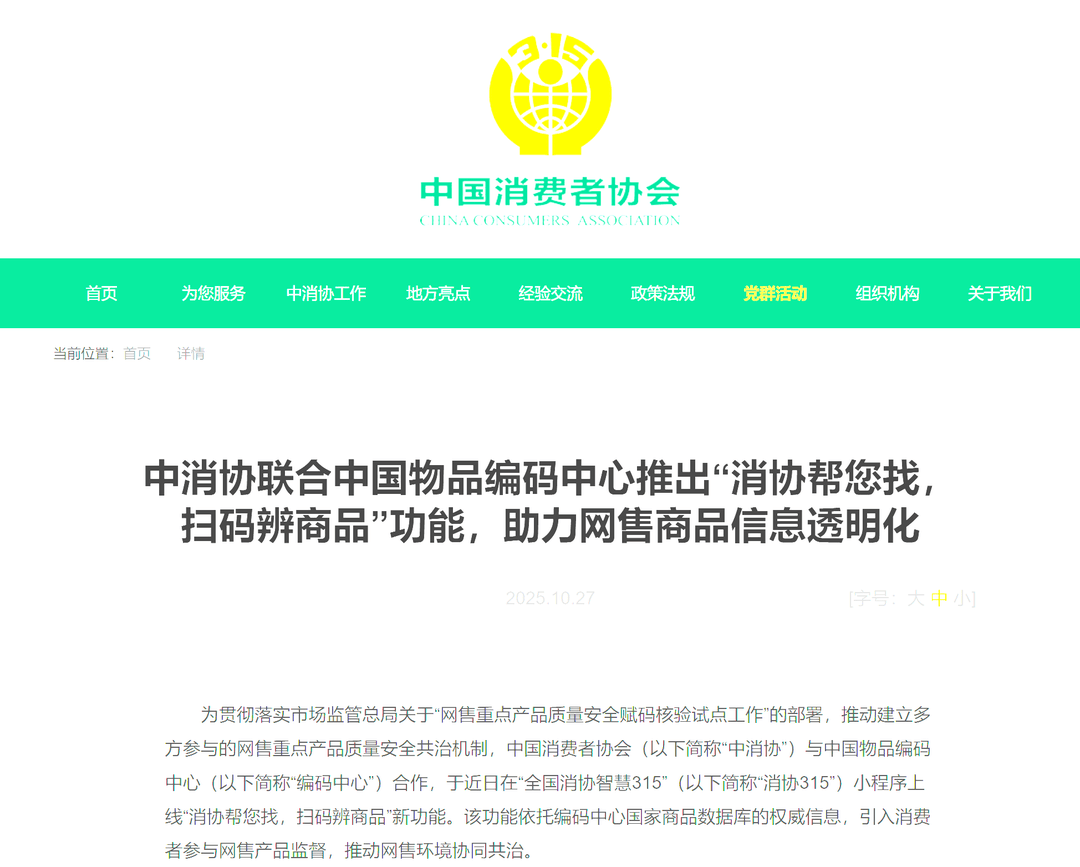
@广大消费者,“消协帮您找,扫码辨商品”功能上线,赶快用起来
Sou Hu Cai Jing· 2025-10-28 09:37
Core Points - The article discusses the launch of a new feature called "Consumer Association Helps You Find, Scan to Identify Products" on the "National Consumer Association Smart 315" mini-program, aimed at enhancing product quality and safety verification in online shopping [3][4][5] - This initiative is a collaboration between the China Consumer Association and the Coding Center, designed to involve consumers in the supervision of online product quality [3][4] Group 1 - The new feature focuses on two critical stages of online shopping: decision-making and receipt confirmation, providing a convenient channel for information verification [4] - Major e-commerce platforms such as Taobao, Kuaishou, Pinduoduo, Douyin, JD.com, Suning, Xiaohongshu, Dewu, Vipshop, and Tencent will display product barcodes for ten categories of goods, including safety helmets and electric bicycles [4] - Consumers can scan the barcodes using the mini-program to access official registration information and compare it with the platform's promotional content, helping to identify exaggerated claims and discrepancies [4][5] Group 2 - The feature allows consumers to verify key product information upon receipt by scanning the physical packaging barcode, and they can report any inconsistencies directly through the mini-program [4] - Feedback from consumers will be synchronized in real-time to the Coding Center, which will initiate a data verification process for any reported discrepancies [4] - The initiative encourages consumers to actively participate in the governance of product data and contribute to a trustworthy and transparent online shopping environment [5]
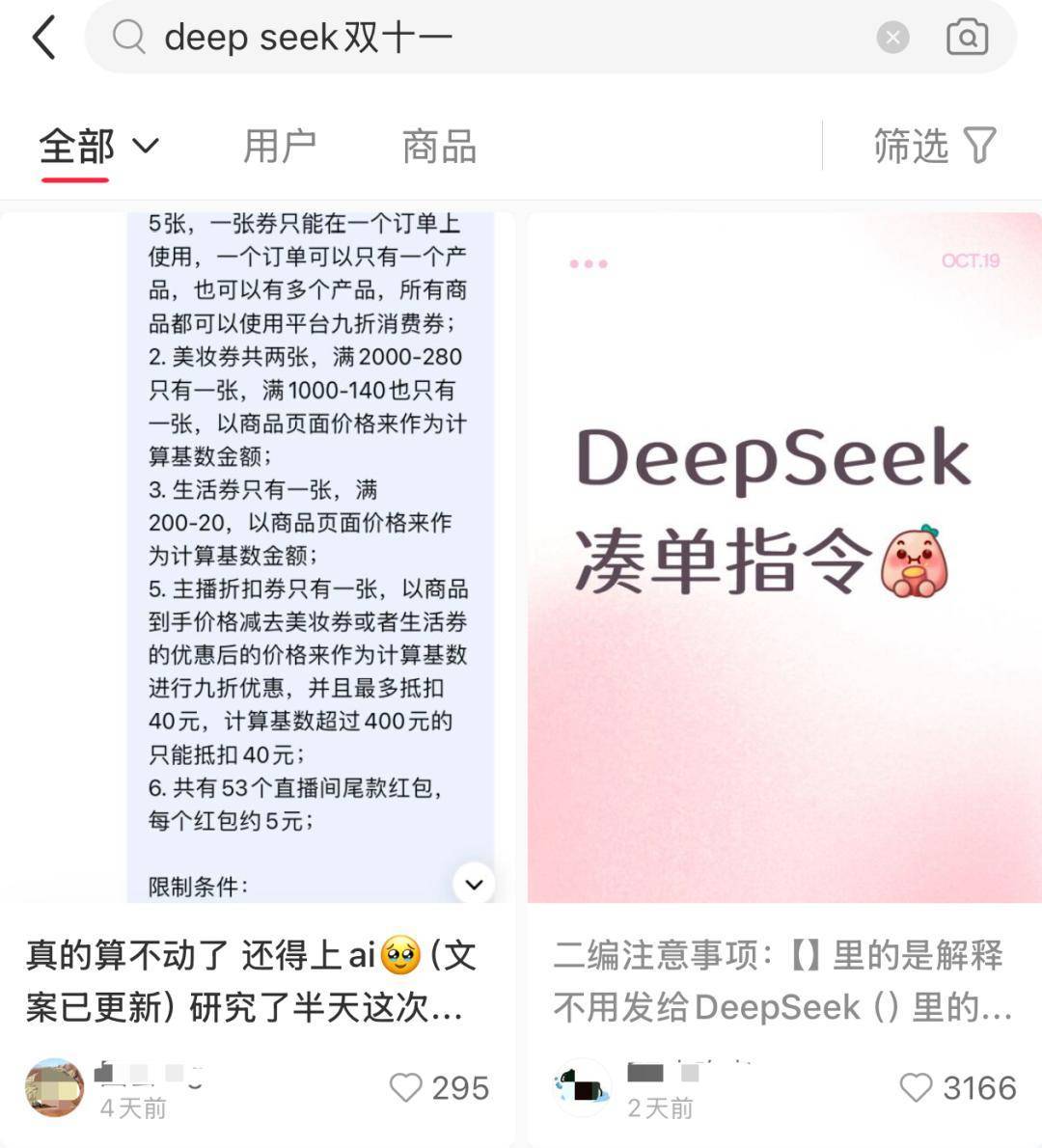
今年双11,AI终于忙了,但打工人也慌了
Sou Hu Cai Jing· 2025-10-28 08:52
Core Insights - The article discusses the evolution of AI in e-commerce during the Double 11 shopping festival, highlighting its integration into various aspects of the shopping experience and the operational efficiency it brings to businesses [1][2][3]. Group 1: AI Integration in E-commerce - This year's Double 11 is characterized as the first fully realized AI-driven event, with major e-commerce platforms showcasing a comprehensive range of AI tools for both consumers and businesses [2][3]. - Tmall's president defined this year's event as a milestone for AI's full deployment, offering six AI shopping assistant products for consumers and extensive AI tools for businesses across the entire e-commerce chain [2][3]. - JD.com introduced a new AI architecture called "Oxygen" and showcased its ambitious "embodied intelligence" through a large-scale deployment of smart devices during the event [2]. Group 2: Consumer Experience with AI - Consumers are increasingly using AI tools for shopping, with over one-third of respondents in a recent Adobe survey indicating they utilize AI for product research and finding deals [8]. - Despite the convenience AI offers, there are concerns regarding the accuracy of AI-generated recommendations and the potential for privacy issues, with 43% of surveyed consumers uncomfortable with companies using AI to analyze personal data [9][10]. - Users like "洋葱" and "迪迪" have reported mixed experiences, with some finding AI helpful for budgeting and product comparisons, while others faced inaccuracies in discount predictions [4][5][7][9]. Group 3: Impact on E-commerce Workers - E-commerce workers have experienced a shift in their roles due to AI, with some reporting reduced workloads while also feeling increased pressure from higher performance expectations [11][13]. - The introduction of AI in marketing and customer service has streamlined operations, allowing fewer employees to manage larger tasks, but it has also raised concerns about job security and the potential for replacement by AI [11][12]. - Workers in advertising have noted that while AI has automated many processes, it has also led to a lack of transparency in campaign management, complicating accountability when issues arise [13][17]. Group 4: Challenges Ahead for AI in E-commerce - Despite the advancements, the article emphasizes that the full commercialization of AI in e-commerce is still a long-term goal, with ongoing challenges in user experience and technology integration [18][20]. - The need for continuous improvement in AI tools and the establishment of trust between consumers and AI systems are critical for future success [10][21]. - Research indicates that traditional e-commerce channels still outperform new AI-driven platforms in terms of conversion rates and user engagement, suggesting that the path to widespread adoption of AI in e-commerce remains complex [20][21].
被指提供违规服务,抖音将清退中通冷链、吉时达等物流商
Xin Lang Cai Jing· 2025-10-28 04:00
Core Points - Douyin E-commerce announced the discovery of logistics companies abusing platform services by providing false logistics tracking and other violations, which harm consumer rights and disrupt platform operations [1] - Douyin will terminate partnerships with several logistics companies, including Zhongtong Cold Chain, Jishida, Water Fun Home, and Tiezhong Express, effective October 29 [1] - Violations include bypassing Douyin's electronic waybills, creating false tracking, and manipulating order statuses, leading to delayed or undelivered goods for consumers [1] Company Overview - Zhongtong Cold Chain operates under Zhongtong Express Group, leveraging its network and ecological advantages [2] - As of June 30, 2025, Zhongtong Express Group has approximately 6,000 direct network partners and over 30,000 collection and delivery points across the country [2] - In the first half of this year, Zhongtong Express Group's express service accounted for 92.9% of total revenue, with freight forwarding and material sales contributing 1.5% and 5.3%, respectively [4] Financial Performance - Zhongtong Express reported a revenue of 22.723 billion yuan in the first half of the year, a year-on-year increase of 9.85%, while net profit attributable to ordinary shareholders was 3.932 billion yuan, a decrease of 2.6% [4] - As of October 28, Zhongtong Express's stock price was 149.30 HKD per share, with a market capitalization of 12.01 billion HKD [4]
零售快报 | 2025年前三季度中国快速消费品市场消费韧性延续,自有品牌加速渗透
凯度消费者指数· 2025-10-28 03:52
Core Insights - The consumer market for fast-moving consumer goods (FMCG) in urban China is projected to grow by 2% year-on-year in the first three quarters of 2025, indicating a stable trend [1] - The beverage category continues to lead in sales growth, while dairy products face challenges due to declining purchase frequency and average transaction value [1] - The final consumption expenditure contributed 53.5% to economic growth, driving GDP up by 2.8 percentage points [1] Offline Channels - In the first three quarters of 2025, modern retail channels (including hypermarkets, supermarkets, and convenience stores) saw sales remain flat compared to the previous year, with convenience store sales down by 2.6% [3] - Community grocery stores showed strong performance with a 6.0% year-on-year sales increase, particularly in the western regions where sales grew at double-digit rates [3] Market Share of Major Retailers - Walmart's market share increased by 1 percentage point in the first three quarters of 2025, driven by the success of Sam's Club [6] - Hema's overall market share rose by 0.4 percentage points, with its fresh store format gaining traction [6] - The penetration rate of discount snack stores exceeded 31%, with western regions showing a higher sensitivity to price, achieving a penetration rate of 36.1% [7] Online Channels - Online channels demonstrated robust performance with a 7% year-on-year sales growth in the first three quarters of 2025 [9] - Douyin (TikTok) maintained strong growth, with its penetration rate increasing by 5.1 percentage points, particularly in town-level markets [11] - Instant retail penetration surpassed 40%, with front warehouse models showing steady sales growth [12] Private Label Brands - Over 48% of urban households in China purchased private label brands in the first three quarters of 2025, reflecting a 10 percentage point increase from the previous year [13] - Retailers are focusing on optimizing supply chains to enhance the price competitiveness of private label products [14]

QuestMobile2025年三季度AI应用行业报告:移动端AI应用规模突破7亿大关,模型升级加速,MCP助推产业开放
3 6 Ke· 2025-10-28 03:26
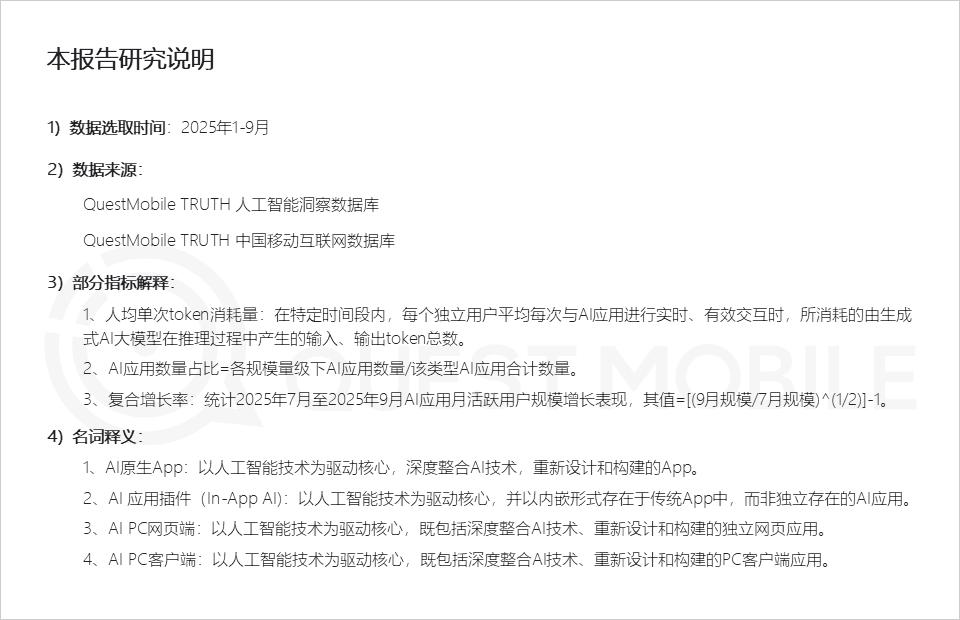
Core Insights - The AI application market is experiencing significant growth, with mobile and PC active user counts reaching 729 million and 200 million respectively by September 2025, driven by a shift towards ecosystem collaboration and model optimization [1][6][14]. Market Overview - As of September 2025, the mobile AI application market includes 287 million users for native apps, 706 million for In-App AI, and 535 million for smartphone manufacturer AI assistants, with respective growth rates of 3.4%, 9.3%, and 1.2% [1][14]. - The overall scale of mobile AI applications has surpassed 700 million, indicating a maturation and commercialization of the industry [6][14]. User Engagement - In-App AI applications dominate the user engagement landscape, with 31 out of the top 50 AI applications being plugins, led by Baidu AI Search, Douyin AI Search, and WeChat AI Search [2][31]. - The average number of In-App AI applications per app in the top 20 has increased to 2.5, while PC web applications and smartphone AI assistants lag behind [2][31]. Competitive Landscape - The competition has shifted from a focus on parameter comparisons to ecosystem collaboration, with major players like Baidu, Alibaba, Tencent, and Douyin updating their models frequently [1][6][14]. - The user engagement time for native AI applications remains the highest at 117.7 minutes, compared to 31 minutes for AI plugins and 5.3 minutes for smartphone AI assistants [2][16]. Trends in AI Applications - The industry is moving towards a "value-driven" model, with pricing strategies becoming more refined and user stickiness increasing, particularly for In-App AI plugins [2][12][18]. - The average single-use token consumption has decreased, indicating improved efficiency and cost control in AI applications [18][20]. Ecosystem Development - The MCP (Model Cloud Platform) services have reached 9,384 by October 20, 2025, facilitating a shift from model development to a service-oriented ecosystem [1][20]. - The integration of AI assistants into smartphones has become standard, with a collective growth of 65 million users across six major manufacturers, reflecting a 13.9% year-on-year increase [40][61]. PC Application Dynamics - The PC application market is undergoing contraction, with over 75% of web applications facing growth challenges, while the client applications are also struggling with 75% showing negative growth [50][57]. - Successful PC applications are primarily in productivity sectors, with notable growth in applications like Xiaoyi and WPS Lingxi, indicating a need for professional value to sustain growth [54][57]. Strategic Focus - Internet companies are focusing on integrating AI with business scenarios to enhance their core offerings, while smartphone manufacturers are building open ecosystems around AI assistants [61][70]. - The evolution of AI applications is characterized by a shift from single-point technology competition to an ecosystem-based collaboration model, with payment capabilities marking a significant milestone in commercialization [74][78].
QuestMobile2025年三季度AI应用行业报告:移动端AI应用规模突破7亿大关,模型升级加速,MCP助推产业开放
QuestMobile· 2025-10-28 02:01
Core Insights - The AI application market is experiencing rapid growth, with mobile and PC active user counts reaching 729 million and 200 million respectively by September 2025 [3][4][20] - Major companies are shifting focus from parameter competition to ecosystem collaboration, optimizing models to meet customer needs and expand application scenarios [4][9] - The In-App AI plugin model has become the leading growth driver, with 31 out of the top 50 AI applications being plugins [4][5][24] Market Overview - By September 2025, the mobile AI application market has surpassed 700 million users, with native apps, In-App AI, and mobile manufacturer AI assistants reaching 287 million, 706 million, and 535 million users respectively [20][9] - The growth of mobile applications is supported by a stable head of native apps, while the PC web applications face challenges, with over 75% experiencing growth difficulties [5][60] User Engagement - The average usage time for native AI applications is 117.7 minutes, significantly higher than In-App AI plugins at 31 minutes and mobile manufacturer AI assistants at 5.3 minutes [6][24] - The top AI applications show a stable user base, with notable growth in vertical applications like AQ and Doubao, which have seen substantial increases in active users [6][38] Competitive Landscape - The competitive landscape is solidifying, with nearly 60% of native apps experiencing negative growth, indicating a narrowing window for new entrants [31][34] - Vertical applications are thriving, with AQ, Doubao, and Jimeng AI showing impressive growth rates of 83.4%, 15.7%, and 12.1% respectively [38][40] Ecosystem Development - The MCP services have reached 9,384, facilitating ecosystem collaboration and marking a new phase of commercialization in the AI industry [4][9][80] - Companies are focusing on integrating AI into business scenarios, enhancing user experience through seamless service delivery [70][72] Future Trends - The AI market is transitioning from a focus on broad capabilities to specialized, efficient solutions, with a significant increase in model updates and iterations [16][18] - The integration of payment capabilities is seen as a key milestone for the commercialization of AI applications, paving the way for an "AI as a service" economy [85][87]

大跳水!黄金失守;郑智化就“连滚带爬”表述致歉;西部航空通报“旅客充电宝突然冒烟”;河南新蔡致歉:已责成纪委调查丨每经早参
Mei Ri Jing Ji Xin Wen· 2025-10-27 23:01
Group 1 - Gold prices fell below $4000, with spot gold down 3.15% at $3981.98 per ounce and COMEX gold futures down 3.40% at $3997.00 per ounce [6][14] - The U.S. stock market indices collectively rose, with the Nasdaq up 1.86%, S&P 500 up 1.23%, and Dow Jones up 0.71%, marking new highs [6][29] - International oil prices saw slight increases, with WTI crude oil up 0.08% at $61.55 per barrel [7] Group 2 - The China Securities Regulatory Commission (CSRC) released 23 measures to enhance the protection of small and medium investors in the capital market [9] - The CSRC announced the optimization of the Qualified Foreign Institutional Investor (QFII) system, aiming to attract more long-term foreign capital [10] - The CSRC plans to implement deeper reforms in the ChiNext board to better serve emerging industries and innovative enterprises [11] Group 3 - Meituan announced nationwide coverage of social security subsidies for delivery riders, marking a significant step in improving labor relations in the industry [19][20] - JD.com launched a national recruitment plan for its "National Good Car" delivery centers, aiming to enhance service quality and user experience [21] - Douyin e-commerce announced the removal of logistics providers that violated platform rules, emphasizing consumer rights protection [22] Group 4 - Qualcomm introduced new AI chips aimed at competing with Nvidia in the data center market, with significant stock price increases following the announcement [26] - Xiaopeng Motors addressed internal changes in executive positions, indicating ongoing organizational optimization [23] - Tesla's chairman urged shareholders to support Elon Musk's nearly $1 trillion compensation plan, highlighting the importance of Musk's leadership for the company's future [28]

共处置违规商品超7万个!抖音电商专项治理福袋违规营销
Sou Hu Cai Jing· 2025-10-27 20:03
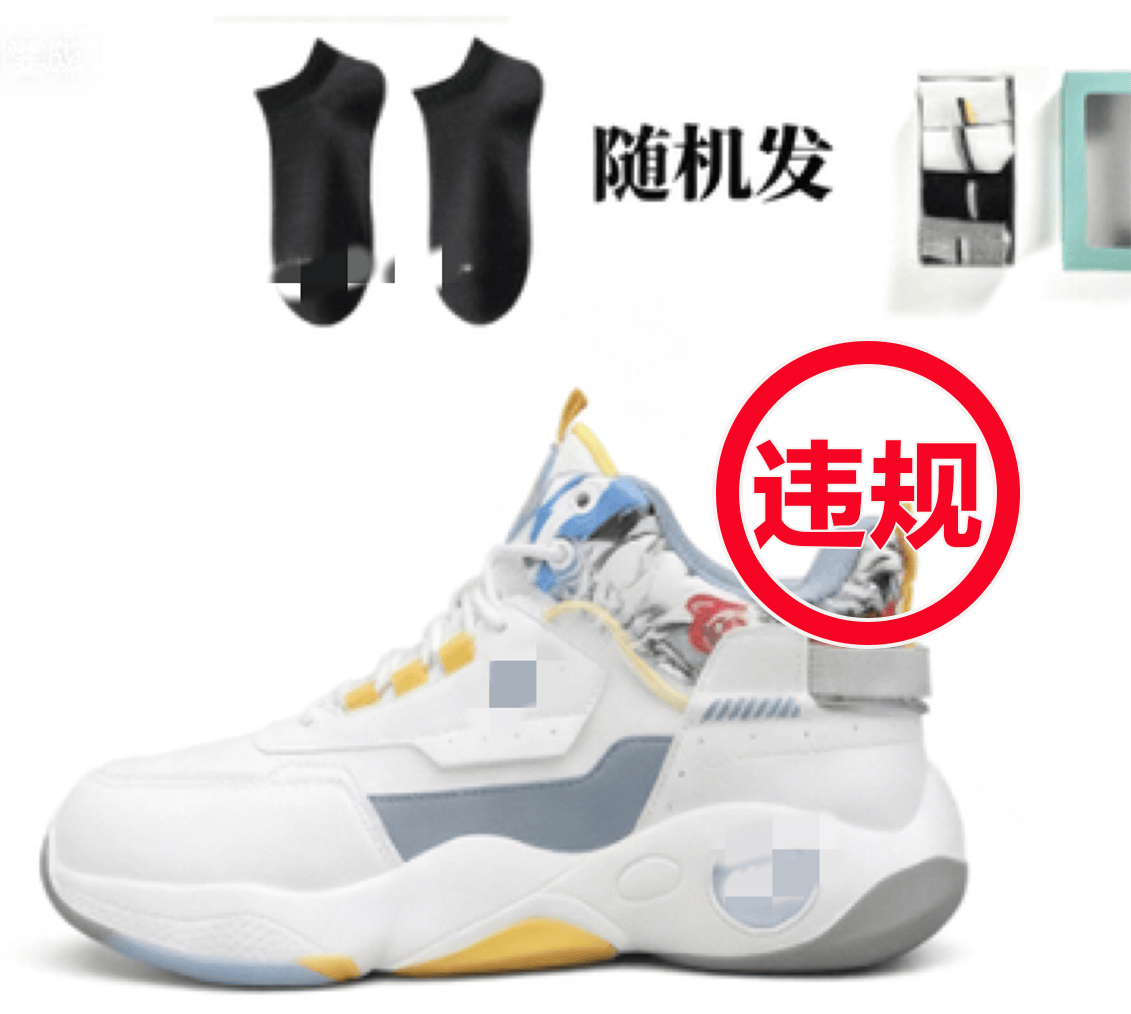
对此,抖音电商安全与信任中心启动专项治理,近两个月累计处置违规商品逾7万件、涉及违规商家逾1万家,并依据相关规则对涉事主体采取冻结货款、停 业整顿、下架商品、店铺清退等措施。 在某直播间福袋中,商家将商品名称标注为"袜子",并配上某品牌球鞋的商品图片,误导消费者以为奖品为某品牌球鞋,但实际收货为袜子。图源:"抖音 电商安全与信任中心"微信公众号 10月26日,抖音电商安全与信任中心发布专项治理福袋违规营销的公告。据公告,平台近期在巡查中发现部分商家和达人在直播间使用"超级福袋"功能进行 违规营销,包括设置易混淆的商品名称、误导性奖品图片、虚高奖品价格、发布与实际奖品不符的任务等,误导消费者,影响消费者购物体验。 抖音电商安全与信任中心提醒,广大消费者在购物时保持警惕,保障自身权益。如发现相关违规行为,可以向抖音电商安全与信任中心方面进行举报。 ...
抖音清退中通冷链等4家物流商,涉虚假物流轨迹
Mei Ri Jing Ji Xin Wen· 2025-10-27 12:52
Core Viewpoint - Douyin's e-commerce safety and trust center announced the removal of several logistics companies due to violations involving the provision of false logistics tracking and other deceptive services, which harm consumer rights and disrupt platform operations [1] Group 1: Companies Involved - The logistics companies being removed from the platform include Zhongtong Cold Chain (a subsidiary of Zhongtong), Jishida, Water Fun Home, and Tiezhong Express [1] Group 2: Reasons for Removal - The removal is a response to the discovery of these companies abusing platform services to provide misleading logistics information, which resulted in discrepancies between order tracking and actual fulfillment [1] Group 3: Implementation Timeline - The removal process will take effect on October 29, following the announcement made on October 27 [1]
