
丸美生物

Search documents
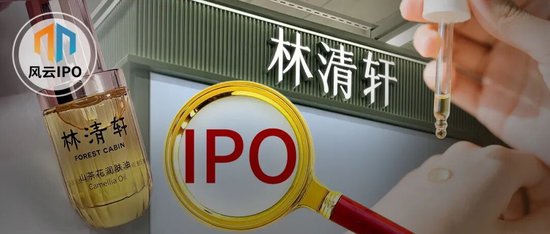
10年半卖爆4500万瓶精油,林清轩IPO背后的“东北网红”家族身家近100亿
Xin Lang Cai Jing· 2025-12-31 03:03
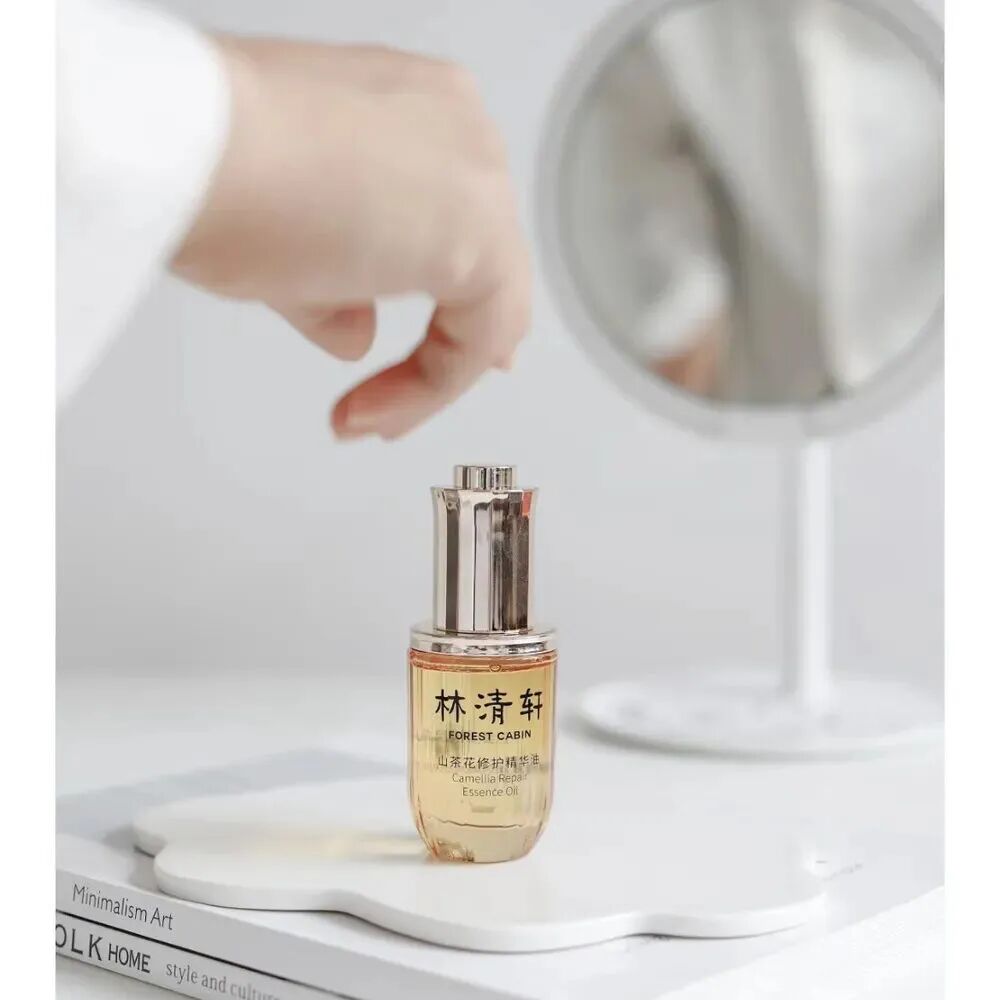
Core Viewpoint - Lin Qingxuan, a high-end domestic skincare brand, officially listed on the Hong Kong Stock Exchange on December 30, 2025, with a closing price of HKD 85 per share, a 9.3% increase from the issue price of HKD 77.77, resulting in a market capitalization of approximately HKD 11.9 billion [2][28]. Group 1: Company Overview - Lin Qingxuan's flagship product, the Camellia Oil, has sold over 45 million bottles since its launch in 2014, averaging 4.29 million bottles sold annually [8][28]. - The company has a diverse product line with 188 SKUs, including essential oils, creams, toners, lotions, serums, masks, and sunscreens, with essential oils, creams, serums, and sunscreens being the four core categories [5][32]. - The pricing of Lin Qingxuan's products ranges from 80 to 2000 RMB, with the 50ml Camellia Oil priced at 799 RMB and a New Year gift set priced at 1443 RMB [7][34]. Group 2: Financial Performance - From 2022 to 2024, Lin Qingxuan's revenue grew from 691 million RMB to 1.21 billion RMB, with a compound annual growth rate of 32.5%. In the first half of 2025, the company achieved revenue of 1.052 billion RMB and a net profit of 182 million RMB [8][35]. - The gross margin of Lin Qingxuan has been increasing, reaching 82.5% in 2024, with the gross margin for the Camellia Oil at 86.2%, comparable to high-end liquor margins [10][38]. - The marketing expenses over three and a half years totaled approximately 1.121 billion RMB, with a significant portion of the workforce (85.2%) dedicated to sales and marketing [11][12][39]. Group 3: Marketing Strategy - The founders, Sun Laichun and Sun Fuchun, actively engage in live streaming and social media to promote the brand, creating a unique "Lin Qingxuan family IP matrix" that includes family members participating in content creation [4][30]. - The company has accumulated around 7.96 million followers on Tmall and over 1.66 million on Douyin, with significant sales during promotional events [19][46]. - Lin Qingxuan has faced challenges with advertising compliance, receiving fines for misleading claims about product efficacy, which highlights the importance of regulatory adherence in marketing strategies [20][47]. Group 4: Market Position - Lin Qingxuan ranks first among all high-end domestic skincare brands in China and is the only domestic brand among the top 15 high-end skincare brands, including international competitors [8][34]. - The company has expanded its offline presence, with 554 stores nationwide, primarily located in shopping centers, reinforcing its high-end brand image [19][46]. - Despite facing consumer complaints regarding product efficacy and pricing, the overall market sentiment towards Lin Qingxuan remains positive, with significant backing from institutional investors [27][51].

丸美生物(603983) - 广东丸美生物技术股份有限公司2025年第三次临时股东会决议公告
2025-12-30 09:45
广东丸美生物技术股份有限公司 2025年第三次临时股东会决议公告 本公司董事会及全体董事保证本公告内容不存在任何虚假记载、误导性陈述 或者重大遗漏,并对其内容的真实性、准确性和完整性承担法律责任。 重要内容提示: 本次会议是否有否决议案:无 证券代码:603983 证券简称:丸美生物 公告编号:2025-048 一、 会议召开和出席情况 (一) 股东会召开的时间:2025 年 12 月 30 日 (二) 股东会召开的地点:广州市海珠区新港东路 69 号丸美大厦 11 楼会 议室 (三) 出席会议的普通股股东和恢复表决权的优先股股东及其持有股份情 况: | 1、出席会议的股东和代理人人数 | 161 | | --- | --- | | 2、出席会议的股东所持有表决权的股份总数(股) | 335,075,306 | | 3、出席会议的股东所持有表决权股份数占公司有表决权股 | 83.5599 | | 份总数的比例(%) | | (四) 表决方式是否符合《公司法》及《公司章程》的规定,会议主持情 况等。 本次会议由公司董事会召集,采用现场投票与网络投票相结合的方式召开。 会议的召集和召开程序、出席会议人员的资格、会 ...

丸美生物(603983) - 广东信达律师事务所关于广东丸美生物技术股份有限公司2025年第三次临时股东会的法律意见书
2025-12-30 09:45
广东信达律师事务所 股东会法律意见书 中国 深圳 福田区 益田路 6001 号 太平金融大厦 11、12 楼 邮政编码:518038 11F/12F., TAIPING FINANCE TOWER, NO.6001 YITIAN ROAD, SHENZHEN, CHINA 电话(Tel.):(0755)88265288 传真(Fax.):(0755)88265537 网站(Website):https://www.sundiallawfirm.com 广东信达律师事务所 关于广东丸美生物技术股份有限公司 2025 年第三次临时股东会的 法律意见书 1 广东信达律师事务所 股东会法律意见书 信达会字(2025)第 418 号 致:广东丸美生物技术股份有限公司 广东信达律师事务所(以下简称"信达")接受广东丸美生物技术股份有限 公司(下称"贵公司")的委托,指派律师参加了贵公司 2025 年第三次临时股 东会(下称"本次股东会"),并进行了必要的验证工作。现根据《中华人民共 和国公司法》(下称"《公司法》")、《上市公司股东会规则》(下称"《股 东会规则》")以及贵公司《公司章程》的规定,按照律师行业公认的业务标 ...
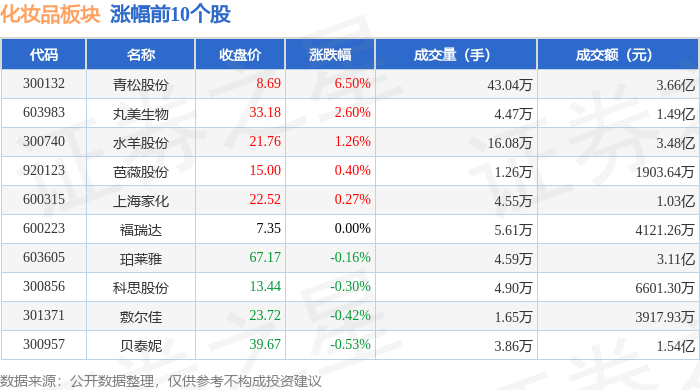
化妆品板块12月30日涨0.36%,青松股份领涨,主力资金净流入4663.64万元
Zheng Xing Xing Ye Ri Bao· 2025-12-30 09:08
Core Viewpoint - The cosmetics sector experienced a slight increase of 0.36% on December 30, with Qingsong Co., Ltd. leading the gains. The Shanghai Composite Index closed at 3965.12, showing no change, while the Shenzhen Component Index rose by 0.49% to 13604.07 [1]. Group 1: Stock Performance - Qingsong Co., Ltd. (300132) closed at 69.8, up by 6.50%, with a trading volume of 430,400 shares and a transaction value of 366 million yuan [1]. - Marubi Biological Technology (603983) closed at 33.18, increasing by 2.60%, with a trading volume of 44,700 shares and a transaction value of 14.9 million yuan [1]. - Shuiyang Co., Ltd. (300740) closed at 21.76, up by 1.26%, with a trading volume of 160,800 shares [1]. - Other notable stocks include Shanghai Jahwa (600315) with a slight increase of 0.27% and a closing price of 22.52, and Furuida (600223) remaining unchanged at 7.35 [1]. Group 2: Capital Flow - The cosmetics sector saw a net inflow of 46.64 million yuan from institutional investors, while retail investors experienced a net outflow of 68.77 million yuan [2]. - Qingsong Co., Ltd. had a significant net inflow of 34.30 million yuan from institutional investors, while retail investors showed a net outflow of 30.07 million yuan [3]. - Shanghai Jahwa recorded a net inflow of 17.15 million yuan from institutional investors, with a net outflow of 17.20 million yuan from retail investors [3].




美妆行业深度报告:国货崛起、模式分化与营销提效下的竞争新局
Shanghai Aijian Securities· 2025-12-30 09:07
Investment Rating - The report rates the beauty and personal care industry as "Outperform" compared to the market [1] Core Insights - The beauty industry is experiencing significant growth driven by domestic brands, with a shift towards online sales channels, particularly through platforms like Douyin [2][3] - Domestic brands are gaining market share, with 43% of consumers preferring domestic beauty brands over international ones by 2025 [2][3] - The industry is characterized by high sales expense ratios due to intense competition and the need for substantial marketing investments [2][3] Summary by Sections 1. Beauty Industry Overview - The beauty sector is primarily focused on skincare and makeup, with online sales accounting for over 70% of revenue [2] - Facial care is the core category within skincare, with domestic brands experiencing growth despite overall market challenges [2][3] - The current channel structure is dominated by online sales, which account for 79% of revenue, with platforms like Taobao and Douyin leading the way [2][3] 2. Market Growth and Domestic Brand Rise - The Chinese cosmetics market is expanding, with domestic brands driving this growth [2][3] - The market size is projected to grow from 934.6 billion yuan in 2024 to 1,200 billion yuan by 2029, with a CAGR of 6.6% [2][3] - Domestic brands are expected to surpass international brands in market share by 2025, with a projected share of 52.9% by 2029 [2][3] 3. Business Model Differentiation - The domestic beauty industry has developed three main business models: efficacy research, brand deepening, and a combination of agency operations with self-owned brands [2][3] - Companies are transitioning from reliance on agency models to creating their own brands to enhance profitability [2][3] 4. Industry Characteristics and Competition - High gross margins and sales expense ratios are common in the beauty industry, driven by the need for extensive marketing to build brand recognition [2][3] - Companies are employing multi-faceted marketing strategies to balance costs and growth [2][3] 5. Investment Recommendations - The report suggests focusing on companies that excel in efficacy research, brand deepening, and transitioning from agency operations to self-owned brands [2][3] - Specific companies to watch include Juzhibio in efficacy research and Proya and Maogeping in brand deepening [2][3]
刚刚敲钟,从濒临破产到“国货高端护肤第一股”,林清轩经历了什么?
3 6 Ke· 2025-12-30 04:11
Core Viewpoint - Shanghai Linqingxuan Biotechnology Co., Ltd. has officially listed on the Hong Kong Stock Exchange, becoming the "first high-end domestic skincare stock" after overcoming a near-bankruptcy crisis and significant controversies [1][5]. Company Overview - The brand name "Linqingxuan" originates from the founder Sun Laichun's pen name during his student years. Sun, born in the 1970s, gained practical experience in the industry before founding Linqingxuan in 2003 with an initial investment of 600,000 yuan [2]. - Linqingxuan's development trajectory includes three key milestones: the opening of its first physical store in 2008, the establishment of its cosmetics factory in 2013, and the launch of its flagship product, camellia oil, in 2014 [2][4]. Market Position - As of 2024, Linqingxuan ranks 13th among all high-end skincare brands in China, holding a 1.4% market share and is the only domestic brand in the top 15 [4]. - Linqingxuan has established a comprehensive industry chain, including camellia flower planting bases and a production facility in Shanghai, which forms the foundation for its competitive differentiation [4]. Financial Performance - Linqingxuan's revenue grew from 691.5 million yuan in 2022 to 1.21 billion yuan in 2024, achieving a doubling of revenue. Net profit improved from a loss of 5.93 million yuan in 2022 to a profit of 187 million yuan in 2024 [8][9]. - In the first half of 2025, Linqingxuan reported revenue of 1.05 billion yuan, a year-on-year increase of 98.3%, with net profit reaching 182 million yuan, up 109.9% [8][9]. Product Structure - The product range includes serums, creams, lotions, and toners, with camellia oil being the primary growth driver. Revenue from this product category accounted for 45.5% of total revenue in 2025 [9][10]. - Linqingxuan maintains a high average transaction value in offline channels, exceeding 1,000 yuan, while online channels have lower average transaction values [10]. Growth Strategy - The company has successfully transitioned to online sales during a crisis, which led to significant growth and a shift in its financing strategy, culminating in a successful IPO [5][7]. - Linqingxuan's online revenue accounted for 59.1% of total revenue in 2024, with a compound annual growth rate of 51.2% from 2022 to 2024, indicating a strong online growth engine [12]. Challenges - High marketing expenditures have been a significant concern, with sales and distribution costs exceeding 50% of revenue from 2022 to 2025, which may impact profitability [15]. - The company faces risks associated with reliance on a single flagship product, as other product categories contribute less than 22% of total revenue [15][17]. - Research and development investment has been declining, falling below the industry standard, which raises concerns about long-term growth sustainability [17]. Industry Context - Linqingxuan's listing coincides with a trend of domestic beauty brands pursuing IPOs in Hong Kong, aiming to expand financing channels and enhance brand influence [15]. - The competitive landscape in the beauty industry is intensifying, with Linqingxuan needing to solidify its high-end positioning and address growth bottlenecks to maintain its market position [17].
化妆品板块12月29日跌1.26%,上海家化领跌,主力资金净流出9493.86万元
Zheng Xing Xing Ye Ri Bao· 2025-12-29 09:02
Group 1 - The cosmetics sector experienced a decline of 1.26% on December 29, with Shanghai Jahwa leading the drop [1] - The Shanghai Composite Index closed at 3965.28, up 0.04%, while the Shenzhen Component Index closed at 13537.1, down 0.49% [1] - Key individual stock performances in the cosmetics sector included Qingdao Kingway up 1.38% and Shanghai Jahwa down 3.06% [2] Group 2 - The net outflow of main funds in the cosmetics sector was 94.94 million yuan, while retail funds saw a net inflow of 41.59 million yuan [2] - The main fund flow for Shanghai Jahwa showed a net outflow of 1.0677 million yuan, with retail funds showing a net inflow of 2.0905 million yuan [3] - Qingdao Kingway had a significant net outflow of 24.09 million yuan from main funds, while retail funds experienced a net outflow of 23.17 million yuan [3]



新成分带来行业增长新引擎
East Money Securities· 2025-12-29 08:37
Investment Rating - The report maintains an "Outperform" rating for the beauty and personal care industry, indicating a positive outlook for growth opportunities in the sector [3]. Core Insights - The report emphasizes that innovation in ingredients, particularly new materials like PDRN (Polydeoxyribonucleotide) and ECM (Extracellular Matrix), is a significant driver for growth in the beauty and medical aesthetics industry. Companies that successfully integrate these new components into their product lines are expected to enhance their growth potential and market competitiveness [5][14]. Summary by Sections 1. PDRN: A New Ingredient Driving Growth - PDRN has been validated in overseas markets for over a decade and is recognized for its effectiveness in promoting tissue regeneration and anti-inflammatory properties. The introduction of PDRN products in the medical aesthetics sector has shown a compound annual growth rate (CAGR) of 30% from 2014 to 2024 for companies like PharmaResearch, which has established a strong market presence with its Rejuran product line [5][18][32]. - The domestic market for PDRN is expected to grow significantly, with a projected revenue of approximately 330 million RMB from Q4 2024 to Q3 2025, indicating robust demand for PDRN products in China [5][20]. - The report highlights that the increasing awareness and education around PDRN among consumers, coupled with regulatory clarity and rapid supply chain development, will further drive demand in the medical aesthetics sector [5][68]. 2. ECM: Potential in Regenerative Fields - ECM is gaining attention as a promising ingredient in both medical aesthetics and cosmetics, with applications in serious medical fields already established. The report notes that the market for ECM products is still developing, with several companies beginning to explore its potential in aesthetic applications [5][24][28]. - The report suggests that the introduction of ECM products could fill existing gaps in the market, particularly in the medical aesthetics sector, where consumer education and awareness are crucial for adoption [5][24]. 3. Investment Opportunities - The report recommends focusing on companies with established pipelines for new materials, particularly in the medical aesthetics sector, such as Lepu Medical and Marubi Biotechnology, which are expected to lead in the approval and commercialization of PDRN products [5][6]. - In the cosmetics sector, brands that are quick to adopt PDRN and other innovative ingredients are likely to gain a competitive edge, with several major brands already launching PDRN-infused products in 2025 [5][6].

化妆品医美行业周报:林清轩本周港股IPO,领跑国货高端精华油赛道-20251228
Shenwan Hongyuan Securities· 2025-12-28 13:13
Investment Rating - The report maintains a "Positive" outlook on the cosmetics and medical beauty industry [2]. Core Insights - The cosmetics and medical beauty sector underperformed the market, with the Shenwan Beauty Care Index declining by 1.1% from December 19 to December 26, 2025, which is weaker than the market performance [4][5]. - Lin Qingxuan is set to lead the high-end domestic essence oil sector with its upcoming IPO on December 30, 2025, planning to issue 13.9665 million H shares. The company has shown significant growth, with revenue projected to increase from 690 million yuan in 2022 to 1.21 billion yuan in 2024, representing a compound annual growth rate (CAGR) of 32.7% [4][10]. - The report highlights the strong performance of Yiwang Yichuang (300792SZ) in the e-commerce agency sector, leveraging AI to enhance operational efficiency and revenue potential [11][12]. Summary by Sections Industry Performance - The cosmetics and medical beauty sector's performance was weaker than the market, with specific indices showing declines: the Shenwan Cosmetics Index fell by 1.3%, and the Shenwan Personal Care Index decreased by 1.0% [4][5]. Key Company Developments - Lin Qingxuan's IPO is anticipated to bolster its market position, with a focus on high-end skincare products. The company has achieved a market share of 1.4% in the high-end skincare segment and ranks 10th in the anti-wrinkle product market with a 2.2% share [10]. - Yiwang Yichuang's business model is robust, with a comprehensive coverage of consumer goods categories and deep collaboration with Alibaba, positioning it well for future growth [11][12]. Market Trends - The report notes a recovery in the e-commerce agency sector, driven by increased demand for brand representation on platforms like Alibaba, with a notable rebound in traffic [12][13]. - The overall retail sales of cosmetics in China showed a growth of 4.8% year-on-year for the first 11 months of 2025, with November alone seeing a 6.1% increase, aided by promotional events [18][20]. Regulatory and Product Innovations - Jiangsu Chuangjian Medical Technology's collagen implant product received approval from NMPA, indicating ongoing innovation in the medical beauty sector [22]. - The report also mentions the investment by L'Oréal in a Chinese pharmaceutical company, marking a significant move into the skin health sector [25].
商贸零售行业周报:潮宏基多渠道高效推新,毛戈平推出高端冻龄系列-20251228
KAIYUAN SECURITIES· 2025-12-28 02:41
Investment Rating - The industry investment rating is "Positive" (maintained) [1] Core Views - The retail industry is experiencing a transformation with a focus on emotional consumption and innovative product offerings, particularly in the jewelry and cosmetics sectors [6][33] - Companies like潮宏基 and毛戈平 are leveraging multi-channel strategies to enhance brand visibility and product sales, indicating a strong market presence [26][31] Summary by Sections Retail Market Overview - The retail index closed at 2462.73 points, with a weekly increase of 0.16%, underperforming the Shanghai Composite Index, which rose by 1.88% [5][15] - The retail sector has seen a year-to-date increase of 10.00%, lagging behind the Shanghai Composite Index's 18.26% rise [15][19] Company Highlights - **潮宏基**: Achieved a revenue of 62.37 billion yuan in the first three quarters of 2025, up 28.4% year-on-year, with a net profit of 3.17 billion yuan, reflecting a 0.3% increase [42] - **毛戈平**: Launched the "琉光赋活" skincare series, set to debut on January 1, 2026, focusing on high-end skincare needs [31] - **周大福**: Reported a revenue of 389.86 billion HKD for FY2026H1, a slight decrease of 1.1%, but with a net profit increase of 0.1% [39] Investment Themes - **Gold and Jewelry**: Focus on brands with differentiated product offerings and consumer insights, recommending潮宏基 and老铺黄金 as key players [6][33] - **Offline Retail**: Emphasis on companies adapting to market changes, with recommendations for永辉超市 and爱婴室 [6][33] - **Cosmetics**: Highlighting brands that innovate with emotional value and safe ingredients, recommending毛戈平 and珀莱雅 [6][34] - **Medical Aesthetics**: Targeting differentiated product manufacturers and expanding medical aesthetic chains, with recommendations for爱美客 and科笛-B [6][34]


