明阳智能

Search documents
热点追踪周报:由创新高个股看市场投资热点(第 230 期)-20260206
Guoxin Securities· 2026-02-06 09:34
========= - Model Name: 250-Day New High Distance; Model Construction Idea: The model aims to track the market trend by monitoring stocks that hit new highs, based on the effectiveness of momentum and trend-following strategies[11]; Model Construction Process: The 250-day new high distance is calculated as follows: $ 250 \text{ Day New High Distance} = 1 - \frac{Closet}{ts\_max(Close, 250)} $ where Closet is the latest closing price, and ts_max(Close, 250) is the maximum closing price over the past 250 trading days[11]; Model Evaluation: The model is effective in identifying market trends and hotspots[11] - Factor Name: Stable New High Stocks; Factor Construction Idea: The factor focuses on stocks that have hit new highs and exhibit stable price paths, leveraging the "boiling frog" effect and smooth price paths for stronger momentum effects[25]; Factor Construction Process: Stocks are selected based on analyst attention, relative strength, price path stability, and new high continuity. Specific conditions include: - Analyst attention: At least 5 buy or hold ratings in the past 3 months - Relative strength: Top 20% in market performance over the past 250 days - Price stability: Evaluated using the sum of absolute daily returns over the past 120 days and the ratio of price path length to displacement - New high continuity: Average 250-day new high distance over the past 120 days - Trend continuity: Average 250-day new high distance over the past 5 days[27] Model Backtest Results: - 250-Day New High Distance Model, 250-Day New High Distance for major indices as of February 6, 2026: Shanghai Composite Index 2.39%, Shenzhen Component Index 3.69%, CSI 300 Index 3.07%, CSI 500 Index 5.29%, CSI 1000 Index 4.95%, CSI 2000 Index 3.67%, ChiNext Index 4.48%, STAR 50 Index 8.58%[12][13][15] Factor Backtest Results: - Stable New High Stocks Factor, Number of stocks hitting new highs in the past 20 trading days: 1641; Highest number of new high stocks by industry: Machinery 238, Electronics 196, Basic Chemicals 176; Highest proportion of new high stocks by industry: Nonferrous Metals 69.92%, Defense & Military 63.11%, Petroleum & Petrochemicals 60.78%[19][20] - Stable New High Stocks Factor, Number of stable new high stocks selected this week: 50; Highest number of stable new high stocks by sector: Manufacturing 18, Technology 16[28] =========
热点追踪周报:由创新高个股看市场投资热点(第230期)-20260206
Guoxin Securities· 2026-02-06 09:19
========= - The report tracks the market trend by monitoring stocks, industries, and sectors that have reached new highs, emphasizing the effectiveness of momentum and trend-following strategies[11] - The 250-day new high distance is calculated as $ 1 - \frac{Closet}{ts\_max(Close, 250)} $ where Closet is the latest closing price and ts_max(Close, 250) is the maximum closing price over the past 250 trading days[11] - As of February 6, 2026, the 250-day new high distances for major indices such as the Shanghai Composite Index, Shenzhen Component Index, CSI 300, CSI 500, CSI 1000, CSI 2000, ChiNext Index, and STAR 50 Index are 2.39%, 3.69%, 3.07%, 5.29%, 4.95%, 3.67%, 4.48%, and 8.58% respectively[12][13][15] - The report identifies 1641 stocks that reached a 250-day new high in the past 20 trading days, with the highest numbers in the machinery, electronics, and basic chemicals industries[19] - The highest proportions of new high stocks are in the non-ferrous metals, defense and military, and petroleum and petrochemical industries[19] - By sector, the manufacturing and technology sectors have the most new high stocks this week, with 523 and 513 stocks respectively[20] - The report also tracks "stable new high" stocks based on analyst attention, relative stock strength, trend continuity, price path stability, and new high sustainability[25][27] - The screening criteria include the absolute value of the past 120-day price change, the sum of the absolute values of the past 120-day daily price changes, and the number of buy or overweight ratings in the past three months[27] - This week, 50 stable new high stocks were selected, including Mingyang Smart Energy, Universal Scientific Industrial, and Hengtong Optic-Electric, with the most in the manufacturing and technology sectors[28][31] - The 250-day new high distances for major indices are: Shanghai Composite Index 2.39%, Shenzhen Component Index 3.69%, CSI 300 3.07%, CSI 500 5.29%, CSI 1000 4.95%, CSI 2000 3.67%, ChiNext Index 4.48%, STAR 50 Index 8.58%[12][13][15] - The highest proportions of new high stocks by index are: CSI 2000 30.10%, CSI 1000 35.00%, CSI 500 41.80%, CSI 300 27.33%, ChiNext Index 34.00%, STAR 50 Index 44.00%[20][23][24] - The highest proportions of new high stocks by industry are: non-ferrous metals 69.92%, defense and military 63.11%, petroleum and petrochemical 60.78%[19][22][24] =========


由创新高个股看市场投资热点
量化藏经阁· 2026-02-06 09:13
Group 1 - The report tracks stocks, industries, and sectors reaching new highs, indicating market trends and hotspots, with a focus on the effectiveness of momentum and trend-following strategies [1][4][13] - As of February 6, 2026, the distance to the 250-day new high for major indices is as follows: Shanghai Composite Index at 2.39%, Shenzhen Component Index at 3.69%, CSI 300 at 3.07%, CSI 500 at 5.29%, CSI 1000 at 4.95%, CSI 2000 at 3.67%, ChiNext Index at 4.48%, and STAR 50 Index at 8.58% [6][26] - Among the CITIC first-level industry indices, textiles and apparel, petroleum and petrochemicals, building materials, light industry manufacturing, and machinery are closest to their 250-day new highs, while banking, comprehensive finance, pharmaceuticals, food and beverage, and agriculture are further away [9][27] Group 2 - A total of 1,641 stocks reached a 250-day new high in the past 20 trading days, with the highest number of new highs in the machinery, electronics, and basic chemicals sectors [2][14][27] - The highest proportion of new high stocks is found in non-ferrous metals, defense and military, and petroleum and petrochemicals, with respective proportions of 69.92%, 63.11%, and 60.78% [14][27] - The manufacturing and technology sectors had the most new high stocks this week, with 523 and 513 stocks respectively, while the proportion of new high stocks in the indices is as follows: CSI 2000 at 30.10%, CSI 1000 at 35.00%, CSI 500 at 41.80%, CSI 300 at 27.33%, ChiNext at 34.00%, and STAR 50 at 44.00% [17][27] Group 3 - The report identifies 50 stocks with stable new highs, including Mingyang Smart Energy, Huanxu Electronics, and Hengtong Optic-Electric, primarily from the manufacturing and technology sectors [3][22][27] - The manufacturing sector had the most new high stocks, particularly in the machinery industry, while the technology sector's highest new highs were in the electronics industry [22][27]


马斯克,引爆中国光伏
投资界· 2026-02-06 07:46
Core Viewpoint - The article discusses the emerging trend of "space photovoltaics" in China, highlighting its potential to reshape the value proposition of Chinese photovoltaic companies as they become integral to Elon Musk's space energy vision [3][4]. Group 1: Market Dynamics - The A-share market has seen a surge in interest in space photovoltaics, with companies like Zairun New Energy and Tuorui New Energy hitting their upper trading limits [3][4]. - The immediate catalyst for this market excitement was Elon Musk's announcement at the Davos Forum about SpaceX and Tesla's plan to establish a photovoltaic production base in the U.S. with an annual capacity of 200 GW, which is projected to meet nearly a quarter of the U.S. electricity demand [4][5]. - The excitement in the market is driven by the perception that space photovoltaics can overcome the limitations faced by ground-based solar energy, such as dependence on weather and daylight [5][6]. Group 2: Industry Positioning - Chinese companies hold a dominant position in the global photovoltaic manufacturing sector, accounting for over 70% of the global supply chain, which positions them favorably for the space photovoltaics market [9]. - The article emphasizes that the space photovoltaics sector is expected to be a significant growth opportunity for Chinese photovoltaic companies, as it offers higher added value compared to traditional ground-based solar energy [6][9]. - The potential market for space photovoltaics is projected to reach between $500 billion and $1 trillion by 2030, indicating a substantial long-term opportunity [5][6]. Group 3: Technological Advancements - The article outlines a three-phase evolution of space photovoltaic technology, starting with gallium arsenide cells for high-value aerospace applications, transitioning to HJT technology for low Earth orbit satellites, and ultimately utilizing perovskite tandem cells for large-scale deployments [13]. - Companies are exploring various technological pathways, including lightweight and efficient solar cells, to meet the unique demands of space applications [13][15]. - The competitive landscape will be shaped by advancements in materials engineering, space certification, and energy transmission systems, indicating a complex interplay of factors driving the industry forward [15].

安永2025年中国海外投资概览
EY· 2026-02-06 04:10
Investment Rating - The report indicates a positive investment outlook for Chinese overseas investments, with a focus on high-quality growth and strategic cooperation in global markets [5][12]. Core Insights - Chinese enterprises' overseas direct investment (ODI) reached USD 174.4 billion in 2025, marking a year-on-year increase of 7.1%. Non-financial ODI was USD 145.7 billion, up 1.3% [12][25]. - Investment in countries participating in the Belt and Road Initiative (BRI) saw a significant increase, with non-financial ODI amounting to USD 39.7 billion, a growth of 17.6% [25]. - The report highlights a notable recovery in overseas mergers and acquisitions (M&A), with announced transaction amounts reaching USD 43.6 billion, a nearly 40% increase year-on-year [36][39]. - The global economic landscape is characterized by resilience despite challenges, with a projected growth rate of 3.1% for 2026 [5][59]. Summary by Sections 1. Overview of Chinese Overseas Investment in 2025 - The report outlines that China's GDP grew by 5% in 2025, surpassing 140 trillion RMB for the first time [5]. - The overall ODI growth reflects a robust performance amid global economic uncertainties [5][12]. 2. Key Highlights of Chinese Enterprises Going Abroad - Direct investment in BRI countries accounted for 27% of total ODI, an increase of 4 percentage points from the previous year [25]. - New contracts signed in overseas projects reached USD 289.2 billion, up 8.2%, with completed turnover at USD 178.8 billion, a 7.7% increase [51]. 3. Analysis of Overseas M&A - The number of M&A transactions was 429, a slight decrease of 1%, but the value of large transactions (over USD 1 billion) increased significantly [36][39]. - The most active sectors for M&A included consumer goods, TMT (Technology, Media, and Telecommunications), and mining and metals [39][42]. 4. Factors Influencing Overseas Investment in 2026 - The report anticipates continued high-quality outbound investment, driven by China's strategic focus on expanding domestic demand and optimizing investment structures [5][59]. - Geopolitical dynamics and trade relations, particularly with the U.S. and European countries, are expected to shape investment strategies [5][66]. 5. Policy Support for Overseas Investment - The report emphasizes the Chinese government's commitment to enhancing support for enterprises going abroad, including the establishment of a comprehensive service system for overseas operations [17][20].
千亿贸易压舱,双向奔赴提速:斯塔默访华背后的中英合作新逻辑
Huan Qiu Wang· 2026-02-06 03:24
【环球网财经 记者 陈超】英国消费者在牛津街排队购买泡泡玛特盲盒,中国生物科技实验室里阿斯利康的科学家正在研发新一代细胞疗法,中英商 业合作正在打破地缘政治的迷雾,回归互利共赢的商业本质。 千亿美元贸易压舱 1月28日,英国首相斯塔默对中国进行正式访问,这是英国首相时隔8年再次访华。此次访问的背景是中英双边经贸关系的深厚基础。根据中国海关总 署和英国国家统计局的数据,中英双边货物贸易额达到1037亿美元,服务贸易额有望突破300亿美元,双向投资存量近680亿美元。 此次访问团队由50余家英国顶尖企业高管和机构代表组成,覆盖金融、能源、制药、创意产业等关键领域。双方签署了多项贸易投资合作成果文件, 并同意年内重启战略对话、经济财金对话等三项高级别机制。这些动作为长期合作建立了更稳定的制度框架,其核心目的之一,正是回应企业界 对"稳定、可预期环境"的迫切需求,为后续的具体商业合作扫除障碍、注入确定性。 值得一提的是,此次访问达成的制度性共识,在访问期间就已催生出具体的企业合作。在贸易便利化方面,京东集团与英中贸易协会在中英商务论坛 上签署战略合作协议,旨在利用京东的电商生态与物流网络,助力更多英国品牌高效触达中国 ...



【行业分析】中国磁悬浮风力发电机行业政策汇总、发展现状及投资前景预测报告——智研咨询发布
Sou Hu Cai Jing· 2026-02-06 03:14
磁悬浮风力发电机是利用磁悬浮技术将发电机转子悬浮在空间中,使其在无机械摩擦的状态下运行,从而在风力推动下旋转并切割磁力线产生电能的装置。 该技术融合了磁悬浮、电机工程、动力机械、空气动力学等多学科成果,具有微风启动、运行平稳、噪音低、寿命长等特点。按主轴方向分类,磁悬浮风力 发电机主要分为水平轴磁悬浮风力发电机和垂直轴磁悬浮风力发电机两大类。 内容概况:磁悬浮技术作为国家认可的"新质生产力",是实现"双碳"目标的重要技术支撑。2024年,中国磁悬浮风力发电机行业市场规模约为6.11亿元,同 比增长6.45%。目前,磁悬浮风力发电机的成熟应用主要集中在分布式小微功率场景,如离网路灯、山区供电和部分建筑节能领域,其优势在于微风启动、 低噪音和维护简便。以索力德为代表的创新企业,通过"磁悬浮多柱多层"等原创技术,在垂直轴兆瓦级风机上实现了突破,展示了向更大功率应用拓展的可 能性。 相关上市企业:磁谷科技(688448)、中科电气(300035) 相关企业:中国北方稀土(集团)高科技股份有限公司、江西金力永磁科技股份有限公司、宁波韵升股份有限公司、中信泰富特钢集团股份有限公司、方大 特钢科技股份有限公司、中国复合材料 ...


中证粤港澳大湾区发展主题指数下跌0.74%,大湾区ETF(512970)成立以来超越基准年化收益达3.32%
Xin Lang Cai Jing· 2026-02-06 01:40
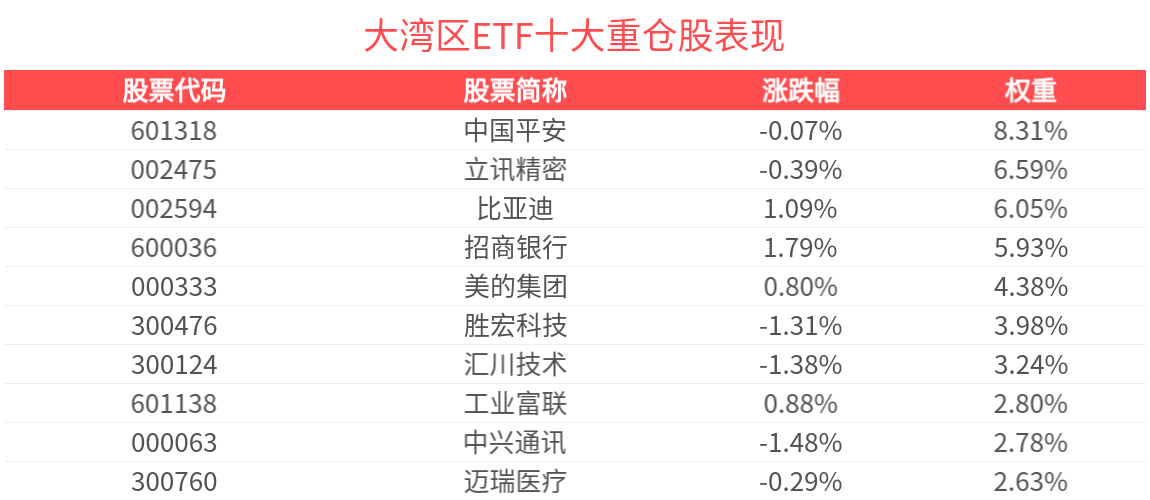
Core Viewpoint - The performance of the China Securities Guangdong-Hong Kong-Macao Greater Bay Area Development Theme Index and its related ETF reflects the market dynamics and investment opportunities within the Greater Bay Area, with notable fluctuations in constituent stocks and overall index performance [1][2]. Group 1: Index Performance - As of February 5, 2026, the China Securities Guangdong-Hong Kong-Macao Greater Bay Area Development Theme Index (931000) decreased by 0.74% [1]. - The Greater Bay Area ETF (512970) also saw a decline of 0.47%, with the latest price at 1.5 yuan [1]. - Over the past six months, the Greater Bay Area ETF has accumulated a rise of 15.97% [1]. Group 2: Stock Performance - Among the constituent stocks, Huayin Securities led with a gain of 10.02%, while Jiejia Weichuang experienced the largest drop at 12.39% [1]. - The top ten weighted stocks in the index account for 44.55% of the total index weight, with China Ping An, Luxshare Precision, and BYD being the top three [2]. Group 3: Trading and Liquidity - The trading volume for the Greater Bay Area ETF was 57.35 million yuan, with an intraday turnover rate of 0.66% [1]. - The average daily trading volume over the past week was 99.55 million yuan [1]. Group 4: Risk and Return Metrics - The maximum drawdown for the Greater Bay Area ETF this year is 5.52%, with a relative benchmark drawdown of 0.02% [1]. - The ETF's Sharpe ratio over the past year is reported at 1.51 [1]. - The tracking error for the ETF over the last three months is 0.022% [1].
明阳智慧能源集团股份公司关于发行股份及支付现金购买资产并募集配套资金暨关联交易预案及摘要的修订说明
Shang Hai Zheng Quan Bao· 2026-02-05 18:32
登录新浪财经APP 搜索【信披】查看更多考评等级 证券代码:601615 证券简称:明阳智能 公告编号:2026-017 明阳智慧能源集团股份公司 关于发行股份及支付现金购买资产并 募集配套资金暨关联交易预案及摘要的 修订说明 本公司董事会及全体董事保证本公告内容不存在任何虚假记载、误导性陈述或者重大遗漏,并对其内容 的真实性、准确性和完整性承担法律责任。 明阳智慧能源集团股份公司(以下简称"公司")于2026年1月23日收到上海证券交易所上市公司管理一 部《关于对明阳智慧能源集团股份公司发行股份及支付现金购买资产预案信息披露的问询函》(上证公 函【2026】0129号)(以下简称"《问询函》")。 根据《问询函》的相关要求,公司对《明阳智慧能源集团股份公司发行股份及支付现金购买资产并募集 配套资金暨关联交易预案》(以下简称"《预案》")及其摘要进行了相应补充和完善。现就本次修订的 主要内容说明如下(如无特别说明,本修订说明中的简称与《预案》中的简称具有相同含义): ■ 特此公告。 明阳智慧能源集团股份公司 董事会 2026年2月6日 证券代码:601615 证券简称:明阳智能 公告编号:2026-016 明 ...
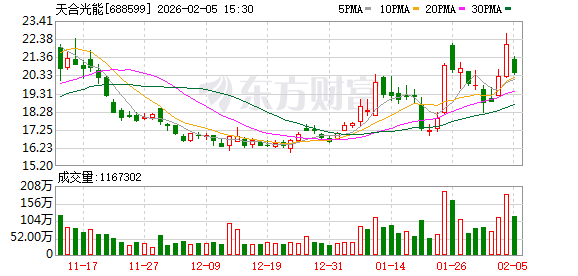
事关“太空光伏” 天合光能、协鑫集成回应
2 1 Shi Ji Jing Ji Bao Dao· 2026-02-05 15:41
Core Viewpoint - The recent visit of SpaceX to several Chinese photovoltaic companies led to a surge in the space photovoltaic concept stocks on February 4, but the momentum could not be sustained, resulting in a significant decline in the space photovoltaic index on February 5 [2][3]. Group 1: Market Performance - On February 5, the space photovoltaic index (8841929) dropped by 4.86%, closing at 3837.43, with notable declines in stocks such as JunDa Co., JinCheng Co., and Shuangliang Energy, which hit the daily limit down [2][3]. - Other companies like GaoCe Co., JieJia WeiChuang, MaiWei Co., JingSheng JiDian, and HaiYou New Materials saw declines exceeding 9%, while Trina Solar fell over 7% and JinkoSolar dropped over 6% [2][4]. Group 2: Company Announcements - Trina Solar announced that it has not engaged in any cooperation with SpaceX and has no related orders in the "space photovoltaic" sector, clarifying that its main products are focused on ground photovoltaic applications [5][6]. - GCL-Poly Energy stated that it has not received any orders in the "space photovoltaic" field and emphasized that the technology is still in the exploratory phase, with uncertain commercial prospects [8]. - JinkoSolar confirmed it has not collaborated with SpaceX and highlighted that the "space photovoltaic" concept remains in the early exploration stage [10]. - Other companies like Guosheng Technology, Shuangliang Energy, and JingSheng JiDian also reported no involvement in "space photovoltaic" business, reiterating the uncertainty surrounding the commercialization of this technology [11][12][13]. Group 3: Financial Forecasts - Trina Solar projected a net loss of between 6.5 billion to 7.5 billion yuan for the year 2025 [7]. - GCL-Poly Energy expects a net loss of between 890 million to 1.29 billion yuan for the same year [8].