
科伦药业

Search documents
国家药监局助力创新药“中国首发”,概念股持续火爆!
Ge Long Hui· 2026-01-08 03:59
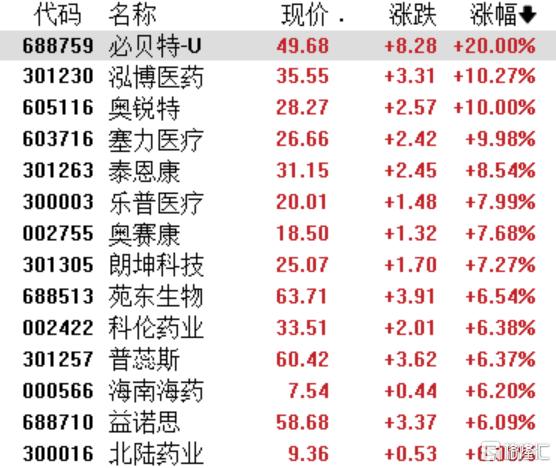
Group 1 - The core message of the news is that China's National Medical Products Administration (NMPA) will enhance support for innovative drugs with new mechanisms and targets throughout the entire process from communication, clinical trials, registration, to review and approval, promoting "China's first launch" of innovative drugs [1][5] - By 2025, it is projected that 76 innovative drugs will be approved for market in China, with 80.85% of chemical drugs being domestic innovations and 91.3% of biological products being domestically developed [5][6] - The internationalization of China's pharmaceutical industry is advancing, with cumulative overseas licensing transactions for innovative drugs exceeding $130 billion, marking a shift from a "generic drug manufacturing powerhouse" to an "innovative drug exporting powerhouse" [6] Group 2 - The A-share market is seeing a strong performance in innovative drug concept stocks, with companies like Beibite-U and Hongbo Pharmaceutical experiencing significant price increases [2][3] - As of the end of 2025, the total market capitalization of 158 innovative drug concept stocks in the A-share market reached 3.42 trillion yuan, with several companies achieving over 100 billion yuan in market value [12][14] - The innovative drug sector is expected to remain a key investment theme in 2026, with a focus on clinical progress and data validation for pipelines that have already entered overseas markets [12][16]

多位知名基金经理“出手”!
Zhong Guo Ji Jin Bao· 2026-01-08 03:41
Group 1 - Notable fund managers have disclosed their latest stock adjustments as the new year begins, with several companies announcing related updates [1] - Fund managers Ge Lan and Tang Xiaobin reduced their holdings in Kelun Pharmaceutical (002422), while Zhao Bei increased her stake [1][2] - Liu Yanchun and Hu Xinwei reduced their holdings in Proya (603605), while Zhou Yun entered the top ten shareholders of Jiazhe New Energy (601619) [1][6] Group 2 - As of December 31, 2025, Ge Lan's fund held 38.1954 million shares of Kelun Pharmaceutical, having reduced by 1.867 million shares compared to the previous quarter [2] - Tang Xiaobin's fund exited the top ten shareholders of Kelun Pharmaceutical by the end of 2025, having reduced holdings from 24.2335 million shares to 13.94 million shares [4] - Zhao Bei's fund increased its holdings in Kelun Pharmaceutical to 22 million shares, up by 2 million shares from the previous quarter [4] Group 3 - Liu Yanchun's fund held 2.6 million shares of Proya as of December 30, 2025, down from 3.332 million shares, indicating a reduction of over 700,000 shares [7] - Hu Xinwei's fund is no longer among the top ten shareholders of Proya [8] - Zhou Yun's fund and the National Social Security Fund 404 combination entered the top ten shareholders of Jiazhe New Energy in the fourth quarter of 2025 [9] Group 4 - The National Social Security Fund 114 combination increased its holdings in Nanshan Aluminum (600219) by 4.3432 million shares in the fourth quarter of 2025 [9] - By the end of 2025, five ETF products were included among the top ten shareholders of Nanshan Aluminum, indicating the growing influence of index funds [9] Group 5 - A significant increase in institutional research activities has been noted, with over 10,000 research sessions conducted in the past month, focusing on sectors such as semiconductors, general equipment, automotive, and artificial intelligence [10] - Fund managers are optimistic about the performance of non-financial listed companies in A-shares for 2025 and 2026, anticipating a stable recovery [10]


多位知名基金经理“出手”!
中国基金报· 2026-01-08 03:36
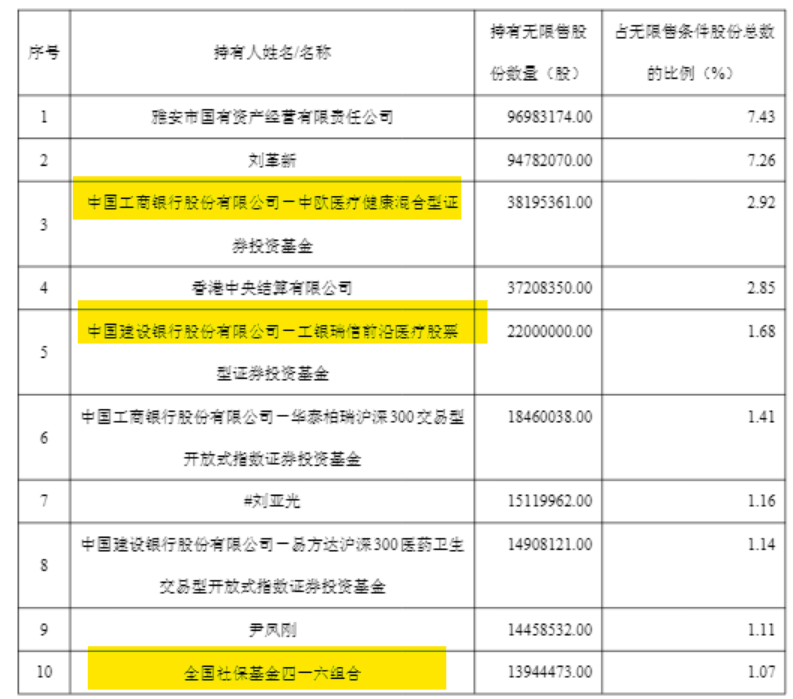
Core Viewpoint - The article discusses the recent stock adjustments made by several well-known fund managers, highlighting their changes in holdings in various companies, particularly focusing on Kelong Pharmaceutical and Proya Cosmetics [2]. Group 1: Kelong Pharmaceutical - Fund managers Ge Lan and Tang Xiaobin reduced their holdings in Kelong Pharmaceutical, while Zhao Bei increased her stake [3]. - As of December 31, 2025, Ge Lan's fund held 38.1954 million shares of Kelong Pharmaceutical, a decrease of 1.867 million shares compared to the end of the third quarter [4]. - Tang Xiaobin's fund, Guangfa Multi-Factor Mixed Fund, exited the top ten shareholders of Kelong Pharmaceutical by the end of 2025, having reduced its holdings from 24.2335 million shares to at least 10.2935 million shares [6]. - In contrast, Zhao Bei's fund held 22 million shares of Kelong Pharmaceutical as of December 31, 2025, an increase of 2 million shares from the previous quarter [6]. - The National Social Security Fund's 416 portfolio became the tenth largest shareholder of Kelong Pharmaceutical with 13.9445 million shares by the end of 2025 [7]. Group 2: Proya Cosmetics - Liu Yanchun and Hu Xinwei reduced their holdings in Proya Cosmetics, with Liu's fund holding 2.6 million shares as of December 30, 2025, down from 3.332 million shares [9]. - Hu Xinwei's fund is no longer among the top ten shareholders of Proya Cosmetics [10]. Group 3: Other Companies - Zhou Yun's fund and the National Social Security Fund's 404 portfolio entered the top ten shareholders of Jiazhe New Energy by the end of 2025 [11]. - The National Social Security Fund's 114 portfolio increased its holdings in Nanshan Aluminum by 4.3432 million shares in the fourth quarter of 2025, with five ETF products now included among the top ten shareholders [11]. Group 4: Market Trends - As of early 2026, A-shares stabilized above 4000 points, with over 10,000 institutional research activities focused on sectors like semiconductors and artificial intelligence [13]. - Fund managers express optimism for A-share performance in 2026, anticipating a recovery in earnings growth for non-financial listed companies [13].

A股异动丨国家药监局重磅发声,创新药概念股集体走强,必贝特创上市新高
Ge Long Hui A P P· 2026-01-08 02:27
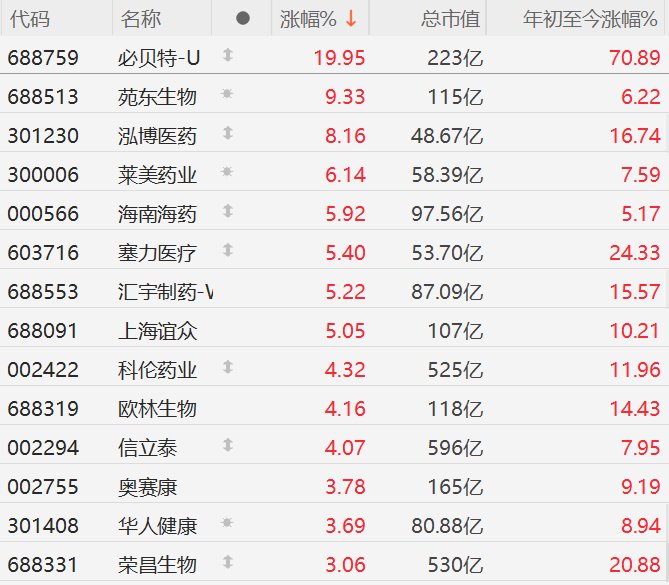
Group 1 - The A-share market continues to show strength in innovative drug concept stocks, with notable gains from companies such as Bibot-U nearing the daily limit and reaching a new high, and Yuandong Bio rising over 9% [1] - The National Medical Products Administration (NMPA) is set to support the "China debut" of innovative drugs, with plans to implement a data protection system for drug trials and establish exclusive market periods for pediatric and rare disease medications by 2026 [1] - The NMPA has announced further optimization of the review and approval process for urgently needed foreign drugs already on the market to meet the pressing clinical needs of patients [1] Group 2 - Notable stock performances include Bibot-U with a 19.95% increase, Yuandong Bio up 9.33%, and Hongbo Pharmaceutical rising 8.16%, among others [2] - The total market capitalization for Bibot-U is 22.3 billion, while Yuandong Bio stands at 11.5 billion, and Hongbo Pharmaceutical at 4.867 billion [2] - Year-to-date performance shows Bibot-U leading with a 70.89% increase, followed by Hongbo Pharmaceutical at 16.74% and Lai Mei Pharmaceutical at 7.59% [2]


创新药领衔科技IPO突围!全市场孤品·创新药ETF天弘(517380)标的指数冲击五连阳,昨日净流入近9000万元,创25年4月以来新高!
Sou Hu Cai Jing· 2026-01-08 02:22
Core Viewpoint - The innovative drug ETF Tianhong (517380) has seen significant trading activity and growth, indicating a strong interest in the innovative drug sector, which is experiencing a historic surge in IPOs and commercialization efforts [1][4]. Group 1: ETF Performance - As of January 8, 2026, the innovative drug ETF Tianhong (517380) recorded a transaction volume of 18.58 million yuan, with the tracked index HSSSHID rising by 0.92% [1]. - The latest scale of the innovative drug ETF Tianhong reached 1.578 billion yuan, with a total of 1.962 billion shares, both marking all-time highs since its inception [2]. - The net inflow of funds into the innovative drug ETF Tianhong was 89.42 million yuan, the highest since April 2025 [3]. Group 2: Market Trends - The innovative drug sector is experiencing a "volume and price increase" opportunity, with the top ten constituent stocks of the ETF heavily weighted towards leading companies like WuXi AppTec and HengRui Medicine, benefiting from a surge in business development (BD) transactions and breakthroughs in AI drug development [3]. - In 2025, the innovative drug sector achieved a historic explosion, with over 30 biotech companies successfully listed in A-shares and Hong Kong, and more than 50 companies awaiting approval, reflecting unprecedented capital activity [4]. - The sector has transitioned from mere speculation to substantial commercialization, becoming a benchmark sector with both growth potential and certainty in the current bull market [4]. Group 3: Institutional Insights - Southwest Securities noted that in early 2025, Hong Kong companies began achieving BD, leading to a rise in the innovative drug sector; a government report in March emphasized support for innovative drugs and medical devices, further boosting A-share performance [5]. - The sector experienced a significant price increase following a major BD deal worth 1.25 billion USD in May, but faced a high-level adjustment by the end of the third quarter [5]. - The firm predicts that in 2026, the innovative drug sector will shift from a broad rally to a selective stock market [5].



中新健康丨一针少花两千,新版医保目录调整能省多少钱
Zhong Guo Xin Wen Wang· 2026-01-08 01:45
Core Insights - The recent adjustment to the National Medical Insurance Drug List has significantly reduced the costs of long-acting growth hormone treatments, benefiting many families [1] - The new drug list includes a high proportion of innovative drugs and aims to enhance drug accessibility for patients in urgent clinical need [2] Group 1: New Drug Additions - A total of 114 new drugs have been added to the insurance list, covering critical areas such as oncology, chronic diseases, and rare diseases [2] - The average price reduction for newly added drugs exceeds 60%, significantly alleviating the financial burden on patients [2] - Notable new drugs include innovative treatments for triple-negative breast cancer and pancreatic cancer, as well as long-acting growth hormone for children [2] Group 2: Optimization of Existing Drugs - The payment scope for 65 existing drugs has been optimized, including expanded indications for certain medications [3] - Adjustments have been made to ensure that the descriptions of drug payment scopes align more closely with clinical realities [3] Group 3: Policy Measures - The government has implemented a series of policies to ensure that negotiated drugs are effectively integrated into hospitals and accessible to patients [3] - Medical institutions are required to hold pharmacy meetings to incorporate new drugs into their procurement lists by February 2026 [3] Group 4: Industry Impact - The adjustment has led to the removal of 29 drugs that have lower efficacy or better alternatives available, thereby optimizing the use of medical insurance funds [4] - The inclusion of numerous innovative drugs indicates a strengthening of domestic pharmaceutical companies' research and development capabilities [4][5] - Major companies like Heng Rui Medicine and Innovent Biologics have successfully introduced multiple innovative drugs into the new insurance list [5]
一针少花两千,新版医保目录调整能省多少钱
Zhong Guo Xin Wen Wang· 2026-01-08 01:28
Core Insights - The recent adjustment to the National Medical Insurance Drug List has significantly reduced the costs of long-acting growth hormone treatments, benefiting many families [1] - The new drug list includes a substantial number of innovative drugs, with an average price reduction of over 60%, aimed at improving patient access to essential medications [2] Group 1: New Drug Additions - A total of 114 new drugs have been added to the insurance list, covering critical areas such as oncology, chronic diseases, and rare diseases [2] - Notable new drugs include innovative treatments for triple-negative breast cancer and pancreatic cancer, as well as long-acting growth hormone for children [2][4] - The new drugs are characterized by either filling clinical treatment gaps, being superior to existing options, or offering better cost-effectiveness [2] Group 2: Existing Drug Adjustments - The payment scope for 65 existing drugs has been optimized, including expanding the target population for certain medications [3] - Adjustments have been made to align drug descriptions more closely with clinical realities, facilitating easier prescription by healthcare providers [3] Group 3: Policy and Industry Impact - The adjustment aims to optimize the use of medical insurance funds, allowing for the introduction of innovative drugs while removing less effective ones [4] - The removal of 29 drugs primarily targets those with lower cost-effectiveness or available alternatives, with minimal impact on most patients [4] - The inclusion of numerous innovative drugs reflects the strengthening of domestic pharmaceutical companies' R&D capabilities [5] Group 4: Financial Implications - The National Medical Insurance Bureau has adjusted the drug list for eight consecutive years, adding a total of 949 new drugs, with significant financial implications for the pharmaceutical market [5] - The insurance fund has spent over 460 billion yuan on negotiated drug expenditures, driving sales growth exceeding 600 billion yuan [5]
002422 葛兰减持 社保基金新进
Shang Hai Zheng Quan Bao· 2026-01-07 20:11
Core Viewpoint - The recent announcements from Kelun Pharmaceutical indicate significant changes in institutional holdings, with notable fund managers adjusting their positions, reflecting a mixed sentiment in the market towards the company's future prospects [1] Group 1: Institutional Holdings Changes - Guo Lan, a well-known fund manager from China Europe Fund, reduced holdings in Kelun Pharmaceutical by 1.867 million shares in Q4 2025, following a previous reduction of 2.5371 million shares in Q3 2025 [1] - The Guangfa Multi-Factor Mixed Fund, managed by Tang Xiaobin, also exited the top ten shareholders of Kelun Pharmaceutical by reducing over 10 million shares in Q4 2025 [1] - In contrast, Zhao Bei from ICBC Credit Suisse increased holdings in Kelun Pharmaceutical by 2 million shares in Q4 2025, while the National Social Security Fund's 416 portfolio became a new top ten shareholder with 13.9445 million shares [1] Group 2: Market Sentiment and Future Outlook - Fund managers express optimism about the market, actively seeking investment opportunities, with a focus on sectors like automotive, semiconductors, and specialized equipment [1] - Liu Ankun from Rongtong Fund noted a "short-term active, long-term positive" market characteristic, supported by continuous inflow of incremental funds and strong sectoral performance in AI and non-ferrous metals [1] - The market is expected to continue its upward trend, driven by funding factors and potential catalysts in industries such as semiconductors and commercial aerospace, with a belief that the spring market rally may have already begun [1]
葛兰、赵蓓、胡昕炜、刘彦春等百亿基金经理,最新调仓路线曝光
Zhong Guo Zheng Quan Bao· 2026-01-07 15:19
Group 1 - Kelong Pharmaceutical has seen a reduction in holdings by the China Europe Medical Health Mixed Fund managed by fund manager Ge Lan, from 42.60 million shares at the end of Q2 2025 to 38.20 million shares by the end of Q4 2025, indicating a decrease of 1.87 million shares [1] - The same fund had already begun reducing its stake in Kelong Pharmaceutical in Q3 2025, where the holdings decreased from 42.60 million shares to 40.06 million shares, a reduction of 2.53 million shares [1] - In contrast, the Industrial Bank of China Credit Suisse Frontier Medical Stock Fund managed by Zhao Bei increased its holdings in Kelong Pharmaceutical from 20.00 million shares at the end of Q3 2025 to 22.00 million shares by the end of Q4 2025 [1] Group 2 - Proya, another well-known consumer goods company, announced a share buyback on January 5, 2025, revealing that the Invesco Great Wall Emerging Growth Mixed Fund managed by Liu Yanchun reduced its holdings from 3.33 million shares at the end of Q3 2025 to 2.60 million shares by the end of December 30, 2025, a decrease of over 700,000 shares [2] - Additionally, the fund managed by Hu Xinwei, the Huatai-PineBridge Consumer Industry Mixed Fund, has exited the top ten circulating shareholders of Proya [2]
医药制造行业2026年度信用风险展望(2025年12月)
Lian He Zi Xin· 2026-01-07 11:29
Investment Rating - The report indicates that the overall credit risk of the pharmaceutical manufacturing industry is controllable, with stable operating performance expected in 2026 [5][6][11]. Core Insights - The pharmaceutical manufacturing industry has shown a slight increase in the number of enterprises, with a deepening degree of differentiation within the industry. Revenue and total profit have remained stable year-on-year due to a stabilizing policy environment [6][11]. - The "14th Five-Year Plan" supports the development of innovative drugs, with the scale of license-out exceeding the total for 2024 in the first three quarters of 2025, indicating a positive outlook for innovative drug development [6][11]. - The industry has maintained net inflows in bond market financing, with overall debt pressure being manageable despite a significant amount of bonds maturing within one year [6][11]. Industry Fundamentals Industry Policy - The pharmaceutical industry is highly sensitive to policy changes, with a "three medical linkage" policy framework encouraging innovation, improving medical services, and optimizing medical insurance payments. The "14th Five-Year Plan" emphasizes the strategic importance of the biomanufacturing industry [7][8]. - Recent policies have focused on cost control in medical insurance, reforming payment methods, and promoting the development of generic drugs and innovative medicines [7][8]. Industry Operating Conditions - As of the end of 2024, the number of pharmaceutical manufacturing enterprises in China reached 9,793, with a slight increase in the number of loss-making enterprises, indicating a growing differentiation within the industry [12][11]. - The basic medical insurance fund's income and expenditure structure has improved, with significant cost control effects observed [11][12]. Financial Performance Growth Metrics - In 2024, the pharmaceutical manufacturing industry reported total revenue of 25,298.5 billion yuan and total profit of 3,420.7 billion yuan, with minor fluctuations expected in 2025 [22][23]. - For the first three quarters of 2025, total revenue was 18,211.4 billion yuan, a decrease of 2.00% year-on-year, while total profit was 2,534.8 billion yuan, down 0.70% [22][23]. Profitability - The gross profit margin for the pharmaceutical manufacturing industry has shown a declining trend, with the sales expense ratio remaining stable and the management expense ratio slightly decreasing [24][25]. - The net cash flow from operating activities has been declining, indicating potential liquidity risks [24][25]. Leverage and Solvency - The leverage level in the pharmaceutical manufacturing industry remains low, with a slight fluctuation observed in recent years. The debt-to-asset ratio has been stable, and the overall solvency indicators are at a high level [30][31]. - As of September 2025, the liquidity ratios have slightly improved, indicating a manageable debt repayment risk [31][32]. Bond Market Performance Issuance Overview - In 2025, the pharmaceutical manufacturing industry experienced a net inflow in bond market financing, with a total of 104 bonds issued amounting to 713.80 billion yuan [39][41]. - The industry has seen a concentration of bond issuers at the AA+ level, with a significant number of private enterprises involved [39][41].