第四范式

Search documents
壁仞之后,昆仑芯、智谱也要来了!港股硬科技迎IPO热潮,首只“港股芯片链”ETF放量涨超3%
Xin Lang Cai Jing· 2026-01-05 06:25
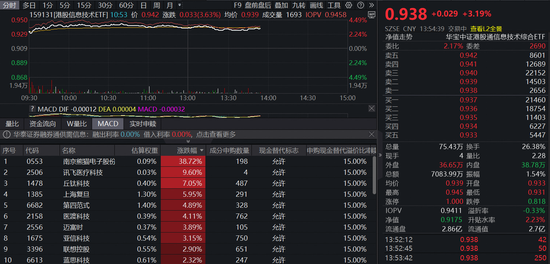
Core Viewpoint - The Hong Kong stock market is witnessing a strong performance in the technology sector, particularly with the launch of the first ETF focused on the "Hong Kong chip" industry chain, which has shown a significant increase in value and trading volume [1][4]. Group 1: ETF Performance - The Hong Kong Information Technology ETF (159131) opened high and maintained a slight fluctuation, currently up by 3.19% with a trading volume exceeding 700 million CNY [1][4]. - The ETF is designed to track the "Hong Kong Stock Connect Information Technology Composite Index," with a composition of 70% hardware and 30% software, focusing on semiconductor, electronics, and computer software sectors [4][9]. Group 2: Market Trends - The Hong Kong hard technology sector is experiencing an IPO boom, with companies like Baidu Kunlun Chip and others preparing for listings, indicating a growing interest in domestic AI and computing technologies [3][8]. - The Chinese intelligent computing chip market is projected to grow from 1.7 billion USD in 2020 to 30.1 billion USD by 2024, with a compound annual growth rate (CAGR) of 105%, significantly outpacing global market growth [3][8]. Group 3: Key Stocks Performance - Notable stocks within the ETF include Nanjing Panda Electronics, which surged over 40%, and other companies like iFlytek Medical Technology and Hillstone Technology, which also saw significant gains [1][4]. - Semiconductor companies such as SMIC and Hua Hong Semiconductor are included in the ETF, with respective weightings of 20.48% and 5.80%, highlighting their importance in the portfolio [4][9].

港股AI大反攻,机构称AI仍是港股互联网板块估值上行的核心催化,港股通互联网ETF基金今日发行
Sou Hu Cai Jing· 2026-01-05 02:51
值得关注的是,跟踪中证港股通互联网指数的港股通互联网ETF基金(基金代码:520910,认购代码: 520913)今日重磅发行,重仓阿里巴巴-W、腾讯控股、小米集团-W、快手-W、美团-W等互联网龙 头,汇聚AI云计算、大模型+各领域AI应用公司,龙头优势显著。 银河证券认为,2026年港股总体有望震荡上行。国内外货币政策宽松背景下,外资和南向资金均有望继 续保持净流入趋势。在加快科技创新、新一轮供给侧改革、扩大内需等利好政策带动下,港股上市公司 盈利水平有望实现实质性提升,市场将迎来盈利与估值均上涨的格局。 2026年A股首个交易日(1月5日),港股互联网板块高开后持续强势,港股科网龙头多数上涨,快手狂 飙逾12%,哔哩哔哩涨超5%,贝壳、平安好医生、第四范式等齐涨。 行情主线方面,在"十五五"时期科技自立自强水平大幅提高的目标下,科技创新将是港股投资的一大主 线。港股科技估值修复空间仍大,龙头业绩有望呈现高景气特征。中信证券表示,AI依然是港股互联 网板块估值上行的核心催化。 中金指出,近期在美联储降息预期升温和国内年底结汇高峰推动下,人民币兑美元升值加速。特朗 普"大重置"下,美国货币配合财政,认为美元 ...
ETF盘中资讯|开门红!港股AI大反攻,港股互联网ETF(513770)豪涨逾4%突破年线!快手、哔哩哔哩领衔大涨
Sou Hu Cai Jing· 2026-01-05 02:19
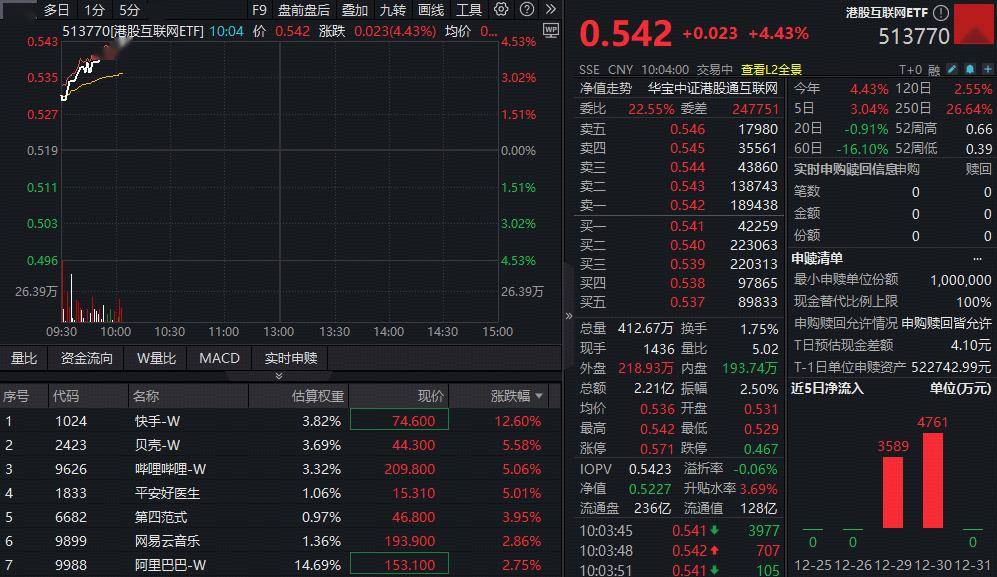
2026年A股首个交易日(1月5日),重仓互联网龙头的港股互联网ETF(513770)跳空高开,强势大涨超4%突破年线!港股科网龙头多数上 涨,快手狂飙逾12%,哔哩哔哩涨超5%,贝壳、平安好医生、第四范式等齐涨超4%。 提醒:近期市场波动可能较大,短期涨跌幅不预示未来表现。请投资者务必根据自身的资金状况和风险承受能力理性投资,高度注意仓位和 风险管理。 数据来源:沪深交易所等。中证港股通互联网指数近5个完整年度的涨跌幅分别为:2020年,109.31%;2021年,-36.61%;2022 年,-23.01%;2023年,-24.74%;2024年,23.04%。指数成份股构成根据该指数编制规则适时调整,其回测历史业绩不预示指数未来表现。 风险提示:港股互联网ETF被动跟踪中证港股通互联网指数,该指数基日为2016.12.30,发布于2021.1.11,指数成份股构成根据该指数编制规 则适时调整。文中指数成份股仅作展示,个股描述不作为任何形式的投资建议,也不代表管理人旗下任何基金的持仓信息和交易动向。基金 管理人评估的该基金风险等级为R4-中高风险,适宜积极型(C4)及以上的投资者。任何在本文出现的信息(包 ...

开门红!港股AI大反攻,港股互联网ETF(513770)豪涨逾4%突破年线!快手、哔哩哔哩领衔大涨
Xin Lang Cai Jing· 2026-01-05 02:12
Core Viewpoint - The Hong Kong Internet ETF (513770) experienced a strong opening on January 5, 2026, with a jump of over 4%, indicating positive market sentiment towards internet leaders in Hong Kong [1][4]. Group 1: Market Performance - The Hong Kong Internet ETF (513770) surged over 4% and broke through the annual line, with major internet stocks like Kuaishou rising over 12% and Bilibili increasing by more than 5% [1][4]. - The ETF's latest price-to-earnings ratio (PE) is 25.31, which is significantly lower than the 5-year average of 29.34%, highlighting its value compared to other indices like the ChiNext and Nasdaq [3][7]. - The ETF's average daily trading volume in 2025 was nearly 600 million yuan, supporting T+0 trading and indicating good liquidity [8]. Group 2: Economic Context - Recent expectations of interest rate cuts by the Federal Reserve and the peak of year-end foreign exchange settlements in China have accelerated the appreciation of the RMB against the USD [3][4]. - A weaker dollar is expected to enhance global economic recovery, which may boost domestic export growth and profit improvement [3][4]. - The overall market outlook for Hong Kong stocks in 2026 is positive, with expectations of continued net inflows from foreign and southbound capital due to a favorable monetary policy environment [7][8]. Group 3: Investment Strategy - The Hong Kong Internet ETF is passively tracking the CSI Hong Kong Stock Connect Internet Index, with significant holdings in major internet companies like Alibaba, Tencent, and Xiaomi, which collectively account for over 78% of the top ten holdings [7][8]. - For investors looking to reduce volatility while still focusing on technology, the Hong Kong Large Cap 30 ETF (520560) is recommended, which combines high-growth tech stocks with stable dividend-paying companies [8].

喜迎开门红,港股科技爆发!首只聚焦“港股芯片”产业链的港股信息技术ETF(159131)跳空高开大涨3.63%
Xin Lang Cai Jing· 2026-01-05 02:01
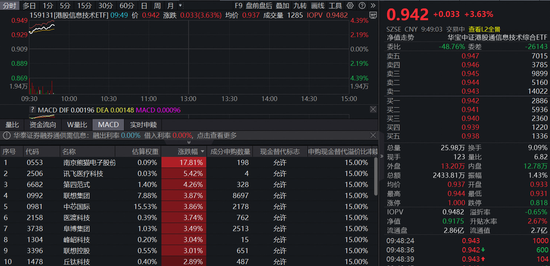
Core Viewpoint - The A-share and Hong Kong stock markets experienced a strong start to the year on January 5, 2026, with significant gains in technology sectors, particularly in the Hong Kong market, where indices such as the Hang Seng Technology Index rose over 4% [1][3]. Group 1: Market Performance - The first trading day of 2026 saw the Hong Kong stock market's technology sector surge, with the Hang Seng Technology Index and the Hong Kong Internet Index both increasing by over 4% [1][3]. - The first ETF focusing on the "Hong Kong chip" industry chain, the Hong Kong Information Technology ETF (159131), opened with a jump of 3.63%, achieving a real-time transaction volume exceeding 24 million CNY [1][3]. Group 2: Sector Insights - Analysts from Galaxy Securities predict that the Hong Kong stock market will continue to see increased trading activity and an overall upward trend, driven by multiple positive factors [3][9]. - The technology sector remains a key focus for medium to long-term investments, supported by price increases in the supply chain, mergers and acquisitions, and domestic substitution trends [3][9]. Group 3: IPO and Market Trends - The IPO of domestic GPU company Birun Technology on January 2 saw its stock price surge nearly 120% on its first day, marking it as the "first GPU stock" in Hong Kong [3][9]. - Birun Technology aims to capture a market share of 0.2% in the Chinese smart computing chip market by 2025, with the market size projected to reach 50.4 billion USD [3][9]. Group 4: ETF Composition - The Hong Kong Information Technology ETF (159131) is structured with a composition of 70% hardware and 30% software, heavily investing in semiconductor, electronics, and computer software sectors, including major companies like SMIC (20.48% weight) and Xiaomi (9.53% weight) [3][9]. - The ETF excludes large-cap internet companies such as Alibaba, Tencent, and Meituan, allowing for a sharper focus on AI and hard technology trends in the Hong Kong market [3][9].
中国AI软件如何走出自己的“范式”路线?
Guan Cha Zhe Wang· 2026-01-02 05:56
Core Insights - The article highlights a significant divergence in the global AI software sector, contrasting standardized SaaS giants like Salesforce with customized solution providers like Palantir, which has accelerated revenue growth and stock revaluation amid the AI wave [1][3]. Group 1: Palantir's Business Model and Success - Palantir, originally focused on government and intelligence data analysis, has expanded its capabilities to various industries, integrating data and processes into a "decision operating system" [3][5]. - The company has secured substantial contracts, including a long-term agreement with the U.S. Army worth up to $10 billion, which positions its platform as a central operational hub, leading to significant long-term revenue and high switching costs [3][5]. - Palantir's approach differs fundamentally from Salesforce's standardized model; it embeds AI deeply into clients' operations, making it difficult for clients to switch providers once integrated [5][12]. Group 2: Fourth Paradigm's Position in China - Fourth Paradigm, established in 2014, serves large organizations in sectors like banking and energy, focusing on embedding AI models into specific business scenarios rather than offering general applications [7][12]. - The company has transitioned from project-based delivery to developing a platform called "Prophet," which standardizes and automates the AI deployment process, similar to Palantir's evolution [8][11]. - In the Chinese market, Fourth Paradigm faces unique challenges, such as concentrated budgets on hardware, necessitating a "soft and hard integration" approach to deliver AI solutions effectively [9][12]. Group 3: Market Positioning and Strategy - Fourth Paradigm is positioned as an "organizational-level AI infrastructure provider," distinct from traditional SaaS or IT outsourcing firms, focusing on embedding AI into critical decision-making processes [15][16]. - The company emphasizes the importance of a platform-based approach and partnerships to scale its operations, which is crucial for reducing marginal costs and achieving efficiency [16][17]. - The article suggests that the true competitive advantage lies in how extensively AI is utilized within client operations, rather than just the algorithms themselves [16][17].
心智观察所:中国AI软件如何走出自己的“范式”路线?
Guan Cha Zhe Wang· 2026-01-02 05:56
Core Insights - The article highlights a significant divergence in the global AI software sector, contrasting standardized SaaS giants like Salesforce with Palantir, which has accelerated revenue and stock valuation through customized AI applications [1][3] - AI is fundamentally altering the value delivery of software, with companies like Fourth Paradigm in China being compared to Palantir due to their similar approaches [1][7] Group 1: Palantir's Business Model - Palantir, originally focused on government and intelligence data analysis, has expanded its capabilities to various sectors, integrating data and processes into a "decision operating system" [3][5] - The company has secured substantial government contracts, including a long-term agreement with the U.S. Army worth up to $10 billion over ten years, which provides significant long-term revenue and high switching costs for clients [3][6] - Palantir's approach involves embedding AI deeply into clients' operational systems, making it difficult for clients to switch to competitors once integrated [6][12] Group 2: Fourth Paradigm's Strategy - Fourth Paradigm, established in 2014, focuses on embedding AI models into specific business scenarios for large organizations in sectors like finance and energy [7][9] - The company has transitioned from a project-based model to a platform-based approach, developing an AI platform called "Prophet" that standardizes and automates the AI deployment process [8][11] - Fourth Paradigm's management acknowledges the need for a "soft and hard integration" approach due to the unique challenges in the Chinese market, where hardware budgets are prioritized [9][10] Group 3: Market Positioning - Fourth Paradigm is positioned uniquely in the Chinese software landscape, focusing on embedding AI into complex decision-making processes rather than offering broad SaaS solutions [14][15] - Unlike traditional management software companies, Fourth Paradigm aims to be an "organizational-level AI infrastructure provider," emphasizing deep integration over wide coverage [15][18] - The company is not merely replicating Palantir's model but is exploring a path that aligns with China's specific market conditions and technological landscape [18][17] Group 4: Future Considerations - The article suggests that for Chinese AI application companies to succeed, they must accept the reality of heavier initial delivery and longer cycles due to the current state of technology and processes [17] - Building a platform and partner ecosystem is essential for scaling operations and reducing marginal costs, as demonstrated by Fourth Paradigm's strategy [17] - The true competitive advantage lies in how extensively AI is utilized within client operations, which can redefine business models and valuation logic [17][18]


智通港股通占比异动统计|1月1日



智通财经网· 2026-01-01 00:40
Core Insights - The report highlights the changes in the Hong Kong Stock Connect holdings, indicating significant increases and decreases in ownership percentages for various companies as of December 31, 2025 [1] Group 1: Increased Holdings - Andeli Juice (02218) saw the largest increase in ownership percentage, rising by 2.35% to a total holding of 23.75% [2] - Mengniu Dairy (02319) experienced a slight increase of 0.07%, bringing its holding to 17.52% [2] - The Yingfu Fund (02800) had a minimal increase of 0.02%, resulting in a holding of 1.78% [2] - Other notable increases include Lion Group (02562) with a 3.79% rise to 49.05% and Zhejiang Shibao (01057) with a 3.55% increase to 58.76% [3] Group 2: Decreased Holdings - Country Garden (02007) faced the largest decrease, with a drop of 0.51% to a holding of 15.33% [2] - Geely Automobile (00175) saw a reduction of 0.16%, resulting in a holding of 11.37% [2] - Huaxia Hengsheng Technology (03088) experienced a minor decrease of 0.02%, leading to a holding of 20.19% [2] - Other significant decreases include Jiahe Biotechnology-B (06998) with a 1.74% drop to 0.61% and Chalco International (02068) with a 1.50% decrease to 19.44% [3] Group 3: Five-Day Changes - Over the last five trading days, Lion Group (02562) had the highest increase in ownership percentage, up by 3.79% [3] - Zhejiang Shibao (01057) and Sanhua Intelligent Control (02050) also saw significant increases of 3.55% and 3.46%, respectively [3] - Conversely, Jiahe Biotechnology-B (06998) had the largest decrease of 1.74% over the same period [3] Group 4: Twenty-Day Changes - In the last twenty days, Lion Group (02562) experienced a substantial increase of 23.92% in ownership [4] - Jihong Co., Ltd. (02603) followed with a 22.62% increase, reaching a holding of 54.86% [4] - Red Star Macalline (01528) also saw an increase of 8.47%, bringing its holding to 52.20% [4]
“造船远航”时代已来,解码京企“出海”逻辑
Xin Jing Bao· 2025-12-31 06:10
Core Insights - Chinese enterprises are accelerating their globalization efforts, transitioning in foreign trade towards quality, efficiency, and innovation-driven models [1] - Beijing is emerging as an international technology innovation center, enhancing competitiveness in smart technology, green trade, and digital services through institutional innovation and reform [1][2] - The number of unicorn companies in China has reached 409, accounting for nearly 30% of the global total, with Beijing housing 115 of these, valued at $594.9 billion [1] Group 1: Globalization Strategies - Beijing enterprises are shifting from "product output" to "ecosystem output," exemplified by Xiaomi's integration of hardware, software, and services in overseas markets [1] - JD Group is exporting its mature supply chain and logistics solutions to assist in the digital transformation of local businesses in Southeast Asia, showcasing the global empowerment value of the "Chinese supply chain ecosystem" [1] - Liard has expanded its overseas business significantly, with a 40% year-on-year growth in its overseas smart display business in the first half of 2022 [5][6] Group 2: Ecosystem Development - Liard's global strategy has evolved from "China screen" to "world window," with a focus on project, brand, and ecosystem exports [6] - Kunlun Wanwei has successfully entered overseas markets through a matrix of gaming and social applications, now focusing on artificial intelligence to build a global AI ecosystem [6] - Fourth Paradigm is establishing an industry AI application ecosystem globally, following a path of technology validation and benchmark establishment [7] Group 3: Policy and Future Outlook - The Beijing Municipal Economic and Information Bureau aims to establish a comprehensive service system for enterprises going abroad by 2028, linking over 100 international organizations and establishing 20 overseas service stations [9] - The dual drive of policy support and platform ecosystem will enable Beijing enterprises to expand into global markets more robustly and efficiently, enhancing both the quantity and quality of outbound enterprises [10] - The evolution of Beijing enterprises' globalization strategies reflects a transition from "borrowing boats to go to sea" to "building ships for long voyages," embedding technology standards and business models into the global value chain [10]

天数智芯开启招股:估值超350亿,第四范式与中兴认购,1月8日上市
3 6 Ke· 2025-12-31 00:44
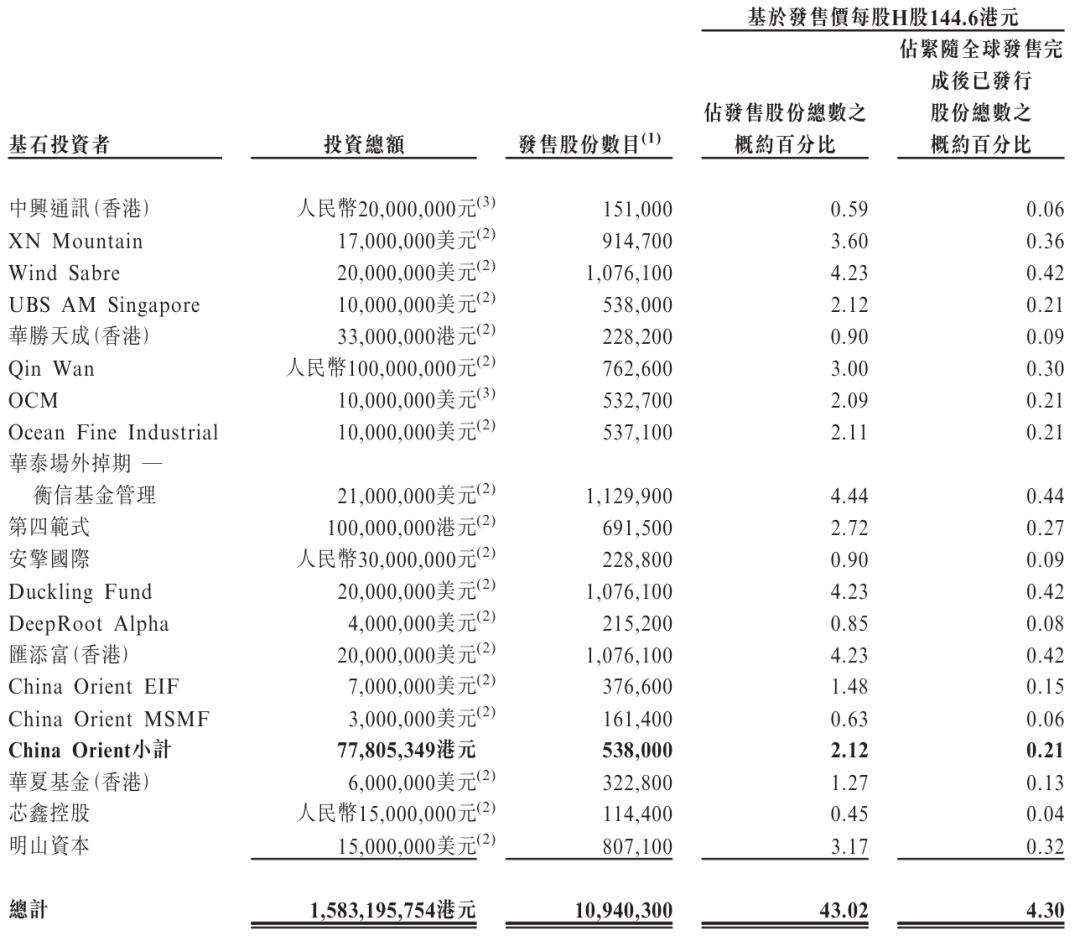
Core Viewpoint - TianShu ZhiXin Semiconductor Co., Ltd. (stock code: "9903") has initiated its IPO process, aiming for a listing on the Hong Kong Stock Exchange on January 8, 2026, with an issue price of HKD 144.60 per share and a total fundraising target of approximately HKD 3.7 billion, leading to a market capitalization of HKD 35.44 billion at IPO [1][4]. Group 1: IPO Details - TianShu ZhiXin plans to issue 25,431,800 shares at an IPO price of HKD 144.60, targeting a total fundraising of around HKD 3.7 billion [1]. - The company has secured cornerstone investors including ZTE Corporation (Hong Kong), XN Mountain, Wind Sabre, UBS AM Singapore, and others, with total subscriptions amounting to HKD 1.583 billion [1][2]. Group 2: Financial Performance - For the first half of 2025, TianShu ZhiXin reported revenue of RMB 324.26 million, a significant increase from RMB 197.43 million in the same period the previous year [10]. - The company’s revenue for 2022, 2023, and 2024 was RMB 189.37 million, RMB 289.04 million, and RMB 539.51 million respectively, with corresponding gross profits of RMB 112.41 million, RMB 143.15 million, and RMB 265.08 million [8][10]. - The gross margin for 2022, 2023, and 2024 was 59.4%, 49.5%, and 49.1% respectively, indicating a declining trend in profitability [10]. Group 3: Product Offerings - TianShu ZhiXin has developed a comprehensive product system that includes general-purpose GPU products and AI computing solutions, addressing the full spectrum of AI computing needs [4][5]. - The flagship TianYuan series is designed for AI model training, while the ZhiKai series focuses on inference applications, both contributing to a complete AI computing solution [5][6]. Group 4: Market Strategy - The company employs a flexible market strategy, offering customized products and solutions tailored to the diverse needs of different industry clients [7]. - TianShu ZhiXin's delivery model includes product sales of general-purpose GPU acceleration cards and collaborative solution deployments with clients [7]. Group 5: Investment and Valuation History - TianShu ZhiXin has undergone multiple funding rounds, raising over RMB 3.5 billion in its B round, RMB 8.2 billion in its C round, and over RMB 14 billion in its D round, with pre-IPO valuations reaching RMB 10 billion [13][14]. - The company’s valuation has increased significantly over the years, reflecting strong investor confidence in its technology and growth prospects [13].