DeepSeek

Search documents
DeepSeek发布下一代技术,北大实习生立功
3 6 Ke· 2026-02-27 09:09
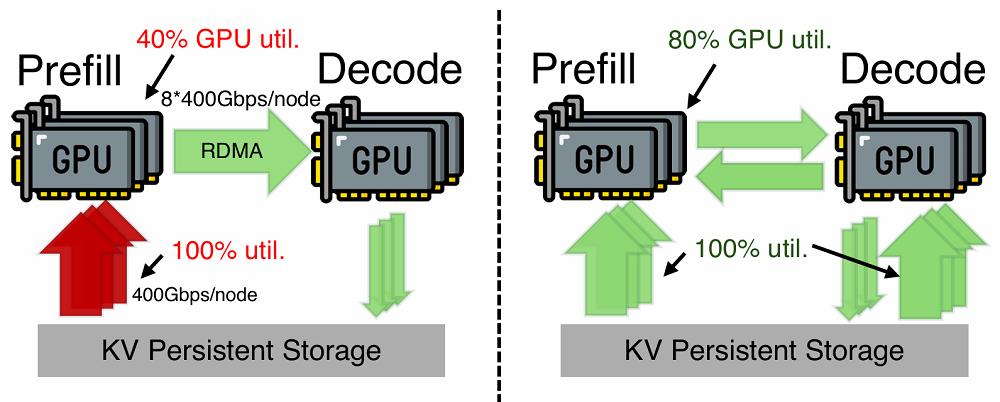
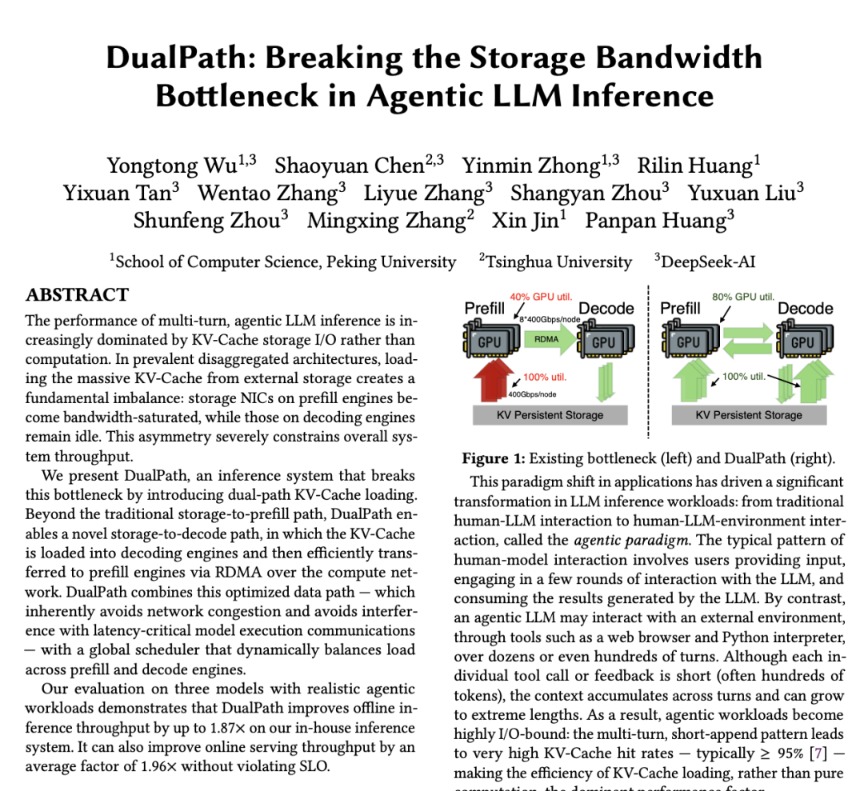
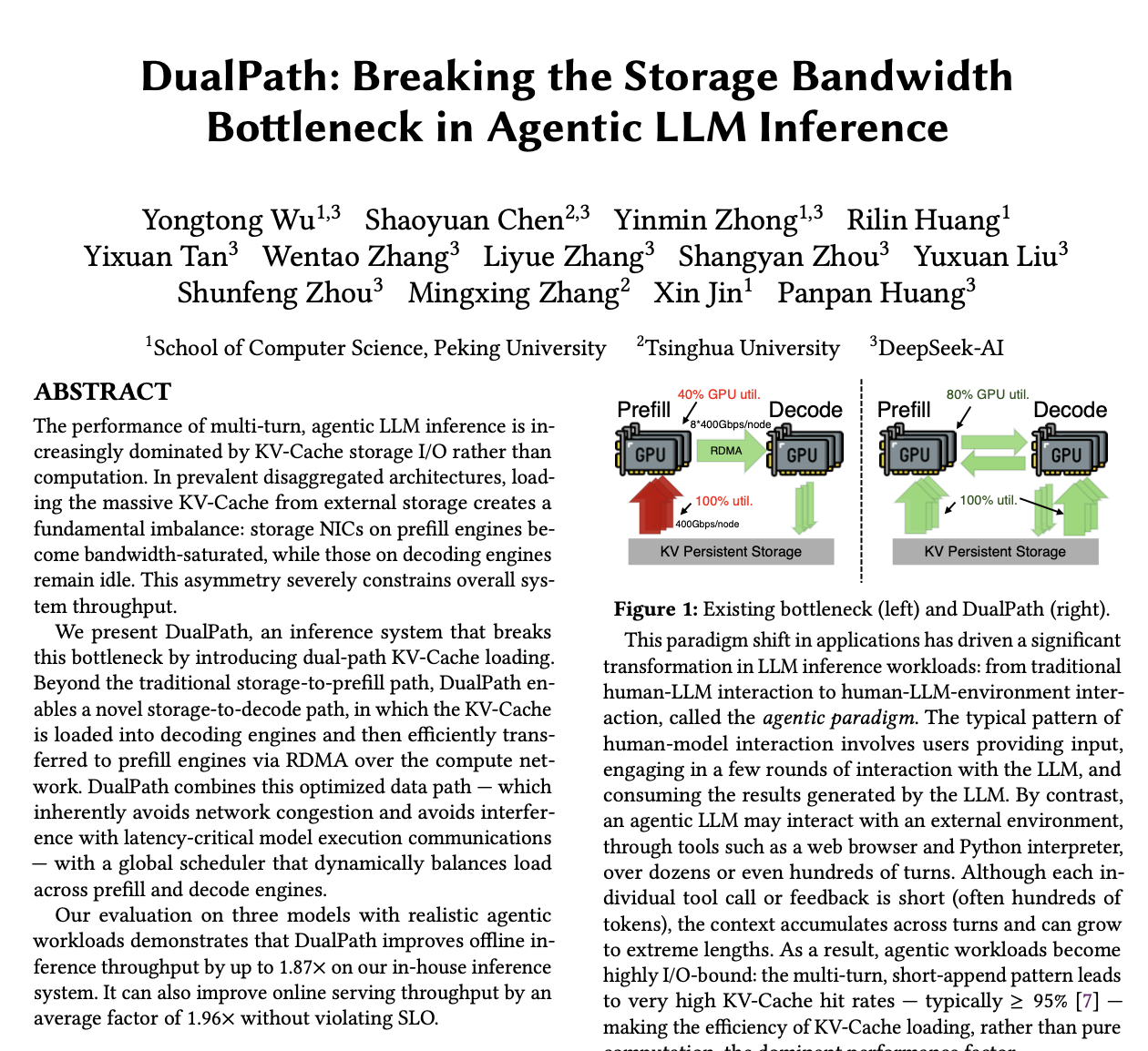
Core Insights - DeepSeek has introduced a new inference system called DualPath, addressing the I/O bottleneck in current large language models for intelligent agent applications [1][3][19] - The DualPath system significantly enhances throughput by implementing a dual-path loading mechanism, effectively eliminating KV cache I/O overhead [1][13] Group 1: System Innovation - DualPath opens a new channel from storage directly to the decoding engine, allowing KV cache to be loaded into the decoding engine and efficiently transmitted to the pre-filling end via RDMA [1][5] - The system achieves a maximum offline inference throughput increase of 1.87 times and an average online service throughput increase of 1.96 times during real intelligent agent workload tests [1][13][17] Group 2: Technical Components - DualPath consists of three core components: the inference engine, traffic manager, and request scheduler, which work together to optimize data movement and resource utilization [6][7] - The traffic manager ensures that KV cache traffic does not interfere with latency-sensitive model collective communications, utilizing a compute network-centric traffic management strategy [11][12] Group 3: Performance Validation - Experiments conducted on a GPU server cluster connected via InfiniBand demonstrated that DualPath can achieve up to 1.87 times acceleration compared to baseline inference frameworks, indicating that KV cache I/O overhead has been largely eliminated [13][15] - The system has been validated for scalability, achieving near-linear expansion from 2P4D (2,000 agents) to 48P96D (48,000 agents) while maintaining consistent task completion times [17][18] Group 4: Future Directions - The research team acknowledges the need for more adaptive and flexible configurations for parallelism and P/D ratios in future developments, suggesting the potential for simulator or online adjustment mechanisms [19]


DeepSeek 有新消息!
Mei Ri Jing Ji Xin Wen· 2026-02-27 09:06
Core Insights - The article discusses a new research paper co-authored by DeepSeek, Peking University, and Tsinghua University, focusing on optimizing inference speed for large language models (LLMs) in AI agents [3][4] - The paper introduces an innovative inference system called DualPath, which enhances the performance of LLMs by implementing a "dual-path reading KV-Cache" mechanism, resulting in a 1.87 times increase in offline inference throughput and a 1.96 times increase in the number of AI agent operations per second [3][4] Group 1 - The transition of large models from single-turn dialogue systems to intelligent agent systems capable of multi-turn interactions is highlighted, necessitating a significant change in inference workloads [3] - The existing systems face bottlenecks due to bandwidth limitations, where the preprocessing engine monopolizes the network bandwidth, leaving the content generation engine underutilized [4] - DualPath addresses this issue by redesigning the KV-Cache loading logic, effectively utilizing idle bandwidth resources to significantly enhance speed [4] Group 2 - DeepSeek's approach to performance optimization is noted as a response to hardware limitations, with some industry professionals viewing it as a less innovative but necessary step [5] - There are ongoing rumors regarding the release timeline of DeepSeek V4, with speculation ranging from February to March, and recent reports indicating testing of a new model called "Sealion-lite" with a context window of 1 million tokens [5] - DeepSeek has provided early access to the updated V4 version to domestic manufacturers like Huawei, while competitors like NVIDIA have not received similar access [5] Group 3 - User feedback indicates a perceived decline in DeepSeek's empathetic communication style, with recent updates leading to a more rigid interaction approach [6] - The competitive landscape for AI assistants in China is intensifying, with major players like ByteDance, Baidu, and Alibaba rapidly iterating their products, alongside pressure from international competitors like ChatGPT and Claude [6]
Anthropic指控中国AI“抄袭”,背后有何资本算计?
Sou Hu Cai Jing· 2026-02-27 08:32
Core Viewpoint - The escalating AI competition between China and the US is highlighted by Anthropic's accusations against Chinese AI companies for "distillation attacks," which raises questions about the integrity of AI technology and market dynamics [2][4][25] Group 1: Accusations and Responses - Anthropic accused three Chinese AI companies, including DeepSeek and Kimi, of copying technology through "distillation attacks," a common method used in AI model training [2][4] - Despite the accusations, Chinese companies have chosen not to respond, reflecting confidence in their technological capabilities and a desire to avoid engaging in US media narratives [7][9] Group 2: Market Dynamics and Valuation - Anthropic's accusations may be a strategic move to signal its technological superiority to the capital market amid pressure on its valuation, as the company seeks to maintain its high market valuation [6][25] - The US AI sector has experienced significant stock declines, leading to concerns about the future of AI and its potential to disrupt traditional business models [4][6] Group 3: China's AI Development - Chinese AI companies are advancing through open-source models and a robust ecosystem, with significant investments leading to valuations exceeding $4 billion for companies like Kimi [9][10] - The Chinese market is characterized by a large engineer workforce, abundant data resources, and a commitment to open-source approaches, which are driving rapid advancements in AI technology [10][20] Group 4: Investment Trends and Future Outlook - AI investment is shifting from speculative technology bets to more stable growth paths, focusing on long-term, low-cost access to computing power [16][18] - The competition in AI is evolving from mere model development to building platforms that can leverage user interaction data, which is crucial for future success [20][22] Group 5: Application and Industry Impact - The application of AI in various sectors is accelerating, with Chinese companies achieving significant breakthroughs in manufacturing, healthcare, and consumer services [21][22] - The future of AI will depend on the ability to create sustainable monetization ecosystems and global network effects, rather than solely on technological prowess [15][25]
海外价值获验证,国内市场开启高增长周期
Dongguan Securities· 2026-02-27 08:04
Investment Rating - The report maintains an "Overweight" rating for the AI Coding industry, indicating a positive outlook on its growth potential and market opportunities [1]. Core Insights - AI Coding is transitioning from "assisted Copilot" to "autonomous Agent," showcasing significant market potential. The industry is characterized by rapid development and high growth potential, particularly in the context of AI applications [3][10]. - The global AI Coding market is projected to grow from 4.29 billion USD in 2023 to over 24.46 billion USD by 2031, with a CAGR of 24.3%. In China, the AI code generation market is expected to increase from 6.5 billion RMB in 2023 to 33 billion RMB by 2028, with a CAGR of 38.4% [21][22]. Summary by Sections 1. AI Coding Transition - AI Coding enhances software development efficiency and reduces labor costs by automating repetitive tasks and improving code quality [10]. - The evolution of AI Coding tools heavily relies on advancements in underlying large models, with international models leading the way [13][15]. 2. Overseas AI Programming Tools - Several overseas AI programming products have achieved significant revenue growth, with products like Claude Code and Cursor surpassing 1 billion USD in ARR by November 2025 [26][28]. - Cursor, an AI-native IDE, has seen its valuation and ARR increase dramatically, marking it as one of the fastest-growing AI SaaS products [31][32]. 3. Domestic AI Programming Market - The domestic AI programming market is heating up, with major internet companies launching self-developed AI IDEs and engaging in competitive pricing strategies to capture market share [51]. - Domestic AI models are focusing on enhancing coding and agent capabilities, with significant increases in model usage observed in early 2026 [52]. 4. Investment Strategy - The report suggests focusing on leading companies in the domestic AI Coding sector, as the market penetration is currently low, indicating substantial growth opportunities [3].



DeepSeek联合北大、清华发布新论文
Cai Jing Wang· 2026-02-27 08:04
Core Insights - The article discusses a new academic paper released by the DeepSeek team in collaboration with Peking University and Tsinghua University, focusing on inference speed optimization for large language models (LLMs) [1] Group 1: Innovation and Technology - The paper introduces an innovative inference system named DualPath, specifically designed to enhance the inference performance of LLMs under agent workloads [1] - The DualPath system implements a "dual-path reading KV-Cache" mechanism, which reallocates storage network load [1] Group 2: Performance Improvements - The offline inference throughput is reported to have increased by up to 1.87 times [1] - The average number of agent operations per second for online services has improved by 1.96 times [1]
DeepSeek又一论文上新
Di Yi Cai Jing Zi Xun· 2026-02-27 07:58
Core Viewpoint - The DeepSeek team has released a new academic paper focusing on optimizing inference speed for large language models (LLMs), which is crucial for the practical application of AI agents [4][5]. Group 1: Research and Innovation - The paper, co-authored with Peking University and Tsinghua University, introduces an innovative inference system called DualPath, designed to enhance the performance of LLMs under agent workloads [4]. - The DualPath system employs a "dual-path reading KV-Cache" mechanism, redistributing storage network load, resulting in an offline inference throughput increase of 1.87 times and an average increase of 1.96 times in the number of agent operations per second for online services [4][5]. Group 2: Industry Context and Expectations - The introduction of DualPath addresses the significant changes in inference workloads as LLMs evolve from simple dialogue systems to complex agent systems capable of multi-turn interactions, which can reach dozens or even hundreds of rounds [4]. - There is a growing expectation for the release of DeepSeek's next flagship model, DeepSeek V4, with various rumors about its launch timeline ranging from early February to March [6]. - Recent leaks suggest that DeepSeek is testing a V4 Lite model, codenamed "Sealion-lite," which supports a context window of 1 million tokens and native multimodal inference [6]. Group 3: Market Reactions and Concerns - Despite the technical advancements presented in the paper, there is a sentiment in the industry that such optimizations are seen as a necessity due to GPU shortages, with some viewing it as "dirty work" rather than innovative [5]. - Concerns have been raised among investment institutions that the release of the new model could lead to significant market volatility, similar to the previous year's model launch [6].

DeepSeek又一论文上新!新模型V4更近了?
Di Yi Cai Jing· 2026-02-27 07:01
Core Insights - The paper introduces an innovative inference system called DualPath, aimed at optimizing the inference performance of large language models (LLMs) under agent workloads, significantly enhancing efficiency in AI applications [3][4] - The DualPath system improves offline inference throughput by 1.87 times and increases the average number of agent operations per second in online services by 1.96 times [3] Group 1: Technological Advancements - The introduction of a "dual-path reading KV-Cache" mechanism reallocates storage network load, addressing the core issue of speed being hindered by data reading during agent tasks [4] - The shift from traditional human-LLM interaction to human-LLM-environment interaction necessitates a transformation in inference workloads, allowing for multiple rounds of interaction that can accumulate extensive context [3] Group 2: Market Reactions and Expectations - There are mixed opinions within the industry regarding the optimization efforts by DeepSeek, with some viewing it as a necessary response to hardware limitations, while others see value in cost reduction for broader AI adoption [5] - Speculation around the release of DeepSeek's next flagship model, V4, has generated significant market interest, with various timelines being discussed, from early February to March [5][6] - DeepSeek has not publicly commented on the rumors surrounding the V4 model, leading to heightened anticipation and concern among investors about potential market volatility upon its release [6]
688118,4分钟20%涨停!人工智能板块,主力资金净流入超100亿!
Xin Lang Cai Jing· 2026-02-27 04:30
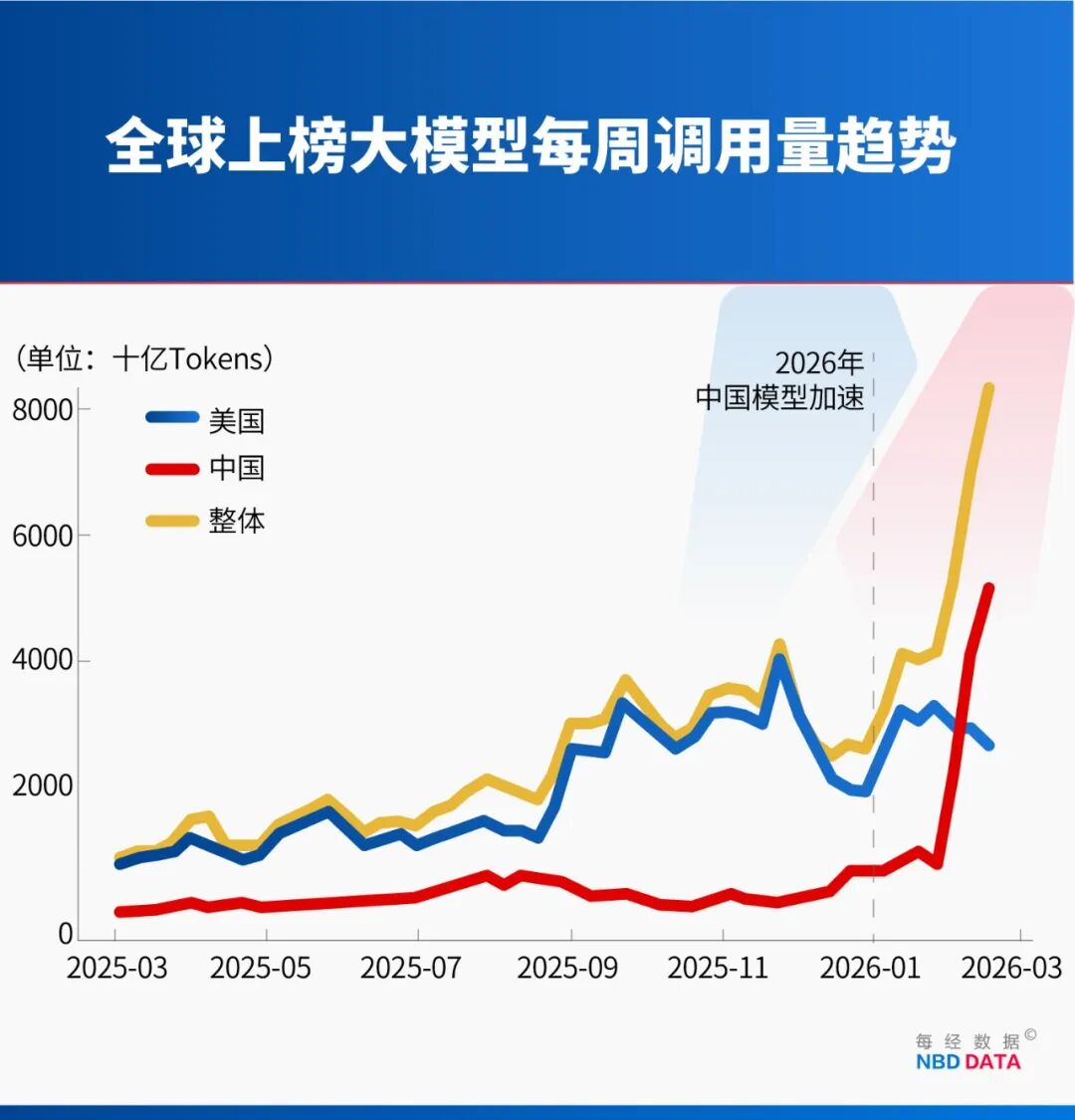
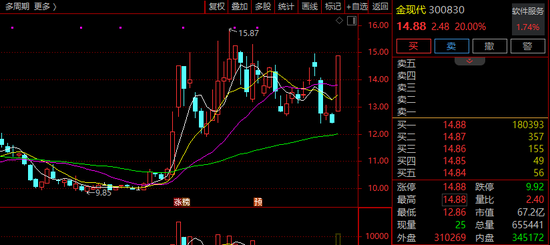
Market Overview - The A-share market continues to experience slight fluctuations, with the Shanghai Composite Index changing between red and green over 10 times, while the CSI 1000 index has risen for the fourth consecutive day, reaching a nearly 9-year high since April 2017 [1][10] - The market turnover remains stable, with sectors such as rare metals, artificial intelligence, supercritical power generation, and hotel catering showing strong performance, while sectors like glass fiber, communication equipment, consumer electronics, and aviation equipment are underperforming [1][10] Supercritical Power Generation - The supercritical power generation sector has been gaining momentum, with the sector index hitting historical highs for four consecutive days. Companies like Jin Modern and Yunnan Energy have seen rapid stock price increases, with Yunnan Energy achieving a seventh consecutive day of gains [2][12] - Recent developments include the successful operation of the world's first commercial supercritical carbon dioxide power generation unit in Guizhou, and the initiation of construction for a 2×660 MW ultra-supercritical coal-fired power project, which is expected to complete an investment of 2.349 billion yuan by 2026 and generate approximately 6 billion kWh annually [4][12] - The technology is projected to support lower energy consumption and carbon emissions, with installations planned primarily in coal-rich regions like Xinjiang, Shanxi, and Inner Mongolia, potentially transforming coastal provinces with higher environmental standards [5][13] Artificial Intelligence Sector - The artificial intelligence sector is witnessing a strong rally, with significant inflows of capital. The AI sector has attracted over 11.7 billion yuan in net inflows, with companies like Huasheng Tiancai and Yuntian Lifa receiving substantial investments [6][15] - Recent reports indicate that in the second week of February, the usage of Chinese AI models surpassed that of American models for the first time, with a total of 41.2 trillion tokens compared to 29.4 trillion tokens from the U.S. [8][16] - Four out of the top five AI models by usage on the OpenRouter platform are from Chinese companies, contributing to 85.7% of the total usage among the top models [9][16]



AI概念股多数拉升 金山云一度涨超11% 汇量科技涨超6%
Zhi Tong Cai Jing· 2026-02-27 03:37
Group 1 - AI-related stocks have seen significant gains, with Kingsoft Cloud (03896) up 9.05% to HKD 7.23, XunCe (03317) up 8.82% to HKD 89.45, Huily Technology (01860) up 6.27% to HKD 12.38, and Kingdee International (00268) up 4.76% to HKD 10.35 [1] - DeepSeek is reportedly testing the V4Lite model, codenamed "Sealion-lite," which features a context window of 1 million tokens and supports native multimodal reasoning [1] - Nomura's research indicates that the technological breakthroughs of DS-V4 will effectively break the "chip wall" and "memory wall," enabling the dual development of domestic computing hardware and AI applications, thus advancing the maturity of China's open-source large model ecosystem [1] - Industrial Securities believes that V4 is expected to be released in February, with significant potential in its application ecosystem [1] Group 2 - OpenRouter, the world's largest AI model API aggregation platform, reported that from September 9 to 15, Chinese models achieved a call volume of 41.2 trillion tokens, surpassing the 29.4 trillion tokens of U.S. models for the first time, with four domestic large models ranking among the top five globally [1]
2月井喷,中国AI调用量首超美国,四款大模型霸榜全球前五,国产算力需求正经历指数级增长
3 6 Ke· 2026-02-27 03:31
Core Insights - In February, China's AI model API call volume surged, surpassing that of the United States for the first time, with 41.2 trillion tokens compared to the U.S.'s 29.4 trillion tokens during the week of February 9-15 [1][7] - The following week, China's model call volume increased to 51.6 trillion tokens, marking a 127% growth over three weeks, while U.S. model calls dropped to 27 trillion tokens [1][7] - Four out of the top five models in global API call volume are from Chinese manufacturers, indicating a collective rise rather than reliance on a single product [1][10] Token Call Volume Growth - The global token call volume for major models has seen explosive growth, increasing from 12.4 trillion tokens in early March 2025 to 139.5 trillion tokens by mid-February 2026, a tenfold increase in less than a year [6] - In early 2026, U.S. models showed signs of fatigue in growth, while Chinese models began to accelerate rapidly, with a notable increase to 22.7 trillion tokens in the first week of February [6][7] Competitive Landscape - The top five models on the OpenRouter platform during the week of February 16-22 were dominated by Chinese models, contributing 85.7% of the total call volume [10] - MiniMax's M2.5 model, launched on February 13, quickly became the top model, contributing 14.4 trillion tokens to the total call volume of 32.1 trillion tokens during the week of February 9-15 [10] Cost Advantages - Chinese models are significantly cheaper than their U.S. counterparts, with input costs at $0.3 per million tokens compared to $5 for U.S. models, and output costs at $1.1 and $2.55 respectively versus $25 for U.S. models [16][17] - The cost advantage is attributed to innovative algorithm architectures, such as the Mixture-of-Experts (MoE) model, which reduces computational costs and increases efficiency [18] Market Dynamics - The demand for Chinese AI models is expected to grow exponentially, with a projected compound annual growth rate of 330% in token consumption from 2025 to 2030 [19] - The shift in user behavior is transforming AI from a simple Q&A tool to a productivity tool capable of handling complex tasks, leading to increased token consumption [21][22] Future Trends - The pricing model for AI services is evolving towards a hybrid model that combines "fuel" (tokens) and "results," with a trend towards customized and flexible pricing structures [22][23] - The rise of AI agents is expected to complicate pricing further, necessitating a multi-dimensional pricing system that accounts for various factors such as task complexity and resource consumption [23]