PIMCO

Search documents
270亿美元与扎克伯格的财技:花别人的钱,买自己的算力
3 6 Ke· 2025-11-03 11:59
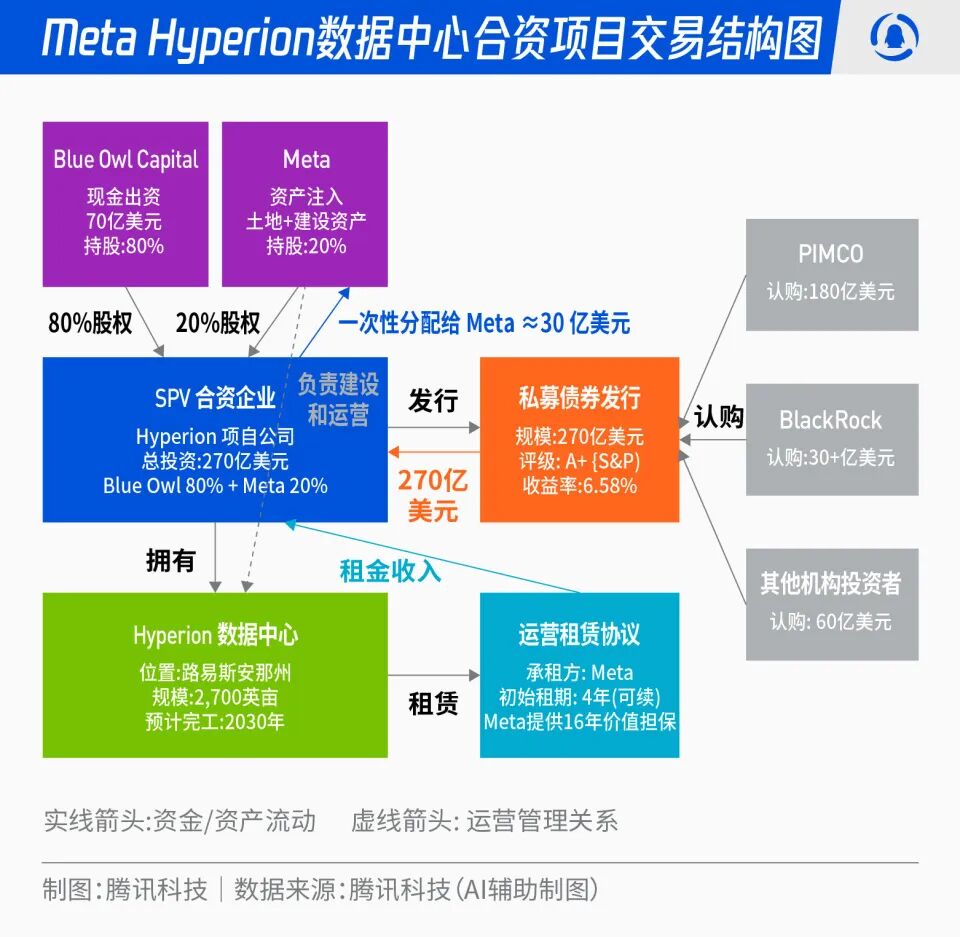
Core Viewpoint - Meta's recent financial report reveals a strong revenue growth of 26% year-over-year, reaching approximately $51.2 billion, but also indicates a significant increase in capital expenditures projected for 2025 and beyond, raising concerns about the return on investment from these expenditures [1][2] Financial Performance - Meta's Q3 revenue was approximately $51.2 billion, marking a historical high with a 26% year-over-year increase [1] - A one-time tax impact of about $15.9 billion resulted in a GAAP EPS of only $1.05, falling short of market expectations [1] Capital Expenditure Plans - Capital expenditures for 2025 have been raised to $70-72 billion, with indications that 2026 will see even higher absolute spending [1] - Investments are primarily directed towards AI infrastructure, cloud spending, and AI talent compensation [1] Financing Structure of the Hyperion Project - The Hyperion data center project involves a total investment of $27 billion, with Blue Owl contributing approximately 80% and Meta 20% [1][5] - The financing is structured through a Special Purpose Vehicle (SPV) that issues $27 billion in A+ rated bonds and $2.5 billion in equity, isolating the financial risks from Meta's balance sheet [5][6] Risk Management and Investor Appeal - Meta retains operational control of the data center while converting capital expenditures into operating expenses, thus alleviating balance sheet pressure [7][8] - The introduction of a Residual Value Guarantee (RVG) mechanism ensures that if the asset's value falls below a certain threshold after 16 years, Meta will cover the difference, providing additional security for bondholders [6][10] Investment Opportunities - The structured financing allows investors to gain exposure to AI infrastructure with predictable cash flows, appealing to long-term capital such as insurance and pension funds [9][10] - The investment structure offers a higher yield compared to traditional bonds, with a risk premium of 225 basis points over U.S. Treasuries due to the unique risks associated with the project [8][9] Industry Implications - The trend towards asset securitization in the AI sector mirrors the real estate investment trust (REIT) model, potentially leading to a new class of investment products termed AI infrastructure-backed securities (AIBS) [13][16] - Successful implementation of this financing model could catalyze a significant expansion in AI infrastructure, driven by financial innovation rather than just capital availability [16]


Westpac Reports FY25 Earnings, Boosts Capital with A$21.4 Billion RAMS Portfolio Sale
Stock Market News· 2025-11-02 21:08
Core Insights - Westpac Banking Corporation (WBC) reported a full-year 2025 net income of A$6.92 billion, slightly below the estimated A$6.93 billion, with a strong second-half performance of A$3.60 billion, surpassing analyst projections of A$3.58 billion [2][9] - The bank's Common Equity Tier 1 (CET1) ratio was reported at 12.5%, exceeding expectations of 12.4%, and is expected to improve by approximately 20 basis points following the sale of its RAMS mortgage portfolio [3][9] - Westpac confirmed the sale of its A$21.4 billion RAMS mortgage portfolio to a consortium including Pepper Money (PPM), KKR, and PIMCO, with completion anticipated in the second half of 2026, marking a strategic exit from a non-core lending brand [4][6][9] - The core net interest margin (NIM) excluding significant items was reported at 1.81%, while the group NIM excluding items stood at 1.94%, indicating stable profitability metrics [5][9] - A final dividend per share of A$0.77 was declared for shareholders [5][9]
12月降息悬了?美联储内部现六年来罕见分歧,“老债王”格罗斯出手做空美债!
美股IPO· 2025-11-01 16:03
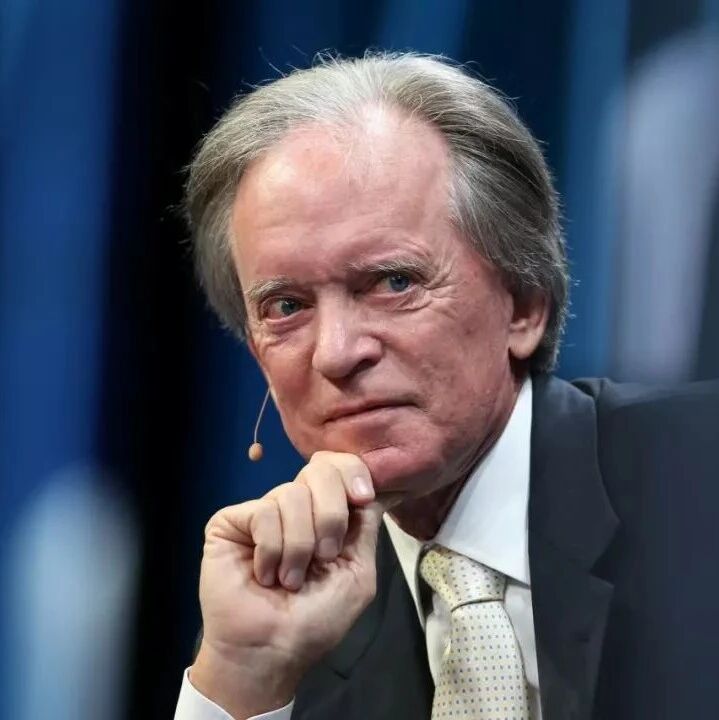
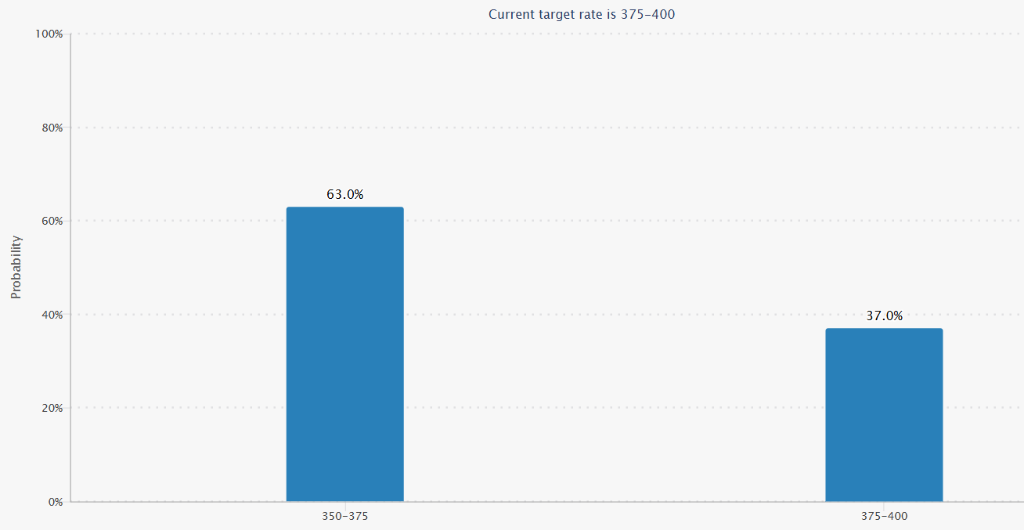
Group 1 - The Federal Reserve's recent interest rate decision saw two dissenting votes among the 12 committee members, marking a rare occurrence of opposing views, with one member advocating for a 50 basis point cut and another for maintaining the current rate [1][6] - The uncertainty surrounding the Fed's policy path has led to increased market volatility, with notable figures like Bill Gross beginning to short U.S. Treasury bonds [4][9] - The probability of a rate cut in December has decreased significantly from 91.7% to 63% according to the CME FedWatch Tool, indicating a shift in market expectations [2][5] Group 2 - Bill Gross, co-founder of PIMCO, has expressed a bearish outlook on U.S. Treasuries, citing concerns over rising deficits and a weakening dollar as key factors influencing his decision to sell 10-year Treasury futures [3][11] - The internal divisions within the Federal Reserve are becoming a focal point for market participants, with various officials presenting differing views on the necessity of rate cuts [6][8] - Analysts suggest that in the current environment, investors may need to adjust their strategies towards longer-term bonds, which are less sensitive to short-term policy fluctuations [11]
12月降息悬了?美联储内部现六年来罕见分歧,“老债王”格罗斯出手做空美债!
华尔街见闻· 2025-11-01 11:10
Core Viewpoint - The article discusses the increasing uncertainty in the market due to the Federal Reserve's mixed signals regarding interest rate decisions, highlighted by the divergence among its members and the actions of prominent investors like Bill Gross [2][5][10]. Group 1: Federal Reserve's Policy Divergence - Federal Reserve Chairman Jerome Powell acknowledged strong differing opinions within the FOMC, with two dissenting votes in the recent rate decision [5][6]. - Some officials advocate for a significant rate cut, while others prefer to maintain the current rates, indicating a lack of consensus [5][7]. - The probability of a rate cut in December has dropped from 91.7% to 63% according to the CME FedWatch Tool, reflecting market uncertainty [2][4]. Group 2: Bill Gross's Investment Strategy - Bill Gross, co-founder of PIMCO, has begun selling U.S. Treasury futures, betting on rising yields due to high deficits and excessive debt issuance [4][10]. - Gross expressed a bearish outlook on U.S. Treasuries, citing risks from an expanding deficit and a weakening dollar [11][12]. - He believes that even with a slowdown in economic growth, the supply of U.S. Treasuries is too high, leading to his decision to sell 10-year Treasury futures [12]. Group 3: Market Reactions and Strategies - Analysts suggest that in the current environment, investors should adjust their strategies towards longer-term bonds, which are less affected by short-term policy fluctuations [13]. - High U.S. Treasury yields are supporting the dollar index, making dollar cash holdings more attractive to global investors [14]. - Morgan Stanley's currency team has shifted its outlook on the dollar to neutral after the Fed's October meeting, advising to close short positions on the euro and yen [15].
12月降息悬了?美联储内部现六年来罕见分歧,“老债王”格罗斯出手做空美债
Hua Er Jie Jian Wen· 2025-11-01 06:31
Core Viewpoint - The Federal Reserve is experiencing unprecedented internal dissent regarding interest rate decisions, leading to increased market uncertainty and influencing investment strategies, particularly in U.S. Treasury bonds [1][2][5]. Group 1: Federal Reserve's Internal Dissent - This week, two out of twelve Federal Reserve voting members opposed the interest rate decision, marking the first occurrence of such dissent in six years [1][5]. - Fed Chair Jerome Powell acknowledged strong differing opinions within the Federal Open Market Committee (FOMC), with some members advocating for a larger rate cut while others prefer to maintain current rates [2][5]. - The probability of a rate cut in December has dropped from 91.7% to 63% according to the CME FedWatch Tool, reflecting the growing uncertainty [3][5]. Group 2: Market Reactions and Investment Strategies - Bill Gross, a prominent investor, has begun shorting U.S. Treasury futures, citing concerns over rising deficits and a weakening dollar, which he believes will lead to higher yields [5][6][8]. - Analysts suggest that in the current environment, investors should adjust their strategies towards longer-term bonds, which are less affected by short-term policy fluctuations [8]. - Morgan Stanley's currency team has shifted its outlook on the dollar to neutral, indicating a change in strategy following the Fed's October meeting [9].
12月降息悬了?美联储内部现六年来罕见分歧,“老债王”格罗斯出手做空美债!
Hua Er Jie Jian Wen· 2025-11-01 02:11
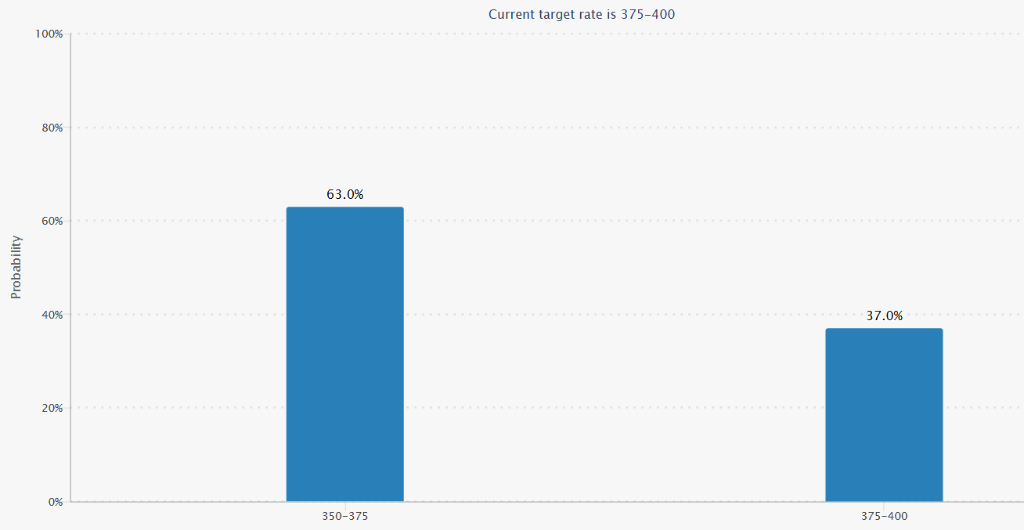
Core Insights - The Federal Reserve's internal divisions and uncertainty regarding interest rate decisions have intensified, with Chairman Powell indicating that a rate cut in December is not guaranteed [1][4] - Bill Gross, a prominent investor, has begun shorting U.S. Treasury futures, betting on rising yields due to high deficits and excessive bond issuance [3][5][6] Group 1: Federal Reserve's Internal Dynamics - The Federal Reserve is experiencing unprecedented internal dissent, with two out of twelve voting members opposing the recent rate decision, highlighting differing views on whether to cut rates or maintain them [4] - Some members, like Jeff Schmid, argue for holding rates steady due to a balanced labor market and persistent inflation, while others, including Governor Waller, advocate for a rate cut based on labor market concerns [4][6] - This level of disagreement is noted as the first of its kind in six years, suggesting potential for ongoing divergence in future policy decisions [4] Group 2: Market Reactions and Investment Strategies - Bill Gross's decision to sell 10-year Treasury futures reflects a bearish outlook on U.S. government bonds, driven by concerns over expanding deficits and a weakening dollar [5][6] - Analysts suggest that in the current environment, investors should consider shifting strategies towards longer-term bonds, which are less sensitive to short-term policy changes [6] - High U.S. Treasury yields are supporting the dollar, making it more attractive for global investors, as expectations for Fed rate cuts have moderated [7]
大咖云集!2025金融街论坛年会闭幕式上他们说……
Jin Rong Shi Bao· 2025-10-31 02:49
Group 1: Global Economic Cooperation - The 2025 Financial Street Forum focused on "Resilient Cooperation in International Trade under Global Changes," discussing global investment patterns and development dynamics [1] - The World Bank aims to promote growth and job creation through investments in infrastructure, regulatory reforms, and reducing non-tariff barriers to enhance trade [1][2] - The need for resilient and efficient logistics networks to support international trade was emphasized, highlighting the importance of financial rules and innovation in global economic development [2] Group 2: Industry Perspectives - The shipping industry is shifting from optimization to building resilient global logistics networks, requiring strong financial support and collaboration across global supply chains [3] - The importance of digitalization and green development in creating new opportunities for international cooperation was noted, with a focus on integrating developing countries into global value chains [3] Group 3: Financial Sector Insights - The rapid development of financial technologies like tokenization and blockchain poses challenges for central banks in maintaining financial stability while supporting the real economy [5] - The need for central banks to balance multiple objectives, including inflation control and economic growth, was highlighted as a key challenge in the current global landscape [4][5] Group 4: Forum Achievements - The forum successfully hosted 38 high-quality events, attracting over 400 officials and experts from more than 30 countries, with significant online engagement [7] - The forum's role as a "wind vane" for financial policy was reinforced, providing stability and confidence in the evolving global financial system [7] - International cooperation mechanisms were expanded, with multiple agreements signed and significant investment discussions held, promoting financial services for the real economy [7]

2025金融街论坛年会闭幕 于变局中构建韧性合作未来
Bei Ke Cai Jing· 2025-10-31 01:57
Group 1 - The main forum and closing ceremony of the Financial Street Forum focused on "Resilient Cooperation in International Trade and Economy under Global Changes," discussing global investment patterns and development dynamics [1] - The forum successfully hosted 38 high-quality events, gathering over 400 officials, international organization leaders, and financial executives from more than 30 countries and regions, with over 6,000 on-site participants and billions of online interactions, marking the largest scale and impact in its history [2] Group 2 - The closing ceremony featured keynote speeches from prominent figures, including the Deputy Director of the State Administration of Foreign Exchange and leaders from major financial institutions, emphasizing the need for reducing non-tariff barriers and deepening regional integration to facilitate domestic and regional trade [3] - The World Bank's Senior Vice President highlighted the importance of building economies that promote growth and job creation, focusing on infrastructure investment, regulatory reforms, and reducing trade barriers [4] - The Chairman of China Merchants Group stressed the need for resilient and efficient logistics networks to support international trade and called for precise and inclusive financial services [8] Group 3 - Henry Paulson emphasized the financial industry's role in addressing biodiversity risks and suggested innovative financing mechanisms and reforms in agricultural subsidies to protect biodiversity [11] - The Chairman of China Ocean Shipping Group proposed collaborative efforts in building resilient shipping logistics networks and digital shipping chains to enhance cooperation between the shipping and financial sectors [14] - The Deputy Director-General of the WTO noted the profound changes in the global trade environment and the need for countries to support multilateralism and trade liberalization, particularly for developing nations [17] Group 4 - A roundtable discussion included leaders from various financial institutions discussing the future of global investment patterns and development dynamics [20] - A high-level dialogue addressed the role of central banks in the new global landscape, with emphasis on balancing multiple objectives such as inflation control, financial stability, and economic growth [24][26] - The Chief Executive of Hong Kong and the Mayor of Beijing highlighted their commitment to enhancing their respective financial centers' roles in supporting national development and attracting global financial institutions [33][34]

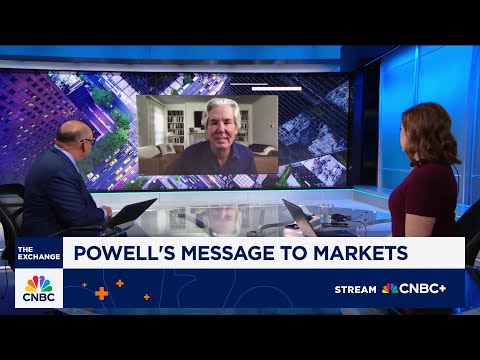
Fed should cut rates 100bps in the months immediately ahead, says Georgetown's Paul McCulley
Youtube· 2025-10-28 18:22
Core Viewpoint - The Federal Reserve (Fed) is expected to cut interest rates by 100 basis points in the near future, aligning with market expectations and macroeconomic conditions [2][5][11]. Macroeconomic Perspective - There has been a softening in the labor market, indicating downside risks, which suggests that the Fed should adopt a neutral stance rather than a restrictive one [4]. - The Treasury and silver markets have already priced in a 3% policy rate, necessitating the Fed to validate this expectation to maintain easier financial conditions [5]. Interest Rate Strategy - The Fed should implement a gradual approach to rate cuts, potentially reducing rates by 25 basis points at each of the next three or four Federal Open Market Committee (FOMC) meetings [8][9]. - A steady approach is preferred to avoid creating negative market psychology or exacerbating bubble risks [9]. Inflation Concerns - There is a belief that the effects of tariffs on inflation have not fully materialized, with about 50% of respondents in a survey acknowledging this [10]. - The potential for inflation to arise from corporations passing on costs to consumers is acknowledged, but the focus is on the downside risks to economic activity, particularly consumer spending among lower-income groups [14].

Fed should cut rates 100bps in the months immediately ahead, says Georgetown's Paul McCulley
CNBC Television· 2025-10-28 18:22
Joining us now is Paul McCully, former chief economist at PIMCO, currently an adjunct professor at Georgetown's Mcdana School of Business. Thank you both for being here for uh for commenting. Um I want to get your perspective, Paul, because Steve just outlined his survey where he said, I believe the numbers, and correct me if I'm wrong, Steve, 66% said the Fed should cut, but 92% believe they will cut.Y >> so that I mean that's a pretty big distinction. And how should we how should we kind of distill that. ...