
吉利汽车

Search documents
电车速成赌局:越卷越快,越快越险
36氪· 2026-02-13 13:34
Core Viewpoint - The automotive industry is experiencing an irreversible trend towards speed, with companies facing intense competition that pressures them to accelerate development cycles, often at the expense of quality and reliability [27][36]. Group 1: Industry Trends - Regulatory bodies have tightened requirements for vehicle development, signaling a shift towards prioritizing reliability and durability in the automotive sector [5][12]. - The development cycle for vehicles has been compressed from 3-5 years to as little as 1.5 years, with major companies adopting a strategy of annual upgrades and biannual model changes [10][11]. - The average replacement cycle for electric vehicles in China has decreased from 6-8 years for traditional fuel vehicles to 3-5 years, reflecting changing consumer expectations [28]. Group 2: Quality Concerns - The rush to market has led to insufficient testing of critical components, such as batteries, which may not undergo thorough validation before mass production [13][14]. - High-profile recalls, such as the one involving Li Auto's MEGA model, highlight the risks associated with inadequate testing and the potential for significant financial repercussions [13]. - The industry is facing a dilemma where the pressure to innovate quickly conflicts with the need for rigorous quality assurance, leading to a potential "prisoner's dilemma" scenario [25]. Group 3: Competitive Dynamics - Companies like BYD and Geely emphasize rapid product development to maintain market share, often launching new models within 6-18 months [18][19]. - The entry of tech giants like Huawei and Xiaomi into the automotive space has intensified competition, forcing traditional automakers to adapt quickly or risk losing market relevance [21][22]. - The competitive landscape is characterized by a "fast fish eats slow fish" mentality, where speed is prioritized over traditional metrics of durability and reliability [18][20]. Group 4: Regulatory Implications - New regulations mandate that traditional fuel vehicles complete 30,000 kilometers of reliability testing, while electric vehicles must complete 15,000 kilometers, marking a significant shift in regulatory expectations [12][15]. - The focus on durability and reliability in future regulations indicates a growing recognition of the importance of these factors in consumer safety and satisfaction [15][36]. Group 5: Development Strategies - Companies are increasingly adopting platform-based development strategies to streamline processes and reduce time-to-market, with some achieving significant reductions in development cycles [32][34]. - The use of standardized components and shared supply chains is becoming a common practice to enhance efficiency and speed in vehicle development [32][33]. - The automotive industry is evolving towards a model where speed and reliability can coexist, leveraging technological advancements and optimized processes [32][36].


中国神华1月售电量同比增约34% 瑞安房地产年度亏损超17亿元
Xin Lang Cai Jing· 2026-02-13 13:26
Company News - China Power (02380.HK) signed three independent general contracting agreements with State Nuclear Power Technology Corporation and Shandong Institute, involving a total investment of 768 million yuan [1] - Huitongda Network (09878.HK) completed the acquisition of a 25% stake in Jintongling (300091.SZ), accelerating the implementation of its "integrated production and sales" strategy [1] - CGN New Energy (01811.HK) reported a power generation of 1,647.8 GWh in January, an increase of 7.9% year-on-year [1] - R&F Properties (02777.HK) recorded a contract sales revenue of approximately 720 million yuan in January, a decrease of 8.05% year-on-year [1] - Hopson Development (00754.HK) reported a contract sales amount of approximately 591 million yuan in January, an increase of 24.95% year-on-year [1] - Aoyuan Group (01813.HK) reported contract sales of 325 million yuan in January, a decrease of 35.3% year-on-year [1] - Jianye Real Estate (00832.HK) reported a contract sales amount of 398 million yuan in January, a decrease of 31.1% year-on-year [1] Financial Performance - Shanghai Fudan (01385.HK) projected total revenue of approximately 3.982 billion yuan for 2025, a year-on-year increase of 10.92%, while net profit is expected to be around 232 million yuan, a decrease of 59.42% year-on-year [2] - Ruian Real Estate (00272.HK) issued a profit warning, expecting a net loss attributable to shareholders between 1.7 billion yuan and 1.8 billion yuan for the 2025 fiscal year [2] - YTO Express (06123.HK) issued a profit warning, anticipating a net loss of approximately 145 million to 154 million HKD for the 2025 fiscal year [3] - Baisheng Group (03368.HK) issued a profit warning, expecting a net loss attributable to shareholders of approximately 186 million yuan for the 2025 fiscal year [3] - IFBH (06603.HK) expects a year-on-year decrease in net profit of approximately 27% to 32% for 2025 [4] Strategic Developments - Yingxing Holdings (01440.HK) is exploring the establishment of its AI infrastructure and Software as a Service (SaaS) capabilities to support its AI-driven business plans [5] - Yinger International (08379.HK) has decided to focus on new business in artificial intelligence and industrial digital transformation, concentrating on technology research and commercial applications in the field of digital finance [5] - Samsonite (01910.HK) is seeking shareholder approval for a dual listing share issuance authorization [5] Buyback Activities - Xiaomi Group-W (01810.HK) repurchased 2.7 million shares for a total of approximately 98.36 million HKD, with a buyback price ranging from 36.30 to 36.48 HKD [6] - Geely Automobile (00175.HK) repurchased 1.595 million shares for approximately 26.91 million HKD, with a buyback price ranging from 16.71 to 16.98 HKD [6] - NetEase Cloud Music (09899.HK) repurchased 92,000 shares for approximately 14.96 million HKD, with a buyback price ranging from 160.3 to 166.5 HKD [6] - Kingsoft (03888.HK) repurchased 725,000 shares for approximately 19.99 million HKD, with a buyback price ranging from 27.38 to 27.76 HKD [6] Industry Performance - China Shenhua (01088.HK) reported coal sales of 33.2 million tons in January, an increase of 9.9% year-on-year, and total electricity sales of 20.96 billion kWh, an increase of 34.4% year-on-year [7] - China Southern Airlines (01055.HK) reported a year-on-year decrease of 1.10% in passenger capacity input and a decrease of 2.86% in passenger turnover, with a seat occupancy rate of 83.26%, down 1.51 percentage points year-on-year [7] - China Eastern Airlines (00670.HK) reported a year-on-year decrease of 3.54% in passenger capacity input and a decrease of 1.03% in passenger turnover, with a seat occupancy rate of 85.01%, up 2.16 percentage points year-on-year [7]



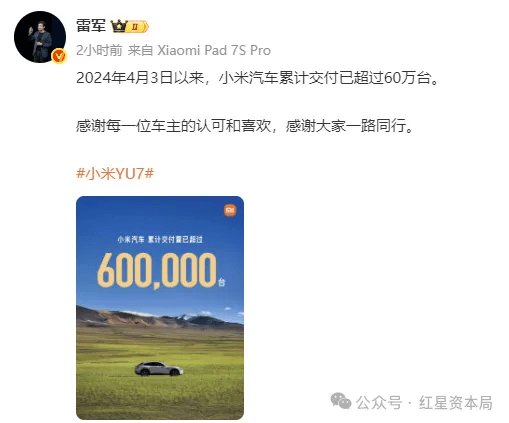
雷军:新一代SU7实车到店!小米汽车交付破60万辆,YU7登顶1月零售销量排行榜
Sou Hu Cai Jing· 2026-02-13 10:27
Group 1 - Xiaomi Group's chairman Lei Jun announced that as of April 3, 2024, the cumulative delivery of Xiaomi cars has exceeded 600,000 units [1] - The new generation Xiaomi SU7 display vehicles have arrived at stores [1] - In January 2024, Xiaomi YU7 achieved sales of 37,869 units, ranking first in retail sales among passenger cars [4] Group 2 - In terms of wholesale sales, Xiaomi YU7 ranked fifth, with January wholesale sales figures showing BYD Song at 42,227 units, Geely Xingyuan at 41,676 units, and Tesla Model Y at 38,916 units [6] - The overall retail sales of passenger cars in January reached 1.544 million units, a year-on-year decline of 13.9% [6] - The retail penetration rate of new energy vehicles in the domestic passenger car market was 38.6%, a year-on-year decrease of 3 percentage points [6] Group 3 - In January, the retail share of new energy vehicles from domestic brands was 60.1%, a year-on-year decrease of 12 percentage points [7] - The market is expected to experience fluctuations in short-term orders and delivery volumes in February due to the upcoming launch of multiple flagship models [8] - The China Passenger Car Association calls for a rational and inclusive automotive market discourse to ensure healthy market operations [8]

年销2700万辆,中国汽车又一个世界冠军
3 6 Ke· 2026-02-13 09:55
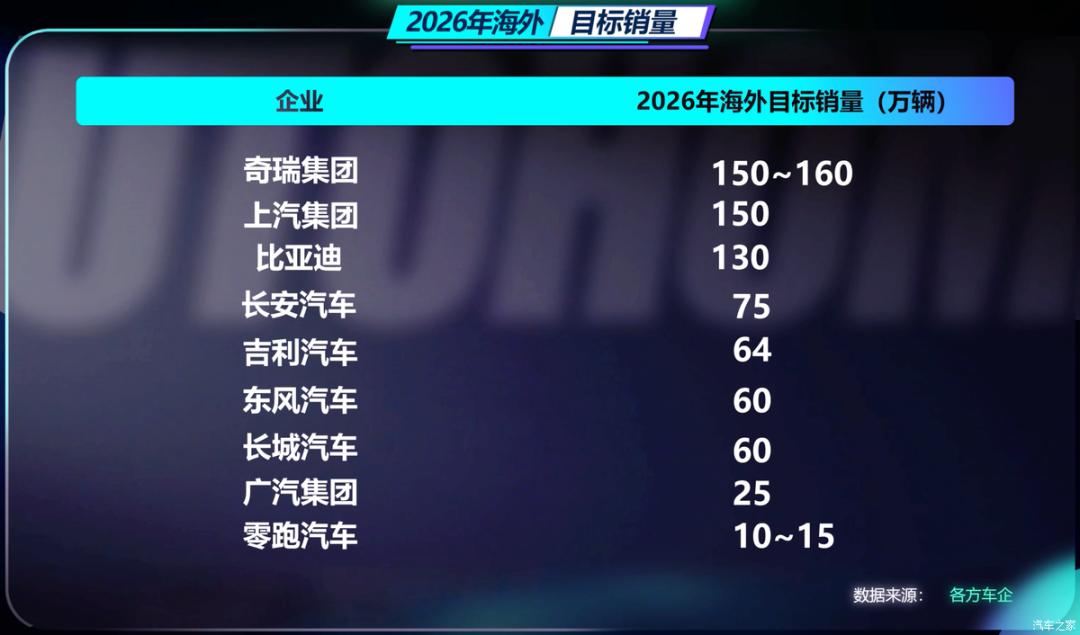
Core Insights - In 2025, Chinese automakers achieved a total global sales volume of 27 million vehicles, surpassing Japan for the first time in over 20 years, marking a significant milestone in the automotive industry [1] - Chinese automobile exports reached 8.32 million units in 2025, maintaining the title of the world's largest exporter for the third consecutive year, with Japan trailing at 4.21 million units [1] - Nine Chinese automakers have already set ambitious overseas sales targets for 2026, indicating confidence in continued growth in international markets [1][2] Group 1: Sales Performance - In 2025, Chery, SAIC, and BYD each exceeded 1 million units in overseas sales, with Chery selling 1.34 million units, representing nearly half of its total sales and a 17% increase year-on-year [3] - BYD's overseas sales surged by 145%, showcasing rapid growth from negligible figures to over 1 million units in just four years [3] - The overall export volume of Chinese automobiles grew by 29.9% in 2025, with December alone witnessing a remarkable 73.2% year-on-year increase, reaching 994,000 units [5] Group 2: Market Trends - The export of Chinese new energy vehicles (NEVs) reached 3.43 million units in 2025, a 70% increase, reflecting a growing global acceptance of electric vehicles [8] - In Europe, electric vehicles accounted for a record 19% of the market share in 2025, with Germany producing 1.67 million electric passenger cars, marking a 23% year-on-year growth [10] - Chinese brands are increasingly gaining traction in international markets, with significant sales growth in Australia and Europe, where they are becoming more competitive against traditional automakers [10][12] Group 3: Strategic Developments - Chinese automakers are expanding their presence in North America and Latin America, with Mexico becoming the largest market for Chinese car exports in 2025 [14] - Agreements with Canada allow Chinese companies to export electric vehicles at a reduced tariff rate, indicating a favorable trade environment [16] - The establishment of local supply chains and partnerships in various regions is a strategic move to enhance competitiveness and market penetration [16][17]




特朗普重创墨西哥汽车产业,中国车企欲收购停产工厂
Guan Cha Zhe Wang· 2026-02-13 09:37
Group 1 - The core issue is that the automotive industry in Mexico is severely impacted by the tariff policies of the Trump administration, leading to factory closures and increased layoffs [2][3] - Chinese automakers, including BYD and Geely, are interested in acquiring a Nissan-Benz joint venture factory in Mexico, with a total of nine companies expressing interest, including Chery and Great Wall Motors [2] - The Mexican automotive industry is highly dependent on the U.S. market, with 280 out of 400 million vehicles produced in Mexico in 2024 expected to be purchased by U.S. consumers [3] Group 2 - The Mexican government is privately urging local authorities to delay Chinese investments until trade negotiations with the U.S. are completed, despite being unable to prevent the sale of the factory [3] - The automotive industry in Mexico has lost approximately 60,000 jobs due to the pressures from tariffs, with a projected decline in exports to the U.S. by nearly 3% by 2025 [3][4] - Chinese investments are viewed as crucial for revitalizing the Mexican automotive industry, as they could provide much-needed jobs and stimulate local production [4]
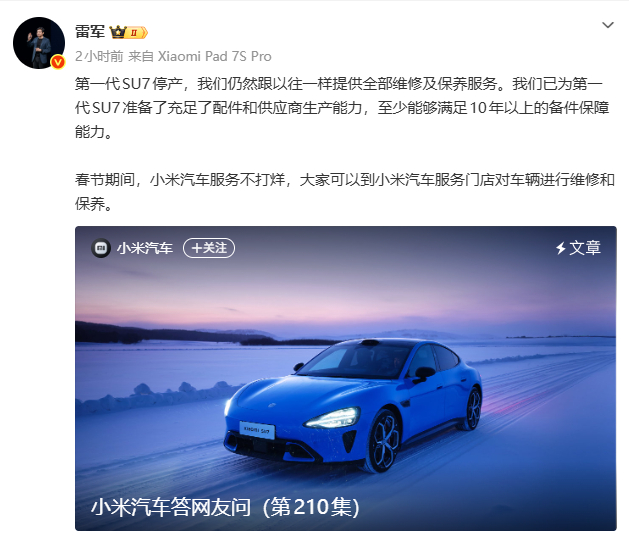
雷军:第一代SU7停产,小米汽车交付破60万辆
2 1 Shi Ji Jing Ji Bao Dao· 2026-02-13 09:21
Group 1 - Xiaomi Group's founder and CEO Lei Jun announced the discontinuation of the first-generation SU7, while ensuring that maintenance and repair services will continue to be provided for over 10 years with sufficient spare parts and supplier production capacity [1] - As of April 3, 2024, Xiaomi has delivered over 600,000 vehicles, with the new generation SU7 display vehicles already available in stores [3] - In January, the Xiaomi YU7 achieved sales of 37,869 units, ranking first in the national passenger car retail sales chart, despite a month-on-month decline compared to December [3] Group 2 - According to the China Passenger Car Association, the wholesale sales of the Xiaomi YU7 in January were 37,869 units, placing it among the top models in the market [4] - The overall retail sales of passenger cars in January reached 1.544 million units, representing a year-on-year decline of 13.9%, with domestic brands experiencing a 18% drop [4] - The market is expected to face challenges in February, with predictions indicating it may reach an absolute low point for the year due to limited effective production and sales time [4]
挂帅千里科技,前荣耀一号位去造车了
Hua Er Jie Jian Wen· 2026-02-13 09:10
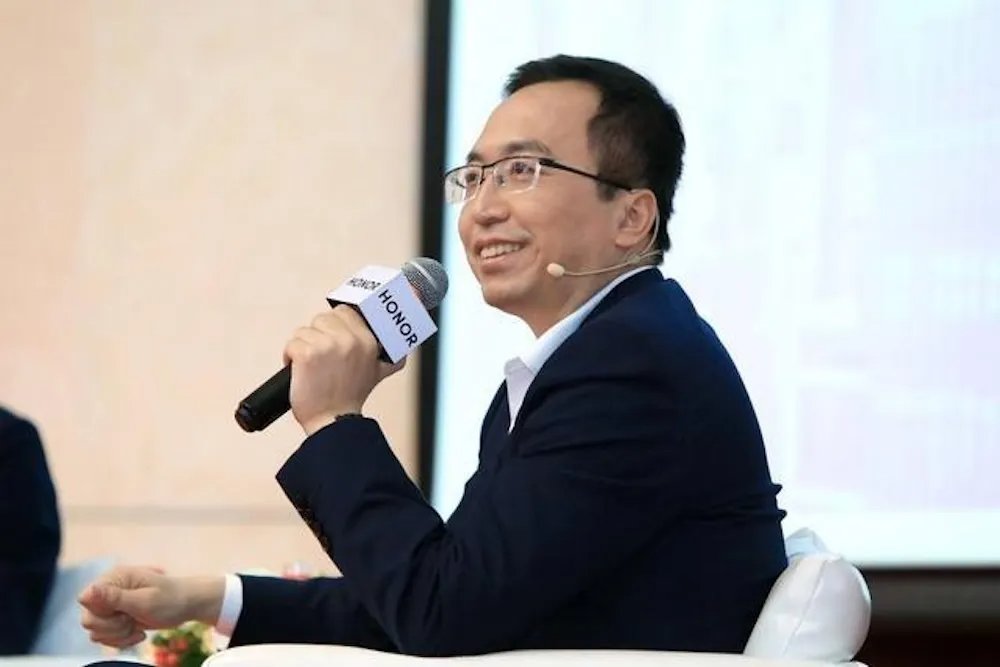
Core Viewpoint - Zhao Ming, former CEO of Honor, has joined Qianli Technology and is expected to play a significant role in transforming the company into a "second Huawei" in the automotive sector [2][10][21]. Group 1: Leadership Changes - Zhao Ming has been nominated as a non-independent director candidate for Qianli Technology's sixth board and may serve as co-chairman [2]. - His collaboration with Qianli Technology's chairman, Yin Qi, has been ongoing since last year, indicating a strategic partnership [3]. - The recruitment of Zhao Ming, along with former Huawei executives, signifies a strong leadership team aimed at disrupting the automotive industry [5]. Group 2: Strategic Shift - Qianli Technology is shifting its strategy from "car + AI" to "AI + car," emphasizing AI as the core of product definition [6]. - The company plans to launch a new passenger car brand targeting the competitive mid-market segment around 200,000 yuan, with production expected to start in 2026 [9]. - A Robotaxi project is also in development, showcasing Qianli's advanced driving technology and aiming to establish a comprehensive AI-driven business model [7][8]. Group 3: Financial Goals - Qianli Technology reported revenue of 2.762 billion yuan in the first three quarters of the previous year, but net profit was less than 1%, highlighting the need for a profitable business model [12]. - The company is in a critical investment phase for its AI business, with expectations that 2026 will be pivotal for the smart driving landscape [13]. - Zhao Ming's experience in creating a successful business model in the tech sector is seen as essential for Qianli's transition to profitability [14][16]. Group 4: Organizational Challenges - Qianli Technology's complex internal structure, resulting from mergers and acquisitions, poses challenges for team integration and cultural alignment [17]. - Zhao Ming's previous experience in leading organizational change at Honor is viewed as crucial for navigating these complexities [18]. - The dual leadership structure, with Yin Qi focusing on technology and Zhao Ming on commercial strategy, aims to leverage both technical and market expertise [19]. Group 5: Market Positioning - Qianli Technology aims to position itself as a technology-driven automotive company, similar to Huawei, with a focus on AI and integrated product offerings [21]. - The introduction of Zhao Ming is intended to enhance the company's brand perception and market valuation, moving away from being seen merely as a parts supplier [20]. - The ambitious timeline for launching new vehicles and establishing a cohesive brand identity underscores the urgency of Qianli's strategic initiatives [21].

吉利汽车2月13日斥资2690.81万港元回购159.5万股
Zhi Tong Cai Jing· 2026-02-13 08:58
Group 1 - The company Geely Automobile (00175) announced a share buyback plan, intending to repurchase 1.595 million shares at a cost of HKD 26.9081 million [1]
吉利汽车(00175.HK)2月13日耗资2690.8万港元回购159.5万股
Ge Long Hui· 2026-02-13 08:56
Group 1 - The company, Geely Automobile, announced a share buyback on February 13, spending HKD 26.908 million to repurchase 1.595 million shares [1]
吉利汽车(00175)2月13日斥资2690.81万港元回购159.5万股
智通财经网· 2026-02-13 08:56
Group 1 - The company, Geely Automobile, announced a share buyback plan, intending to repurchase 1.595 million shares at a cost of HKD 26.9081 million [1]