
市场集中度提升

Search documents
2026车企目标大“PK”
Guo Ji Jin Rong Bao· 2026-01-29 12:48
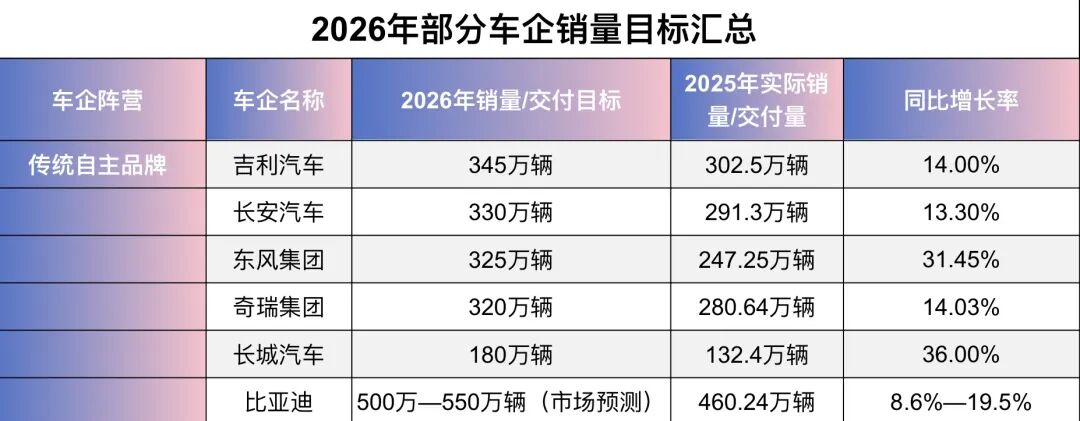
Core Insights - The Chinese automotive industry has shown impressive growth, with production and sales reaching 34.53 million and 34.40 million units respectively in 2025, marking a year-on-year increase of 10.4% and 9.4% [1] - New energy vehicle (NEV) sales reached 16.49 million units, achieving a penetration rate of 47.9% [1] - Major automakers have set ambitious sales targets for 2026, amidst challenges from policy changes, technological advancements, and global competition [1] Company Targets - Geely aims for a sales target of 3.45 million units in 2026, up 14% from 2025's 3.025 million units, with 64.3% of sales coming from NEVs [4] - Changan targets 3.3 million units, with NEV sales projected at 1.4 million units, reflecting a 26.2% increase [5] - Dongfeng Group's target is 3.25 million units, a 31.45% increase from 2025, with NEVs making up 52% of sales [6] - Great Wall Motors aims for 1.8 million units, a 36% increase, focusing on NEV and export markets [6] - BYD's projected sales for 2026 are between 5 million and 5.5 million units, with a growth rate of 8.5% to 19.5% [6] New Entrants and Growth - New entrants like Leap Motor and Hongmeng Zhixing are targeting sales of 1 million units, with significant growth rates of over 67% [7][9] - Leap Motor's sales target is 1 million units, up from 596,600 units in 2025 [9] - Hongmeng Zhixing is expected to reach between 1 million and 1.3 million units, with a growth rate of 70% to 120% [11] Industry Trends - The penetration rate of NEVs is expected to exceed 60% in 2026, driven by policy support and technological advancements [12] - The export model is shifting from "complete vehicle export" to "localized production and full industry chain layout," with significant growth in NEV exports [13] - The competitive landscape is transitioning from price wars to value-driven strategies, with a focus on technological innovation [15] - Market concentration is increasing, with leading brands capturing a larger market share, while weaker brands are likely to exit the market [15] Challenges and Uncertainties - The market faces uncertainties due to policy changes, such as the reduction of NEV purchase tax, which may affect consumer purchasing behavior [16] - Economic recovery is slower than expected, impacting consumer spending and demand for traditional vehicles [17] - Trade barriers and compliance risks are increasing for Chinese automakers expanding overseas, necessitating a balance between global operations and local compliance [17] Conclusion - The Chinese automotive market in 2026 is poised for significant transformation, emphasizing the shift towards NEVs and smart technologies, while navigating various uncertainties and competitive pressures [19]


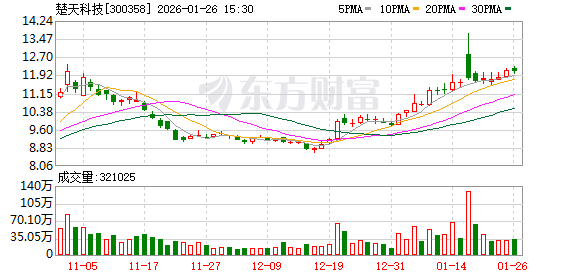
楚天科技:目前国内行业竞争依然激烈但逐步缓解
Zheng Quan Ri Bao· 2026-01-26 14:20
Industry Overview - The domestic industry competition remains intense but is gradually easing, with new characteristics and changes emerging [2] - The focus of industry competition is shifting from traditional equipment performance to technology integration, system solutions, and global service capabilities [2] Company Performance - The company expects to achieve a turnaround in profitability for the fiscal year 2025 compared to the previous year, driven by years of accumulation in product and manufacturing technology [2] - Key factors contributing to the company's improved performance include enhanced overall solution capabilities, global service capabilities, timely adjustments in development strategies, and significant expansion into overseas markets [2] - The company has implemented a series of cost reduction and efficiency enhancement measures to support its growth [2] Market Trends - There is an acceleration in domestic substitution, an increase in market concentration, and an expansion of advantages for leading enterprises [2] - The international market is becoming a new growth point for the company [2]

资源整合,海外扎根,生态竞争——2026车企销量目标透视
Zhong Guo Qi Che Bao Wang· 2026-01-13 01:26
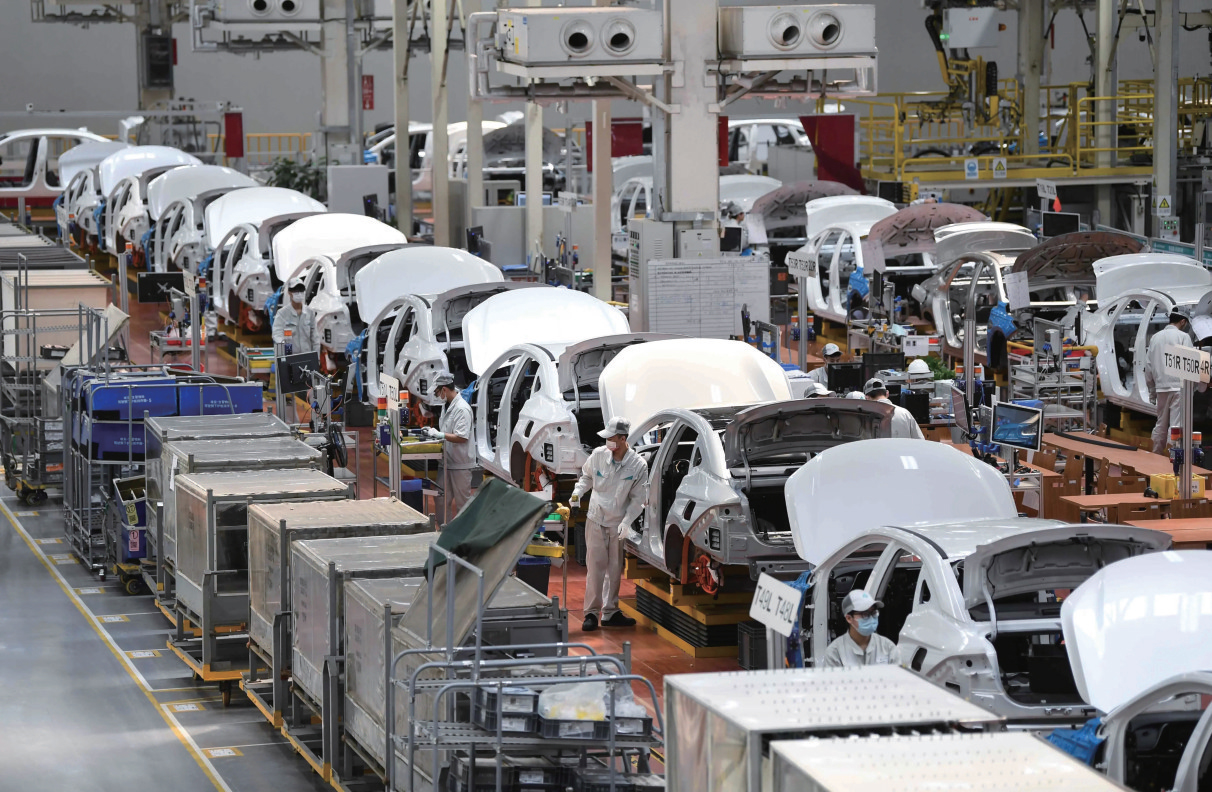
Core Insights - The automotive industry is setting ambitious sales targets for 2026, indicating a shift towards increased market concentration and strategic transformation among companies [2][3]. Group 1: Market Concentration - The sales targets set by leading automotive companies exceed 10 million units collectively, reflecting a significant concentration of market power among top players [3]. - The trend of market concentration is driven by resource integration, with leading companies leveraging economies of scale to invest in technology development, such as BYD's upcoming Blade Battery 5.0 and Changan's launch of 11 new models [3]. - Smaller companies lacking core competitiveness face immense pressure, with predictions of a 3% to 5% decline in China's automotive sales by Morgan Stanley, further squeezing their market space [3][4]. Group 2: Profitability Impact - The rise in market concentration is expected to have profound effects on industry profitability, as leading firms gain stronger pricing power and can maintain higher product prices through supply control [4]. Group 3: Global Strategy Shift - Companies are transitioning from "product export" to "ecosystem establishment," reshaping the global automotive landscape. BYD aims for overseas sales of 1.5 to 1.6 million units, focusing on building a complete ecosystem including battery factories and charging networks [5]. - Changan targets 3.3 million units, establishing its first overseas electric vehicle base in Thailand with a planned capacity of 200,000 units [6]. - Geely aims for 600,000 units in overseas sales, enhancing its global manufacturing network across various regions [6]. Group 4: Technological Ecosystem Competition - The competition in the automotive market is increasingly centered around technological ecosystems, with leading companies and new entrants focusing on this as a key competitive strategy [7]. - BYD's sales target of 4.5 million units is supported by its technological ecosystem, including the Blade Battery 5.0, which enhances its position in the new energy sector [7]. - The collaboration between tech companies and traditional automakers is deepening, leading to a redefinition of automotive products and service models [8].

2025年中国焦亚硫酸钠行业产业链、供需现状、价格走势、市场规模及未来趋势研判:“量价齐跌”致市场规模萎缩,产能利用率处于较低水平[图]
Chan Ye Xin Xi Wang· 2025-12-15 01:29
Core Insights - Sodium metabisulfite (Na2S2O5) is an inorganic compound widely used in food, paper, and chemical industries, characterized by its white or yellow crystalline appearance and strong odor [1][2] - China has become a significant producer of sodium metabisulfite globally, but the market is currently oversupplied, leading to a reduction in production capacity and output [1][10] Industry Overview - The upstream of the sodium metabisulfite industry includes raw materials such as sulfur, soda ash, and caustic soda, while the midstream involves the manufacturing process [5][6] - The downstream applications of sodium metabisulfite are extensive, including its use as a preservative in food, a bleaching agent in the paper industry, and a reducing agent in chemical processes [5][6] Supply and Demand Situation - As of 2024, China's sodium metabisulfite production capacity is projected to be 1.45 million tons, a decrease of 135,000 tons from 2019 [10] - The production output is expected to decline to 455,000 tons in 2024, reflecting a year-on-year decrease of 1.3% [10] - The capacity utilization rate remains low at around 31.4%, indicating significant idle capacity in the market [10] Consumption Trends - The apparent consumption of sodium metabisulfite in China is forecasted to be 440,000 tons in 2024, down 1.8% year-on-year, with domestic consumption accounting for 96.7% of total production [10][11] - The main consumption sectors include basic chemical manufacturing (35%), concrete admixtures (34%), food industry (21%), and mineral flotation (10%) [11] Price Trends - Prices for sodium metabisulfite are expected to decrease in 2024-2025 due to ample inventory and limited new orders, with a projected price of around 2,200 RMB per ton by December 2025 [11] Market Size - The market size for sodium metabisulfite in China is estimated to be approximately 928 million RMB in 2024, reflecting a 10% decline compared to 2023 [11][12] Industry Development Trends - The sodium metabisulfite industry is anticipated to evolve towards greener and more efficient production processes, with increased resource integration and market concentration among leading companies [13]

杭氧股份20251203
2025-12-04 02:22
Summary of Hangyang Co., Ltd. Conference Call Company Overview - Hangyang Co., Ltd. is a leading industrial gas company in China, benefiting from the stability of pipeline gas business and the flexibility of retail gas business, with a projected performance of approximately 1 billion yuan in 2025, primarily driven by pipeline gas contributions [2][12] Core Business Segments - The company's revenue structure consists of 70% from pipeline gas and 30% from retail gas, with plans to gradually increase the retail gas proportion to enhance profitability [2][5] - Core business areas include industrial gas equipment, pipeline gas, and retail gas, with pipeline and retail gas being significant growth drivers [10] Industry Dynamics - The Chinese industrial gas market is highly concentrated, with the top five companies holding over 70% market share. Hangyang is among these leaders, and successful integration with Yingde Gas could significantly enhance market share and pricing power [2][6] - The investment logic for the industrial gas industry in 2026 is based on supply-side reforms and increased market concentration, with expected profit compound annual growth rate (CAGR) close to 20% over the next three years [4] Growth Opportunities - Hangyang is actively expanding into controllable nuclear fusion, commercial aerospace, and hydrogen energy sectors, aligning with national development priorities under the "14th Five-Year Plan," which will provide new growth momentum [2][8] - The controllable nuclear fusion sector is expected to create significant demand for low-temperature systems, with potential value contribution of 5% to 16% from this business [7] Competitive Positioning - Hangyang's current valuation is approximately 20 times earnings, lower than international peers like Linde and Air Liquide, which are valued at 25-30 times. The company’s valuation is expected to align more closely with these peers as it advances in nuclear fusion and industry consolidation [3][9][15] - The company possesses strong defensive attributes due to long-term contracts in pipeline gas, ensuring stable revenue even during economic downturns [11][12] Future Projections - Hangyang's performance is projected to grow by over 15% in 2025, with sustained growth of around 20% in 2026 and 2027. If the economic cycle reverses, growth rates could exceed 30% or even 50%, indicating potential for the market capitalization to double [2][9][15] Conclusion - Hangyang Co., Ltd. is well-positioned in the industrial gas sector with a robust growth strategy, strong market presence, and significant opportunities in emerging fields, making it a compelling investment opportunity in the context of industry consolidation and technological advancements [2][4][8]

三棵树20251106
2025-11-07 01:28
Summary of the Conference Call for SanKe Tree Company Overview - SanKe Tree is a leading domestic paint brand in China, primarily focused on the architectural coatings sector. The company was established in 2002 and went public in 2016. As of 2024, it has ranked first in the domestic paint industry for six consecutive years, with its headquarters located in Putian, Fujian. [3][2] Financial Performance - Despite the downturn in the real estate market, SanKe Tree achieved a profit of approximately 700 million RMB in the first three quarters of 2025, representing a year-on-year growth of over 80%. [2][3] - The company's revenue and profit growth was rapid from 2011 to 2021, but it faced challenges starting in 2022 due to the real estate market decline. [3] Industry Insights - The architectural coatings industry is expected to have a strong long-term growth potential due to short repaint cycles and product upgrades. The demand for interior wall paints is increasing due to enhanced environmental and functional properties, leading to price increases. [2][5] - The industry is currently undergoing a consolidation phase, with smaller companies exiting the market, while leading firms like Nippon Paint and SanKe Tree are alleviating price wars through price increases. [6] Market Position - Nippon Paint, as the industry leader, has a revenue scale of over 25 billion RMB, approximately double that of SanKe Tree. [7] - SanKe Tree has strategically increased its focus on architectural and home decoration coatings, which now account for nearly 90% of its product mix. [3] Retail Market Strategy - SanKe Tree is actively expanding its retail market presence through the "Ma Shang Zhu" community store model, which has led to the establishment of over 1,000 stores by 2025, significantly boosting order volume and performance contributions. [2][9] - The company is also exploring high-end products like artistic paints in first- and second-tier cities to enhance profitability and brand image. [11] Beautiful Countryside Business - SanKe Tree has established a leading position in the beautiful countryside business, with sales of imitation stone paint reaching 1.1 billion RMB in 2024, capturing about 5% market share. [10] - The imitation stone paint market has grown from over 5 billion RMB in 2014 to over 20 billion RMB in 2024, indicating strong demand in rural self-built housing. [10] Future Outlook - SanKe Tree plans to continue expanding its "Ma Shang Zhu" community stores and beautiful countryside business, which are expected to enhance overall profitability. [11] - The company is optimistic about maintaining a good growth trajectory and improving net profit levels in the future, with a positive rating on its development outlook. [11]

万亿级基金公司破十家,市场巨头“卡位战”激战正酣
Sou Hu Cai Jing· 2025-10-13 19:52
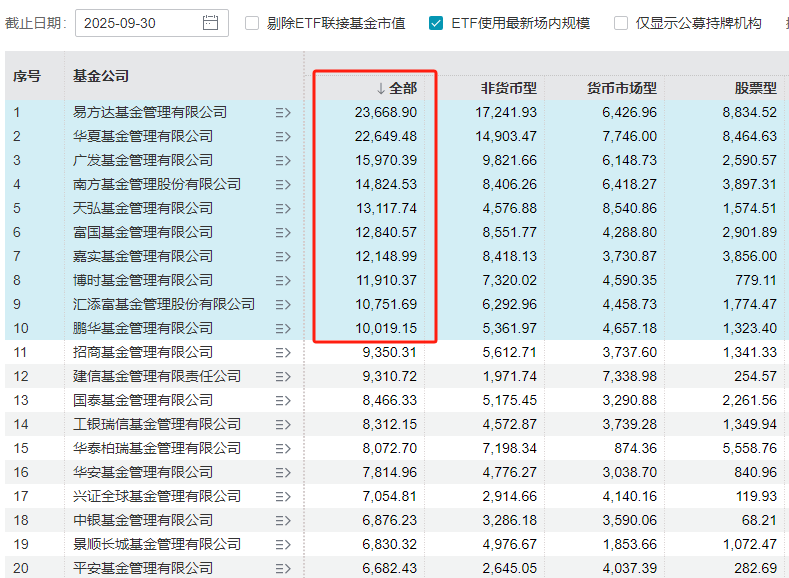
Core Insights - The public fund industry in China is experiencing significant growth, with the number of fund companies surpassing the trillion yuan mark reaching ten, indicating a strong market concentration and competitive landscape [1][3]. Group 1: Market Trends - The total assets managed by the top ten fund companies have reached 14.79 trillion yuan, accounting for 41.20% of the total market size of 35.90 trillion yuan, reflecting an increase in market concentration [3]. - The competition among the top fund companies is intensifying, particularly between the leading firms, with a notable proximity in asset sizes, indicating a potential shift in market leadership [4]. Group 2: Investment Strategies - The exchange-traded funds (ETFs) segment is witnessing rapid growth, especially in broad-based and popular industry ETFs, becoming a key battleground for major players [6]. - Despite the rise of passive investment strategies, long-term performance remains crucial for maintaining brand loyalty and investor trust, highlighting the importance of active management capabilities [7]. Group 3: Industry Challenges - The emergence of ten trillion-yuan fund companies marks a pivotal moment in the development of the public fund industry, suggesting increased maturity and a shift in competitive dynamics [7]. - Fund managers face challenges in balancing scale with performance, maintaining flexibility and innovation, and adapting to potential regulatory changes, which are critical for future success [7].
派林生物又“卖身”,中国生物吞下血液制品龙头
Xin Jing Bao· 2025-09-12 13:54
Core Viewpoint - The control of the domestic blood product company, Palin Bio (000403), is set to change hands as its controlling shareholder, Shengbang Yinghao Investment Partnership, has signed a share transfer agreement with China National Biotechnology Group, which will acquire 21.03% of the shares for approximately 4.699 billion yuan, making it the new controlling shareholder of the company [1][2]. Group 1: Share Transfer Details - Shengbang Yinghao will transfer a total of 199,878,656 shares, representing 21.03% of the total share capital, to China National Biotechnology Group at a price of approximately 46.99 billion yuan, equating to about 23.51 yuan per share, which reflects a premium of approximately 27.77% over the closing price of 18.4 yuan per share on September 9 [2][8]. - Following the completion of the share transfer, the controlling shareholder will shift from Shengbang Yinghao to China National Biotechnology Group, with the actual controller changing from the Shaanxi Provincial State-owned Assets Supervision and Administration Commission to China National Pharmaceutical Group [2][4]. Group 2: Company Performance and Industry Context - Palin Bio's main business involves the research, development, production, and sales of blood products, which are derived from human plasma and include human albumin, human immunoglobulin, and human coagulation factors [6][10]. - In the first half of 2025, Palin Bio reported a revenue of 986 million yuan, a year-on-year decrease of 13.18%, and a net profit attributable to shareholders of 236 million yuan, down 27.89% [8][9]. - The decline in performance is attributed to the growing pains of expansion, as the company has been increasing its plasma collection capacity, which has temporarily reduced product supply [9][10]. Group 3: Industry Dynamics and Competition - Since 2001, China has stopped approving new blood product manufacturing enterprises, leading to a competitive landscape dominated by major players such as Tian Tan Bio, Shanghai Lai Shi, Hualan Bio, and Palin Bio [1][10]. - The acquisition of Palin Bio by China National Biotechnology Group signifies a further increase in industry concentration, as the group already controls Tian Tan Bio, the largest blood product company in China [11][12]. - Post-acquisition, there will be potential competition issues as both Palin Bio and Tian Tan Bio produce overlapping blood product categories, which may lead to market competition concerns [12].

中国经济韧性与活力彰显!A500ETF(159339)现涨0.42%,4月8日以来反弹11.06%
Xin Lang Cai Jing· 2025-05-23 03:29
Group 1 - In April, despite a more complex international environment and increased external shocks, consumption growth showed positive signs, investment scale expanded, and import and export resilience exceeded expectations, demonstrating strong economic resilience and vitality [1] - The total retail sales of consumer goods in April increased by 5.1% year-on-year, with significant growth in sales of home appliances, audio-visual equipment, cultural office supplies, furniture, and communication equipment, which contributed notably to the overall retail sales growth [1] - On May 23, the A-share market experienced a rebound, with the A500 index showing stable performance, and the A500 ETF (159339) averaging a daily trading volume of 261 million yuan over the past 20 trading days, indicating high market activity [1] Group 2 - The A500 ETF (159339) tracks the A500 index, which covers 63% of total revenue and 70% of total net profit in the A-share market with less than 10% of the total number of stocks, making it a strong tool for long-term investment in China's capital market [2] - The A50 ETF (159592) tracks the A50 index, which focuses on large-cap leading stocks across various industries, benefiting from increased market concentration due to supply-side reforms, and is favored by funds during earnings disclosure periods [2] - According to Everbright Securities, despite a gradual economic recovery, the resonance of macro and micro liquidity, along with industrial upgrades, provides positive support for the market, with expectations of synchronized monetary policy easing between China and the US [2]
百强房企投资积极性筑底回升!前四月拿地金额同比增长42%
券商中国· 2025-05-01 07:21
Core Viewpoint - The land transaction activity in key cities has significantly increased, indicating a recovery in investment sentiment among top real estate companies [1][4]. Group 1: Land Acquisition Data - From January to April, the top 100 real estate companies' land acquisition amount reached 428.5 billion yuan, a year-on-year increase of 42% [4]. - The total new value of land acquired by these companies was 830.9 billion yuan, reflecting a year-on-year growth of 23.6% [4]. - The total construction area increased by 3.2% year-on-year, amounting to 39.15 million square meters [4]. - The top 10 sales companies accounted for 69% of the total new value acquired by the top 100, an increase of 7 percentage points compared to the end of 2024 [4]. Group 2: Market Trends and Dynamics - The land market is showing significant differentiation, with first-tier cities and strong second-tier cities experiencing rising transaction premiums, while third and fourth-tier cities are seeing a decline in both volume and price [5][8]. - The concentration of the market is increasing, with leading companies and state-owned enterprises optimizing their land reserves, while smaller firms are reducing their investment due to liquidity pressures [5]. - The top 10 companies in the Yangtze River Delta region acquired 114.67 billion yuan worth of land, leading among the four major city clusters [7]. Group 3: Future Outlook - The core cities are expected to see a recovery in market sentiment due to policy optimization and increased quality supply, although the national market has not fully stabilized yet [8]. - Companies are advised to seize the opportunity during the "stop falling and stabilize" policy window while being cautious in their investments, focusing on quality land in key cities to avoid high-price risks [8].