
长安汽车

Search documents
天海电子历时8年终上会,毛利率逐年下降,应收账款占资产四成
Shen Zhen Shang Bao· 2026-01-10 00:36
Core Viewpoint - Tianhai Automotive Electronics Group Co., Ltd. is set to undergo its IPO review after an eight-year preparation period, showcasing significant growth in revenue and profit, but facing challenges related to raw material costs and accounts receivable [1][2]. Group 1: Company Overview - Tianhai Electronics specializes in the research, production, and sales of automotive components such as wiring harnesses, connectors, and electronics, holding a market share of 8.45% in the automotive wiring harness sector and 3.52% in the connector sector in China [1]. - The company has established partnerships with major automotive manufacturers including Chery, SAIC, Geely, Changan, Li Auto, NIO, and XPeng, as well as international giants like General Motors [1]. Group 2: Financial Performance - From 2022 to 2024, the company's revenue is projected to grow from 8.215 billion to 12.523 billion yuan, with a compound annual growth rate (CAGR) of 23.47%, while net profit is expected to rise from 402 million to 614 million yuan [1]. - In the first half of 2025, the company reported revenue of 6.557 billion yuan and a net profit of 315 million yuan, continuing its growth trend [1]. Group 3: Cost and Margin Challenges - The company's gross profit margins have been declining, from 15.94% to 13.93% over the reporting period, with a further drop to 13.93% in the first half of 2025 [2]. - Raw material costs are a significant concern, with direct material costs accounting for 78% of the main business costs, and copper material purchases representing over 40% of this [2]. - The price of electrolytic copper increased from 59.85 yuan/kg to 68.78 yuan/kg, a rise of 14.9%, impacting profit margins despite a copper price linkage mechanism with clients [2]. Group 4: Accounts Receivable and Inventory - Accounts receivable have increased significantly, from 3.162 billion yuan to 5.201 billion yuan, constituting about 40% of total assets, with overdue accounts receivable reaching 6.70% by the end of the reporting period [2]. - Inventory value rose from 1.427 billion yuan to 1.710 billion yuan, with the provision for inventory impairment increasing from 6.49% to 8.60%, indicating potential risks due to unsold stock amid intensified competition [3]. Group 5: Outsourcing and Operational Risks - The company has utilized labor outsourcing to enhance production flexibility, with outsourcing costs accounting for 8.38% to 6.51% of operating costs over the reporting periods [3]. - There are risks associated with potential disputes with outsourcing partners or issues in labor organization that could adversely affect production schedules [3].

锂电回收行业迎来转机能源金属涨价推升“城市矿山”价值
Zheng Quan Shi Bao· 2026-01-09 23:02
Core Viewpoint - The lithium battery recycling industry is transitioning from extensive development to a new phase characterized by refinement, standardization, and globalization, driven by rising prices of lithium and cobalt, along with supportive policies [1][8]. Industry Overview - The lithium battery recycling sector is being recognized as a "urban mine," converting waste batteries into valuable, recyclable resources [1]. - A green circular market exceeding 100 billion yuan has emerged, reshaping the resource supply landscape in the new energy industry [1]. Profitability and Market Dynamics - The profitability of lithium battery recycling businesses has improved significantly due to increased retirement volumes and rising prices of lithium and cobalt [2]. - The price surge of energy metals has shifted the profit model from relying on subsidies to focusing on the intrinsic value of recycled materials, expanding profit margins for companies [2][3]. Policy Developments - New regulations have eased the import of recycled materials, allowing certain types of black powder to be imported without being classified as solid waste, thus facilitating the global resource allocation for China's battery recycling industry [2][3]. Capacity Expansion and Capital Operations - Leading companies are adopting a dual strategy of capacity expansion and capital operations to seize market opportunities, including new base construction and technology partnerships [4][6]. - Companies like Greeenme and Tianqi are actively pursuing acquisitions and financing to enhance their operational capabilities and market presence [4][5][6]. Technological Advancements and Industry Collaboration - The industry is evolving from merely end-of-life disposal to playing a crucial role in the entire battery lifecycle, with companies establishing comprehensive value chains [7]. - Greenme has achieved a lithium recovery rate exceeding 96.5% and has formed partnerships with over 1,000 automotive and battery manufacturers to create a closed-loop supply chain [7]. Market Outlook - The lithium battery recycling market is expected to grow at an annual rate exceeding 50% over the next 3 to 5 years, with the domestic market projected to surpass 100 billion yuan by 2030 [8].


长安汽车L3级车型落地 重庆打造智能网联汽车第一城
Zhong Guo Jing Ying Bao· 2026-01-09 19:51
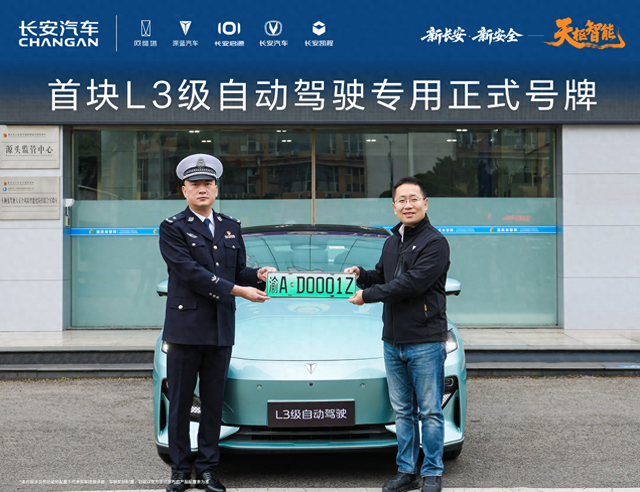
Core Viewpoint - The launch of L3 conditional autonomous driving vehicles by Changan Automobile in Chongqing marks a significant step towards the commercialization of smart connected vehicles in China, with the first dedicated license plate "渝AD0001Z" issued for such vehicles [2][3][4]. Group 1: Autonomous Driving Development - Changan Automobile has received approval for its L3 level conditional autonomous driving vehicles, becoming one of the first companies to do so in China [2][4]. - The first dedicated license plate for L3 autonomous driving was issued in Chongqing, allowing these vehicles to operate on specific urban roads known for complex traffic conditions [3][4]. - The current pilot program is limited to designated routes and vehicles, with the aim of gathering data to improve technology and regulatory frameworks before broader consumer access [4][5]. Group 2: Safety and Responsibility - The responsibility for driving remains with the driver, even with the introduction of L3 autonomous vehicles, as the system is only active under specific conditions [5][6]. - The transition from L2 to L3 involves a shift in responsibility, where the vehicle's control system assumes primary responsibility under defined conditions, but the driver must be ready to take over when prompted [6][7]. - Legal frameworks are being developed to clarify the responsibilities of manufacturers and drivers, ensuring safety while promoting the adoption of autonomous driving technologies [6][9]. Group 3: Industry and Policy Implications - Chongqing is positioning itself as a leader in the smart connected vehicle industry, supported by government policies aimed at fostering innovation and collaboration within the automotive sector [7][8]. - The development of smart connected vehicles is seen as a major technological breakthrough that will transform automotive usage and urban traffic management [9]. - The pilot program in Chongqing is expected to provide practical insights that will inform future legislative changes regarding autonomous driving, enhancing the legal framework to support industry growth [9].

锂电回收行业迎来转机 能源金属涨价推升“城市矿山”价值
Zheng Quan Shi Bao· 2026-01-09 17:44
Core Insights - The lithium battery recycling industry is evolving from a rough development phase to a more refined, standardized, and globalized stage, driven by rising prices of lithium and cobalt, along with supportive policies [1][7] - Major companies like Tianqi Co., Ltd. and Greeenme are expanding their capacities and capital operations to build competitive barriers through technological upgrades and industry chain extensions [1][2] Industry Trends - The prices of key metals such as lithium, cobalt, and nickel are expected to remain high due to global mining cycles and increased downstream energy storage demand, positively impacting cash flow and profitability for recycling companies [2][3] - The recycling business of Greeenme saw a significant increase in dismantling volume, reaching 36,000 tons in the first three quarters of 2025, a year-on-year surge of 59% [2] Policy Developments - In June 2025, the Ministry of Ecology and Environment, the Ministry of Industry and Information Technology, and the State Administration for Market Regulation announced that recycled black powder for lithium-ion batteries meeting national standards would not be classified as solid waste, facilitating imports [2][3] - The gradual relaxation of import policies for recycled resources reflects the government's emphasis on recycling and lithium battery recovery [3] Company Strategies - Greeenme is actively pursuing a dual strategy of capacity expansion and capital operation, including a planned acquisition of Henan Recycling Group to enhance its circular economy strategy [4][5] - Tianqi Co., Ltd. has established a processing capacity of 100,000 tons for waste lithium batteries, with plans for further expansion [5][6] Technological Advancements - Greeenme has developed a complete lifecycle value chain for battery recycling, achieving a lithium recovery rate exceeding 96.5% through innovative technologies [6] - The company collaborates with over 1,000 automotive and battery manufacturers to create a closed-loop supply chain, reducing risks associated with supply chain and metal price fluctuations [6] Market Outlook - The lithium battery recycling industry is expected to grow at an annual rate exceeding 50% over the next 3 to 5 years, with the market size projected to surpass 100 billion yuan by 2030 [7] - The industry is undergoing a transformation driven by price, demand, and policy changes, moving towards a more refined and standardized development phase [7]
增动能、调结构、优监管
Xin Lang Cai Jing· 2026-01-09 17:39
Core Insights - The latest round of state-owned enterprise (SOE) reforms has shown significant progress, with core functions and competitiveness of SOEs being enhanced [1] - The focus on innovation and R&D has led to a continuous increase in funding, with central enterprises' R&D expenditure averaging a growth of 6.5% annually since the 14th Five-Year Plan, and basic research investment growing by 19% annually [2] - The restructuring of state-owned assets is a key focus, with strategic mergers and the establishment of new central enterprises aimed at enhancing the role of state-owned economy in modern industrial systems [4] Group 1: Innovation and R&D - Central enterprises have seen R&D funding exceed 1 trillion yuan for three consecutive years from 2022 to 2024, indicating a strong commitment to innovation [2] - The establishment of 134 pilot platforms for external testing and verification across 16 key industries demonstrates a proactive approach to bridging technology and product development [2] - The continuous improvement of R&D expenditure accounting and evaluation systems reflects a commitment to optimizing R&D investment efficiency [2] Group 2: Corporate Governance and Management - The integration of party leadership into corporate governance has been enhanced, leading to more scientific and efficient board operations [3] - The implementation of performance-based management practices has become common, with 6% of central enterprise management personnel being adjusted or removed due to performance issues [3] - The market-oriented operational mechanisms have been strengthened, improving resource utilization and management efficiency within SOEs [3] Group 3: Structural Adjustment - The restructuring of state-owned assets is crucial for accelerating the transformation of growth drivers and supporting the development of a modern industrial system [4] - New central enterprises, such as China Chang'an Automobile Group, have been established, and 116 strategic mergers have been initiated to bolster key industries [4] - By 2025, central enterprises are expected to generate over 1.1 trillion yuan in revenue from strategic emerging industries, highlighting a shift towards new productive forces [4] Group 4: Regulatory Enhancements - The effectiveness of state asset supervision has been improved through the establishment of a matrix-style regulatory model that balances object and behavior supervision [6] - The implementation of smart regulatory platforms in regions like Zhejiang has enhanced oversight capabilities, integrating AI for risk identification and management [7] - The ongoing reforms aim to deepen and solidify the achievements made, with a focus on continuous improvement in regulatory practices [7]
新能源浪潮下的创新蝶变 鹏翎股份详解转型之道
Zhong Guo Zheng Quan Bao· 2026-01-09 15:05
Core Insights - The core philosophy of the company emphasizes the importance of market respect and competition for maintaining corporate vitality [2] - The company has been deeply engaged in the automotive parts industry for over 30 years, maintaining a leading position in the automotive fluid pipeline sector [3] - The explosive growth of the new energy vehicle market presents unprecedented strategic opportunities for the company [2][4] Financial Performance - The company achieved operating revenues of 1.952 billion, 2.461 billion, and 1.960 billion yuan for the years 2023, 2024, and the first three quarters of 2025, reflecting year-on-year growth rates of 14.95%, 26.08%, and 16.37% respectively [3] Product Development and Strategy - The company is transitioning from a traditional auto parts supplier to a system assembly provider, with a focus on high-value, high-tech products [2][3] - The company has identified two main product upgrade directions: increasing demand for nylon-related products in new energy vehicles and a shift towards delivering complete assembly products [3] - The company is actively entering the thermal management sector, developing lightweight and highly integrated thermal management assembly products [2][6] Market Adaptation and Client Relationships - The company has established solid partnerships with major automotive manufacturers, including BYD, Changan Automobile, Geely, and others, to develop new models in the new energy vehicle sector [3] - The company emphasizes the need for agile supply capabilities to meet fluctuating market demands, which enhances its competitive edge [3] Future Growth and Strategic Planning - The company aims to become a technologically advanced manufacturing enterprise within three years, focusing on the core business of fluid pipelines and seals while exploring new opportunities in intelligent machinery components [4][8] - The company plans to establish a research and development center in Shanghai and has initiated a second growth curve focused on thermal management water-side modules [6][8] - The strategic plan for 2026-2028 includes a focus on the electrification, intelligence, and connectivity of the automotive industry, with an emphasis on electric vehicle thermal management and automotive electronics [8] Operational Efficiency and Profitability - The company aims to enhance its net profit margin through internal integration, production optimization, and new material applications [10] - The company is focusing on optimizing material performance, structural design, and heat transfer efficiency in its pipeline systems to improve overall profitability [10]

国务院国资委:国有经济向“新”布局明显提速
Sou Hu Cai Jing· 2026-01-09 14:37
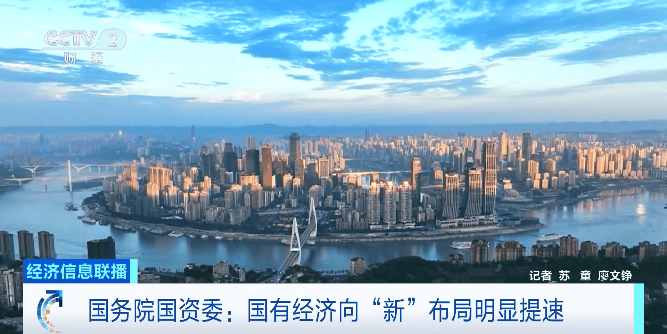
(央视财经《经济信息联播》)今天(9日),国务院国资委表示,截至2025年12月底,国有企业改革 深化提升行动主体任务已基本完成,核心竞争力有效提升,国有经济向新质生产力布局明显提速。 国务院国资委相关负责人表示,通过战略性重组和专业化整合,组建了中国雅江集团、中国资环集团、 中国长安汽车、中国数联物流等新央企,着力推动产业向重点领域、优势赛道集中。各地围绕发展支柱 性实体产业板块,开展了116组战略性重组;同时,各地、各中央企业还着力推动传统产业转型升级, 和在战略性新兴产业、未来产业的精准布局,相关领域发展呈现良好势头。 李镇介绍,国资国企持续优化科技创新体制机制,国有企业创新能力显著提升。"十四五"以来,中央企 业研发经费年均增长6.5%,2022到2024年连续三年破万亿元;中央企业主导建设了23个创新联合体, 对外开放中试验证平台134个,在16个重点行业打造了800多个应用场景。 转载请注明央视财经 编辑:令文芳 国务院国资委副主任 李镇:不少地方和中央企业系统梳理产业发展图谱,推动精准布局,开辟"第二曲 线"。(2025年)1到11月,中央企业在战略性新兴产业领域营收突破11万亿元。 ...
新能源浪潮下的创新蝶变,鹏翎股份详解转型之道
Zhong Guo Zheng Quan Bao· 2026-01-09 14:33
Core Insights - The core philosophy of the company is to embrace competition and maintain market vitality, which has been crucial for its growth over the past 30 years in the automotive parts industry [1][2] - The explosive growth of the new energy vehicle market presents unprecedented strategic opportunities for the company, which is transitioning from a traditional auto parts supplier to a systems provider [1][2] Financial Performance - The company achieved revenues of 1.952 billion yuan, 2.461 billion yuan, and 1.960 billion yuan for the first three quarters of 2023, 2024, and 2025 respectively, with year-on-year growth rates of 14.95%, 26.08%, and 16.37% [2] Product Development and Market Strategy - The company is focusing on two main product upgrade directions: increasing demand for nylon-related products in new energy vehicles and shifting towards delivering complete assembly products instead of just components [2] - The company has established strong partnerships with major automotive manufacturers, including BYD, Changan Automobile, and Geely, to develop new models in the new energy vehicle sector [2] Innovation and Future Growth - The company plans to enhance its R&D investment to keep pace with the trends of electrification, intelligence, and connectivity in the automotive industry [3] - A new growth curve is being initiated with the establishment of a research center in Shanghai, focusing on thermal management modules, which will leverage the company's existing customer and supply chain advantages [5] Strategic Planning - The company has outlined a three-year strategic plan (2026-2028) focusing on the intelligent and connected aspects of new energy vehicles, aiming to become a technology-driven advanced manufacturing enterprise [7] - The strategy includes optimizing production processes and enhancing material performance to improve profit margins, while also exploring opportunities in related core component investments [8]
同星科技:公司汽车领域主要与长安、江淮、奇瑞、松芝等企业合作
Zheng Quan Ri Bao Wang· 2026-01-09 14:15
Core Viewpoint - The company, Tongxing Technology, is positioned to benefit from the recent approval of L3-level conditional autonomous driving vehicles by the Ministry of Industry and Information Technology, which is expected to create new market demand and development opportunities for the company [1] Group 1: Partnerships and Collaborations - The company collaborates with major automotive enterprises such as Changan, JAC, Chery, and Songzhi [1] - Deep Blue Automotive, a long-term strategic partner of the company, has officially launched L3-level autonomous driving, which is anticipated to stimulate market demand [1] Group 2: Future Strategies - The company plans to deepen cooperation with existing core customers, leveraging synchronous research and quality system advantages to enhance the value and share of individual vehicle components [1]
长安汽车:2025年长安汽车总体销量291.3万辆,同比增长8.5%
Zheng Quan Ri Bao Wang· 2026-01-09 14:15
证券日报网讯1月9日,长安汽车(000625)在互动平台回答投资者提问时表示,2025年长安汽车总体销 量291.3万辆,同比增长8.5%,创9年新高;新能源方面,2025年销量突破百万大关,达到110.9万辆, 同比增长51%,成为驱动长安增长的新引擎;海外方面,2025年销量达63.7万辆,同比增长18.9%,海 外市场已成为长安稳健增长的新动能。2026年公司总体销量目标330万辆,同比增长13.3%;其中,新 能源140万辆,同比增长26.2%;海外75万辆,同比增长17.7%。 ...