
宁波银行

Search documents
这场论坛聚焦金融提振消费
Bei Jing Shang Bao· 2025-12-14 15:39
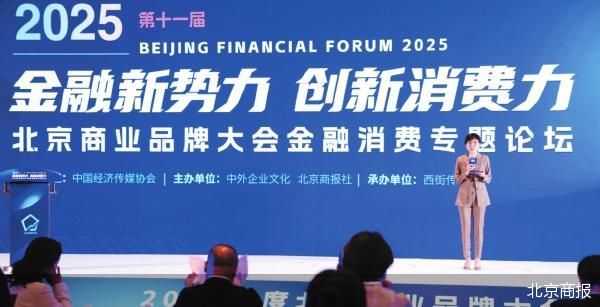
Group 1 - The core viewpoint emphasizes the integration of finance and consumption as a key support for expanding domestic demand and stabilizing economic growth, with a focus on quality improvement rather than mere scale expansion [1][3] - The 2025 Beijing Commercial Brand Conference highlighted the importance of financial empowerment in enhancing consumption quality, with ten major financial brands recognized for their contributions [1] - The forum discussed the evolving relationship between finance and consumption, indicating that financial services are becoming more crucial in driving consumer spending and economic stability [3][4] Group 2 - The macroeconomic outlook for 2026 suggests a significant increase in the resident consumption rate, with financial policies expected to focus on service consumption and enhancing residents' income [3][4] - The transition from traditional factor-driven growth to innovation-driven growth is identified as a key transformation in the next five years, with an emphasis on high-quality development and technological innovation [4][6] - Financial institutions are expected to play a larger role in supporting emerging industries and facilitating the shift from real estate-driven growth to new economic drivers [6][9] Group 3 - The rise of new consumer segments, such as new citizens and the elderly economy, presents opportunities for financial services to innovate and meet diverse consumer needs [9][10] - The demand for inclusive financial services is growing, particularly among younger consumers and new labor groups, highlighting the need for tailored financial products [9][10] - The insurance sector is leveraging technology to enhance service delivery and expand coverage, particularly for traditionally underserved populations [10][11] Group 4 - The wealth migration from traditional assets like real estate to diversified financial products is reshaping the investment landscape, with a focus on wealth management and financial planning [13][14] - Financial technology is being utilized to provide personalized services to clients, enhancing customer experience and engagement in wealth management [14][15] - The dual function of life insurance as both risk protection and asset growth is emphasized, positioning it as a vital component in comprehensive asset planning [16]

公募销售新规落地,政银绑定深化下银行扩表动能有望复苏
Western Securities· 2025-12-14 12:55
Investment Rating - The report indicates a positive outlook for the insurance sector, recommending specific companies such as China Pacific Insurance, China Ping An, China Life (H), and China Taiping, while also recommending New China Life Insurance [4][17]. Core Insights - The financial industry experienced a mixed performance, with the non-bank financial index rising by 0.81%, outperforming the CSI 300 index by 0.89 percentage points. The insurance sector showed a notable increase of 2.36%, while the banking sector declined by 1.77% [2][11]. - The central economic work conference emphasized a proactive fiscal policy, which is expected to benefit the insurance sector by increasing infrastructure asset supply and improving credit risk perceptions [14][15]. - The report highlights the potential for valuation recovery in the brokerage sector, driven by regulatory changes that align public fund interests with long-term investor returns [18][19]. Summary by Sections 1. Weekly Performance and Sector Insights - The non-bank financial index rose by 0.81%, with the insurance sector outperforming the CSI 300 index by 2.44 percentage points [2][11]. - The banking sector underperformed, with a decline of 1.77%, attributed to macroeconomic policy expectations [3][21]. 2. Insurance Sector Data Tracking - The insurance sector's premium income showed steady growth, with life insurance and property insurance premiums increasing by 9.6% and 4.0% year-on-year, respectively [17][26]. - The report notes that the 10-year government bond yield decreased to 1.84%, which is favorable for the insurance sector's investment strategies [31]. 3. Brokerage Sector Data Tracking - The brokerage sector's PB valuation stands at 1.37x, indicating potential for valuation recovery as earnings improve [19][42]. - Regulatory changes in public fund sales are expected to enhance the industry's focus on long-term investor interests [18][19]. 4. Banking Sector Data Tracking - The banking sector's PB valuation is at 0.54x, suggesting it remains undervalued [21][25]. - The central economic work conference's focus on domestic demand and flexible monetary policy is expected to support the banking sector's growth [22][23].




小微贷:融资难易之变
Bei Jing Shang Bao· 2025-12-14 07:47
Core Insights - The article emphasizes the significant growth and development of inclusive microfinance loans in China, highlighting their role in bridging financial resources with the real economy and addressing the financing difficulties faced by small and micro enterprises [1][5]. Group 1: Growth of Inclusive Microfinance Loans - As of Q3 2025, the balance of inclusive microfinance loans reached 36.5 trillion yuan, marking a year-on-year increase of 12.1% [5]. - The balance of these loans has seen a remarkable cumulative growth of 241.3% over six years, surpassing 10 trillion yuan in June 2019, 20 trillion yuan in March 2022, and 30 trillion yuan in March 2024 [6]. - Major state-owned banks dominate the market, with significant loan balances reflecting strong policy support and cost advantages [6]. Group 2: Policy and Institutional Support - The development of inclusive microfinance has been supported by national policies since 2013, which elevated it to a strategic level, followed by systematic frameworks established in 2015 [5][6]. - Financial institutions have responded by creating dedicated departments for inclusive finance and offering tailored products to meet the needs of small and micro enterprises [6][7]. Group 3: Interest Rate Trends - The average interest rate for newly issued inclusive microfinance loans was 3.48% as of June 2025, a decrease of over 2 percentage points compared to pre-reform levels [8]. - State-owned banks typically offer rates between 2.3% and 3.5%, while local banks may charge between 3% and 5% due to regional competition and client risk profiles [8][9]. Group 4: Future Directions and Challenges - The focus is shifting from merely increasing loan volumes to enhancing the quality of services, with an emphasis on maintaining a balance between serving the real economy and effective risk management [10][11]. - Financial institutions are encouraged to innovate and improve their service offerings, moving away from price competition to a more comprehensive approach that includes digital risk control and collaboration across the industry [9][10].
低调霸榜全球最难SQL榜单超两月,国产AI这次选择高调开源!
量子位· 2025-12-14 07:12
Core Viewpoint - Ant Group's AI division, Ant Financial Technology, has made significant strides in the AI data analysis field, recently achieving top rankings in global SQL benchmarks and announcing the open-source release of its Agentar-SQL series, which includes comprehensive frameworks for real-time text-to-SQL conversion and other data capabilities [2][4][5]. Group 1: Achievements and Innovations - Ant Group's Agentar-Scale-SQL achieved a dual first-place ranking in the BIRD benchmark with an execution accuracy of 81.67% and execution efficiency of 77% [5]. - The average query accuracy of Ant Group's Agentar SQL tools exceeded 92% during a trial with a major city commercial bank, representing over a threefold improvement compared to traditional query methods [7]. - Ant Group's AI solutions have been adopted by 100% of state-owned commercial banks and over 60% of local commercial banks in China, indicating a strong market presence [18]. Group 2: Strategic Focus and Market Approach - Ant Group's CEO emphasized that the true value of AI lies in its ability to address real-world industry challenges rather than just technological advancement [9]. - The company has adopted a unique "pay-for-performance" model, reducing the barriers for small and medium-sized institutions to implement AI by allowing them to pay based on tangible business outcomes [42][43]. - Ant Group has established deep partnerships with 300 collaborators, serving over 13,000 end customers, and has upgraded its "Xinglan Plan" to enhance partner capabilities across various dimensions [45][47]. Group 3: Broader Applications and Future Directions - The AI methodologies developed in the financial sector are being adapted for broader applications, such as in public transportation and energy sectors, showcasing the versatility of Ant Group's AI capabilities [27][30][37]. - Ant Group's AI solutions have gained international recognition, serving over a hundred overseas financial institutions and being selected for the Hong Kong Monetary Authority's generative AI sandbox project [48][49]. - The company is positioned as a leader in the AI industry, with its technology being recognized for its robustness and applicability in various sectors beyond finance [20].

2025普惠金融报告|小微贷:融资难易之变
Bei Jing Shang Bao· 2025-12-14 06:47
Core Insights - The article emphasizes the significant growth and development of inclusive microfinance loans in China, highlighting their role in bridging financial resources with the real economy and addressing the financing difficulties faced by small and micro enterprises [1][5][10] Group 1: Growth and Development of Inclusive Microfinance Loans - As of Q3 2025, the balance of inclusive microfinance loans reached 36.5 trillion yuan, marking a 12.1% year-on-year increase, showcasing the effectiveness of these loans in alleviating financing challenges for small enterprises [5][6] - The growth trajectory of inclusive microfinance loans has been remarkable, with a cumulative increase of 241.3% over six years, from 10 trillion yuan in June 2019 to over 36 trillion yuan by Q3 2025 [6][10] - The establishment of a national strategy for inclusive finance in 2013 and subsequent policy frameworks have been pivotal in fostering the development of this financial sector [5][6] Group 2: Role of Financial Institutions - State-owned banks are the main players in the inclusive microfinance sector, with significant loan balances and a clear policy orientation, as evidenced by their substantial year-on-year growth rates [6][7] - Joint-stock banks focus on product innovation and customer segmentation, with notable growth in loan balances and efforts to reduce financing costs through lower interest rates [7][8] - Local banks leverage regional advantages and data integration to enhance service efficiency for small enterprises, thereby improving their access to financing [7][8] Group 3: Interest Rate Trends and Policy Support - The average interest rate for newly issued inclusive microfinance loans was 3.48% as of June 2025, reflecting a decrease of over 2 percentage points compared to pre-reform levels [8][9] - Recent trends show some banks offering even lower rates, such as 2.2% in Shenzhen, although these rates are typically reserved for low-risk clients [9] - The People's Bank of China has implemented various measures to lower financing costs for small enterprises, including multiple reductions in the re-lending rate and the introduction of targeted financial tools [8][9] Group 4: Future Directions and Strategic Focus - The future of inclusive microfinance loans is expected to focus on increasing loan supply, enhancing service coverage, and improving quality while reducing costs, aligning closely with the needs of the real economy [10][11] - Financial institutions are encouraged to refine their roles, with state-owned banks focusing on core enterprises, joint-stock banks emphasizing online and efficient credit products, and local banks providing tailored services based on regional needs [11] - A balanced approach to service delivery, risk management, and compliance is essential for building a sustainable and inclusive microfinance ecosystem [11]
2025普惠金融报告|消费贷:不卷利率卷服务
Bei Jing Shang Bao· 2025-12-14 06:40
上海金融与发展实验室首席专家、主任曾刚表示,消费贷余额增长既有政策催化的短期因素,更是消费需求升级的长期趋势体现。他分析称,从短期看, 2025年财政贴息、额度上限提高等政策组合拳确实起到了立竿见影的刺激作用,特别是在以旧换新、家装等领域释放了大量潜在需求。但从深层逻辑看,中 等收入群体扩容、消费观念迭代、场景金融渗透率提升才是持续增长的底层支撑。 客群与利率分化 从县域市场的家电焕新,到新市民的应急周转,消费贷正以更普惠的姿态渗透日常生活。2025年三季度末,我国不含个人住房贷款的消费性贷款余额已达 21.29万亿元。然而,在规模扩张的背后,消费贷市场也曾一度深陷"价格战"漩涡,"以贷还贷"等问题涌现。如今,随着助贷新规落地,消费贷行业粗放扩 表的时代正式落幕。站在深耕生态、提质增效的关键节点,银行与消金机构如何在合规框架内持续释放普惠价值、构建新增长极,成为行业亟待解答的命 题。 规模扩容 当房贷这一零售"引擎"增速放缓,消费贷曾在资产荒与利率下行的围猎中,被金融机构视作填补利润缺口的"缓冲器"。从利率"内卷"至"2"字头掀起规模狂 欢,到监管引导下利率重回"3"字头,再到提额度、延期限与场景深耕成为新方 ...
A股上市银行密集派发中期分红,总额超2600亿元引关注
Huan Qiu Wang· 2025-12-14 02:53
Group 1 - The core viewpoint of the article highlights that as of December 13, 26 A-share listed banks have disclosed their mid-term or quarterly dividend plans for 2025, surpassing the 24 banks that did so in the same period of 2024, with total dividends expected to exceed 260 billion yuan [1][3] - The banks disclosing dividend plans include 6 large state-owned banks, 6 joint-stock banks, and 14 small and medium-sized banks, with the six major state-owned banks expected to contribute over 200 billion yuan in cash dividends [3] - Industrial and Commercial Bank of China leads with an estimated dividend of approximately 50.4 billion yuan, followed by China Construction Bank, Agricultural Bank of China, Bank of China, Postal Savings Bank of China, and Bank of Communications [3] Group 2 - Joint-stock banks such as Industrial Bank and CITIC Bank are expected to have mid-term dividends exceeding 10 billion yuan, while China Everbright Bank and Minsheng Bank are projected to exceed 5 billion yuan [3] - Some small and medium-sized banks, like Shanghai Bank and Nanjing Bank, also show significant dividend amounts, with several banks like Industrial Bank and Ningbo Bank introducing mid-term dividend plans for the first time [3] - The increase in dividend frequency among commercial banks is a response to the new "National Nine Articles" aimed at promoting multiple dividends per year for listed companies, enhancing the connection between company profits and investor returns [3] Group 3 - More frequent dividends can directly enhance shareholder satisfaction, allowing investors to share in the banks' operational success in a timely manner [4] - Stable cash returns align well with the investment needs of long-term funds such as social security funds, pension funds, and insurance capital, helping to attract these funds for long-term holding [4] - The positioning of banks as dividend-oriented can create a virtuous cycle of attracting long-term capital, enhancing stock price stability, and reducing abnormal price fluctuations caused by short-term speculation [4]





银行周报(2025/12/8-2025/12/12):11月社融数据:社融增速磨底,对公贷款延续短期化特征-20251214
GUOTAI HAITONG SECURITIES· 2025-12-14 02:34
Investment Rating - The report assigns an "Overweight" rating to the banking sector [6] Core Insights - The growth rate of social financing is stabilizing, with a year-on-year increase of 8.5% in November 2025, remaining unchanged from the previous month. Excluding government bonds, the growth rate is 6.0%, which is an increase of 0.1 percentage points from the previous month [6] - New social financing in November amounted to 2.49 trillion yuan, a year-on-year increase of 159.7 billion yuan, primarily supported by corporate bond issuance, while credit and government bonds showed negative growth [6] - The report highlights a trend of short-term borrowing among enterprises, with corporate loans increasing by 610 billion yuan, a year-on-year increase of 360 billion yuan [6][4] Summary by Sections 1. Social Financing Data - In November, the total social financing growth rate was 8.5%, with a new social financing addition of 2.49 trillion yuan, up 159.7 billion yuan year-on-year. The growth rate excluding government bonds was 6.0% [6][2] - Corporate bond financing net increased by 416.9 billion yuan, a year-on-year increase of 178.8 billion yuan, primarily driven by state-owned enterprises [6][4] 2. Credit and Loan Trends - The report indicates a weak increase in credit, with November's RMB loan growth rate at 6.4%, down 0.1 percentage points from the previous month. New loans for the month totaled 390 billion yuan, a year-on-year decrease of 190 billion yuan [6] - Personal loans decreased by 206.3 billion yuan, with short-term loans down by 215.8 billion yuan year-on-year, indicating pressure on both short-term and medium-to-long-term loans [4][6] 3. Deposit Trends - RMB deposit growth rate in November was 7.7%, down 0.3 percentage points from the previous month, with new deposits amounting to 1.41 trillion yuan, a year-on-year decrease of 760 billion yuan [6] - The report notes a slowdown in deposit migration, with corporate deposits increasing by 645.3 billion yuan, a year-on-year decrease of 94.7 billion yuan [6][4] 4. Investment Recommendations - The report suggests focusing on three investment themes: identifying banks with potential for performance growth, emphasizing banks with convertible bond expectations, and continuing dividend strategies [6]



11月金融数据点评:社融增速平稳,M1增速受基数影响回落
Orient Securities· 2025-12-13 15:34
Investment Rating - The report maintains a "Positive" outlook for the banking sector in 2026, indicating a return to fundamental narratives supported by policy financial tools and asset expansion resilience [6][23]. Core Viewpoints - The banking sector is expected to stabilize net interest margins due to a concentrated repricing cycle of deposits, with structural risks anticipated to receive policy support [3][23]. - The report highlights two main investment themes: focusing on quality small and medium-sized banks and state-owned banks with defensive value [24]. Summary by Sections Financial Data Analysis - In November 2025, social financing (社融) grew by 8.5% year-on-year, with a monthly increment of 2.49 trillion yuan, exceeding market expectations [10][9]. - The structure of social financing showed a decrease in RMB loans by 116.3 billion yuan year-on-year, indicating weak demand for credit [10][9]. - Government bonds decreased by 104.8 billion yuan year-on-year, while corporate direct financing increased by 170.2 billion yuan, with bond financing up by 178.8 billion yuan [10][9]. Loan Trends - Total RMB loans grew by 6.4% year-on-year in November, with a total of 390 billion yuan in new loans, reflecting a decline in both household and corporate loans [13][14]. - Household loans saw a significant drop, with short-term loans down by 178.8 billion yuan and medium to long-term loans down by 290 billion yuan [13][14]. - Corporate loans increased by 281.9 billion yuan, primarily driven by bill discounting [14][13]. Monetary Supply - M1 growth fell to 4.9% year-on-year, while M2 grew by 8.0%, with the gap between M2 and M1 increasing to 3.1% [20][21]. - New RMB deposits totaled 1.41 trillion yuan in November, a decrease of 760 billion yuan year-on-year, with declines across all categories including household and non-bank deposits [20][22]. Investment Recommendations - The report suggests focusing on quality small and medium-sized banks such as Nanjing Bank, Hangzhou Bank, and Ningbo Bank, while also considering state-owned banks like Bank of Communications and Industrial and Commercial Bank of China for their defensive value [24][23].



宁波银行北京分行成功举办数字人力 3.0 系统发布会,助力企业人力资源管理升级
Bei Jing Shang Bao· 2025-12-13 14:13
Core Insights - The event "2025 Human Resource Management Transformation and Upgrade Seminar and Ningbo Bank Digital Human Resource 3.0 Launch" was successfully held in Beijing, focusing on exploring new paths for digital transformation in human resources [1] - The seminar gathered over 80 representatives from state-owned enterprises, listed companies, and key private technology enterprises in Beijing to discuss new opportunities in the industry [1] Group 1: Company Initiatives - Ningbo Bank has been recognized for its commitment to empowering enterprise development and serving the real economy, as highlighted by the Deputy Director of the Economic Service Department of the Beijing Federation of Industry and Commerce [3] - The bank's Digital Human Resource 3.0 system, based on the "6865" service plan, introduces four functional modules: Executive Dashboard, HR Smart Hub, Financial Accelerator, and Employee Benefits Station, aimed at providing comprehensive solutions for digital upgrades in human resource management [3][4] - The system is designed to break down data barriers across human resources, financial accounting, and business operations, creating a closed-loop management ecosystem that supports executives, HR departments, finance departments, and employees [4] Group 2: Industry Trends and Compliance - The seminar featured a presentation by a senior partner from Beijing Dacheng Law Firm, focusing on labor management policy trends, including employment stability policies, labor remuneration standards, social insurance requirements, and employee rights protection [6] - Key areas of focus included compliance points and risk prevention measures for enterprises in human resource management, providing clear guidance for legal and regulatory adherence [6] Group 3: Future Outlook - The successful hosting of the seminar not only provided a platform for collaboration among participating enterprises but also introduced advanced human resource management concepts and practical digital solutions [9] - The launch of the Digital Human Resource 3.0 system marks a significant step for Ningbo Bank in expanding its service offerings and enhancing its financial technology capabilities, aiming to assist more enterprises in their digital transformation journeys [9]

