康方生物

Search documents
港股再融资热潮涌动 新经济企业成绝对主角
Zheng Quan Shi Bao· 2025-09-26 15:20
Core Insights - The Hong Kong stock market is experiencing explosive growth in refinancing, driven by ample liquidity, valuation recovery, and corporate strategic expansion needs [1][3] - New economy enterprises are leading the refinancing trend, with significant fundraising amounts from companies like BYD and Xiaomi [4][7] Group 1: Refinancing Growth - Hong Kong listed companies have raised over 280 billion HKD through various refinancing methods this year, marking a year-on-year increase of over 400% compared to 2022 [1][3] - The total amount raised has already surpassed the entire 2024 forecast of 990.73 billion HKD [3] - Placement of shares is the primary method for refinancing, accounting for 87.81% of the total amount raised [3] Group 2: New Economy Enterprises - BYD leads the refinancing efforts with 433.83 billion HKD, marking the largest equity refinancing project in the global automotive industry in the past decade [4] - Xiaomi follows closely with 426 billion HKD, setting a record for overseas equity refinancing in China's tech hardware sector [4] - Other notable companies like Horizon Robotics and WuXi AppTec have also raised significant amounts, focusing on sectors such as biomedicine and artificial intelligence [4] Group 3: International Capital Involvement - International institutional investors are heavily participating in this refinancing wave, with notable investments from entities like GIC and Al-Futtaim family office [7] - BYD's placement attracted numerous top long-term investors, including a strategic investment of 35 billion HKD from Al-Futtaim [7] - WuXi AppTec's fundraising of 76.47 billion HKD also saw participation from prominent sovereign funds [7] Group 4: Market Dynamics - The flexible nature of Hong Kong's placement rules, including options for "lightning placements," allows for rapid capital raising [2][5] - The current market environment is conducive to refinancing, with companies showing strong intent to raise funds for business expansion and R&D [1][3]

港股再融资热潮涌动,新经济企业成绝对主角
证券时报· 2025-09-26 15:17
Core Viewpoint - The Hong Kong stock market is experiencing explosive growth in refinancing due to ample liquidity, valuation recovery, and corporate strategic expansion needs, with total fundraising exceeding 280 billion HKD this year, a year-on-year increase of over 400% [1][4]. Group 1: Refunding Scale Surge - Hong Kong listed companies have raised a total of 284.15 billion HKD through various refinancing methods, marking a 439.37% increase compared to 52.68 billion HKD in the same period last year [4]. - The primary method of refinancing has been through share placements, accounting for 87.81% of the total, with 249.50 billion HKD raised [4]. Group 2: Dominance of New Economy Enterprises - New economy enterprises are leading the refinancing trend, with BYD raising 43.38 billion HKD, marking the largest equity refinancing project in the global automotive industry in the past decade [6]. - Xiaomi Group follows closely with 42.60 billion HKD raised, surpassing its total fundraising since its 2019 IPO and setting a record for Chinese tech hardware companies in overseas equity refinancing [7]. - The financing needs of these enterprises have shifted from "survival expansion" to "technology positioning," necessitating rapid capital leverage to build technological barriers [7]. Group 3: International Capital Involvement - International institutional investors are significantly participating in this refinancing wave, with notable entities like GIC and Al-Futtaim family office investing heavily [9][10]. - BYD's placement attracted numerous top long-term investors, including Al-Futtaim, which subscribed for 3.5 billion HKD [9]. - Wuji Capital has been actively investing in various companies, indicating a strong interest from international funds in the Hong Kong market [10].


特朗普对专利药征收100%关税:全球医药市场震荡,中国药企影响有限
Sou Hu Cai Jing· 2025-09-26 13:17
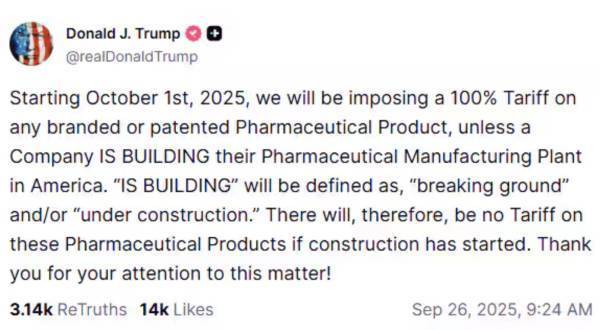
Core Viewpoint - The announcement of a 100% tariff on all branded or patented pharmaceuticals imported into the U.S. starting October 1 has caused significant turmoil in the global pharmaceutical market, particularly affecting major European and Asian pharmaceutical companies [1][3][5]. Tariff Policy Details - The tariff specifically targets branded or patented pharmaceuticals, exempting generics, biosimilars, and raw materials [5][6]. - The policy follows a series of investigations and threats from the U.S. government regarding drug imports, with the final tariff being less severe than initially proposed [3][5]. - Major pharmaceutical stocks, particularly in Europe and Asia, experienced notable declines following the announcement, with companies like Novo Nordisk and GlaxoSmithKline seeing drops of 3.1% and 1.1% respectively [3][5]. Impact on Global Pharmaceutical Companies - U.S. pharmaceutical companies, such as Pfizer and Merck, are expected to benefit from the tariff as it may enhance their market share domestically [5][6]. - Companies are responding by increasing investments in U.S. production capabilities, with Johnson & Johnson planning to invest $55 billion over five years to bolster local manufacturing [6][7]. - The cost implications of the tariff are significant, potentially doubling the cost of imported drugs, which could lead to increased healthcare costs in the U.S. [5][6]. Response from Chinese Pharmaceutical Companies - Chinese pharmaceutical companies are likely to be less affected due to their focus on generic drugs and raw materials, which are not subject to the new tariffs [2][9]. - The majority of Chinese exports to the U.S. consist of generics (over 60%) and raw materials (approximately 25%), with patented drugs making up less than 15% [9][10]. - Chinese companies like Huahai Pharmaceutical and Haisco Pharmaceutical are positioned to avoid tariff impacts by focusing on generics and utilizing licensing agreements for any innovative drugs [10][11]. Opportunities for Chinese Pharmaceutical Industry - The tariff situation may create unexpected growth opportunities for Chinese pharmaceutical companies as Western firms are forced to relocate production to the U.S., potentially diminishing their competitiveness in other markets [11][12]. - The restructuring of the global pharmaceutical supply chain could lead to increased demand for outsourcing services, benefiting Chinese contract research organizations (CROs) [11][12]. - Analysts suggest that the actual impact of the tariff on Chinese pharmaceutical stocks is minimal, with upcoming healthcare negotiations and data releases potentially serving as catalysts for recovery [11][12].
国泰海通|产业:呼吸系统专题(一):慢阻肺治疗缺口突出,PDE3/4及多疗法共破局
国泰海通证券研究· 2025-09-26 11:08
Core Viewpoint - Chronic Obstructive Pulmonary Disease (COPD) has a high prevalence and mortality rate, indicating a significant unmet medical need for new treatment options [1] Group 1: Unmet Medical Needs in COPD - COPD is a leading cause of disability and death globally, with approximately 300 million cases worldwide and 100 million in China [1] - Current standard treatments (LAMA/LABA/ICS) have been in use for 40 years and carry risks of pneumonia, cardiovascular issues, and urinary tract infections, highlighting the urgent need for new therapies [1] Group 2: PDE3/4 Inhibitors and Market Activity - Merck acquired Verona for $10 billion to obtain Ensifentrine, while GSK spent approximately $12.5 billion to acquire HRS-9821 from Hansoh Pharma, reflecting the importance of the respiratory market and PDE3/4 targeted drugs [2] - PDE3 and PDE4 inhibitors have synergistic effects, potentially improving airway smooth muscle contraction and controlling inflammation, thus showing significant application potential [2] - Ensifentrine received FDA approval in June 2024, with sales reaching $217 million by Q2 2025, representing a 44% quarter-over-quarter growth, indicating substantial market potential [2] Group 3: Targeted Therapies for Eosinophilic Phenotype - Dupilumab (IL-4R) and mepolizumab (IL-5) have been successfully approved for COPD, focusing on high eosinophil count populations [3] - Dupilumab, the first targeted therapy for COPD, was approved by the FDA in 2024, with sales exceeding $14 billion in 2024 [3] - Mepolizumab showed positive results in trials with eosinophilic phenotype patients, demonstrating a correlation between eosinophil count and reduced acute exacerbation rates [3] Group 4: Emerging Targets and Domestic Innovations - TSLP and ST2/IL33 targets currently lack approved drugs, but domestic companies are innovating [4] - Amgen/AZ's tezepelumab is the only TSLP monoclonal antibody on the market, while domestic firms like Zhengda Tianqing and Kangnuo are developing differentiated therapies with promising efficacy [4] - The ST2/IL33 target, which is upstream of IL-4/IL-13, is being explored by domestic companies, with no approved drugs globally yet [4]

特朗普对进口创新药加征关税,但实际影响或有限,建议逢低布局
BOCOM International· 2025-09-26 10:59
Investment Rating - The report maintains a "Buy" rating for several companies in the pharmaceutical sector, indicating an expectation of total returns exceeding the relevant industry over the next 12 months [4]. Core Insights - The recent announcement by President Trump regarding a 100% tariff on imported branded and patented drugs is expected to have a limited impact on China's innovative drug industry, as most Chinese companies either have production facilities in the U.S. or utilize local contract manufacturing organizations (CMOs) [3]. - The report suggests that investors should strategically position themselves in the innovative drug supply chain during market fluctuations, with several catalysts expected in Q4 2025, including the ESMO conference and upcoming healthcare negotiations [3]. - Long-term investment opportunities are highlighted in specific segments such as innovative drugs and CXO services, with recommendations for companies like Sanofi, Legend Biotech, and WuXi AppTec [3]. Summary by Sections Section: Impact of Tariffs - The 100% tariff on imported drugs is not expected to significantly affect Chinese innovative drug companies, as they have limited direct exports to the U.S. and often rely on local production [3]. - CXO companies primarily export raw materials and biological drugs, which are not impacted by the new tariffs, indicating a controlled overall impact on the Chinese pharmaceutical supply chain [3]. Section: Investment Recommendations - The report recommends focusing on companies with rich short-term catalysts, such as Kangfang Biotech and Rongchang Biotech, ahead of significant data releases and healthcare negotiations [3]. - Specific companies are highlighted for their growth potential, including Sanofi and Legend Biotech, which are considered undervalued with clear long-term growth logic [3]. Section: Company Ratings - A list of companies with their respective ratings and target prices is provided, showing a generally positive outlook for the majority of the companies covered [4]. - Notable companies with "Buy" ratings include Sanofi (target price of 35.00), Legend Biotech (target price of 74.00), and WuXi AppTec (target price of 70.00) [4].
医药行业迎击100%关税冲击波
21世纪经济报道· 2025-09-26 10:19
Core Viewpoint - Global pharmaceutical companies are facing a difficult choice: invest billions in building factories in the U.S. or bear up to 100% tariff costs on imported drugs [1][2] Tariff Policy Impact - The U.S. tariff policy aims to push pharmaceutical companies to relocate production to the U.S. and encourage investment in domestic manufacturing [2] - Following the tariff announcement, Hong Kong pharmaceutical stocks experienced declines, indicating market concerns about the changes [2] - Approximately 80% of generic drug active pharmaceutical ingredients (APIs) and some high-value finished drugs in the U.S. are reliant on imports, highlighting the need for domestic production [2] Consequences for Pharmaceutical Companies - Companies without U.S. manufacturing facilities will face significant losses due to the 100% tariff, potentially doubling the end-user prices of imported drugs [4] - For example, a European company's cancer drug costing $100 per treatment could rise to $200 due to tariffs, forcing companies to either absorb losses or increase prices [4] - Companies dependent on single overseas production sites must urgently evaluate alternatives, such as accelerating U.S. factory construction or seeking non-U.S. production options [4] Global Pharmaceutical Landscape - The tariff policy is expected to accelerate the shift of pharmaceutical distribution networks, with Indian pharmaceutical companies likely to benefit, potentially capturing nearly 50% of global generic drug revenue by 2030 [6] - European pharmaceutical companies are also expressing concerns about the risk of industry migration from Europe to the U.S. due to the tariffs [6] Impact on Chinese Pharmaceutical Companies - The tariff announcement is expected to have a limited impact on Chinese pharmaceutical companies, primarily affecting patented drugs, and the operational feasibility of the policy is uncertain [7] - Chinese companies need to enhance risk awareness to address potential challenges arising from geopolitical tensions and regulatory changes [7] - The U.S. foreign investment review process is expanding to include healthcare, which may affect Chinese companies regardless of their listing status [7][9] Market Dynamics and Listing Trends - The attractiveness of the U.S. stock market for innovative pharmaceutical companies is diminishing compared to Hong Kong, as regulatory hurdles increase for Chinese biotech firms seeking U.S. listings [10] - The Hong Kong market has become more appealing for mainland biotech companies, with significant fundraising activity observed in 2023 [12][14] - The introduction of a confidential listing application process in Hong Kong has allowed companies to avoid early public disclosures, enhancing their competitive positioning [14] Future Outlook - The geopolitical environment is complex, but the Chinese pharmaceutical industry is expected to leverage its strengths in drug development and commercialization [16] - China's drug approval activity is increasing, with a projected rise in the share of Chinese drugs in U.S. FDA approvals from 4% in 2024 to 35% by 2040 [12]
特朗普挥棒,医药行业如何迎击100%关税冲击波?
2 1 Shi Ji Jing Ji Bao Dao· 2025-09-26 08:57
Core Viewpoint - Global pharmaceutical companies face a challenging decision: invest billions in building factories in the U.S. or bear up to 100% tariff costs on imported drugs [1][2] Tariff Policy and Market Impact - The U.S. will impose new tariffs starting October 1, including a 100% tariff on patented and branded drugs, significantly increasing import costs [1][2] - The policy aims to encourage pharmaceutical companies to relocate production to the U.S., reducing reliance on overseas supply chains and creating local jobs [2][4] - Capital markets reacted negatively, with Hong Kong pharmaceutical stocks experiencing declines, indicating market concerns over the tariff implications [2] Industry Response and Strategic Adjustments - Companies reliant on single overseas production bases must urgently evaluate alternatives, such as accelerating factory construction in the U.S. or seeking non-U.S. production options [3] - The tariff policy is expected to accelerate the shift of pharmaceutical distribution networks globally, with Indian pharmaceutical companies potentially benefiting from this transition [4] Implications for Chinese Pharmaceutical Companies - The impact of the tariff on Chinese pharmaceutical companies is expected to be limited, primarily affecting patented drugs, with operational challenges in implementing the policy [5] - Increased scrutiny on foreign investments in the healthcare sector by the U.S. could pose challenges for Chinese companies, particularly regarding data transfer regulations and compliance [6][7] Market Trends and Future Projections - The trend of Chinese innovative drugs gaining approval in the U.S. is expected to rise, with projections indicating that by 2040, Chinese drugs could account for 35% of new drug approvals by the FDA [8] - The Hong Kong market has become increasingly attractive for Chinese biotech companies, with significant fundraising activity observed in 2023 [8][9] Regulatory Environment and Listing Challenges - Recent regulatory changes in Hong Kong have made it easier for biotech companies to list, with a notable increase in the number of companies opting for confidential submissions [9][10] - The U.S. investment review mechanisms pose additional challenges for biotech companies seeking to attract capital, particularly in sensitive technology sectors [7][11]
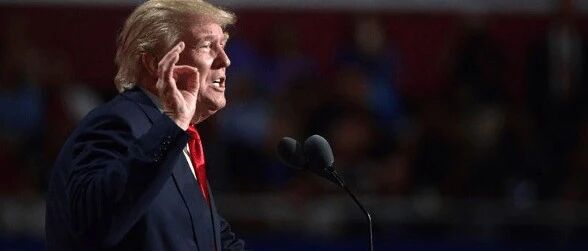
特朗普挥棒 医药行业如何迎击100%关税冲击波?
2 1 Shi Ji Jing Ji Bao Dao· 2025-09-26 08:52
Core Viewpoint - Global pharmaceutical companies face a difficult choice: invest billions in building factories in the U.S. or bear tariffs of up to 100% on imported drugs [1][2]. Tariff Policy and Market Reaction - The U.S. will impose new tariffs starting October 1, including a 100% tariff on patented and branded drugs, which could double the cost of imported medications [1][2]. - The policy aims to encourage pharmaceutical companies to relocate production to the U.S. and reduce reliance on foreign supply chains [2][4]. - Capital markets reacted negatively, with Hong Kong pharmaceutical stocks experiencing declines, indicating market concerns over the tariff implications [2]. Impact on Pharmaceutical Companies - Companies that do not establish factories in the U.S. will face significant financial losses due to the 100% tariff, potentially leading to a doubling of end-user prices [2][3]. - U.S. pharmaceutical production has been heavily reliant on imports, with approximately 80% of generic drug active pharmaceutical ingredients (APIs) sourced from abroad [2][4]. Global Pharmaceutical Landscape - The tariff policy may accelerate the shift of pharmaceutical production from Europe to the U.S., with European companies expressing concerns over the potential loss of business [4]. - Indian pharmaceutical companies are expected to benefit from the restructuring of the global pharmaceutical landscape, with projections indicating they could capture nearly 50% of the global generic drug market by 2030 [4]. Implications for Chinese Pharmaceutical Companies - The impact of the U.S. tariff policy on Chinese pharmaceutical companies is expected to be limited, primarily affecting patented drugs, and the operational feasibility of the policy remains uncertain [6]. - Increased scrutiny on foreign investments in the healthcare sector by the U.S. government may pose challenges for Chinese companies, particularly regarding data transfer regulations [6][7]. Investment and Market Trends - The new investment security program in the U.S. aims to enhance scrutiny of foreign investments in critical technologies, which may affect biotech companies [7]. - The Hong Kong market has become increasingly attractive for Chinese biotech companies, with a significant rise in listings and fundraising activities in 2023 [9][10]. Future Outlook - The ongoing geopolitical challenges may present opportunities for Chinese pharmaceutical companies, particularly in drug development and commercialization [12]. - The trend of increasing regulatory scrutiny and the need for strategic planning in cross-border investments will be crucial for companies aiming to navigate the evolving landscape [8][11].
搞完医药搞芯片!特朗普又来关税大棒,加征100%关税!午后多个板块跳水...
雪球· 2025-09-26 08:27
↑点击上面图片 加雪球核心交流群 午后跳水,三大指数震荡走跌,截至收盘, 沪指跌0.65% , 深成指跌1.76% , 创业板指跌2.60% 。 沪深两市成交额2.15万亿 , 较上一个交易日缩量2242亿, 全市场超3400只个股下跌 。 板块方面 , 风电 、 保险等板块涨幅居前 , 游戏 、 算力硬件 、 光刻机等板块跌幅居前。 港股也走低,恒生指数跌超1%,恒生科技指数跌近3%,小米集团、金山云跌超7%等。 特朗普,突发重磅! AI、半导体大跌 以AI为主线的科技股今天集体走弱,工业富联大跌5%,寒武纪跌超3%,立讯精密大跌超6%,瑞芯微、芯原股份、 领益智造、景旺电子等 跌超6 %。 9月26日午后,突然传来重磅消息。据路透社报道,消息人士称,特朗普政府正在考虑一项新的半导体政策,要求芯片公司在国内制造的半导体数 量与其客户从海外生产商进口的半导体数量相同,如果公司未能长期保持这种1:1的比例,将面临大约100%的关税。 美国商务部长霍华德·卢特尼克与半导体行业高管讨论了这一概念,理由是美国科技公司严重依赖海外芯片生产,容易受到多重因素影响,对经济 安全形成威胁。 知情人士表示,根据新制度,如果一家 ...
突发“黑天鹅”!刚刚,医药板块集体大跌!
天天基金网· 2025-09-26 05:13
Group 1 - The article discusses the new tariffs announced by President Trump on various imported products, including a 25% tariff on heavy trucks, 50% on kitchen cabinets, 30% on furniture, and 100% on patented and branded drugs starting from October 1, 2025, unless companies build manufacturing plants in the U.S. [3][8][10] - The pharmaceutical sector in the Asia-Pacific market experienced a decline following the announcement, with the A-share pharmaceutical and biotechnology sector also showing a downward trend [4][6][10] - Specific indices related to weight-loss drugs, innovative drugs, and CROs saw significant declines, with the weight-loss drug index dropping by 1.56% and the innovative drug index by 1.48% [5][6] Group 2 - Individual stocks such as Sunflower and Aosaikang saw substantial declines, with Sunflower dropping over 12% and Aosaikang down by 9% [6][7] - The Hong Kong biotechnology index opened nearly 2% lower and continued to decline, with companies like MicroPort Medical and WuXi Biologics showing notable drops [7][10] - The article highlights that the high tariffs could increase costs and disrupt the drug supply chain, potentially putting patients at risk [9][10] Group 3 - The article mentions that major pharmaceutical companies like Johnson & Johnson and GlaxoSmithKline have announced plans to increase investments in the U.S. in response to the tariffs, with Johnson & Johnson planning to invest $55 billion [10] - The long-term implications of Trump's tariff policy could lead to higher drug costs for patients, as the high production costs in the U.S. may offset any benefits from the tariffs [10]