
Arm Holdings plc

Search documents
美股AI和数字币大跌,MIT的报告导致市场发生了什么?
美股IPO· 2025-08-20 01:49
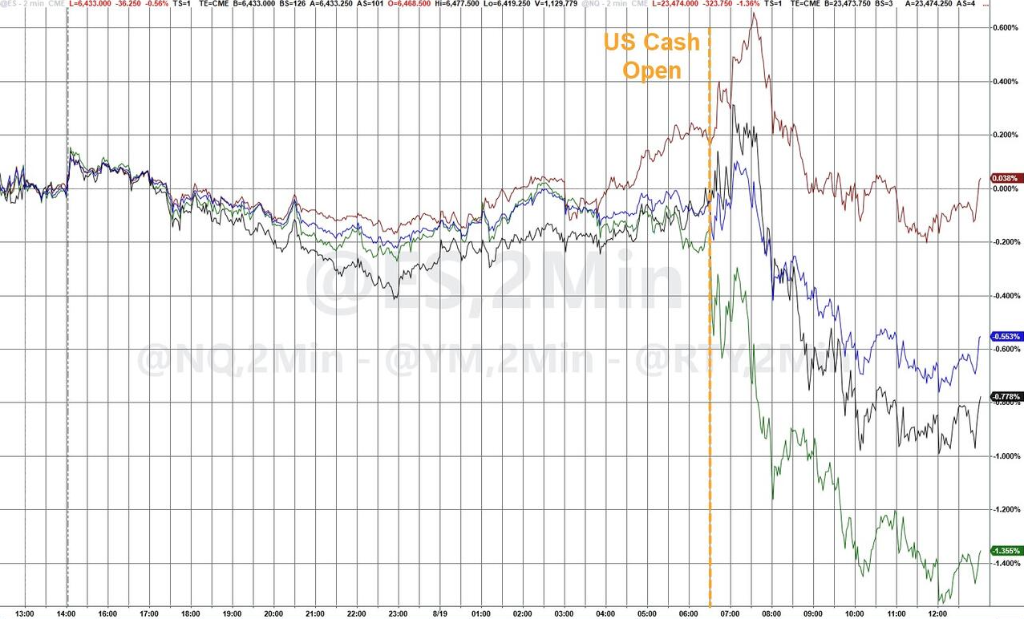
Core Viewpoint - The recent sell-off in technology stocks is driven by concerns over the lack of returns from generative AI investments, as highlighted by a MIT report stating that "95% of organizations have seen zero returns" from such investments, alongside warnings from OpenAI CEO Sam Altman about a potential bubble forming in the AI sector [1][4][5]. Group 1: Market Reaction - The Nasdaq Composite Index, heavily weighted in technology stocks, fell by 1.4%, marking its largest single-day drop since August 1 [2]. - Major tech companies like Nvidia, Palantir, and Arm experienced significant declines, with Nvidia down 3.5%, Palantir down 9.4%, and Arm down 5% [2][11]. - The S&P 500 Index also decreased by 0.7%, reflecting broader market concerns [2]. Group 2: Valuation Concerns - The Nasdaq 100 Index's expected price-to-earnings ratio stands at 27 times, nearly one-third higher than its long-term average, raising valuation concerns among investors [4]. - The MIT report challenges the prevailing expectation that AI will quickly translate into corporate profits, stating that "the vast majority of AI projects have yet to produce measurable profit impacts" [8]. Group 3: Shift to Defensive Sectors - As tech stocks faced sell-offs, funds shifted towards defensive sectors such as consumer staples, utilities, and real estate, with about 70% of S&P 500 constituents closing higher [13]. - The bond market also reflected this trend, with U.S. Treasury prices rising and yields falling as risk assets came under pressure [14]. Group 4: Broader Market Implications - Other risk assets, including Bitcoin, also suffered, with Bitcoin dropping 2.7% and reaching a near three-week low [16]. - The market's reaction indicates a rotation from high-momentum stocks, suggesting a concentrated profit-taking and style shift rather than indiscriminate selling [17]. Group 5: Investor Sensitivity - The market has previously shown sensitivity to potential risks associated with AI, as evidenced by a brief market disturbance earlier this year due to advancements by a Chinese AI company that raised questions about U.S. dominance in AI [19]. - Upcoming events, such as the Jackson Hole global central bank conference and Nvidia's earnings report, are expected to be critical in testing market sentiment towards AI [21].






美股大跌的导火索,这篇MIT的报告有什么特别?
硬AI· 2025-08-20 01:08
Core Viewpoint - A recent MIT report reveals that up to 95% of companies are not seeing any returns from their generative AI investments, raising concerns about the sustainability of the AI hype and its ability to translate into corporate profits [2][3][6]. Market Reaction - Following the MIT report, the tech sector in the U.S. experienced a significant sell-off, with the Nasdaq Composite Index dropping 1.4%, marking its largest single-day decline since August 1. Major tech stocks like Nvidia, Palantir, and Arm saw declines of 3.5%, 9.4%, and 5% respectively, while defensive sectors like consumer staples and utilities rose [3][4]. AI Investment Insights - The MIT report titled "The Generative AI Gap: The State of Business AI in 2025" indicates that despite high expectations for generative AI, most projects fail to deliver measurable financial impact. Only about 5% of AI pilot projects achieve rapid revenue growth, while the majority stagnate [6][7]. - The report highlights that over half of generative AI budgets are allocated to sales and marketing tools, but the highest ROI comes from back-office automation [9]. Success Factors - Successful AI implementations are characterized by addressing specific pain points and forming strategic partnerships. Some startups have reportedly increased their revenue from zero to $20 million within a year [9]. - The report emphasizes that purchasing AI tools from specialized vendors yields a success rate of about 67%, compared to only one-third for internally developed systems. This challenges companies investing heavily in proprietary AI systems [10]. Valuation and Market Sentiment - The report's findings coincide with growing concerns over high valuations in the tech sector, with the Nasdaq 100 Index's expected P/E ratio at 27, significantly above its long-term average. This inflated valuation sets the stage for potential market corrections [12]. - Sam Altman's warning about the possibility of significant investor losses and the presence of "irrational exuberance" further exacerbates investor anxiety [12][13].

美股大跌的导火索,这篇MIT的报告有什么特别?
Hua Er Jie Jian Wen· 2025-08-20 00:49
Core Insights - A report from MIT reveals that up to 95% of companies are not seeing any returns from their generative AI investments, challenging the optimistic sentiment on Wall Street and leading to a significant sell-off in tech stocks [1][2] - The Nasdaq Composite Index fell by 1.4%, marking its largest single-day drop since August 1, while the S&P 500 Index decreased by 0.7% [1] - Key beneficiaries of the AI boom, such as Nvidia, Palantir, and Arm, experienced notable declines in their stock prices, indicating a shift of funds from high-risk tech stocks to defensive sectors [1][2] AI Investment Gap - The MIT report titled "The Generative AI Gap: The State of Business AI in 2025" highlights that most AI projects fail to deliver financial impact, despite high expectations from enterprises [2] - Based on interviews with 150 business leaders and analysis of 300 AI deployment cases, only about 5% of AI pilot projects achieved rapid revenue growth [2][3] - The report attributes the failures not to the quality of AI models but to internal organizational issues and integration strategies [2][3] Success vs. Failure in AI Deployment - Successful AI implementations often involve targeting specific pain points and forming strategic partnerships, with some startups reportedly increasing their revenue from zero to $20 million within a year [3] - Over half of generative AI budgets are allocated to sales and marketing tools, while the highest ROI comes from backend automation [3] - Purchasing AI tools from specialized vendors has a success rate of about 67%, compared to only one-third for internally built systems, challenging the trend of companies developing proprietary AI solutions [3] Market Sentiment and Valuation Pressure - The report coincides with growing concerns over the high valuations of tech stocks, with the Nasdaq 100 Index's expected P/E ratio at 27, significantly above its long-term average [4] - Sam Altman's warning about potential investor losses and the possibility of irrational exuberance has further fueled market anxiety [4] - The market's sensitivity to negative news regarding AI commercialization capabilities has been demonstrated, as evidenced by previous market reactions to adverse developments [4]
久违的美国科技股大跌,AI和数字币领跌,发生了什么?
Hua Er Jie Jian Wen· 2025-08-20 00:44
Group 1 - The core viewpoint of the articles highlights a significant sell-off in U.S. tech stocks, driven by concerns over the commercialization returns of AI and warnings of a potential bubble from industry leaders [1][3][5] - The Nasdaq Composite Index experienced its largest single-day drop since August 1, closing down 1.4%, with notable declines in major tech stocks such as Nvidia (-3.5%), Palantir (-9.4%), and Arm (-5%) [1][3] - A report from MIT indicated that up to 95% of organizations have seen no returns from generative AI investments, raising doubts about the profitability of AI projects [3][5] Group 2 - The market is increasingly concerned about high valuations in tech stocks, with the Nasdaq 100 Index's expected P/E ratio at 27, significantly above its long-term average [3][5] - Sam Altman, CEO of OpenAI, expressed concerns about over-excitement among investors regarding AI, suggesting a bubble may be forming [3][5] - The sell-off was characterized by a rotation of funds from high-risk tech stocks to defensive sectors, with consumer staples, utilities, and real estate showing gains [7][8] Group 3 - The decline in tech stocks was particularly pronounced among high-momentum stocks, which had previously seen significant gains since mid-May, with the S&P 500 Information Technology sector rising 14% during that period [6][8] - Other risk assets, including Bitcoin, also faced declines, with Bitcoin dropping 2.7% and reaching a near three-week low [10] - Investor sensitivity to AI-related risks has been highlighted, with previous events causing market fluctuations, indicating a heightened vigilance towards negative news in the AI sector [11]
8点1氪:个人养老金新增三种领取情形;俞敏洪回应新东方CEO被调查;海口一单位招聘研究生月薪3000
36氪· 2025-08-20 00:05
Group 1 - The Ministry of Human Resources and Social Security has announced three new scenarios for receiving personal pensions, effective from September 1 [2][3] - The new scenarios include: medical expenses exceeding the average disposable income of residents in the province within the last 12 months, receiving unemployment insurance for 12 months within the last two years, and currently receiving minimum living security [2][3] Group 2 - Xiaomi has stated it will not participate in the automotive price war, focusing instead on vehicle deliveries, with significant reductions in operating losses expected [7] - Apple has expanded its iPhone production in India, with all four iPhone 17 models now being manufactured there, aiming to reduce reliance on third-party supply chains [5] - Starbucks plans to raise salaries for all salaried employees in North America by 2%, marking a shift from previous practices where raises were determined by managers [5] Group 3 - The chairman of Yara International has been arrested for embezzlement and abuse of power, although the company’s operations remain normal [8] - Nexstar has agreed to acquire Tegna for $3.5 billion in cash, which will significantly increase its coverage of U.S. households [14] - South Korea's automotive exports increased by 8.8% year-on-year in July, driven by a surge in exports to Europe [14] Group 4 - Xiaomi reported a revenue of 116 billion yuan for Q2 2025, a year-on-year increase of 30.5%, with net profit rising by 75.4% [18] - Pinduoduo's revenue for the first half of 2025 reached 138.8 billion yuan, a 204.4% increase year-on-year, with significant growth across various regions [19] - XPeng Motors reported a revenue of 182.7 billion yuan for Q2 2025, a 125.3% increase year-on-year, with vehicle deliveries rising by 241.6% [20] Group 5 - China’s Hainan province has optimized the method for calculating the "cumulative residence of 183 days" for personal income tax preferential policies [13] - The Danish jewelry brand Pandora plans to close 100 stores in China this year, doubling its initial plan [12] - Kodak has denied reports of ceasing operations or filing for bankruptcy, asserting confidence in its financial recovery [12]




富国银行:软银20亿美元注资英特尔(INTC.US),力挺Arm(ARM.US)加速AI芯片布局
智通财经网· 2025-08-19 23:15
Group 1 - SoftBank's $2 billion investment in Intel supports Arm's autonomous chip development and may provide additional foundry capacity [1] - Analysts believe this investment signals Arm's intent to develop proprietary AI chips, with Intel's foundry services as a potential alternative [1] - SoftBank will become Intel's sixth-largest shareholder with approximately 2% ownership [1] Group 2 - Arm's CEO Rene Haas announced increased R&D investment and is evaluating the feasibility of in-house chip manufacturing [2] - Arm has hired industry veterans to strengthen its capabilities, including former HPE executive Nicholas Dube and chip engineer Steve Holt [2] - SoftBank is expanding its presence in the AI industry, having acquired AI chip manufacturer Graphcore and the silicon design company Ampere [2]
今夜 美股跳水!
Zhong Guo Ji Jin Bao· 2025-08-19 16:26
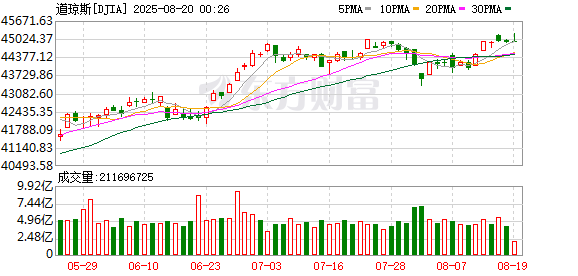
Market Overview - The U.S. stock market experienced a mixed performance, with the Dow Jones reaching a historical high due to a significant rise in Home Depot's stock, while the Nasdaq index declined, primarily driven by a drop in Nvidia's shares [1][4] - The Dow Jones turned from gains to losses after hitting a new high, while the Nasdaq fell approximately 1% and the S&P 500 index decreased by about 0.2% [1] Semiconductor Sector - Several well-known semiconductor manufacturers saw their stock prices decline, putting pressure on the Nasdaq and S&P 500 indices. Nvidia's stock dropped by 2%, with reports indicating that the company is developing a new chip for China that will outperform the currently allowed H20 model [4] - AMD and Broadcom experienced declines of 4% and 2%, respectively, while other major tech stocks like Tesla, Meta, and Netflix also faced downward pressure [4] AI Industry Insights - OpenAI's CEO, Sam Altman, expressed concerns that the current AI industry is in a bubble phase, noting that investor enthusiasm has reached a "crazy" level, leading to uncontrolled valuations. He anticipates that some investors will face significant losses [4] - Despite recognizing the risks, Altman plans to invest trillions of dollars in data center construction, maintaining a strong belief in the future value of artificial intelligence [4] Home Improvement Sector - Home Depot's stock rose by 3.7%, contributing to the Dow's increase, even though the company's second-quarter profits fell short of expectations. The company has maintained its full-year performance outlook [5] Federal Reserve and Economic Outlook - Investors are awaiting comments from Federal Reserve Chairman Jerome Powell to gauge potential directions for upcoming policy meetings. The market currently anticipates an 83% probability of a 25 basis point rate cut in September [7] - Analysts suggest that Powell's response to recent "stagflation-like" data will be crucial, as the market has largely priced in the likelihood of a rate cut [8] Intel's Performance - Intel's stock surged following news of SoftBank's $2 billion investment, with reports indicating that the Trump administration is considering acquiring a 10% stake in Intel [9]
英伟达持仓概念股走低 CoreWeave(CRWV.US)跌超6%
Zhi Tong Cai Jing· 2025-08-19 16:10
Group 1 - Nvidia-related stocks experienced a decline on Tuesday, with NEBIUS (NBIS.US) and CoreWeave (CRWV.US) dropping over 6% [1] - Recursion Pharmaceuticals (RXRX.US) fell more than 5%, while Applied Digital (APLD.US) decreased nearly 5% [1] - Arm Holdings (ARM.US) saw a decline of over 3% [1]




美股异动 | 英伟达持仓概念股走低 CoreWeave(CRWV.US)跌超6%
智通财经网· 2025-08-19 16:07
Group 1 - Nvidia-related stocks experienced a decline on Tuesday, with NEBIUS (NBIS.US) and CoreWeave (CRWV.US) dropping over 6% [1] - Recursion Pharmaceuticals (RXRX.US) fell more than 5%, while Applied Digital (APLD.US) decreased nearly 5% [1] - Arm Holdings (ARM.US) saw a decline of over 3% [1]
美股异动|Arm涨超1.2% 消息称其挖走亚马逊AI芯片总监以推进自研芯片计划
Ge Long Hui· 2025-08-19 13:56
Core Viewpoint - Arm has hired key personnel to advance its plans for developing proprietary chips, indicating a strategic move to enhance its capabilities in the AI chip market [1] Group 1: Personnel Hires - Arm has appointed Rami Sinno, former AI chip director at Amazon, to lead its efforts in developing complete chips [1] - Nicolas Dube, an executive with extensive large system design experience from Hewlett Packard Enterprise (HPE), has also been hired by Arm [1] - Steve Halter, a chip engineer with experience from Intel and Qualcomm, has joined Arm to bolster its engineering team [1] Group 2: Market Context - The hiring of these experienced professionals suggests Arm's commitment to competing in the rapidly growing AI chip sector, particularly in light of the success of Amazon's AI chips Trainium and Inferentia [1]