OPPO

Search documents
传音赴港上市,非洲之王的估值困局与增长破局
Xin Lang Cai Jing· 2025-12-03 13:21
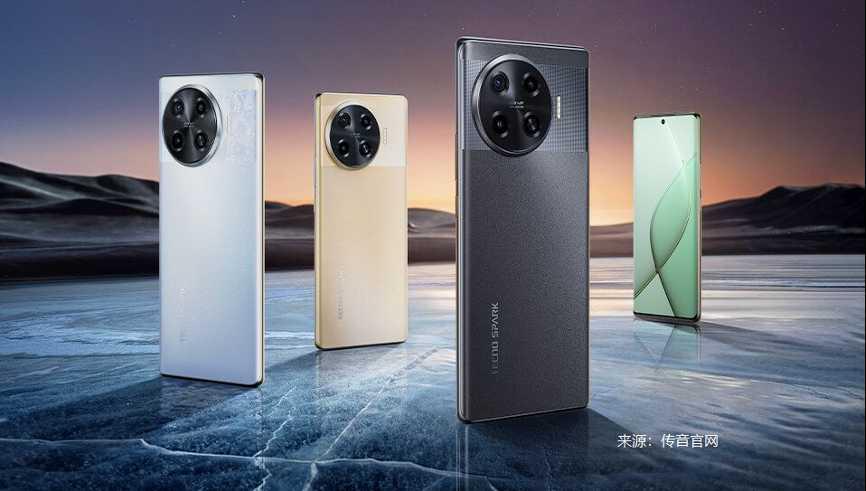
Core Viewpoint - Transsion Holdings, known as the "King of Africa," has submitted an application for a dual listing on the Hong Kong Stock Exchange, following its debut on the STAR Market in 2019, reflecting its strategic moves in emerging markets amidst challenges in growth and competition in the mid-to-low-end smartphone sector [2][18]. Group 1: Market Position and Performance - By 2024, Transsion is projected to be the third-largest smartphone manufacturer globally, with sales of 201 million units, including 106 million smartphones, primarily dominating the emerging markets [3][19]. - In 2024, Transsion holds market shares of 61.5% in Africa, 15.4% in the emerging Asia-Pacific, and 22.8% in the Middle East, leading in all these regions [3][19]. - The company’s smartphone average selling price (ASP) is around 548 RMB, significantly lower than competitors like Xiaomi, whose ASP exceeds 1,000 RMB [6][22][23]. Group 2: Competitive Strategy - Transsion's success in emerging markets is attributed to its localized production and tailored products that meet the specific needs of these markets, such as long battery life and multi-SIM capabilities [4][20]. - The company has established a robust distribution network with approximately 2,900 long-term partners and over 2,000 service points, creating a localized sales and after-sales system that is difficult for new entrants to penetrate [4][20]. - Transsion is diversifying its product offerings beyond smartphones, venturing into IoT products, energy storage brands, and electric vehicles, indicating a shift towards becoming a comprehensive smart living service provider [4][20]. Group 3: Financial Performance and Challenges - In the first half of 2025, Transsion's smartphone revenue declined by 16.95%, while feature phone revenue dropped by 34.77%, indicating significant challenges in maintaining growth momentum [9][25]. - Despite a decline in revenue, Transsion's smartphone shipments in Q3 2025 increased by 13.6% year-over-year, reaching 29.2 million units, regaining market share and ranking [10][27]. - The company’s Q3 2025 revenue was 2.047 billion RMB, a 22.6% increase from the previous year, showing signs of recovery after a challenging first half [10][27]. Group 4: Valuation and Market Perception - Transsion's A-share price has dropped by 24.33% this year, reflecting market concerns about its future prospects, with a current market valuation of approximately 804 billion RMB [15][31]. - In contrast, Xiaomi's H-share has seen a cumulative increase of 16.58%, with a market valuation of 1.05 trillion HKD, indicating a more favorable market perception [15][31]. - The valuation disparity between Transsion and Xiaomi highlights the challenges Transsion faces in sustaining high valuations in the Hong Kong market, where growth sustainability and global brand recognition are prioritized [15][31][32].


荣耀双十一遇冷:销量降14%,市场份额跌至第六
Xi Niu Cai Jing· 2025-12-03 12:44
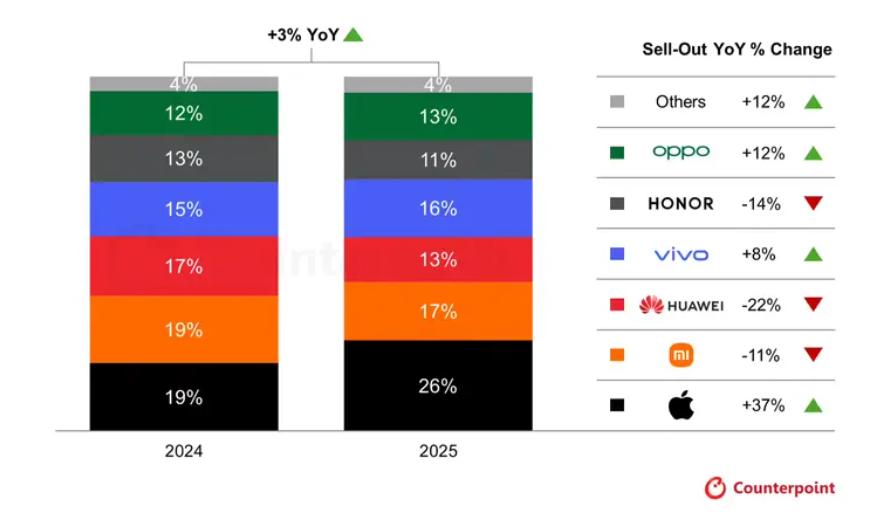
Core Insights - The Chinese smartphone market is expected to see a slight year-on-year increase of 3% in sales during the 2025 Double Eleven shopping festival, primarily driven by Apple's iPhone 17 series, which experienced a significant year-on-year sales surge of 37% [1][3] Market Performance - Excluding Apple's contribution, the actual market sales would have declined by 5% year-on-year, highlighting the stark contrast between Apple's growth and the struggles of domestic brands [3] - Honor's sales fell by 14% year-on-year, with a market share of 11%, down 2% from the previous year, ranking sixth among major brands [3] Competitive Landscape - Honor's third-quarter sales decreased by 8.1%, the largest drop among mainstream manufacturers, with its market share falling to 14.4%, ranking fifth in the domestic market [5] - Honor's Magic series faces intense competition from Apple's iPhone, Huawei's Mate series, and Xiaomi's digital Ultra series, indicating a need for breakthroughs in brand appeal and unique technological selling points [5][6] Product Performance - The weekly sales of Honor's Magic 8 series were reported at 248,000 units, which is relatively low compared to other flagship models during the same period [5] - The initial sales of the Honor Magic 8 series were over 50,000 units, approximately 50% of the previous generation's first-day sales [5] Market Challenges - Despite recovering market share since its independence, Honor's growth model is seen as heavily reliant on its previous channel system and technology legacy from Huawei [6] - The return of Huawei and the aggressive push from other domestic brands may pose further risks to Honor's market share, especially as consumer upgrade cycles lengthen and purchasing decisions become more cautious [6]

豆包手机助手被微信“限制操作”,多个AI智能体近期碰壁
2 1 Shi Ji Jing Ji Bao Dao· 2025-12-03 12:06
Core Insights - Doubao Mobile Assistant faced restrictions on WeChat shortly after its launch, with users receiving messages about abnormal login environments, leading to the suspension of WeChat operations within the app [1] - The Doubao Mobile Assistant was officially launched on December 1, primarily designed for the Nubia M153 phone, which is not mass-produced and is currently sold out [1] - Doubao aims to collaborate with phone manufacturers on operating systems rather than entering the smartphone manufacturing market [1] Group 1 - Doubao Mobile Assistant allows users to automate tasks such as ordering food, booking flights, and responding to WeChat messages without occupying screen time [1] - The AI-driven task execution may trigger security measures in third-party apps, as it operates through accessibility interfaces that could be mistaken for bot accounts [3] - Other smartphone manufacturers, including Vivo and OPPO, have also faced similar restrictions with their AI assistants being blocked by apps like WeChat and Bilibili [3][4] Group 2 - OPPO's AI assistant features, such as "AI One-Key Flash Note," have been limited due to WeChat's restrictions, requiring users to manually record expenses [4] - Amazon has taken legal action against Perplexity AI for allegedly bypassing its security measures, raising concerns about user privacy and data security [4] - Perplexity AI responded to Amazon's lawsuit by claiming that large platforms should not interfere with how users utilize AI tools [4]
中兴:2025年机圈最大的躺赢玩家
3 6 Ke· 2025-12-03 11:49
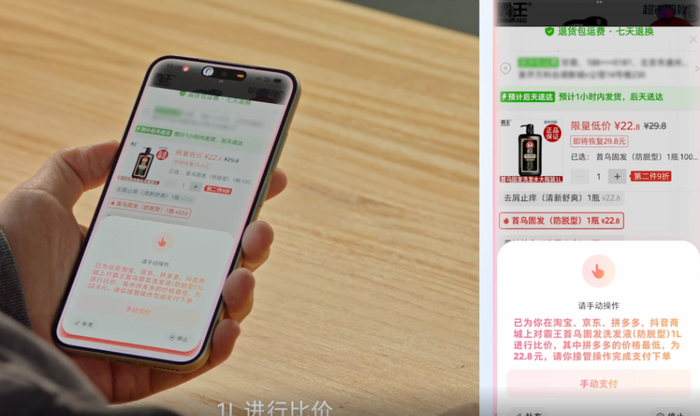
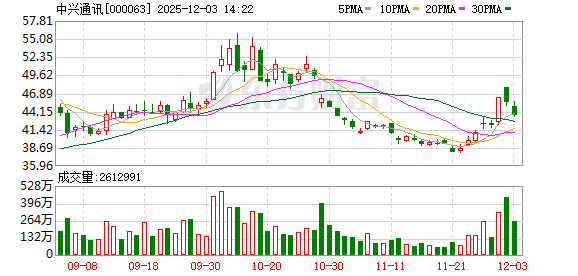
Core Viewpoint - ZTE has emerged as a leader in the AI smartphone market, benefiting from the launch of the "Doubao Phone Assistant" in collaboration with ByteDance, which has led to significant stock price increases and high demand for its Nubia M153 model [1][3][6]. Group 1: Market Reaction - On December 2, ZTE's stock price surged, closing at 46.3 CNY per share, with a market capitalization reaching 211.1 billion CNY, following the announcement of the AI assistant [3][6]. - The Nubia M153, originally priced at 3,499 CNY, has seen resale prices soar to between 7,999 and 9,999 CNY, indicating strong market interest and speculation [3][6]. Group 2: Product Features - The Nubia M153 supports various AI interactions, including app wake-up, voice commands, and cross-platform price comparisons, showcasing its advanced capabilities [2][3]. - The collaboration between ZTE and Doubao aims to simplify user tasks, allowing the AI to autonomously execute commands based on user requests [3][4]. Group 3: Industry Context - Other major smartphone manufacturers like Xiaomi, Huawei, and OPPO have not yet ventured into the AI smartphone space, raising questions about their strategies in light of ZTE's success [3][4]. - The focus for manufacturers is on the stability and reliability of AI features rather than just intelligence, which is crucial for consumer acceptance [4][6]. Group 4: Technical Challenges - The integration of AI assistants with existing applications, such as WeChat, presents challenges, as demonstrated by user reports of login issues due to security protocols [6][9]. - The need for a clear operational protocol for AI interactions with apps is highlighted as a potential future competitive advantage in the smartphone industry [10].

独家丨OPPO刘作虎亲自带队攻坚Pocket项目
雷峰网· 2025-12-03 10:29
Core Insights - The article discusses the entry of OPPO into the handheld imaging market, led by Liu Zuohua, indicating a strategic move to capture a growing segment in consumer electronics [4][6][8] - The handheld imaging market is experiencing rapid growth, with DJI's Pocket camera sales reaching approximately 10 million units and projected revenues exceeding 50 billion yuan this year [5][6] - OPPO aims to leverage its existing technology and user base to differentiate itself in a competitive landscape dominated by DJI [9][10] Group 1: Market Dynamics - The handheld imaging market is expected to see significant growth, with estimates suggesting that sales could reach tens of millions of units starting next year [6] - The market is characterized by a growth rate exceeding 100%, making it an attractive opportunity for smartphone manufacturers seeking new revenue streams [6][10] Group 2: Competitive Landscape - DJI currently holds a dominant position in the market, but OPPO's entry is seen as a direct challenge, particularly due to its large user base and technological capabilities [9][10] - The competition will not solely focus on hardware specifications but will also involve ecosystem capabilities and engineering prowess [9][10] Group 3: Strategic Initiatives - OPPO has assembled a high-caliber R&D team to integrate its imaging technology from smartphones into the Pocket project, indicating a strong commitment to innovation [8] - The decision to have Liu Zuohua lead the project reflects OPPO's seriousness about capturing a significant share of the mobile imaging market [4][8] Group 4: Challenges Ahead - Entering the market will not be straightforward, as OPPO must navigate the complexities of technology transfer and differentiation to avoid a price war with established players like DJI [7][9] - The need for unique market positioning is emphasized, as simply replicating DJI's approach may not yield success [9]

红板科技IPO:下游行业单一难免业绩波动风险 积极赊账产能却未打满 是否暴露产品竞争力不足?
Xin Lang Cai Jing· 2025-12-03 08:25
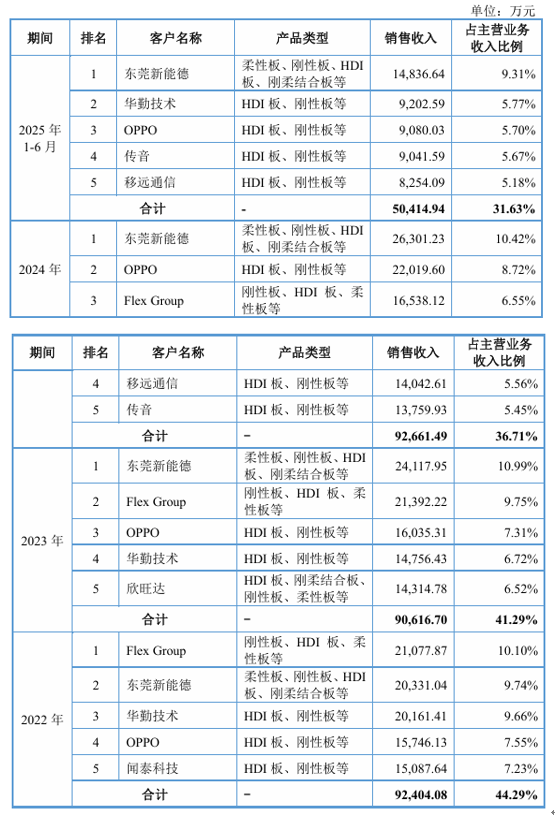
Core Viewpoint - Hongban Technology has received approval from the China Securities Regulatory Commission for its initial public offering (IPO) and plans to list on the Shanghai Stock Exchange, focusing on its PCB business while facing challenges due to high dependence on the consumer electronics sector and low profitability in recent years [1][11]. Group 1: Business Overview - Hongban Technology specializes in the research, production, and sales of printed circuit boards (PCBs), with major products including HDI boards, rigid boards, flexible boards, rigid-flex boards, IC substrates, and similar substrates [1][11]. - The revenue contribution from various product categories in the first half of 2025 is projected to be 61% from HDI boards, 17% from rigid boards, 8% from flexible boards, 6% from rigid-flex boards, and 2% from IC substrates [1][11]. Group 2: Market Position and Client Dependency - Hongban Technology is a key supplier of HDI boards to eight of the top ten global smartphone brands, including OPPO, vivo, and Huawei, which indicates a strong market position but also a high dependency on major clients [2][12]. - The revenue from the consumer electronics sector has consistently accounted for 53%-57% of total revenue, with increasing reliance on major clients like OPPO and Dongguan Xinnengde, whose sales accounted for 10.42% and 8.72% of revenue in 2024, respectively [2][13]. Group 3: Financial Performance and Profitability - The company's gross margin has been volatile, with a decline of 1.26 percentage points to 15.86% in 2023, but is expected to improve to 19% in 2024 due to a higher proportion of HDI business, and further increase to 25.93% in the first half of 2025 as product prices recover [5][17]. - Hongban Technology's gross margin has consistently been 1-4 percentage points lower than the industry average from 2022 to 2024, indicating challenges in achieving competitive profitability [6][18]. Group 4: Capacity Utilization and Industry Comparison - The company's capacity utilization rates have remained below full capacity, recorded at 71.96%, 85.01%, 88.51%, and 88.63% over the past years, suggesting either limited demand for its products or inefficiencies in production [9][21]. - Hongban Technology's revenue scale is significantly smaller than comparable companies, with the average revenue of peer companies being 4 times higher, which limits its ability to leverage economies of scale [8][19]. Group 5: Accounts Receivable Management - The company has a higher proportion of accounts receivable provisions compared to peers, with a consistent 5% provision rate, indicating a potentially lenient accounts receivable management policy [10][22]. - The growth rate of accounts receivable has outpaced revenue growth, raising concerns about the company's credit management and the quality of its customer base [10][22].
智动力:目前合作手机品牌包括三星、OPPO、vivo等 未为豆包手机供货
Mei Ri Jing Ji Xin Wen· 2025-12-03 06:36
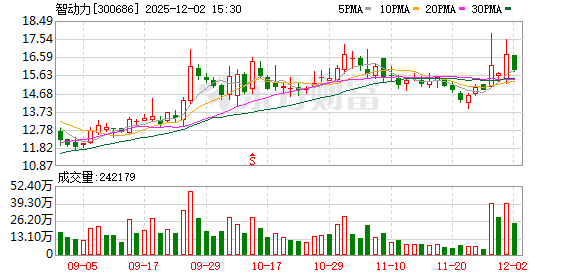
Core Viewpoint - The company, Zhihui Power (智动力), confirmed that it does not currently have a partnership with Doubao and is not supplying components for Doubao's smartphones [2]. Group 1: Company Information - Zhihui Power (300686.SZ) stated that its functional devices, structural devices, and precision optical components can be applied in smart devices, including AI smartphones [2]. - Current smartphone brands that Zhihui Power collaborates with include Samsung, OPPO, and Vivo [2].

“豆包助手”手机用户使用微信异常?字节+中兴的AI故事怎么讲
2 1 Shi Ji Jing Ji Bao Dao· 2025-12-03 06:24
Group 1 - The core viewpoint of the article highlights ByteDance's strategic move into the AI mobile assistant market, with the launch of the Doubao mobile assistant leading to a significant increase in ZTE's market value by 20 billion yuan in one day [2] - The Doubao mobile assistant allows users to perform various tasks through voice commands and integrates with multiple applications, showcasing advanced AI capabilities [2] - ZTE is currently the only mobile manufacturer collaborating with Doubao, offering a limited release of the Nubia M153 model priced at 3499 yuan, which has already sold out [2] Group 2 - ByteDance's strategy reflects a broader industry trend where major smartphone manufacturers are developing their own AI assistants, indicating a competitive landscape for AI integration in mobile devices [3] - The shift from functional modules to an ecosystem-centric approach in mobile AI assistants is crucial, as the user base for AI assistants is projected to reach 535 million by September 2025 [4] - Challenges such as data privacy, app ecosystem barriers, and the need for deeper integration of AI into mobile operating systems are significant hurdles that need to be addressed for successful implementation [4][5]

韩媒:京东方8.6代OLED面板产线将于明年5月量产
WitsView睿智显示· 2025-12-03 05:08
Core Viewpoint - BOE plans to start mass production of 8.6-generation OLED panels for laptops in May next year, with Acer and ASUS as initial customers [1][2]. Group 1: Production and Technology - The 8.6-generation OLED production line in Chengdu, Sichuan, can produce both laptop and smartphone panels [2]. - Compared to the current mainstream 6th generation, the 8.6-generation (2290mm×2620mm) can produce approximately 2.5 times the number of 14-inch panels per substrate, significantly reducing costs and improving production efficiency [2]. - BOE aims to be the first company globally to achieve mass production of 8.6-generation OLED panels, having completed the factory's lighting ceremony and entered trial production [2]. Group 2: Competitive Landscape - Samsung Display also plans to start mass production of 8.6-generation OLED panels in the second quarter or third quarter of next year, with Apple as a customer for its products [2]. - The first Apple laptops featuring OLED screens, specifically the "MacBook Pro," will utilize Samsung's 8.6-generation panels [2]. - BOE is in discussions with multiple Chinese smartphone manufacturers, including Apple and OPPO, regarding OLED screen supply [2].

昔日“手机单反”陷品控争议:努比亚能靠“豆包AI”翻盘吗?
凤凰网财经· 2025-12-03 04:55
Core Viewpoint - The collaboration between ByteDance and ZTE to launch an AI smartphone has generated significant market interest, leading to a strong initial performance in the consumer electronics sector, but subsequent stock price corrections highlight ongoing challenges for ZTE and its Nubia brand [1][2]. Group 1: Market Reaction and Product Launch - On December 1, the AI smartphone concept sparked a surge in the consumer electronics sector, with ZTE's stock hitting the daily limit and trading volume exceeding 13.1 billion yuan [1]. - Following the initial excitement, ZTE's AH shares experienced a pullback, with H shares dropping over 6% [2]. - The Nubia M153, priced at 3,499 yuan, was launched with limited availability and quickly sold out, indicating strong initial demand [2]. Group 2: Industry Insights and Competitive Landscape - An industry insider noted that large model assistants may become standard in smartphones, but the competitive landscape will not provide unique advantages as various brands adopt different models [6]. - The integration of AI does not inherently resolve existing issues in smartphone performance, such as camera quality and battery life, which consumers should approach with realistic expectations [6]. Group 3: Nubia's Brand Challenges - Nubia, established in 2012, aimed to penetrate the high-end market but has struggled to maintain a significant market share, often hovering around 1% [7][8]. - Recent product launches have faced criticism for quality control and marketing issues, with the Nubia Z80 Ultra experiencing a problematic launch event [9][10]. - Nubia's high-end aspirations are hindered by a lack of differentiation and a narrow user base, making it difficult to compete against brands that dominate the mid-range market [15]. Group 4: Consumer Feedback and Quality Control Issues - User complaints highlight significant quality control issues, including camera focus problems and software bugs, leading to dissatisfaction with Nubia products [20][21]. - The Nubia Z80 Ultra has not resolved previous issues, with users reporting touch screen failures and overall poor performance [21][34]. - The brand's reputation is further damaged by negative feedback regarding customer service and warranty claims, with many users expressing frustration over unaddressed product defects [34].