联影医疗

Search documents
医疗器械板块9月12日跌0.72%,山外山领跌,主力资金净流出1.99亿元
Zheng Xing Xing Ye Ri Bao· 2025-09-12 08:31
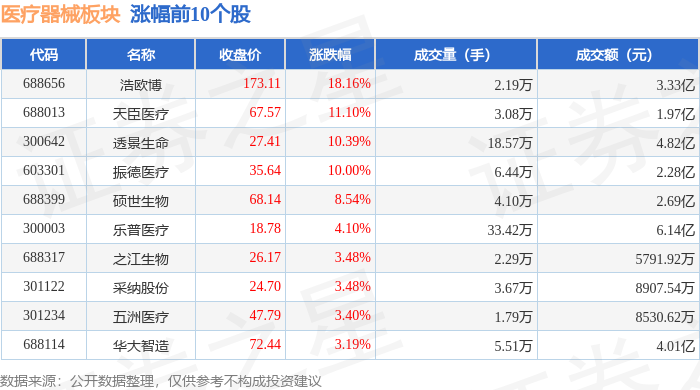
Market Overview - On September 12, the medical device sector declined by 0.72%, with Shanwaishan leading the drop [1] - The Shanghai Composite Index closed at 3883.69, up 0.22%, while the Shenzhen Component Index closed at 12996.38, up 0.13% [1] Top Gainers in Medical Device Sector - Haobobo (688656) closed at 173.11, up 18.16% with a trading volume of 21,900 lots and a transaction value of 333 million [1] - Tianchen Medical (688013) closed at 67.57, up 11.10% with a trading volume of 30,800 lots and a transaction value of 197 million [1] - Toukeng Life (300642) closed at 27.41, up 10.39% with a trading volume of 185,700 lots and a transaction value of 482 million [1] - Zhend Medical (603301) closed at 35.64, up 10.00% with a trading volume of 64,400 lots and a transaction value of 228 million [1] Top Losers in Medical Device Sector - Shanwaishan (688410) closed at 15.35, down 4.78% with a trading volume of 142,500 lots and a transaction value of 216 million [2] - Aojing Medical (688613) closed at 26.03, down 3.38% with a trading volume of 77,200 lots and a transaction value of 202 million [2] - Jiming Health (603222) closed at 13.66, down 2.84% with a trading volume of 1,008,500 lots and a transaction value of 1.382 billion [2] Capital Flow Analysis - The medical device sector experienced a net outflow of 199 million from institutional investors, while retail investors saw a net inflow of 256 million [2] - Retail investors had a net outflow of 57.41 million [2] Individual Stock Capital Flow - Sainuo Medical (688108) had a net inflow of 127 million from institutional investors, while retail investors experienced a net outflow of 11.9 million [3] - Toukeng Life (300642) saw a net inflow of 56.51 million from institutional investors, with a net outflow of 5.40 million from retail investors [3] - Meihua Medical (301363) had a net inflow of 31.17 million from institutional investors, while retail investors had a net outflow of 1.08 million [3]




国泰海通:设备更新政策持续落地 医疗设备景气度延续
Zhi Tong Cai Jing· 2025-09-12 07:24
Core Insights - The medical equipment bidding scale shows significant growth, with MRI increasing by 36.7%, CT by 77.5%, DR by 50.2%, and ultrasound by 35.2% in August 2025, while endoscopy and surgical robots declined by 2.7% and 51.9% respectively [1][2] - Cumulatively, from January to August 2025, MRI grew by 83.9%, CT by 93.6%, DR by 85.9%, ultrasound by 64.2%, endoscopy by 31.6%, and surgical robots by 46.5% [2] - The government aims for a 25% increase in medical equipment investment by 2027 compared to 2023, with large procurement plans announced across provinces in 2024 [3] Medical Equipment Procurement Trends - The procurement of medical equipment is becoming more market-oriented, with an increasing proportion of self-purchases by medical institutions to meet the demand for high-end medical imaging and radiation therapy [4] - The funding structure for equipment updates is diversifying, including central government special funds, local government funds, and self-raised funds from medical institutions [4] - Since 2025, county-level medical equipment updates have become a highly active market segment, with significant contributions from county medical community construction [4]

海通证券晨报-20250912
Haitong Securities· 2025-09-12 07:09
Fixed Income Research - The bond market may have completed a "five-wave" cycle and is now entering an adjustment phase, with historical data suggesting that the decline from the peak could be around 30%-35% of the previous gains [1][3][30] Coal Mining Research - The fundamental reason for the frequent global electricity shortages is the rapid growth in electricity demand, while structural bottlenecks on the supply side remain unresolved. Traditional energy sources, particularly coal-fired power, will continue to be the ballast of the global electricity system in the medium to long term [5][7][8] - Global electricity demand is expected to grow at a rate of 4.4% in 2024, significantly outpacing the global GDP growth of 2.9%. This growth is driven by deep electrification in the industrial sector, rapid expansion of data centers driven by artificial intelligence, and increased extreme weather events due to global climate change [6][7] Power Equipment and New Energy Research - Solid-state batteries are identified as the next generation of high-performance batteries, with increasing demand for oxide semi-solid batteries and the potential for sulfide all-solid-state batteries to demonstrate their capabilities. Continuous advancements in the industry are expected to enhance the trend of solid-state battery markets [9][10][11] - The solid-state battery market has transitioned from being demand-driven to being driven by new technologies, with significant developments expected in various fields, including consumer batteries and electric vehicles [12][13]
科创ETF(588050)开盘跌0.29%,重仓股中芯国际跌0.91%,海光信息跌2.19%
Xin Lang Cai Jing· 2025-09-12 01:38
Group 1 - The core point of the article highlights the performance of the Sci-Tech ETF (588050), which opened with a slight decline of 0.29% at 1.357 yuan [1] - Major holdings in the Sci-Tech ETF include companies like SMIC, which fell by 0.91%, and other firms such as Haiguang Information and Transsion Holdings, which saw declines of 2.19% and 2.73% respectively [1] - The ETF's performance benchmark is the Shanghai Stock Exchange Sci-Tech 50 Index, managed by ICBC Credit Suisse Asset Management, with a return of -5.04% since its inception on September 28, 2020, and a recent one-month return of 26.15% [1] Group 2 - The article provides specific stock performance data for the ETF's holdings, indicating mixed results with some companies like Chipone rising by 8.35% while others like Ninebot fell by 0.28% [1] - The fund manager is Zhao Xu, indicating a leadership role in the management of the ETF [1]





自研芯片打破海外垄断 国产医疗级助听器亮相
Bei Jing Shang Bao· 2025-09-11 16:32
Group 1 - The core viewpoint of the articles highlights the integration of AI technology in the healthcare sector, particularly through the introduction of innovative products like the uOrigin hearing aid and the uAI Avatar medical expert assistant [1][2]. - The uOrigin hearing aid is the first medical-grade hearing aid tailored for Chinese language and lifestyle, showcasing the company's commitment to localized health solutions [2]. - The uAI Avatar medical expert assistant utilizes advanced cross-modal technologies for health consultations, providing users with a human-like interaction experience [1][2]. Group 2 - The uOrigin hearing aid features a self-developed chip, filling a gap in the domestic high-end medical-grade hearing aid market, and represents a full-chain independent innovation from chip to software [2][3]. - The hearing aid offers impressive battery life, with the battery version lasting up to 50 hours and the charging version up to 150 hours without Bluetooth [2]. - The product includes advanced noise reduction capabilities through a deep neural network algorithm, ensuring clear sound quality in complex environments [3].
上交所副总经理王泊最新发声
Zhong Guo Ji Jin Bao· 2025-09-11 14:44
Group 1 - The Science and Technology Innovation Board (STAR Market) has gathered 589 listed companies with a total market value exceeding 9 trillion yuan, showcasing strong technological capabilities [1] - Since its inception in 2019, the STAR Market has evolved into a demonstration area for technological innovation, focusing on "hard technology" and forming a significant "chain-cluster" development pattern [2] - The STAR Market has 120 companies in the integrated circuit sector, covering over 60% of the A-share industry, and 113 companies in biomedicine, making it a key listing venue for global biomedicine after the US and Hong Kong [2] Group 2 - In the first half of 2025, STAR Market companies invested a total of 84.1 billion yuan in R&D, which is 2.8 times their net profit, with a median R&D investment ratio of 12.61%, the highest in the A-share market [2] - The STAR Market has implemented a "quality improvement and efficiency enhancement" initiative, significantly benefiting both financing and investment sides, with over 280 billion yuan in index tracking products [3] Group 3 - The STAR Market's inclusive system design allows unprofitable companies and those with special equity structures to access the capital market, enhancing its vitality [4] - The newly introduced "1+6" policy aims to support technology-driven companies, allowing them to enter the market without waiting for profitability, with 15 new IPO applications received since its launch [4] Group 4 - The STAR Market has tailored a "growth toolbox" to support companies throughout their lifecycle, with the "K8 Reform" proposing 35 measures to improve M&A efficiency for tech firms [5] - Since the release of the "K8 Reform," 134 new M&A transactions have been disclosed, with a total transaction value exceeding 40 billion yuan, surpassing the total of the past five years [6] Group 5 - The Shanghai Stock Exchange has developed a comprehensive service model to support companies at all stages of development, including on-site supervision and customized training [7] - The STAR Market has facilitated numerous significant achievements, referred to as "DeepSeek moments," highlighting its role in fostering innovation and technological breakthroughs [7]
上交所副总经理王泊最新发声
中国基金报· 2025-09-11 14:43
Core Viewpoint - The Science and Technology Innovation Board (STAR Market) has successfully gathered 589 listed companies with a total market capitalization exceeding 9 trillion yuan, showcasing its strong capabilities in hard technology [2][4]. Group 1: Development and Achievements - Since its inception in 2019, the STAR Market has evolved into a demonstration area for technological innovation, focusing on "hard technology" characteristics [4]. - The STAR Market has formed a significant "chain-group" development pattern, with 120 companies in the integrated circuit sector covering over 60% of the A-share industry, and 113 companies in biomedicine focusing on major diseases, making it a key listing venue globally [4]. - In the first half of 2025, STAR Market companies invested a total of 84.1 billion yuan in R&D, which is 2.8 times their net profit, with a median R&D investment ratio of 12.61%, the highest in the A-share market [4]. Group 2: Financing and Investment - The STAR Market emphasizes the synergy between investment and financing, allowing funds to flow effectively while enabling investors to share in the returns [5]. - The STAR Market has initiated a "quality improvement and efficiency enhancement" action plan, and its indices cover all fields, with over 280 billion yuan in tracking product scale, making it the highest proportion of index investment in A-shares [6]. Group 3: Inclusive Policies - The STAR Market's vitality stems from its inclusive institutional design, allowing unprofitable companies and those with special equity structures to access the capital market [8]. - The newly introduced "1+6" policy has established a "growth layer" and restarted the fifth set of listing standards, supporting cutting-edge fields like artificial intelligence and commercial aerospace [8]. - Since the "1+6" policy was launched, 15 IPO applications have been accepted, including 4 from unprofitable companies, with existing growth layer companies showing a 37.79% increase in revenue [8][9]. Group 4: Support for Enterprises - The STAR Market has tailored a "growth toolbox" to enhance support for technology companies throughout their lifecycle, with 35 measures proposed in the "K8 Reform" to improve merger and acquisition efficiency [9]. - Since the implementation of the "K8 Reform," 134 new merger transactions have been disclosed, with a total transaction amount exceeding 40 billion yuan [9]. Group 5: Comprehensive Services - The Shanghai Stock Exchange has developed a comprehensive service model to support the growth of STAR Market companies, including on-site supervision, customized training, and proactive problem-solving [11]. - STAR Market companies have achieved significant milestones, such as breakthroughs in drug development and equipment independence, contributing to the overall innovation landscape [12].
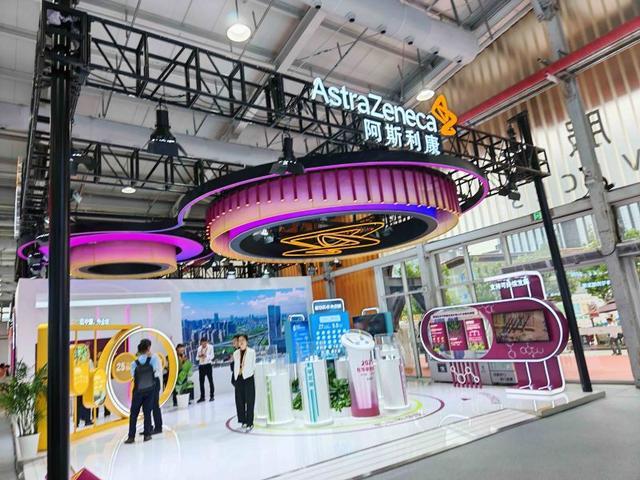
从“中国制造”到“中国智造”:服贸会健康馆成国产高端医疗装备秀场|聚焦2025服贸会
Hua Xia Shi Bao· 2025-09-11 14:20
Core Insights - The China International Fair for Trade in Services (CIFTIS) is showcasing advancements in health and medical services, emphasizing the integration of AI and healthcare [2][6] - The event features nearly 2,000 enterprises and highlights the urgency of developing a new service trade framework in China [2][6] Industry Developments - The health and medical services section at CIFTIS has attracted global top medical institutions and technology companies, presenting innovations in AI, high-end imaging, and precision diagnosis [2][6] - The launch of the National AI Application Pilot Base in the medical field aims to accelerate the incubation of AI products, making AI-assisted diagnostics more accessible to grassroots medical institutions [6][7] Company Innovations - GE Healthcare's MaxElite+ PET/CT device utilizes third-generation zero-noise digital detection technology, improving imaging speed by approximately three times while reducing the dosage of contrast agents by about 50% [3] - United Imaging's uMRJupiter, a 5T MRI, offers advanced diagnostic capabilities for neurological conditions, surpassing the previous 3.0T standard [4] - Philips' ElitionAI+ MRI integrates AI imaging technology, achieving a 64-fold acceleration in scanning while maintaining high image quality and reducing noise [5] Market Trends - The "Healthy China 2030" strategy and rapid technological advancements are creating unprecedented opportunities in China's health and medical industry [6][9] - The emergence of innovative service models, such as the Tianjin Pengruili Hospital, reflects the growing openness of China's medical service market to foreign investment [7][8] Future Outlook - The integration of AI, big data, and cloud computing is expected to enhance the intelligence and efficiency of medical equipment and services, promoting a more personalized and internationalized healthcare landscape [9]


自研芯片打破海外垄断,国产医疗级助听器服贸会亮相
Bei Jing Shang Bao· 2025-09-11 13:34
Core Insights - The 2025 China International Fair for Trade in Services (CIFTIS) serves as a significant platform for showcasing medical technology advancements, with a focus on AI integration in healthcare [1] - United Imaging Healthcare (UIH) is leveraging AI to enhance medical service efficiency and meet consumer health management needs through customized products [1][2] - The uOrigin hearing aid represents a breakthrough in domestic medical-grade hearing aids, showcasing full-chain independent innovation from chip to software [1][4] Group 1: AI and Medical Technology - UIH has prioritized digital intelligence as a strategic direction, launching the "Yuan Zhi" medical AI model, which has achieved over 95% accuracy in complex medical imaging tasks [2] - The company has developed over ten adaptive medical AI agents that cover critical healthcare scenarios, including clinical diagnosis and patient services [2] - The uAI Avatar medical expert AI serves as a health consultation assistant, capable of multi-language interactions and providing reliable medical knowledge [2][3] Group 2: Hearing Aid Innovations - The uOrigin hearing aid is tailored for Chinese users, requiring professional guidance for hearing tests and device adjustments [4] - The uOrigin hearing aid features self-developed chips, achieving low power consumption with battery life of up to 50 hours and 150 hours for the rechargeable version [4] - Advanced noise reduction capabilities are highlighted, utilizing a rich sound database and deep neural network algorithms to enhance user experience in complex environments [5]
上交所王泊:科创板改革不停步,服务不止步,生态不松劲
Zhong Guo Jing Ying Bao· 2025-09-11 11:25
中经记者 孙汝祥 夏欣 北京报道 "站在新起点,科创板将继续以'改革不停步,服务不止步,生态不松劲'的担当,进一步打通'科技、资 本、产业'良性循环的堵点痛点,为实现高水平科技自立自强、推动高质量发展,注入更多资本市场动 能。"9月10日,上交所党委委员、副总经理王泊在由《中国经营报》主办的科创板迈向"新高地"暨"硬 科硬客"2025年会的开场发言中如是表示。 王泊强调,对上交所以及科创板而言,坚持金融服务实体经济的根本宗旨,提升支持科技创新的能级, 充分发挥交易所资本市场枢纽功能,是党和国家交给科创板的重要使命。 上交所党委委员、副总经理王泊 以包容性改革破壁垒 王泊指出,科创板将"包容性"作为制度设计的核心底色,坚持为未盈利硬科技企业打开"资本入口",真 正让好公司不会因暂未盈利错失资本市场助力。 在科创板设立之初即推出"多元上市标准",首次允许未盈利企业、红筹企业、特殊股权架构企业登陆A 股,为科创企业开辟了针对性的上市通道。2025年新改革的"1+6"政策更是精准发力,专门搭建"科创成 长层",重启第五套上市标准,将人工智能、商业航天、低空经济等前沿领域纳入包容范畴。 王泊表示,科创板始终紧扣科技企业 ...