DeepSeek

Search documents
2025年世界互联网大会领先科技奖揭晓
Zhong Guo Jing Ji Wang· 2025-11-07 08:50
Core Points - The 2025 World Internet Conference Leading Technology Award ceremony was held in Wuzhen, Zhejiang, recognizing 17 innovative projects in the internet technology field [1] - The award aims to promote international collaboration in internet technology and showcase leading technological achievements globally [1] - A total of over 420 submissions from 34 countries and regions were received, highlighting the vitality of global technological collaboration [1] Company Highlights - Alibaba's Tongyi Qianwen model won the award due to its strong performance and leadership in the open-source field [1] - Alibaba is one of the first domestic companies to develop and open-source large models, having released over 300 models with a global download count exceeding 600 million [1] - The Tongyi model supports various modalities including LLM, programming, images, speech, and video, serving over one million customers across diverse applications [1] Industry Applications - According to a report by international research firm Sullivan, Tongyi Qianwen was the most chosen large model by Chinese enterprises in the first half of 2025 [2] - Based on Tongyi Qianwen, China UnionPay developed a large model for the financial payment sector, contributing to the intelligent upgrade of the industry [2] - The National Astronomical Observatory released the world's first solar model "Jinwu," achieving over 91% accuracy in predicting M5-level solar flares [2] - Tongyi Qianwen supports 119 languages and dialects, making it accessible to global users, with derivative models developed by companies like Microsoft and DeepSeek [2]
独家对话群核科技董事长:未来机器人数量将超700亿
Sou Hu Cai Jing· 2025-11-07 08:11
Core Viewpoint - The "Hangzhou Six Little Dragons" are gaining attention, particularly with the focus on spatial intelligence and the potential for a significant increase in the number of robots globally, predicted to exceed 70 billion units [2][7]. Group 1: Company Overview - Qunhe Technology, a member of the "Hangzhou Six Little Dragons," has submitted its IPO application to the Hong Kong Stock Exchange, marking the beginning of the "Hangzhou Six Little Dragons IPO" [3]. - The company owns the spatial design software KuJiaLe, its overseas version Coohom, and the AI development platform SpatialVerse, and is recognized as the largest spatial design platform globally, holding a 22.2% market share in China [3]. Group 2: Spatial Intelligence - Qunhe Technology emphasizes a differentiated approach to spatial intelligence, focusing on understanding and reasoning about space rather than hardware development, which is already being addressed by other companies [3][4]. - The company believes that embodied intelligence requires spatial intelligence, as robots need to navigate physical environments, which involves spatial understanding and reasoning [3][4]. Group 3: AI Development - The current wave of generative AI has been anticipated by Qunhe Technology, which has previously encountered early forms of this technology. The unexpected aspect is the ability of algorithms to produce surprising intelligence through vast amounts of data [6]. - The company is leveraging its extensive physical design and spatial data accumulated through the KuJiaLe 3D cloud design platform to train models that generate spatial data consistent with the physical world, addressing issues of data scarcity and high acquisition costs [6]. Group 4: Future Predictions - The CEO predicts that the future may see a robot population ten times that of humans, with the global number of robots potentially exceeding 70 billion [7]. - The transition from automation to intelligent robots is expected to occur within the next two to three years, although achieving human-like flexibility and intelligence may take longer [7].


一场关于人工智能当下与未来的对话
3 6 Ke· 2025-11-07 02:27
Core Insights - The dialogue at the 2025 Dachen Entrepreneur Summit highlighted the emergence of AI "Six Little Dragons" in Hangzhou, emphasizing both the accidental and inevitable factors contributing to this phenomenon [1][2] - The discussion underscored the importance of a supportive ecosystem, characterized by a clear boundary between government and market roles, fostering innovation and investment [2][3] Group 1: AI Ecosystem in Hangzhou - Hangzhou's unique talent structure, government support, and a balanced lifestyle conducive to long-term innovation are key factors in the success of the AI "Six Little Dragons" [2][3] - The local government adopts a non-intrusive approach, focusing on optimizing the ecosystem and providing public services, which has been crucial for nurturing innovation [2][3] Group 2: Competition in the AI Landscape - The relationship between startups like Zhipu AI and tech giants such as Alibaba is complex, with startups needing to leverage their agility against the deep resources of larger companies [4][6] - Zhipu AI emphasizes the importance of conversion efficiency and ecosystem building as core competitive advantages, allowing for rapid adaptation to market feedback [6] Group 3: Philosophical Perspectives on Embodied Intelligence - The discussion on embodied intelligence raised philosophical questions about the ultimate goals of humanoid robots, debating whether they should be seen merely as tools or as companions [7][8] - Different innovation strategies were presented, with one focusing on revolutionary breakthroughs and the other on incremental improvements to address current challenges [8] Group 4: Risks and Challenges in AI Development - The dialogue acknowledged the inherent risks in AI investments, with strategies for risk management including diversified investment portfolios [10][12] - Concerns were raised about both internal risks related to technological disruption and external risks concerning safety and ethical implications of AI [11][12]
当全球习惯了中国技术,所谓“脱钩”就失去了根基
Tai Mei Ti A P P· 2025-11-07 02:25
Core Insights - The article emphasizes China's commitment to an open-source approach in artificial intelligence (AI), contrasting it with the closed-source model led by the United States. This strategy is seen as essential for fostering innovation and breaking free from technological decoupling [1][2]. Group 1: Open Source Strategy - The open-source strategy aims to build a global network exceeding 1.4 billion people, enhancing talent pool and innovation efficiency while breaking the decoupling trap [2]. - The release of open-source models like DeepSeek has rapidly spread within the global open-source community, attracting thousands of developers to download, use, and contribute, thereby extending China's innovation network globally [2][3]. Group 2: Impact of DeepSeek - DeepSeek has gained significant advantages, including a large user base and indirect users, with applications like Feishu, Weibo, and Tencent Yuanbao integrating the model, leading to its top rankings in app stores [3]. - The model has become a star in the open-source community, garnering over 90,000 followers on GitHub and generating more than 11,000 project forks, significantly expanding its application boundaries and influence [3]. Group 3: Challenges of Open Sourcing AI Models - Open-sourcing AI models is more complex than traditional software due to technical intricacies, data dependencies, and ethical challenges. Achieving the same level of accessibility as software open-source requires simultaneous release of code, model weights, and training data [4][5]. - While DeepSeek has not open-sourced its training code, it has shared many innovative details about its training process, contributing to industry advancements [5]. Group 4: Future Outlook - The continued development of high-quality open-source models is crucial for enhancing China's voice in global AI competition and contributing to a more open, inclusive, and innovative global AI ecosystem [6]. - Companies must carefully balance the expansion of their network scale with the protection of core technological advantages, as seen in DeepSeek's strategic choices [6].
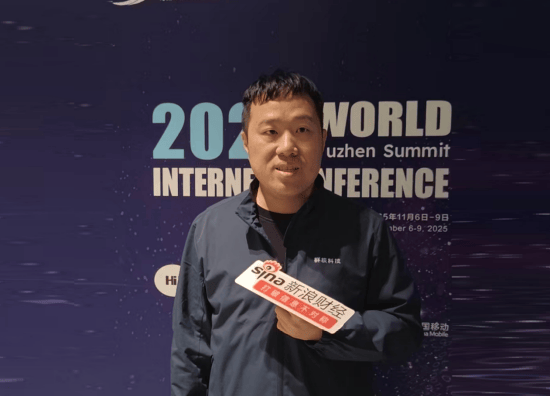
对话群核科技董事长黄晓煌:我们跟DeepSeek一样,都做“智能”但更偏空间丨直击乌镇
Xin Lang Ke Ji· 2025-11-06 09:23
Core Insights - The 2025 World Internet Conference in Wuzhen highlighted the focus of Qunhe Technology on spatial intelligence, emphasizing its distinction from DeepSeek's focus on human language understanding [1] - Qunhe Technology does not engage in hardware development, citing existing competition from companies like Yushu and Yundongchu [1] - Huang Xiaohuang, the co-founder and chairman of Qunhe Technology, stated that embodied intelligence requires spatial intelligence for robots to operate in physical environments, which includes spatial understanding, reasoning, and action [1]

我们对AI认识远远不足,所以透明度才至关重要|腾研对话海外名家
腾讯研究院· 2025-11-06 08:33
Core Viewpoint - The article emphasizes the importance of AI transparency, arguing that understanding AI's operations is crucial for governance and trust in its applications [2][3][9]. Group 1: Importance of AI Transparency - The ability to "see" AI is essential in an era where AI influences social interactions, content creation, and consumer behavior, raising concerns about misinformation and identity fraud [7][8]. - AI Activity Labeling is becoming a global consensus, with regulatory bodies in China and the EU mandating clear identification of AI-generated content to help users discern authenticity and reduce deception risks [7][8]. - Transparency not only aids in identifying AI interactions but also provides critical data for assessing AI's societal impacts and risks, which are currently poorly understood [8][9]. Group 2: Mechanisms for AI Transparency - AI labeling is one of the fastest-advancing transparency mechanisms, with China implementing standards and the EU establishing identification obligations for AI system providers [12][14]. - Discussions are ongoing about what should be labeled, who embeds the labels, and how to verify them, highlighting the need for effective implementation standards [12][14][15]. - The distinction between labeling content and AI's autonomous actions is crucial, as current regulations primarily focus on content, leaving a gap regarding AI's behavioral transparency [13]. Group 3: Model Specifications - Model specifications serve as a self-regulatory mechanism for AI companies, outlining expected behaviors and ethical guidelines for their models [17][18]. - The challenge lies in ensuring compliance with these specifications, as companies can easily make promises that are difficult to verify without robust enforcement mechanisms [18][20]. - There is a need for a balance between transparency and protecting proprietary information, as not all operational details can be disclosed without risking competitive advantage [20]. Group 4: Governance and Trust - Transparency is vital for building trust in AI systems, allowing users to understand AI's capabilities and limitations, which is essential for responsible usage and innovation [9][23]. - The article argues that transparency mechanisms should not only focus on what AI can do but also on how it operates and interacts with humans, fostering a more informed public [10][23]. - Ultimately, achieving transparency in AI governance is seen as a foundational step towards establishing a reliable partnership between AI technologies and society [23].

黄仁勋:中国将在AI竞赛中击败美国
Hua Er Jie Jian Wen· 2025-11-06 06:28
据央视新闻报道,当地时间8月6日,美国总统特朗普表示,美国将对芯片和半导体征收约100%的关 税。特朗普称,如果在美国制造,将不收取任何费用。 黄仁勋在上月曾警告称,关税将导致美国失去全球一半AI开发者,从长远来看,"这伤害更大"。 英伟达首席执行官黄仁勋称,中国将在人工智能竞赛中击败美国,原因是更低的能源成本和更宽松的监 管环境。 黄仁勋周三在接受英国《金融时报》AI峰会间隙接受采访时表示: "中国将赢得AI竞赛。" 他批评西方包括美国和英国受"犬儒主义"拖累,并呼吁"我们需要更多乐观主义"。 英伟达黄仁勋警告:关税"伤害更大" 英伟达市值上周首次突破5万亿美元,但美国关税的不确定性持续困扰投资者。黄仁勋的表态可能加剧 市场对美国在AI领域竞争力的担忧。 今年1月,中国DeepSeek的发布震惊了全球,在硅谷引发了激烈辩论,焦点是资源更充足的美国AI公 司,包括OpenAI和Anthropic,能否保持技术优势。黄仁勋此前曾警告,美国最新AI模型并未大幅领先 中国竞争对手。 风险提示及免责条款 市场有风险,投资需谨慎。本文不构成个人投资建议,也未考虑到个别用户特殊的投资目标、财务状况或需要。用户应考虑本文中 ...

AGI五年内突破关键瓶颈!AIGC正在重构所有行业
Sou Hu Cai Jing· 2025-11-05 11:10
Core Insights - The report highlights that AGI will overcome key bottlenecks in the next five years, transitioning AI from virtual spaces to real-world applications, marking the beginning of a new era of human-machine coexistence [1] Group 1: AGI Technology Evolution - AI is evolving from single-text generation to multi-modal and embodied intelligence, with breakthroughs concentrated in five key areas [2] - The continuous evolution of the Transformer architecture is leading to AI video generation technologies that approach physical realism through spatiotemporal modeling [3] - The application of intelligent agents is experiencing a comprehensive explosion, enabling cross-system process automation and establishing a solid foundation for AGI [4] Group 2: US-China Competition - In 50 key AI competitive fields, the US leads in 26 areas, while China leads in 13, with 11 fields being evenly matched [5] - China excels in fields like facial recognition and industrial robots, focusing on application landing and industrial integration, while the US leads in foundational model training and AI-specific chips, emphasizing breakthroughs and principle innovation [6] - The report indicates that closed-source models outperform open-source models by approximately nine months, with the future competition focusing on who can achieve cross-level integration first [7] Group 3: Major Players in AI - Eight major players, including OpenAI and Google DeepMind, are shifting from model competition to ecological competition [8] - Companies are moving towards personalized and specialized models, emphasizing efficient reasoning and multi-modal integration rather than merely pursuing larger scales [9] - OpenAI and Anthropic maintain closed-source strategies for safety and differentiation, while Meta and DeepSeek lean towards open-source approaches [11] Group 4: Industry Applications - AIGC is revolutionizing content production, education, healthcare, and manufacturing, leading to exponential efficiency improvements [12] - In content production, AI has created over 10,000 music pieces, showcasing remarkable efficiency in literary creation as well [13] - AI is transforming education by enabling personalized learning paths and fostering interdisciplinary creativity [14] - In healthcare, AI-assisted platforms are enhancing cancer diagnosis and treatment precision through integrated data analysis [15] Group 5: Future Outlook - The evolution of AGI will redefine human values, shifting from labor-centric to reflection and creativity-centric paradigms [18] - The economic paradigm is transitioning from scarcity to meaning, focusing on how to live more meaningfully rather than merely producing more [19] - The relationship between humans and AI is expected to evolve from automation to cohabitation, with a focus on symbiosis rather than complete automation [49][51]

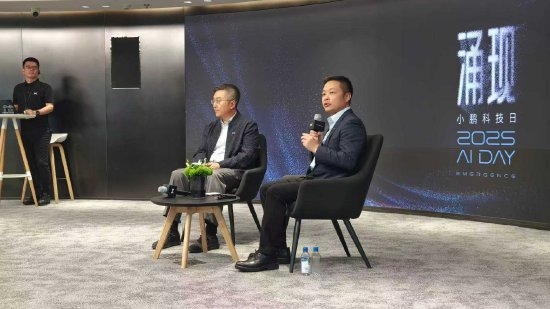
何小鹏谈开源:向前走是最重要的
Xin Lang Ke Ji· 2025-11-05 10:17
Core Insights - Xiaopeng Motors' CEO He Xiaopeng emphasized the importance of open-source technology, comparing it to initiatives by Meta and Alibaba, and expressed a commitment to collaboration within the industry [1] Group 1: Open Source Strategy - Xiaopeng Motors has decided to open-source its SDK, aiming to enhance collaboration and innovation within the automotive industry [1] - The company believes that successful operations require strong capabilities in core technology, computing power, data management, engineering, and customer satisfaction metrics like NPS and ENPS [1] Group 2: Financial Commitment - Xiaopeng Motors invests nearly 10 billion in R&D annually, reflecting its long-term commitment to technological advancement over its 11 years of operation [1] - The CEO expressed a desire for more partnerships, including with major players like Volkswagen, to drive the industry into a new phase of development [1]

AI泡沫何时破?一场被资本催熟的技术狂欢终将回归理性
Sou Hu Cai Jing· 2025-11-05 08:07
Core Insights - The AI market is experiencing significant volatility, with major companies like Nvidia losing substantial market value and Microsoft retracting data center projects, indicating a fragile bubble driven by capital investment [1][3] - The competition in AI infrastructure is becoming increasingly debt-driven, as exemplified by Oracle's $300 billion contract with OpenAI, raising concerns about the sustainability of such investments [1] - Historical parallels are drawn to the 2000 internet bubble, with current market indicators suggesting a potential repeat of past patterns, including high valuations and significant market corrections [1][3] Group 1: Market Dynamics - Major US tech companies have invested over $1.5 trillion in AI over the past three years, resulting in only a 0.9% GDP growth, highlighting inefficiencies in capital allocation [1] - DeepSeek's open-source strategy has disrupted the US AI dominance by achieving GPT-3.5 level performance at a fraction of the cost, leading to a 17% drop in Nvidia's stock price [3] - The emergence of competitive models from China, Europe, and other regions is reshaping the global AI landscape, indicating a shift away from reliance on hardware scaling [3] Group 2: Financial Viability - AI applications currently generate limited revenue, primarily in advertising optimization, necessitating an annual income of $600 billion to cover hardware costs [5] - A $1.5 trillion funding gap exists in global data center construction, with signs of fatigue in private credit markets, raising concerns about the financial sustainability of AI investments [1][5] Group 3: Regulatory Environment - The implementation of the EU AI Act and increased scrutiny on data privacy and algorithmic bias are tightening the regulatory landscape for AI companies [5] Group 4: Future Outlook - Predictions suggest that the AI bubble may burst between 2026 and 2027, driven by a combination of market corrections and cyclical fears surrounding AI stocks [3] - Historical trends indicate that significant technological advancements often follow market corrections, suggesting that the true potential of AI may only be realized post-bubble [7]