沪农商行

Search documents
上海国际金融中心一周要闻回顾(7月7日—7月13日)
Guo Ji Jin Rong Bao· 2025-07-13 07:20
Group 1: Key Meetings and Collaborations - Shanghai Mayor Gong Zheng met with Prudential Group CEO Huakang Yao, emphasizing the importance of financial openness and collaboration in asset management and green finance [2] - The Shanghai Financial Industry Association held a successful re-election meeting, with a focus on enhancing the role of the association in supporting economic development and financial innovation [3] Group 2: Policy and Regulatory Developments - The Shanghai Municipal Financial Office convened a meeting to convey the spirit of the 12th Municipal Committee's seventh plenary session, outlining future work deployment [4] - A notice was issued regarding the 2025 Shanghai Oriental Talent Plan, inviting applications for outstanding youth projects in the financial sector [5] Group 3: Financial Support Initiatives - Shanghai encourages financial institutions to provide seamless and non-repayment loans to small and medium-sized enterprises in the software and information services sector [6][7] - The Shanghai Futures Exchange released an international version of its business rules to facilitate high-level openness in the futures market [10] Group 4: Market Developments - The first batch of Sci-Tech Innovation Bond ETFs was established, with net subscription amounts exceeding 2.9 billion yuan [8] - The Shanghai Stock Exchange and Shenzhen Stock Exchange announced the upcoming launch of several specialized indices focusing on niche markets [9] Group 5: Financial Technology and Innovation - The Shanghai Financial Technology Innovation Regulatory Tool Workgroup announced the testing phase for six new innovative applications aimed at enhancing digital finance [11] - Shanghai Rural Commercial Bank issued a $30 million non-resident acquisition loan to support a domestic pharmaceutical company's cross-border acquisition [12] Group 6: Long-term Investment Regulations - The Ministry of Finance introduced new regulations for insurance companies to enhance long-term investment stability and sustainability [14] - The National Financial Supervision Administration released guidelines for the appropriate management of financial products to protect consumer rights [15]




农商行债券投资情况梳理:农村金融机构持有多少债券?-20250713
Hua Yuan Zheng Quan· 2025-07-13 05:51
Group 1: Report Industry Investment Rating - No specific industry investment rating is mentioned in the report. Group 2: Core Viewpoints of the Report - Rural commercial banks (RCCs) have become important participants in the bond market, preferring to invest in inter - bank certificates of deposit, government bonds, local bonds, policy - financial bonds, and participating in urban investment bond investments. In 2024, RCCs significantly increased their allocation of ultra - long - term government bonds, and their bond investment is shifting from "hold - to - maturity" to trading [1]. - In the medium - to - long - term, the proportion of commercial banks' bond investment is likely to increase. As the era of real estate wanes and infrastructure investment space shrinks, credit demand may be weak in the long run, and the asset structure of the banking system will change accordingly [1]. - The bond - holding scale of rural financial institutions is estimated to exceed 13 trillion yuan. If the bond investment ratio is controlled within 20% or 15%, it may lead to significant bond investment reduction and impact the bond market [1]. - Interest - rate bonds are expected to show narrow - range fluctuations in 25Q3. The report continues to be bullish on long - duration urban investment bonds, capital bonds, and suggests paying attention to investment opportunities in Hong Kong - listed banks and China Property Insurance's capital - supplementary bonds [1]. Group 3: Summary by Related Information Rural Commercial Banks' Bond Investment Preferences - RCCs tend to invest in inter - bank certificates of deposit, government bonds, local bonds, policy - financial bonds, and participate in urban investment bond investments. In 2024, they significantly increased their allocation of ultra - long - term government bonds [1]. Trend of Commercial Banks' Bond Investment Proportion - From the overall situation of small and medium - sized banks, the proportion of bond investment increased from 13.7% at the end of January 2015 to 22.7% at the end of May 2025 [1]. Estimation of Rural Financial Institutions' Bond - Holding Scale - As of the end of May 2025, small and medium - sized banks (joint - stock banks, city commercial banks, and RCCs) held a total of 46.4 trillion yuan in bonds, accounting for 22.7% of total assets. As of the end of March 2025, if the bond investment ratio of rural financial institutions is the same as that of small and medium - sized banks, their bond - holding scale reaches 13.6 trillion yuan. If calculated based on the 27.8% bond investment ratio of A - share listed RCCs at the end of 2024, the bond - holding scale of rural financial institutions reaches 16.6 trillion yuan [1]. Potential Impact of Regulatory Policies - If the bond investment ratio of rural financial institutions is controlled within 20%, at least 1.6 trillion yuan of bond investment needs to be reduced; if controlled below 15%, the reduction scale exceeds 4.6 trillion yuan, which may significantly impact the bond market [1]. Bond Market Outlook and Investment Suggestions - In 25Q3, the possibility of an interest - rate cut is low, and interest - rate bonds are expected to show narrow - range fluctuations. The report recommends band - trading interest - rate bonds and paying attention to the money supply. It continues to be bullish on long - duration urban investment bonds, capital bonds, and insurance sub - debt, and suggests paying attention to investment opportunities in Hong Kong - listed banks and China Property Insurance's capital - supplementary bonds [1].
超6300亿元!A股上市银行大派“红包”
21世纪经济报道· 2025-07-12 15:01
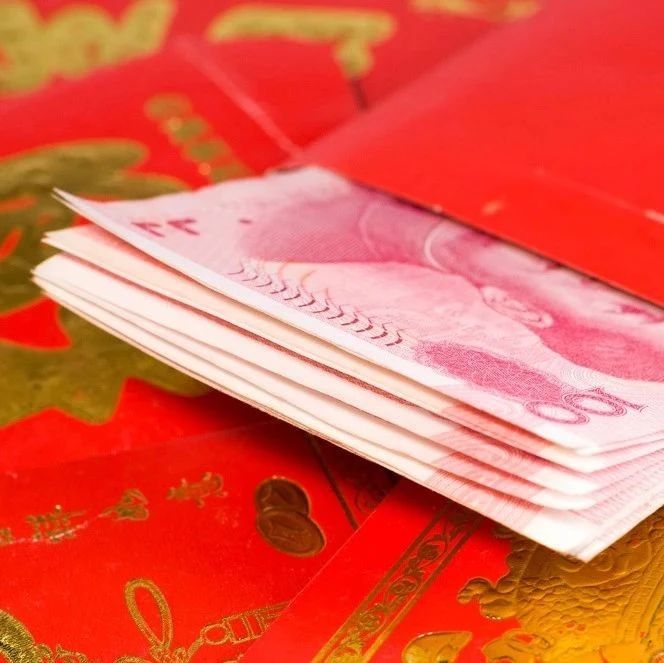
Core Viewpoint - The banking sector in A-shares is experiencing a significant dividend distribution period, with total dividends exceeding 630 billion yuan for 2024, marking an increase of 20 billion yuan compared to the previous year, and setting a new historical high [1][7]. Dividend Distribution Peak - As of July 11, 2024, A-share listed banks are in a peak dividend distribution phase, with both China Merchants Bank and Xi'an Bank distributing cash dividends on the same day [3]. - China Merchants Bank announced a cash dividend of 2.000 yuan per share, totaling approximately 50.44 billion yuan, with a dividend yield of about 5.7% based on a hypothetical stock price of 35 yuan [3]. - Xi'an Bank distributed 1 yuan for every 10 shares, amounting to 444 million yuan, which represents 17.37% of its net profit [4]. - On July 10, Beijing Bank and CITIC Bank also executed dividend distributions, with Beijing Bank distributing 0.2 yuan per share, totaling 4.23 billion yuan, and CITIC Bank distributing 0.1722 yuan per share, totaling 9.582 billion yuan [4][5]. Acceleration of Dividend Distribution - A total of 33 A-share listed banks have completed their 2024 annual dividend distributions, with five more having announced their dividend plans [6]. - Major state-owned banks like Industrial and Commercial Bank of China and Agricultural Bank of China have also announced their dividend distributions, with ICBC distributing 0.1646 yuan per share and ABC distributing 0.1255 yuan per share [6]. - The trend of earlier dividend distributions among major state-owned banks indicates a proactive approach to enhancing shareholder returns [6]. Mid-term Dividend Layout - In addition to the ongoing annual dividends, banks are also planning mid-term dividends for 2025, with several banks expressing intentions to enhance shareholder returns through mid-term distributions [9]. - Changsha Bank and Su Nong Bank have indicated plans to implement mid-term dividends based on their net profits, aiming to improve investor satisfaction [9]. - The trend towards mid-term dividends is expected to provide more stable cash flows for investors, supporting sustained stock price growth [13]. Market Outlook - Analysts predict that the decline in net profit and revenue for listed banks is expected to stabilize, with a projected year-on-year revenue decline of 0.9% and a net profit decline of 0.5% [14]. - The current market environment is viewed as the beginning of a long-term trend, with low interest rates and the revaluation of RMB assets serving as underlying logic for the ongoing market rally [15]. - The banking sector's stable profitability and dividend distribution are expected to attract long-term capital, reinforcing the investment value of banks with high dividend yields and solid asset quality [16].




海航控股减持沪农商行,大赚超2亿元!
Zhong Guo Ji Jin Bao· 2025-07-12 08:29
Group 1 - HNA Group's subsidiary, Shanxi Airlines, sold 34.7536 million shares of Hu Nong Commercial Bank, accounting for 0.36% of the bank's total share capital, generating approximately 349 million yuan in total proceeds [2] - The original investment cost for the shares was 141 million yuan, resulting in a profit of 208 million yuan from the sale, with an investment return rate of approximately 247% [4] - The sale was authorized by the board of directors and does not constitute a related party transaction or a major asset restructuring as per regulations [2] Group 2 - Hu Nong Commercial Bank's stock price has been on the rise, reaching a three-year high of 10.51 yuan per share in early June 2023, and has increased by 19.14% year-to-date [3] - As of July 11, 2023, the stock closed at 9.95 yuan per share, with a total market capitalization of 959.6 billion yuan [3][4] - The stock's trading volume was 373,000 shares, with a turnover rate of 0.40% on the same day [4] Group 3 - HNA Group faced significant challenges in recent years, reporting a net profit loss of 9.21 billion yuan in 2024, compared to a profit of 3.11 billion yuan in the previous year [5] - The company's total revenue for 2024 was 65.236 billion yuan, reflecting an 11.25% year-on-year increase [5] - As of the first quarter of 2025, the company's revenue was 17.601 billion yuan, with a year-on-year growth of 0.29%, but the net profit decreased by 60.34% [6]


海航控股减持沪农商行,大赚超2亿元!
中国基金报· 2025-07-12 07:36
Core Viewpoint - HNA Group's subsidiary, Shanxi Airlines, has sold 34.75 million shares of Hu Nong Commercial Bank, generating approximately 349 million yuan in total proceeds, optimizing asset structure and improving liquidity [2][6]. Summary by Sections Shareholding Reduction - Shanxi Airlines sold its entire holding of Hu Nong Commercial Bank shares, which accounted for 0.36% of the bank's total share capital, with total proceeds of about 349 million yuan [2][5]. - The original investment cost for these shares was 141 million yuan, equating to 4.05 yuan per share, and the book value as of March 31, 2025, was 290 million yuan [4]. Financial Performance - The sale resulted in a profit of 208 million yuan, yielding an investment return rate of approximately 247% [7]. - Hu Nong Commercial Bank's stock price has seen a significant increase, reaching a high of 10.51 yuan per share in early June 2023, with a year-to-date increase of 19.14% [6]. Company Overview - HNA Group, established in 1995, has faced operational challenges in recent years, reporting a net loss of 921 million yuan in 2024, compared to a profit of 311 million yuan in the previous year [9]. - The company's total revenue for 2024 was 65.236 billion yuan, reflecting an 11.25% year-on-year growth, while the net profit attributable to shareholders showed a significant decline [9].

长城稳固A,长城稳固C: 长城稳固收益债券型证券投资基金2025年第2季度报告
Zheng Quan Zhi Xing· 2025-07-12 02:32
Core Viewpoint - The report provides an overview of the performance and management of the Changcheng Stable Income Bond Fund for the second quarter of 2025, highlighting its investment strategy, financial indicators, and market conditions during the reporting period [1][3]. Fund Overview - Fund Name: Changcheng Stable Income Bond Fund - Fund Manager: Changcheng Fund Management Co., Ltd. - Fund Custodian: Industrial and Commercial Bank of China Limited - Total Fund Shares at Reporting Period End: 293,816,189.68 shares [2]. - Investment Objective: To achieve long-term stable returns through active management of fixed income and equity assets while controlling risks [2]. - Investment Strategy: Utilizes a top-down analysis approach, considering macroeconomic factors, monetary and fiscal policies, and market conditions to dynamically adjust asset allocation [2]. - Performance Benchmark: 90% of the return from the China Bond Composite Wealth Index and 10% from the CSI 300 Index [2]. Financial Indicators - Fund A Net Value Growth Rate for the past three months: 1.42%, six months: 1.97%, one year: 7.05%, three years: 4.42%, five years: 7.06%, since inception: 40.42% [5]. - Fund C Net Value Growth Rate for the past three months: 1.32%, six months: 1.78%, one year: 6.64%, three years: 3.20%, five years: 4.96% [5]. - Total realized income for Fund A includes interest income, investment income, and other income after deducting relevant expenses [3]. Investment Portfolio - As of the reporting period, the fund's asset allocation was 93.43% in bonds and 2.97% in stocks [12]. - The fund's investment in policy financial bonds amounted to 39,880,832.05 yuan, representing 9.93% of the net asset value [13]. - The fund's investment strategy includes maintaining a minimum of 80% in bond assets and a maximum of 20% in equity assets [7]. Market Conditions - The bond market experienced fluctuations, with a general bullish trend during the second quarter of 2025, influenced by global economic events and domestic monetary policy adjustments [10][11]. - The report notes a significant drop in domestic interest rates, with the 10-year government bond yield decreasing by approximately 9 basis points [10]. - The market showed signs of recovery towards the end of June, with expectations of renewed central bank bond purchases [10].

名场面!上市银行6300亿“红包”只是前菜,中期分红接踵而至
2 1 Shi Ji Jing Ji Bao Dao· 2025-07-11 11:46
Core Viewpoint - The A-share listed banks are experiencing a peak in dividend distribution, with total dividends for 2024 exceeding 630 billion yuan, marking an increase of 20 billion yuan from the previous year, and setting a new historical high [1][4]. Dividend Distribution - On July 11, both China Merchants Bank and Xi'an Bank distributed cash dividends, with China Merchants Bank paying 2.000 yuan per share, totaling approximately 50.44 billion yuan, resulting in a dividend yield of about 5.7% based on a hypothetical share price of 35 yuan [2][3]. - Xi'an Bank distributed 1 yuan for every 10 shares, amounting to 444 million yuan, which represents 17.37% of its net profit [2]. - On July 10, Beijing Bank and CITIC Bank also executed dividend distributions, with Beijing Bank distributing 0.2 yuan per share, totaling 4.23 billion yuan, and CITIC Bank distributing 0.1722 yuan per share, totaling 9.582 billion yuan [3]. Overall Dividend Performance - As of July 11, 33 A-share listed banks have completed their 2024 annual dividend distributions, with five more having announced their plans [3]. - The six major state-owned banks maintained a dividend payout ratio of over 30%, with total cash dividends reaching 420.63 billion yuan, led by Industrial and Commercial Bank of China with 109.77 billion yuan [4]. Mid-term Dividend Plans - Several banks are planning mid-term dividends for 2025, with institutions like Changsha Bank and Su Nong Bank expressing intentions to enhance shareholder returns through mid-term distributions [5][6]. - The trend of increasing mid-term dividends is seen as a strategy to improve investor satisfaction and share the benefits of high-quality growth [6]. Market Outlook - Analysts predict a narrowing decline in net profit and revenue for listed banks in the first half of the year, with expectations of a 0.9% year-on-year decrease in revenue and a 0.5% decrease in net profit [7]. - The current market environment is viewed as the beginning of a long-term upward trend for bank stocks, supported by low interest rates and the revaluation of RMB assets [7].

海航控股:子公司山西航空已处置完所持沪农商行股票 累计回款约3.49亿元
news flash· 2025-07-11 11:37
海航控股:子公司山西航空已处置完所持沪农商行股票 累计回款约3.49亿元 智通财经7月11日电,海航控股(600221.SH)公告称,公司子公司山西航空已通过二级市场出售其持有的 沪农商行34,753,638股股票,累计处置回款约3.49亿元。山西航空于2014年投资沪农商行,原始投资成 本1.41亿元,截至2025年3月31日股票账面价值2.90亿元。 ...
红利低波ETF(512890)本周整体涨0.66%,成交额25.4亿
Xin Lang Ji Jin· 2025-07-11 08:40
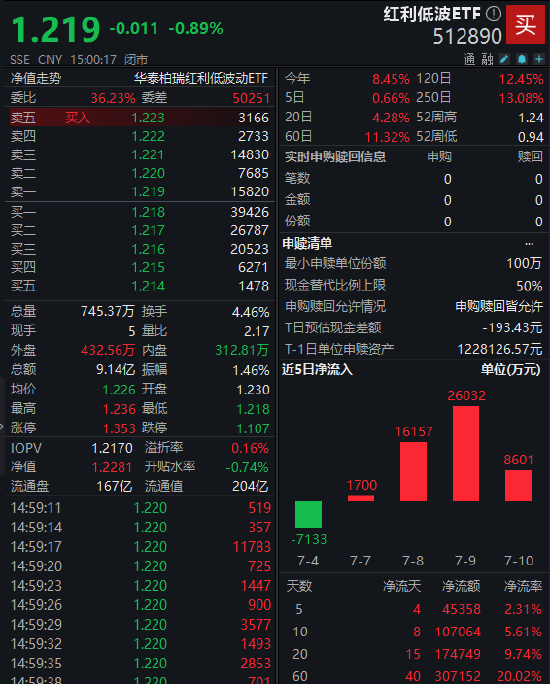
Core Viewpoint - The Reducing Volatility Dividend ETF (512890) has seen significant inflows and growth in fund size, driven by the performance of major banks and a favorable investment environment for dividend assets [1][3]. Fund Performance - On July 11, the Reducing Volatility Dividend ETF (512890) closed down 0.89% with a trading volume of 914 million yuan, while the overall weekly performance was up 0.66% with a total trading volume of 2.54 billion yuan [1]. - The fund has attracted over 520 million yuan in net inflows over four consecutive trading days, reaching a record high in fund size of 20.535 billion yuan as of July 10 [1][3]. Market Context - The banking sector continues to rise, with the stock prices of the four major banks breaking previous highs and setting historical records [1]. - Current dividend assets are considered valuable in a declining interest rate environment, with recommendations to focus on stocks with a dividend yield above 3% and low ROE volatility [1][3]. Fund Characteristics - The Reducing Volatility Dividend ETF (512890) was established on December 19, 2018, and has consistently achieved positive returns every full year since its inception, making it one of the few ETFs in the A-share market with such a track record [3]. - As of June 30, the fund ranked first in its category for five-year returns [3]. Holdings Overview - The fund's top holdings include Chengdu Bank, Yagor, and Shanghai Bank, with significant increases in their respective positions [4]. - The total market value of the top holdings amounts to approximately 3.722 billion yuan, representing 25.19% of the fund's net value [4]. Investment Opportunities - There are opportunities for rebound in sectors that have seen declines of over 4% since the beginning of the year, such as refining trade, white goods, and infrastructure [1]. - Financial stocks are transitioning from being undervalued to becoming a dynamic benchmark, with their low volatility and dividend yields exceeding 6% making them a core investment direction [1].
银行“杀疯了”!这些主题基金大赚特赚!基金、牛股名单火线揭晓!
私募排排网· 2025-07-11 03:18
Core Viewpoint - The banking sector in A-shares has experienced significant growth, with a year-to-date increase exceeding 20%, outperforming major market indices like the CSI 300 and Shanghai Composite Index [3][4]. Group 1: Reasons for the Surge in Banking Stocks - The improvement in asset quality and stable profitability of banks has been highlighted as a key factor for the surge, with core earnings and net interest income showing signs of recovery [4][6]. - The influx of insurance capital into banking stocks is considered a major driver, as the decline in 10-year government bond yields has created an asset shortage, making bank stocks attractive due to their stability and dividend characteristics [4][5]. - The increase in public fund allocation to banking stocks, with the proportion rising from 3.72% to 4.00%, indicates a renewed interest in the investment value of banking stocks [5][6]. Group 2: Valuation and Performance Metrics - The banking sector's low valuation is also a contributing factor, with a static price-to-book (PB) ratio of 0.67, suggesting a significant safety margin compared to other industries [6][11]. - The average return of the top 20 banking stocks has reached 27.62%, with six stocks showing gains over 30% year-to-date, indicating strong performance across the sector [9][12]. - The dividend yield for several banks, such as Chongqing Bank and Changsha Bank, exceeds 6%, while some banks have yields below 3%, raising concerns about the perceived safety margin [10][11]. Group 3: Performance of Banking-Themed Funds - The banking-themed funds have also performed well, with the top 20 funds showing a minimum return of 19.08% year-to-date, and seven funds exceeding 20% [13][14]. - Notably, two funds managed by Liu Chongjie have achieved returns of 26.63% and 23.30%, benefiting from high dividend themes and the unique valuation dynamics of Hong Kong bank stocks [13][15].