舍弗勒集团

Search documents
范波在太仓专题调研深化对德合作工作
Su Zhou Ri Bao· 2026-02-26 00:38
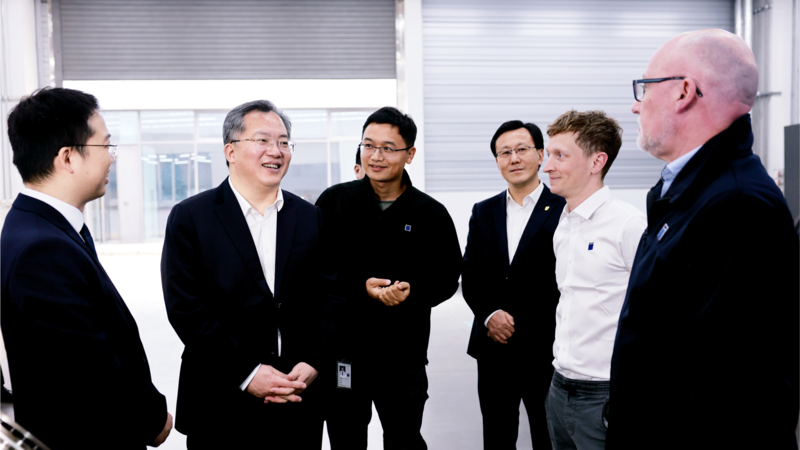
昨日(2月25日),苏州市委书记范波在太仓围绕深化对德合作开展专题调研。他强调,要深入学习贯彻习近 平总书记对江苏、苏州工作重要讲话重要指示精神,突出开放赋能,深化对德合作,持续优化市场化法治化国际 化一流营商环境,擦亮"德企之乡"金字招牌,以更高水平对外开放塑造发展新优势。 倪黎祥 摄 德国舍弗勒集团1995年落户太仓以来,持续增资扩产,推动太仓基地成为江苏产值规模最大的德资制造业企 业。范波看展厅、进车间,了解技术创新、智能制造等情况,希望舍弗勒充分发挥"链主"作用,布局更多优质项 目,带动更多配套企业集聚,助力苏州现代化产业体系建设。在克朗斯机械(太仓)有限公司,范波察看灌装设 备生产线,了解企业发展历程。他指出,要学习借鉴德资企业先进经验,支持企业深耕细分领域,培育更多"隐形 冠军"企业。 来到通快(中国)有限公司,范波询问企业生产经营情况和德籍员工在苏生活感受,勉励企业抢抓人工智能 发展机遇,加大研发投入,不断提升智能制造水平。在太仓德国中心,范波了解运营模式和入驻企业情况,希望 中心充分发挥平台功能,吸引集聚更多创新企业、优秀人才。 范波强调,多年来,广大德资企业持续投资苏州,在推动科技创新、促进 ...

解码中德合作的“太仓样本”
Ren Min Ri Bao· 2026-02-26 00:01
今年春节,小科智行(太仓)汽车科技有限公司创办人科瑞斯和蒋筱桦夫妇,在江苏太仓度过了一个别 样假期。科瑞斯与两名德国专家在实验室攻坚新产品研发,蒋筱桦则梳理专利申报材料、规划企业发 展。在他们眼里,这座距上海仅50公里的江南小城,是一个能让人沉心做事、惬意生活的理想之地。 科瑞斯来自德国。他和蒋筱桦这个中德家庭的选择,彰显了太仓对德国企业与人才的独特吸引力。从 1993年第一家德企落户,到如今超560家德企集聚,太仓已然成为名副其实的"德企之乡"。 德国企业为何如此钟爱太仓?记者深入调研,探寻背后的深层逻辑。 从"一个弹簧"到"一片森林": 产业集聚形成磁场效应 走进克恩—里伯斯公司展厅,指甲盖大小的精密弹簧在灯光下泛着金属光泽。这家百年企业,占据着全 球汽车安全带卷簧市场的重要份额。1993年,一个小小的弹簧,拉开了太仓与德企故事的序幕。 彼时,伴随德国大众汽车集团在上海建厂,克恩—里伯斯公司董事长斯坦姆希望投资中国市场,并对生 产基地提出明确要求:靠近上海、交通物流便捷、文化底蕴深厚、劳动力素质较高。太仓,在这样的背 景下进入了他的视野。 当年,克恩—里伯斯公司在太仓租下400平方米厂房,雇用6名员工。" ...
汽车业失血,军火单续命
汽车商业评论· 2026-02-12 23:06
Core Viewpoint - Renault has confirmed plans to produce up to 600 drones for the French Ministry of Defense at a factory in Le Mans, France, marking a significant shift towards defense manufacturing in response to heightened security concerns in Europe [5][8][22]. Group 1: Renault's Drone Production - The project will be a collaboration between Renault and defense contractor Thales, with a potential contract value of approximately €1 billion over a 10-year period [8]. - The drones produced will be similar to Iran's "Shahed" drones, intended for remote strikes, intelligence gathering, and reconnaissance, reflecting the capabilities seen in the ongoing Ukraine conflict [8][25]. - Renault emphasizes that this military production will not impact its existing automotive investment plans and does not intend to become a major defense player [9][10]. Group 2: Industry Trends in Defense - Other automotive suppliers in Europe, like Valeo and Schaeffler, are also pivoting towards defense, with Valeo participating in a "defense drone agreement" and Schaeffler collaborating with a drone startup [13][14]. - The shift towards defense is not universal; some companies, like ZF Friedrichshafen, are cautiously entering the defense sector, with defense-related revenue remaining a small fraction of their overall business [18]. Group 3: European Security Concerns - The ongoing Ukraine conflict and rising uncertainties in US-EU relations have heightened security awareness across Europe, leading to increased defense budgets and procurement [20][21]. - France's defense strategy has been rapidly adjusted, with President Macron announcing a significant increase in military spending, including a plan to boost defense spending by €36.5 billion by 2030 [27]. Group 4: Automotive Industry Challenges - The European automotive industry is facing significant challenges, including weak market demand and high costs associated with electric vehicle transitions, leading to substantial profit declines and job losses [30][31]. - The defense sector presents a unique opportunity for automotive companies, offering stable government contracts and less competition from Chinese firms, making it an attractive alternative [30][31]. Group 5: Economic Implications - Increased defense spending in Germany is expected to exceed €108 billion in 2026, providing a substantial boost to the defense industry and potentially offsetting declines in traditional sectors like automotive [32][34]. - Economists anticipate that this influx of funding could lead to technological advancements and a transformation in the defense sector, similar to the historical impact of defense spending in the US [36][37]. Group 6: Risks and Challenges - Transitioning to defense manufacturing carries risks, including limited export potential for European defense products and a weaker multiplier effect on the economy compared to civilian manufacturing [40][41][44]. - The defense industry currently employs about 120,000 people in Germany, significantly less than the 800,000 employed in the automotive sector, raising concerns about the ability to absorb job losses from the automotive industry's contraction [47][49].

西菱动力2025年业绩预增,实际控制人拟减持2%股份
Jing Ji Guan Cha Wang· 2026-02-12 03:19
Group 1: Core Viewpoint - The company Xiling Power (300733) anticipates a significant increase in net profit for 2025, alongside plans for share reduction by its actual controller and the acquisition of turbocharger business [1][2][4] Group 2: Performance and Financial Outlook - The company expects net profit for 2025 to be between 90 million to 110 million yuan, representing a year-on-year growth of 77.82% to 117.33% [2] - The annual report is scheduled for formal disclosure in 2026 [2] Group 3: Shareholder Actions - The actual controller, Yu Yinglian, plans to reduce holdings by 2.00% (approximately 6.0617 million shares) through block trading due to personal financial needs, with the announcement set for December 2025 [3] Group 4: Business Development - The company signed an agreement in November 2025 to acquire the turbocharger business from Schaeffler Group in China, with the transaction expected to be completed in the first half of 2026 [4]

研究机构数据:去年12月,欧洲每卖出十辆汽车中就有一辆是中国品牌
Guan Cha Zhe Wang· 2026-01-30 10:21
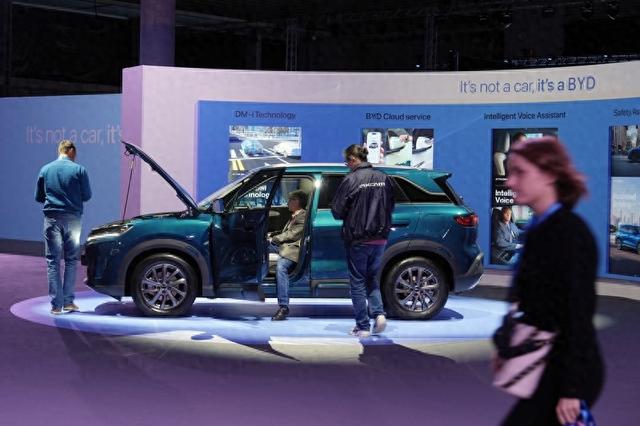
【文/观察者网 熊超然】"欧洲每卖出十辆汽车中就有一辆是中国品牌。" 彭博社1月30日报道称,上个月,中国汽车制造商在欧洲销售的乘用车中占据了近十分之一的份额,创 下历史新高。这一快速增长势头,得益于混合动力汽车和纯电动汽车的强劲销售。 根据研究机构Dataforce的数据,去年12月,中国品牌在欧洲汽车市场的份额达到9.5%,首次在季度销 量上超越了包括起亚在内的韩国竞争对手。随着贸易壁垒的降低和中国出口力度的加大,比亚迪及其中 国同行有望进一步扩大在欧洲的市场份额。 电动汽车是欧洲市场增长的主要动力,而中国车企在电动汽车领域的进展最为显著。凭借在电池技术方 面的竞争优势,从西班牙和希腊,到意大利和英国,中国厂商赢得了电动汽车和混合动力汽车消费者的 青睐。 "我们对中国汽车在南欧的快速普及感到震惊,"Dataforce分析师朱利安·利辛格(Julian Litzinger)表 示:"我们知道这些国家的消费者在品牌选择上更加灵活,但电动汽车的这种增长速度是之前无法预见 的。" 2025年11月19日,西班牙巴塞罗那,比亚迪举行ATTO 2 DM-i和Comfort Dynamic欧洲发布会。 IC Photo ...

拟募资38亿元,吉利、比亚迪供应商人本股份再冲IPO
Cai Jing Wang· 2025-12-30 05:47
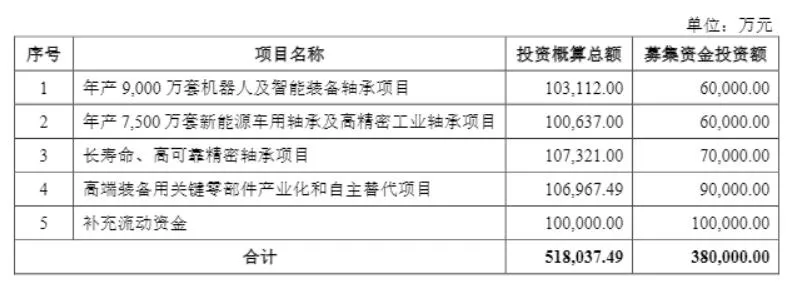
Core Viewpoint - Renben Co., Ltd. has reinitiated its IPO application on the Shanghai Stock Exchange after a previous unsuccessful attempt, with its application accepted on December 29 [1] Group 1: Business Overview - Renben Co., Ltd. specializes in the research, production, and sales of bearings and related products, possessing a full industry chain capability from materials to finished products [1] - The company offers over 50,000 types of bearing products, which are widely used in automotive, light machinery, heavy machinery, and major equipment sectors [1] Group 2: Revenue Composition - From 2022 to 2025, the revenue from finished bearings consistently accounts for over 86% of total income, with automotive bearings contributing 39.16%, 45%, 45.97%, and 45.07% respectively [1] - Revenue from light machinery bearings represents 28.94%, 25.62%, 24.41%, and 24.59% over the same period [1] Group 3: Major Clients - Key clients in the automotive sector include Geely Group, BYD, Changan Automobile, Great Wall Motors, and Bertley, with Geely being the largest customer [1] Group 4: Financial Performance - The company's revenue for 2022 to 2025 is projected at 9.388 billion, 10.482 billion, 11.96 billion, and 6.471 billion respectively, while net profit is expected to be 585 million, 625 million, 700 million, and 313 million [2] - In 2022, revenue grew by 2.93% year-on-year, but net profit decreased by 20.91% [2] - The gross profit margin slightly declined from 28.64% in 2022 to 26.54% in the first half of 2025 [2] Group 5: Debt and Liquidity - The company has a high asset-liability ratio of 66.63% as of mid-2025, with bank loans constituting 62.39% of total liabilities [2] - The liquidity ratios are below industry averages, with a current ratio of 1.08 compared to the industry average of 2.07, and a quick ratio of 0.76 against an average of 1.63 [2] Group 6: IPO Fundraising and Projects - The company aims to raise 3.8 billion through the IPO, an increase of approximately 40% from the previous target of 2.702 billion [4] - The funds will be allocated to various projects, including the production of 9 million sets of robot and intelligent equipment bearings, 7.5 million sets of new energy vehicle bearings, and other key projects [4]
欧企加速“去中国”,“这能怪中国吗,得怪欧洲...”
Guan Cha Zhe Wang· 2025-12-02 07:12
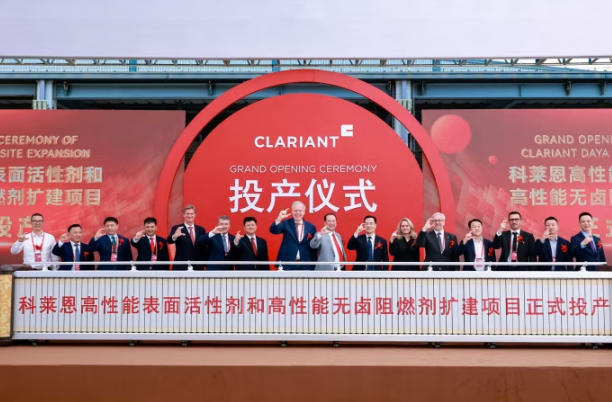
Core Viewpoint - European companies are increasing investments in China despite political concerns about dependency on Chinese manufacturing, highlighting a paradox where businesses seek to leverage China's competitive advantages while governments express worries about trade imbalances and reliance on China [1][2]. Group 1: Investment Trends - European manufacturers are ramping up investments in China, particularly in sectors like chemicals, automotive, machinery, and pharmaceuticals, often to establish China as an export base and R&D center [1][2]. - The European Union's direct investment in China has been on the rise, with a record €3.6 billion in greenfield investments in the second quarter of last year [5][6]. - Approximately 25% of surveyed European companies are shifting more production to China, with localization in pharmaceuticals (80%), machinery (46%), and medical devices (40%) [4]. Group 2: Competitive Landscape - Companies like Clariant are expanding operations in China, with Clariant investing CHF 180 million (approximately RMB 1.6 billion) to expand its facility in Huizhou [4]. - The competitive landscape is shifting as European firms face challenges in competing with local Chinese companies due to lower costs and efficient supply chains [2][4]. - The trend of relocating production to China is partly driven by rising costs in Europe, especially in energy, making China a more attractive production base [8]. Group 3: Employment and Economic Impact - European companies are facing layoffs, particularly in the automotive sector, while simultaneously investing heavily in China, indicating a shift in focus [9]. - For instance, ZF Friedrichshafen plans to cut 7,600 jobs in Europe while expanding operations in China [9]. - The shift towards China for production and R&D may lead to further job losses in Europe, raising concerns about the long-term impact on local employment and industrial competitiveness [9][12]. Group 4: Policy and Regulatory Environment - The European Union is tightening regulations on investments and procurement from non-EU countries, particularly targeting Chinese firms, which may create barriers to trade [13]. - There are calls for Europe to address its own competitiveness issues, such as reducing regulations and energy costs, to better compete with China [12]. - The EU is also considering requiring Chinese companies to invest locally in Europe to access the market, reflecting a growing tension in trade relations [12][13].
范波会见舍弗勒集团高管,共同见证项目签约
Su Zhou Ri Bao· 2025-11-28 00:33
乔治F.W.舍弗勒对苏州给予舍弗勒集团在苏项目的支持帮助表示感谢。他说,舍弗勒集团扎根苏州发展已有 30年,双方在不断深化产业合作中结下了深厚情谊。我们始终践行"在中国、为中国"理念,希望以新项目签约为 契机,进一步深化与苏州务实合作,积极融入苏州人工智能发展进程,实现更高水平互利共赢。 11月25日,舍弗勒人形机器人数智工厂项目签约落户苏州太仓。苏州市委书记范波会见了舍弗勒集团家族董 事会股东及监事会主席乔治F.W.舍弗勒一行,共同见证项目签约。 苏州市副市长季晶,太仓市主要负责同志参加活动。 德国舍弗勒集团自1995年落户苏州太仓以来,多次增资扩产,推动太仓成为舍弗勒在华最大制造基地。此次 签约的数智工厂项目聚焦人形机器人核心系统,将建设零部件覆盖能力中心、生产中心、检测中心、AI训练中心 等,推动舍弗勒成为具有生态主导力和全球竞争力的人形机器人"链主"企业。 倪黎祥 摄 会见中,范波代表苏州市委、市政府对舍弗勒持续增资苏州表示感谢。他说,苏州是工业大市、制造强市, 也是中国对外开放的前沿城市。当前,我们正深入学习贯彻中共二十届四中全会精神,坚定不移扩大高水平对外 开放,持续深化国际产业链供应链合作,以开 ...

舍弗勒“割爱” 西菱动力“接盘” 涡轮增压业务易主背后的价值链重构
Zhong Guo Qi Che Bao Wang· 2025-11-21 01:56
Core Viewpoint - The automotive industry's transition to electrification is a definitive trend, leading major global component manufacturers to strategic crossroads that will shape the competitive landscape. Schaeffler Group's recent agreement to sell its turbocharger business in China to Xiling Power Technology marks a significant step in its strategy to divest from internal combustion engine (ICE) operations and focus on electric vehicle (EV) technologies [2][3][4]. Group 1: Schaeffler's Strategic Moves - Schaeffler has sold 100% of the shares of Weipai Automotive Electronics (Shanghai) Co., Ltd., which operates the turbocharger business in China, due to its ongoing financial losses, with a projected revenue of approximately €100 million in 2024 and a net loss of ¥22.58 million in 2024 [3][4]. - The divestment aligns with Schaeffler's core strategy of transitioning towards electrification, as the turbocharger business significantly diverges from this focus [3][5]. - Schaeffler's restructuring plan includes the formation of four core divisions, with the electric drive division expected to grow from 9% of total revenue in 2022 to 31% by 2030, while the ICE-related business is projected to decline from 53% to 28% in the same period [4][5]. Group 2: Xiling Power's Acquisition Strategy - Xiling Power's acquisition of Weipai Electronics is characterized by a cash payment structure, with an initial payment of only 1 yuan, indicating a strategic move to capitalize on the market potential of turbochargers amid the dual trends of fuel vehicle upgrades and new energy development [9][10]. - The company believes that the turbocharger market will continue to thrive, particularly in the mid-to-high-end fuel vehicle sector and through the growth of plug-in hybrid vehicles, which are expected to see significant production increases in 2024 [9][10]. - Xiling Power plans to enhance profitability post-acquisition by improving management efficiency, optimizing procurement channels, and implementing refined management practices to boost production efficiency and product quality [10]. Group 3: Market Dynamics and Future Outlook - The contrasting decisions of Schaeffler and Xiling Power reflect differing strategic assessments of the turbocharger business's future, with Schaeffler opting to divest due to financial pressures and a focus on electrification, while Xiling Power sees potential for growth [11][12]. - Despite the shift towards electrification, the turbocharger market is expected to maintain a solid demand foundation, with aftermarket needs likely to persist for 8 to 10 years, providing a buffer against the immediate impacts of the transition [12][13]. - The evolving landscape suggests a "giant exit, local replacement" scenario, where Chinese companies can leverage international assets and optimize operations to achieve breakthroughs in traditional markets [13].

德国汽车业数万岗位削减,就业人数已降至十多年来的最低水平
第一财经· 2025-11-20 13:26
2025.11. 20 本文字数:2673,阅读时长大约4分钟 作者 | 第一财经 冯迪凡 德国举步维艰的汽车行业再迎风雨。 今年三季度末,整车制造商在机动车及发动机生产领域雇用44.68万人,同比减少3.8%。在汽车供 应行业中,从事车身、上装及拖车制造的供应商就业人数下降4.0%。汽车零部件及配件领域的降幅 更为显著,同期减少11.1%。 20日,德国联邦统计局发布最新数据显示,德国工业近期遭遇了显著的就业岗位流失,其中汽车行 业受冲击尤为严重。由于数万个工作岗位被裁撤,德国汽车行业就业人数已降至十多年来的最低水 平。 具体而言,截至2025年第三季度末,骑车业就业人数较上年同期减少逾48700人,降幅达6.3%,在 员工规模超过20万人的主要工业部门中居首位。 值得注意的是, 在汽车产业内部,供应商受裁员冲击远大于整车制造商。 柏林自由大学现代中国学院客座研究员、中国欧洲学会经济研究分会理事史世伟教授长期在欧洲追踪 德国工业发展和政策。他对第一财经记者表示,德国汽车业在全球各地发展不同,在美国市场面临关 税和销售下降,在中国市场面临电动车的强力竞争,目前也在"卷价格"和试图在生产上流程创新,不 过在欧洲 ...