
Deepseek

Search documents
OpenAI创始人点赞中国大模型,国产方案成国际市场新宠
Jing Ji Guan Cha Bao· 2026-02-20 13:56
第二,开源生态的全球影响力。阿里通义千问Qwen系列开源模型下载量已反超Meta旗下的Llama,在硅 谷引发"Qwen恐慌"。英伟达CEO黄仁勋在2025 GTC大会上直言,Qwen已占据开源模型大部分市场份 额,且领先优势持续扩大。开源模式不仅降低了全球开发者的技术门槛,更通过全球协作加速模型迭 代,形成"降本算力—开源扩散—场景深耕—生态繁荣"的良性循环。 第三,垂直行业的深度渗透。中兴通讯的5G-A全栈解决方案集成算力引擎与智算一体机,将4K视频传 输时延降至50ms,支撑2025年春晚8K直播的实时字幕生成;腾讯云智能驾驶云专区通过跨区容灾架构 优化,使自动驾驶模型训练效率提升30%,车道线识别准确率达99.2%。这些案例表明,中国技术已从 实验室走向产业实战,在广电、汽车等关键领域构建起系统性优势。 面对中国的这种系统性发展模式,OpenAI似乎陷入了两难境地。如果继续闭门造车,无数开发者将被 吸引到更开放、自由的平台;而选择开源,则意味着失去部分商业控制权,却有望聚拢全球生态力量。 这种战略抉择背后,是技术实力与生态构建之间的博弈,也是全球科技格局的一次深度重塑。 OpenAI选择了后者。202 ...


智谱、MiniMax发布新模型、迅策(3317.HK)将入港股通:数据成为释放大模型价值的稀缺资源
Ge Long Hui· 2026-02-13 11:29
春节前AI军备竞赛如火如荼。 继Deepseek之后,2月12日MiniMax与智谱发布新一代大模型,二者股价单日暴涨,AI赛道再度被情绪 点燃。 迅策科技准确把握了这一产业痛点。 但在情绪之外,产业侧的变化更值得关注。 随着大模型能力加速商品化,模型本身正逐步从"稀缺能力"转向"可规模采购的工具"。真正制约大模型 进入企业核心系统的瓶颈,正在从算法层转移到数据侧。模型能力的趋同,正使得高质量、可实时调用 的数据成为释放大模型价值的真正稀缺资源。 2月13日盘后,港股通迎来年度审议关键节点。恒生指数公司公布恒生系列指数调整结果,并于3月9日 正式实施。其中,港股"Data Agent"第一股迅策科技(03317.HK)获纳入恒生综指和恒生综指中小型/小 型股指和恒综多个行业指数,以及恒生港股通多个行业指数等共计8个指数。一般而言,"入指"(纳入 恒生综合指数成份股)即"入通"(纳入港股通)。 这家被称为"中国版Palantir"的公司,并不提供模型本身,而是解决模型进入企业真实业务之前最难的一 步——为企业搭建一套可被大模型持续调用的实时数据基础设施,让企业真正掌握可被模型反复调用的 数据资产,从而真正地释放 ...
Exclusive-Nvidia's AI chip sale to ByteDance hinges on conditions set by Trump administration
Yahoo Finance· 2026-02-04 22:11
Group 1 - The Trump administration is open to allowing China's ByteDance to purchase Nvidia's H200 chips, but Nvidia has not agreed to the proposed conditions for their use [1][2] - Nvidia is currently negotiating with the U.S. government regarding the licensing terms for shipping H200 AI chips to Chinese companies, acting as an intermediary [2][3] - The U.S. Commerce Department has issued regulations that require applicants to certify and provide data to ensure rigorous Know Your Customer (KYC) procedures are in place to prevent unauthorized access [6] Group 2 - China has granted preliminary approval for major tech companies, including ByteDance, Tencent, and Alibaba, to import the chips, although the regulatory conditions are still being finalized [4] - The U.S. government's recent actions represent ongoing complexities in the U.S.-China tech war, with concerns about national security and the potential military applications of the chips by China [5] - The Commerce Department's new regulations include requirements for applicants to provide a list of remote users associated with companies in countries of concern, such as Iran and Venezuela [6]

卢修学:推动AI财税应用提升政府数字化治理能力
Nan Fang Du Shi Bao· 2026-02-04 05:34
为此,两位市政协委员建议:开展AI财税服务政企合作试点,由市财政局、税务局牵头,联合市政数 局等部门,在仲恺、大亚湾等区域或行业先行先试,构建智能核算、一键申报等功能的一体化财税服务 模块。 构建"政府引导+平台支撑+市场运作"模式,通过数据安全对接、发放"AI财税服务券"、支持本地服务机 构转型等措施,降低企业使用门槛。 聚焦借助人工智能技术优化政府财税服务,助力惠州数字化治理转型,在惠州两会上,市政协委员卢修 学与张莉琴联名提交了题为《关于推动AI财税应用服务助力提升政府数字化治理能力的建议》的经济 建设类提案。 完善配套保障,成立专项工作组,开展宣传培训,并建立用户反馈优化机制。 提案指出,惠州作为粤港澳大湾区重要节点城市和制造业大市,正推进"2+1"现代产业集群建设,但当 前政府服务仍面临效率不高、覆盖面不广、个性化不足等挑战,尤其对中小微企业和新业态从业人员而 言,合规成本高、政策理解难等问题突出。 通过AI财税平台试点,预期企业申报时间可缩短70%以上,中小企业财税成本降低30%-50%,同时实现 政策精准推送和风险事前预警,提升政府服务效能与营商环境吸引力。 近年来,Deepseek的横空出世及 ...
中美AI行业的关键时刻
虎嗅APP· 2026-01-29 14:10
Core Insights - The article discusses the significant developments in the AI industry in 2025, highlighting the emergence of Chinese AI companies like Deepseek, Manus, and Qwen, which are gaining global recognition and challenging the dominance of Silicon Valley giants [7][8]. Group 1: Key Events in AI Development - The Chinese AI company Deepseek made a notable impact during the Spring Festival of 2025, showcasing engineering capabilities that impressed Silicon Valley [10][11]. - Manus secured a $75 million investment from Benchmark, raising its valuation to $500 million, indicating a growing interest from U.S. investors in Chinese AI projects [13][15]. - The emergence of the "Reverse CFIUS" regulation has created a cautious environment for U.S. investments in Chinese AI companies, leading to a "chilling effect" among investors [18][19]. Group 2: Investment Trends - The AI application era has officially begun, with U.S. venture capitalists becoming more active in funding Chinese AI projects, driven by the success of models like Deepseek and Qwen [16][22]. - The article notes that investments exceeding $100 million require a clear separation from Chinese affiliations, as U.S. funds navigate the complexities of geopolitical tensions [23][24]. - The sentiment in the Chinese primary market is optimistic, with significant cash flow observed in the embodiment intelligence sector, driven by government support and market demand [30][33]. Group 3: Challenges and Opportunities - The article highlights the challenges faced by Chinese entrepreneurs in Silicon Valley, including cultural differences and the need for patience in adapting to the U.S. market [25][26]. - The success of Hygen, a Chinese AI startup, illustrates a potential pathway for other entrepreneurs, emphasizing the importance of capital isolation and market focus [27][28]. - The article discusses the rapid changes in the AI landscape, where the window for securing top projects is shrinking, making it increasingly difficult for investors to identify and fund disruptive innovations [50][51]. Group 4: Competitive Landscape - The competition among major AI players, particularly between OpenAI and Google, is intensifying, with both companies striving for dominance in the foundational model space [58][59]. - The article notes that NVIDIA continues to play a pivotal role in the AI ecosystem, forming strategic partnerships and acquiring key assets to maintain its competitive edge [62][64]. - Meta's recent acquisition of Manus reflects a strategic shift towards building strong AI agents, indicating a potential new direction for the company amidst its challenges in foundational models [70][71].

情绪共识下的冷思考
3 6 Ke· 2026-01-21 10:56
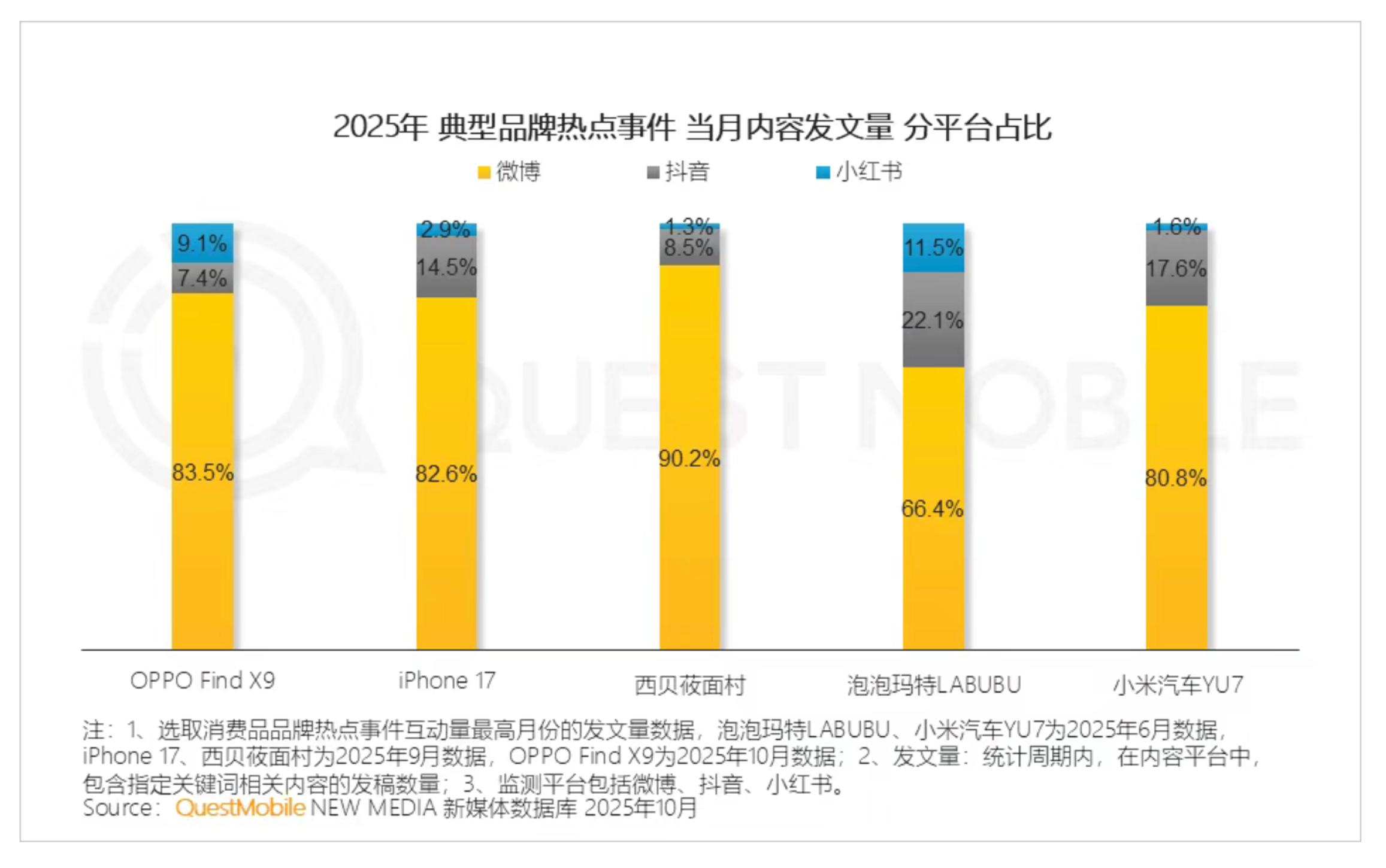
Group 1 - The core argument emphasizes the importance of "emotional consensus" in brand discourse, particularly for leading brands [1] - A recent QuestMobile report indicates that major brand events, such as product launches, dominate social media discussions, often exceeding 80% of content volume [3] - The case of Xibei illustrates a missed opportunity to become a leading brand amidst public discourse, highlighting the need for brands to engage effectively with consumer sentiment [4] Group 2 - The market is shifting towards decisions driven by "emotion," with consumers increasingly seeking emotional experiences beyond product functionality [8][10] - Emotional consensus is defined as a collective understanding formed through discussion and shared feelings, which can be leveraged by brands to differentiate themselves [13] - Brands must actively participate in public discourse, not merely to avoid mistakes but to strengthen their connection with consumers [12][19] Group 3 - The value of emotional consensus is realized through a dynamic process of engagement, rather than mere appeasement [14] - Successful brands can ignite discussions around key events, as seen with OPPO's product launch that generated over 210 million exposures on Weibo [15] - Brands like Mixue Ice City effectively engage with consumers by responding humorously to public discussions, enhancing their relatability [15] Group 4 - Brands can achieve emotional resonance by transcending niche markets and appealing to broader audiences, as demonstrated by DeepSeek's rise to prominence [16] - Emotional consensus can highlight unmet consumer expectations, allowing brands to create meaningful connections and collaborations [18] - Brands need to develop capabilities such as strong brand identity, keen insight into public sentiment, and effective communication strategies to leverage emotional consensus [19][20] Group 5 - Recognizing the value of emotional consensus is becoming a critical variable in brand competition [22] - Future metrics for evaluating brand communication effectiveness will focus on emotional engagement rather than just traffic [23] - Brands that center their narratives around emotional consensus are building competitive advantages based on resonance and long-term trust [24]
未知机构:天风传媒海外重申全年维度看好ai应用短期看情绪回暖反弹上层态度昨-20260121
未知机构· 2026-01-21 02:00
Summary of Conference Call Notes Industry Overview - The focus is on the AI technology industry, highlighting its significant growth and potential for the future [1][2]. Key Points and Arguments - **Government Support**: The founder of Minimax, Yan Junjie, was invited to a meeting with the Central Political Bureau and the State Council, indicating strong governmental support for the AI technology industry [1]. - **Market Sentiment**: Recent commentary from China National Radio suggests that AI applications represent the future direction of industries, with regulatory measures aimed at guiding the market to uncover true value in companies with core patents rather than stifling innovation [1]. - **Shift in Industry Dynamics**: The AI industry has transitioned from a "technology competition" phase over the past three years to an "entry battle" this year, with major players like Alibaba, ByteDance, and Deepseek actively involved [2]. Notable Data Points - **Google's Growth**: Google’s Gemini API call volume has more than doubled over the past year, reaching 85 billion calls, with enterprise users exceeding 8 million [2]. - **Anthropic's Product Launch**: Anthropic's Claude Cowork has become the highest traffic preview product in its history, indicating strong market interest [2]. - **OpenAI's Future Plans**: OpenAI is planning to launch its first hardware device in 2026, signaling ongoing innovation in the AI space [2]. Additional Insights - The AI sector is viewed as a core driver of the new technological revolution and industrial transformation, with significant advancements in large model capabilities both domestically and internationally [2].
神秘资金持续加码AI应用!软件龙头ETF(159899)盘中连续第7日净流入!石基信息、四方精创、莱斯信息跌幅居前
Sou Hu Cai Jing· 2026-01-20 07:00
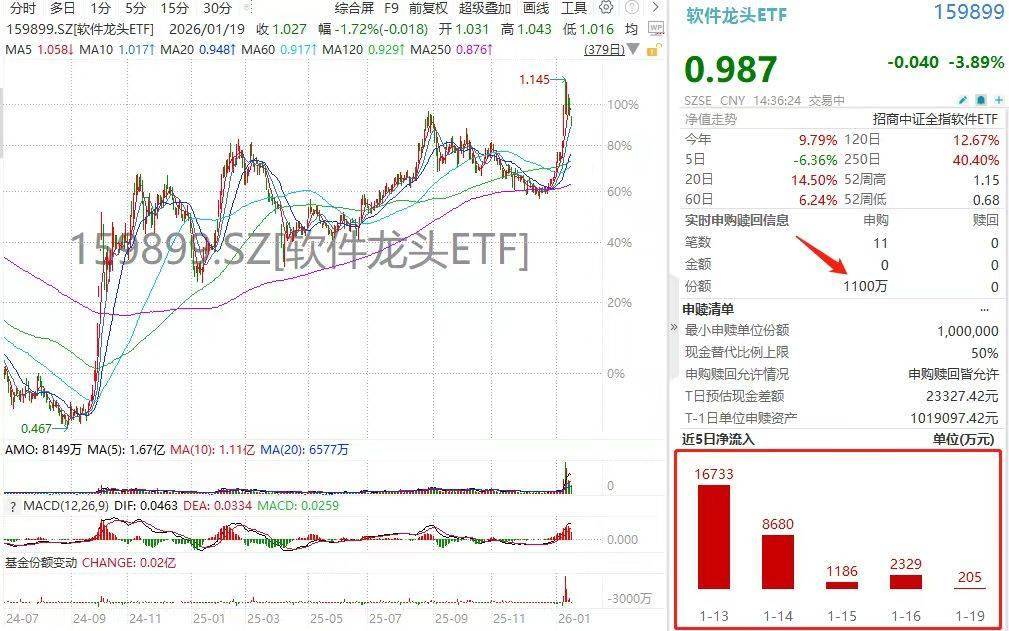
Group 1 - The high-growth sector is experiencing a downturn, with significant declines in leading software ETFs and notable net inflows for seven consecutive days [1] - The Ministry of Industry and Information Technology has issued an action plan to promote the high-quality development of industrial internet platforms, aiming for over 450 influential platforms and more than 1.2 billion connected industrial devices by 2028 [3] - There is a strong market expectation for major companies to release flagship large models before the Spring Festival, with potential releases from ByteDance and Deepseek anticipated to narrow the performance gap with overseas counterparts [3] Group 2 - The GEO (Generative Engine Optimization) concept is gaining traction, representing just the tip of the iceberg in AI applications, with a focus on optimizing generative AI platforms for better brand and product visibility [3] - The commercialization of AI software is accelerating, with AI Agents expected to rapidly materialize by 2026, indicating ongoing investment value in the sector [4] - The integration of AI and manufacturing is projected to shift the market focus from "computational power competition" to "application realization," suggesting a positive outlook for mid-term investments [4]

直击达沃斯:云计算算力和能源正在成为硬约束
Xin Lang Cai Jing· 2026-01-19 09:35
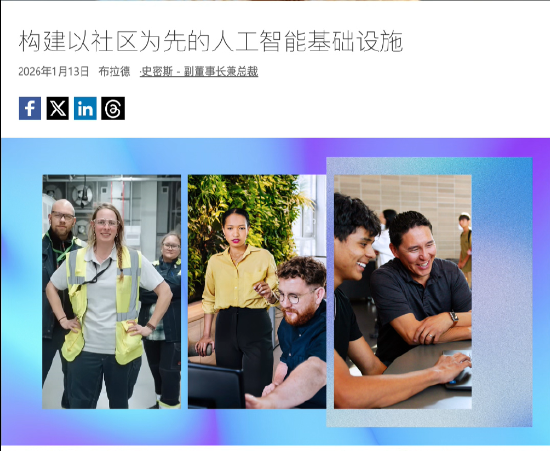
Core Insights - The 2026 Winter Davos Forum highlights a significant shift in the power structure within the tech industry, particularly regarding AI as it transitions from a cutting-edge technology to a global infrastructure [1][6] Group 1: AI Implementation and Challenges - The primary focus of discussions at Davos is on how to scale AI from pilot projects to full implementation, emphasizing the need for deep integration into business processes and decision-making at the CEO and board level [1][6] - Cloud computing capabilities and energy resources are becoming critical constraints for AI development, with discussions centering on the stability, scalability, and sustainability of cloud infrastructure, as well as the availability and cost of power [1][6] Group 2: Social and Political Dimensions of AI - AI is entering a phase of social and political negotiation, as evidenced by public complaints in the U.S. about rising electricity costs. Microsoft's recent community-focused AI infrastructure initiative aims to create local jobs and retain long-term value within communities, highlighting the importance of social acceptance for AI infrastructure [2][7] Group 3: Corporate Signals and Strategic Moves - Nvidia's recent appointment of its first Chief Marketing Officer (CMO) signifies a strategic shift from merely selling GPUs to positioning itself as a platform and infrastructure provider, necessitating clear communication on how computing power is deployed and utilized [4][10] - Google Cloud's presence at Davos indicates a focus on leveraging large model capabilities to enhance competitive advantages in cloud services, suggesting a complex interplay between cloud computing and large models that influences cost structures and customer loyalty [4][10] - The emergence of Deepseek has drawn global attention to Chinese AI, with its unique position of operating without external financing and commercial pressures, allowing it to focus on advancing AGI ideals [5][10]
直击达沃斯|科技公司大盘点:AI正式进入社会和政治层面博弈
Xin Lang Cai Jing· 2026-01-19 09:35
Core Insights - The 2026 Winter Davos Forum highlights a significant shift in the power structure within the tech industry, particularly regarding AI as it transitions from a cutting-edge technology to a global infrastructure [1][6] Group 1: AI Implementation and Challenges - The primary focus of discussions at Davos is on how to scale AI from pilot projects to full implementation, emphasizing the need for deep integration into business processes and decision-making at the CEO and board level [1][6] - Cloud computing capabilities and energy resources are becoming critical constraints for AI development, with discussions centering on the stability, scalability, and sustainability of cloud infrastructure, as well as the availability and cost of power [1][6] Group 2: Social and Political Dimensions of AI - AI is entering a phase of social and political negotiation, as evidenced by public complaints in the U.S. about rising electricity costs. Microsoft's recent community-focused AI infrastructure initiative aims to create local jobs and retain long-term value within communities, highlighting the importance of social acceptance for AI infrastructure [2][7] Group 3: Corporate Signals and Strategic Moves - Nvidia's recent appointment of its first Chief Marketing Officer (CMO) signifies a strategic shift from merely selling GPUs to positioning itself as a platform and infrastructure provider, necessitating clear communication on how computing power is deployed and utilized [4][10] - Google Cloud's presence at Davos indicates a focus on leveraging large model capabilities to enhance competitive advantages in cloud services, suggesting a complex interplay between cloud computing and large models that influences cost structures and customer loyalty [4][10] - The emergence of Deepseek has drawn global attention to Chinese AI, with its unique position of operating without external funding and commercialization pressure, allowing it to focus on advancing AGI ideals [5][10]