
哪吒2

Search documents
成都“新春第一会”聚焦产业链 当地人工智能产业规模已达1500亿元
Zhong Guo Jing Ying Bao· 2026-02-26 05:45
Core Insights - Chengdu is focusing on the high-quality development of 17 key industrial chains, aiming to transform industrial advantages into development momentum under the theme "Chain Drives the Future" [1] - By 2025, Chengdu's GDP is projected to reach 2.48 trillion yuan, with a growth rate of 5.8%, leading among the top ten cities and 15 sub-provincial cities in China [1] Industrial Chain Development - Chengdu has achieved significant progress in industrial chain construction, with 13 industrial chains expected to reach a scale of over 100 billion yuan by 2025 [2] - The city is accelerating the establishment of a "9+9+10" modern industrial system, which includes 9 major characteristic industries, 9 strategic emerging industries, and 10 future industry segments [2] - Chengdu has two trillion-level industrial clusters and 14 hundred-billion-level parks, ranking first among sub-provincial cities in terms of national advanced manufacturing clusters and characteristic industrial clusters for small and medium enterprises [2] Innovation and Industry Highlights - The artificial intelligence industry in Chengdu is projected to exceed 150 billion yuan by 2025, with a year-on-year growth of over 39% [3] - The digital cultural and creative industry is expected to achieve total revenue of 413.97 billion yuan in 2025, with an 8.3% year-on-year growth, placing it among the top in the nation [3] - The aerospace industry has over 1,000 enterprises, with a scale nearing 140 billion yuan, showcasing significant achievements such as the launch of the world's first AI intelligent satellite constellation [3] Ecosystem and Future Outlook - The completeness of the industrial chain ecosystem is crucial for innovation, enabling faster problem-solving and collaboration among enterprises [4] - Chengdu has outlined eight key focus areas for industrial chain construction in 2026, including nurturing enterprises, targeted investment, and enhancing product quality and brand creation [5]
情绪共识下的冷思考
3 6 Ke· 2026-01-21 10:56
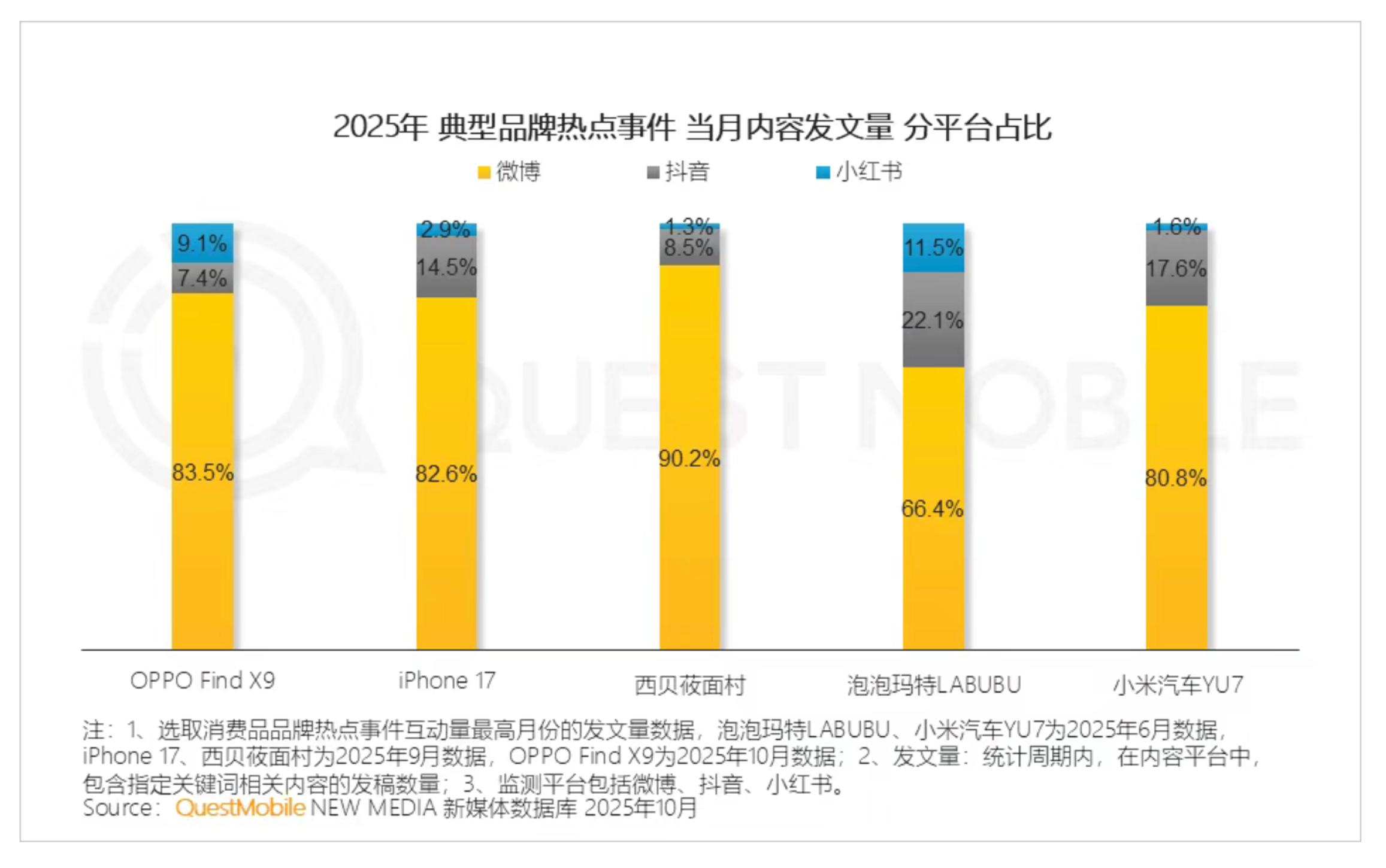
Group 1 - The core argument emphasizes the importance of "emotional consensus" in brand discourse, particularly for leading brands [1] - A recent QuestMobile report indicates that major brand events, such as product launches, dominate social media discussions, often exceeding 80% of content volume [3] - The case of Xibei illustrates a missed opportunity to become a leading brand amidst public discourse, highlighting the need for brands to engage effectively with consumer sentiment [4] Group 2 - The market is shifting towards decisions driven by "emotion," with consumers increasingly seeking emotional experiences beyond product functionality [8][10] - Emotional consensus is defined as a collective understanding formed through discussion and shared feelings, which can be leveraged by brands to differentiate themselves [13] - Brands must actively participate in public discourse, not merely to avoid mistakes but to strengthen their connection with consumers [12][19] Group 3 - The value of emotional consensus is realized through a dynamic process of engagement, rather than mere appeasement [14] - Successful brands can ignite discussions around key events, as seen with OPPO's product launch that generated over 210 million exposures on Weibo [15] - Brands like Mixue Ice City effectively engage with consumers by responding humorously to public discussions, enhancing their relatability [15] Group 4 - Brands can achieve emotional resonance by transcending niche markets and appealing to broader audiences, as demonstrated by DeepSeek's rise to prominence [16] - Emotional consensus can highlight unmet consumer expectations, allowing brands to create meaningful connections and collaborations [18] - Brands need to develop capabilities such as strong brand identity, keen insight into public sentiment, and effective communication strategies to leverage emotional consensus [19][20] Group 5 - Recognizing the value of emotional consensus is becoming a critical variable in brand competition [22] - Future metrics for evaluating brand communication effectiveness will focus on emotional engagement rather than just traffic [23] - Brands that center their narratives around emotional consensus are building competitive advantages based on resonance and long-term trust [24]

2026年的暴富密码,藏在2025的“意想不到”中
Sou Hu Cai Jing· 2026-01-07 08:56
Group 1 - The film "Nezha 2" achieved a record-breaking box office of 15.4 billion, ranking among the top five globally, showcasing the high industrial standards of Chinese animation and promoting Chinese culture [1][4] - The rapid adoption of artificial intelligence (AI) throughout the year has transformed various industries, with significant advancements in AI applications such as healthcare, education, e-commerce, and finance [3][4] - China has become the world's largest exporter of new energy vehicles, with domestic brands increasing their market share in Europe and Southeast Asia [5][6] Group 2 - The competitive landscape in the food delivery sector intensified as major internet companies engaged in aggressive subsidy wars, leading to significant price reductions for consumers [6][8] - The tea beverage industry saw a surge in IPOs, with brands like Mixue Ice City and others expanding internationally, indicating a strong growth trend in the sector [6][8] - The financial sector experienced a slight increase in average salaries among listed banks, while the total number of employees in major state-owned banks decreased [9] Group 3 - The A-share market saw an 18% increase, reaching a ten-year high with total market capitalization surpassing 100 trillion [9] - The micro-short drama industry surpassed the film industry, achieving a scale of 50 billion, indicating a shift in consumer entertainment preferences [9][11] - Predictions for 2026 include continued growth in AI integration across industries, increased exports of new energy vehicles, and the emergence of new popular IPs in the cultural sector [11][12]

2026,尽情“畅”吧!
Xin Hua She· 2026-01-07 08:45
Core Viewpoint - The article emphasizes the theme of "smoothness" in China's development, highlighting the progress made in infrastructure, digital governance, and the overall improvement in the business environment as key factors driving economic growth and societal well-being in 2026 [1][10]. Infrastructure Development - Significant infrastructure projects have been completed, including the opening of the Baoyin High-Speed Railway and various high-speed rail segments, which enhance connectivity across regions [2][3]. - The completion of the 162-kilometer Shantou to Shantou South segment of the Shanshan High-Speed Railway and the 314-kilometer Wuyi High-Speed Railway strengthens the economic corridors in the Guangdong-Hong Kong-Macao Greater Bay Area and the Yangtze River Economic Belt [2][3]. - Smaller projects, such as rural road improvements and the expansion of 5G networks, contribute to the overall connectivity and accessibility of remote areas, integrating them into the national development framework [2][3]. Digital Governance - The shift towards digital governance is highlighted, with examples of individuals completing administrative tasks online, showcasing the efficiency of the "one-stop service" model [3][4]. - The implementation of the "Optimization of Business Environment Regulations" has streamlined market access and reduced transaction costs, fostering a more vibrant market environment [5][6]. Cultural and Social Impact - The cultural sector has seen significant achievements, with popular films and events fostering a sense of community and national pride, contributing to a positive public sentiment [6][7]. - The article notes the importance of emotional connections and shared experiences in enhancing social cohesion and public morale [6][7]. Future Outlook - The "14th Five-Year Plan" sets ambitious goals for further improving market integration and addressing existing barriers, aiming for a more fluid movement of logistics, capital, talent, and information [8][9]. - Investments in education, healthcare, and social welfare are expected to increase, ensuring that development benefits reach all citizens and enhance overall quality of life [8][9]. - Environmental sustainability remains a priority, with initiatives aimed at achieving carbon neutrality and promoting green development as integral to future growth [8][9].
2025中国做对了什么?
Xin Lang Cai Jing· 2026-01-02 12:18
Core Insights - In 2025, China implemented multiple consumer stimulus policies that effectively promoted the release of consumption potential [1] - The success of films like "Ne Zha 2" entering the global box office top ten indicates a recovery in Chinese consumer spending [1] - The market is witnessing a diverse and higher-quality consumption trend, with young consumers actively engaging in purchasing popular IPs [1] - Foreign tourists are increasingly coming to China to shop, indicating a growing attractiveness of the Chinese market [1] - Looking ahead to 2026, the expanding Chinese market is expected to remain a reliable source of economic growth and contribute significantly to global economic development [1]
2025年电影市场两大致命伤
3 6 Ke· 2025-12-31 12:45
Core Insights - The 2025 film market is projected to exceed 51.8 billion, surpassing expectations, but the overall sentiment remains negative due to extreme market polarization [1] - The phenomenon of "eliminating the middle class" in the film industry is evident, with major animated films dominating the box office, leading to a stark divide between blockbuster hits and underperforming films [2] Market Performance - The top films of 2025 include "Nezha 2" with 15.446 billion, "Zootopia 2" expected to contribute 4.2 billion, and several others, with the top 10 films collectively earning over 34.4 billion, accounting for two-thirds of the total market [3] - In comparison to 2019, the number of films surpassing the 1 billion mark has halved, indicating a significant decline in the number of successful films [3] Industry Challenges - The market is experiencing a decline in "middle-class films," which previously contributed significantly to the industry, with many films now seeing box office drops of over 50% to 80% [4][5] - The failure of major directors' films has compounded the industry's issues, with several high-budget projects underperforming and leading to substantial financial losses [6][11] Director Performance - Notable films from established directors have failed to meet expectations, with many films grossing only around 3 billion, resulting in significant losses for production companies [7][9][12] - The industry is witnessing a shift in audience perception, with viewers becoming less reliant on the reputations of directors and more focused on content quality and reviews [11]

世界经济的韧性与底气
Jing Ji Wang· 2025-12-25 02:17
Core Insights - The global economy in 2025 demonstrated impressive resilience amidst multiple shocks, characterized by enhanced risk prevention, self-correction capabilities, and increased policy predictability [3][4] - Emerging markets and developing economies are expected to be the main contributors to global growth in 2025, with a projected global economic growth rate of 3.2% for 2025 and 2.9% for 2026 [3][6] - China is positioned as a "stabilizing anchor" for the world economy, showcasing strong resilience and vitality despite external challenges [2][11] Group 1: Economic Performance in 2025 - The world economy exhibited remarkable resilience in 2025, with a moderate growth rate driven by emerging markets and developing economies [3][6] - The OECD projected global economic growth rates of 3.2% for 2025 and 2.9% for 2026, supported by expansionary macro policies and positive expectations for new technologies [3][6] - The IMF noted a resilient start to 2025, although signs of a gradual slowdown in growth were emerging as supportive factors began to fade [3][5] Group 2: Factors Influencing Economic Resilience - Key reasons for the resilience of the global economy include China's resistance to U.S. tariffs, the elasticity of global supply chains, and proactive fiscal and monetary policies from multiple countries [5][10] - The impact of artificial intelligence (AI) on trade and investment is significant, contributing to the overall economic dynamism [5][10] - The global economy is facing challenges from geopolitical tensions and trade policies, yet the anticipated recession has not materialized, leading to better-than-expected economic performance [5][6] Group 3: Outlook for 2026 - The global economy is expected to experience a stable transition in 2026, with growth projected at 2.8%, supported by loose monetary policies and stabilizing global trade [7][8] - Experts agree that the growth rate will stabilize between 3.1% and 3.2%, with a focus on structural adjustments rather than cyclical recovery [8][10] - The transition will be influenced by technological advancements and free trade, with AI posing both opportunities and uncertainties for productivity and employment [8][10] Group 4: China's Role in Global Economy - China is anticipated to play a crucial role in global economic growth, providing supply, demand, technology transfer, and support for sustainable development [11][12] - The "15th Five-Year Plan" emphasizes high-level openness and a commitment to global economic growth, reflecting China's responsibility in the global economy [12][14] - China's focus on quality economic growth, particularly in high-tech manufacturing and green development, is expected to dominate its export landscape [14]
世界经济的韧性与底气(2025年终特别报道)
Ren Min Ri Bao Hai Wai Ban· 2025-12-24 22:46
Core Insights - The global economy in 2025 demonstrated impressive resilience amidst multiple shocks, characterized by enhanced risk prevention capabilities and self-correcting abilities [14][15][16] - Emerging markets and developing economies are expected to be the main contributors to global growth in 2025, with a projected global economic growth rate of 3.2% for 2025 and 2.9% for 2026 [14][17] - China is positioned as a "stabilizing anchor" for the global economy, showcasing strong resilience and vitality despite external challenges [11][21] Economic Performance - The OECD forecasts global economic growth rates of 3.2% for 2025 and 2.9% for 2026, driven by expansionary macro policies and positive expectations for new technologies [14] - The IMF noted a resilient start to 2025, but indicated signs of a gradual slowdown as supportive factors diminish [14][15] - The global economy is expected to maintain a growth rate between 3.1% and 3.2% in 2025, influenced by geopolitical tensions and trade policy uncertainties [17] Challenges and Opportunities - The world economy is anticipated to face challenges in 2026, including uncertainties from U.S. tariff policies and the impact of technological advancements on employment and productivity [20][18] - The transition to a more stable economic environment in 2026 will rely on technological progress and free trade [17][20] - The rise of artificial intelligence presents both opportunities and risks, with its potential to drive economic growth while also posing challenges to labor markets [19][18] China's Role - China is expected to play a crucial role in global economic stability, with its economic policies reflecting a commitment to high-level openness and reform [21][23] - The Chinese economy is projected to grow by around 5% in 2025, providing significant support to the global economy [22][23] - China's focus on high-tech manufacturing, green development, and artificial intelligence is set to dominate its export landscape, contributing to global supply chains [24][23]

华鑫证券研究所所长谭倩:三重逻辑共振 科技引领A股行情
Zheng Quan Ri Bao Wang· 2025-10-14 12:52
Core Viewpoint - The A-share market has undergone significant structural changes over the past year, with the technology sector showing remarkable performance, driven by three levels of logical resonance, leading to an optimistic outlook for the future [1][3]. Macro Level - Strong support from national strategies is driving the rapid development of emerging industries, with a focus on breaking through key core technologies and promoting technological innovation through top-level institutional design and financial resource allocation [1][2]. - The State Council has issued opinions to deeply implement the "Artificial Intelligence +" initiative, promoting the integration of AI with various sectors of the economy and society [1]. Meso Level - A new round of technological innovation is catalyzing the revaluation of Chinese technology assets, with notable advancements in AI, robotics, and smart driving, showcasing the emergence of excellent Chinese tech companies [2]. - Examples include DeepSeek achieving performance comparable to ChatGPT at a fraction of the cost, and significant cultural milestones such as the success of "Nezha 2" at the box office [2]. Micro Level - Improvement in liquidity conditions and the influx of incremental capital are supporting the technology market, with foreign capital turning bullish and a rebalancing of domestic and foreign funds [2]. - From January to August, non-bank deposits increased by 5.87 trillion yuan, a historical high for the same period, while margin trading balances and new institutional accounts surged, particularly in the computer and communication sectors [2].
中经评论:发展服务贸易如何“补短锻长”
Jing Ji Ri Bao· 2025-10-11 00:42
Core Insights - China's service trade is projected to exceed $1 trillion for the first time in 2024, marking a historic high and providing greater certainty for global economic development [1] Group 1: Growth and Structural Changes - The service trade's total import and export volume surpassed $737 billion in the first eight months of this year, indicating robust growth [1] - Knowledge-intensive services are emerging as a new growth engine, with significant increases in exports of telecommunications, computer, and information services [2] - The travel service sector is experiencing a strong recovery, with the expansion of visa-free policies attracting more international tourists to China [2] Group 2: Technological Empowerment - The recent China International Service Trade Fair showcased advanced technologies such as AI and 5G/6G, highlighting their integration into various sectors like finance, education, and healthcare [2] Group 3: Current Challenges - Traditional service sectors like logistics and construction still dominate, while high-value services such as finance and legal services have a high dependency on imports [3] - The eastern region contributes nearly 80% to the national service trade, while the central and western regions, despite rapid growth, remain small in scale [3] - China's participation in global digital service trade standard-setting is below 15%, limiting its influence in key areas like data cross-border flow and digital taxation [3] Group 4: Policy Initiatives - Recent policies from the Ministry of Commerce and other departments aim to promote service exports through 13 specific measures targeting financing difficulties and data flow issues [4] - The focus is on supporting new business models like digital and green services, with a comprehensive policy framework to guide future development [4] - The development of high-quality service trade is closely linked to domestic demand expansion, encouraging the supply of quality services through innovative scenarios and business integration [4]